Miriam Waltz is an Assistant Professor in gender justice and health technologies at Leiden University, with a joint appointment between the Institute for Cultural Anthropology and Development Sociology and the African Studies Centre. Her research focuses on interdisciplinary health technologies in Africa, pesticide use in Western Kenya, and perinatal healthcare in South Africa. Education: BA in Anthropology and Development Studies, University College Utrecht (2012) Honours and MA in Social Anthropology, University of Cape Town (2013–2015) Joint PhD in Anthropology (Aarhus University & University of Oslo, 2022) Research Interests: Examines pesticide use among smallholder farmers in Kenya, exploring socio-ecological dynamics and non-human entanglements. Investigates perinatal health care navigation and technological interventions in Cape Town. Explores multispecies ethnography and science-policy interfaces in African contexts.
Jacky Bourgeois is an Assistant Professor of Data-Centric Design at Delft University of Technology's Faculty of Industrial Design Engineering (IDE), leading the Data-Centric Delft Design Lab. His work bridges Human-Computer Interaction, Data Science, and Participatory Design, focusing on methods like data donation to empower collaborative data exploration. He holds a computer science background, previously researching ubiquitous technologies for domestic energy practices of 'energy farmers' (solar households). Key projects include the PROMISE study on patient-led oncological care and the Data Donation initiative promoting ethical data practices. Education: Background in Computer Science; academic focus on sustainable design engineering and IoT. Teaching includes courses like 'Data-Centric Design for...' (2024) and 'Digital Product Development' (2023). Research Interests: Data as subjective inquiry material, data intimacy, data commons, and human-data interaction in home contexts. Notable contributions include PAIRcolator for collaborative data reflection and Tangi for 360° video insights. Awards include Best Paper at CHI 2025 and DIS '24 Best Paper. Grants & Collaborations: NWO-funded research on hospital sounds (2024), IoT Rapid Proto Labs for industry-academia partnerships, and ancillary role as a scientific employee at The Open University (2025–2027). Labs & Teams: Director of the Data-Centric Delft Design Lab; collaborates with the HCI Data & Design SIG. Current projects address ethical frameworks for data donation and patient-centered healthcare systems.
Lorena Sosa is an Associate Professor at the Faculty of Law, Economics and Governance, Utrecht University, specializing in International and European Law. She is affiliated with the Netherlands Institute of Human Rights (SIM) and the research program Family & Law (UCERF). Her roles include membership of the management board of the Center for Global Challenges, Director of Education at UGlobe since 2022, and a community-engaged learning ambassador for her faculty since 2023. Education: PhD (cum laude) in Law from Tilburg University (2015), LL.M. in International Public Law (cum laude, National University of Córdoba), and a law degree from the same institution. Prior to Utrecht, she held positions at the University of Buenos Aires, University of Turku, and others. Research focuses on intersectional discrimination, gender-based violence, and human rights law. Key areas include the Istanbul Convention, feminist legal frameworks, and trans rights in criminal procedures. She employs socio-legal methods and collaborates with international organizations like the EU, Council of Europe, and UN. Publications span topics like femicide, domestic violence, and transgender experiences. Recent works include contributions to the Routledge International Handbook on Femicide and Feminicide (2023) and Preventing and Combating Violence Against Women (2023). Awards include the Marie Skłodowska-Curie Fellowship (2018), VENI Grant (2020), and the Max van der Stoel Award (2015) for her PhD on intersectionality in violence against women frameworks. Teaching includes courses on human rights law at Utrecht’s Legal Research Master, PIL Master, and University College Utrecht. She advises on projects related to victim rights, gender diversity, and empirical legal studies.
Sarah Bracke is a Professor in Sociology of Gender and Sexuality at the Faculty of Social and Behavioural Sciences, University of Amsterdam . Her work critically examines intersections of gender, sexuality, race, and secularism, particularly in European contexts. She is deeply engaged in analyzing systemic crises—capitalist, nationalist, and ecological—and their impact on marginalized communities. Current Affiliation : University of Amsterdam, Faculty of Social and Behavioural Sciences. Research Focus : Gender theory, reproductive rights, anti-LGBTQ+ mobilizations, secularism, and the political dimensions of care economies. Bracke’s research emphasizes the deliberate erosion of gender, reproductive, and LGBTQ+ rights, often highlighting transnational collaborations among far-right and mainstream political forces. She connects these issues to broader crises, including climate change, capitalist precarity, and nationalist rhetoric. Her work advocates for feminist coalitions that transcend traditional boundaries, prioritizing care ethics and collective solidarity over exclusionary frameworks. Her recent publications explore topics like the racialized dimensions of reproductive politics, the secularist underpinnings of European ‘Muslim Question’ discourse, and the role of academia in resisting oppressive systems. Although no specific awards or advisees are mentioned in the text, Bracke’s scholarship consistently bridges feminist theory, critical race analysis, and critiques of neoliberalism, urging transformative responses to global crises.
Susan Schreibman serves as Full Professor and Key Domain Chair of Digital Arts and Culture within the Faculty of Arts and Social Sciences at Maastricht University. She concurrently holds board positions at the National Library of Ireland and Research School Media Studies, and serves as Academic Editor for the University of Illinois Press. Her research centers on computationally-driven analysis of digital archives, cultural innovation, and participatory engagement design, with core specializations in Digital Humanities, Media Studies, Literary Modernism, and Irish Cultural Studies. She pioneers methodologies for remediating analog publication modalities into born-digital paradigms while critically examining their societal impact. Analysis of her 2022-2025 publications reveals dominant trends in 3D digital scholarship (particularly multimodal historical narratives like the Battle of Mount Street Bridge project), feminist approaches to digital humanities infrastructure, and social justice applications in archival systems. Her work consistently bridges technical innovation with cultural critique across heritage, education, and gender studies contexts. No scientific awards were documented in the source materials. Professor Schreibman leads significant research initiatives including PURE3D Contested Memories and #dariahTeach, indicating active grant-funded collaborations though specific funding sources remain unmentioned. Her editorial role for University of Illinois Press and co-edited volumes like Feminist Digital Humanities: Intersections in Practice (2025) demonstrate scholarly leadership. She directs the PURE3D project developing 3D reconstructions of historical events, contributes to the #dariahTeach digital humanities education platform, and participates in the IGNITE initiative advancing digital scholarly practices. These efforts operate within Maastricht University's Faculty of Arts and Social Sciences infrastructure with external partnerships at cultural institutions like the National Library of Ireland.
Sergio Rigoletto is an Assistant Professor of Film Studies at the University of Groningen, Faculty of Arts. Previously, he held an Associate Professor position in Cinema Studies and Italian at the University of Oregon, USA. His research focuses on the intersection of film aesthetics with social change, queer media cultures, and Italian cinema. Key areas include transnational queer imaginaries in Mediterranean media, stardom in Neorealist cinema, and gendered labor in film industries. Education: PhD from the University of Reading, MA from Birkbeck College, London, and BA/MA from the University of Catania, Italy. His publications include Masculinity and Italian Cinema: Sexual Politics, Social Conflict and Male Crisis in the 1970s (2014) and Le norme traviate (2020). Current projects involve a monograph on Anna Magnani and Queer from the South: Film, Video Art and Media Activism in the Mediterranean . Research interests span queer media activism, Italian film history, and international television. He has contributed to journals like Journal of Cinema and Media Studies and New Review of Film and Television Studies , analyzing topics such as Xavier Dolan’s cinematic techniques and spectrality in Call Me by Your Name . Rigoletto’s work emphasizes interdisciplinary approaches to film, blending cultural theory with close textual analysis. His recent focus on Mediterranean queer media highlights transnational collaborations and challenges traditional national narratives in cinema.
Prof. Dr. ir. BJ (Jeroen) de Kloet is a Professor of Globalisation Studies and Director of the Amsterdam Centre for Globalisation Studies (ACGS) at the University of Amsterdam 's Faculty of Humanities, Department of Media Studies. He has held visiting positions at institutions including Hong Kong Baptist University and has been actively involved in international academic collaborations across Asia and Europe. Key Research Areas: Globalization, Chinese cinema, urban studies, postcolonial theory, cultural politics Awards: Member of the Royal Netherlands Academy of Arts and Sciences (KNAW) in Social Sciences and Humanities (2023) Teaching: Engages in critical reflection on academic labor through seminars like 'How to survive the university?' His recent publications explore topics such as platformization, digital intimacies, and the politics of heritage-making. He has presented at major conferences in Venice, Hong Kong, Singapore, and Taipei, focusing on the intersection of creativity, control, and urban transformation.
Valentina Mazzucato is Professor of Globalisation and Development at the Faculty of Arts and Social Sciences, Maastricht University, where she teaches and leads research in transnational migration and development. She founded and directed the research programme on Globalisation, Transnationalism and Development (2012–2020), co-founded the MA Globalisation and Development Studies, and led the development of the interdisciplinary BSc Global Studies. She is a member of the Royal Netherlands Academy of Arts and Sciences (KNAW) and has held leadership roles in major research initiatives including the ERC Consolidator Grant project MO-TRAYL. Her educational background includes a BA in Political Science and French Literature from Williams College, an MSc in Agricultural Economics from Michigan State University, and a PhD cum laude from Wageningen Agricultural University on indigenous soil and water conservation in Burkina Faso. Her research focuses on transnational migration between Africa and Europe, particularly the socio-economic and cultural impacts on migrants, their families, and communities. She employs mixed methods and multi-sited research designs, pioneering the simultaneous matched sample methodology. Her recent work explores transnational youth mobility, return visits, remittances, and temporalities of migration. The articles from 2024–2025 reveal a strong thematic consistency in migrant youth, transnational identity, methodological innovation, and policy implications, reflecting her leadership in interdisciplinary migration scholarship. ERC Consolidator Grant (2017–2023) for MO-TRAYL project Elected member of the Royal Netherlands Academy of Arts and Sciences (KNAW), 2019 Prof. Mazzucato has secured multiple international grants from NWO, NORFACE, and the ERC, enabling her to build transnational research teams and mentor PhD candidates and early-career researchers. She supervises Bachelor’s and Master’s theses and externally examines PhDs internationally. She is actively involved in policy engagement, having advised Queen Beatrix and participated in EU and NGO forums on migration and development. She also co-created a play with Ghanaian migrants to translate research into public dialogue. She leads the Transnational Links and Livelihoods Group and collaborates across institutions including Princeton University (Center for Migration and Development), African universities, and policy organizations. Her work bridges academic research, teaching innovation, and societal impact.
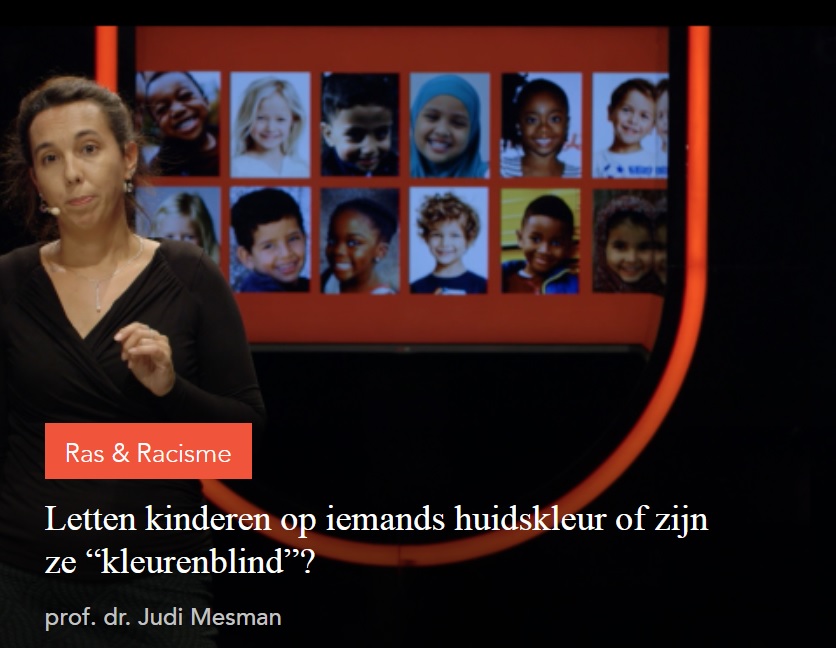
Judi Mesman is a Professor of the Interdisciplinary Study of Social Challenges at Leiden University, where she also holds the position of University Professor of Societal Responsibility and Impact since 2024. She is affiliated with the School of Governance and Global Affairs and the Department of Education and Child Studies. Previously, she served as Dean of Leiden University College The Hague from 2016 to 2022 and as Scientific Director of the Institute of Education and Child Studies from 2012 to 2016. Mesman's research focuses on social (in)justice, particularly intergenerational issues at individual and institutional levels. Her work examines how social and cultural norms in children's upbringing and education influence their self-image and worldview, with special attention to how children perceive and internalize norms regarding sexuality, ethnicity, and gender. She investigates how parents and educators unintentionally transfer prejudices to children through subtle messages and implicit stereotyping. Mesman's research program has significant societal impact, as demonstrated by her receipt of the prestigious Stevin Prize in 2021, the highest award in the Netherlands for researchers who effectively translate knowledge into societal benefits. Her work has influenced educational publishers, teacher training programs, and diversity initiatives. She has conducted studies on implicit stereotyping in schoolbooks and developed interventions to promote anti-racist education. Stevin Prize (2021) Member of Royal Netherlands Academy of Arts and Sciences (2018) Member of Royal Holland Society of Sciences and Humanities Recipient of NWO Veni, Vidi, Vici grants Recipient of ERC Starting and Consolidator Grants Mesman has supervised 26 PhD students to completion and teaches Intercultural Pedagogy in the Bachelor's program in Educational Sciences. She has developed the minor 'The (Un)Just Society' and created a podcast series on working with youth in a multicultural society, for which she received a teaching award. Her current research focuses on how norms and values about gender, ethnicity, and sexuality are transferred among professionals who work with children, including in teacher training programs.
Dr. Yasin Koc is an Assistant Professor of Social Psychology at the University of Groningen, affiliated with the Department of Psychology within the Faculty of Behavioural and Social Sciences. His research focuses on identity dynamics, intergroup relations, and the psychological experiences of disadvantaged groups. He holds a PhD from the University of Sussex and dual BA degrees in Psychology and Comparative Literature from Istanbul Bilgi University. Education: 2014–2018: PhD in Social Psychology, University of Sussex 2006–2011: BA in Psychology (High Honours), Istanbul Bilgi University 2006–2010: BA in Comparative Literature (High Honours), Istanbul Bilgi University Research Interests: Dr. Koc investigates how disadvantaged groups navigate identity conflicts within privileged systems, majority perceptions of marginalized groups, and new masculinities. His five core research lines include multiple conflicting identities, experiences of disadvantaged groups, majority perceptions, responses to privilege, and evolving masculinities. He employs mixed-methods approaches, combining experimental and qualitative studies. Key Achievements: Recipient of the APS Rising Star Award (2022) Principal Investigator of the Koc Social Identities Lab Editorial board member for British Journal of Social Psychology and Journal of LGBTQ Issues in Counseling Awards & Grants: APS Rising Star Award (2022) Netherlands Research Council (NWO) grants for intergroup psychology projects Lab & Collaboration: He leads the Koc Social Identities Lab , exploring identity integration, prejudice, and systemic inequality. Collaborations include global projects like the PsyCorona consortium analyzing pandemic-related behavioral responses.
Jack Halberstam is a Professor of Gender Studies and English at Columbia University, specializing in queer theory, feminist studies, and cultural critique. His research explores intersections of gender, sexuality, and societal norms, with notable works like Female Masculinity and The Queer Art of Failure . Halberstam’s Wild Things: The Disorder of Desire (2020) examines queer ecologies and anarchy, while Trans*: A Quick and Quirky Account of Gender Variance (2018) redefines gender fluidity. He received the 2018 Arcus/Places Prize for scholarship linking gender, sexuality, and urban design. His academic journey includes influential critiques of pop culture in Gaga Feminism (2012) and early explorations of gothic horror in Skin Shows (1995). Halberstam’s forthcoming work The Wild Beyond: Music, Architecture and Anarchy continues his exploration of queer theory’s boundaries. Beyond publications, his teaching focuses on interdisciplinary approaches to gender and literature at Columbia University. Research Focus: Queer temporality, gender variance, cultural criticism, and the built environment. Recent Projects: Investigating anarchist frameworks in queer studies and the role of architecture in gender expression.
Dr. Jennifer Koch is an Associate Professor at the Laboratory of Geo-information Science and Remote Sensing, part of Wageningen University & Research. Previously, she served as an Associate Professor and Associate Research Director at the University of Oklahoma's Data Institute for Societal Challenges. Her research integrates data-driven methods like simulation modeling to address socio-economic and climate change challenges, focusing on sustainable urbanization and environmental management. Education: She holds a Diplom (Univ.) in Geoecology from the University of Bayreuth and a Dr.-Ing. in Electrical Engineering/Computer Science from the University of Kassel. She teaches courses on geo-information management and data analytics. Research emphasizes multi-scale modeling, stakeholder engagement, and participatory approaches to socio-ecological systems. Recent work explores urban growth in Africa, methane emission monitoring, and renewable energy siting. Articles highlight interdisciplinary methods in GIS, climate policy, and community geography. Professional service includes roles with iEMSs, IALE, and the AAG. No ancillary activities reported. Her work bridges technical geospatial tools with societal challenges, emphasizing practical policy applications.
Thijs Weststeijn is a Professor of Art History at Utrecht University's Department of History and Art History (Humanities). He specializes in early modern European art, particularly Dutch Golden Age art and global cultural exchanges. His research focuses on cross-cultural interactions between Europe, China, and Asia, with notable projects like the 'Histories of Global Netherlandish Art, 1550-1750.' Weststeijn holds a PhD from Amsterdam University Press (2008) and has held fellowships at institutions like the Getty Research Institute and the Max Planck Institute. He is a founding editor of History of Humanities and contributed to exhibitions such as Barbaren en Wijsgeren . His recent media engagements include discussions on climate change impacts on cultural heritage (2023) and re-evaluations of Rembrandt's global influences. Key publications include Art and Antiquity in the Netherlands and Britain (2015) and Foreign Devils and Philosophers (2020).
Dr. Yfke Ongena is a Senior Lecturer in Communication and Information Sciences at the University of Groningen's Faculty of Arts. She holds a PhD from Vrije Universiteit Amsterdam (2005) and has extensive postdoctoral experience, including at the University of Nebraska-Lincoln (2006). Her research focuses on survey methodology, questionnaire design, and interviewer-respondent interaction. Key projects include the NWO-funded 'Mixed modes in the European Social Survey' (2011–2015) and current work on socially desirable responses in surveys. Education: BSc/MSc in Communication Science (University of Groningen), PhD in Survey Methodology (VU Amsterdam). Awards include the GOR25 Poster Award (2025). She has authored over 55 publications, with recent work addressing AI in medical diagnostics, physician cost awareness, and gender equity in academic careers. Research Interests: Survey design challenges, measurement bias, representation in surveys, and the integration of AI in healthcare. Active in professional networks like the European Survey Research Association and GESIS. Grants and Projects: NWO-funded projects, ESRA conference involvement, and collaborations with institutions like the University of Twente and Groningen Radiology departments. Currently investigates patient perspectives on AI in prostate cancer diagnosis and residency training programs in radiology.
Dr. Elisabeth (Lies) Wesseling is an Associate Professor in the Department of Literature and Art at the Faculty of Arts and Social Sciences, Maastricht University. She serves as Director of the Centre for Gender and Diversity and leads the international research network PLACIM (Platform for a Cultural History of Children's Media). Her interdisciplinary work bridges literature, cultural history, and the humanities' engagement with science and identity. Her educational background includes MA degrees in English Language and Literature and Comparative Literature (both cum laude) and a PhD in Comparative Literature, all from Utrecht University. Dr. Wesseling’s research focuses on the cultural construction of childhood, particularly through narrative forms in fiction, life writing, and film. She investigates how global adoption narratives forge kinship across cultural boundaries, drawing on postcolonial theory, literary anthropology, and life writing studies. Her work critically examines implicit cultural assumptions about parenthood, orphanhood, and identity, aiming to enrich ethical discourse on transnational adoption. Her recent publications (2020–2023) reflect a strong trajectory in children’s literature, narrative theory, and cultural critique, with a particular emphasis on mermaid myths, adoption memoirs, and postcolonial family formations. These works span edited volumes and journals, demonstrating sustained scholarly engagement. She is actively involved in academic service as congress convenor of the 21st Biennual IRSCL Conference and board member of the International Research Society for Children's Literature. She also belongs to several learned societies including the International Society for Cultural History and the Society for Literature, Science, and Art. Dr. Wesseling has supervised multiple PhD candidates and coordinates research programs funded by the Dutch Science Foundation (NWO). Her teaching spans BA, MA, and MPhil levels, focusing on arts and culture, postcolonialism, and problem-based learning. She has led major educational innovation projects such as ForUM and TAC, enhancing pedagogical practices across institutions. She leads the externally funded research program Emergent Cultural Literacy: Assimilating Children's Literature and directs the Centre for Gender and Diversity, fostering interdisciplinary collaboration on gender, identity, and cultural inclusion within the faculty.