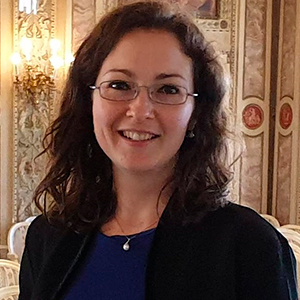
Valentina Crestani is Associate Professor of Language and Translation at the University of Milan, specializing in German-Italian linguistic mediation. She coordinates the 4EU+ European Pluralities program and leads Human Hall's Linguistic Inclusiveness project. Her research examines accessible communication systems like Leichte Sprache (German) and linguaggio facile (Italian), with focus areas including: gender-sensitive terminology development, audiovisual accessibility strategies, and institutional translation frameworks. She has edited volumes on disability-language intersections including Gender, Disability, Language: Projects and Perspectives in Milan . Dr. Crestani's publications analyze comparative translation methodologies, particularly regarding legal and educational materials for diverse audiences. Recent work explores energy terminology complexity and museum communication adaptations.
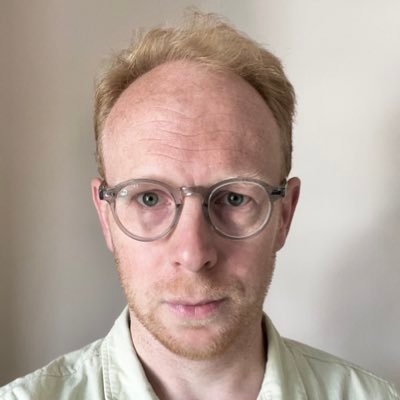
Dr. John McKeane is Associate Professor in the Department of Modern Languages and Linguistics at the School of Literature and Languages, University of Reading. He serves as Research Division Lead and is actively involved in academic service as Membership Secretary of the Society for French Studies and as an external examiner for King’s College London. His work bridges French literature, literary theory, continental philosophy, and cultural studies. Research Interests: French literary theory, particularly deconstruction and post-structuralism Philosophical thought of Maurice Blanchot, Jacques Derrida, Jean-Luc Nancy, Philippe Lacoue-Labarthe, and Sarah Kofman Translation studies and literary translation Philosophy of education, especially the French baccalaureate Cultural studies, including French popular music and plant humanities His recent scholarly output demonstrates sustained engagement with the intersections of literature, philosophy, and pedagogy. Articles from 2023 to 2025 focus on figures like Nancy, Blanchot, and Cassin, exploring themes such as voice, pedagogy, art, and ancient thought. His translations include major works by Christophe Bident and Jean-Luc Nancy. Scientific Contributions: Author of Philippe Lacoue-Labarthe: (Un)timely Meditations (2015) Co-editor of Blanchot romantique (2010) and Sarah Kofman and the Relief of Philosophy (2021) Translator of Maurice Blanchot: A Critical Biography (2018) Current monograph under contract: Sarah Kofman and Ancient Thought: Learning to Live at Last (OUP) Advising and Grants: Dr. McKeane supervises PhD students on topics in Maghrebi literature, translation strategies, and dubbing practices. While specific grant details are not mentioned, his extensive publication and editorial work suggest active research funding and scholarly leadership. Labs and Teams: He contributes to collaborative research through co-edited volumes and conference organization, such as the 2019 event on Sarah Kofman. He also produces public-facing academic content through YouTube lectures on French literature and philosophy.
Heloise Robinson is the Singer Fellow in Law at Exeter College, Oxford, and a member of the Oxford Faculty of Law. She holds a DPhil in Law from Oxford and completed her initial legal studies at McGill University in Canada. Her research focuses on medical law and ethics, particularly disability issues, jurisprudence, and equality. She has taught a wide range of legal subjects including Medical Law and Ethics, Tort Law, and Jurisprudence, and has designed specialized courses like Disability and Equality in the Law Faculty. Robinson also maintains an active role in academic publishing, leading edited collections and contributing to top-tier journals such as the Modern Law Review and the Journal of Medical Ethics. Her work frequently engages with ethical debates surrounding disability rights, reproductive choices, and legal philosophy. Her academic contributions include groundbreaking proposals on redefining legal personhood in pregnancy to prioritize the rights of pregnant individuals over fetal interests, challenging existing frameworks in abortion law and disability equality. She is currently completing a monograph on selecting against disability and state neutrality, as well as editing an Oxford University Press collection on philosophy and disability law. Robinson’s interdisciplinary approach is reflected in her conference presentations, which bridge legal theory, bioethics, and disability advocacy. Robinson’s advisory work includes supervising postgraduate research in medical law and ethics, and she has assessed DPhil research on disability law and legal philosophy. She is affiliated with the Family and Medical Law Research Group and has convened major conferences such as the 2022 event on prenatal testing and disability ethics. Her scholarship emphasizes the intersection of law, philosophy, and social justice, particularly in marginalized communities.
Fatma Ülkü Kavrık is a Lecturer at Gazi University, School of Foreign Languages, Department of Foreign Languages, where she has been serving since 2012. She currently holds the title of Lecturer with PhD, following the completion of her doctorate in 2022. Education: Doctorate (2018–2022): Hacı Bayram Veli University, Faculty of Letters, Department of Translation and Interpretation Postgraduate (2009–2012): Hacettepe University, Faculty of Humanities, Department of Translation and Interpreting Undergraduate (2004–2008): Middle East Technical University, Faculty of Education, Department of Foreign Language Education Minor (2006–2007): Hogeschool Inholland, Faculty of Education, Netherlands Her research focuses on the translation of fictional and constructed languages, transcreation, sociolinguistic variations such as sociolects (e.g., Nadsat), and ideological dimensions in literary translation. She explores how cultural neologisms are transferred across languages, particularly between English, Turkish, and German. Her work integrates translation theory with pedagogical applications, especially in higher education settings. Her recent publications and conference presentations reveal a strong thematic trend in science fiction linguistics, including analyses of works by Ursula K. Le Guin and Anthony Burgess. She investigates how fictional cultures and their languages are rendered in translation, often questioning whether translation should give way to transcreation for authenticity and cultural fidelity. She has contributed to academic discourse through peer-reviewed journal articles, book chapters, and presentations at national and international conferences. Notable topics include the translation of Orientalism in fictional contexts, the didactic use of invented languages, and gendered voice representation in classic literature. She has not received any explicitly mentioned scientific awards. However, her scholarly output indicates active engagement in translation studies, particularly in niche areas involving constructed languages and ideological translation shifts. She has not publicly listed any advisees or students. Her research contributes to both theoretical and applied dimensions of translation, with potential implications for curriculum development and intercultural communication in language education.
Diego Martín Papayannis is a full-time Associate Professor in the Department of Private Law at the Faculty of Law, University of Girona, where he also serves as Vice-Dean. He holds a PhD in Law from Pompeu Fabra University and has held visiting positions at Yale Law School and Bocconi University. He is an active researcher in legal philosophy, particularly in the philosophy of private law, tort law, and law and economics. His educational background includes: Law Degree, University of Buenos Aires (2001) Master in Law and Economics, University of Buenos Aires (2007) PhD in Law, Pompeu Fabra University (2010) Visiting Research Scholar, Yale Law School (2013) His research centers on the philosophical foundations of private law, causality, legal theory, and the economic analysis of law. Recently, he has been exploring how private law contributes to public goals such as wealth redistribution, gender equality, and social justice. His work bridges doctrinal analysis with normative and economic perspectives, making significant contributions to both Spanish and international legal scholarship. The articles and books authored and edited by Diego Martín reflect a consistent focus on the philosophical and ethical dimensions of tort law, causality, and legal justification. His publications span leading journals such as Legal Theory , Ratio Juris , and Journal of European Tort Law , and major publishers like Cambridge University Press and Springer. The recurring themes include corrective justice, moral responsibility, legal neutrality, and the social function of private law. He has supervised 7 PhD theses and 2 postdoctoral researchers and is currently advising 5 doctoral students. He has led curriculum development initiatives, including the creation of a 30-ECTS English-language program at the Faculty of Law to enhance internationalization. His research is supported by participation in funded projects and editorial roles in significant academic publications. Diego Martín is a key member of the Research Group in Legal Philosophy at the University of Girona. His leadership as Vice-Dean has contributed to institutional innovation, particularly in promoting multilingual legal education and attracting international students. He continues to shape legal scholarship through his editorial work, publications, and supervision of emerging legal theorists.
Yeidy Rivero is Professor in the Department of Film, Television, and Media at the University of Michigan, Ann Arbor, with courtesy appointments in the Department of American Culture and Latina/o Studies. Her research examines how media representations shape and reflect understandings of race, ethnicity, and national identity in Latin America, the Spanish Caribbean, and Latino communities in the United States. She is particularly known for her groundbreaking analysis of racial representation in Puerto Rican television history. Education: PhD, Department of Radio, TV, & Film, University of Texas at Austin, 2000 MA, Theater, State University of New York at Stony Brook, 1993 BA, Drama, minor in Communications, University of Puerto Rico, Río Piedras, 1991 Professor Rivero's research explores the complex dynamics where media, race, and national identity intersect. Her work challenges narratives of racial egalitarianism by demonstrating how commercial media have historically marginalized Black and Brown communities while constructing national identities claiming racial harmony. Through meticulous archival research, she reveals how media industries in Latin America and the Caribbean navigate relationships with the United States while developing distinct cultural formations that reflect and shape social hierarchies. Analysis of Professor Rivero's publication record shows a consistent scholarly trajectory examining media representation across historical periods and geographical contexts. Her work spans from early television in Cuba and Puerto Rico to contemporary transnational media flows and diasporic film production. A recurring theme is how media industries negotiate race, ethnicity, and national identity within contexts of colonialism, imperialism, and globalization, with particular attention to how white performers in blackface and the exclusion of Black actors have shaped televisual representations. Scientific Awards: LSA Michigan Humanities Award (Fall 2012), University of Michigan, Ann Arbor Visiting Resident Scholar, Annenberg School of Communication, University of Pennsylvania (Fall 2009) Trustee's Teaching Award, Department of Communication and Culture, Indiana University-Bloomington (2008) Professor Rivero has made significant contributions to media studies through her research, teaching, and service. Her book "Tuning Out Blackness: Race and Nation in the History of Puerto Rican Television" established her as a leading scholar on race and media in the Caribbean. She actively participates in the Center for Latin American and Caribbean Studies (LACS) at the University of Michigan and contributes to interdisciplinary initiatives examining media representation and social justice. Her work bridges academic research with public engagement, influencing broader conversations about media representation and cultural politics. As a faculty member at the University of Michigan, Professor Rivero is deeply involved with research groups focused on race, ethnicity, and media representation. She collaborates with scholars across disciplines in the humanities and social sciences, contributing to interdisciplinary projects that examine media production, circulation, and consumption. Her scholarly influence extends through editorial work, conference participation, and mentorship of emerging scholars in the field of critical media studies.
Rima Mekdaschi Studer is a Senior Research Scientist specializing in sustainable land systems at the Centre for Development and Environment (CDE) , University of Bern. With field experience across Niger, Syria, Ethiopia, Kenya, and Mongolia, her work focuses on dryland restoration, climate adaptation, and knowledge management for land degradation neutrality. Key affiliations: World Overview of Conservation Approaches and Technologies (WOCAT), World Association of Soil and Water Conservation (WASWC) Geographic expertise: Dryland regions in Africa, Middle East, and Asia Research Interests center on: Sustainable land management in arid regions Climate change adaptation/mitigation strategies Agroforestry implementation Plant water relations and nutrition analysis Capacity building for land restoration Networking for global SLM implementation Publication Trends show a consistent focus on dryland conservation, with recent works addressing gender integration (2024), climate adaptation frameworks (2023), and participatory planning (2022). Collaborative outputs emphasize technical guidelines (2019), cross-regional comparisons (2020), and knowledge dissemination (2016). Professional Contributions include leading the WOCAT program and developing decision support tools for land managers. She has authored/coauthored 31 publications, with 10 recent works spanning 2016-2024. Languages & Networks: Fluent in English, German, French, and Arabic. Active in global soil/water conservation networks.
Professor Maria Chiara Errigo serves as a Fixed-term Researcher in the Department of Law, Political and International Studies at the University of Parma. Her teaching portfolio spans Biological Law, Biotechnology and Food Safety, Constitutional Principles from GMO to CRISPR, and Constitutional Protection of Rights across Master's programs in Social Services Planning, Global Food Law, and Law, as well as a Bachelor's program in Political Sciences and International Relations for cohorts 2022/2023 through 2025/2026. Her research concentrates on Constitutional Law intersections with BioLaw, Food Law, and Human Rights, specifically analyzing how constitutional frameworks adapt to biotechnological innovations (GMOs, CRISPR), climate emergency responses in agri-food systems, family relationship definitions, and gender language in legislation. This work critically engages with Italian Constitutional Court rulings and legislative debates on contemporary bioethical challenges. Analysis of her 2023-2024 publications reveals a cohesive focus on constitutional law's evolving role in regulating emerging scientific and social issues. Her scholarship consistently bridges theoretical legal principles with practical regulatory gaps in Italian jurisprudence, particularly regarding food safety, reproductive technologies, and child welfare within rapidly changing societal contexts. No scientific awards, research grants, or student advising details were documented in the source material. Similarly, information regarding laboratory affiliations, research teams, or future projects was not provided, though her active publication record indicates ongoing scholarly engagement with current Italian legal developments.
Guiomar Susana Topf Monge is a researcher at Universidad Pablo de Olavide in the Department of Filología y Traducción and a faculty member at Universidad de Sevilla in its Instituto de Idiomas . Her work focuses on feminist translation theory, gender studies, and German-Spanish intercultural analysis. Education: PhD from Universidad Pablo de Olavide (2020) with thesis on gender ambiguity in Annemarie Schwarzenbach's works Guiomar Topf Monge's research examines gender representation in translation , particularly through the works of Swiss author Annemarie Schwarzenbach. She analyzes how German pronouns like man translate to Spanish una or uno , addressing linguistic sexism and inclusive language strategies. Her publications span Google Scholar from 2010 to 2025. Her article analysis shows trends in translation methodology , gender-neutral language , and machine translation evaluation , particularly with DeepL. She also explores Swiss exile literature , travel narratives , and cross-cultural reception studies . Guiomar Topf Monge has contributed to feminist translation theory through 17 publications and book reviews, with 309 public views on Academia.edu. She has collaborated with international researchers on topics ranging from Quebec studies to German-Spanish intercultural communication .
Karin Milles is a Professor in the Department of Culture and Learning at Södertörn University, specializing in feminist linguistics and gender perspectives in Swedish language research and pedagogy. Her research spans feminist linguistics, language ideology, and sociolinguistics, examining how language constructs gendered realities. She investigates contemporary feminist language activism—including neologisms like "vagina" and "clitoris" to expand women's sexual agency—and historical practices like suffragette meeting techniques. Current projects focus on feminist embroidery activism, pronoun usage in schools, and the "Killmiddag" method for fostering inclusive masculinity. Milles' publications reveal an interdisciplinary trajectory from language equality handbooks ("Jämställt språk", 2008) to historical biographies (Sophie Sager, 2021). Her work consistently bridges academic linguistics with public engagement through language columns in "Språktidningen" and textbooks on gender and language.
Frank Francesco Birk serves as Professor of Social Work and Head of the Social Work - People with Disabilities Program at the Faculty of Social Work, Baden-Württemberg Cooperative State University Villingen-Schwenningen. His work bridges social work, sustainability, and embodied practices with a focus on inclusive approaches. His educational background includes a Dr. phil. in Special Education and Rehabilitation Sciences from Universität zu Köln, MA in Motology from Philipps-Universität Marburg, and BA in Childhood Education from Katholische Hochschule NRW. Additional qualifications span systemic counseling, eTeaching, and cultural pedagogy. Birk's research centers on movement-oriented social work, with pioneering work in experiential gerontology, nature-based sports social work, and intergenerational movement concepts. He develops inclusive didactic models like the Adaptive-Inclusive Didactics Model (AiD M ) and focuses on body-positive anti-discrimination approaches addressing ableism, adultism, and body shaming. His scholarship connects climate justice with disability inclusion through the iBNE framework (Inclusive Education for Sustainable Development). His 15 most recent publications reveal strong thematic clustering in: Body politics and anti-discrimination (40% of works) Sustainability-social work intersections (35%) Early childhood movement education (15%) Intergenerational programs (10%) Notable methodological trends include cross-cultural comparisons (Germany-Korea-Japan), intersectoral collaborations, and participatory action research with marginalized communities. Award highlights: Friedrich Ebert Foundation scholarships (2014-2018) Hugo Kükelhaus Society study visits (2021-2022) SPD Generations in Motion Volunteering Award (2016) Birk actively mentors through the Friedrich Ebert Foundation and serves as liaison lecturer for graduate funding. His practice integrates research through roles in the German Society for Social Work's specialist groups on Movement/Sport/Body and Climate Justice. Current projects focus on implementing inclusive sustainability frameworks within social work curricula and developing body-positive interventions for educational settings. He contributes to professional networks including the Hugo Kükelhaus Society, German Children and Youth Foundation's Early Childhood Cultural Education Network, and serves as reviewer for academic publications in his field.
Christoph Schneider serves as a Professor of Social Work at the Baden-Wuerttemberg Cooperative State University (DHBW) in Villingen-Schwenningen within the Faculty of Social Sciences, a position held since 2015. His professional trajectory includes research roles at the University of Konstanz (2006-2009, 2009) and clinical practice as a systemic therapist at pro familia (2009-2015), establishing him at the intersection of academic sociology and applied social work. His educational background comprises: Social Work studies at KFH Freiburg (1994-1999) Doctorate in Social Sciences, University of Konstanz (2006) Systemic Couple and Family Therapist certification (DGSF, 2011-2014) Schneider's research demonstrates rigorous interdisciplinary synthesis across Social Work , Cultural Sociology , and Systemic Therapy . He investigates social inequality through lenses of shame/humiliation studies and intergenerational psychodynamics, while examining cultural phenomena like the Warsaw Genuflection and Holocaust memory. His work consistently bridges theoretical sociology with therapeutic practice, emphasizing how cultural structures shape individual experience and social integration processes. This integrative approach reveals deep engagement with both historical events and contemporary societal conflicts. Analysis of his 2018-2024 publications shows escalating focus on moral conflicts in identity politics versus class struggle frameworks, alongside continued development of constructivist systemic therapy models. His recent journal articles in Zeitschrift für Soziologie and textbook contributions reflect a strategic pivot toward current socio-political debates while maintaining methodological commitment to qualitative analysis. The recurring themes of cultural foundations, symbolic interaction, and psychosocial dynamics indicate cohesive scholarly evolution rather than fragmented research interests. Scientific awards: No awards documented in available sources. Advising and grants: No information regarding student supervision or research funding identified. He maintains active affiliation with the Binational Center for Qualitative Methods (BZQM) at the University of Konstanz, underscoring his methodological dedication to qualitative research across national and disciplinary boundaries. This membership facilitates transnational scholarly exchange in qualitative methodologies central to his sociological and therapeutic investigations.
Dr. Adriana Diaz is a Senior Lecturer at the School of Languages and Cultures , University of Queensland. With a PhD in Critical Intercultural Language Pedagogy, she specializes in challenging Eurocentric language education frameworks through decolonial theories and social justice principles. Education: BA (Hons), Griffith University; PhD, Griffith University. Research Areas: Critical language pedagogy, intercultural communication, sociolinguistics, multicultural education. Her work explores: Intersectional power dynamics in language classrooms Decolonial approaches to Spanish language teaching Resistance to monolingualism in Australian education Open-access educational resources for inclusive pedagogy Gender-neutral language practices in Spanish instruction Coloniality in language textbooks Scientific Awards: UQ Early Career Researcher Open grant (2018–2019) UQ Teaching Innovation Grants Open grant (2016–2018) Supervision: Dr. Diaz currently advises PhD candidates on topics including intercultural capability development, foreign language retention in Queensland, and early literacy policies. She has completed supervision of projects on language assessment, Saudi English teaching, and multicultural community belonging.
Ann Philbrick is a full-time Professor at the University of Minnesota , affiliated with the College of Pharmacy in the Pharmaceutical Care and Health Systems department and the Family Medicine and Community Health (Twin Cities) program. Her interdisciplinary work bridges clinical pharmacy practice with public health and community medicine. Her research focuses on medication safety , health equity , and access to care for marginalized populations. Key areas include race-free kidney function assessment , language access in diabetes care, immigrant/refugee health , and pharmacist workforce safety . She has contributed to 15 recent articles (2020-2025) spanning pharmacology , respiratory medicine , and health communication . While no specific scientific awards are listed in this profile, her work has been cited 6 times for her 2025 glomerular filtration consensus paper alone. She frequently engages with media on flu vaccine education (2020), translating complex medical concepts to the public.
Dr. Lea Stahel is a Senior Research and Teaching Associate at the Department of Sociology, Faculty of Arts and Social Sciences, University of Zurich. Her research focuses on digital sociology, with specific interests in online aggression, algorithmic influences, social norms, and digital inequality. Education: Dr. phil. in Sociology (University of Zurich, 2018), MSc in Political Psychology (Queen's University Belfast, 2011–2012), BA in Psychology (University of Basel, 2006–2009) Research Interests: Lea investigates sociological multilevel perspectives on digital hate speech, legitimacy construction in networked publics, and the intersection of technical recommendations with social influences on decision-making. Her work spans health, work, and political domains in digital contexts. Project Leadership: She leads initiatives like Hostility towards Members of Parliament in Switzerland (FDJP-funded) and Cyber Safari – Zurich Learning Path to Digital Resilience (DIZH/DSI-funded). Collaborative projects include Algorithm vs. Friends (DSI) and External Pressure on Journalists (FAN). Scientific Communication: Lea contributes to policy reports for Swiss federal agencies and academic discourse through book chapters and conference presentations, including at the International Conference on Social Media & Society and the Third Workshop on Abusive Language Online.