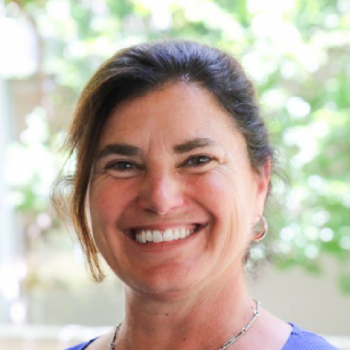
Dr. Jennifer Koch is an Associate Professor at the Laboratory of Geo-information Science and Remote Sensing, part of Wageningen University & Research. Previously, she served as an Associate Professor and Associate Research Director at the University of Oklahoma's Data Institute for Societal Challenges. Her research integrates data-driven methods like simulation modeling to address socio-economic and climate change challenges, focusing on sustainable urbanization and environmental management. Education: She holds a Diplom (Univ.) in Geoecology from the University of Bayreuth and a Dr.-Ing. in Electrical Engineering/Computer Science from the University of Kassel. She teaches courses on geo-information management and data analytics. Research emphasizes multi-scale modeling, stakeholder engagement, and participatory approaches to socio-ecological systems. Recent work explores urban growth in Africa, methane emission monitoring, and renewable energy siting. Articles highlight interdisciplinary methods in GIS, climate policy, and community geography. Professional service includes roles with iEMSs, IALE, and the AAG. No ancillary activities reported. Her work bridges technical geospatial tools with societal challenges, emphasizing practical policy applications.
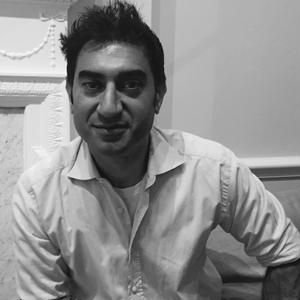
Joseph Kangmennaang is an Assistant Professor and Queen's National Scholar in Black Health & Social Change at Queen's University. He holds a PhD from the University of Waterloo, an MA from Western University, and a B.A. from the University of Ghana. His research focuses on the interplay between environment and wellbeing, particularly in sub-Saharan Africa and among Black immigrant communities in North America. He employs social theories, participatory methods, and mixed approaches to address health disparities, with a focus on non-communicable diseases, food/water security, and the impact of racism and social change. His courses include HLTH 397 (Globalization and Black Health) and HLTH 495 (Racism and Health). Research areas include immigrant health equity, syndemics, and the role of place in healthcare access. Collaborations with marginalized communities emphasize participatory action and civic engagement. He has published extensively on topics such as climate change impacts on health, HIV/AIDS knowledge among women in Malawi, and the social determinants of wellbeing in Ghana. His work bridges global health challenges with localized solutions, addressing systemic inequities through interdisciplinary partnerships. Notably, he explores how structural factors like migration, remittances, and agroecology affect household welfare and food security in Malawi and Ghana. His recent studies highlight the mental health implications of discrimination among minoritized Canadians during the pandemic and the spatial distribution of diseases like cholera in Tanzania. He advocates for community-driven interventions to promote wellbeing in resource-limited settings.
Jesse J. Helton, Ph.D., is an Associate Professor in the School of Social Work at Saint Louis University, where he has been since 2014. His research focuses on child maltreatment, adverse childhood experiences (ACEs), food insecurity, and disability, with notable work published in JAMA Pediatrics , Child Maltreatment , and Preventative Medicine . He holds editorial roles at the Child Maltreatment journal and serves on the Prevention Committee of the American Professional Society on the Abuse of Children. Dr. Helton’s community partnerships address child abuse prevention, food security, and family violence mitigation in collaboration with statewide and local organizations. Education: Ph.D. in Social Work, University of Illinois; M.A. in Social Work, University of New Hampshire. Research Interests: Dr. Helton’s work explores intersections between childhood trauma, socioeconomic factors, and health outcomes. Key themes include the impact of food insecurity on caregiver-child dynamics, disparities in ACEs among marginalized groups, and policy interventions to reduce maltreatment. His studies often employ mixed-methods approaches, combining quantitative data analysis with qualitative insights from affected communities. Awards: Recipient of the 2020 Association of Jesuit Colleges Leadership Institute award, 2018 Outstanding Young Alumni from Eureka College, and a 2014 Innovative Teaching Fellowship from SLU’s Reinert Center. Teaching: Courses include Principles of Statistics and Data Analysis , Research Methods for Diverse Societies , and Science of Helping . He emphasizes evidence-based practices and culturally responsive pedagogy. Labs/Teams: Collaborates with multidisciplinary teams across universities and NGOs, focusing on translational research to inform child welfare policies and community programs.
Malcolm von Schantz is a Professor and Deputy Faculty Pro Vice-Chancellor at Northumbria University, affiliated with the HLS Faculty Management and Administration. Previously, he held leadership roles at the University of Surrey, including Associate Dean (International) and acting Pro-Vice Chancellor (International Relations). He is also an Honorary Professor at the University of the Witwatersrand, South Africa. He holds a PhD in Zoology from an unspecified institution (awarded 10 Dec 1994). His research focuses on human circadian rhythms and sleep, their molecular determinants, and links to physical/mental health. He has secured over £6.4M in research funding from bodies like the MRC, Wellcome Trust, and NIH. Key research areas include sleep architecture, chronotype variability, HIV-related sleep disruptions, and cardiometabolic health correlations. His work has been published in high-impact journals and widely featured in media. He actively participates in international conferences and public outreach, including translating sleep education materials into multiple languages. Notable collaborations include the BioClocks UK initiative and the Baependi Heart Study in Brazil. His recent articles address daylight saving policies, gender-specific sleep-cardiovascular links, and light sensitivity in bipolar disorder. He supervises PhD students and engages in editorial roles across journals. Public impacts include translating educational comics and participating in community health events. His research emphasizes global health equity, particularly in low-resource settings.
Dr. Caroline Murphy is an Associate Professor of Employment Relations and Director of the MSc in HRM at the Department of Work and Employment Studies , Kemmy Business School , University of Limerick . She is also an Associate Research Fellow at the ESRC-funded DIGIT Centre for Digital Futures at Work, focusing on workplace technology and labor rights. PhD in Trade Union Organizing (2011) , University of Limerick Masters in International Tourism , University of Limerick Research Interests span job quality, precarious employment, digital transformation of work, gender equality in labor markets, formal and informal care work, and employee representation. Her work addresses challenges in the long-term care workforce and sustainable work practices. Recent Publications highlight workplace digitalisation in SMEs, gender diversity in governance, and rural employment dynamics. Themes include labor equity, technology integration, and policy analysis. Scientific Awards : Faculty Teaching Development Award (2016) Industrial Relations Research Trust Research Scholar Award (2009) Activities include membership in the Athena Swan Committee and directing the Reconciling Employment and Eldercare Together Research Network. She has collaborated with the International Labour Organisation and Financial Services Union.
Parfait Martial Eloundou-Enyegue is a Professor in the Department of Global Development at Cornell University and serves as Section Head and President of the Recruitment, Tenure and Promotion Committee at Institut National D'Etudes Démographiques (INED, France). He also holds appointments at Cornell's Brooks School of Public Policy and leads the Cornell Institute of African Studies. His work spans demography, sociology, and development economics with a focus on reconciling micro- and macro-level social change analysis. Education : Doctorate and Master's from Pennsylvania State University; Ingenieur Agroeconomiste from University of Dschang (Cameroon) Research Interests center on demographic transitions, global inequality, education-development linkages, fertility-schooling relationships, and decomposition methods for social change. His work examines how population dynamics affect economic development, poverty, and policy in sub-Saharan Africa. Recent Articles explore demographic dividends, micro-macro integration in sociology, and global child inequality trends. Awards include Pennsylvania State University's Distinguished Alumnus (2020), multiple Comparative International Education Society recognitions, and UN-related policy engagements. Scientific Awards : 2020 Pennsylvania State University Distinguished Alumnus, 2018 Cornell CALS Science & Policy Award, 2008 Marilyn Emmons Williams Undergraduate Research Advising Award Teaching includes courses on social indicators, education inequality, and development empirics. He has consulted for UN, World Bank, and USAID, and led large-scale demographic training initiatives across Francophone Africa.
Victoria A. Beard is Professor of City and Regional Planning at Cornell University's College of Architecture, Art, and Planning, where she serves as Director of the Cornell Mui Ho Center for Cities. She is also a Core Faculty member of the Southeast Asia Program and was named a Global Public Voices Fellow (2021-22) for her work on urban poverty and water/sanitation inequality in developing countries. Education: Ph.D. in Community and Regional Planning, University of British Columbia (1999) M.A. in Urban Planning, University of California–Los Angeles (1995) B.A. in Urban Studies and Planning, University of California–San Diego (1992) Beard's research examines how communities in the Global South navigate formal planning systems to address urban poverty through collective action and transnational networks. Her work emphasizes water/sanitation infrastructure as critical sites of inequality, investigating how intermittency and affordability barriers perpetuate urban exclusion. She conducts comparative fieldwork in Southeast Asia (Indonesia, Thailand, Cambodia) and transnational contexts (Oaxaca/Southern California), analyzing how community-based planning can drive city-wide transformation despite institutional constraints. Her recent publications reveal a strategic shift toward infrastructure justice, with increasing focus on municipal service delivery systems and climate resilience. Beard consistently connects micro-level community practices to macro-level policy frameworks, highlighting pathways for inclusive urban development that center marginalized populations' lived experiences. Scientific Awards: Global Public Voices Fellow (2021-22) International Faculty Fellow, Global Cornell (2017) Fulbright Scholar to Indonesia (1993-94) Beard has secured major research funding including CORCL (University of California–Irvine) and Pacific Rim Research Program grants for transnational community planning projects. With 20+ years of practitioner experience, she has designed poverty-alleviation programs for the World Bank, Asian Development Bank, and RAND, specializing in community-based development, monitoring/evaluation systems, and national policy implementation. Her grant portfolio bridges academic research and on-the-ground impact through partnerships with NGOs like Mercy Corps. As Director of the Cornell Mui Ho Center for Cities, Beard leads initiatives focused on climate-resilient urban futures, including symposia on New York City resilience and Kenya's informal housing. She collaborates extensively with Cornell's Southeast Asia Program and Atkinson Center for Sustainable Future, building interdisciplinary teams that integrate planning, public health, and environmental science perspectives.
Sophie Ryan is a Climate and Health Research Fellow at Appalachian State University's Department of Geography and Planning, supported by the National Academy of Sciences. She holds a Ph.D. in Geography (candidate) from the University of North Carolina at Chapel Hill and advanced degrees in Geography from Appalachian State University and the University of Vermont. Education : Ph.D. Candidate in Geography (UNC Chapel Hill), M.A. in Geography (Appalachian State), B.S. in Geography (University of Vermont) Ryan's research integrates medical geography and climate science to explore mental health impacts of extreme weather events. Her work combines spatiotemporal modeling , health data analysis , and disaster response studies , focusing on youth, older adults, and vulnerable populations. Recent projects examine greenspace effects on mental health , compound climate events , and pandemic-related health disparities . Her publications highlight climate-mental health linkages , spatial epidemiology , and social vulnerability in disaster contexts. Articles address topics like heat-stress and mental health , transgender youth post-disaster trauma , and suicide risk disparities during the COVID-19 pandemic. Ryan employs distributed lag models , cluster analysis , and geospatial techniques to assess environmental health impacts. Scientific Awards : NASEM Climate-Health Fellow
Niall Winters is a Visiting Fellow at the University of Oxford's Department of Education, previously serving as Professor of Education and Technology and an Official Fellow. His research focuses on socially-just technology innovations, particularly in healthcare and education, supported by over €7 million in funding. He holds a PhD in Computer Science from Trinity College Dublin. Key roles include co-convenor of the Critical Digital Education Research Group, director of the MSc Education (Digital and Social Change), and mentor to Kellogg students. Prior to Oxford, he was a Reader in Learning Technologies at UCL Institute of Education and Deputy Head of the Department of Culture, Communication and Media. His research integrates global health challenges with digital solutions, emphasizing community health workers' training in low-resource settings. Collaborations include the Global Centre on Healthcare and Urbanisation at Kellogg and projects with UNESCO, WHO, and the NHS. He has held fellowships at institutions like Sciences Po and MIT Media Lab Europe. Publications span mobile health technologies, gamification in medical education, and policy frameworks for digital equity. His work bridges theory and practice, advocating for ethical technology design that addresses systemic inequalities in education and healthcare systems.
Professor Helen Bao is a faculty member in the Department of Land Economy at the University of Cambridge, part of the Faculty of Economics. She holds the position of Professor of Urban Economics & Public Policy and is Director of the Lab of Interdisciplinary Spatial Analysis. Her research focuses on government policies to mitigate market failures in urban settings, behavioral insights in land and housing markets, and sustainable urbanization. She has led major grants, including projects on nudging financial systems in rural China and spatial governance in two countries. Her work bridges economics, policy, and behavioral sciences. Education: PhD in Statistics, City University of Hong Kong (2004) MA in Statistics, Dongbei University of Finance and Economics (2000) BA in Finance, Dongbei University of Finance and Economics (1997) Research Interests: She explores housing affordability, urban policy, behavioral interventions, and land-use efficiency. Recent studies include mitigating racial/gender discrimination in housing markets, micro-mobility adoption, and the political economy of carbon trading. Grants & Projects: Current grants include Royal Society funding for spatial governance and Horizon Europe projects on rural sustainability. Past grants include ESRC-NSFC funding on financial systems in rural China and land use policies in smart cities. Students: Current PhD advisees include He Tang and Yangfanqi Liu, with recent graduates such as Gong Haotong Li. She has supervised over 10 students in topics like carbon emission trading and rural homestead reforms. Labs & Teams: Leads the Lab of Interdisciplinary Spatial Analysis and collaborates internationally, including with institutions in China and the EU. Her work emphasizes cross-disciplinary approaches to urban challenges.
Chinasa T. Okolo is a Research Fellow in the Governance Studies program and Center for Technology Innovation (CTI) at the Brookings Institution. A recent computer science PhD graduate from Cornell University, she focuses on AI governance, data policy, and equity issues in artificial intelligence, particularly as they relate to the Global Majority and Africa. B.A. in Computer Science from Pomona College M.S. in Computer Science from Cornell University Ph.D. in Computer Science from Cornell University Dr. Okolo's research critically examines global equity in AI, with a focus on how African governments can develop robust AI and data governance frameworks. She investigates the geopolitical impacts of AI in the Majority World and analyzes datafication and algorithmic marginalization in Africa. Her work incorporates ethnographic methods to understand how frontline health care workers in rural settings perceive and value AI, with particular emphasis on explainability in AI-enabled technologies deployed throughout the Majority World. She has conducted significant research on the effective adoption of AI in Africa, COVID-19 misinformation spread on social networks within African communities, and the impact of generative AI within Africa. Her recent publications explore cultural encoding of gender bias in language models for African languages, AI safety governance approaches in Southeast Asia, and the impacts of generative AI within Africa. Her work spans the intersection of artificial intelligence, international development, and social justice, with publications at top-tier venues including ACM's CHI, CSCW, COMPASS, EAAMO, and FAccT conferences. Scientific Awards Named one of TIME's top 100 most influential people in AI of 2024 Honored in the inaugural Forbes '30 Under 30' AI list Recognized as one of 100 Brilliant Women in AI Ethics™ Dr. Okolo has received research funding from the Social Science Research Council, MacArthur Foundation, McGovern Foundation, Kapor Center, National GEM Consortium, Oracle Corporation, North American Network Operators' Group (NANOG), National Science Foundation (NSF), and Google. She serves as editor-in-chief of ACM SIGCAS Computers and Society, is a Scientific Advisory Committee member of the Global Index on Responsible AI, and an inaugural member of the Partnership on AI's SAIGE Council. She has contributed to global AI governance efforts including serving as a consulting expert on the African Union AU-AI Continental Strategy, an expert contributing writer to the International AI Safety Report, and a drafting member of the Nigerian Federal Government's National AI Strategy. She also participates in the IEEE Standards Association working group on algorithmic bias and is a member of the ACM US Technology Policy Committee. As founder of Technēculturǎ, Dr. Okolo leads initiatives focused on critically examining global equity in AI. She recently launched the 'AI Safety and the Global Majority' series at Brookings, convening experts from Africa, the Caribbean, Latin America, Oceania, and Southeast Asia to counter Western-centric assumptions in AI safety. She is actively engaged in current policy discussions, with her most recent work including 'AI Safety Governance, The Southeast Asian Way' report and upcoming participation in the AI Safety Asia launch event on August 28, 2025.
Dr. Paige S. Boydston is a Clinical Assistant Professor in the Behavior Analysis and Therapy program at Southern Illinois University. She specializes in applied clinical work and teaching within behavior analysis, focusing on autism intervention across diverse settings. Education: Ph.D. in Psychology (Behavior Analysis and Therapy emphasis, 2020, Southern Illinois University); M.S. in Psychology (Clinical emphasis, Pittsburg State University); B.S. in Psychology (Wichita State University) Dr. Boydston's research addresses critical clinical and social dimensions of behavior analysis: Parent Training : Developing effective caregiver intervention strategies Telehealth : Expanding access to behavioral services in underserved areas Autism Interventions : Adapting early intensive behavioral methods for older children and adolescents Equity Work : Promoting gender equality within the field of behavior analysis
Leila M. Harris is a Professor at the University of British Columbia (UBC), holding dual appointments in the Institute for Resources, Environment and Sustainability (IRES) and the Institute for Gender, Race, Sexuality and Social Justice (GRSJ). She co-directs UBC’s Program on Water Governance and is affiliated with the Department of Geography and the Peter Wall Institute for Advanced Studies. Her work focuses on environmental governance, water equity, and social justice, particularly in marginalized communities across Africa, South Asia, and Turkey. Harris’s research examines the intersection of environmental issues with inequality, gender, and ethnicity. Key projects include analyzing non-material dimensions of water insecurity (emotions, trust, belonging), water governance shifts in South Africa, Brazil, and Canada, and the socio-political impacts of emerging water testing technologies. She has led international research networks like the SSHRC-funded WaTERS program and contributed to policy briefs on water governance in Ghana, South Africa, and British Columbia. Her scholarship bridges feminist political ecology, critical development studies, and postcolonial theory. Recent work explores participatory methods, water justice in Indigenous contexts, and the human right to water. Harris has advised on water policy reforms in Canada and globally, emphasizing equity and marginalized community voices. Education: PhD (Geography), University of British Columbia (2002) Lab/Teams: Program on Water Governance, EDGES Collaborative
Imran Rasul is a Professor of Economics at University College London (UCL) and Director of the ESRC Institute for the Microeconomic Analysis of Public Policy at the Institute for Fiscal Studies (IFS). He co-directs the James M. and Cathleen D. Stone Centre on Wealth Concentration, Inequality, and the Economy at UCL, and is Co-President of the Bureau for Research and Economic Analysis of Development (BREAD). His research focuses on labor economics, development economics, and public policy, with notable contributions to understanding inequality, tax compliance, and field experiments in development. He has held editorial roles at leading journals, including the Review of Economic Studies and the Journal of the European Economic Association. Rasul has received prestigious awards such as the Yrjö Jahnsson Award (2019), IZA Young Labour Economist Prize (2007), and an ERC Starter Grant (2012). He is a Fellow of the British Academy, the Academy of Social Sciences, and the Econometric Society. His work often combines rigorous empirical methods with policy relevance, addressing topics like gender empowerment, youth unemployment, and public service delivery in developing economies. Affiliations: UCL, IFS, BREAD Editorial Roles: Co-editor, Review of Economic Studies (2009-2017); Past Managing Editor, Journal of the European Economic Association (2016-2022) Leadership Roles: President-elect of the Royal Economic Society (2024), Vice-President of the European Economic Association (2024) His research interests span labor market dynamics, development interventions, and the design of effective public policies. He has advised on projects globally, including in Uganda, Nigeria, and Bangladesh, focusing on issues like job creation, tax compliance, and educational equity.
Michelle Fitts is a Senior Research Fellow in the Wellbeing and Preventable Chronic Disease group, focusing on public health research related to Aboriginal and Torres Strait Islander communities, women’s health, and remote healthcare systems. Her work contributes to UN Sustainable Development Goals (SDGs) 3 (Good Health), 5 (Gender Equality), and 8 (Decent Work). Research Interests : Health equity for Indigenous populations Workforce dynamics in remote health services Digital health interventions for substance use Trauma and concussion management Gender-based violence in healthcare contexts Publication Trends : Her recent articles (2024–2025) emphasize qualitative methodologies, workforce retention in Aboriginal-controlled clinics, AI-driven health tools, and trauma-related healthcare disparities. Topics span SDG-aligned areas like chronic disease prevention and gender justice. Network & Collaborations : Collaborates with institutions in Australia’s Northern Territory and Western Australia, focusing on Indigenous health and rural service delivery. Key partnerships include academic teams in public health and emergency medicine.