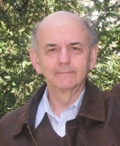
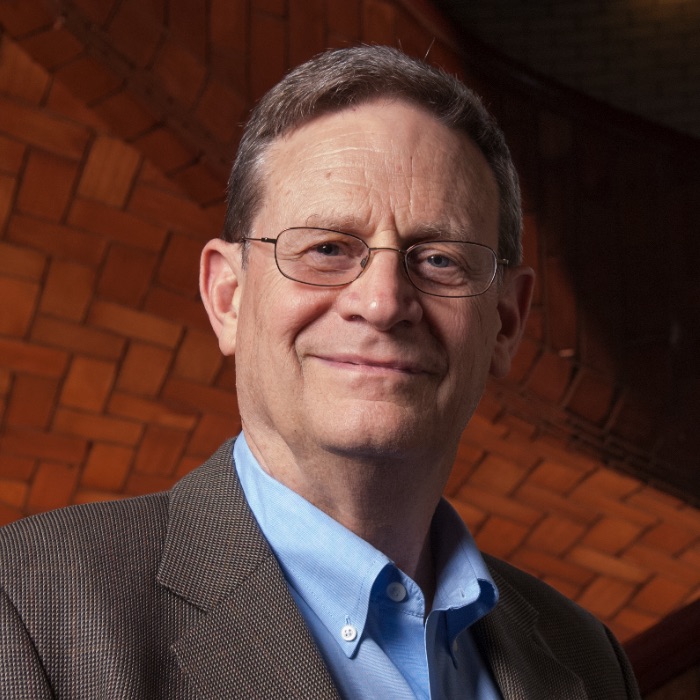
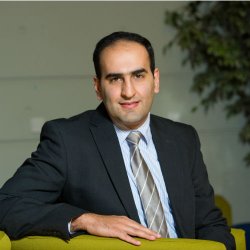
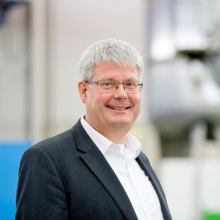
Sumanta Acharya is a Professor in the Department of Mechanical Engineering at Illinois Tech's Armour College of Engineering. His career spans computational methods, experimental fluid mechanics, and combustion, with affiliations including ASME, AIAA, and ASTFE. Ph.D. in Mechanical Engineering, University of Minnesota (1982) M.S. in Mechanical Engineering, University of Minnesota (1980) B.S. in Mechanical Engineering, Indian Institute of Technology (1978) A leading expert in thermal and fluid sciences, Acharya focuses on gas turbine heat transfer, turbulence modeling, and advanced cooling systems. His work integrates Computational Fluid Dynamics (CFD) with experimental validation for applications in biofuels , hydrogen combustion , and phase change materials . Recent publications highlight innovations in Brayton cycle integration, impingement cooling, and aerothermal performance optimization. Awarded by ASME, AIAA, and LSU, his honors include the ASME Heat Transfer Memorial Award (2011) and ASME Fellow (1999). He has contributed to key committees, including the ASME Heat Transfer Division Executive Committee and the Department of Energy's University Turbine Systems Research program. Researcher to Know, Illinois Science & Technology Coalition (2022) ASME Dedicated Service Award (2019) AIAA Thermophysics Award (2015) Contact: sacharya1@illinoistech.edu | Phone: 312.567.3701
Hugo de Lasa is a Full Professor at the Department of Chemical and Biochemical Engineering, Faculty of Engineering, University of Western Ontario. He holds a Bachelor in Chemical Engineering (1968) from Universidad Nacional del Sur, Argentina, and a Doctoral degree (1971) from Université de Nancy, France. Research Focus: Catalysis, Photocatalysis, Chemical Reactor Engineering, Fluidization, Biomass Gasification Awards: Research Excellence Prize (1998), Fellow of the Chemical Institute of Canada (2000), Medal of Research and Development (2000), Doctor Honoris Causa (2004, 2018) His work spans chemical reactor design , photocatalytic hydrogen production , and fluidized bed technologies . Recent publications highlight machine learning applications in chemical equilibrium modeling and CO2 capture using microalgae. He founded the Chemical Reactor Engineering Centre (CREC) and Recat Technologies Inc. , a university spin-off commercializing reactor innovations. Awards include the Vanguard Award (2019) and Commemorative Issue in Catalysts Journal (2020). His research has generated 389 peer-reviewed publications , 14 patents , and over 10,000 citations .
M. Granger Morgan is the Hamerschlag University Professor of Engineering at Carnegie Mellon University , with appointments in the Department of Engineering and Public Policy , Department of Electrical and Computer Engineering , and H. John Heinz III College . He co-directs the NSF Center for Climate and Energy Decision Making and the Electricity Industry Center at CMU. Education: Ph.D., Applied Physics and Information Science, University of California, San Diego (1969) M.S., Astronomy and Space Science, Cornell University (1965) B.A., Physics, Harvard College (1963) His research spans science, technology, and public policy with focus areas in energy systems , climate change mitigation , electric grid resilience , and uncertainty characterization in policy analysis . Recent publications analyze hydrogen market barriers , carbon sequestration timelines , and interdependent energy infrastructure risks . Scientific leadership includes: Member, National Academy of Sciences Member, American Academy of Arts and Sciences Co-chair, NAS Report Review Committee Board member, International Risk Governance Council Foundation Advisory Board, E.ON Energy Research Center, RWTH Aachen DOE Electricity Advisory Committee member Former EPA Science Advisory Board Chair Fellow of AAAS, IEEE, and Society for Risk Analysis Contact: Office 5220 Wean Hall, Phone 412-268-2672, Email granger.morgan@andrew.cmu.edu
Frede Blaabjerg is a Professor at Aalborg University (AAU Energy) , affiliated with the Faculty of Engineering and Science . Since 1998, he has pioneered power electronics research in applications such as wind turbines , photovoltaic (PV) systems , reliability engineering , and Power-2-X technologies. Education : PhD in Electrical Engineering (1995, Aalborg University) Honorary Degrees : Honoris Causa at University Politehnica Timisoara (2017) and Tallinn Technical University (2018) His research focuses on power electronics control , system optimization , and reliability for renewable energy and electric mobility . Recent work includes grid-forming converters , virtual synchronous generators , and smart EV charging systems. Key publication trends span 15+ years , with over 3,733 peer-reviewed articles and 900+ journal papers in power electronics , renewables , and energy storage . Notable book series: Control of Power Electronic Converters and Systems (4 volumes, Elsevier). Scientific Awards : 46 IEEE Prize Paper Awards 2020 IEEE Edison Medal 2019 Global Energy Prize 2014 IEEE William E. Newell Power Electronics Award Leadership Roles : Editor-in-Chief, IEEE Transactions on Power Electronics (2006–2012) Chairman, Danish Council for Research and Innovation Policy (2020–) President, IEEE Power Electronics Society (2019–2020)
Ashwani K. Gupta is a Distinguished University Professor at the University of Maryland, holding the Minta Martin Professorship in Engineering. He serves as Professor in the Department of Mechanical Engineering, Professor at the Institute of Physical Science and Technology, and Affiliate Professor in the Department of Aerospace Engineering. With over 45 years of experience in combustion engineering since graduating from Southampton University in 1970, Gupta has established himself as a leading authority in advanced combustion technologies. Dr. Gupta earned his Ph.D. from the University of Sheffield in 1973, followed by a D.Sc. from the same institution in 1986 and another D.Sc. from Southampton University in 2013. His academic journey includes six years at MIT as a research staff member and three years at Sheffield University as an independent research worker before joining the University of Maryland in 1983. Gupta's research focuses on revolutionizing combustion technology through innovations in swirl flows, high-temperature air combustion (HiTAC), and distributed combustion systems. His pioneering work on 'colorless distributed combustion' has enabled ultra-low emission combustion processes with significant applications in gas turbine engines and waste-to-energy conversion. His research spans biofuels, CO2 utilization, sulfur chemistry, waste conversion, and advanced laser diagnostics, addressing critical challenges in sustainable energy and environmental protection. Analyzing his recent publications reveals a strong emphasis on waste-to-energy conversion, biomass processing, and CO2-assisted technologies. Gupta's work demonstrates a clear trajectory toward sustainable energy solutions, with increasing integration of artificial intelligence for combustion optimization and emission control. His research bridges fundamental combustion science with practical engineering applications for cleaner energy systems. Among Gupta's numerous accolades are: Election to Fellowship of the Royal Academy of Engineering (2023) Honorary Fellowship of the Royal Aeronautical Society (2020) Recognition as one of the top 2% of scientists worldwide by Stanford University (2022-2024) Multiple prestigious medals from ASME and AIAA including the Soichiro Honda Medal (2018) and AIAA Air Breathing Propulsion Award (2014) Honorary doctorates from three international universities Gupta has secured substantial research funding throughout his career, resulting in over 850 technical papers, three books, 18 edited books, and 22 book chapters. He has delivered over 100 plenary/keynote/invited presentations at international conferences. His mentorship has shaped numerous graduate students who continue to contribute to the field of combustion engineering. Gupta directs the Combustion Laboratory at the University of Maryland, which serves as a hub for cutting-edge research in sustainable combustion technologies. The Combustion Laboratory, under Gupta's leadership, has become a center of excellence for advanced combustion research, particularly in distributed combustion systems, waste-to-energy conversion, and alternative fuels. The lab maintains strong collaborations with industry partners and international research institutions, facilitating technology transfer and practical implementation of research findings. Gupta's team employs state-of-the-art diagnostics and computational tools to advance fundamental understanding while developing practical engineering solutions for cleaner energy systems.
James Tinjum is a Professor in the Department of Civil & Environmental Engineering at the University of Wisconsin-Madison, College of Engineering. His interdisciplinary expertise spans geotechnical, geological, environmental, transportation, and sustainable energy engineering. Education PhD 2006, University of Wisconsin-Madison MS 1995, University of Wisconsin-Madison BS 1993, University of Wisconsin-Madison Research Interests Professor Tinjum’s research integrates energy geotechnics with environmental sustainability. He investigates wind energy site design, district-scale geothermal heating/cooling systems, beneficial reuse of industrial byproducts (e.g., coal-combustion residuals, cement kiln dust), life-cycle environmental analysis, and remediation of contaminated sites. Additional focus areas include thermal conduction in unsaturated soils, landfill liner performance, and PFAS management in Wisconsin. Recent Research Directions His 2020–2024 publications reveal a strong emphasis on geothermal system performance , wind-turbine foundation–soil interaction , and emerging contaminant transport (PFAS, chromium). Fiber-optic distributed temperature sensing (FO-DTS) is a recurring enabling technology, applied to both geothermal borefields and landfill covers. Life-cycle assessment methodologies are consistently employed to quantify environmental benefits of renewable energy and waste-reuse strategies. Scientific Awards 2018 Fellow, American Society of Civil Engineers (ASCE) 2003 ASCE Zone III Practitioner Advisor of the Year 2002 ASCE Wisconsin Section Outstanding Young Engineer Teaching & Mentoring Professor Tinjum teaches core geotechnical courses (Soil Mechanics, Foundation Systems) alongside specialized offerings in wind-energy balance-of-plant design and sustainable systems engineering capstone. He supervises numerous master’s and doctoral students through GLE 790/890 research credits each semester. Labs & Teams He directs field-scale instrumentation campaigns at two wind-turbine sites and multiple campus/district geothermal installations, leveraging fiber-optic sensing networks and thermal response testing to advance energy geotechnics.
Dr. Michael J Pekris is a Senior Lecturer in Mechanical Engineering Sciences at the University of Surrey, serving as Director of Employability within the School of Engineering. He holds a MEng and DPhil from the University of Oxford (2004), with a thesis on liquid crystal heat transfer in turbine blade cooling. His career includes R&D roles at Rolls-Royce, focusing on advanced seal technology and engine efficiency. He is a Chartered Engineer (CEng), Fellow of the IMechE (2023), and Fellow of the Higher Education Academy (FHEA). His research spans sustainable aviation, fluid dynamics, and heat transfer, with a focus on brush seals, hydrogen-fueled aircraft, and transcritical CO2 systems. He leads the Surrey Aerothermal Test Facility (SATF) and collaborates on projects like the Surrey Hydrogen Aircraft Performance Evaluator (SHAPE). He also serves as IMechE Academic Liaison Officer and Royal Academy of Engineering Visiting Professor Scheme Champion. Research interests include environmental technologies for aero-engine seals, sustainable aviation (electric/hydrogen), fluid dynamics, thermodynamic cycles, and rotating machinery. His work addresses energy efficiency, waste heat recovery, and low-emission propulsion systems. Notable contributions include Rolls-Royce Innovation Award (2013) and patents on seal technology. He actively engages in professional development initiatives and industry-academia partnerships. Publications emphasize seal dynamics, CFD modeling, and thermal management. Recent work explores hydrogen-fueled aircraft viability and CO2-based power systems. Collaborations involve Rolls-Royce, ASME Turbo Expo, and Surrey’s interdisciplinary engineering teams. His academic roles include teaching Structural Vibrations and Engineering Management, and advising the Professional Training Year module.
Dr. Joshua Brinkerhoff is an Associate Professor in Mechanical Engineering at the University of British Columbia Okanagan Campus. He serves as the Associate Director for Research & Industrial Partnerships in the School of Engineering and leads the UBC-Okanagan Computational Fluid Dynamics Laboratory. His research spans computational fluid dynamics, turbomachinery, multiphase flows, hydrogen safety, wind energy, and biofluid mechanics. He teaches courses in mechanics of materials, alternative energy systems, turbulence, computational fluid dynamics, and aircraft design. PhD, Aerospace Engineering (Carleton University, Ottawa, ON) BEng, Aerospace Engineering (Carleton University) Dr. Brinkerhoff’s research interests include: Computational Fluid Dynamics (CFD) for laminar-to-turbulent transition and instability analysis Wind energy systems and turbine aerodynamics Hydrogen storage and safety protocols for transportation Biofluid mechanics for respiratory diseases and aneurysm modeling Multiphase flows in industrial and environmental contexts His publications focus on CFD simulations for: Aerosol dispersion and mitigation in indoor environments Wind farm interactions and atmospheric gravity waves Cavitation and phase transitions in cryogenic and LNG systems Heat transfer optimization in industrial and thermal systems Instability dynamics in buoyancy-driven and swept flows Turbulent structures in fluidized beds and reactors Dr. Brinkerhoff has no listed scientific awards in the provided data but has extensive contributions to renewable energy, hydrogen safety, and medical fluid dynamics. His laboratory develops open-source tools like TOSCA for large-eddy simulations and investigates practical applications in urban air quality, dental aerosol control, and turbine wake modeling.
Norwegian University of Science And TechnologyNorway
Lars O. Nord is a Professor in the Department of Energy and Process Engineering at NTNU, specializing in thermal energy systems, CO2 capture technologies, and dynamic process modeling. He holds a PhD from NTNU (2010) and a Master's from Virginia Tech (2001). His research focuses on power cycles, turbomachinery optimization, and decarbonization strategies for energy systems. Nord has led projects such as DEXPAND and InnCapPlant, addressing CO2 capture under variable loads and expander efficiency in renewable systems. Current roles: Head of the Thermal Energy research group and teaches courses like Engineering Thermodynamics. Research highlights include thermal energy storage integration, moving bed adsorption processes, and offshore hybrid energy systems. His work spans over 80 publications, emphasizing CO2 capture dynamics, turbine design, and control strategies for flexible power plants. Notable collaborations include SINTEF and Aker Solutions. Nord advises multiple PhD candidates and has mentored alumni now leading roles in industry and academia.
Patrick Phelan is a Professor and Associate Dean of Graduate Programs at the Ira A. Fulton Schools of Engineering, Arizona State University (ASU). He holds additional roles as a Senior Global Futures Scientist and Editor-in-Chief of Frontiers in Energy Efficiency . His research focuses on sustainable energy systems, thermal management, and energy efficiency, with notable contributions to solar energy, thermal transport processes, and industrial cooling technologies. Phelan has extensive administrative experience, including managing the U.S. Department of Energy’s Emerging Technologies Program and the National Science Foundation’s Thermal Transport Processes Program. Education: Postdoctoral Fellow, Tokyo Institute of Technology (1990–1992) Ph.D., Mechanical Engineering, University of California, Berkeley (1990) M.S., Mechanical Engineering, Massachusetts Institute of Technology (1987) B.S., Mechanical Engineering, Tulane University (1985) Research Interests: Thermal engineering and heat transfer Sustainable energy systems and cooling Energy efficiency in buildings and industry Thermogalvanic systems and advanced materials Decarbonization and community benefit strategies Professional Associations: Fellow, American Society of Mechanical Engineers (ASME) Member, American Society of Heating, Refrigerating and Air-Conditioning Engineers (ASHRAE) Current Activities: Leading the ASU Energy Efficiency Center Contributing to the Energy for Rural Arizona initiative Advancing agricultural cold chain efficiency Teaching courses on heat transfer and energy systems (e.g., MAE 589, MAE 576)
Thorsten Koch serves as Head of the Department of Applied Algorithmic Intelligence Methods within the Division of Mathematical Algorithmic Intelligence at Zuse Institute Berlin (ZIB). His research spans mathematical optimization, energy systems modeling, quantum computing applications, and scientometrics. Koch leads significant research projects including FAN (focusing on AI in scholarly communication), UNSEEN (energy scenarios), HPO-NAVI (research software visibility), and Multi-Energy Models for European Energy System Planning. Koch's research interests center on developing advanced optimization algorithms for complex systems, particularly in energy networks and scientific data analysis. His work bridges theoretical mathematics with practical applications in gas network optimization, wind farm design, portfolio management, and quantum computing. He has pioneered methods for large-scale mixed-integer programming, scenario generation, and the integration of machine learning with traditional optimization techniques. His recent publications demonstrate growing emphasis on quantum optimization, scientometrics, and the application of AI to scientific communication infrastructure. His publication trends reveal a strategic expansion from traditional mathematical optimization into quantum computing applications and scientific data infrastructure. Recent work shows increasing collaboration across disciplines - connecting energy systems analysis with financial modeling, integrating machine learning with optimization solvers, and applying computational methods to scientometrics. The 15 most recent articles highlight three major thrusts: quantum optimization (33%), energy systems modeling (27%), and scientific data infrastructure (40%), reflecting his leadership in both theoretical algorithm development and practical implementation for societal challenges. Koch actively contributes to research infrastructure through leadership roles in projects like KOBV (Berlin-Brandenburg Cooperative Library Network), HDC (Humanities Data Centre), and CIB (future library networks). His work on the DeepGreen initiative focuses on establishing legally secure workflows for implementing open-access components in scientific publication licensing agreements, demonstrating his commitment to open science principles and research data management.
Prof. Dr.-Ing. Stephan Staudacher is the Director of the Institute of Aircraft Propulsion at the University of Stuttgart. His work focuses on aircraft propulsion systems, gas turbine performance, and turbomachinery design. He holds a professorship in the Faculty of Mechanical Engineering and Aerospace, leading research in advanced engine technologies, erosion effects, and fault detection algorithms. Research interests include engine reliability, computational fluid dynamics (CFD), and experimental validation of propulsion systems. His publications emphasize topics like neural network applications for fault detection, ice crystal icing simulations, and particle transport in additive manufacturing processes. Recent studies highlight the optimization of composite-cycle engines and assessment of mission severity caused by erosion. Key contributions include advancements in engine condition monitoring, transient performance analysis, and the development of Stuttgart University’s Altitude Test Facility (ATF). His work bridges theoretical models with industrial applications, addressing challenges in both civil and military aviation propulsion systems.
Prof. Dr.-Ing. Arne Pietsch is a faculty member at the Technical University of Luebeck in the Department of Mechanical Engineering and Economics . His expertise centers on apparatus and plant engineering for the food industry , with a focus on hygienic apparatus engineering and high-pressure technology . Specializations: Food process engineering, supercritical fluid applications, and industrial plant design Current role: Founding Officer in the department His research spans supercritical CO2 processes , including decaffeination, turbine cleaning, and polymer impregnation. He integrates high-pressure systems into engineering education and explores viscosity dynamics in food processing. Key publication trends (2012–2019) highlight work in: Supercritical fluid extraction and impregnation High-pressure equipment safety and design Gas-assisted oilseed pressing Coffee processing quality control
Dr Stathis Tingas is a Lecturer at Edinburgh Napier University's School of Computing Engineering and the Built Environment. His research focuses on hydrogen fuel systems, combustion engineering, and sustainable transportation technologies. With numerous publications in high-impact journals and conference proceedings, Dr Tingas has established himself as a significant contributor to the field of alternative energy systems. Dr Tingas' research interests center on hydrogen and ammonia as alternative fuels for transportation, with particular emphasis on combustion characteristics, engine performance, and emissions control. His work spans theoretical modeling, computational analysis, and practical applications for decarbonizing various transportation sectors including aviation, heavy-duty vehicles, and maritime transport. Recent publications demonstrate his focus on hybrid propulsion systems combining fuel cells with traditional engine technologies. Dr Tingas' publication record shows consistent productivity with research outputs spanning from fundamental combustion science to applied engineering solutions. His work often employs computational singular perturbation techniques for analyzing complex combustion phenomena, with recent focus shifting toward practical applications of hydrogen and ammonia fuels in real-world engine systems. The trend in his publications indicates growing emphasis on zero-emission transportation solutions aligned with net-zero targets. Dr Tingas serves as a second supervisor for PhD students, including Richard Wallace who is working on subsurface hydrogen storage simulation. He has successfully secured multiple research grants from UK government bodies including the Department for Science, Innovation & Technology, Scottish Government, and the Royal Society of Edinburgh, with projects totaling over £500,000 in funding. His current research portfolio includes projects focused on accelerating clean energy technology development, creating sustainable cities, advancing electromobility, and developing zero-carbon hydrogen engines for heavy transport applications. These projects demonstrate his commitment to addressing practical challenges in the transition to sustainable energy systems.
Virginia Polytechnic Institute and State UniversityUnited States
Matt Nowinski is a Collegiate Associate Professor in the Department of Mechanical Engineering at Virginia Tech's College of Engineering. His professional roles include advisory board memberships and leadership positions within the department. He holds multiple degrees including a Ph.D. in Mechanical Engineering from ETH Zurich (1999), an M.S. in Computer Science from Syracuse University (2022), and prior mechanical/aerospace engineering degrees from Virginia Tech. His research focuses on asteroid dynamics (particularly D-type and V-type asteroids), gas turbine engines, aeroelasticity, and education technology. Notable areas include lightcurve analysis, surface mineralogy modeling, and machine learning applications in astronomy. His work bridges aerospace engineering with astrophysics, leveraging both experimental and computational methods. Dr. Nowinski has over 24 years of industry experience as a Boeing subject matter expert in military communications systems, complemented by academic roles at George Mason University and University of Chicago. He is a recipient of the John Jones Faculty Fellowship and Society of Distinguished Alumni honor. His research contributions span asteroid characterization, turbine blade flutter mechanisms, and telescope instrumentation. Current work emphasizes observational astronomy through the Stone Edge Observatory and Slack-based collaborative platforms. He actively contributes to advancing STEM education through innovative curricula and research integration.