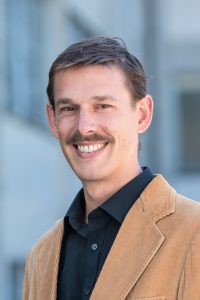
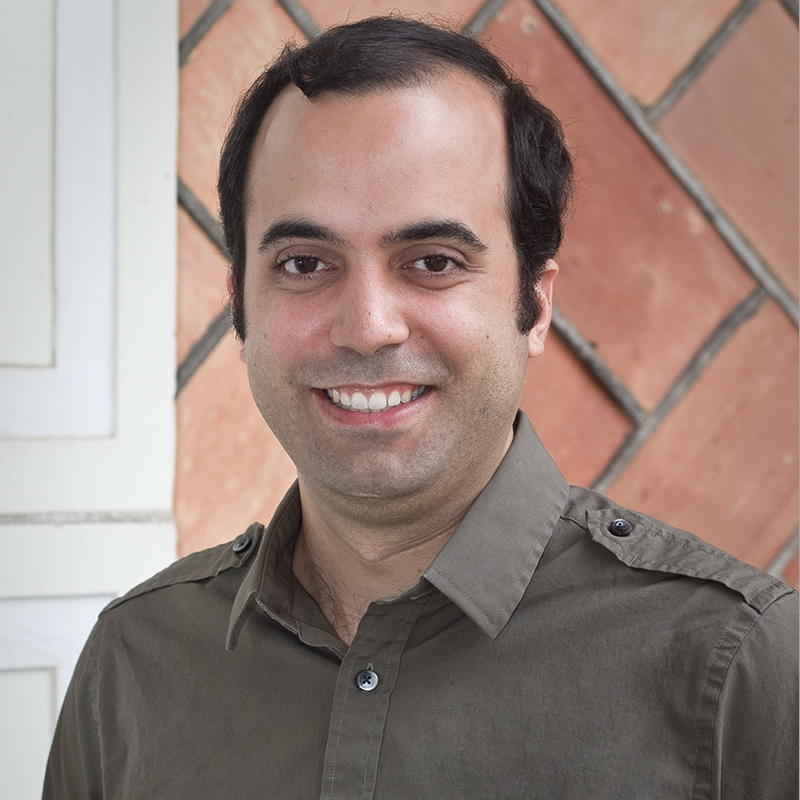
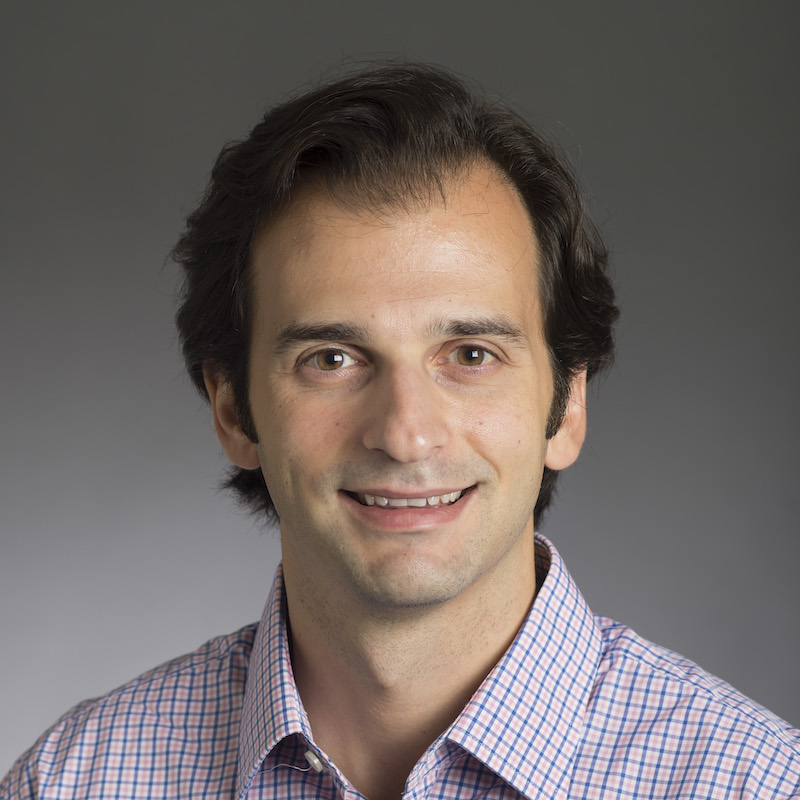
Dr. Alex Bigazzi is an Associate Professor and Associate Head (Undergraduate Program) in the Department of Civil Engineering at the University of British Columbia (UBC), with a joint appointment in the School of Community and Regional Planning. He leads the REACT Lab, focusing on active transportation, micromobility, and sustainable infrastructure design. His research emphasizes the intersection of physics, physiology, and behavior in active travel, particularly for pedestrians and cyclists, and addresses emissions reduction and equitable urban mobility. Bigazzi holds a B.M. in Jazz Saxophone from the University of Miami and a Ph.D. in Civil Engineering from Portland State University. His career includes academic and practical contributions, such as founding the REACT Lab and leading projects on e-bike incentives, air pollution exposure, and infrastructure design. His work has earned awards like the 2024 Wall Legacy Award for inclusive transport design and the 2023 Climate Action Award. He teaches courses on pedestrian/bicycle facility design and capstone projects, mentoring students through UBC’s Civil Engineering programs.
Prof. Gabriela Hug is a Full Professor at ETH Zurich's Department of Information Technology and Electrical Engineering, serving as Deputy Head of the Department and Deputy Head of the Power Systems and High Voltage Lab. She leads the Energy Science Center (ESC) and holds adjunct roles at Carnegie Mellon University. Her research focuses on modeling, control, and optimization of electric power systems for sustainable energy transitions. Education: PhD in Information Technology and Electrical Engineering, ETH Zurich (2004–2008) MSc in Information Technology and Electrical Engineering, ETH Zurich (1999–2004) Research Interests: Her work addresses challenges in smart grid integration, renewable energy systems, and advanced control strategies. Key areas include vehicle-to-grid technologies, distribution network optimization, and energy storage system planning. She emphasizes data-driven approaches and collaborative frameworks for grid resilience and flexibility. Key Achievements: Recipient of the 2019 ALEA Award (ETH Zurich) NSF Career Award (2013) IEEE Outstanding Young Engineer Award (2013) Leadership & Roles: Co-Director, NCCR Automation (Swiss National Centre of Competence in Research) Board Chair, Energy Science Center (ESC) Adjunct Faculty, Carnegie Mellon University Labs & Teams: Power Systems Laboratory (ETH Zurich) Energy Science Center (multi-disciplinary research hub)
Peter A. Raymond is the Oastler Professor of Biogeochemistry at Yale University's School of the Environment and Department of Geology and Geophysics. He serves as Senior Associate Dean of Research & Director of Doctoral Studies and is Co-Director of the Yale Center for Natural Carbon Capture. Raymond leads the Raymond Biogeochemistry Lab, which investigates the biogeochemistry of inland waters, enhanced weathering, methane cycling, and blue carbon systems through cutting-edge field, laboratory, and modeling approaches. Education B.S., Marist College Ph.D., College of William and Mary/Virginia Institute of Marine Science Research Focus Raymond's research fundamentally reshapes our understanding of carbon cycling in aquatic systems, demonstrating that rivers serve as dynamic conduits rather than passive pipes in the global carbon cycle. His work examines how biology and watershed variables alter carbon chemistry in streams, rivers, and estuaries, with particular emphasis on understanding global carbon cycles in relation to climate change. Raymond employs radiocarbon measurements to explore the age and turnover of carbon in aquatic ecosystems, revealing that rivers are variable sources of both old and young terrestrial dissolved organic carbon to oceans. The Raymond Lab is particularly known for developing the Pulse-Shunt Concept, which challenges traditional views of riverine biogeochemistry by emphasizing the episodic and dynamic nature of elemental fluxes. Current research directions include enhanced weathering and alkalinity studies for carbon removal, global greenhouse gas budgets through projects like RECCAP 2, natural methane cycling in aquatic systems, and blue carbon ecosystems such as mangroves and salt marshes. Publication Trends Raymond's recent publications (2023-2025) demonstrate a strong focus on global carbon and methane cycling, with particular attention to inland water systems' role in the Earth's climate system. His work increasingly integrates large-scale datasets with field measurements to understand how climate change and human activities affect greenhouse gas emissions from rivers and streams. A significant portion of his recent work contributes to international efforts like the Global Carbon Project, aiming to refine estimates of global carbon and methane fluxes. His research also shows growing emphasis on carbon removal strategies, particularly enhanced rock weathering through the Earthshot-funded GOAL-A project, and their potential for climate mitigation. Scientific Recognition Fellow of the American Association for the Advancement of Science Member of the Connecticut Academy of Science and Engineering Coastal and Estuarine Research Federations Cronin Award for Young Scientists ISI highly cited author Past Editor and Chief of the American Geophysical Union's journal Global Biogeochemical Cycles Mentorship and Funding Professor Raymond currently mentors four doctoral students (Jon Gewirtzman, Shou-En "Samuel" Tsao, Benjamin Saalidong, and Mingyu Zhang) and masters student Bella Garrioch. His research is supported by multiple grants from the National Science Foundation (NSF), including CAREER awards, and participation in the Earthshot-funded GOAL-A (Global Ocean And Land Alkalinization) project. Raymond has also been involved in significant collaborative projects with USGS data to research how climate and land use change alter carbon export from US watersheds, and with Lamont Doherty to develop methods for measuring air-sea gas exchange of CO2 in rivers and estuaries. Research Infrastructure The Raymond Biogeochemistry Lab at Yale is a dynamic research group comprising research scientists, postdocs, doctoral and masters students, and postgraduate researchers. The lab recently acquired a Mini Carbon Dating System (MICADAS) at Yale, significantly expanding their research capabilities in ecosystem carbon turnover and verification of natural climate solutions. The lab collaborates globally on projects in the Arctic, Hudson River, and middle Atlantic Bight, and is actively involved in the NASA Carbon Monitoring System BlueFlux field campaign to assess carbon exchange in coastal wetlands.
Mario Berges is an Associate Professor in the Department of Civil and Environmental Engineering at Carnegie Mellon University (CMU), with a courtesy appointment in Electrical and Computer Engineering. He holds leadership roles as Co-Director of the IBM Smart Infrastructure Analytics Lab and Director of the Intelligent Infrastructure Research Lab (INFERLab). His work focuses on applying information/communication technologies to enhance the operational efficiency and resilience of built environments amid evolving resource constraints and climate changes. Education: PhD in Civil & Environmental Engineering from CMU (2010). Research Interests: Berges' research integrates smart infrastructure systems, energy efficiency, and machine learning. Key areas include non-intrusive load monitoring (NILM), structural health monitoring of pipelines, building automation systems, and urban heat risk modeling. He develops data-driven frameworks for energy disaggregation, sensor placement optimization, and real-time infrastructure diagnostics. Awards: Recognized with the 2010 FIATECH Outstanding Early Career Researcher Award and 2015 Dean’s Early Career Fellowship from CMU. Grants & Labs: Leads INFERLab, collaborating with IBM on smart infrastructure projects. His work spans academic-industry partnerships focused on building analytics, smart grid technologies, and sensor networks. Future Directions: Expanding research into AI-driven energy systems, resilient urban infrastructure, and cross-disciplinary solutions for climate adaptation.
Albert Presto is a Research Professor in the Department of Mechanical Engineering at Carnegie Mellon University with a courtesy appointment in Civil and Environmental Engineering. He serves as Director of the Center for Atmospheric Particle Studies (CAPS) and is a Faculty Affiliate at the Steinbrenner Institute for Environmental Education and Research. His work spans multiple interdisciplinary collaborations across environmental science, engineering, and public health domains. Department of Mechanical Engineering, College of Engineering Center for Atmospheric Particle Studies (CAPS) Steinbrenner Institute for Environmental Education and Research Africa Clean Air Network Advisory Council Health Effect Institute's Energy Review Committee Presto's research focuses on pollutant emissions from energy extraction and consumption and their subsequent atmospheric transformations. His work examines how gas and oil wells emit methane, how vehicles emit carbon monoxide and particulate matter, and how these pollutants undergo oxidation in the atmosphere to create secondary pollutants like ozone and secondary particulate matter. His approach combines ambient measurements, laboratory experiments, source testing of pollution sources, and atmospheric models to provide a holistic view of pollutant emissions and transformations. His recent publications reveal a strong emphasis on air quality monitoring technologies, particularly low-cost sensor networks deployed internationally. There's a clear trend toward studying air pollution in African cities (especially Nairobi, Kampala, and Addis Ababa), examining spatial and temporal variability of particulate matter, and investigating the health impacts of air pollution exposure. His work increasingly integrates machine learning approaches for pollution forecasting and leverages international collaborations to address global air quality challenges. Member of Africa Clean Air Network Advisory Council Collaborator with US embassies worldwide on air quality data collection Quoted in The Guardian on inequality of air pollution exposure, specifically noting how people of color are more likely to be exposed to harmful air pollution Collaborated on research regarding chemicals released during the Ohio train derailment Presto actively collaborates with medical professionals to develop neighborhood-by-neighborhood studies of pollutant exposure and to understand relationships between emissions and health effects like childhood asthma. His work includes investigating racial-ethnic exposure disparities to airborne pollutants and examining how proximity to pollution sources like fast-food restaurants affects pediatric asthma outcomes. He has received seed funding from the Scott Institute for Energy Innovation for research in clean hydrogen production, AI hardware efficiency, and decarbonizing transportation. As Director of CAPS, Presto leads a research team focused on atmospheric particle studies with applications ranging from local Pittsburgh air quality to global monitoring initiatives. His lab develops and deploys advanced air quality monitoring technologies, including low-cost sensor networks that have been implemented in multiple cities across Africa. The CAPS research group works at the intersection of environmental engineering, atmospheric science, and public health to address critical air quality challenges worldwide.
Gavin McNicol is an Assistant Professor in the Department of Earth and Environmental Sciences at the University of Illinois at Chicago (UIC). His research focuses on soil biogeochemistry and its connection to Earth’s climate system, particularly methane emissions from wetlands, temperate rainforests, and waste systems. He employs field measurements, laboratory experiments, and data science to study greenhouse gas dynamics across scales. McNicol teaches courses on data science (EAES 420) and climate-ecosystem interactions (EAES 579). His work integrates machine learning with satellite remote sensing to monitor global wetland methane emissions. Key collaborations include FLUXNET-CH4, CRMRCN, and the SOIL NGO in Haiti. McNicol holds a BS from the University of Stirling (2010) and a PhD from UC Berkeley (2016). Research interests span wetland methane budgets, carbon cycling in coastal ecosystems, and climate impacts of sanitation systems. He has secured grants from NASA, DOE, and NSF, totaling over $87,000. His team, the McNicol Lab, emphasizes interdisciplinary approaches combining fieldwork, lab analysis, and computational modeling. Recent publications (2023–2025) address global methane upscaling, tropical wetland monitoring gaps, and boreal-Arctic methane feedbacks. McNicol’s work bridges local measurements to global climate models, with applications in climate change mitigation and sustainable development.
Peter K. Kitanidis is a Professor in the Department of Civil and Environmental Engineering and the Institute for Computational and Mathematical Engineering at Stanford University . His research focuses on groundwater flow , hydrologic forecasting , and stochastic inverse modeling , with applications to pollutant remediation and CO₂ storage monitoring . Education : Diploma, National Technical University of Athens (1974) M.S., MIT (1976) Ph.D., MIT (1978) Research Interests : Groundwater modeling and contaminant transport Hydraulic tomography and aquifer characterization Stochastic methods for uncertainty quantification Bioremediation and enhanced in-situ pollutant decay Dilution and mixing processes in heterogeneous media Real-time river flow forecasting Scientific Awards : L.G. Straub Award (1979) W.L. Huber Research Prize (1994) ISI Highly Cited Researcher (2001) AGU Hydrologic Sciences Award (2011) ASCE Pioneers in Groundwater Lecturer (2011) Advising and Grants : Advised 20+ PhD and MS students (1978–2018) Principal investigator on NSF, EPA, and DOE-funded projects Developed software for groundwater data analysis and CO₂ monitoring Contributed to bioremediation protocols and hydraulic tomography algorithms Labs and Teams : Kitanidis Laboratory for groundwater crisis solutions Collaborated with Oak Ridge National Laboratory and Stanford Hydrogeology Group Mentored postdocs (2000–2017) in reactive transport and inverse modeling
Prof. Dr. Stefanie Hellweg serves as a Full Professor for Ecological Systems Design at the ETH Zürich , Department of Civil, Environmental and Geomatic Engineering. She is Deputy Head of the Institute of Environmental Engineering and leads groundbreaking research at the intersection of industrial ecology, life cycle assessment, and circular economy systems. PhD in Environmental Engineering (ETH Zürich, 2000) Industrial Engineering Degree (Karlsruhe University, 1996) Her research develops advanced methodologies for environmental impact assessment of products and technologies, focusing on: Life Cycle Assessment (LCA) with correlated uncertainty modeling Circular economy implementation in chemical and energy sectors Industrial symbiosis optimization for heat and nutrient flows Urban wastewater systems redesign for resource recovery Chemical pollution analysis in plastic materials Key publication trends reveal expertise in: Hybrid wastewater treatment systems Energy-efficient greenhouse cultivation Exergy analysis for sustainability metrics Machine learning applications in environmental modeling Policy-relevant industrial ecology studies She actively participates in global sustainability initiatives as: President of the International Society of Industrial Ecology (ISIE) Member of UN Environment's International Resource Panel Editorial board member for leading environmental journals
Craig Carter is the John G. and Barbara A. Bebbling Professor of Supply Chain Management at Arizona State University’s Department of Supply Chain Management. He holds the Harold E. Fearon Fellow of Purchasing Management title. His research focuses on sustainable supply chain management, ethical buyer-supplier relationships, environmental supply chain practices, and diversity sourcing. He has advised on over 100 Fortune 1000 firms globally and served as an editor for multiple journals, including the Journal of Supply Chain Management and Decision Sciences Journal. Education: Ph.D. in Business from Arizona State University (1996), B.S. in Business from the University of Maryland (1990). His industry experience includes roles at Ryder Systems and the U.S. Department of Transportation. Research emphasizes unintended consequences of sustainability initiatives, behavioral decision-making in supply chains, and supply chain leakage of greenhouse gas emissions. His work bridges theoretical frameworks (e.g., configurational approaches) with practical applications, such as mitigating supply risk and enhancing collaboration. Recent publications explore topics like honesty contagion in negotiations and informal exchanges impacting sourcing collaboration. He has been recognized for editorial contributions and has been actively involved in shaping supply chain management’s academic trajectory through thought leadership. Courses taught include Strategic Procurement, Global Supply Operations, and seminars on supply chain theory. His work often integrates empirical research with real-world case studies, emphasizing actionable insights for practitioners.
Assoc Prof Ng Teng Yong is an Associate Professor at the School of Mechanical & Aerospace Engineering (NTU), specializing in numerical modeling and simulation. With a background as Research Manager at A*STAR Institute of High Performance Computing, his work spans materials science, nanotechnology, and aerospace engineering. Current focus on graphene-based desalination membranes Expertise in molecular dynamics simulations Investigates nanoscale fluid mechanics and structural dynamics Recent publications highlight advancements in energy-efficient electrodialysis, smart robotics, and nonlinear vibration analysis. His interdisciplinary approach integrates computational methods with experimental validation in additive manufacturing and soft material mechanics.
Dr. Amir Hakami is a Professor in the Department of Civil & Environmental Engineering at Carleton University , where he leads the Carleton Atmospheric Modelling Group . His research focuses on advanced air quality modeling techniques to inform environmental policy. Degrees: B.Sc. (Polytechnic of Tehran), M.Sc., Ph.D. (Georgia Tech), Postdoc (Caltech) Contact: Office 3454 Mackenzie Building, Phone: 613-520-2600 ext. 8609, Email: amir.hakami@carleton.ca Research Interests: Air quality modeling at multiple spatial scales Adjoint sensitivity analysis for atmospheric response Inverse modeling and data assimilation techniques Uncertainty quantification in environmental systems Interdisciplinary applications in policy, public health, and economics Teaching: Courses include Environmental Engineering Systems Modeling , Contaminant Transport , and Air Pollution & Emissions Control at undergraduate and graduate levels. Research Group: The group includes Ph.D. candidates, postdoctoral fellows, and alumni working on topics ranging from atmospheric chemistry to sustainable energy systems. Members come from diverse backgrounds in engineering, science, and policy disciplines.
Xavier Brusset is a Professor in Supply Chain at SKEMA Business School since 2016, where he also serves as Director of the PRISM Research Center since 2017. Previously, he held professorial positions at Toulouse Business School (2015-2016) and ESSCA School of Management (2009-2015), where he was responsible for the Master 2 in Purchasing and Supply Chain Management program. His academic journey includes a PhD in Management Sciences from Université Catholique de Louvain (2010) and a Habilitation à Diriger des Recherches from Université Paris Ouest Nanterre La Défense (2016). His research spans multiple critical areas in supply chain management, with particular focus on supply chain resilience, blockchain applications, weather risk management, and pandemic impacts on supply chains. Brusset has developed innovative approaches to understanding how supply chain partners interact, how information affects their behavior, and how external disruptions like weather anomalies and pandemics impact operational efficiency. His work bridges theoretical models with practical applications, often developing decision-support tools for managers facing complex supply chain challenges. Brusset's publication record shows a clear evolution of research interests, beginning with foundational work on supply chain contracts and information sharing, then expanding to weather risk management, and most recently focusing on pandemic disruptions and blockchain applications. His 15 most recent publications (2018-2025) demonstrate increasing sophistication in modeling complex supply chain phenomena, with particular emphasis on network effects, ripple effects, and multi-echelon optimization under disruption scenarios. Editorial board member of Logistics Research Editor of International Journal of Retail and Distribution Management (2022-2023) Recognized EU expert for CINEA research projects evaluation Organizer of the Colloquium on European Research in Retailing (CERR) Reviewer for multiple top journals including International Journal of Production Economics As an advisor, Brusset has supervised doctoral students including R. Alkhudary (co-director, Université Paris 2 Panthéon-Assas) and V. Capocasale (rapporteur). His professional experience extends beyond academia to include industry roles in financial markets and logistics technology, having co-founded WebLogistix, a platform for sharing logistics information in Argentina. His research has practical applications across multiple sectors, particularly in retail, food supply chains, and manufacturing, where he develops tools to help managers mitigate risks and optimize operations under uncertainty.
James Tinjum is a Professor in the Department of Civil & Environmental Engineering at the University of Wisconsin-Madison, College of Engineering. His interdisciplinary expertise spans geotechnical, geological, environmental, transportation, and sustainable energy engineering. Education PhD 2006, University of Wisconsin-Madison MS 1995, University of Wisconsin-Madison BS 1993, University of Wisconsin-Madison Research Interests Professor Tinjum’s research integrates energy geotechnics with environmental sustainability. He investigates wind energy site design, district-scale geothermal heating/cooling systems, beneficial reuse of industrial byproducts (e.g., coal-combustion residuals, cement kiln dust), life-cycle environmental analysis, and remediation of contaminated sites. Additional focus areas include thermal conduction in unsaturated soils, landfill liner performance, and PFAS management in Wisconsin. Recent Research Directions His 2020–2024 publications reveal a strong emphasis on geothermal system performance , wind-turbine foundation–soil interaction , and emerging contaminant transport (PFAS, chromium). Fiber-optic distributed temperature sensing (FO-DTS) is a recurring enabling technology, applied to both geothermal borefields and landfill covers. Life-cycle assessment methodologies are consistently employed to quantify environmental benefits of renewable energy and waste-reuse strategies. Scientific Awards 2018 Fellow, American Society of Civil Engineers (ASCE) 2003 ASCE Zone III Practitioner Advisor of the Year 2002 ASCE Wisconsin Section Outstanding Young Engineer Teaching & Mentoring Professor Tinjum teaches core geotechnical courses (Soil Mechanics, Foundation Systems) alongside specialized offerings in wind-energy balance-of-plant design and sustainable systems engineering capstone. He supervises numerous master’s and doctoral students through GLE 790/890 research credits each semester. Labs & Teams He directs field-scale instrumentation campaigns at two wind-turbine sites and multiple campus/district geothermal installations, leveraging fiber-optic sensing networks and thermal response testing to advance energy geotechnics.
Prof. Dr. Evi Hartmann holds the Chair of Business Administration, especially Supply Chain Management at Friedrich-Alexander University Erlangen-Nuremberg (FAU) within the Department of Business, Economics, and Social Sciences. She is actively involved in multiple research focus areas including sustainability, energy markets and energy system analysis, and insurance and risk. Her academic leadership extends across interdisciplinary collaborations with engineering, mathematics, and industry partners. Dr. Hartmann studied industrial engineering at the University of Karlsruhe (TH), received her doctorate in 2002 from the Institute of Technology and Management at the Technical University of Berlin, and completed her habilitation in business administration in 2008. Prior to her academic career, she worked as a consultant at AT Kearney from 1998 to 2005, followed by a junior professorship for 'Purchasing and Supply Management' at the Supply Chain Management Institute at the European Business School. Her research program focuses on supply chain management, purchasing, and strategic foresight, with particular emphasis on application-oriented approaches that bridge theory and practice. Current research trajectories include supply chain resilience in crisis situations (including pandemic response), digital transformation through Industry 4.0 technologies, sustainable and low-carbon supply chains, and the integration of strategic foresight methodologies in logistics decision-making. Her work frequently employs Delphi studies, bibliometric analyses, and multi-tier case studies to examine complex supply chain phenomena. Analysis of her recent publications reveals a strong trend toward interdisciplinary research that combines supply chain management with digital transformation, sustainability, and crisis response. Her work increasingly examines the intersection of technology adoption (particularly Industry 4.0), organizational culture, and supply chain resilience across multiple industries including automotive, food, and maritime logistics. Prof. Hartmann is recognized as the author of two academic bestsellers in her field, though specific awards are not detailed in available materials. Her research has been published in top-tier journals including IEEE Transactions on Engineering Management, International Journal of Production Research, and Journal of Cleaner Production. Her research program demonstrates extensive industry collaboration, with numerous projects involving real-world implementations and close partnerships with companies. She leads research initiatives examining the practical implications of digital transformation, sustainability challenges, and resilience strategies in supply chain operations. Current projects include studies on digital ecosystems, physical internet applications, and the future of freight forwarding technologies. Prof. Hartmann participates in several research networks including the Energy Campus Nuremberg (EnCN) and collaborates with the Department of Mathematics on gas networks and markets research. She is also involved with the Nuremberg Energy Region (Energieregion Nürnberg eV) and contributes to interdisciplinary research centers focused on sustainable development and digital transformation in supply chains.
Dr. Kristin A. Persson is a Professor and Daniel M. Tellep Distinguished Professor in Engineering at the University of California, Berkeley's Department of Materials Science and Engineering. She leads the Persson Group at Lawrence Berkeley National Laboratory (LBNL), focusing on atomistic computational methods for energy materials. As director of the Materials Project, she pioneers high-throughput computing and data-driven approaches to accelerate material discovery for clean energy applications, including batteries, electrolytes, and photocatalysts. Her research spans lithium-ion and multivalent batteries, with a focus on electrolyte design, interfacial chemistry, and sustainable materials. Persson has directed the Materials Project since its inception, a global initiative to computationally predict material properties and provide open-access data. She holds affiliations with LBNL’s Energy Sciences Area and collaborates with industry and academia on projects like the Electrolyte Genome and piezoelectric materials databases. Key achievements include election to the National Academy of Engineering (2025), Royal Swedish Academy of Sciences (2024), and Fellowships from the AAAS (2022) and APS (2021). Her group’s work has produced over 200 publications, with recent highlights on disordered cathodes, ML-driven material predictions, and circular polymers. Persson advises a dynamic team of ~50 graduate students, postdocs, and staff, fostering interdisciplinary innovation in energy storage and materials informatics. Awards include DOE’s Distinguished Scientist Fellowship (2024), Cyril Stanley Smith Award (2022), and Web of Science Highly Cited Researcher recognition (2020). Her lab’s infrastructure supports projects from computational workflows to experimental collaborations, with a focus on translating theory into real-world energy solutions.