Aniket Ambekar is a Research Fellow at the Department of Chemical Engineering and Chemistry, Eindhoven University of Technology. His research focuses on multiphase flow dynamics in porous media, with expertise in computational fluid dynamics (CFD) and experimental validation techniques. He holds a PhD in Chemical Engineering from the Indian Institute of Technology Delhi (2022), an MSc in Computational Fluid Dynamics from National Institute of Technology (2016), and a BSc in Chemical Technology from the University of Pune (2013). Research interests include packed bed hydrodynamics, gas-liquid flow mechanisms, and the role of wettability in two-phase systems. His work combines high-resolution simulations (e.g., volume-of-fluid method) with experimental measurements to study flow regimes, interfacial dynamics, and phase distribution. Notable contributions address perforation effects in structured packings, particle aspect ratio impacts, and monolith gas-liquid interactions. He has received prestigious awards including the Marie Skłodowska-Curie postdoctoral fellowship (2022) and the Outstanding Ph.D. Thesis Award (2024). Collaborations span European institutions, focusing on energy-efficient separation processes and reactor design optimization.
Falah Alobaid is a Full Professor (Tenured) at LUT School of Energy Systems, LUT University, specializing in energy systems engineering. He holds a Ph.D. from the Technical University of Darmstadt (2013), recognized with the university's Energy Special Prize (2014), and completed habilitation in Energy Systems (2018) with the title of Privatdozent (2019). His research focuses on power plant technologies, including combustion, gasification, and CO₂ capture, with expertise in modeling, simulation, and pilot-scale experimentation. Education: Ph.D. (Energy Systems), Technical University of Darmstadt, Germany (2013) Habilitation (Energy Systems), Technical University of Darmstadt, Germany (2018) Research interests emphasize sustainable energy solutions: Fluidized bed combustion and gasification CO₂ capture and storage technologies Renewable energy integration Process simulation and dynamic modeling of power systems Thermal energy storage systems His work bridges experimental and computational approaches, with contributions to EU projects such as SCARLET and OptiMaDyn. Publications reflect advancements in fluidized bed systems, CFD-DEM modeling, and operational flexibility of thermal power plants. Recent trends include integrating artificial intelligence for process optimization and exploring novel materials for carbon capture. Awards include the Energy Special Prize (2014) and recognition for his habilitation work. He leads the Institute of Energy Systems and Technology research group, focusing on bioenergy, waste-to-energy systems, and low-carbon technologies. Grants and collaborations span EU-funded initiatives and national projects. Advising focuses on graduate students in energy systems, though no specific names are listed. Laboratory work includes managing the Institute of Energy Systems and Technology, where experimental setups for fluidized beds and solar thermal systems are developed. Future research targets net-negative CO₂ emissions via chemical looping gasification and enhanced renewable energy storage.
Arturo Macchi is a Professor in the Department of Chemical and Biological Engineering at the University of Ottawa, Faculty of Engineering. He holds a Ph.D. from the University of British Columbia, and MASc and B.Eng. degrees from the École Polytechnique de Montréal. His research focuses on multiphase reactor engineering, particularly fluidized bed systems, gas hydrates, microreactors, and CO₂ capture technologies. Collaborations include institutions like CanmetEnergy-Ottawa, NRC-ICPCE, and industry partners such as Syncrude Canada Ltd. and Lonza Inc. Key research areas include high-pressure multiphase reactors, CO₂ capture via dual fluidized beds, and microreactor design for pharmaceutical applications. His work integrates computational fluid dynamics (CFD) modeling with experimental validation to address challenges in energy efficiency, process intensification, and sustainable energy storage. Recent projects explore calcium looping processes for thermochemical storage and oxy-fuel combustion technologies. Publications highlight advancements in fluidization dynamics, bubble column hydrodynamics, and scale-up methodologies for industrial hydroprocessors. His contributions span both fundamental and applied research, bridging academic insights with industrial applications in petrochemical, environmental, and pharmaceutical sectors.
Prof. Uner Colak is a Professor at Istanbul Technical University's Energy Institute, specializing in nuclear reactor engineering, computational fluid dynamics, and thermal hydraulics. His research focuses on high-temperature reactors, neutron flux analysis, and reactor safety. He has led numerous projects on nuclear fuel management, hydrogen production, and energy systems optimization. Colak has received the TÜBA Scientific Copyright and Translated Works Awards Program (TEÇEP) in 2015. His work spans reactor core design, neutron transport analysis, and droplet dynamics, with over 49 publications and 12 projects since 2001. Research interests include nuclear reactor core physics, computational modeling for reactor safety, and advanced energy systems. His recent work involves validating reactor analysis codes, optimizing load dispatch algorithms, and investigating droplet-surface interactions for heat transfer applications. Projects include developing pebble flow dynamics for high-temperature reactors and assessing nuclear power localization strategies. His articles highlight contributions to reactor physics, fluid dynamics, and energy policy. Current activities include active projects on hydrogen technologies and sustainable energy solutions until 2027. Colak collaborates internationally, contributing to global nuclear energy advancements and training future researchers through ongoing theses supervision.
Xiaotao Bi is a Professor in the Department of Chemical and Biological Engineering at the Faculty of Applied Science, University of British Columbia. He is a Fellow of The Canadian Academy of Engineering, recognized for his significant contributions to the field of chemical engineering, particularly in biomass energy systems and environmental technologies. Dr. Bi's research focuses on developing environmental systems analysis and life cycle assessment tools to model and evaluate biomass energy systems. His work encompasses Canadian wood pellets, animal wastes, agricultural residues, and integrated impacts assessment of various biomass conversion processes including combustion, gasification, torrefaction, and pelletization. Current research interests include electrostatic charging of dielectric particles in gas-solids fluidized beds, dual fluidized bed for biomass steam gasification, and novel i-CFB reactors for catalytic NOx reduction. His extensive publication record demonstrates expertise across multiple domains of sustainable energy and environmental engineering. Recent work shows a strong emphasis on biomass conversion technologies, particularly microwave-assisted processes, fluidized bed systems, and waste valorization. There's a clear trend toward developing more efficient and environmentally friendly processes for converting various biomass feedstocks into energy and valuable products, with particular attention to addressing technical challenges like tar formation in gasification and electrostatic issues in particle handling. Dr. Bi has been recognized with the prestigious honor of being named a Fellow of The Canadian Academy of Engineering, which acknowledges his significant contributions to engineering research and practice in Canada. As a research leader, Dr. Bi has supervised numerous graduate students and secured funding for his research team to investigate innovative approaches to biomass conversion and environmental engineering challenges. His work bridges fundamental research with practical applications for sustainable energy systems. Dr. Bi leads a research team focused on developing advanced technologies for biomass conversion and environmental protection. His laboratory facilities likely include specialized equipment for fluidized bed operations, biomass processing, and analytical tools for characterizing biofuels and byproducts.
Markus Schubert is Professor of Process Engineering at Dresden University of Technology's Faculty of Mechanical Science and Engineering, appointed in September 2022. Previously, he served as Group Leader for Fluid Process Engineering at Helmholtz-Zentrum Dresden-Rossendorf's Institute of Fluid Dynamics (2017-2022) and led the 'Mehrphasenreaktoren' group (2012-2016). His academic background includes: Doctorate (summa cum laude) in Mechanical Science and Engineering, Technische Universität Dresden (2007) Studies in Process Technology and Engineering, Technische Universität Dresden (1997-2003) Professor Schubert's research centers on multiphase flow phenomena and reactor innovation, with expertise spanning bubble column hydrodynamics, distillation tray efficiency, and advanced reactor systems including rotating and foam-based designs. His experimental and computational work addresses mass transfer optimization and flow pattern characterization in complex industrial processes. Analysis of his 2009-2023 publications reveals consistent focus on multiphase flow visualization and reactor design, particularly using X-ray tomography (ERC XFLOW project) and CFD modeling for distillation and bubble column systems. Key trends include the integration of advanced imaging techniques with process optimization for separation efficiency. His scientific recognition includes: ERC Grant for XFLOW project (Ultrafast X-ray tomography of turbulent bubble flows, 2013-2016) Professor Schubert has secured competitive research funding including the ERC grant and led international collaborations at institutions like Université Laval and UNSW. His work bridges fundamental hydrodynamics with industrial applications in chemical and process engineering. He currently leads process engineering research at TU Dresden, building on his leadership of the Fluid Process Engineering group at HZDR where he directed experimental facilities for multiphase flow characterization and reactor development.
Dr. Zak Mansouri serves as a Senior Lecturer in Aerospace Engineering at Nottingham Trent University's School of Science & Technology, where he acts as Course Director for Aerospace Engineering and leads the Development and Diagnostic of Alternative Fuels (DDAF) Laboratory. A core member of the Imaging, Materials and Engineering Research Centre (IMEC), he oversees critical engineering modules including Solid Mechanics & Dynamics and Advanced Dynamics & Vibration as Module Leader, shaping curriculum for undergraduate and postgraduate aerospace programs. His academic foundation includes a PhD from Algeria's University of Laghouat (2016), doctoral research at France's CNRS, and postdoctoral work at the French Alternative Energies and Atomic Energy Commission. Key milestones: PhD in Combustion Engineering, University of Laghouat (2016) Doctoral Researcher, CNRS France (2013-2016) Postdoctoral Researcher, CEA France (2016-2017) Mansouri's research pioneers net-zero combustion technologies, with current focus on iron fuel systems (funded by The Royal Society), hydrogen combustion dynamics, and aerothermal optimization of gas turbines. His expertise bridges experimental diagnostics and computational fluid dynamics to address combustor-turbine interactions in next-generation aero engines, directly supporting global decarbonization efforts in aerospace and energy sectors through industry-academic partnerships. Analysis of his 2021-2025 publications reveals a cohesive research trajectory centered on turbine performance under non-ideal conditions, with growing emphasis on alternative fuels. His work consistently targets aerothermal challenges in gas turbines—particularly hot-streak and swirl effects—while expanding into micro-combustion systems for hydrogen and metal powders, demonstrating a strategic shift toward scalable net-zero propulsion solutions. His scientific recognition includes: ANR Research Fellowship (2017) for low-carbon combustion technology (€50,000) Mansouri secures competitive funding from The Royal Society and previously from French National Research Agency, with industrial consultancy contributions to €2.5M projects at GE Renewable Energy modernizing hydropower infrastructure. He actively supervises PhD candidates through NTU's Doctoral School, prioritizing projects in sustainable combustion and turbomachinery, and maintains open collaboration channels for industrial R&D partnerships. He directs the DDAF Laboratory's experimental research on alternative fuel diagnostics and leverages IMEC's multidisciplinary facilities for thermal-fluid investigations. His global network integrates industrial partners (Lanemark, ArcelorMittal, TSI) with academic institutions across France and Algeria, driving innovation in turbine cooling systems and zero-emission combustion through shared expertise in computational modeling and experimental validation.
Joseph Meadows is an Associate Professor in the Department of Mechanical Engineering at Virginia Tech's College of Engineering. His research focuses on combustion, heat transfer, and computational fluid dynamics, with applications in rotating detonation engines and thermoacoustic instability mitigation. He leads the Advanced Propulsion and Power Laboratory. Education: Ph.D., M.S., and B.S. in Mechanical Engineering from the University of Alabama and University of Memphis. Professional History: Associate Professor since 2025, Assistant Professor (2017–2025), and Combustion Design Engineer at Siemens Energy Inc. (2014–2017). His work bridges experimental and computational domains, emphasizing dynamic injector response , fuel inhomogeneity , and mesoscale wood combustion modeling . Recent publications highlight 2D/3D CFD comparisons and acoustic diagnostics in high-temperature environments. While no explicit awards are listed, his research impacts gas turbine design and clean energy systems.
Sara Barsotti is a researcher at the National Institute of Geophysics and Volcanology (INGV) specializing in volcanology and volcanic hazard assessment. Her key roles include: Associate Editor for Volcanology at Frontiers in Earth Science Review Editor for Geohazards and Georisks at Frontiers in Earth Science Contributor to the EU Center of Excellence for Exascale in Solid Earth (ChEESE) Member of the EUROVOLC citizen-science initiative Collaborator with European volcano observatories Her research focuses on computational geophysics, volcanic hazard modeling, and operational monitoring systems. She investigates tephra dispersion dynamics, lava flow behavior, and probabilistic hazard assessment using high-performance computing. Her work emphasizes European volcanic systems—particularly Icelandic eruptions—and integrates multidisciplinary approaches to improve crisis management protocols and public safety during volcanic events. Analysis of her recent publications reveals a strong trend toward operationalizing advanced computational methods for real-time hazard assessment. Key developments include exascale computing applications for solid earth simulations, refinement of the Aviation Colour Code system for aviation safety, and citizen-science data integration for eruption monitoring. These efforts consistently target practical risk mitigation strategies during active volcanic crises like the 2021 Fagradalsfjall eruption. Scientific awards: None mentioned in the provided text. While specific advised students or individual grants aren't documented, her leadership in major European projects (ChEESE, EUROVOLC) demonstrates substantial involvement in funded research initiatives. These projects coordinate transnational collaborations involving observatories, research centers, and emergency management agencies across Europe. Barsotti actively participates in integrated European volcano infrastructure teams, contributing to standardized monitoring protocols, hazard communication frameworks, and crisis response systems. Her work bridges institutional observatories (e.g., Icelandic Meteorological Office, INGV sections) with community-based monitoring tools, enhancing data collection and public engagement during volcanic unrest.
Dr. Amneet Bhalla serves as an Associate Professor in the Department of Mechanical Engineering within the College of Engineering at San Diego State University (SDSU). His primary contact email is asbhalla@sdsu.edu, with office located in Engineering Building Room 323-G, and phone number (619) 594-2043. Education: Ph.D., Mechanical Engineering, Northwestern University (2013) M.S., Mechanical Engineering, Indian Institute of Technology Kharagpur (2009) B.S., Mechanical Engineering, Indian Institute of Technology Kharagpur (2004-2008) Postdoctoral Training: University of North Carolina at Chapel Hill (Mathematics Department) and Lawrence Berkeley National Laboratory (Computational Research Division) Research Interests: Dr. Bhalla develops advanced numerical methods and high-performance computing techniques for computational fluid dynamics (CFD) and fluid-structure interaction (FSI) problems. His work spans aquatic locomotion, renewable energy device modeling, multiphase flows, vehicular aerodynamics, and bioengineering applications. He creates mathematical models to interrogate underlying flow physics for engineering design optimization, with emphasis on open-source software development through the IBAMR library. Publication Trends: Recent publications (2023-2025) focus on robust numerical frameworks for multiphase flows with phase change, acoustic streaming, and fluid-structure interaction. Key themes include mass conservation in level set methods, adaptive mesh refinement, and solvers for non-isothermal gas-liquid-solid systems. Applications range from aquatic locomotion and renewable energy devices to microfluidics and biomedical flows, demonstrating commitment to both theoretical advances and practical engineering solutions. Scientific Awards: No awards mentioned in the provided text Advising and Grants: Dr. Bhalla secured an NSF CAREER award (2023) for "Consistent Continuum Formulation and Robust Numerical Modeling of Non-Isothermal Phase Changing Multiphase Flows". As PI of the CFD Lab, he mentors graduate students in computational mechanics, leveraging prior industrial experience at ExxonMobil Upstream Research Company. His research integrates industrial practicality with academic rigor through collaborations with national laboratories. Laboratory and Team: The Computational Fluid Dynamics and Flow Physics Laboratory (CFD Lab) develops the open-source IBAMR software—a distributed-memory parallel implementation of the immersed boundary method with adaptive mesh refinement. The lab emphasizes transparency, community engagement, and reproducibility, establishing cross-institutional collaborations while advancing computational methods for complex flow phenomena in engineering and biological systems.
Delphine Périé-Curnier is a Full Professor in the Department of Mechanical Engineering at Polytechnique Montréal and Director of Graduate Studies. Her research focuses on developing quantitative MRI techniques for non-invasive characterization of living tissue mechanical properties, particularly in cardiotoxicity detection and musculoskeletal mechanobiology . She leads the Bioperformance Analysis and Innovation Laboratory (LIAB) and contributes to the Institute of Biomedical Engineering. Education: Ph.D. from Paul Sabatier University, Toulouse, France Her work bridges medical imaging , biomechanical modeling , and finite element analysis to predict disease progression through pathomechanism understanding. Key projects include exercise-induced cardiac changes in childhood cancer survivors and spinal biomechanics in scoliosis. Recent publications (2023-2024) emphasize cardiovascular MRI for childhood cancer survivorship and hemodynamic modeling in left ventricle analysis. She supervises 26 graduate students, with completed theses spanning topics like doxorubicin cardiotoxicity , knee replacement stability , and spatial cardiac MRI protocols . Teaching includes graduate courses in biomedical design , advanced biomechanics , and modeling techniques .
Prof. Dr.-Ing. Ruben-Laurids Lange is a faculty member at the Westfälische Hochschule Gelsenkirchen, where he holds the Professorship for Water Technologies in Supply and Disposal within the Faculty of Mechanical Engineering, Environmental and Building Technology. His work bridges academic teaching and applied research in municipal water systems, with strong ties to practical engineering through prior industry experience at Emschergenossenschaft and Dahlem Beratende Ingenieure. Bachelor in Civil Engineering, Bergische Universität Wuppertal (2006) Doctorate in Engineering (Dr.-Ing.), Ruhr-Universität Bochum (2013) His research focuses on sanitary engineering, wastewater treatment, and urban water management , with particular expertise in micropollutant removal, membrane technologies, sediment dynamics in sewers, and hydraulic design of water systems. He investigates advanced treatment methods such as powdered activated carbon dosing and ultrafiltration, often in combination, to improve water quality and sustainability. His work contributes to optimizing cleaning intervals, minimizing environmental impact, and adapting infrastructure to climate change. The 15 most recent publications highlight a consistent focus on micropollutant and pharmaceutical removal , especially through adsorption and membrane-based processes . Key themes include the integration of powdered activated carbon with ultrafiltration, phosphate precipitation effects on greenhouse gases, sediment transport in real wastewater systems, and fourth-stage wastewater treatment. The research spans experimental studies, technical comparisons, and field applications, primarily targeting municipal wastewater treatment plants and urban drainage systems. No scientific awards or fellowships are mentioned in the provided text. Prof. Lange teaches core undergraduate courses in Sanitary Technology, Wastewater Engineering, and Water Treatment , covering topics such as drinking water installation design, DIN standards, fire protection, rainwater utilization, biological and chemical wastewater treatment, sludge processing, and membrane technology. He supervises various internships in water and biomass energy systems. While no formal students or advising roles are listed, his leadership in teaching and applied research suggests an active mentoring role. There is no mention of research grants or funding sources. His research is closely aligned with practical applications in municipal water infrastructure, particularly through collaborations with water management associations like Emschergenossenschaft and Lippeverband. While no formal lab or research team is explicitly named, his work involves experimental sewer systems and pilot-scale treatment studies, indicating hands-on research facilities likely integrated within the university’s engineering programs.
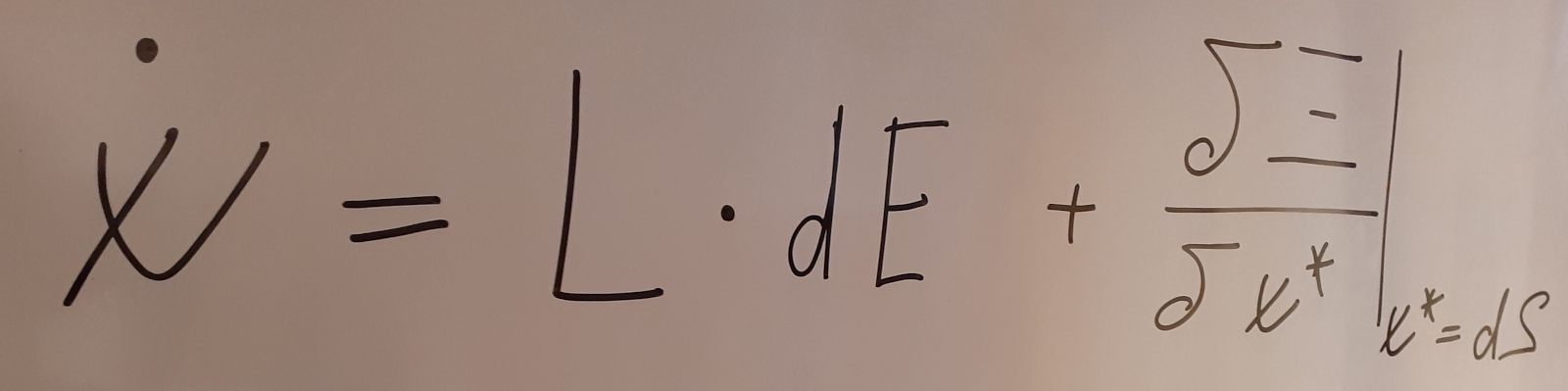
Michal Pavelka is an Associate Professor at the Division of Mathematical Modeling, Mathematical Institute, Faculty of Mathematics and Physics, Charles University, Prague, Czech Republic. His career spans roles from Postdoc (part time) at the Institute of Chemical Technology to positions at École Polytechnique de Montréal and New Technologies Research Centre. He earned his Ph.D. in 2015 and M.Sc. in 2012 at Charles University under František Maršík. Michal Pavelka's research integrates Non-equilibrium Thermodynamics , Geometric Mechanics , and Machine Learning . His work bridges advanced mathematical frameworks like GENERIC and Extended Irreversible Thermodynamics with practical applications in electrochemical systems (fuel cells, batteries) and quantum fluids . Notably, he has contributed to Smoothed Particle Hydrodynamics and Hamiltonian mechanics in complex systems. His recent publications focus on Multiscale Thermodynamics , Superfluid Modeling , and Machine Learning in Physics . Scientific awards include the Best paper award, Entropy (2021) and Czech Grant Agency President's award (2020). He has secured significant grants, including a €363k Czech Grant Agency award (2023–2025) for geometric multiscale thermodynamics of complex fluids. Scientific Awards: Best paper award, Entropy (2021) Czech Grant Agency President's award (2020) High quality monographs of Charles University competition (1st-3rd place, 2020) Current Projects: He leads research on geometric multiscale thermodynamics and co-supervises projects on zinc-air batteries and solid oxide fuel cells. His lab develops the SmoothedParticles.jl Julia package for fluid dynamics simulations.
Sheng C. Dai is an Associate Professor and group coordinator in Geosystems Engineering at the Georgia Institute of Technology, holding the Georgia Mining Association Early Career Professorship in the School of Civil and Environmental Engineering with courtesy appointments in Ocean Science and Engineering and the School of Earth and Atmospheric Sciences. Dr. Dai earned his Ph.D. from Georgia Tech in 2013 following ORISE postdoctoral fellowships at the National Energy Technology Laboratory (2013-2015). His educational background includes specialized training in geosystems engineering and energy-related subsurface processes. His research focuses on energy geotechnics and nature-inspired engineering, addressing critical challenges in energy sustainability and environmental protection through studies of geomechanics, granular dynamics, and porous media flow. Key applications include gas hydrate systems for energy recovery, waste-to-fuel conversion, and biomimetic solutions inspired by natural processes like rock-boring clams. Analysis of Dr. Dai's 2023-2025 publications reveals strong interdisciplinary integration of computational modeling (DEM, SPH), machine learning, and experimental techniques across energy geotechnics, granular material flow, and bio-inspired mechanisms. His work bridges petroleum engineering, environmental sustainability, and space exploration contexts. Dr. Dai has received numerous accolades recognizing his research, teaching, and service contributions: 2025: Early Career Researcher Award (USUCGER) 2024: Emerging Leaders Program (EVPR/Georgia Tech) 2023: Interdisciplinary Research Award and Woodruff Academic Leadership Fellows 2022: NSF Game Changer Academies and CREATE-X Faculty Fellowship 2020: NSF CAREER Award 2017: Bill Schutz Teaching Award and NETL Research Spotlight His Subsurface Processes Laboratory secures funding from DOE, NSF, NASA, and DOT for projects including $1M awards for waste-to-fuel conversion and methane clathrate research. Dr. Dai serves as Associate Editor for Journal of Geophysical Research: Solid Earth and leads ISSMGE's TC308 Energy Geotechnics Task Force while advising USGS and NETL programs. The laboratory conducts cutting-edge experimental and computational research on hydrate-bearing sediments, granular biomass flow, and bio-inspired geotechnical solutions, maintaining strong industry partnerships for real-world application of subsurface engineering innovations.
Dr. Mehdi Jafarian is a Senior Lecturer in the School of Chemical Engineering at the University of Adelaide . His work focuses on hydrogen production , CO2 capture , solar thermal energy , and chemical looping combustion . Key research areas include: Solar thermal integration in industrial processes Hydrogen generation via methane pyrolysis CO2 sequestration technologies Advanced water treatment systems Thermochemical energy storage Research Trends : Recent publications emphasize hydrogen production optimization , PFAS removal , and molten metal reactor systems . Sub-fields span flash reactor modeling , hydrodynamic cavitation , and membrane-free electrolysis . Contact : mehdi.jafarian@adelaide.edu.au