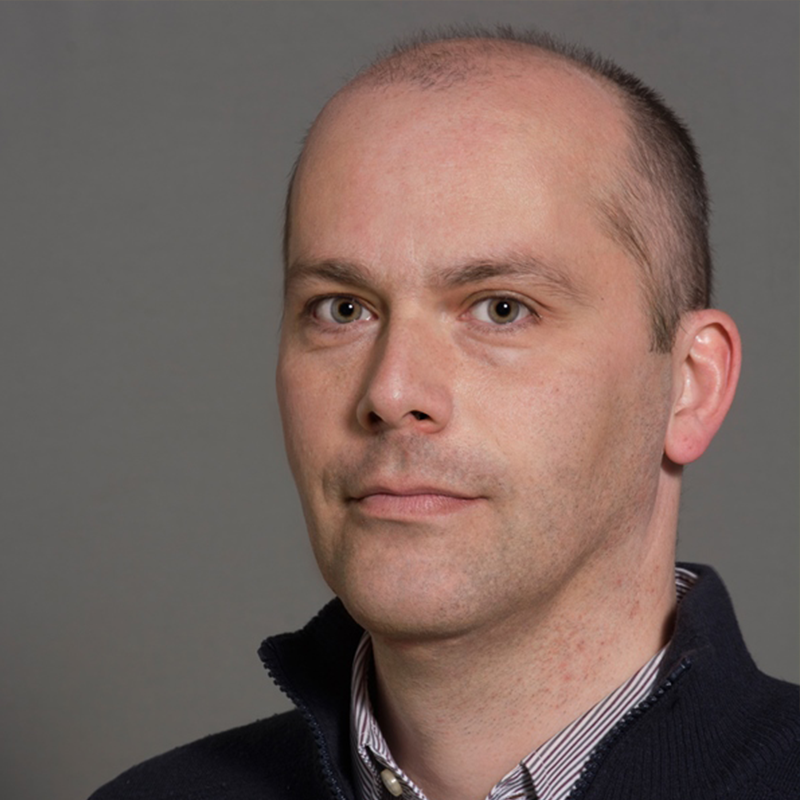
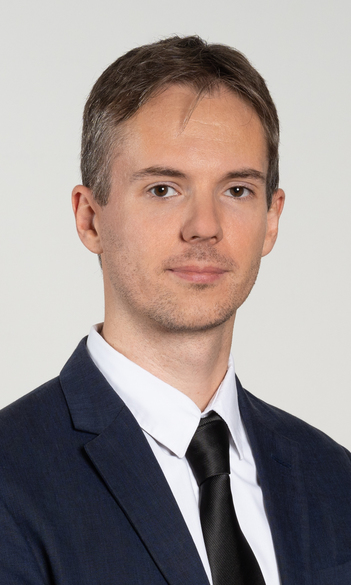
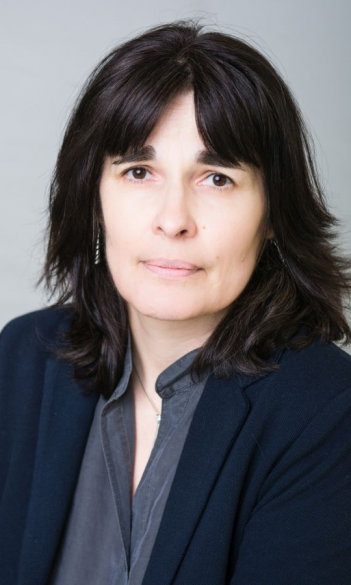
Máté Szabó is an Assistant Professor at the University of Debrecen , affiliated with the Faculty of Informatics and the Department of Information Technology . His email contact is szabo.mate@inf.unideb.hu . He works in areas such as Machine Learning , Smart Cities , and Mobile Computing . His research spans topics like microservice architecture for ensemble models, Markov modeling of traffic flows, and distributed machine learning on mobile platforms. He has explored neural models for conversational AI and gamification in programming education through Minecraft-based challenges. His work also addresses edge computing and data parallelism in mobile environments. His publications (2016–2024) reflect trends in machine learning deployment on Android platforms smart city traffic analytics gamified educational tools cognitive modeling of numerical understanding microservice-based model integration .
Dr. Tamás Koltai is a Professor and Dean at the Faculty of Economics and Social Sciences of Budapest University of Technology and Economics (BME). He leads the doctoral school's Specialization Group in Production Management. His roles include overseeing academic programs and research in production management, operations research, and efficiency analysis. Education: Doctor of the Hungarian Academy of Sciences (2016) Dr. habil. (2000), Budapest University of Technology and Economics Candidate of Technical Sciences (1987), Hungarian Academy of Sciences M.Sc. in Mechanical Engineering (1983), BME Faculty of Mechanical Engineering Research Interests: Dr. Koltai focuses on production management optimization, including the application of Data Envelopment Analysis (DEA), sensitivity analysis in mathematical models, and the integration of robotics in assembly lines. His work bridges theoretical models (e.g., MILP/CP optimization) with practical industrial challenges, particularly in healthcare efficiency and educational management. Notable Awards: IEOM Society Teaching Excellence Award (2021) BME GTK Faculty Memorial Medal (2016) János Susánszki Award (2013) Széchenyi Professorship Scholarship (1999–) Teaching & Leadership: He has held visiting roles at the University of Seville (1990–1992) and the University of Michigan (1988/89). His teaching excellence is recognized through awards and his contributions to business simulation education. His research often collaborates with industry partners to address real-world operational challenges. Labs/Teams: Leads the Production Management Specialization Group and contributes to interdisciplinary teams focusing on manufacturing efficiency and healthcare operations within BME.
Dr. Csanád Bodó (Habil. Associate Professor) is affiliated with the Institute of Hungarian Linguistics and Finno-Ugric Studies at Eötvös Loránd University (Budapest). He serves as a lecturer in the Department of Hungarian Historical Linguistics, Sociolinguistics and Dialectology, and contributes to the MTA-ELTE Kollaboratív Írás Kutatócsoport (Hungarian Academy of Sciences-ELTE Collaborative Writing Research Group). Academic rank: Associate Professor Contact: bodo.csanad@btk.elte.hu His research focuses on participatory sociolinguistics , particularly in the context of Hungarian-speaking minority communities in Eastern Europe. Key themes include: Language revitalization strategies among the Moldavian Csángó community Critical family language policy in peripheral regions Translanguaging and multilingual education practices Enregistering politically correct language in urban academic settings Collaborative research methodologies Language ideologies in revitalization contexts Recent publications (2025–2022) analyze collaborative knowledge production, language revitalization through education, and transliteracies in minority educational contexts. His work critically engages with language endangerment rhetorics and participatory approaches to sociolinguistic research.
Gergely Csibra is a Professor and Principal Investigator at the Central European University. He leads the Cognitive Development Center, focusing on cognitive development in human infants, particularly how infants understand actions, social interactions, and communication. His research employs behavioral and neuroimaging methods to explore topics like social cognition, episodic memory, and symbol use. His academic background spans developmental psychology and cognitive science. Current and former PhD students include Mariem Diané, Denis Tatone, and others. Csibra’s work emphasizes methodological diversity, integrating experimental and theoretical approaches. Research interests include infants' understanding of social relationships, mental state attribution, and symbolic representation. His studies investigate how infants interpret communication, learn from others, and form social evaluations. Key themes involve the cognitive foundations of cooperation and communication in early development. Despite prolific publication output (over 100 articles listed), no explicit scientific awards are cited in the provided text. His lab, the Cognitive Development Center, serves as a hub for collaborative research projects and methodological innovation in developmental science.
Dr. Bertalan Forstner is an Associate Professor and Deputy Head at the Department of Automation and Applied Informatics , Budapest University of Technology and Economics (BME). He co-leads the Applied Mobile Research Group (AMORG) within the Applied Computer Science Group, where his work bridges robotics, IoT, and cognitive infocommunication. Research Interests: Swarm Robotics & Aerial Systems: uniform dispersal algorithms for large fleets of low-cost flying robots, obstacle avoidance, and area-filling with minimal sensing. Internet of Things & Model-Driven Engineering: multi-domain IoT architectures, model-based unification of heterogeneous mobile platforms, and energy-efficient offloading. Cognitive Infocommunication & Educational Technology: adaptive learning environments, biofeedback-driven serious games, and AI-enhanced assessment tools using item-response theory. Distributed & Peer-to-Peer Systems: semantic overlays, mobile P2P protocols, and performance evaluation simulators. Research Impact & Trends: Across more than 50 peer-reviewed works (2005-2025), a clear evolution is visible: early efforts focused on P2P and mobile networking transitioned into swarm-robotics algorithms, which in turn informed IoT and cognitive-systems research. Recent 2025 papers emphasize quantitative service-level analytics, user-behavior classification, and synthetic data generation for cognitive modeling, underscoring a trajectory toward data-driven, AI-enhanced, human-centric systems. Scientific Awards & Recognitions: No specific awards are listed in the provided text. Advising & Funding: While individual PhD students are not named in the source, Dr. Forstner’s long-running research projects in AMORG and sustained publication output imply active supervision and grant support. Details on specific grants or doctoral candidates are not disclosed. Laboratory & Teams: He leads the Applied Mobile Research Group (AMORG) and collaborates closely with the Applied Computer Science Group at BME, maintaining facilities in building Q, room B227 on the Magyar tudósok körút campus.
Orsolya Király is an Assistant Professor at the Department of Clinical Psychology and Addiction, Eötvös Loránd University. She is affiliated with the Addiction Research Group and actively contributes to clinical and behavioral addiction studies. Her work focuses on gaming disorder, problematic internet use, and digital health implications. She has developed and validated assessment tools like the IGDT-10 and explored cross-cultural dynamics in addictive behaviors. Her research integrates psychological, sociological, and public health perspectives, addressing topics such as psychiatric comorbidity in gaming disorder, family systems in the digital age, and policy recommendations for youth gaming. She has published extensively on gaming addiction's clinical and societal impacts, emphasizing evidence-based interventions and prevention strategies. Dr. Király's work often involves collaborative international studies, with a focus on validating diagnostic criteria and understanding behavioral motivations. Key contributions include longitudinal analyses of gaming and social media interactions, esports player typologies, and the role of digital technologies in mental health. She has also explored pandemic-related behavioral changes and their mental health consequences. Her research bridges academic and clinical realms, aiming to inform both policy and therapeutic practices. Awards: None explicitly listed in provided texts. Advising & Grants: No specific advisees or grant details mentioned. Research focuses on collaborative projects with institutions globally, emphasizing data-driven approaches to behavioral addiction studies. Labs/Teams: Active member of the Addiction Research Group at ELTE, contributing to interdisciplinary projects on digital addictions and clinical psychology advancements.
Attila Rausch is an Assistant Professor at the Institute of Educational Sciences, Faculty of Pedagogy and Psychology, Eötvös Loránd University. His work focuses on digital competence, technology-based measurement and assessment, and technology-supported skill development. As a university lecturer, he teaches courses on educational technology and research methodology, and serves as Chair of the Research Ethics Committee. Undergraduate Pedagogy Program: Responsible for Digital Pedagogical Assistant specialization Master's Programs: Teaches research methodology, workshops, and educational technology PhD Training: Instructs quantitative research methods and measurement specifics in early childhood education His research explores technology-based assessment of early numeracy and cognitive skills, digital game-based learning, and sustainability in digital education. He has led studies on inductive reasoning assessment, post-pandemic technology use, and mathematics education challenges. Awards include MTA Bolyai János Research Scholarship and ÚNKP Bolyai+ Scholarships. He supervises students in OTDK competitions and contributes to educational policy through committee memberships. Scientific awards include: MTA Bolyai János Research Scholarship (2020-2023) ÚNKP Bolyai+ Scholarships (2020-2021, 2022-2023) He advises award-winning students in topics ranging from foster family placement effects to climate change education and digital tool usage. His work bridges empirical research with practical applications in educational technology, teacher training, and sustainability-focused pedagogy.
Professor Dominic C.Y. Foo is a distinguished academic at the University of Nottingham Malaysia, serving as Professor of Process Design and Integration and Founding Director of the Centre of Excellence for Green Technologies . He holds multiple prestigious fellowships including Fellow of the Institution of Chemical Engineers (IChemE) and Fellow of the Academy of Sciences Malaysia (ASM) , and is recognized in the Stanford list of top 2% scientists for several consecutive years. Department of Chemical and Environmental Engineering Active in international collaborations across Asia, Europe, Americas, and Africa Editor-in-Chief of Process Integration and Optimization for Sustainability (Springer Nature) Research Focus : His work centers on process integration and optimization for sustainability, particularly through pinch analysis and mathematical programming to address resource conservation , CO2 reduction , and decarbonization . Key areas include water minimization , energy planning , and carbon management networks , with applications spanning from the oil palm industry to hydrogen production systems. Scientific Contributions : With over 190 journal papers , 8 books , and 30+ keynote speeches , Professor Foo's research has had significant global impact. He has examined 40+ PhD/MSc theses internationally and developed specialized software like RCNet and DECO2 for resource conservation and carbon management. 2009 IChemE Innovator of the Year 2013 Outstanding Asian Researcher (SCEJ, Japan) 2016 Top Research Scientist Malaysia (ASM) International Engagement : He serves as Visiting Professor at several institutions including University of the Philippines Los Baños and De La Salle University in the Philippines. His editorial roles span multiple leading journals in chemical and environmental engineering.
Szegletes Luca is a Senior Lecturer at the Budapest University of Technology and Economics, affiliated with the Department of Automation and Applied Informatics as part of the Applied Mobile Research Group (AMORG). Her research spans multiple interdisciplinary domains, focusing primarily on integrating machine learning techniques with biofeedback systems. Her work demonstrates expertise in diffusion probabilistic models for EEG signal processing, deep learning applications in embedded systems, and reinforcement learning frameworks. She has pioneered methods for physiological data analysis, including blood pressure measurement and face anonymization in low-power environments. Notable research contributions include adaptive educational game frameworks, cognitive profiling systems, and biofeedback-driven difficulty control mechanisms. Her publications reflect a strong focus on bridging computational methods with cognitive science and biomedical applications.
Róbert Tóth is an Assistant Professor at the University of Debrecen's Faculty of Informatics, Department of Information Technology. His work focuses on enhancing spatial abilities through emerging technologies, including gamification and augmented reality. Contact details: toth.robert@inf.unideb.hu, Office: 2nd floor, I228 Faculty of Informatics building. Research interests include: Spatial skill assessment and training using 3D modeling and interactive tools Integration of gamification and augmented reality in educational contexts Development of open-source software frameworks for cognitive training (e.g., viskillz-blender) Analysis of transportation data (GTFS/RT) and geospatial visualization techniques Optimization of educational systems and Smart Campus services Recent publications emphasize spatial reasoning development, gamified learning environments, and efficient handling of geospatial data through Python-based tools and Blender integrations. His work bridges software engineering, educational technology, and human-computer interaction.
Bálint Forgács is an Habil. Associate Professor at the Department of Cognitive Psychology, Eötvös Loránd University, and Head of the Language and Brain Research Group. His research focuses on semantic processing, metaphor comprehension, theory of mind in infants, and electrophysiological correlates of cognitive functions. He explores how language and communication develop in early childhood and how abstract concepts are mentally represented. His work intersects cognitive psychology, neuroscience, and linguistics, emphasizing social and developmental aspects of cognition. Research interests include the pragmatics of metaphorical language, the neurobiological basis of semantic systems, and the communicative functions of language from birth. He investigates how infants track others' understanding and how metaphors shape discourse in fields like climate science. His studies employ electrophysiological methods (e.g., ERP) and behavioral experiments to uncover mechanisms underlying meaning construction and social cognition. Forgács' recent work highlights newborns' sensitivity to communicative dimensions of language and the role of mentalization in semantic processing. He critiques metaphorical language in climate discourse, advocating for clearer scientific communication. His research has implications for education, linguistics, and interdisciplinary studies in cognitive science.
Maria Kovacs is a Professor in the Nationalism Studies Department at Central European University (CEU). She actively participates in academic events, including the book launch of "Belated Obeisance - Jurist Victims of the Holocaust" (Kesei fohajtas – a holokauszt jogasz aldozatai) at the Hungarian Bar Association on March 7, supported by CEU. Her research interests center on Nationalism Studies, Holocaust Studies, and Legal History as evidenced by institutional affiliation and event participation. The department focuses on 21st-century nationalist movements and historical memory, though specific subfields are not detailed in the text. Her Google Scholar profile shows 15 recent publications (2025-2023) predominantly in Cognitive Psychology and Developmental Psychology, revealing a strong experimental focus on infant/toddler theory of mind, perspective taking, and bilingualism effects. Methodologies include eye-tracking, tablet-based games, and multi-lab studies, with recurring themes in mental state attribution and combinatorial cognition. No scientific awards were mentioned in the provided text. Details about student advising, grant funding, or research teams are absent from the sources. Her institutional role appears focused on historical and political analysis despite the cognitive science publications, though interdisciplinary connections are not specified.
Anikó Fehérvári is a Full Professor at the Institute of Educational Sciences, Faculty of Pedagogy and Psychology, Eötvös Loránd University (ELTE), where she also serves as Director of the Institute. She holds academic leadership roles, including membership in the Awards Committee, Faculty Council, Scientific Committee, and Habilitation Committee. Her research focuses on social and educational inequalities, Roma education, teacher perceptions, and program evaluation for disadvantaged groups. She leads the Research Group on Innovation and Equality in Education and is Chief Editor of EDUCATIO and Hungarian Educational Research Journal . Her educational background includes a PhD, and she oversees the MA in Educational Sciences and doctoral programs at ELTE. She has contributed to national and international projects such as the Arany János Program and RIDEX (robotics for inclusive education). Key research themes include early school leaving prevention, multicultural curriculum analysis, and the impact of gamification in education. Publications span over 70 peer-reviewed articles, with recent works addressing Roma student inclusion, teacher attitudes, and pandemic-era learning patterns. She actively participates in conferences and policy initiatives to promote equitable education systems. Her work bridges theoretical research and practical interventions to address systemic inequalities.
Borbála Dsupin is a dedicated music education specialist at the University of Debrecen's Faculty of Child Education and Special Education. She currently serves in the Complex Department of Art and Health Education, having previously worked in the Department of Art Education, Sports and Health Education from 2018-2024 and Faculty of Child and Adult Education from 2014-2018. With a PhD earned in 2010, Dr. Dsupin has established herself as a prominent researcher in early childhood music education, focusing particularly on the integration of folk traditions and movement in developing children's musical abilities and emotional intelligence. Her educational background includes: PhD in Music Pedagogy (2010) - University of Jyväskylä, Finland Dr. Dsupin's research centers on how folk music traditions, rhymes, and games can be effectively integrated into early childhood education to develop musical intelligence, emotional sensitivity, and cultural awareness. She emphasizes that children up to age 8-9 remain open to all musical genres, making this developmental period crucial for establishing lifelong musical preferences. Her work demonstrates how folk rhymes serve as 'complex genres' that simultaneously develop text comprehension, rhythm sense, melody perception, and movement coordination. She advocates for preserving Hungarian musical traditions while incorporating international influences to create well-rounded musical citizens, famously stating: 'Folk tradition keeps us Hungarian, while international culture makes us European.' Her publication record reveals a consistent focus on the therapeutic and developmental power of music in early childhood. Dr. Dsupin's research shows how musical activities can simultaneously address emotional development, socialization, intellectual growth, and language acquisition. Her work particularly highlights the role of folk games in developing specific movement types (gestures, weight shifts, steps, jumps) that prepare children for school readiness and future adult functioning. Dr. Dsupin has received recognition for her contributions to music education, though specific awards are not detailed in the available information. As an advisor, Dr. Dsupin has likely mentored numerous students in music education and child development. Her research has been supported through institutional affiliations with the University of Debrecen's various departments focused on child education and art pedagogy. She collaborates with colleagues like Jánosné Hovánszki and Annamária Dulainé Madarász on projects examining the relationship between folk traditions and contemporary educational practices. Her work forms an integral part of the music education research team at the University of Debrecen, where she contributes to developing methodological frameworks that help teachers draw from 'pure sources' of cultural tradition in educational practice while addressing modern educational challenges.
Edit Lippai is an Assistant Professor at the Institute of People–Environment Transaction, part of the ELTE Faculty of Education and Psychology in Budapest. She is affiliated with the Environmental Psychology Lab and serves on the Quality Management Committee. Her research focuses on environmental psychology, educational spaces, and gamification in pedagogy. She holds a position as a lecturer and contributes to institutional quality initiatives. Her work bridges environmental psychology with educational design, exploring how physical spaces and interactive methods like gamification influence learning environments. Notable areas include school environment analysis, urban psychological studies, and integrating sustainability frameworks into curricula. Recent publications emphasize applying role-playing game mechanics to education and sustainability, reflecting her interest in innovative pedagogical tools. Her earlier work, such as studies on urban symbolism and spatial identity, demonstrates long-term engagement with human-environment interactions. No scientific awards are explicitly listed, but her active research output and committee roles highlight her professional contributions. She has no documented advisees or grant details in the provided texts. Lippai is based at ELTE’s Budapest campus (Kazinczy u. 23-27, Room 422) and can be reached via lippai.edit@ppk.elte.hu.