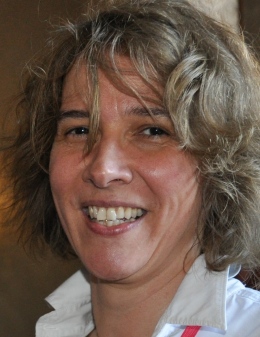
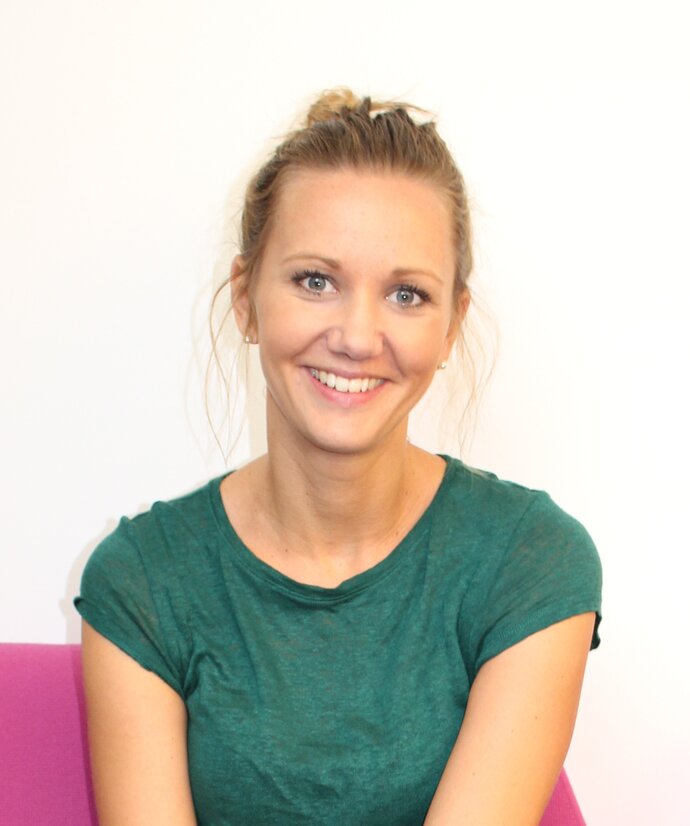
Mikael Johansson is a Professor at Kungliga Tekniska Högskolan (KTH), specializing in Control Technology . He teaches and coordinates courses such as Distributed Optimization (FEL3311) and various advanced-level degree projects in computer science, electrical engineering, and systems engineering. His research spans Control Systems , Machine Learning , and Optimization , with a focus on asynchronous algorithms, federated learning, and applications in energy systems and construction. His work includes 15 recent publications on topics like neural networks, distributed optimization, and battery technology. Notable areas of contribution are in asynchronous learning, federated learning with privacy constraints, and quasi-Newton methods for optimization. His research bridges theoretical advancements with practical applications in urban design, healthcare, and autonomous systems.
Jelena Zdravkovic is a Professor and Head of the Department of Computer and Systems Sciences (DSV) at Stockholm University. She leads the PRECIS research group which focuses on Process, Requirements, Enterprise, Capability, and Information Systems modelling. Her work spans theoretical and practical aspects of enterprise and IT solutions with a particular emphasis on digital transformation. Professor Zdravkovic's research interests center around Digital Business Ecosystems , Digital Twins , and Data-driven Requirements Engineering . Her work in Enterprise Modeling explores capability-oriented and consumer-oriented approaches to requirements engineering. She investigates how digital transformation and big data can be leveraged to improve requirements elicitation processes, and how organizations can model and manage complex digital business ecosystems. Her research has significant implications for how businesses can adapt to rapidly changing technological environments while maintaining resilience and competitiveness. Her recent publications reveal a clear trajectory toward integrating artificial intelligence with digital modeling techniques, particularly in the context of smart buildings and business ecosystems. There's a consistent focus on how data-driven approaches can transform traditional requirements engineering practices, making them more responsive to the velocity and variety of digital data sources. Her work bridges theoretical modeling with practical applications across various industries including healthcare, energy, and transportation. Professor Zdravkovic has been actively involved in mentoring PhD students, including supervising research on the Management Framework of Resilient Digital Business Ecosystems. She has participated in numerous national and international projects focused on interoperability and model-driven engineering, securing research funding for innovative work at the intersection of business and technology. She leads the PRECIS research group which deals with theories, methods and tools for analysis and design of organizational and IT solutions in congruence. The group's research covers three key topics – Enterprise Modelling, Business Process Management, and Conceptual Modelling. Their work brings together academic rigor with practical applications to solve real-world business challenges through innovative information systems approaches.
Károly Takács is Professor at Linköping University's Institute for Analytical Sociology. He holds a Ph.D. from University of Groningen and has held positions at Corvinus University of Budapest, Collegium Budapest, Netherlands Institute for Advanced Studies, and University of Brescia. He founded and led the Research Center for Educational and Network Studies at Hungarian Academy of Sciences. His research examines social networks in relation to cooperation, conflict, and reputation systems, with particular focus on gossip mechanisms and ethnic discrimination in educational contexts. He currently leads an ERC Consolidator Grant investigating how gossip influences reputation and cooperation across different social environments. Takács' publications develop theoretical frameworks for understanding reputation-centered cooperation and empirically test mechanisms through experiments, network analysis, and large-scale studies in educational settings. His work combines analytical modeling, experimental methods, and advanced network analysis techniques.
Betty Tärning is a researcher at the Department of Philosophy, Lund University , specializing in Cognitive Science and Educational Technology . She is affiliated with the eSSENCE: The e-Science Collaboration and contributes to the LU Profile Area: Natural and Artificial Cognition . Her work focuses on digital learning environments, pedagogical agents, and feedback systems. Email: betty.tarning@lucs.lu.se Office: LUX:B467, Helgonavägen 3, Lund Research Interests: Tärning investigates how virtual reality and educational games can enhance learning outcomes, particularly in middle school and early childhood education . Her recent work explores robotic emotional expression and feedback neglect in digital contexts. Article Trends: Recent publications emphasize human-robot interaction , virtual learning environments , and feedback mechanisms in educational games. She integrates cognitive modeling with pedagogical design to address challenges in digital literacy and student engagement . Projects & Collaborations: Active in initiatives like DeSIDE: Designing Sustainable Digital Work and Virtuellt klassrum som forskningsplattform , she collaborates across disciplines, including with Pufendorf IAS and Humanities Lab . Her network includes researchers from Sweden , Europe , and North America .
Agneta Gulz is a Professor at the Department of Computer and Information Science (IDA) at Linköping University, Sweden. She is affiliated with the Human-Centered Systems (HCS) division, where her research focuses on human-centered computing, cognitive science, and educational technologies. Her work emphasizes the intersection of virtual reality (VR) systems, collaborative learning environments, and educational interventions. Gulz leads studies on user engagement in immersive technologies, scaffolding cognitive skills in children, and analyzing feedback mechanisms in digital learning platforms. Her research has been published in journals like Teleoperators and Virtual Environments and Learning and Individual Differences , as well as presented at major conferences such as the International Conference on Computers in Education. She collaborates with researchers like Magnus Haake and Betty Tarning on projects addressing information literacy through drama-based interventions and preschool attention development. Gulz’s contributions span cross-cultural studies in automated feedback systems and the design of educational tools that bridge theoretical and practical learning challenges. She is an active member of the HCS division, contributing to the department’s mission in advancing human-centered computing and AI applications in education.
Marko Laaksonen is a Professor at the Department of Health Sciences (HOV) at Mid Sweden University, specializing in winter sports biomechanics and performance analysis. He is affiliated with the Swedish Winter Sports Research Centre, focusing on biathlon and cross-country skiing. His research examines physiological responses to training, rifle carriage effects on skiing mechanics, and performance indicators in biathlon. Key areas include exercise intensity distribution, shooting precision, and muscle metabolism during endurance activities. Recent publications analyze biathlon shooting performance under varying conditions, training load measurement, and equipment impacts on athlete efficiency. Over 15 articles demonstrate expertise in winter sports analytics and physiological monitoring.
Céline Fauvelle is a Research Assistant at the University of Skövde’s Department of Commerce and Entrepreneurship within the School of Business. Her work intersects digital retailing, human-centered AI, and sustainable production methodologies. She contributes to research projects that emphasize interactive decision support systems and knowledge-driven optimization, aligning with the department’s focus on commerce and entrepreneurship. Her contact details include the email celine.fauvelle@his.se. Her research interests span business intelligence, game analytics, and applied AI in manufacturing contexts. While specific publications aren’t directly attributed to her in the provided texts, her role suggests engagement with cutting-edge methodologies in digital transformation and optimization frameworks. She operates within the university’s collaborative networks, including ShiftLabs and CLAS seminars, which focus on industrial digitalization and sustainability leadership.
Marcelo Milrad is a Full Professor in Media Technology at Linnaeus University's Department of Computer Science and Media Technology, part of the Faculty of Technology. He leads the Center for Learning and Knowledge Technologies (CeLeKT) and co-directs the Information Institute. His research focuses on Technology-Enhanced Learning (TEL), mobile technologies in education and healthcare, computational thinking, and AI integration in education. He has published over 240 articles and collaborates extensively with industry and public sector partners. Education: Advanced degrees in computer science and educational technology (not explicitly detailed). Research interests include designing learning environments for complex domains, mobile applications for collaborative learning, and AI in education. He actively develops master's programs like Digital Humanities and teaches courses on programming for teachers and healthcare professionals. Notable projects include the EREDWeB project on VR in education and Exten.D.T.² on design thinking with emerging tech. He chairs international conferences like WMTE and serves on editorial boards in TEL. His work emphasizes cross-disciplinary collaboration, with initiatives like the Digital Humanities Center and the Linnaeus Media Observatory. He leads projects funded by grants such as the SEK 25M cultural entrepreneurship initiative and a 4M grant for archival AI.
Henrik Artman is a Professor at KTH Royal Institute of Technology, affiliated with the Media Technology and Interaction Design (MTM) school. His research focuses on Cyber Situational Awareness , Simulator Training , Live Virtual Constructive (LVC) systems, and intersections with Sustainability and Energy Supply . He serves as Deputy Head of School and teaches courses such as Advanced Individual Course in Human-Computer Interaction and Computer Game Design . Research Interests include: Human-Computer Interaction Cybersecurity and situational awareness LVC military training systems Sustainability in digital design Energy infrastructure resilience Key Contributions involve analyzing LVC training value for air combat, cyber threat response frameworks, and simulator mission design. His work bridges military training, cybersecurity, and interaction design, with a focus on real-world applications.
Professor Peter Hedström is a leading academic at Linköping University (LiU), serving as the founder of the Institute for Analytical Sociology (IAS) and holding a senior research fellowship at Nuffield College, Oxford. He earned his PhD in Sociology from Harvard University and has held professorships at prestigious institutions including the University of Chicago, Stockholm University, and NYU Abu Dhabi. His research focuses on social networks, segregation processes, and the methodology of social sciences, with grants from the European Research Council and Swedish Research Council. Hedström is a fellow of the Royal Swedish Academy of Sciences, Royal Swedish Academy of Letters, and Norwegian Academy of Science and Letters. Research Interests: Hedström’s work explores how social networks influence societal phenomena, particularly segregation. His recent studies challenge traditional views on gender segregation, proposing the 'Trojan-horse mechanism' where networks can reduce segregation. He also investigates urban scaling and regional divides, using computational social science methods. His methodologies combine causal inference, machine learning, and large-scale data analysis. Awards: He received the Robert K. Merton Award for his groundbreaking article on gender segregation and is frequently cited in global rankings. His contributions to analytical sociology have positioned IAS as a hub for computational social science. Grants & Collaborations: Supported by major grants, Hedström leads SweCSS, a computational social science center. He advises students and collaborates with global researchers through visiting programs. The IAS, founded in 2014, drives interdisciplinary research on societal challenges like segregation and urban dynamics. Labs & Teams: As IAS director, Hedström fosters collaboration between social and computational sciences. The institute’s work spans migration, cultural dynamics, and policy analysis, with projects like the SweCSS Visiting Fellows Program enhancing international partnerships.
Henrik Engström is a Professor of Informatics at the University of Skövde, affiliated with the School of Informatics and Department of Information Technology. He holds a PhD in Computer Science from the University of Exeter. His research focuses on game development processes, serious games, and interdisciplinary collaboration in game design. Engström has led multiple projects, including the Game Tech Academy and Sweden Game Arena initiative, aiming to leverage game technology for societal challenges in health, education, and industry. He coordinates the Game Development Master's Programme and has published extensively on topics like game analytics, inclusive design, and mobile game publishing strategies. His work often bridges academia and industry, emphasizing practical applications in training simulations and healthcare. Education: PhD in Computer Science (University of Exeter) Key Projects: Sweden Game Arena, Game Hub Scandinavia, Digital Parental Support Tools Research Interests: Game design processes, serious games for health, inclusive game development, and mobile game business models Engström’s research outputs span over two decades, with notable contributions to understanding game development challenges, stress detection in games, and the application of AI in game narratives. His book Game Development Research (2020) synthesizes empirical insights from industry practices. He collaborates internationally, including with Japanese and Scandinavian institutions, to advance educational game models and industry-academia partnerships. His articles highlight trends in data-driven decision-making for indie game publishers, the psychological impact of game design on player experiences, and leveraging game jams for addressing heavy societal topics. Engström also leads grants focused on digital health tools for expecting parents and sustainable urban planning via game-based participation. Labs/Teams: Key contributor to the Sweden Game Conference and collaborator with Game Tech Academy, fostering innovation in game-based solutions for societal challenges.
Wagner Ourique De Morais is a Lecturer at the Academy of Information Technology , Halmstad University, with a focus on Smart Home Systems and Healthcare Technology for elderly populations. Doctoral Thesis : Architecting Smart Home Environments for Healthcare: A Database-Centric Approach (2015) Key Research Areas : Ambient Assisted Living (AAL), Graph Neural Networks for Clinical Prediction, IoT-Edge-Cloud Offloading, and Wearable Health Monitors His work spans 15+ years , including publications on Zero-Day Attack Detection in Vehicular Networks (2025), Graph Neural Networks for Clinical Risk Prediction (2024), and Smart Medication Organizers (2017). Research trends emphasize sensor integration , context-aware computing , and security in smart environments . He contributes to projects like the "Safe at Night" initiative and has developed middleware for heterogeneous sensor networks (2008). Current teaching and research at Halmstad University prioritize technology-enabled elderly care and cyber-physical system design .
Professor Palle Dahlstedt is affiliated with the University of Gothenburg's Interaction Design department. His work bridges music technology, live coding, and interdisciplinary performance. He specializes in gestural interactions, algorithmic creativity, and systems for collaborative improvisation. Key projects include the Bucket System, OtoKin, and research on live coding frameworks. Research interests focus on creative technologies in music and performance, with emphasis on real-time systems, human-computer interaction, and artistic collaboration. Dahlstedt has published extensively in venues like NIME, ICLC, and Evolutionary Intelligence, addressing topics ranging from hybrid piano design to generative storytelling. Notable contributions include the Biosphere Code Manifesto (2015), exploring algorithms in environmental contexts, and the Electroacoustic Modular Ecosystem (2020). His work often involves cross-disciplinary collaborations with dancers, musicians, and technologists. Performance highlights include jury-selected NIME performances (2015) and collaborations with artists like Gino Robair and Tim Perkis. Dahlstedt actively participates in international festivals and conferences, advancing the field of computational creativity and artistic research.
Jayanth Raghothama is an Associate Professor at KTH Royal Institute of Technology, affiliated with the School of Computer Science and Communication (CBH) and the Digital Futures Faculty. He is part of the Division of Health Informatics and Logistics, focusing on healthcare systems, complex systems modeling, and simulation-based decision-making. His academic role includes co-leading the Digitalization Platform and serving as a Vice-Director. Education: PhD in Complex Systems from KTH (2017). Prior experience includes software industry roles and work with a think tank in Bangalore. Research Interests: Healthcare logistics, complex systems analysis, participatory simulations, AI/ML ethics, and the philosophy of games and simulations. His work bridges computational models with real-world applications in healthcare, urban planning, and disaster management. Recent Projects: Co-Principal Investigator of the 'Data-driven Improvement of Work-Flows at the Karolinska University Hospital' project. Active in AI-based colorectal cancer detection in primary care (AIDCCIP project). Teaching: Courses on Applied Machine Learning, Simulation Methods, and Healthcare Logistics at Bachelor, Master, and PhD levels. Modules include AI/ML ethics and Agent-Based Modeling. Publications: Over 20 peer-reviewed articles focusing on healthcare simulation models, real-world data analysis in oncology, and hybrid modeling techniques. Notable works include patient flow optimization algorithms and frameworks for risk stratification in lung cancer studies.
Arend Hintze is a Professor of Microdata Analysis at Dalarna University's Department of Information and Technology. His research bridges artificial intelligence, evolutionary biology, and computational psychiatry, focusing on neuroevolution, cellular automata, and digital health applications for bipolar disorder. Key research themes include: Evolutionary dynamics in computational models AI for mental health prediction Cellular automata and self-replication Large language model behavior analysis Recent publications demonstrate interdisciplinary work across computer science, genetics, and psychiatry, with emphasis on: Neuroevolution and information transfer Fitness landscape navigation Bipolar disorder early warning systems Evolutionary game theory applications His work frequently employs agent-based modeling, digital evolution, and deep learning techniques.