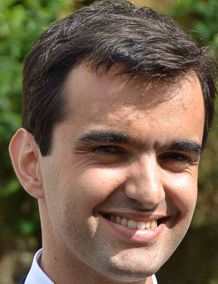
Sam Cheeseman is an Adjunct Fellow at RMIT University's School of Science, specializing in theoretical and computational chemistry, nanotechnology, and antimicrobial research. His work focuses on developing innovative nanomaterials to combat bacterial resistance and biofilm formation, with applications in medical devices, water treatment, and antimicrobial surfaces. Based at RMIT's City Campus in Australia, he actively supervises Masters and PhD students in cutting-edge research projects. Dr. Cheeseman's research interests span Theoretical and Computational Chemistry, Nanotechnology, Microbiology, and Food Sciences. His work centers on antimicrobial nanomaterials, particularly liquid metals, metal nanoparticles, and nanostructured surfaces that can physically or chemically disrupt bacterial cells. He investigates how nanoscale features can mechanically rupture pathogens, develop stimuli-responsive antimicrobial materials, and create novel coatings for medical implants, fabrics, and water treatment systems. His extensive publication record demonstrates significant contributions to antimicrobial nanotechnology, with a focus on combating antibiotic-resistant bacteria and biofilms. Cheeseman's research reveals how nanostructured titanium surfaces, liquid metal particles, and nanocomposites can effectively inactivate pathogens through physical puncture, reactive oxygen species production, and metal ion release. His work bridges materials science, microbiology, and biomedical engineering to address one of the most pressing global health challenges: antimicrobial resistance. As a dedicated educator, Cheeseman is open to supervising Masters Research and PhD students, currently guiding projects on "Design and Fabrication of Antimicrobial Nanoparticles from Liquid Metals." His collaborative approach is evident through numerous co-authored publications across multiple disciplines, demonstrating his commitment to interdisciplinary research that addresses complex challenges in antimicrobial technology.