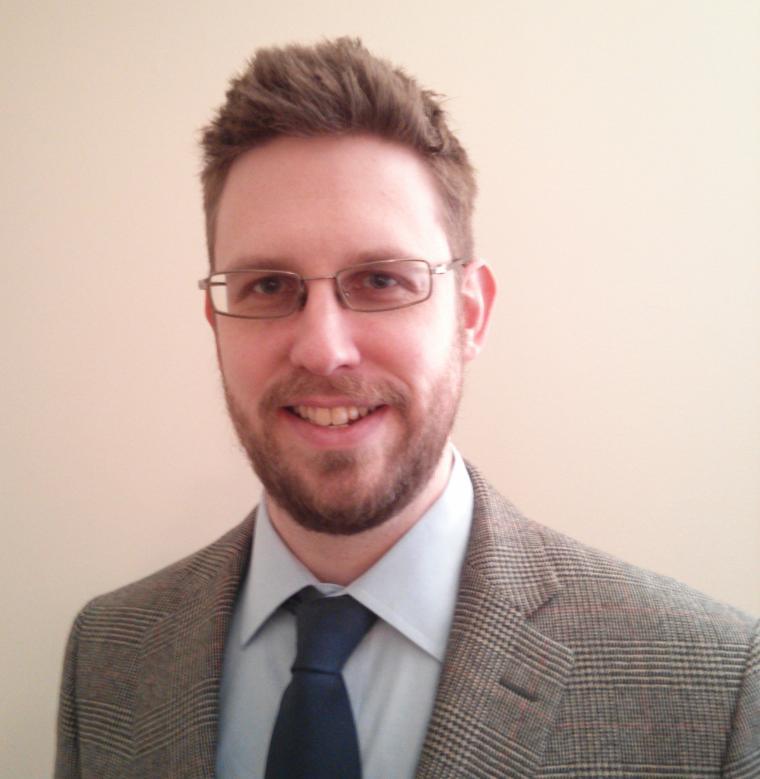
Hunter N. Moseley is a Professor in the Department of Molecular and Cellular Biochemistry at the University of Kentucky. He maintains an active research laboratory focused on bioinformatics and computational biology, with a strong emphasis on metabolomics and systems biochemistry. His work bridges computational methodology development with biological applications, particularly in data integration and analysis. Education: B.A. in Chemistry, Computer Science, and Mathematics, Huntingdon College (1992) Ph.D. in Biochemistry, University of Alabama at Birmingham (1998) His research interests center on developing computational methods for analyzing biological and biophysical data, particularly through integration of omics-level datasets and leveraging public scientific databases. Key areas include metabolomics, systems biochemistry, structural biology, and data harmonization. His laboratory has produced numerous software tools for data analysis and database integration. The recent publications highlight a strong trend in developing computational frameworks for metabolite pathway prediction, database harmonization (particularly KEGG, Reactome, MetaCyc), and FAIR data principles. There is a consistent focus on methodological rigor, data quality, and software development for metabolomics data analysis, including tools for GPU utilization tracking, academic publication tracking, and metabolic database access. Dr. Moseley has mentored numerous students and collaborators who appear as co-authors on his publications. His lab has secured research support that enables collaborative work across disciplines, including environmental health, cancer research, and cardiovascular disease. He leads the Moseley Bioinformatics Lab, which develops and maintains several open-source software packages for the scientific community.
Mario Cesar Acosta Cobos is a Researcher at the Department of Computer Architecture of the Barcelona School of Informatics (FIB) at the Universitat Politècnica de Catalunya (UPC). His work focuses on optimizing computational performance and energy efficiency in Earth system models, particularly within the EC-Earth3 framework for the Coupled Model Intercomparison Project (CMIP6). He collaborates extensively with the Barcelona Supercomputing Center (BSC) and other international institutions. Key research interests include high-performance computing , climate modeling , parallel computing , and scientific data compression . His contributions address challenges like workflow optimization for HPC platforms, GPU acceleration for atmospheric chemistry models, and minimizing computational costs in Earth system simulations. Recent work highlights include analyzing the computational and energy costs of CMIP6 simulations, improving EC-Earth3 coupling efficiency, and developing optimized GPU implementations for atmospheric chemistry solvers. His publications span journals like Geoscientific Model Development , Computer Physics Communications , and Future Generation Computer Systems . Acosta Cobos has been involved in collaborative projects such as the Joint-Laboratory of Extreme Scale Computing and contributed to HighResMIP, focusing on high-resolution climate models. His research bridges computational science with environmental applications, emphasizing reproducibility, scalability, and sustainable computing practices.
Rosa Maria Badia Sala is a Research Professor at the Universitat Politècnica de Catalunya (UPC), affiliated with the Departament d'Arquitectura de Computadors and the Barcelona Supercomputing Center (BSC-CNS). She specializes in distributed computing, heterogeneous systems, and task-based programming models. Her work focuses on advancing high-performance computing (HPC), cloud computing, and workflow management for large-scale scientific applications. She holds a Doctorat en Informàtica and has been actively involved in numerous research projects, including contributions to the COMPSs programming framework and the optimization of HPC workflows. Her collaborations span institutions like BSC-CNS and international initiatives such as JLESC. Recent research includes GPU-accelerated computing, quantum optimization algorithms, and digital twins for power networks. Badia's publications span journals like Future Generation Computer Systems and IEEE Transactions on Parallel and Distributed Systems, reflecting her expertise in parallel computing, distributed systems, and real-time data analysis. She has supervised multiple doctoral theses and contributes to research grants focused on HPC and AI integration.
Michael J. Taylor is an Associate Professor of Mechanical Engineering at Santa Clara University's School of Engineering , where he has been affiliated since 2015. Chair of Mechanical Engineering (2021-present) Faculty Director of da Vinci RLC (2024-present) Co-director, WAVE HPC Center (2021-2022) His research spans computational solid mechanics , auxetic metamaterials, thin film mechanics, and peridynamics. Notable work includes modeling wrinkling in anisotropic sheets, rupture in biomembranes, and development of GPU-accelerated software for structural analysis. Recent projects focus on stress concentration reduction in metallic auxetic structures and fracture dynamics in thin films. Pioneered VOACH method for acoustic vowel analysis Developed 2D peridynamic plate theory Collaborated with Rolls-Royce Energy and Multiscale Systems He teaches courses in mechanical vibrations , finite element methods, continuum mechanics, and computational mathematics. His publications (2006-present) demonstrate expertise in elastic deformations, GPU computing, and biomembrane mechanics.
Prof. Dr. Gunter Saake is a full professor for Databases and Information Systems at the Otto von Guericke University Magdeburg, where he has been since 1994. His research spans databases, software engineering, and digital systems, with a focus on modern hardware integration. His research interests include: Database operations on CPUs, GPUs, and emerging architectures Self-tuning database systems Feature-oriented software development (FOSD) Code quality in configurable software Adaptive information systems In his scientific contributions , he has explored rare pattern mining in large datasets and heterogeneous database adaptation. His recent work on micro-optimization for adaptive query execution highlights trends in hardware-aware database design. Awards : 1998 - Otto von Guericke Research Prize Editor of Database Spectrum Journal (since 2001) Member of DFG Review Boards (Computer Science & Medical Technology) Leadership roles include two deanships (1996-1998, 2012-2014) and vice rectorate for budgeting (2001-2005).
Mirjana Stojilovic is a researcher at EPFL's School of Computer and Communication Sciences and the Parallel Systems Architecture Laboratory (PARSA). She obtained her PhD in 2013 from the School of Electrical Engineering in Belgrade and has worked on projects like STRUCTURES (EU FP7) and ADHeS (armasuisse). Her research spans field-programmable technology, electronic design automation, and hardware security, with a focus on side-channel attacks and countermeasures in reconfigurable systems. Education: PhD in Electrical Engineering (2013), School of Electrical Engineering, Belgrade Research Areas: FPGA security, power analysis attacks, hardware acceleration, EDA optimization Her recent publications analyze vulnerabilities in shared cloud FPGAs, side-channel leakage, and routing architectures. She has supervised numerous PhD and MSc students and received awards for teaching and research. She also organizes workshops and serves on program committees for conferences like FPGA, DATE, and FPL. Scientific Awards: 2023 Best paper award nomination (DDECS) 2020 OMEGA Student Award (for supervised project) 2016 Young scientist award (ICLP), Best paper (EMC Europe) 2015 Teaching Award (EPFL) 2011 Blažo Mirčevski Young author award Committees: Program member for DATE, FPGA, FPL, and associate editor for ACM TRETS and IEEE ESL She teaches courses such as Fundamentals of Digital Systems, Computer Architecture, and Information, Computation, Communication (ICC) at EPFL.
Stefanos Papadakis serves as a Research Staff Scientist at the Telecommunications and Networks Laboratory (TNL) of the Institute of Computer Science at Foundation for Research and Technology-Hellas (FORTH) and holds an Adjunct Lecturer position in the Department of Computer Science at the University of Crete. Since 2001, he has pioneered hardware and software prototyping at TNL-FORTH, currently leading the Software Defined Radio (SDR) group he established to drive vertical integration from physical layer design to application development. His educational foundation includes a Physics degree (2001) and M.Sc. (2004) and Ph.D. (2009) in Computer Science, all earned at the University of Crete. Teaching responsibilities encompass core courses CS-330: Introduction to Telecommunication Systems Theory and CS-435: Network Technology & Programming. Papadakis' research spans wireless innovation frontiers including software-defined/cognitive radios, spectrum sharing, heterogeneous networking, position location, radio propagation modeling, and emergency communications. His work emphasizes practical implementation, yielding functional prototypes across the entire communications stack. Notable contributions include GPU-accelerated SDR frameworks, robust spectrum virtualization techniques, and emergency response communication systems validated through international competitions. Analysis of his 15 most recent publications (2010-2016) reveals dominant themes in SDR optimization for IoT and critical communications, with significant focus on GPU parallelization, interference management in dense networks, and real-time spectrum sharing mechanisms. His experimental approach consistently bridges theoretical models with hardware validation, particularly in emergency response and heterogeneous network scenarios. Key recognitions include: Ericsson Award of Excellence in Telecommunications for position location research First place in PENED doctoral proposal competition Fourth place in IEEE DySPAN 2015 5G Spectrum Challenge Second place in Virginia Tech ShaRC 2016 with the 'Skynet' cognitive radio system Mentorship spans 16 undergraduate projects (11 completed), 8 M.Sc. students (3 completed theses), and 1 Ph.D. candidate. His research is sustained through major EU and national projects including REDComm (emergency communications), EU-MESH (metropolitan networks), RERUM (IoT security), and Heraklion smart city initiatives. The SDR group maintains critical infrastructure like the Heraklion metropolitan wireless network, FORTH campus network, and specialized mobile emergency nodes equipped with multi-radio SDR platforms, satellite transceivers, and high-performance computing resources.
Rafael C. Bernardi is an Associate Professor in the Department of Physics at Auburn University, focusing on computational biophysics and mechanobiology. His work bridges atomic-level simulations with experimental collaborations to unravel how proteins sense and generate mechanical forces. Education Ph.D. in Biophysics from Universidade Federal do Rio de Janeiro, Brazil M.Sc. in Physics from Centro Brasileiro de Pesquisas Físicas, Brazil B.S. in Physics from Universidade Estadual de Londrina, Brazil Research Interests Dr. Bernardi’s research centers on mechanoactive proteins , particularly their role in bacterial adhesion and molecular motors. His team develops advanced computational tools like hybrid QM/MM methods and machine learning frameworks for molecular dynamics, contributing to software such as NAMD and VMD . Recent work includes studying force propagation in biomolecular complexes and engineering protein therapeutics for enhanced stability. Scientific Awards NSF Career Award (2022) Casimiro Montenegro Filho National Thesis Award (2010) Professional Engagement Dr. Bernardi serves as a peer reviewer for over 20 journals, including ACS Catalysis and Nature Communications , and is a member of the Biophysical Society and American Chemical Society. His group co-organized the 2024 Mid-South Biophysics Symposium and hosts annual Computational Biophysics Workshops.
Stefano Quer is an Associate Professor at the Department of Control and Computer Science (DAUIN), Politecnico di Torino. He holds a PhD in Electronic Engineering from the same institution and has been affiliated with DAUIN since 1996. Researcher (1996-2000) Associate Professor (2000-present) Visiting Faculty at UC Berkeley (1994-1995) Research Interests His work spans Formal Verification BDD/SAT Techniques Embedded Systems Hardware/Software Co-Verification Parallel Computing with applications in VLSI CAD, industrial IoT, and energy-efficient systems. Recent articles focus on GPU-accelerated graph algorithms, wireless sensor calibration, and AI-driven test optimization. Scientific Awards Best Paper Award, IEEE EURO-DAC'94 Academic Contributions Supervised PhD students Lorenzo Cardone and Andrea Calabrese Member of DATE, ICSOFT Technical Program Committees Topical Advisor for Sensors MDPI 60+ publications in IEEE/ACM venues
Jaumin Ajdari is a Full Professor at the Faculty of Contemporary Sciences and Technologies at South East European University in Tetovo, Macedonia. He holds a Doctor of Mathematical Sciences degree from the University of Tirana, with a focus on parallel processing and orthogonal wavelet transforms. Education: PhD in Mathematical Sciences (University of Tirana, 2011), MSc in Mathematics (University of Tirana, 2006), MSc in Mathematics (University of Zagreb, 1993), Engineer in Applied Mathematics (University of Zagreb, 1993) His research spans parallel computing , machine learning , database systems , IoT applications , and natural language processing , particularly for low-resource languages. His recent publications focus on predictive modeling, smart agriculture using IoT, cloud computing challenges in education, and hate speech detection in Albanian social media. Key article trends include: Machine learning applications in education and agriculture Cloud computing adoption studies IoT sensor data analysis NLP for Balkan languages Database optimization techniques Parallel algorithm implementations
Prof. Dr.-Ing. Wolfgang Schröder is a full professor at RWTH Aachen University and currently serves as Dean of the Faculty of Mechanical Engineering . In addition, he is Director of the Institute of Fluid Mechanics and Aerodynamics , a member of the Steering Committee of the Profile Area Modeling & Simulation Sciences , and RWTH’s representative in the Scientific and Technical Council (WTR) of the Forschungszentrum Jülich. His professional addresses are Wüllnerstraße 5a, 52062 Aachen and Eilfschornsteinstraße 18, 52062 Aachen , reachable at office@aia.rwth-aachen.de and dekan@fb4.rwth-aachen.de . His research portfolio spans computational fluid dynamics , large-eddy simulation , aero-acoustics , turbulent boundary-layer control , drag-reduction technologies , high-performance computing for multi-phase flows, and biomedical flow modeling . Recent work emphasizes: Multi-fidelity and surrogate modeling for active flow control and drag reduction. Advanced LES and hybrid RANS/LES methods for complex internal and external flows. Coupled CFD/CAA approaches to predict and mitigate aero-acoustic noise from airframes, landing gears, and distributed propellers. High-resolution simulations of gas-liquid and electrochemical flows in engineering and biomedical contexts. Across more than 80 peer-reviewed contributions since 2021, a clear trend emerges toward physics-based machine learning , real-time optimization , and exascale-ready algorithms that integrate experimental data (PIV, DLS) with massively parallel simulations. Scientific Awards & Honors : No specific awards are enumerated in the supplied text; however, his continuous leadership roles (Dean, Institute Director, WTR representative) indicate sustained recognition within the academic community. Advising & Funding : While individual student names are not listed, Prof. Schröder heads a large research group responsible for numerous doctoral and master’s theses. Projects are supported by German federal programs, EU Horizon initiatives, and industrial partnerships with aerospace and automotive sectors. Laboratories & Teams : He directs the Institute of Fluid Mechanics and Aerodynamics (AIA), operates within the Center for Computational Engineering Science (CCES), and leverages RWTH’s high-performance computing clusters for large-scale simulations.
Dr. ir. Lech Grzelak is an Associate Professor at the Mathematical Institute within Utrecht University's Faculty of Science. His research focuses on Financial Mathematics, Computational Finance, and Quantitative Finance, with a strong emphasis on Stochastic Differential Equations (SDEs), Volatility Modeling, and Hybrid Derivatives. University : Utrecht University Academic Rank : Associate Professor Department : Mathematical Institute Grzelak's work spans Stochastic Volatility Models , Local Volatility Models , and Valuation Adjustments (xVA) . He has developed innovative methods like the Seven-League Scheme for large time-step Monte Carlo simulations and Stochastic Collocation techniques for efficient sampling. Recent research trends include: Integration of Deep Learning with Monte Carlo for SDE simulation (GANs-based approaches) Hybrid models combining Stochastic Volatility and Stochastic Interest Rates Collateral Choice Options and Wrong-Way Risk modeling Applications in VIX Options , Basket Options , and Commodity Derivatives He is an associate editor for the Journal of Computational Finance and Journal of Applied Mathematics and Computation . Grzelak also provides free educational content through his ComputationsInFinance YouTube channel and offers a Computational Finance Course online.
Christian Heine is a researcher at the Institute of Computer Science , University of Leipzig. His work focuses on advanced data visualization techniques, particularly those grounded in topological and geometric analysis of scalar fields, ensemble data, and high-dimensional datasets. Key Research Areas: Topological visualization, scalar field analysis, medical imaging, and uncertainty quantification. Methodologies: Bayesian inference, fiber trajectories, volume rendering, and dynamic workflows. Applications: Meteorological data analysis, medical diagnostics, and interactive visualization systems. He has published extensively on these topics, with recent work addressing spatio-temporal trends in climate data and noise-robust visualization techniques. His research often integrates interdisciplinary approaches, bridging computer science and applied sciences.
Jose Manuel Dominguez Alonso is a researcher at the University of Vigo , affiliated with the Faculty of Sciences and the Marine Research Center . His work focuses on Earth Physics and Smoothed Particle Hydrodynamics (SPH) applications in marine and renewable energy systems. He is part of the FA9 EphysLab research group at the Ourense campus. Education: PhD in Applied Physics from the University of Vigo (2014) under advisors Dr. Moncho Gómez Gesteira and Dr. Alejandro Jacobo Cabrera Crespo. His research explores fluid dynamics , off-shore wind turbines , wave energy converters , and fluid-structure interaction . He has developed DualSPHPhysics for high-performance computing in marine environments. His recent articles (2024-2025) emphasize teaching numerical modeling to students, 3D hydrodynamic analysis , and coupled simulation techniques . His work bridges computational methods with real-world marine engineering challenges like coastal protection and renewable energy optimization.
Dr. Chang Y Choo is a Professor of Electrical Engineering at San José State University, where he also serves as Director of the AI/ML FPGA/DSP Systems Laboratory. His academic career spans over three decades, with previous positions at Worcester Polytechnic Institute and industry experience at Altera Corp. (now Intel). Dr. Choo maintains an active research program focusing on hardware acceleration for AI and signal processing applications, with particular emphasis on FPGA-based implementations for real-world systems. Dr. Choo's educational background includes: Ph.D. in Computer and Systems Engineering, Rensselaer Polytechnic Institute (1986) M.S. in Operations Research and Statistics, Rensselaer Polytechnic Institute (1982) B.S./M.S. in Engineering, Seoul National University, Korea Dr. Choo's research interests center on the intersection of hardware design and artificial intelligence. His work focuses on implementing computer vision, deep learning, and digital signal processing algorithms on specialized hardware platforms including FPGAs, GPUs, and custom ASICs. Current projects include developing real-time illumination/view-independent object recognition systems for autonomous vehicles, wideband acoustic echo cancellation for wearable technology, and FPGA-based accelerators for medical imaging applications. His research bridges theoretical algorithm development with practical hardware implementation constraints. Analysis of Dr. Choo's recent publications reveals a clear trajectory toward increasingly sophisticated hardware-accelerated AI systems. His work has evolved from foundational research in digital signal processing and image compression to cutting-edge applications of deep learning on specialized hardware. Recent publications demonstrate expertise in implementing CNN architectures on FPGAs, developing metabolic syndrome prediction models, and creating food object detection systems using transformer models. This progression reflects the broader field's shift toward hardware-aware AI development. Dr. Choo's significant scientific contributions include multiple patents that have advanced the state of the art in several domains: U.S. Patent No. 9,025,763 (2015): 'Apparatus and Method for cancelling wideband acoustic echo' U.S. Patent Nos. 7,058,675 (2006) and 7,124,161 (2006): 'Apparatus and method for implementing efficient arithmetic circuits in programmable logic devices' U.S. Patent Nos. 5,943,096 (1999) and 6,621,864 (2003): 'Motion vector based frame insertion process' U.S. Patent Nos. 5,832,131 (1998) and 5,991,455 (1999): 'Hashing-based vector quantization' U.S. Patent No. 5,587,710 (1997): 'Syntax based arithmetic coder and decoder' Throughout his career, Dr. Choo has been actively involved in both academic and industry collaborations. He has served as a technical consultant for numerous Silicon Valley companies including National Semiconductor (now Texas Instruments), Philips Semiconductor, Skybox Imaging (acquired by Google), Novariant (now AgJunction), and Ricoh Innovations. His industry experience informs his teaching approach, which emphasizes practical implementation considerations alongside theoretical foundations. Dr. Choo has also served as an expert witness in intellectual property court cases involving audio and video compression algorithms and FPGA hardware. Dr. Choo directs the FPGA/DSP AI/DL Laboratory at San José State University, which focuses on developing hardware-accelerated solutions for real-time AI applications. The lab maintains strong connections with Silicon Valley technology companies and provides students with hands-on experience in cutting-edge hardware design methodologies. Current research directions include autonomous vehicle navigation systems, medical imaging applications, and edge AI deployment strategies.