Per Stenstrom is a Professor of Computer Engineering at Chalmers University of Technology, Sweden since 1995. His research focuses on computer architecture, particularly high-performance memory systems and energy-efficient computing. He has authored/co-authored four textbooks, over 200 publications, 20 patents, and supervised approximately 25 PhD students. Awarded ACM Fellow and IEEE Fellow. Member of Academia Europaea and the Royal Swedish Academy of Engineering Sciences. Co-founder of the HiPEAC Network of Excellence. Served as Editor or Associate Editor for journals like ACM Transactions on Architecture and Code Optimization and IEEE Transactions on Computers . Program Chair for major conferences including ISCA, HPCA, IPDPS, and ACM International Conference on Supercomputing. His research innovations include cache compression techniques, memory optimization strategies, and energy-aware resource management in multicore systems. Ongoing work emphasizes secure and scalable cache partitioning, hybrid memory systems, and defense mechanisms against microarchitectural attacks.
Carl C Kjelgaard Mikkelsen is an Associate Professor at the Department of Computing Science, Umeå University, Sweden. His research focuses on developing robust numerical algorithms that cannot fail, particularly in the context of finite precision arithmetic used by computers. His work bridges theoretical numerical analysis with practical high-performance computing applications. Dr. Mikkelsen's research interests center around numerical analysis and high performance parallel computing, with special emphasis on the worst case analysis of algorithms. He investigates the profound differences between exact arithmetic used by humans and finite precision arithmetic used by computers. His current projects include developing parallel constraint solvers for constrained molecular dynamics and parallel solvers for ultra-sparse linear systems. He is a co-author of the StarNEig library for solving dense nonsymmetric standard and generalized eigenvalue problems in parallel. His recent publications demonstrate a strong focus on accuracy requirements in numerical methods, particularly Newton's method, and the development of robust parallel algorithms for linear algebra problems. His work spans from theoretical analysis of numerical stability to practical implementation in high-performance computing environments. Dr. Mikkelsen teaches numerical analysis and scientific computing, emphasizing algorithm design, analysis, and implementation. He focuses on teaching students the critical differences between exact and finite precision arithmetic, and invests significant time in teaching software development practices and technical writing.
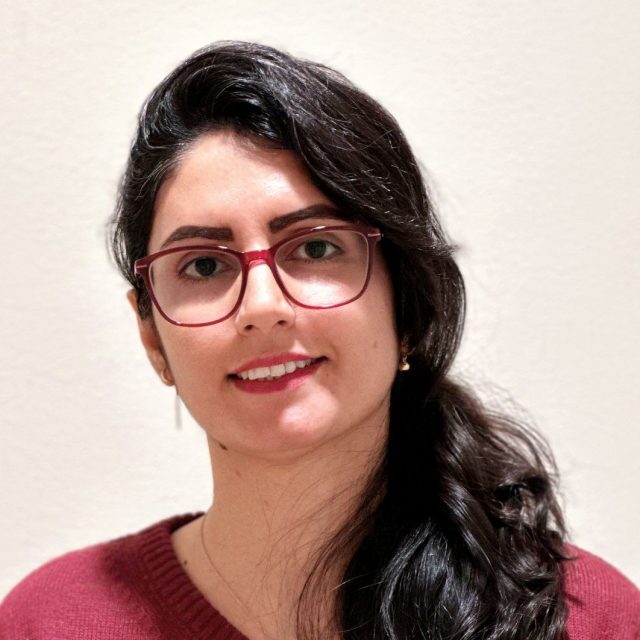
Nooshin Nosrati is a Digital Futures Postdoctoral Fellow at KTH Royal Institute of Technology, where she leads the "Lego Inspired accessible and automated design framework for demanding Edge AI Systems" project (21 August 2024 – 31 May 2026). Her research focuses on developing the SiLago framework, a modular ASIC design automation tool achieving 10X-100X energy efficiency gains over GPUs/FPGAs. The project bridges system-level implementation with application synthesis for industrial Edge AI applications. She completed her Ph.D. in Digital Electronic Systems at the University of Tehran, with a thesis on hybrid reliability provisions in embedded systems . Her expertise includes hardware modeling, VLSI, and system architecture design. Supervisors: Main Supervisor: Ahmed Hemani (Full Professor, Department of Electrical Engineering, KTH) Co-Supervisor: Artur Podobas (Associate Professor, Division of SCS, School of EECS, KTH) Project Context: Funded by KTH's Digital Futures initiative, the work aligns with societal goals in digitalized industry and cooperative research. The SiLago framework integrates computation, storage, and interconnect requirements to streamline ASIC design from application-level concepts to manufacturable silicon.
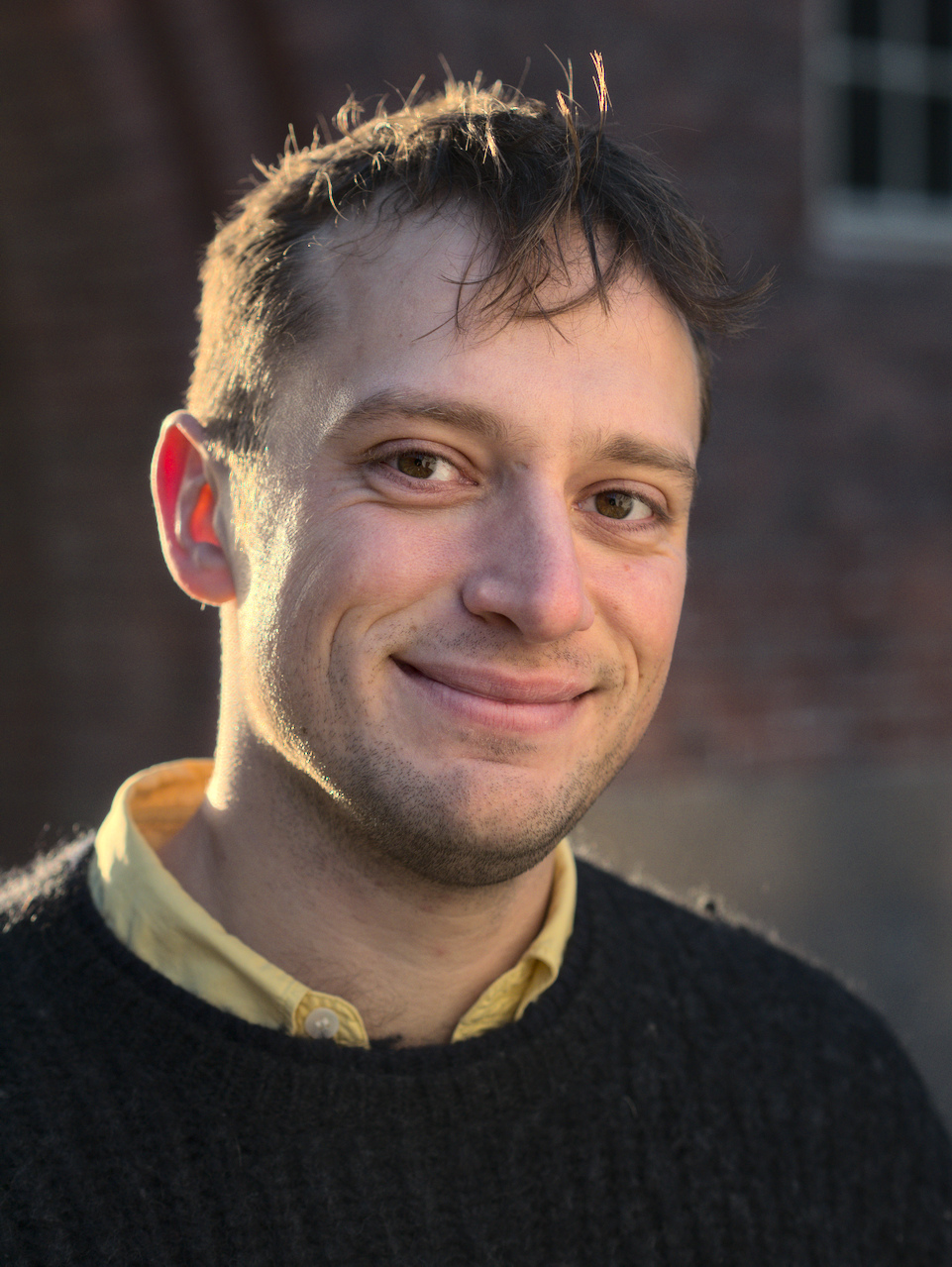
Oskar Kviman is a doctoral student at KTH Royal Institute of Technology working in the Lagergren Lab within the Division of Computational Science and Technology. His research bridges machine learning, statistics, and computational biology with a focus on developing and applying advanced probabilistic methods. His primary research interests include: Bayesian phylogenetics and probabilistic machine learning Variational inference, variational auto-encoders, and sequential Monte Carlo methods Generative AI techniques including flow matching, Schrödinger bridges, and diffusion models Computational cancer research focusing on differential expression testing and spatial transcriptomics Kviman's publication record demonstrates significant contributions to variational inference methodology, particularly in phylogenetics and generative modeling. His work spans top machine learning conferences including ICML, NeurIPS, and AISTATS, showing consistent development of techniques that improve efficiency and accuracy in probabilistic modeling. Recent publications focus on multi-marginal flow matching, variational resampling, and mixture learning in black-box variational inference. He has been recognized for his peer review contributions as a Top reviewer (10%) for AISTATS 2023. Kviman has supervised master's theses for Xindi Liu and Ricky Molén at KTH and serves as a lecturer for 'Statistical Methods in Applied Computer Science' since 2021, while previously working as a teaching assistant for 'Machine Learning, Advanced Course' and 'Deep Learning, Advanced Course'.
Shahab Fatemi is an Associate Professor at the Department of Physics, Umeå University, leading the Computational Space Physics research group. His primary research focuses on plasma interactions with planetary bodies using hybrid-kinetic simulations and spacecraft data, with a particular emphasis on Mercury, the Moon, and comets. He completed his Ph.D. in Space Science at Luleå University of Technology (2014) and held postdoctoral positions at UC Berkeley and NASA's Ames Research Center. He is a co-investigator on NASA's Lunar Vertex mission (launching 2025) and contributes to ESA/JAXA's BepiColombo mission to Mercury. His technical expertise includes developing the Amitis parallel plasma simulation code in C++/CUDA/MPL. Teaching responsibilities include undergraduate courses on Spacecraft Technology and Design , Research Topics in Physics , and Machine Learning in Physics . He supervises PhD/postdoc/undergraduate researchers and collaborates internationally across institutions like IRF Kiruna and NASA's Goddard Space Flight Center. Research interests span planetary magnetospheres, solar wind interactions, and plasma modeling, with recent work analyzing Mercury's field-aligned currents, lunar exosphere dynamics, and Ganymede's atmospheric/plasma environment. His computational tools enable 3D simulations of planetary plasma environments at unprecedented resolution. Key projects include: Leading Mercury plasma studies via BepiColombo's MIPA instrument Developing Lunar Vertex's PRISM payload for magnetic anomaly investigation Simulating Ceres' plasma environment under variable solar wind conditions Labs/teams: Computational Space Physics Group (Umeå) BepiColombo/SERENA collaboration NASA Lunar Science Working Group Future work includes expanding Amitis code capabilities for exoplanetary plasma studies and preparing for JUICE mission data analysis at Ganymede.
Martin Hultman is an Assistant Professor at the Department of Biomedical Engineering (IMT), Division of Biomedical Engineering (MT), Linköping University. His work centers on biomedical optics and microcirculation, with a strong emphasis on developing high-speed, real-time imaging algorithms using FPGA and GPU platforms. Department: Division of Biomedical Engineering (MT) University: Linköping University Academic Rank: Assistant Professor Email: martin.o.hultman@liu.se His research focuses on non-invasive optical techniques for assessing microvascular blood flow, particularly through laser speckle contrast imaging. These methods are applied in clinical contexts such as burn wound assessment and critical limb ischemia. He actively contributes to advancing real-time perfusion imaging with hardware-accelerated processing. The recent publications highlight a consistent trend in developing robust, speed-resolved, and depth-sensitive imaging techniques using multi-exposure laser speckle contrast imaging, wavelet analysis, and machine learning. These studies span applications in skin perfusion, coagulation monitoring, and longitudinal variability in microcirculation, reflecting a strong interdisciplinary focus at the intersection of biomedical engineering, signal processing, and clinical physiology. Scientific recognition includes: Best Research Presentation Award at Medicinteknikdagarna, awarded by the International Federation for Medical and Biological Engineering (IFMBE) and Svensk förening för medicinsk teknik och fysik (MTF) Martin Hultman collaborates closely with senior researchers such as Professor Tomas Strömberg, Senior Associate Professor Marcus Larsson, and Adjunct Associate Professor Ingemar Fredriksson. He is involved in the Biomedical Optics research group, contributing to innovations in optical imaging for clinical diagnostics. While no formal grants are mentioned, his work implies involvement in funded research projects related to real-time imaging and microcirculatory assessment. There is no indication of student advising at this time. He is part of the Biomedical Optics research team within the Division of Biomedical Engineering, which develops technologies for clinical and research applications using light-tissue interactions. The group is actively involved in translating optical methods into practical tools for healthcare, including real-time imaging systems and diagnostic algorithms.
Yi Wang is a Professor of Embedded Systems at the Department of Information Technology, Uppsala University , Sweden. He leads research in real-time and embedded systems with a focus on modeling, analysis, and implementation of safety-critical applications. He is affiliated with the Embedded Systems Group and serves as a Principal Investigator (PI) in major research centers such as UPMARC and projects like CUSTOMER (ERC Advanced Grant), CoDeR-MP, and CERTAINTY. Research Interests: Yi Wang’s work centers on Embedded Systems Design, Real-Time Scheduling, Multicore Programming, and Model-Checking of Real-Time Systems . His research addresses fundamental challenges in timing predictability, schedulability analysis, and the verification of complex real-time systems. He has made significant contributions to the digraph real-time task model, mixed-criticality systems, and timing analysis of ROS 2 systems. His work bridges theory and practice, often resulting in deployable tools and formal methods for industrial applications. Recent Research Trends: His most recent publications (2023–2025) focus on optimizing real-time performance in ROS 2, managing parallel task graphs with resource contention, improving GPU-based inference on embedded platforms, and enhancing timing predictability in multithreaded executors. These works reflect a strong trend toward applying formal real-time theory to modern robotics, AI integration, and multicore embedded architectures. Scientific Tools and Leadership: He is a key contributor to foundational tools in real-time systems: UPPAAL – Model checking for timed automata TIMES – Schedulability analysis and code generation CATS – Compositional analysis of timed systems TIMES-Pro – Based on the digraph real-time task model Advising and Research Funding: Yi Wang has supervised numerous PhD students and postdocs. He has led or participated in multiple large-scale funded projects supported by the Swedish Research Council (VR), the Swedish Foundation for Strategic Research (SSF), and the European Commission (FP7, ERC). These include UPMARC (10-year Linnaeus center), CoDeR-MP (with ABB and SAAB), SAVE++ (with VOLVO), and CREDO. Laboratories and Research Groups: He is a core member of the Embedded Systems Group at Uppsala University and leads research within the UPMARC center, which focuses on programming models and analysis techniques for multicore architectures. His lab develops formal methods and tools to ensure correctness and timing guarantees in embedded and cyber-physical systems.
Håkan Sundell is an Assistant Professor of Computer Science at the University of Borås , affiliated with the Faculty of Librarianship, Information, Education and IT and the Department of Information Technology . Since 2006, he has been active as a teacher in informatics and a research group leader for the CSL@BS research group , while also serving as program manager for the System Architecture Education with a Focus on Software Development . His research spans Artificial Intelligence , Parallel and Distributed Systems , Concurrent Programming , and Machine Learning Applications , with a particular emphasis on lock-free data structures and GPU algorithms . He has developed over 30 courses and supervised multiple doctoral students to completion. Scientific contributions include advancements in non-blocking algorithms, real-time systems, and AI-driven marketing tools. His article trends reflect interdisciplinary work in data science for fashion retail , district heating analytics , and marketing campaign optimization . Key Awards: Best Paper Award at IPDPS 2003 Recognized as a pioneer in Swedish computer game development As a main supervisor since 2012, he has driven externally funded research projects (VR, SSF, KKS, HUR) and served on university committees, including chairing the education committee from 2018–2022.
Kateryna Morozovska is a Researcher at the KTH Royal Institute of Technology , affiliated with the Division of Decision and Control Systems and the School of Electrical Engineering and Computer Science . Her work bridges computational methods and energy systems development, focusing on physics-informed machine learning for renewable energy integration and power transformer optimization. Education B.S. and M.S. in Electrical Mechanics from Zaporizhzhya National Technical University (2013) European Energy Masters program with mobility at DTU (Denmark), TU Delft (Netherlands), and NTNU (Norway) PhD in Electrical Engineering from KTH (2020) on 'Dynamic rating for applications in renewable energy' Licentiate from KTH (2019) Research Focus Kateryna's research emphasizes Physics-Informed Neural Networks (PINNs) for power system optimization, including transformer thermal modeling, cellulose degradation analysis, and renewable energy integration. Her projects explore dynamic rating techniques to enhance grid efficiency and sustainability, funded by Vinnova and applied in PV-power plants and wind farms. Scientific Contributions She has developed frameworks for transformer cost analysis, wind farm sizing, and sensor placement optimization using PINNs and MILP. Her work addresses environmental trade-offs in wind energy, such as raw material mining impacts, and investigates thermodynamic challenges in nanocellulose and power systems. Affiliations Kateryna collaborates with industry partners through the PINN Summer School and contributes to SweGRIDS and Mendeley communities. Her teaching includes hands-on PINN training and multi-GPU machine learning.
Jacob Lindbäck is a doctoral student at KTH Royal Institute of Technology , affiliated with the Division of Decision and Control Systems and the Wallenberg AI, Autonomous Systems and Software Program (WASP). His research focuses on the analysis and development of scalable optimization algorithms for machine learning, particularly computational optimal transport and its applications. Key research areas: Machine Learning Optimization Algorithms Optimal Transport Computational Mathematics Publications highlight advancements in GPU-accelerated splitting methods for optimal transport, novel algorithms, and computational efficiency. He also contributes as an assistant for the course Modelling of Dynamical Systems (EL2820) .
Joakim Andén-Pantera is an Associate Professor in the Division of Probability, Mathematical Physics and Statistics at the Department of Mathematics, KTH Royal Institute of Technology. His research spans signal processing, statistical data analysis, and machine learning with applications in cryo-electron microscopy, biomedical signal analysis, and audio classification. His educational background includes advanced training in mathematics and signal processing leading to his current academic position. Though specific degree details aren't provided in the text, his research profile indicates deep expertise in mathematical methods for signal representation. Professor Andén-Pantera's work focuses on developing mathematical frameworks that extract discriminative information from signals while remaining invariant to irrelevant variations like translation, frequency-shifting, and noise. His research bridges theoretical mathematics with practical applications across multiple domains: Developing wavelet scattering transforms for robust signal representation Applying these techniques to cryo-EM for molecular structure analysis Creating methods for audio and music classification through time-frequency analysis Designing algorithms for biomedical signal processing, particularly ECG analysis Contributing to computational methods for cosmological parameter estimation His publication record shows consistent contributions in both theoretical signal processing and practical implementations. The research trajectory demonstrates increasing sophistication in applying scattering transforms and deep learning to diverse signal processing challenges across biology, medicine, and acoustics. Notable scientific recognition includes: Best Paper Award (2nd Place) at IEEE International Workshop on Machine Learning for Signal Processing (2015) Best Paper Award (1st Place) at International Conference on Digital Audio Effects (2012) Best Paper Award at IPDPS for cuFINUFFT implementation Professor Andén-Pantera advises graduate students on degree projects in financial mathematics, mathematical statistics, and engineering mathematics. His research group develops computational tools including ASPIRE for cryo-EM and Kymatio for wavelet scattering transforms. He teaches courses in Applied Statistics, Probability Theory, and Statistical Learning at KTH. He leads the development of several influential open-source software projects that have become standard tools in their respective fields, with Kymatio particularly gaining widespread adoption across multiple research communities.
Ola Friman serves as an Adjunct Professor at Linköping University's Department of Electrical Engineering (ISY), actively contributing to the Computer Vision Laboratory (CVL). His academic profile centers on interdisciplinary applications of image processing across engineering and medical domains. Research specialties include computer vision algorithms for remote sensing systems (particularly airborne thermography and hyperspectral imaging) and medical image analysis techniques for fMRI and CT applications. Key methodological contributions involve illumination compensation, anisotropic interpolation, and GPU-accelerated statistical processing for large-scale data. Publication trends from 2005-2014 reveal consistent innovation in translating theoretical image processing concepts to practical solutions, with emphasis on district heating infrastructure monitoring, medical diagnostics, and remote sensing data rectification through collaborations with international researchers. As a core member of the Computer Vision Laboratory (CVL), he participates in advancing vision-based technologies within Linköping University's electrical engineering research ecosystem, focusing on real-world implementation of computer vision systems.
Stefan Engblom is a Professor in Scientific Computing at Uppsala University, Department of Information Technology. His research focuses on developing computational methods and software for scientific applications, with particular expertise in numerical methods, fast algorithms, and simulation of complex systems. He is affiliated with the Scientific Computing division within the Information Technology department at Uppsala University. Engblom's research spans several key areas including fast multipole methods for efficient computation of long-range interactions, stochastic simulation of reaction-diffusion processes in complex geometries, computational epidemiology for modeling disease spread, and fluid dynamics simulations. His work combines theoretical development with practical implementation, resulting in several widely used software packages. His publications reveal a consistent focus on developing efficient numerical algorithms that address computational challenges in various scientific domains. The research shows a progression from fundamental algorithm development (fast multipole methods) to applications in biology (reaction-diffusion systems) and public health (epidemic modeling), demonstrating the versatility and applicability of his computational approaches. Engblom maintains active software development through several research codes including SimInf for epidemic modeling, URDME for reaction-diffusion processes, FMM2D/FMM3D for fast multipole methods, and other specialized tools for fluid dynamics and fiber simulations. His stenglib provides general-purpose Matlab libraries used in his research and available to the broader scientific community.
Jens Wittsten is a Researcher affiliated with the Department of Engineering at the University of Borås' Academy of Textiles, Technology and Economics. He serves as the main supervisor for doctoral student Markus Klintborg and holds office in room C801. His work bridges applied mathematics, materials science, and computational engineering. Research interests include modeling phenomena in moiré heterostructures (e.g., twisted graphene layers), semiclassical quantization in strained lattices, and seismic data processing techniques. He has contributed to understanding electronic phase transitions, magic angles in bilayer graphene systems, and numerical methods for wave propagation modeling. His publication trends reflect interdisciplinary focus: recent works address both fundamental physics (e.g., Hofstadter butterfly studies) and applied engineering challenges (e.g., warehouse optimization via GPU-accelerated routing). Jens advises one doctoral candidate and maintains an active research portfolio spanning over 25 peer-reviewed articles since 2010. His methodological innovations include contributions to seismic apparition techniques and dealiasing algorithms.
Nicholas Morse is a Postdoctoral Researcher in the Engineering Mechanics Department at KTH Royal Institute of Technology in Stockholm, Sweden. He joined KTH in May 2025 and is supervised by Professors Philipp Schlatter (FAU Erlangen, KTH), Ramis Örlü (OsloMet, KTH), and Mihai Mihaescu (KTH). Dr. Morse earned his PhD in Aerospace Engineering & Mechanics from the University of Minnesota in 2023 under Professor Krishnan Mahesh. Prior to KTH, he served as a Senior Scientist at the Research Center Pharmaceutical Engineering in Graz, Austria (2023-2025), where he led simulation strategy for an EU Horizon 2020 project and developed computational methods for droplet breakup analysis. Nicholas Morse's research centers on: Curvature and rotational effects on turbulent flows Turbulent boundary layers on curved surfaces and spinning cones Eccentric Taylor-Couette-Poiseuille flow transition High-fidelity simulation of complex turbulent flows using DNS and LES His technical expertise spans: High-performance computing infrastructure Direct numerical and large-eddy simulation methodologies Adaptive mesh refinement algorithms Heterogeneous (GPU) computing implementations Multiphase flow modeling Academic recognition includes: John A. & Jane Dunning Copper Fellowship for Aerospace Engineering & Mechanics (2019) Donald & Shirley Gorence Scholarship (2018) Robert H. & Marjorie F. Jewitt Fund Scholarship (2017) Dr. Morse has extensive experience in computational fluid dynamics, having conducted large-scale simulations (>10,000 processors) at the University of Minnesota and developed the Multi-Element Wing Generator MATLAB application for Formula SAE aerodynamics design. His work bridges theoretical fluid mechanics with practical engineering applications across aerospace and pharmaceutical domains.