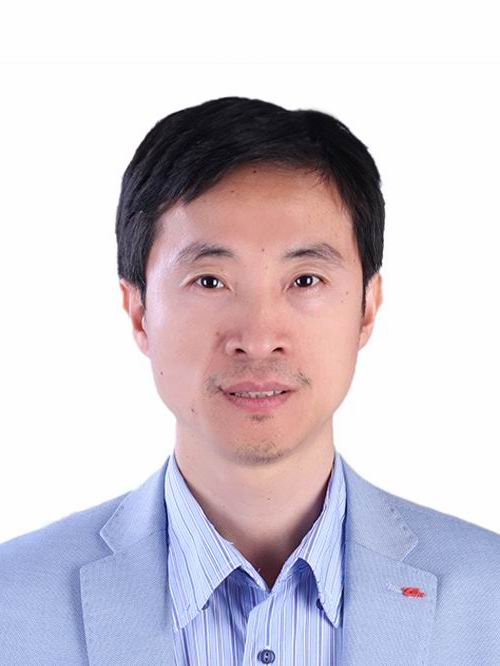
Ali Gurbuzمشاهده پروفایل
استادیار
- Machine Learning
- Signal Processing
- Remote Sensing
- +۵ مورد دیگر
Ali Gurbuz is an Assistant Professor in the Department of Electrical and Computer Engineering at Mississippi State University's College of Engineering, specializing in smart sensing systems and machine learning applications. His research integrates signal processing with autonomous systems for environmental monitoring and medical imaging. His educational background includes a Bachelor's degree from Bilkent University (Turkey), and Master's/Doctoral degrees in Electrical and Computer Engineering from Georgia Institute of Technology. Since joining MSU in 2018 after a position at the University of Alabama, he has established himself as a leading researcher in sensing technologies. Gurbuz's research focuses on developing intelligent front-end sensing systems that optimize data acquisition using machine learning, addressing critical bottlenecks in processing capabilities for applications ranging from autonomous vehicles to precision agriculture. His work emphasizes efficient data collection through radar, lidar, and camera systems, with particular attention to soil moisture estimation and medical imaging applications. His publication portfolio demonstrates strong trends in UAS-based remote sensing, RF interference mitigation, and deep learning for signal processing. Key research areas include GNSS reflectometry for soil moisture mapping, radar-based sign language recognition, and seafloor gas seep detection using sonar data. NSF CAREER Award recipient (2021) for $500,000 to advance smart sensing systems research Gurbuz co-directs the Information Processing and Sensing (IMPRESS) research group at MSU, collaborating extensively with the Center for Advanced Vehicular Systems and Geosystems Research Institute. His work bridges theoretical signal processing with practical implementations in agricultural monitoring, environmental sensing, and medical applications, with several projects demonstrating hardware-software co-design approaches for next-generation sensing systems.