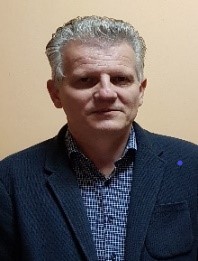
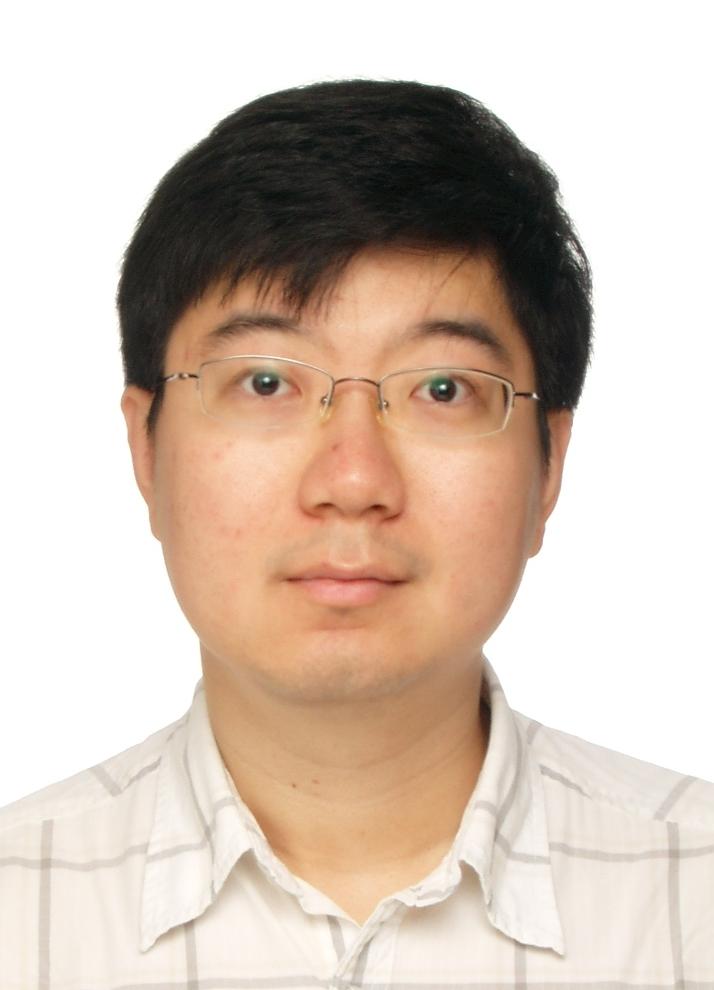
Andrei-Nicolae Alistar is an Assistant Professor at the Technical University of Iasi, focusing on power electronics and control systems. His research explores resonant converters, fuzzy logic control, and state-space averaging techniques. He has published works on numerical command structures for power converters and applications of fuzzy logic in resonant converter designs. His current research investigates the current state of resonant-circuit-based power converters. Education: PhD Topic: Contributions to the development of power converters with resonant circuits (Advisor: Prof. Dimitrie Alexa) Research Interests: Power electronics, resonant converter optimization, and advanced control methodologies for energy systems. His work bridges theoretical control frameworks with practical applications in high-efficiency power conversion. Awards: None explicitly mentioned. Advising & Grants: No formal advisees or grants listed. Collaborations include researchers like Constantin Posa and Cosmin Galea.
Professor Daniel Tudor Cotfas is affiliated with the Department of Electronic and Computers at the Faculty of Electrical Engineering and Computer Science, University of Technical Education Bucharest. His research focuses on renewable energy systems, particularly photovoltaic (PV) and hybrid energy solutions. He explores topics such as solar thermoelectric generators, low-power sensor networks, and cybersecurity in IoT-integrated energy systems. His work emphasizes improving energy efficiency through advanced materials, optimization algorithms, and policy frameworks. Key research areas include dust impact on PV panel performance, parameter extraction for solar cells using metaheuristic algorithms, and virtual instrumentation for educational and industrial applications. He has contributed to remote laboratory systems and smart energy monitoring technologies. His publications address challenges in concentrated solar power, hybrid PV-thermoelectric systems, and energy harvesting for wireless sensors. Notable collaborations involve experimental setups for studying thermoelectric materials under concentrated light and developing frameworks for secure IoT integration in renewable energy infrastructure. Cotfas is also engaged in educational initiatives, leveraging LabVIEW and FPGA-based tools for hands-on learning in renewable energy and control systems.
Doru TODINCA is an Associate Professor at the Polytechnic University of Timisoara , affiliated with the Faculty of Automatic Control and Computers and the Computer Science department. His research focuses on fuzzy logic systems , networks and communications , and mobile systems , with particular emphasis on applications in cellular networks and fuzzy automata. He earned his Dr. Eng. degree in 2005 with a thesis on resource allocation in GPRS/EGPRS networks , supervised by Dr. Eng. Ştefan HOLBAN. His work bridges theoretical fuzzy logic with practical network challenges, including resource optimization and service composition. Notable contributions include algorithms for network selection, fuzzy inference systems for diabetic management, and VHDL frameworks for automata modeling. His research has been published in venues such as OMNeT++ simulations and IEEE conferences. Education: PhD (2005), Polytechnic University of Timisoara Awards: Merit Award 2025 He organizes events like the Mobile Applications Student Contest (SCMUPT) and contributes to workshops on secure data transmission solutions. His lab focuses on embedded systems, fuzzy logic controllers, and wireless communication protocols.
Marcelo H. Ang Jr. is a Professor in the Department of Mechanical Engineering at the National University of Singapore (NUS), where he also serves as the Director of the Advanced Robotics Centre. With expertise spanning robotics, control systems, and intelligent automation, he has made significant contributions to mobile manipulation, compliant control, and multi-robot systems. His work bridges theoretical foundations with practical applications in manufacturing, surveillance, and human-robot interaction. Research Interests: Robust Mobile Manipulation in Unstructured Environments Distributed Mobile Robotic Systems Man-Machine User Interface Control of Dynamic Behavior of Robot Manipulators Passive Compliance and Flexible Robots Mobile Robotics Intelligent Control using Neural Networks and Fuzzy Reasoning His research spans fundamental robotics concepts like impedance control and compliant manipulation to cutting-edge applications in multi-robot systems, autonomous navigation, and soft robotics. Recent work focuses on mobility-enhanced sensor networks, deep learning for perception, and autonomous vehicles. Scientific Awards: Awards for Excellence 2000, for Most Outstanding Paper in 1999 Volume for "A Walk-Through Programmed Robot for Welding in Shipyards" Research Activities: Professor Ang has led multiple funded projects including "Integration of Solid Modeling Systems and Robot Controller Architectures" (1990-1995), "Management of Manufacturing Technologies" (1993-1995), and "Research and Development of a Ship-Welding Robot" (1994-1997). He has supervised numerous students, including Ph.D. candidate Zheng Liu who worked on multi-robot surveillance systems. His laboratory at NUS develops advanced robotic systems for applications ranging from ship welding to autonomous vehicles.
Professor Madhu Chetty is a distinguished academic in Information Technology at Federation University Australia's Institute of Innovation, Science and Sustainability (IISS). He also serves as the Director of AI and ML Stream within the Health Innovation and Transformation Centre (HITC). With over 35 years of tertiary teaching, research, and leadership experience in Australia and overseas, Professor Chetty has held academic positions at the University of Melbourne, Monash University, and the National Institute of Technology, India. His notable visiting appointments include Indian Institute of Technology Bombay, University of Warwick, Jawaharlal Nehru University, and Delft University of Technology. Amity University, India conferred on him a 'Citation and Lifetime Professorship'. Professor Chetty's research focuses on applying Artificial Intelligence (AI), Machine Learning (ML), Large Language Models, and Blockchain to problems in bioinformatics, health, and energy trading. His interdisciplinary work contributes to FedUni's strategic research centers in Health and IT. Key research areas include modeling genetic networks for cardiovascular and eye disease research, mental health applications using AI techniques for analyzing biopsychosocial data, drug repurposing with IBM collaboration, and blockchain algorithms for energy trading funded by the Qatar government. His publication record shows a consistent focus on computational approaches to biological problems, with recent work emphasizing genetic network modeling, mental health applications of AI, and blockchain technology. The research demonstrates a progression from foundational work in protein structure prediction to current applications of AI in healthcare and energy systems, with a strong emphasis on translating computational methods to real-world problems. 2021 Overall Award for Excellence in Graduate Research Supervision 2024 Dean's award for excellence in PhD thesis (awarded to one of his students) 2021 Vice Chancellor's Certificate of Commendation for Excellence in Community Engagement and Impact Professor Chetty has supervised over 22 PhD students to completion and currently supervises 5 PhD students across diverse topics including dementia prediction, drug repurposing, cancer classification, and mental health. His leadership extends to editorial roles for journals, conference organization, and development of publicly available software tools like GRAMP and GlobalMIT for genetic network analysis. He has secured substantial research funding totaling over $1.1 million as lead investigator, including projects funded by NHMRC, Qatar Research, Development and Innovation, and industry partners. As an academic leader, he has served as Deputy Head of School, member of the School Leadership Team, and HDR Coordinator. His professional service includes roles as General Chair of IEEE International Conference and Vice Chair of the IEEE Victorian/Tasmanian Section, demonstrating significant contribution to the broader academic community.
Mostafa Shokrian Zeini is a researcher at the Leibniz Institute for Agricultural Engineering and Bioeconomy (ATB) , specializing in the Agromechatronics Department . His work bridges control theory, robotics, and agricultural technology, with a focus on Model-in-the-Loop (MIL) , Software-in-the-Loop (SIL) , and Hardware-in-the-Loop (HIL) systems. Research Interests: Agricultural Robotics Visual Servoing Nonlinear Control Synthesis Uncertain Complex Systems Recent Projects: foodChain – 5G integration in the Golßen-Mittenwalde-Schönefeld region Development of robotic harvesting systems for sweet peppers, apples, and blueberries Review of field robots for potato cultivation Collaborations: 43rd GIL Annual Conference Joint work with institutions like Shiraz University of Technology and Hamedan University of Technology
Dr. Baris Yuce is a Senior Lecturer and Program Lead for Engineering Management BEng/MEng at the Faculty of Environment, Science and Economy, University of Exeter. He holds a PhD in Engineering from Cardiff University and has previously worked as a Postdoctoral Researcher at Cardiff in sustainable engineering and machine vision. His academic background includes MSc and BSc degrees in Industrial Engineering from Sakarya University, Turkey. His research focuses on the integration of artificial intelligence, optimization, and data science into sustainable engineering systems. Key areas include smart cities, renewable energy management, sustainable supply chains, and Industry 4.0. He applies machine learning, multi-agent systems, fuzzy logic, and nature-inspired optimization algorithms to real-world engineering challenges in buildings, transportation, and manufacturing. Baris has contributed to a wide array of funded research projects, including EU FP7 initiatives like SPORTE2, KnoholEM, and MAS2TERING, as well as UKRPIF, KTP, STFC, and industry-funded efforts. These projects reflect a strong emphasis on digital twins, energy optimization, smart grids, and sustainable infrastructure. He is affiliated with the Environmental Intelligence @ Exeter research network, which aligns with his focus on data-driven sustainability solutions. His work bridges civil, mechanical, electrical, and manufacturing engineering domains with computer science and applied mathematics. Scientific Awards: No awards listed in the provided text. Baris Yuce has been involved in multiple research collaborations and grants, serving as Principal Investigator (PI) on an industrially funded project with Waterman Group and as Co-Investigator (Co-I) on several others including UKRPIF's CREWW ENZO, STFC Food Network+, KTP with Smart Manufacturing, RIVIC, SPORTE2, KnoholEM, EEO-Box, WANDA, and MAS2TERING. These roles highlight his leadership in interdisciplinary and applied research. While no formal advisees are listed, his role as Program Lead suggests academic leadership and mentorship responsibilities. He is part of the Environmental Intelligence @ Exeter initiative, a cross-disciplinary research network focused on leveraging data science and AI for environmental sustainability, indicating active participation in cutting-edge, team-based research.
Carlo Stefano Ragusa is a Full Professor in the Department of Energy (DENERG) at the Polytechnic University of Turin, where he leads research in applied electromagnetics and magnetic materials. He is a member of the Interdepartmental Center PEIC (Power Electronics Innovation Center) and has held various academic positions including Associate Professor at Turin Polytechnic University in Tashkent and Visiting Researcher at Ecole Normale Superieure de Cachan. Professor Ragusa's research interests focus on applied electromagnetics, electromagnetic devices, magnetic alloys and steels, and magnetic materials for electrotechnical applications. His work spans electrical engineering with emphasis on power components, magnetism, and simulation engineering. His research aligns with UN Sustainable Development Goals 4 (Quality education), 7 (Affordable and clean energy), 8 (Decent work and economic growth), and 10 (Reduced inequalities). Analysis of his recent publications reveals a consistent focus on magnetic loss characterization across various materials including soft magnetic composites, non-oriented steel sheets, and ferrites. His work addresses energy efficiency challenges in power electronics applications, with particular attention to complex induction waveforms, DC bias effects, and rotational losses. The research demonstrates both theoretical modeling and experimental validation approaches. Professor Ragusa has supervised numerous PhD students including Gulaly Khan, Uma Rajput, Song Huang, Francesco Moraglio, Michele Quercio, and Luigi Solimene. His research has been supported by various competitive calls including MetSuperCap (2024-2027), DYNANOMAG (2013-2016), SAVE (2007-2011), and multiple commercial contracts. He leads the CADEMA research group within DENERG and has served as Program Chair for the 13th International Workshop on 1&2 DIMENSIONAL MAGNETIC MEASUREMENT AND TESTING. His teaching contributions span the Electrical, Electronics and Communications Engineering PhD program at Politecnico di Torino across multiple academic years from 2005 to present.
Athanasios Vasilakos is a Professor at the University of Agder's Department of Information and Communication Technology. His research focuses on cutting-edge ICT domains including quantum computing, cybersecurity, and distributed systems. He maintains an extensive publication record with recent works concentrated in quantum machine learning, blockchain applications, and IoT security. Research interests span: Quantum computing architectures and cryptographic applications Secure federated learning frameworks for distributed networks AI-driven solutions for IoT and telecommunications systems Advanced cybersecurity techniques including steganalysis and homomorphic encryption Cross-domain applications in bioinformatics, smart grids, and autonomous vehicles Publication analysis reveals strong thematic focus on: security enhancements for emerging technologies (blockchain, quantum systems), privacy-preserving machine learning, and IoT optimization. Recent works demonstrate increasing attention to quantum-classical hybrid systems and their real-world implementations. Collaboration networks include extensive international partnerships across Europe and Asia, particularly in quantum computation, cybersecurity, and intelligent systems research.
Magdalena Turowska is a Researcher at the Department of Computer Science and Systems Engineering , Faculty of Information and Communication Technology , Wrocław University of Science and Technology . Her research focuses on computer networks, congestion control, and game theory applications in systems engineering. Research Interests : Network optimization, fuzzy logic control systems, game theoretic resource allocation, and adaptive congestion management in virtual networks. Publications (2007-2014) analyze road transport algorithms, multipath routing pricing games, network utility maximization, and fuzzy PID controller adaptations for congestion control. Contact : magdalena.turowska@pwr.edu.pl
Yifan Yu is an Assistant Professor at the Department of Information, Risk, and Operations Management, McCombs School of Business, The University of Texas at Austin. He holds a Ph.D. in Information Systems from the University of Washington and bachelor's/master's degrees in Management Science and Engineering from Tsinghua University. Research Focus: Economics of AI/ML, unstructured data analytics (text/images/video), and data-driven sustainable operations. Methodologies: Machine/deep learning, network analysis, econometric/game-theoretical modeling, and experiments. Publications: Appeared in top journals like Management Science , MIS Quarterly , and Information Systems Research . Awards: Best paper recognitions at INFORMS, CIST, WITS, and teaching awards from University of Washington.
Dr. Will Shepherd is a Researcher at the University of Sheffield 's School of Mechanical, Aerospace and Civil Engineering, affiliated with the Pennine Water Group. His work focuses on urban drainage systems, integrating artificial intelligence, GIS, and sensor technologies to enhance infrastructure resilience and performance. Rainfall radar integration for hydraulic modeling Contaminant ingress and transient analysis in water systems Thermal energy recovery from buried infrastructure Recent research includes the Pipebots EPSRC Programme Grant for robotic sensing in buried pipes and the CENTAUR Horizon 2020 project for autonomous flood control systems. Earlier projects span QUICS (uncertainty in catchment modeling), Cloud to Coast (pathogen risk prediction), and Cost-S (sewer asset management). Scientific Awards ‘Most Innovative New Technology of the Year’ at the 2018 Water Industry Awards (for CENTAUR)
Doc. dr. sc. Dejan Marić is an Assistant Professor at the Mechanical Engineering Faculty, University in Slavonski Brod, Croatia, where he also serves as a post-doctoral researcher. He has held academic roles since 2014, progressing from Assistant to his current rank, while maintaining strong industry connections through applied projects. Education: PhD in Technical Sciences (2014-2019) – Mechanical Engineering Faculty, Slavonski Brod Master in Mechanical Engineering (2007-2012) – Mechanical Engineering Faculty, Slavonski Brod Research Interests: Dr. Marić’s research spans welding technology, residual-stress analysis, corrosion protection, and manufacturing-process optimization. He investigates how technological parameters influence residual stresses and corrosion behaviour in welded structures, aiming to enhance durability and performance. His work integrates advanced welding processes (MIG-CMT, plasma cutting, laser welding), surface engineering through protective coatings, and quality-assurance methodologies. He also explores lean-manufacturing applications in SMEs and tribological aspects of mechanical systems, contributing to both academic knowledge and practical industrial solutions. Scientific Output: Over the last three years he has published more than 30 peer-reviewed articles focusing on: Post-weld heat treatment of high-strength steels Optimization of welding parameters for aluminium alloys Corrosion resistance of stainless steels and protective primers Plasma-jet cutting quality modelling using fuzzy logic Friction and wear reduction in automotive and power-train components Projects & Funding: Principal investigator, University of Osijek: “Optimization of cladded layer made with Ni-alloy” Institutional project leader: “Influence of technological parameters on residual stresses” European project partner (RCK-Slavonika 5.1, ROBO CHALLENGE, MAGMA) Industry collaborations with Đuro Đaković Kompenzatori d.o.o. on welding-quality testing and corrosion evaluation Laboratories & Teams: Dr. Marić conducts research within the Welding and Joining Technologies Laboratory at the Mechanical Engineering Faculty, supervising experimental work on residual-stress measurement, corrosion testing, and welding-process monitoring systems.
Prof. Mijodrag Milošević is a Full Professor at the Faculty of Technical Sciences, University of Novi Sad, where he serves as Head of the Chair of Machine Tools, Process Planning, Flexible Manufacturing Systems and Design Processes. With over 160 publications including more than 20 in SCI journals, his research significantly contributes to advanced manufacturing technologies and Industry 4.0 applications. His educational background includes: Bachelor's thesis: "Razvoj programske podrške za realizovanje metodologije za proveru radne tačnosti koordinatnih mernih mašina" (1997) Magister thesis: "Razvoj specijalizovanog CAD/CAPP/CAM rešenja primenom savremenih programskih sistema opšte namene" (2005) PhD dissertation: "Kolaborativni sistem za projektovanje tehnoloških procesa izrade proizvoda baziran na internet tehnologijama" (2012) Prof. Milošević's research focuses on cutting-edge manufacturing technologies with particular emphasis on Process Planning, Manufacturing Optimization, and Virtual Design. His work bridges traditional manufacturing with digital transformation through Industry 4.0 technologies, Smart Manufacturing, and Collaborative Engineering approaches. His expertise spans from fundamental process optimization to advanced applications of artificial intelligence and cloud computing in manufacturing environments. Analysis of his recent publications reveals a strong trend toward smart manufacturing solutions, with increasing focus on AI-driven optimization, digital twins, and cloud-based manufacturing systems. His research has evolved from traditional CAPP systems to sophisticated integration of metaheuristic algorithms, machine learning, and IoT technologies in production engineering, reflecting the broader industry shift toward intelligent, data-driven manufacturing processes. Among his professional recognitions: Certificate of Innovation Consultant in the Innovation Consultants Development Programme Prof. Milošević has participated in over 20 scientific research projects from national and international programs, including those from the Ministry of Education, Scientific and Technological Development of Republic of Serbia, TEMPUS, and CEEPUS initiatives. He has coordinated significant research projects including "Application of collaborative engineering for improving sustainable manufacturing process," "Application of smart manufacturing in Industry 4.0," and "Trends of development and application of the Industry 4.0 model in SMEs." Currently, he is involved in the research project "Application of edge computing and artificial intelligence methods in smart products" and several CEEPUS projects. He previously served as head of the Laboratory of Process Planning, Manufacturing Optimisation and Virtual Design before assuming his current role as head of the Chair of Machine Tools, Process Planning, Flexible Manufacturing Systems and Design Processes, leading a team focused on advancing manufacturing technologies through research and innovation.
Ying Cai is a prolific researcher with significant contributions across diverse domains of computer science, mathematics, and biomedical applications. Their work spans artificial intelligence, medical imaging, cybersecurity, and computational methods, as evidenced by recent publications in journals like Engineering Applications of Artificial Intelligence and IEEE Transactions on Medical Imaging . Key research areas include lung cancer detection algorithms, distributed filtering under cyber-attacks, and cryptographic protocols. 2025: 9 publications 2024: 18 publications 2023: 8 publications Notable collaborations include work with Yang Zhao, Zeyu Zhang, and Daji Ergu on medical AI applications and computational techniques. Their recent articles demonstrate expertise in: Medical imaging and diagnostic automation Deep learning optimization Secure communication protocols Computational mathematical models Ying Cai's research bridges theoretical rigor with practical implementation across domains like health informatics, network security, and educational technology.