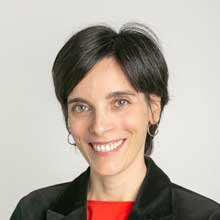
Tina Comes is a Full Professor in Decision-Making & Digitalisation at the University of Maastricht, Netherlands. She holds a part-time position (0.2 FTE) and has previously held academic roles at TU Delft (Associate Professor in Decision-Making for Resilience, 2017), University of Agder (Full Professor in ICT, 2015-2017), and Visiting Professor at Lamsade, Université Dauphine, Paris (2014). Her research focuses on Crisis Informatics , Decision Theory , Disaster Management , Humanitarian Logistics , and Resilience . Her work spans building simulation , ventilation systems , and energy-efficient design , with grants totaling €9.6 million since 2012. Key projects include Resilient Systems (NL Ministry of Defense, 2020-2026), H2020 HERoS (2020-2023), and Climate Resilient Urban Infrastructure (Amsterdam, 2020-2022). She has supervised 6 PhD students at TU Delft (2017-2022), 3 Postdocs/PhDs at University of Agder (2013-2020), and 1 PhD at Université Toulouse (2014-2018). Her scientific awards include: 2020 José Maria Sarriegi Award by the Spanish Red Cross 2019 Emerald Literati Award 2016 Delft Technology Fellowship (acceptance rate 2012 Best Paper Award at ISCRAM Conference
Caterina Cruciani is an Associate Professor at the Department of Management , Venice School of Management , Ca' Foscari University of Venice. She serves as a member of the University Scientific Instrumentation Service Center (CSA) Management Committee and is affiliated with the Research Institute for Social Innovation . Research Interests Trust dynamics in financial advisory Behavioral finance and investor decision-making Sustainability disclosure and ESG integration Digital transformation in financial services Regional economic development and SME financing Agent-based modeling of cooperative behavior Key Article Trends (2009-2024): Span 15 years of research on financial trust (12 publications), behavioral economics (10), sustainability (6), and digital finance (5). Methodologically combines experimental economics , structural equation modeling , and Supervised Topic Modeling for ESG discourse analysis.
Dr. Mina Najafi is an academic researcher specializing in sustainable construction, digital transformation in built environments, and place attachment theory. Her work bridges engineering, urban planning, and social sciences. She actively supervises PhD students and contributes to interdisciplinary research initiatives. Research Focus: Sustainable Construction, BIM Technology, Digital Twins, Aging in Place Strategies, and Climate Resilience. Key Projects: Exploration of digital frontiers in construction, policy analysis for energy efficiency, and community-centric design for low-density regions. Her research interests span innovative construction practices, the integration of emerging technologies, and the socio-cultural dimensions of built environments. Recent work emphasizes leveraging digital tools for supply chain optimization and climate adaptation.
Ramana Vinjamuri is an Associate Professor in the Department of Computer Science and Electrical Engineering at the University of Maryland, Baltimore County (UMBC). He holds a secondary appointment as Visiting Professor at the Indian Institute of Technology, Hyderabad, India. His academic journey includes a Ph.D. in Electrical Engineering from the University of Pittsburgh (2008), M.S. in Bioinstrumentation from Villanova University (2004), and B.Tech. in Electrical and Electronics Engineering from Kakatiya University (2002). Dr. Vinjamuri's research focuses on Brain-Machine Interfaces (BMIs) for upper-limb prostheses control , neuroprosthetics and exoskeletons , machine learning in motor control , and neurophysiological signal processing . His work extends synergy-based models to control 37-dimensional hand movements, addresses human-robot interaction through emotionally intelligent systems, and develops neurotechnologies for substance use disorder using wearable sensors and AI. NSF CAREER Award (2019) NSF IUCRC BRAIN Center Planning Grant (2020) Harvey N Davis Distinguished Teaching Assistant Professor Award (2018) His publications demonstrate expertise in EEG and EMG signal analysis , deep learning for motor decoding , synergy modeling , and humanoid robot control . The Vinjamuri Lab at UMBC involves graduate, undergraduate, and high school researchers, with international collaborations in India and the US.
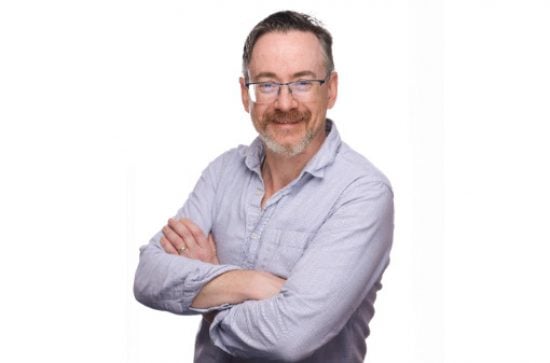
Professor Andrew Coogan is a behavioral neuroscientist specializing in circadian rhythms, chronobiology, and sleep. He is a Professor at Maynooth University's Department of Psychology, part of the Faculty of Science & Engineering, and directs the Chronobiology and Sleep Research Laboratory. His research focuses on circadian clock function in human environments, with a strong emphasis on their impact on health conditions like ADHD, diabetes, and mental health. He holds a Bachelors from Trinity College Dublin and a PhD from University College Dublin, after which he worked in the UK before joining Maynooth in 2008, serving as Department Head from 2015–2021. Education: BSc (Trinity College Dublin), PhD (University College Dublin). Research Interests: His work spans circadian rhythms in disease contexts (e.g., ADHD, diabetes, Parkinson’s), sleep disorders, and societal impacts of light pollution. He investigates how circadian disruptions influence health outcomes, using interdisciplinary approaches combining neuroscience, chronobiology, and clinical studies. Recent studies focus on pandemic-related sleep changes, chronotherapeutics, and sleep timing in metabolic disorders. Publications & Grants: Over 120 peer-reviewed papers (H-index 44), funded by grants from Science Foundation Ireland, Health Research Board, and others. His articles analyze topics like vaccine timing, social jetlag in diabetes, and ADHD chronobiology. Collaborations span Europe, addressing global health challenges through circadian lens. Awards & Recognition: While no specific awards are listed, his extensive publications and leadership roles reflect significant scholarly impact. Advising & Teams: Supervised 11 PhD, 5 MSc, and 2 MD students. Leads the Chronobiology and Sleep Research Lab, collaborating widely on clinical and basic research projects. Future Work: Ongoing studies include circadian data collection in bipolar disorder (AMBIENT-BD) and societal-level sleep patterns post-pandemic. He advocates for evidence-based chronotherapeutic strategies in clinical settings.
Cen April Yue is an Assistant Professor of Marketing, Advertising, and Public Relations at the University of Connecticut and a Visiting Lecturer at ISM (Lithuania). She holds an Affiliate Scholar position at the Internal Communication Research Hub, University of Florida. Her research focuses on internal public relations, leadership communication, organizational change, and corporate social responsibility. She serves as Chief Research Editor at the Institute for Public Relations' Organizational Communication Research Center. Her research explores topics such as employee advocacy, CEO social media engagement, artificial intelligence in communication, and the ethical dimensions of organizational behavior. She has published extensively in journals like the Journal of Public Relations Research and Journal of Brand Management , with a focus on leadership communication strategies, internal stakeholder management, and technology-driven communication trends. Education : Not explicitly listed in provided texts. Awards : Over 10 top paper awards and recognitions from communication associations and conferences. Teaching : Courses include Public Relations (MNG229), Communication Research Methods, and Communication Campaigns. Her work bridges theoretical and practical aspects of organizational communication, emphasizing the role of technology and leadership in fostering employee relationships and managing change. Current research trends include AI's impact on internal communication and ethical challenges in corporate social responsibility.
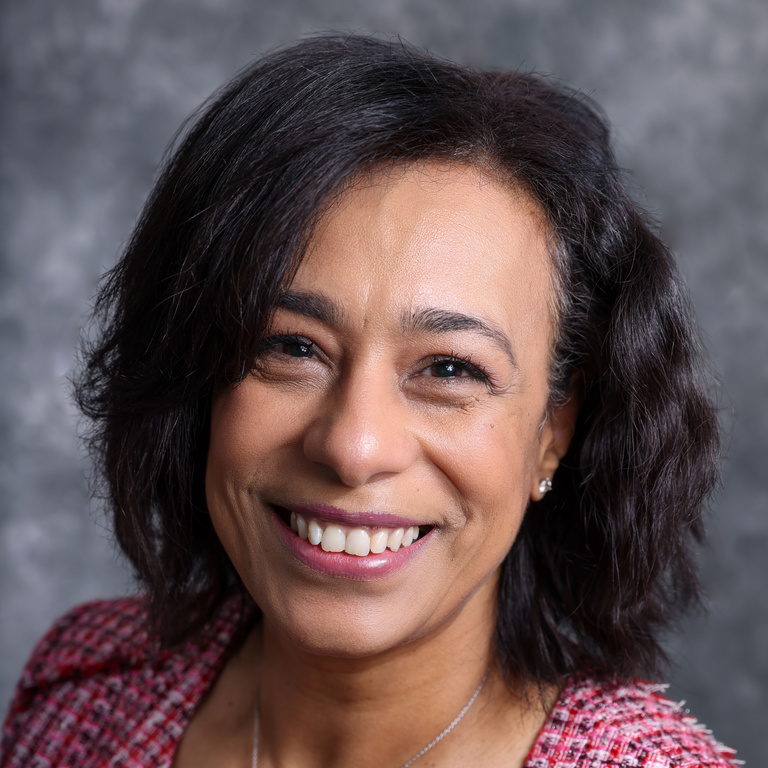
Amany Farag is a tenured Associate Professor at the University of Iowa College of Nursing and Co-Director of the VA Quality Scholars Program (Iowa City site). Her work bridges nursing science, human factors engineering, and data science to address critical patient safety challenges, with a specific focus on medication administration practices across healthcare settings. Education: Postdoctoral Scholar, Case Western Reserve University, Frances Payne Bolton School of Nursing PhD, Case Western Reserve University, Frances Payne Bolton School of Nursing MSN, University of Alexandria, Alexandria Egypt BSN, University of Alexandria, Alexandria Egypt Dr. Farag's research centers on reactive and proactive approaches to patient safety , with dual emphasis on medication error reporting systems and nurse fatigue prevention. Her work integrates human factors engineering and machine learning to develop novel interventions. Key themes include understanding how social and system factors influence nurses' error reporting behaviors, examining fatigue as a precursor to errors, and developing self-management strategies for nurse wellness. Recent projects explore intershift recovery, sleep hygiene using consumer technology, and the impact of shift work on cognitive performance. Publication trends reveal a strong focus on interdisciplinary safety science , with consistent output in nursing, human factors, and healthcare quality journals. Her work increasingly incorporates AI methodologies while maintaining clinical relevance to frontline nursing practice. Scientific Recognition: Mary Hanna Memorial Journalism Award (Journal of Peri-Anesthesia Nursing, 2016) Author of the Year (Journal of Emergency Medicine, 2018) Junior Investigator Award (Midwest Nursing Research Society, 2018) Rogers Endowed Lectureship Award (Mississippi Medical Center, 2018) Dr. Farag secures significant funding from national agencies including the National Council of State Boards of Nursing (NCSBN), NIOSH-funded Healthier Workforce Center of the Midwest, CDC-funded Injury Prevention Research Center, and University of Iowa Institute for Clinical and Translational Science. Her collaborative approach spans nursing, data science, ergonomics, and public health teams. As Co-Director of the VA Quality Scholars Program, she mentors future healthcare quality leaders while advancing her research on medication safety systems and nurse fatigue mitigation strategies through interdisciplinary partnerships.
Robert D. Zettle is a Professor of Psychology in the Clinical-Community Psychology Program at Fairmount College of Liberal Arts and Sciences, Wichita State University. He directs the Contextual Behavioral Science Lab and teaches Abnormal Psychology, Cognitive Behavioral Therapy, and Ethical and Professional Issues in Clinical Psychology. Dr. Zettle's educational background includes: Ph.D. in Psychology from University of North Carolina-Greensboro (1984) M.A. in Psychology from Bucknell University (1976) B.A. in Psychology from Wilkes College (1974) His research centers on Contextual Behavioral Science , examining how languaging and verbal behavior contribute to human suffering. Key areas include: Developing measures of psychological flexibility and self-as-context Experimental manipulation of processes in anxiety and mood disorders Comparing traditional CBT with Acceptance and Commitment Therapy (ACT) for depression Investigating mechanisms like defusion and acceptance in ACT Current projects focus on dissociative symptom induction, mood-enhancing versus value-congruent behavioral activation, and client treatment preferences in spider fear interventions. Dr. Zettle's recent publications (2019-2025) reveal a strong emphasis on self-as-context measurement , cross-cultural adaptations of ACT tools, and depression relapse prevention . His work increasingly integrates attention bias modification with ACT and explores client preference dynamics, while expanding applications to university counseling centers and international contexts. He mentors graduate students including Nakisha Carrasquillo, Angela Cathey, Suzanne Gird, Angie Hardage-Bundy, Sarah Staats, and Jeff Swails. His research is supported by ongoing projects in the Contextual Behavioral Science Lab investigating core ACT processes and clinical applications. The Contextual Behavioral Science Lab, directed by Dr. Zettle, maintains a collaborative team environment focused on both experimental psychopathology and clinical treatment development. Current work spans measurement validation, interoceptive exposure techniques, and comparative treatment studies for depression and anxiety disorders.
Dr. Terrance Fitzsimmons is an Associate Professor in Leadership at the University of Queensland Business School , with over 35 years as a Chartered Accountant. He serves as Managing Director of the Australian Gender Equality Council (AGEC) and holds advisory/board positions with Women and Leadership Australia and the Abbey Museum of Art and Archaeology . His research applies Pierre Bourdieu's theoretical frameworks to analyze gender inequality through concepts like field , capital , and symbolic violence . Key projects include the 'Filling the Pool' (2015) and 'Employer of Choice for Gender Equality' (2020) reports, addressing systemic workplace disparities. Recent publications focus on gendered leadership progression (2024), maverick-driven organizational change (2025), and Indigenous knowledge integration (2024). Collaborations with Dr. Miriam Yates and Professor Victor Callan examine CEO pathways, boardroom diversity, and pandemic impacts on work-life balance. Dr. Fitzsimmons supervises PhD projects on topics like Indigenous women's leadership and STEM diversity , with current grants including ARC Linkage Projects (2025-2028) for Indigenous environmental rangers' leadership amplification.
Dr. Michael P. Byrne is an Associate Professor at the School of Earth and Environmental Sciences , University of St Andrews, and a Marie Skłodowska-Curie Research Fellow at the Atmospheric, Oceanic and Planetary Physics Group , University of Oxford. His research focuses on climate dynamics, monsoons, land-climate interactions, and the water cycle. He leads the Climate Dynamics Lab at St Andrews, exploring topics like cloud feedbacks, tropical climate change, and continental-ocean temperature contrasts. He completed his PhD at MIT under Paul O’Gorman. His work bridges theory, models, and observations to address fundamental climate questions, including monsoon dynamics, intertropical convergence zone behavior, and extreme temperature amplification over tropical land. Key contributions include studies on ITCZ width impacts, elevation-dependent warming, and biases in precipitation projections. Education: PhD from Massachusetts Institute of Technology (advisor: Paul O’Gorman) Research Highlights: Cloud feedback mechanisms in tropical climates Land-ocean warming contrasts and their societal impacts ITCZ dynamics and global climate modeling Awards: Marie Skłodowska-Curie Fellowship (Oxford) Labs/Teams: Climate Dynamics Lab (St Andrews), ITCZ-MIP collaboration
Dr. Wahed Waheduzzaman is a Lecturer in Human Resource Management and Organizational Studies at Swinburne University of Technology's School of Business, Law and Entrepreneurship. His research focuses on HRM, Public Service Management, Local Government, and Corporate Governance, with recent emphasis on gender diversity, AI integration in HR, and workplace bullying in public sectors. He has supervised numerous PhD and Master's theses on topics ranging from green HR practices to migrant worker inclusion. Research interests include the intersection of HRM with environmental performance, governance reforms, and digital transformation. He actively contributes to peer-reviewed journals and conferences, and serves as Editor for Administrative Sciences . Professional activities include committee roles with Ratepayers Australia Inc. and editorial leadership. Teaching expertise covers Human Capital Analytics, HR Analytics, and Workplace Relations. Key publications highlight innovative methodologies like thematic analysis for strategic HRM research and quantitative content analysis for digital education integration. His work bridges theoretical frameworks with real-world governance challenges, particularly in public and municipal sectors.
Francisco Laranjo is a Portuguese graphic designer, researcher, and educator with a PhD in Design Methods and Criticism from the University of the Arts London. He holds an MA in Visual Communication from the Royal College of Art and a BA from ESAD – Escola Superior de Artes e Design. Currently serving as Assistant Professor at Lusófona University, he also works as an Associate Lecturer at Central Saint Martins and Co-director of the Shared Institute. PhD in Design Methods and Criticism MA in Visual Communication BA in Communication Design His work bridges graphic design with critical theory, focusing on design pedagogy, ethical implications of data-driven design, and the role of critique in professional practice. Publications span design criticism in Design Observer , Eye Magazine , and academic journals, while his teaching has reached institutions across 8 countries including CalArts, Sandberg Institute, and Zürich University of the Arts. Recent publications demonstrate a trajectory toward critical design theory, post-pandemic design adaptation, and curatorial practices. Key themes include the intersection of design and politics , digital-physical hybridity , and pedagogical innovation in graphic design education. As Editor of Modes of Criticism and co-director of Shared Institute, Laranjo fosters critical discourse through curatorial projects like the 2022 'Designers Troublemakers' exhibition and the upcoming 2025 'Graphic Collection – 50 years of design in Portugal' at the Polytechnic University of Porto.
Dr. Marion Schrumpf is a Group Leader in the Soil Biogeochemistry research group at the Max Planck Institute for Biogeochemistry, affiliated with the Department of Biogeochemical Processes. Her work focuses on soil carbon dynamics, mineral-organic matter interactions, and climate change impacts on soil systems. Research areas: Soil biogeochemistry, carbon cycling, mineral-soil interactions, nutrient stoichiometry, microbial ecology, and climate modeling. Email: mschrumpf@... Phone: +49 3641 57-6182 Office: B2.015 Her recent publications address themes like mineral control over soil carbon stabilization, drought effects on soil processes, microbial stoichiometric adaptation, and the Jena Soil Model's role in simulating carbon-nutrient interactions. She leads efforts to disentangle the complex relationships between land use, mineralogy, and soil organic matter turnover across diverse ecosystems.
Laurent Matthey is an Associate Professor at the University of Geneva's Department of Geography and Environment since 2014. He directs the Urban Planning orientation of the joint UNIGE-HES-SO Master's in Territorial Development and co-directs the UNIGE-EPFL MAS in Urban Planning. His work bridges ethnography and literary studies, examining political issues in urban narrative production through sensitive registers and attentional regimes. Current affiliations: CRESSON team (UMR AAU) since 2023 Active in EspaceSuisse committee and RAMAU network management Research focuses on epistemology of urban planning knowledge , organized into two streams: Planning discourses and narrative studies Ethnography of urban projects His research-creation explores intersections between: Communication and urban planning Fiction and urban planning Narrative and sensitive methods Urban social quality Current projects include "Participez! Neighborhood makers" (FNS Division 1 funding) and completed works like "The narrative making of the city" (FNS-COST 18126) and "Developing housing cooperatives in Greater Geneva" (Interreg V France-Switzerland). He has supervised doctoral students in Geneva, including Hugo Campi ("Flowers to Convince"), Nicole Peccoud ("Social emergency in Geneva"), and Morgane Rudaz ("Feminist collages"). Key scientific contributions appear in GeoHumanities , Planning Theory , and Social Inclusion , with recent emphasis on: AI's role in urban narrative (2024) Decolonial planning approaches (2023) Affective urbanism (2018) Teaching encompasses: Urban geography and ecology (T206059 BGEO) Research-creation seminar (T416007 MDT) Creative methods in metropolitan foresight Professional engagements include urban quality studies for Geneva's Urban Planning Office and Lausanne's Roads Department. He has co-authored foundational texts on Swiss urbanism with Christophe Mager and David Gaillard, exploring topics like "Urbanism fictionnel" (2011) and "Being an urban planner" (2016).
Professor Lisa Zamberlan serves as Pro Vice-Chancellor International within the University Office of Global Affairs at the University of New South Wales (UNSW). She holds a prominent leadership position in the Division of the Vice Chancellor and President, overseeing international strategy and global affairs for the university. Her academic background is deeply rooted in design education and architecture. Professor Zamberlan's research examines three interrelated themes: discipline identity in architecture; the practice of learning and teaching in the design studio; and the future of design practice. Her scholarly work has focused on transformative learning in design education and the evolving landscape of contemporary design practice. Professor Zamberlan's recent publications reveal a strong focus on creativity in design education, peer learning dynamics in studio environments, and the development of entrepreneurial capacity within design disciplines. Her work consistently addresses how design education can adapt to prepare students for an uncertain professional future, emphasizing collaboration, innovation, and new forms of design knowledge. The recurring themes across her publications include design pedagogy, creative processes, interdisciplinary learning, and educational innovation within built environment disciplines. Professor Zamberlan has secured multiple research grants supporting her work, including the 2016 BE Research Start Grant for "Homeland, returning, remembering re-imagining," 2015 SOTL Research Grant for "A review of the BIA peer tutor program," and several others focused on design education and creativity. Her grant portfolio demonstrates a sustained commitment to educational innovation and design research. Within the academic community, she has contributed significantly to curriculum development and educational innovation at UNSW's Faculty of Built Environment, particularly in the areas of interdisciplinary learning and peer tutoring programs for design students. Her leadership extends to shaping faculty-wide educational initiatives and enhancing the quality of design education through evidence-based practices.