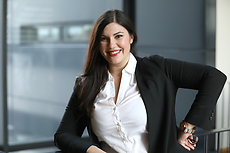
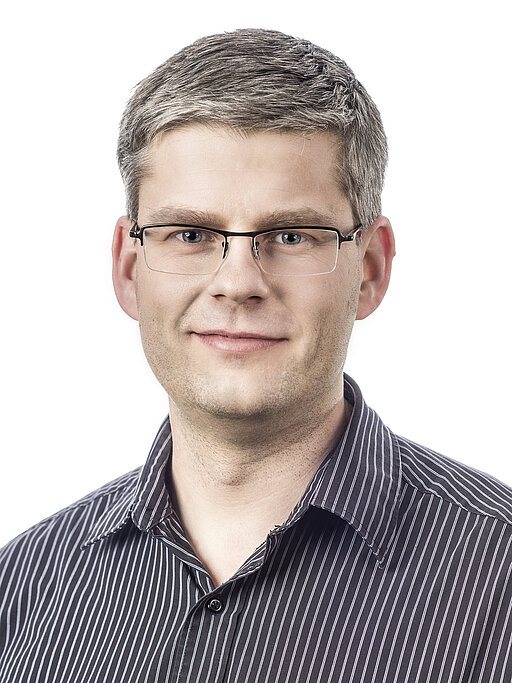
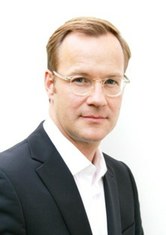
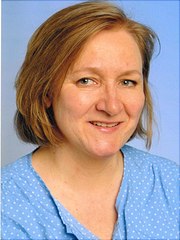
Professor Melanie Brinkmann is a leading virologist and immunologist at Technische Universität Braunschweig and the Helmholtz Centre for Infection Research (HZI) . She has served as head of the research group "Virology and Innate Immunity" at HZI since 2010 and became a professor at TU Braunschweig's Institute of Genetics in 2018. Her academic training includes biology studies at Georg-August University Göttingen, Humboldt University Berlin, and Imperial College London, followed by a PhD at Hannover Medical School and postdoc work at MIT's Whitehead Institute. Research Focus: Her work explores how herpesviruses (e.g., KSHV, CMV) and other pathogens manipulate innate immune responses, particularly through interferon signaling and pattern recognition receptors. Leadership Roles: She co-chaired Germany's SARS-CoV-2 Pandemic Expert Advisory Group (2021-2023), serves on the DFG Review Board (2024), and founded the Infect-Net network for female infection researchers. Scientific Awards: Recognized with the ScienceHero Prize (2022) for pandemic communication, Robert Koch Postdoctoral Award (2007), and others.
Angela Carollo is a Researcher at the Max Planck Institute for Demographic Research (MPIDR) in Rostock, Germany, affiliated with the Laboratory of Fertility and Well-Being. Her work focuses on developing advanced statistical methodologies for demographic analysis, particularly in survival and event-history models with multiple time scales. Her research interests span demography, statistics, and population health, with emphasis on: Survival analysis and competing risks modeling Event-history frameworks with multidimensional time Fertility dynamics and family transitions Mortality patterns and health outcomes Statistical software development for demographic applications Carollo's publication record demonstrates consistent innovation in handling complex demographic data structures. Her recent work shows strong trends toward interdisciplinary collaboration (spanning statistics, gerontology, and public health) and methodological rigor in modeling time-dependent phenomena. Key contributions include the TwoTimeScales R package and novel approaches to hazard smoothing across multiple temporal dimensions, applied to critical demographic questions like partnership transitions and mortality prediction. No scientific awards were documented in the source material. Her collaborative research involves extensive work with international teams across Europe, though no formal student advising or grant management details were provided. Current projects include dissertation work on "Multiple Time Scales in Survival and Event-History Models" within the Laboratory of Fertility and Well-Being. Carollo operates within MPIDR's Laboratory of Fertility and Well-Being, which investigates how demographic processes like fertility and partnership transitions interact with individual well-being across the life course, leveraging advanced statistical techniques for population-level insights.
Professor Daniel Wachsmuth holds the Chair of Mathematics VII (Optimal Control) at the University of Würzburg, where he has been a professor since 2012. He is affiliated with the Faculty of Mathematics and Computer Science and maintains his office in Building 30 (Mathematics West), Room 02.011. Prior to his current position, he completed his academic training with positions as a postdoc at RICAM in Linz, Austria (2008-2012) and as a research assistant at TU Berlin (2002-2008). Wachsmuth's research focuses on optimal control theory , particularly concerning partial differential equations, nonsmooth optimization problems, and regularization of problems with bang-bang control. His work bridges theoretical mathematical analysis with practical numerical methods for solving complex control problems. He has made significant contributions to the understanding of sparse optimization, topological derivatives, and non-convex optimization problems in function spaces. His recent publications demonstrate a strong trend toward addressing L 0 constraints in optimal control, developing advanced numerical methods for non-smooth problems, and exploring connections between optimal control theory and deep neural networks. His work spans both theoretical developments (such as second-order conditions and stability analysis) and practical algorithmic implementations for solving challenging optimization problems. Among his notable recognitions is the Dimitrie-Pompeiu Preis awarded in 2016. His research has been published in top-tier journals including SIAM Journal on Control and Optimization, Computational Optimization and Applications, and Inverse Problems. Current Position: Professor of Mathematics at University of Würzburg (since 2012) Previous Positions: Postdoc at RICAM, Linz (2008-2012); Research Assistant at TU Berlin (2002-2008) Contact: daniel.wachsmuth@uni-wuerzburg.de; +49 931 31-89071
Eric Gilbert is a Professor in the School of Interactive Computing at the Georgia Institute of Technology's College of Computing. With a PhD from the University of Illinois Urbana-Champaign (2010), he has established himself as a leading researcher in social computing and human-computer interaction. His work bridges technical systems design with deep understanding of social dynamics in online communities. His research spans social media analysis, content moderation systems, misinformation detection, and the sociotechnical aspects of online communities. Gilbert's work often examines how social structures emerge and function in digital spaces, with particular attention to community governance, information credibility, and the design of systems that support healthy online interactions. Gilbert's recent publications reveal an evolving research trajectory focusing increasingly on AI-human collaboration, non-consensual intimate media, Wikipedia dynamics during geopolitical conflicts, and transgender safety online. His 2024-2025 publications demonstrate strong interdisciplinary work connecting computer science with gender studies, political science, and law. His research has been consistently published in top venues including CHI, CSCW, and FAccT, with a notable increase in publication volume in recent years. His work shows strong collaborative patterns, particularly with researchers like Karrie Karahalios, Sarita Schoenebeck, Ceren Budak, and Amy Bruckman. Gilbert has mentored numerous graduate students who have become prominent researchers in their own right, including Shagun Jhaver, Eshwar Chandrasekharan, and Tanushree Mitra. His advisees frequently co-author with him on significant publications, demonstrating his active engagement in student mentorship. His research program has evolved from early work on social network analysis and tie strength prediction to contemporary investigations of AI systems, content moderation challenges, and the societal impacts of social computing technologies. This evolution reflects both the changing landscape of social media and computing technologies and his ability to identify emerging research opportunities at the intersection of technology and society.
Professor Björn Hansen is Chair of Slavic Linguistics at the Institute of Slavic Studies, University of Regensburg, where he has held a professorship since 2002. Previously, he served as Lecturer in Slavonic Linguistics at the University of Cambridge (2000-2002) and as a research assistant at the University of Hamburg. He is also Partnerschaftsbeauftragter for university cooperation with the University of Novi Sad (Serbia) and University of Łódź (Poland), and chairs the doctoral committee for the Faculty of Philosophy IV at Regensburg. Born: 1964 in Flensburg 1984-1991: Studies in East Slavic Studies and German Language and Literature at University of Hamburg 1995: PhD in Slavic Linguistics (University of Hamburg) 2001: Habilitation in Slavic Philology - Linguistics (University of Hamburg) Hansen's research spans multiple areas of Slavic linguistics, with particular focus on the structures of Polish, Russian, Serbian and Croatian languages. His work investigates language contact phenomena, areal typology, language change in Slavia, heritage linguistics, and corpus linguistics. He specializes in syntax and semantics, particularly examining modality, grammaticalization processes, contact-induced change, clitics (including clitic climbing), indefiniteness, subject encoding, frame semantics of public discourse, and the language of religion. His methodological approach often combines corpus-based analysis with theoretical linguistic frameworks. Analysis of Hansen's recent publications reveals consistent focus on microvariation in South Slavic languages, particularly Bosnian, Croatian, and Serbian. His work demonstrates expertise in clitic phenomena, modal constructions, and subject case marking. He frequently employs corpus-based methodologies to investigate rare linguistic phenomena, especially in underresourced languages. His research increasingly connects historical linguistics with contemporary language use, examining how grammaticalization processes evolve over time and across language contact situations. Member of DFG-Fachkollegium 104-02 (2009-2024) Official expert for Alexander von Humboldt Foundation (since 2011) Reviewer for multiple national research foundations including DFG, Swiss National Science Foundation, and Austrian Science Fund Member of editorial boards for several international linguistics journals Hansen has supervised numerous doctoral and master's students, with research spanning heritage language syntax, Slavic modality, language contact phenomena, and corpus-based linguistic analysis. He leads multiple externally funded research projects including 'seeFfield' (VolkswagenStiftung, 2022-2029), 'LangGener' (DFG-NCN, 2018-2022), and several DFG projects examining microvariation in Bosnian/Croatian/Serbian, Polish-German bilingualism, and historical semantics of corruption. As Principal Investigator of the Graduate School for East and Southeast European Studies (2012-2019), he has significantly contributed to interdisciplinary research in the region. Hansen directs the Binational Study Program 'German-Polish Studies' (funded by DAAD) and has organized numerous international conferences and workshops on Slavic linguistics, including the 'Clitic Climbing' workshop (2017) and 'Perspectives of German-Slavic Multilingualism' conference (2016).
Prof. Oliver Behrend is a Professor and Managing Director at the Munich Center for Neurosciences (LMU Munich), affiliated with the Faculty of Biology. His research focuses on auditory and sensory neurobiology, including interaural time difference coding, bat echolocation, amphibian sensory systems, and neural processing of environmental stimuli. Education & Affiliations: Munich Center for Neurosciences (LMU) Graduate School of Systemic Neurosciences Collaborative Research Center 870 Research Interests: Behrend's work spans auditory neuroscience, comparative neurobiology, and neuroethology. Key areas include: Binaural hearing mechanisms in mammals and bats Lateral line sensory systems in amphibians Neural coding of acoustic and water wave parameters Echolocation signal processing in bats like Rhinolophus rouxi Publications Trends: Recent work emphasizes interaural time difference processing (e.g., glycinergic inhibition in MSO), comparative analyses of sensory systems (e.g., Xenopus laevis), and editorial contributions to neurobiology conferences. Over 15 peer-reviewed articles since 1997 highlight expertise in auditory physiology, neuroethology, and sensory integration. Grants & Labs: Behrend leads the Munich Center for Neurosciences, a collaborative hub for systemic neuroscience research. His involvement in CRC 870 and graduate programs underscores his role in training the next generation of neuroscientists.
Dr. Kaiyang Yin is currently a Professor at the Ningbo Institute of Materials Technology and Engineering, Chinese Academy of Sciences. Previously, he served as an Associated Postdoctoral Researcher in the Department of Microsystems Engineering at the University of Freiburg, Faculty of Engineering. His research focuses on programmable mechanical metamaterials, mesostructure design optimization for metal and polymer materials, and scale-bridging characterization of functional materials. He investigates correlations between manufacturing parameters, microstructure, and mechanical properties to enable custom design of programmable materials. Key research interests include biomimetic engineering (e.g., bamboo-inspired scaffolds), additive manufacturing effects on material properties, and energy-efficient actuator systems. His work integrates principles from mechanical engineering, materials science, and manufacturing processes to address challenges in functional materials systems. Publications highlight contributions to multimaterials design, titanium alloy microbeam analysis, and data-driven characterization of biomimetic structures. His research is funded by the German Research Foundation (DFG) through the Excellence Strategy program. Supervised by Prof. Chris Eberl during his postdoctoral tenure, Yin’s academic journey reflects a strong foundation in interdisciplinary materials science.
Heiko Roehl is an Adjunct Professor at the Institute for Environmental Social Sciences, Albert-Ludwigs-Universität Freiburg since 2011, specializing in Organizational Development and Change Management. He concurrently serves as CEO of Kessel&Kessel GmbH. His academic career includes roles as a Researcher at Daimler-Benz AG (1996–1999) and leadership in international development programs for GIZ/GTZ in South Africa (2002–2006). Education: PhD in State Theory and Global Governance from Universität Bielefeld (1996–1999), focusing on knowledge organization frameworks. Earlier studies include research at Technical University Chemnitz-Zwickau and Freie Universität Berlin. Research interests center on organizational change, knowledge management, and strategic tools for social transformation. Key themes include conflict management in change processes, trust-building in organizations, and innovative work models. His work bridges theoretical frameworks with practical applications in corporate, governmental, and non-profit sectors. Articles highlight trends in authentic leadership, dynamic competency models, and organizational resilience. Recent publications (2021–2017) emphasize addressing 'fake change' dynamics, trust in transformations, and rethinking work-life balance. Earlier work (2000s) focused on knowledge organization in automotive industries and HIV/AIDS fund management in South Africa. No scientific awards listed. Advising/grants: No specific mentions of formal advising roles or grant leadership. Professional contributions include executive training and consulting for international organizations.
Dr. Julia Dräger-Dietel is a Research Scientist in Theoretical Oceanography at the University of Hamburg, affiliated with the Faculty of Mathematics, Informatics and Natural Sciences. Her work focuses on advancing understanding of ocean dynamics, particularly in mesoscale and submesoscale turbulence, eddy effects, and climate-related processes in upwelling systems like the Benguela region. She holds a position in the Theoretical Oceanography department under Prof. Dr. Eden. Her research interests include ocean turbulence, energy cascades, Lagrangian trajectory analysis, and the application of statistical physics to geophysical flows. Key projects involve studying eddy diffusivity, inverse energy cascades in ocean turbulence, and the role of submesoscale processes in mixing and climate interactions. Her work often integrates observational data from drifters and satellites with numerical models to diagnose and parameterize oceanic phenomena. Dr. Dräger-Dietel’s publications highlight contributions to understanding turbulence regimes in the Benguela Upwelling System, submesoscale dynamics, and the statistical properties of oceanic flows. She has explored topics such as diurnal warm layers, vertical mixing, and the transition from balanced to unbalanced motions in coastal filaments. Despite her prolific research output, no scientific awards or grants are explicitly mentioned in the provided materials. She has no listed advisees or collaborators in student supervision roles. Her current affiliations include the Theoretical Oceanography group at the University of Hamburg, with ongoing contributions to climate system analysis and ocean modeling. She contributes to the University’s broader initiatives in Earth System Physics education and research, including the B.Sc. Earth System Physics program. Her office is located at Bundesstraße 53, Room 449 in Hamburg.
Dr. Christian Döbler is a Researcher at Heinrich Heine Universität Düsseldorf's Mathematical Institute, specializing in stochastic analysis and probability theory. He coordinates the Financial and Insurance Mathematics program. His research develops Stein's method for distributional approximation, analyzes random matrices, and investigates stochastic geometry. Publications establish quantitative central limit theorems for random matrix eigenvalues and functional convergence properties. Döbler teaches probability theory, linear algebra, and financial mathematics. His work connects Malliavin calculus with approximation techniques to solve problems in high-dimensional probability.
Prof. Thomas Brüser is a full professor and Executive Director of the Institute of Microbiology at Leibniz University Hannover. He holds a Dr. rer. nat. in Microbiology and has held academic positions since 2009. His research focuses on bacterial protein transport mechanisms (Tat pathway), phage holin systems, and microbial biochemistry. He teaches in Molecular Microbiology and Life Science programs. Education: 1989-1994: Studied Biology (Biochemistry, Genetics, Organic Chemistry) at University of Cologne and University of Sussex 1995-1999: PhD at University of Bonn ("Enzymology of oxidative sulfur metabolism") 2000-2001: Postdoc at University of Pennsylvania (Rhodobacter capsulatus research) 2006: Habilitation at MLU Halle-Wittenberg ("Tat-dependent membrane protein transport") Research Interests: General Microbiology & Microbial Biochemistry . Current projects include: Transport of folded proteins via Tat pathway Pyoverdine maturation enzymes Phage holin/antiholin dynamics Bacterial membrane stress responses Chaperone-assisted protein translocation His lab investigates molecular mechanisms underlying bacterial survival strategies and protein secretion systems. Key Contributions: Over 50 peer-reviewed publications since 2007, including seminal work on Tat translocon structure/function and phage lysis mechanisms. Awarded VAAM PhD Prize (2000) and Christian-Wolff Prize (2007). Academic Governance: Chair: MSc Molecular Microbiology Admissions Member: Life Science Examination Boards Represents faculty in curriculum committees Lab Team: Active research group with collaborators in structural biology (e.g., Risselada, Grubmüller) and applied microbiology (e.g., Perner, Fuss).
Dr. Denise Mehner-Breitfeld is a researcher at the Institute of Microbiology, Leibniz University Hannover. Her work focuses on microbial biochemistry and protein transport mechanisms, particularly the twin-arginine translocation (Tat) system. She holds a PhD from the University of Halle and Leibniz University Hannover, where her thesis explored Tat-transport mechanisms. She contributes to academic governance as Deputy Scientific Staff for the Molecular Microbiology MSc program and serves on admissions and examination boards. Her research investigates protein translocation across bacterial membranes, holin-antiholin systems in phage T4, and interactions between Tat components (TatA, TatBC) with membrane proteins. Recent work explores TatBC-TatA cluster interactions and SlyD chaperone roles in protein recognition. She also examines phage-derived systems in Clostridioides difficile toxin transport and membrane-stabilizing mechanisms linked to the Psp system. Publications span 2012–2024, analyzing Tat system biophysics, holin-mediated transport, and membrane protein dynamics. Her studies integrate structural biology, molecular microbiology, and biochemistry to elucidate fundamental mechanisms of protein trafficking in bacteria. Professional roles include BAFÖG representative for biology and committee participation in research staff governance. She collaborates closely with Prof. Brüser’s research group, contributing to experimental and computational studies of bacterial membrane systems.
Prof. Dr. Hajo Kries is a Professor at the Institute of Biochemistry and Technical Biochemistry, University of Stuttgart, specializing in Technical Biochemistry. His research focuses on enzyme engineering, natural product biosynthesis, and synthetic biology approaches to design novel biocatalysts. Key research areas include reprogramming nonribosomal peptide synthetases, elucidating biosynthetic pathways of complex natural products, and developing high-throughput screening methods for enzyme engineering. His work bridges chemical biology, enzymology, and metabolic engineering. Recent publications demonstrate innovations in directed evolution of megasynthetases, mechanistic studies of cyclopropanol formation in natural products, and the engineering of noncanonical amino acid incorporation. Research consistently addresses fundamental questions in enzyme specificity while developing tools for therapeutic peptide production.
Prof. Adelheid Zeis is a Professor of Public Law at Frankfurt UAS, specializing in general administration law and municipal law. She serves as Head of the degree courses for Public Administration (B.A.) and Public and Non-Profit Management (B.A.), as well as Managing Director of IPM. Her research focuses on municipal governance structures, administrative legal frameworks, and financial accountability in public institutions. Education: Not explicitly detailed in the text. Research Interests: Prof. Zeis' work centers on the intersection of municipal law and practical administrative challenges, particularly in financial transparency and compliance. She explores how local governments navigate legislative requirements while maintaining operational efficiency, as evidenced by her analysis of Wiesbaden’s financial reporting practices. Advising & Grants: No student advisees or grant information is listed. Her role as a course head and program manager highlights her focus on academic administration and curriculum development. Labs/Teams: Oversees operations at IPM (exact function unclear from text), likely related to public management education or research.
Kevin Batz is a researcher in computer science at RWTH Aachen University, currently affiliated with University College London. He completed his PhD in December 2024 under Professor Joost-Pieter Katoen, focusing on probabilistic program semantics and verification. His work includes co-developing Weighted Programming, a paradigm for mathematical modeling, and advancing deductive verification techniques for probabilistic systems. Education: PhD in Computer Science (RWTH Aachen University, 2024, summa cum laude). Supervised by Prof. J.-P. Katoen. Research Interests: Probabilistic programming semantics, automated verification, formal methods for heap-manipulating systems, and quantitative separation logic. He has pioneered tools like the deductive verification infrastructure for probabilistic programs and contributed to foundational work on expectation analysis. Awards: ETAPS Doctoral Dissertation Award 2025 Best Paper Award at LOPSTR 2020 Springorum Medal 2019 Teaching & Supervision: Taught courses on probabilistic programming, static analysis, and compiler construction. Supervised multiple thesis projects, including award-winning works on quantitative separation logic and invariant-based strategy synthesis. Labs/Teams: Member of the Software Modeling and Verification Group at RWTH Aachen, contributing to the LuFG i2 research unit.