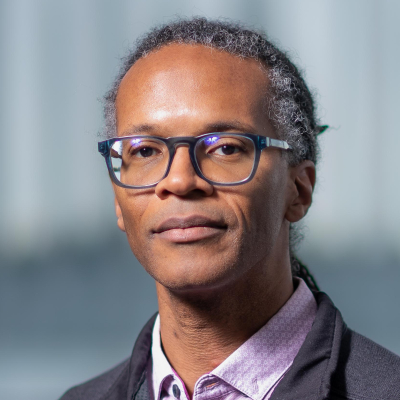
Joseph Eremondi is an Assistant Professor in the Department of Computer Science at the University of Regina, specializing in programming language theory and design. His research develops tools to enhance usability of dependently typed programming languages, which enable mathematical specification and verification of code behavior. Current projects include gradual dependent types, semantics for pattern matching, termination proof techniques, and compiler error diagnosis. Eremondi's publications advance formal foundations for programming language design while addressing practical usability concerns. Recent work establishes theoretical foundations for gradual dependent typing and develops ordinal notations for termination verification. He teaches courses in programming language concepts and formal verification, including courses on Agda-based program verification.
Dr. Armando Bertone is an Associate Professor in the Department of Educational and Counselling Psychology at McGill University, Director of the Perceptual Neuroscience Lab for Autism and Development, and Research Scientist at the Children and Adolescents Mental Health Research Program. He holds the William Dawson Scholar Award and FRQ-S Research Scholar Awards. His work focuses on sensory cognition in autism, perceptual learning, and educational technology. Dr. Bertone leads the Summit Centre for Education, Research, and Training, fostering collaboration between academics, educators, and communities. His research is funded by NSERC, CIHR, SSHRC, FRQ-S, and private-sector grants. He has developed patented tools for early detection of neurodevelopmental conditions. Education: Postdoctoral Fellowships: Department of Neurology & Neurosurgery (McGill) and École d’Optométrie (Université de Montréal) Ph.D. in Clinical/Experimental Neuropsychology (Université de Montréal) M.Ps. in Clinical Psychology (Université de Montréal) M.A. in Experimental Psychology (Concordia University) Research Interests: Dr. Bertone’s work spans autism spectrum conditions, perceptual learning, multisensory integration, and neurodevelopmental disorders. He investigates neural mechanisms underlying sensory processing deficits, with applications to education and clinical interventions. His lab develops technologies for early detection and assessment of neurodevelopmental conditions. Awards: William Dawson Scholar Award FRQ-S Research Scholar Award J1 (2011-15) & J2 (2016-20) Grants & Advising: Active grants from tri-council agencies (NSERC, CIHR, SSHRC) and private foundations. Supervises graduate students in Human Development and School/Applied Psychology programs. Collaborates with schools across Canada on applied research initiatives. Labs & Affiliations: Director, Perceptual Neuroscience Lab (PNLab) Associate Member, Azrieli Centre for Autism Research (ACAR) Summit Centre for Education, Research, and Training (SCERT)
Philippe Paquette is a Clinical Assistant Professor at the University of Montreal's School of Rehabilitation, affiliated with the Department of Physiotherapy and Clinical Teaching. His work focuses on musculoskeletal rehabilitation, neurodynamics, and ultrasound imaging applications in clinical practice. He has contributed to research on carpal tunnel syndrome, nerve mobilization techniques, and biomechanical validation studies. His recent studies explore imaging biomarkers for tendon pathology and the effectiveness of preoperative neuromobilization programs. Paquette collaborates on interdisciplinary projects involving clinical neurodynamics and exercise therapy innovations. Research highlights include developing standardized ultrasound imaging protocols and evaluating rehabilitation outcomes for musculoskeletal disorders. Education background not explicitly detailed in provided texts. Research interests prominently feature translational research bridging imaging technologies with clinical practice. His publications (2011-2023) demonstrate sustained focus on nerve mechanics, diagnostic imaging advancements, and patient-centered rehabilitation strategies. Collaborative work spans multiple disciplines including neurology, orthopedics, and biomedical engineering. No awards listed but maintains active research output in high-impact clinical areas. Advising activities unspecified but contributions to clinical teaching are central to his role. Affiliated with the University's Faculty of Medicine, contributing to both educational programs and research initiatives in rehabilitation sciences.
William M. Farmer is a Professor in the Department of Computing and Software at McMaster University's Faculty of Engineering. His expertise spans logic, mechanized mathematics, mathematical knowledge management, and formal methods. He specializes in the Theory of Computation and contributes to the Digital & Smart Systems research cluster. Dr. Farmer teaches CAS 760: Logic for Practical Use (Theory), focusing on practical logic design and implementation. His research emphasizes formal systems, automated reasoning, and the integration of mathematical software with theory representation. He is affiliated with the IMPS (Interactive Mathematical Proof System) project and maintains a research website at imps.mcmaster.ca/wmfarmer. His work bridges theoretical foundations and practical applications, including formalizing mathematical knowledge, developing biform theories, and advancing tools like Chiron and Alonzo. Despite no listed awards or grants in the provided text, his contributions to formal methods have influenced computational logic and mathematical software systems.
Ben Pin-Yun Wang is an Associate Teaching Professor and Chinese Language Coordinator in the Pacific and Asian Studies department at the University of Victoria. He holds a dual-title PhD in Applied Linguistics and Asian Studies from Pennsylvania State University (PSU). His expertise lies in teaching Chinese as an additional language, Chinese linguistics, and pedagogical approaches informed by cognitive-functional and corpus-based methodologies. Education: BA and MA from National Taiwan University, PhD from Pennsylvania State University. Research interests include language pedagogy, curriculum development, cognitive linguistics, corpus linguistics, and Taiwan studies. His work emphasizes data-driven learning activities and metaphor analysis in Mandarin Chinese. Publications focus on applied linguistics, corpus linguistics, and cognitive approaches to language teaching, contributing to methodologies in Chinese second language acquisition and curriculum design. As coordinator, he oversees Chinese program administration, student advising, curriculum planning, and instructor training. He has taught at UVic since joining and previously held roles at PSU and National Taiwan University. Teaching responsibilities span all Chinese language levels, cultural courses on Taiwan, and content-based instruction in linguistics and translation.
Dr. Diane Lougheed is a Professor of Medicine in the Division of Respirology at Queen's University, cross-appointed to the Departments of Biomedical and Molecular Sciences and Public Health Sciences. She is also a Senior Adjunct Scientist at the Institute for Clinical Evaluative Sciences (ICES@Queen’s). Her primary clinical interests are asthma and cystic fibrosis in adults, with leadership roles in establishing interdisciplinary asthma programs and directing the Adult Cystic Fibrosis Clinic. She holds a Master’s in Epidemiology from Queen’s University and has authored over 100 peer-reviewed publications and book chapters. Education and Appointments: MD: McMaster University (1986) MSc in Epidemiology: Queen’s University (1999) FRCPC in Internal Medicine (1991) and Respiratory Medicine (1992) Professor of Medicine, Department of Medicine, School of Medicine Chair, Division of Respirology and Sleep Medicine Medical Director, Asthma Education Centre and Asthma Research Unit (Kingston General Hospital) Research Interests: Asthma symptom perception, cough mechanisms, and work-related asthma Health systems, public health, and quality improvement Guidelines implementation and asthma outcomes research Clinical trials, epidemiology, and early detection strategies Grants and Awards: Funded by CIHR, AllerGen NCE, Ontario Thoracic Society, and others Recipient of Academic Health Sciences Centre AFP Innovation Fund grants Labs and Teams: Leads the Asthma Research Unit and collaborates with ICES@Queen’s on population health studies.
Christopher Bowie is a Professor in the Department of Psychology at Queen's University. He holds a M.A. (1997) and Ph.D. (2002) from Hofstra University. His research focuses on neurocognition in psychosis, functional outcomes in psychotic disorders, novel behavioral assessment methods, and early intervention in severe mental illness. He is affiliated with the university's Clinical Program and leads the Bowie Lab. His work emphasizes cognitive remediation strategies and translational research in schizophrenia and related disorders. Research interests include neurocognitive mechanisms underlying psychosis, pharmacological and behavioral treatments for cognitive deficits, and optimizing functional outcomes through evidence-based interventions. His studies often involve collaborations with clinical teams, leveraging advanced neuroimaging and behavioral analysis methods. Recent work explores the role of cognitive training in improving real-world functioning and mental health outcomes in university students and older adults with cognitive impairments. Key publications highlight advancements in cognitive remediation techniques, including randomized controlled trials evaluating interventions for schizophrenia, bipolar disorder, and age-related cognitive decline. His work also addresses the moderating effects of neurophysiology on treatment outcomes and the development of objective assessment tools using digital technologies. Bowie has contributed to influential white papers on cognitive remediation standards and co-edited a seminal text on cognitive remediation's role in improving functional outcomes. His research is supported by grants focusing on translational approaches, including studies integrating transcranial direct current stimulation with cognitive training. Collaborations with international consortia (e.g., the Canadian Biomarker Integration Network in Depression) underscore his commitment to advancing biomarker-based and neurocognitive research in mental health.
Dr. Donna Ellis serves as Director of the Centre for Teaching Excellence (CTE) at the University of Waterloo, guiding strategic initiatives focused on effective teaching methodologies, blended learning, and anti-racism in education. She holds a PhD and MA from the University of Waterloo, with undergraduate teaching experience in Communication Arts. Her research explores instructional innovations, institutional teaching culture, and leadership in educational development. Ellis is an active leader in international organizations, including the International Consortium for Educational Development (ICE) and the POD Network. Education: PhD in Management Engineering, University of Waterloo MA in Language and Professional Writing, University of Waterloo Key Roles: President, International Consortium for Educational Development (2022–2025) Former President, Professional and Organizational Development (POD) Network Her research interests emphasize teaching culture transformation, institutional change, and leveraging educational centers for accreditation and quality assurance. Ellis has contributed to over 14 scholarly publications since 2010, focusing on topics like HR strategies for teaching centers and anti-racism in higher education. She received the Robert J. Menges Award (2013) for outstanding research in educational development. Ellis has led strategic planning initiatives at institutions like Dalhousie University and Queen’s University, and her work includes co-authoring the 2011 Task Force on Innovative Teaching Practices report. She actively engages in editorial roles for journals such as To Improve the Academy and Innovative Higher Education .
Prabhakar Ragde is a Professor at the University of Waterloo's Department of Computer Science, located in DC 2633. His academic background includes a Ph.D. from the University of California, Berkeley (1986) and a B.Math from the University of Waterloo (1982). He is affiliated with the Faculty of Mathematics and holds roles in the Professors group. His research focuses on functional programming languages, operational semantics, and dependent types, with applications in proof assistants for verified computations. Though no specific articles are listed here, his work aligns with theoretical computer science and formal methods. No scientific awards, grants, or advising details are explicitly mentioned in the provided text. For further details, visit his personal webpage .
Stephen Watt is a Professor at the University of Waterloo, affiliated with the Department of Computer Science within the Faculty of Mathematics. He holds a PhD in Computer Science (1986), MMath in Applied Mathematics (1981), and BSc in Honors Mathematics and Physics (1979). His research focuses on enabling computers to handle mathematics intelligently, with key areas including programming languages for mathematical software, symbolic computation algorithms, computer algebra system interoperability, mathematical knowledge management, and STEM education technology. His work spans theoretical and applied domains, such as developing algorithms for block matrices and handwriting recognition systems like the Legendre-Sobolev approach. He has contributed to initiatives like the International Mathematical Knowledge Trust (IMKT) and collaborated on projects like InkML for mathematical collaboration. Recent publications explore generative AI in STEM assessments, software portability, and GPU-optimized arithmetic operations. Dr. Watt’s research also addresses historical perspectives on symbolic computation and its evolution, alongside modern challenges in mathematical collaboration tools and digital ink compression. His contributions span conferences such as ISSAC, CICM, and SYNASC, reflecting interdisciplinary engagement with both theoretical and applied computer science.
Full Clinical Professor of Psychiatry at Université de Montréal and psychiatrist at CHUM. Pioneered early psychosis intervention programs in Quebec and founded the EQIIP SOL intensive outreach team for homeless youth with mental illness and substance use disorders. Research Focus: First-episode psychosis functional outcomes; comorbidities (substance use, metabolic disorders); novel interventions including adventure therapy and mobile technologies. Leadership: President of Quebec Association of Early Psychosis Programs; co-founder of Canadian Consortium for Early Psychosis Intervention; advises Quebec Ministry of Health on youth mental health policy. Honors: Recognized for clinical leadership (CHUM Foundation 2013), program excellence (Quebec Ministry 2014), and community impact (AMI-Québec 2019). Community Engagement: Co-director of Montreal Street Youth Intervention Network connecting 20+ community organizations.
Susan Brown is a Professor at the University of Guelph, holding a Canada Research Chair (Tier 1) in Collaborative Digital Scholarship. She is affiliated with the College of Arts and the School of Theatre, English, and Creative Writing. Her research focuses on digital humanities, critical infrastructure studies, Victorian literature, and feminist theory, particularly through her leadership of the Orlando Project, a pioneering interdisciplinary initiative. She has received significant grants from the Social Sciences and Humanities Research Council of Canada and the Canadian Foundation for Innovation. Her work bridges feminist literary history with digital innovation, emphasizing collaborative knowledge production and inclusive digital infrastructure. Brown has contributed to university administration, including roles on the Senate Awards Committee, Board of Governors, and editorial boards of journals like Victorian Review and KULA . She has also served on national and international advisory boards, including Compute Canada and the Digital Research Alliance of Canada. Research interests include feminist digital methodologies, semantic technologies, and the intersection of technology with literary studies. Awards include the Society for Digital Humanities Outstanding Achievement Award (2006) and the T-REX Best New Tool Prize (2008). She has taught extensively in Victorian studies, gender theory, and digital humanities, receiving a teaching award in 1999 for integrating digital methods. Brown founded the DH@Guelph Summer Workshops and co-created the Culture and Technology Studies program. Grants and projects include funding for the Humanities Interdisciplinary Collaboration Lab (THINC Lab) and the Canadian Writing Research Collaboratory (CWRC). Her recent work explores metadata ontologies, linked open data, and the ethical dimensions of digital cultural heritage.
Nadeem Siddiqi is a Professor at Carleton University’s School of Linguistics and Language Studies (SLaLS). He holds academic affiliations with the Department of Cognitive Science and the Department of English. His research focuses on formal linguistic theory, morphology, and the development of the Lexical-Realizational Functional Grammar (LRFG) model, co-created with Ash Asudeh. He runs the Morphology Lab, which hosts research programs on morphological phenomena and syncretism patterns, funded by grants. Education: BA in English (UC Davis), MFA in Creative Writing (Mills College), MA & PhD in Linguistics (Arizona) Research Interests: Siddiqi’s work addresses stem allomorphy, suppletion, and the integration of Distributed Morphology with Lexical Functional Grammar. His current projects include the LRFG Virtual Lab (collaborating with universities globally) and the Feature Competition Lab (focusing on syncretism and morphological upstaging across languages). Teaching: He teaches a yearly graduate seminar in Morphology (LING 5005), covering topics like Roots and Comparative Morphological Theory. Supervision: He accepts limited graduate and undergraduate students annually, focusing on morphological theory and functional words.
Ronald Garcia is an Associate Professor in the Department of Computer Science at the University of British Columbia, affiliated with the Faculty of Science and the Software Practices Lab. His research focuses on programming language theory, emphasizing gradual typing, type systems, and end-user programming. He teaches courses such as Programming Language Principles (CPSC 509) and Compiler Construction (CPSC 411). Education details are not explicitly stated in the provided texts, but his extensive academic contributions span over two decades. Research interests include formal semantics of programming languages, typestate systems, dependent types, and improving software practices for end-users. He has advised numerous Ph.D. and Master's students, contributing to over 30 academic publications. Recent work explores hybrid programming environments for end-users, runtime type slicing for debugging, and foundational frameworks for gradual dependent types. Garcia actively participates in academic conferences as a PC member and keynote speaker, notably in PLDI, POPL, and ICFP. His lab and collaborations focus on advancing theoretical foundations while addressing practical challenges in software development and education.
Brian Fristensky is an Associate Professor in the Department of Plant Science at the University of Manitoba, Faculty of Agricultural and Food Sciences. His research and teaching focus on plant biotechnology, bioinformatics, and plant genomics, particularly in the context of plant-microbe interactions and defense mechanisms. Institution: University of Manitoba School: Faculty of Agricultural and Food Sciences Department: Department of Plant Science Position: Associate Professor Office: 330 Agriculture Building, Fort Garry Campus Contact: 204-474-6852 / 204-474-6085; brian.fristensky@umanitoba.ca; frist@cc.umanitoba.ca Education A.B., Cornell University, 1980 Ph.D., Washington State University, 1987 Research Interests Dr. Fristensky's research centers on bioinformatics and plant biotechnology, with a strong emphasis on molecular biology of plant defense mechanisms. His work spans computational biology, genomics, and genetic engineering, particularly in developing tools for bioinformatics analysis and understanding plant responses to pathogens. He leads the Fristensky Lab, which develops the BIRCH bioinformatics system and BioLegato interface. Recent Research Trends His recent publications (2021–2023) show continued innovation in bioinformatics software development, including the BioLegato interface and educational tools for data science. Earlier work (1999–2006) focused on transgenic approaches to enhance disease resistance in canola using pea defense genes, and the functional analysis of PR10 proteins in stress tolerance. His research integrates computational and experimental biology, with applications in crop improvement and sustainable agriculture. Scientific Awards No awards explicitly mentioned in the provided texts. Advising and Grants Dr. Fristensky advises undergraduate and graduate students, offering opportunities for thesis work and summer research in his lab. He supports students in the Plant Biotechnology Program and teaches core courses in biotechnology, cytogenetics, and bioinformatics. He assists researchers in writing the bioinformatics components of grant proposals, indicating active grant-related mentoring and collaboration. Labs and Teams He leads the Fristensky Lab (Bio Information Technologies Laboratory), which develops the BIRCH (Biological Research Computer Hierarchy) system—a comprehensive desktop bioinformatics platform. The lab focuses on software tools for genome assembly, transcriptomics, systems biology, database management, and data pipelines. The BioLegato interface serves as a programmable GUI for launching and chaining bioinformatics programs. The lab also engages in training and collaborative research, particularly in biofuels and data science education.