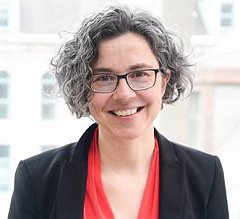
Laura Becker is an Assistant Professor at the Department of General Linguistics, University of Freiburg. Her research focuses on linguistic typology, quantitative methodology, and the role of coding efficiency in grammatical structures. She holds a PhD exploring article systems across languages and has contributed to cross-linguistic studies on syntax, morphology, and sociolinguistics. Her work emphasizes statistical rigor and computational tools, such as the glottospace R package for geospatial linguistic analysis. Recent projects include investigating phoneme inventories in Polynesian languages and socio-linguistic influences on conditional constructions. Publications highlight her expertise in morphosyntax, language contact, and corpus-based approaches. No scientific awards are explicitly mentioned in the provided materials. Dr. Becker has advised no recorded students in the available data and has not listed specific grants or labs. Her current research trends prioritize quantitative frameworks to address typological and evolutionary questions in linguistics.
Koushik Sen is a Professor in the Department of Electrical Engineering and Computer Sciences at the University of California, Berkeley. His research focuses on developing software tools and methodologies to enhance programmer productivity and software quality, with expertise in Software Engineering, Programming Languages, and Formal Methods. Education: B.Tech from Indian Institute of Technology, Kanpur M.S. and Ph.D. in Computer Science from University of Illinois at Urbana-Champaign Research Focus: Professor Sen pioneers automated testing techniques including concolic testing and DART (Directed Automated Random Testing). His work bridges formal methods with practical software development, emphasizing bug detection, program synthesis, and AI-driven software analysis tools. Recent innovations include machine learning approaches for code recommendation and fuzzing. Publication Trends: His recent publications (2019-2023) demonstrate strong emphasis on fuzzing techniques, program synthesis, and AI/ML applications in software engineering. Notable domains include smart contract security, automated testing, and developer tooling, with frequent collaborations in top-tier conferences. Awards and Honors: NSF CAREER Award (2008) Sloan Foundation Fellowship (2011) IFIP TC2 Manfred Paul Award (2010) Okawa Foundation Research Grant (2015) Multiple ACM SIGSOFT Distinguished Paper Awards UIUC Distinguished Alumni Educator Award (2014) Leadership: Active program committee member for premier conferences (PLDI, ICSE, ISSTA) and keynote speaker. His research is supported by NSF, Okawa Foundation, and Sloan Foundation.
Aron Hirsch is a researcher and Assistant Professor specializing in Semantics & Pragmatics , with affiliations including the ERC project Realizing Leibniz’s Dream: Child Languages as a Mirror of the Mind (Research Area 4). His work bridges theoretical linguistics and cognitive modeling. Current Role: Assistant Professor (since August 2023) Past Role: Researcher in the ERC project on child language and semantics Research Interests Aron Hirsch investigates the syntax-semantics interface, particularly focus particles like 'only,' type disambiguation, and logical strength in language. His research explores how cognitive constraints shape linguistic structures and how pragmatic principles interact with formal semantics. Recent Publications Aron’s publications (2022–2024) focus on semantic operators, cumulativity in questions, and register variation. He collaborates with leading scholars such as Bernhard Schwarz and Itai Bassi , contributing to major venues like Proceedings of Semantics and Linguistic Theory (SALT) and Sinn und Bedeutung . Labs & Collaborations He works within the ERC project Realizing Leibniz’s Dream , focusing on child language as a window into the mind, and collaborates with international teams at institutions including University of Rochester and Universidad Nacional Autónoma de México .
Tonio Sebastian Richter is a Professor of Egyptology with a focus on Coptology at the Free University of Berlin's Department of History and Cultural Studies, Institute of Egyptology. He holds the position of Academy Professor at the Berlin-Brandenburg Academy of Sciences and Humanities and has served as the head of several major research projects including the DFG long-term project "Database and Dictionary of Greek Loanwords in Coptic" (DDGLC) and the Academy project "Structures and Transformations of the Vocabulary of the Egyptian Language. Text and Knowledge Culture in Ancient Egypt." His educational background includes a Magister Artium in Egyptology and Religious History from the University of Leipzig (1996), followed by a doctorate in 1999 and habilitation in 2005, both based on works concerning Coptic legal documents and their linguistic features. Richter has held academic positions at the Universities of Leipzig, Heidelberg, and Berlin, including serving as a Heisenberg Fellow of the German Research Foundation from 2011-2014. Richter's research interests span the history and cultural history of Egypt during the Roman, Byzantine, and early Islamic periods, with particular focus on Coptic language and texts. His work examines documentary texts including papyri, ostraca, and inscriptions that illuminate economic, legal, and social history. He has made significant contributions to the study of Coptic legal documents, magical and alchemical texts, and language contact phenomena between Egyptian/Coptic and Greek/Arabic. His research has revealed important insights into Coptic alchemical papyri, which represent some of the earliest witnesses to "the divine art" and enrich our knowledge of the development of late antique science and its transmission from Greek to Arabic. Richter has also pioneered work on language change and contact in the Egyptian-Coptic language, particularly regarding Greek and Arabic loanwords. Academy Professor, Berlin-Brandenburg Academy of Sciences and Humanities (2015-present) Professor of Egyptology with focus on Coptology, Free University Berlin (2014-present) Heisenberg Fellow, German Research Foundation (2011-2014) Extraordinary Professor, University of Leipzig (2011) Richter has received numerous scientific awards including the Heisenberg Fellowship from the German Research Foundation (2011) and the Friedrich-Weller Prize from the Saxon Academy of Sciences (2000). He serves on the scientific advisory boards of several prestigious institutions including the International Thesaurus Commission of the Thesaurus Linguae Latinae and the Scientific Advisory Board of the German Archaeological Institute. As an educator, Richter has been a main instructor for multiple International Summer Schools in Coptic Papyrology and has organized numerous academic conferences and workshops on Coptology, papyrology, and Egyptology. His work bridges linguistic, historical, and archaeological approaches to understanding ancient Egyptian civilization through its textual remains.
Dr. Mathis Richter is a Postdoctoral Researcher at the Institute of Neuroinformatics (INI), part of the Faculty of Computer Science at Ruhr University Bochum, Germany. He has been affiliated with the INI since 2008, progressing from Research Assistant to Research Associate, and currently serves as a Postdoctoral Researcher since July 2018. At the INI, he contributes to both the Embodied Cognition group and the Autonomous Robotics group, led by Prof. Dr. Gregor Schöner. Dr. Richter earned his Dr.-Ing. (Ph.D. equivalent) in Engineering from Ruhr-Universität Bochum between 2011 and 2018, following an M.Sc. and B.Sc. in Applied Computer Science from the same institution. His academic journey includes an exchange year at the University of Birmingham, UK. His research centers on higher cognition, specifically concept representation, how concepts combine to form complex mental scenes, and the neural mechanisms organizing cognitive operations in time. Using Dynamic Field Theory as his primary framework, he develops mathematical models explaining how neural populations represent objects and concepts. His work demonstrates how these cognitive models connect to sensory-motor systems, often implemented on robotic platforms to validate their autonomy and functionality. Analysis of Dr. Richter's publications reveals a consistent focus on neural dynamic modeling of cognitive processes, with particular emphasis on spatial relations, language grounding, and embodied cognition. His research trajectory shows increasing sophistication in modeling complex cognitive phenomena while maintaining strong connections to robotic implementations. As an educator, Dr. Richter has taught Lab courses in Autonomous Robotics across multiple terms since Winter 2015/2016 and has delivered Lectures in Computational Neuroscience: Neural Dynamics since Winter 2018/2019. His teaching directly reflects his research expertise in neural dynamics and cognitive systems. Dr. Richter actively participates in interdisciplinary research that bridges cognitive science, neuroscience, computer science, and robotics, contributing to the INI's mission of understanding how organisms generate behavior and cognition through interaction with their environments.
Tanja Ackermann is a Professor of German Linguistics with a focus on Variation and Change at Bielefeld University , holding the position since 2023. She serves as project leader in two subprojects of the Collaborative Research Center 1646: Linguistic Creativity in Communication (projects A06 and B03), and as a member of BiSEd (Bielefeld School of Education). Her academic affiliations include the Faculty of Linguistics and Literary Studies and its Habilitation Committee . Doctorate in Linguistics (2017) Habilitation, Venia legendi in German Linguistics (2023) Prior academic roles: Acting Professor at University of Mainz (2020–2022), Research Associate at Freie Universität Berlin (2011–2023), and short-term lectureship at Peking University (2017). Research interests span diachronic and synchronic analysis of language variation (areal/sociolinguistic), language change (functional/contrastive), historical grammar (morphology/morphosyntax), and pragmatics (speech acts, address forms, (im)politeness, expressivity). She specializes in onomastics (name grammar, sociopragmatic aspects, phonology) and interactive linguistic creativity (interrogative forms, indirect meaning). Publications reflect trends in Germanic morphosyntax, historical pragmatics, and onomastic variation. Key themes include inflectional erosion , possessive markers , and gendered phonological patterns in proper names. Scientific Recognition Awarded Wilhelm von Humboldt Prize by the DGfS in 2019 Affiliation Highlights Project leader for SFB 1646 (linguistic creativity in communication) Previous involvement in SRC 980 'Episteme in Motion' (subproject C08, 2016–2020)
Aria Adli is a Professor of Romance Linguistics at the University of Cologne , where he founded and directs the Sociolinguistic Lab . He holds a tenured W3 professorship and previously held positions at Humboldt University Berlin, University of Strasbourg, and University of Freiburg. Education : Diplom in Psychology (University of Bonn, 1998) Double degree: Maitrise in Linguistics (Université de Toulouse II) and Licence in Psychology (1998) Habilitation (University of Freiburg, 2011) PhD in Romance Philology (University of Tübingen, summa cum laude, 2003) His research focuses on grammatical variation , examining syntax-information structure interfaces, social stratification (Bourdieu's lifestyle), and register effects. He uses cross-linguistic comparisons (French, Spanish, Catalan, Persian) and methods like corpus analysis, computer simulations, and fieldwork. Scientific Awards : Emmy-Noether Fellowship (DFG) DAAD grants for multilingualism research art, science & business-Stipendium (Akademie Schloss Solitude) Thyssen-Stiftung funding Grants & Projects : Principal investigator for SFB 1412 subproject 'Register: Language-Users' Knowledge of Situational-Functional Variation' DFG grant for 'Grammar-Usage Relationship in Spanish/Persian' Organized international workshops on sociolinguistics, register, and variation Academic Leadership : Head of the Sociolinguistic Lab Geschäftsführender Direktor of Fachgruppe 5 (Phil Fakultät UzK) Member of Excellence Cluster 'Choice in Expression' initiation group
Christoph Schroeder is a Professor for German as a Second and Foreign Language at the Institute for Germanistics, University of Potsdam. He serves as a corresponding member of the Institute for Migration Research and Intercultural Studies (IMIS) and has held visiting professorships at the University of Cyprus (2004) and Istanbul Bilgi University (2005). His work bridges linguistics, migration studies, and multilingual education. Education: Habilitation in Linguistics (University of Osnabrück, 2004); Promotion (PhD) in Germanistics (University of Bremen, 1995). Key Affiliations: IMIS, Center of Migration Studies (Istanbul Bilgi University), Arbeitsgebiet DaZ/DaF (University of Potsdam). Research Interests focus on language contact, contrastive linguistics, and multilingualism in schools. His work examines orthographic challenges in German-Turkish language contact, secondary predication in Turkish, and strategies for supporting students with non-German native languages through multilingual education frameworks. Notable Projects include leading the Volkswagen Foundation-funded project "Schriftspracherwerb in der Organisation Schule unter den Bedingungen von Migration und Mehrsprachigkeit" (2007-2012), which explored literacy acquisition in multilingual schools across Germany, Turkey, and Cyprus. His editorial roles include co-editing Essener Linguistische Skripte and serving on the editorial board of Language Typology and Universals (STUF) . Publications span contrastive linguistics, language typology, and migration-related educational challenges. Recent work analyzes orthographic systems in language contact scenarios, adverbial modification in Turkish, and article systems across European languages. His research often integrates sociolinguistic and typological perspectives. Professional Memberships: Association of Linguistic Typology (ALT) Deutsche Gesellschaft für Sprachwissenschaft (DGfS) Deutsche Gesellschaft für Fremdsprachenforschung (DGFF)
Professor Christian Mair is Chair of English Linguistics at the University of Freiburg, Germany, with a distinguished career spanning decades in linguistic research. He holds a prominent position in the Department of English Linguistics within the Faculty of Humanities and maintains an active research profile with regular publications and supervisory responsibilities. Professor Mair's scholarly work centers on corpus-based approaches to understanding language variation and change, with particular expertise in: World Englishes and their global development Corpus linguistics methodology and application Historical and contemporary grammatical changes in English Sociolinguistic aspects of language contact and variation Pidgin and creole languages in diaspora contexts English as a Lingua Franca in non-traditional English-speaking environments His recent research demonstrates sustained engagement with contemporary linguistic issues, particularly examining English in German-speaking contexts, migration's impact on language variation, and digital methodologies in linguistic analysis. Professor Mair frequently collaborates with international scholars on projects investigating English in diverse sociolinguistic settings across the globe. Professor Mair has received significant academic recognition: Member of the Heidelberg Academy of Sciences Corresponding Member of the Austrian Academy of Sciences in Vienna He leads multiple research initiatives including the DFG project "West African Englishes on the Move" and research on "New Forms of English as a Lingua Franca (ELF) in Germany." His research team comprises several associates and assistants working on various aspects of English linguistics, with regular visiting scholars from international institutions. Professor Mair maintains active collaborations worldwide, hosting researchers such as Dr. Azizeh Chalak and Dr. Hossein Heidari Tabrizi from Iran. His work bridges theoretical linguistics with practical applications in understanding how English functions in increasingly globalized and multilingual contexts, with particular attention to non-colonial English language environments.
Florian Haas is a Senior Lecturer in Linguistics at the Institute for English and American Studies , Friedrich Schiller University Jena , where he has taught since 2009 across BA, MA, and teacher training programs. His research focuses on recent morphosyntactic changes in English , contrastive linguistics , typology , and usage-based construction grammar , with a notable Habilitation thesis on the history of human impersonal pronouns in English. Education : PhD in Linguistics (2008, Free University of Berlin, summa cum laude), MA in European Master's Degree in Linguistics (2002), MA in English Studies (2002). His research interests span corpus-driven analysis of language change, cross-linguistic contrasts (particularly English-German), and cognitive approaches to grammar. His publications emphasize diachronic shifts in pronouns, genre-specific linguistic patterns, and constructionist analyses of syntax. He has supervised numerous student theses on topics like political framing, bilingualism, and sociolinguistic variation in English. Academic service includes roles as Erasmus coordinator, reviewer for journals like Journal of Pragmatics , and memberships in societies such as the Association for Linguistic Typology .
Daniela Sammler is an Adjunct Professor at Goethe University Frankfurt and Research Group Leader of the Neurocognition of Music and Language research group at the Max Planck Institute for Empirical Aesthetics in Frankfurt/Main. She has established herself as a leading researcher at the intersection of music cognition, language processing, and neuroscience, with a particular focus on prosody, syntax, and the neural mechanisms underlying both speech and musical processing. Education 2025: Adjunct Professor, Goethe University Frankfurt/M. 2022: Venia Legendi, Goethe University Frankfurt/M. 2018: Habilitation and Venia Legendi, University of Leipzig (Topic: Intonation in speech and music) 2004-2008: Dr. rer. nat. in Psychology, University of Leipzig and MPI for Human Cognitive and Brain Sciences, Leipzig (Topic: Syntax in language and music) 1997-2004: Psychology studies at University of Leipzig and Université Louis Pasteur, Strasbourg (Diploma from Leipzig) Research Interests Daniela Sammler's research focuses on the neurocognitive foundations of music and language processing , with particular emphasis on how prosody, melody, and syntax are represented and processed in the brain. Her work explores the common neural mechanisms underlying speech and music, investigating how the brain processes intonation patterns in both domains. She has made significant contributions to understanding the dorsal and ventral pathways for prosody and the neuroanatomical overlap of syntax processing in music and language. Her research employs a variety of methodologies including fMRI, EEG, intracranial ERP studies, and behavioral experiments with both healthy participants and patient populations. She has conducted groundbreaking work on amusia and language disorders , prosodic structure building , and the neural bases of musical joint action . Analysis of her recent publications reveals a growing focus on interpersonal musical interaction, interbrain synchrony, and the cognitive mechanisms underlying collaborative music-making. Scientific Awards Gold Medal for outstanding achievements in the preservation of historic monuments in Europe (2012) Otto Hahn Medal of the Max Planck Society (2010) Otto Hahn Award of the Max Planck Society (2010) Poster Award, Organization of Human Brain Mapping (2010) Research Leadership and Grants Since 2020, Dr. Sammler has led the Neurocognition of Music and Language research group at the Max Planck Institute for Empirical Aesthetics. Prior to this, she headed the Otto Hahn Group Neural Bases of Intonation in Speech and Music at the MPI for Human Cognitive and Brain Sciences from 2013-2020, which was funded through her Otto Hahn Award. Her research has been supported by prestigious grants from the Max Planck Society and other funding bodies, enabling her to establish cutting-edge research programs at the intersection of music, language, and neuroscience. She currently leads multiple research projects including "Neural Networks for Real-Time Joint Music Performance: Piano duos in the MR-scanner" and "Cognitive drivers of interbrain synchrony during musical interaction," which investigate the complex cognitive and neural processes underlying musical collaboration. Her research group has also explored how vocal tone carries information about emotional state and speaker intention through prosody. Research Environment Dr. Sammler's research group operates within the Department of Music at the Max Planck Institute for Empirical Aesthetics in Frankfurt. Her lab employs state-of-the-art neuroimaging techniques including fMRI, EEG, and intracranial recordings to investigate the neural substrates of music and language processing. The research environment fosters interdisciplinary collaboration between neuroscientists, linguists, musicologists, and cognitive scientists, creating a rich intellectual space for exploring the complex relationships between music and language.
Brigitte Pientka is a Professor at McGill University's School of Computer Science , where she leads the Computation and Logic group . She earned her PhD from Carnegie Mellon University in 2003 and previously studied at the University of Edinburgh and Technical University of Darmstadt. Education PhD in Computer Science, Carnegie Mellon University (2003) University of Edinburgh Technical University of Darmstadt Research Interests Her work focuses on the theoretical and practical foundations for building reliable software systems, combining logic, type theory, and verification with system-building. Key areas include: Type Theory and Dependent Types Logical Frameworks and Mechanized Metatheory Session-Typed Concurrency and Linear Logic Metaprogramming and Contextual Type Systems Theorem Proving and Formal Verification Functional Programming and Language-Based Security Professional Roles She has served as: PC Chair for ICFP'24 and CPP'24 General Chair for POPL'20 Executive Editor of Logical Methods in Computer Science Steering Committee Member for LICS, POPL, and ESOP Scientific Awards Dr. Pientka has received: Test of Time Award at PPDP'18 Humboldt Fellowship for research at MPI-SWS, Germany Labs & Teams She actively develops the Beluga programming language , a tool for mechanizing meta-theory proofs and type-driven program manipulation.
Maria Averintseva-Klisch is a Senior Lecturer at the Department of German Linguistics, Faculty of Humanities, University of Tübingen. She specializes in text coherence (particularly referential coherence), semantics and pragmatics (especially demonstrative pronouns), syntax (right displacement), and linguistic applications in school education. Her research bridges linguistic theory with pedagogical practice, focusing on text grammar, literary analysis, and language education. University of Tübingen Department of German Linguistics Senior Lecturer since 2018 Her work emphasizes the integration of linguistic theory into school curricula, particularly through the Topological Model and referential coherence in texts. She has published extensively on German syntax-discourse interfaces, anaphoric demonstratives, and aesthetic reading strategies. Recent publications focus on pragmatic inferences in medieval literature, reference resolution in educational texts, and demonstrative pronouns in discourse. She actively contributes to academic conferences and collaborates with institutions like the German Society for Linguistics (Deutsche Gesellschaft für Sprachwissenschaft).
Arnulf Deppermann is Professor of German Linguistics at the University of Mannheim and Head of the Pragmatics Department at the Leibniz Institute for German Language. He specializes in conversation analysis, multimodal interaction, and the study of spoken German. His research examines how meaning, understanding, and social action are interactively constituted through linguistic and embodied resources. Research interests focus on interactional semantics, multimodal resource coordination, and the temporal organization of social interaction. Key areas include action ascription, the relationship between grammar and interaction, and methodological advances in conversation analysis. His work spans diverse contexts from psychotherapy to theater rehearsals. Recent publications demonstrate strong emphasis on: Interactional semantics and meaning negotiation Multimodal coordination in institutional settings Therapeutic communication patterns German linguistics and conversation analytic methodology Editorial roles include founding co-editor of the online journal 'Gesprächsforschung'. He organizes major conferences including the International Conference on Conversation Analysis (ICCA).
Gabriele Diewald is a Professor of German Linguistics at the Department of German and Applied Linguistics, Leibniz University Hannover. She holds a habilitation in German linguistics and has held academic positions including Vice President for Teaching and Visiting Professorships at institutions like the University of São Paulo. Her research focuses on grammaticalization, language change, pragmatics, and gender-fair language use, with significant contributions to linguistic theory and public discourse on gendered language norms. Education & Career: PhD in German Linguistics (1990), University of Erlangen-Nuremberg Habilitation (1998), Friedrich-Alexander University Erlangen-Nuremberg Visiting Scholar at Stanford University (1996–1997) Professorships at University of Hamburg (2000–2001) and Leibniz University Hannover (since 2001) Vice President for Teaching, Leibniz University Hannover (2007–2012) Research Interests: Diewald’s work bridges theoretical linguistics and societal applications, particularly in gender-fair language. She analyzes grammaticalization processes, pragmatic functions of language, and the sociopolitical dimensions of linguistic change. Her studies address how language reflects and shapes gender norms, with critiques of traditional linguistic assumptions and advocacy for inclusive language practices. Publications & Impact: Over 50 peer-reviewed articles and books, including co-authored Duden guides on gender-fair language (e.g., Handbuch geschlechtergerechte Sprache ). Her research appears in journals like Linguistische Berichte and Constructions & Frames , addressing topics from modal particles to evidentiality in German. She also engages public debates via media interviews (e.g., NZZ , Tagesspiegel ) and policy consultations on gender-sensitive language in education and governance. Contributions: Editor of volumes on grammaticalization, construction grammar, and gender linguistics. Active in interdisciplinary initiatives like the Leibniz Institute for the German Language’s Empirical Gender Linguistics project. Her work emphasizes the societal role of linguistics, advocating for linguists to address cultural and political challenges.