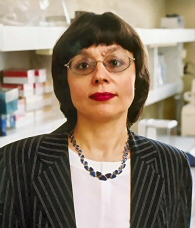
Olga Dontsova is a Full Professor at Moscow State University (MSU) in the Faculty of Chemistry. She serves as Head of the Division of RNA Structure and Function at the Belozersky Institute of Physico-Chemical Biology and Head of the Chair of Chemistry of Natural Compounds. Her research spans molecular biology, bioorganic chemistry, and RNA-based mechanisms. Research Focus: She investigates structure-functional relationships in ribonucleoprotein complexes, with emphasis on translation machinery, transfer-messenger RNA (tmRNA) interactions with ribosomes, RNA methyltransferases, and telomerase's role in cancer. Her team pioneered a chemical-biochemical-genetic approach to map mRNA topography in ribosomes, elucidate trans-translation dynamics, and characterize novel RNA-modifying enzymes. Scientific Contributions: Developed a molecular dynamic model for trans-translation Discovered unique yeast telomerase with unconventional properties Investigated functional roles of modified RNA residues in translation Honors: Member of Academia Europaea (2014) Corresponding Member of Russian Academy of Sciences (2006) European Academy Award for Young Scientists (1994) Grants & Leadership: Her work has been funded by HHMI, HFSP, CRDF, INTAS, RFFI, and Russian Ministry of Science and Education. She chairs the Biology Panel of the Russian Scientific Foundation and serves on editorial boards for Biochimie, Russian Journal of Molecular Biology, and Acta Naturae. Teaching: As a supervisor of 21 Ph.D. students and numerous diploma projects, she teaches advanced courses at MSU while maintaining an active research program.
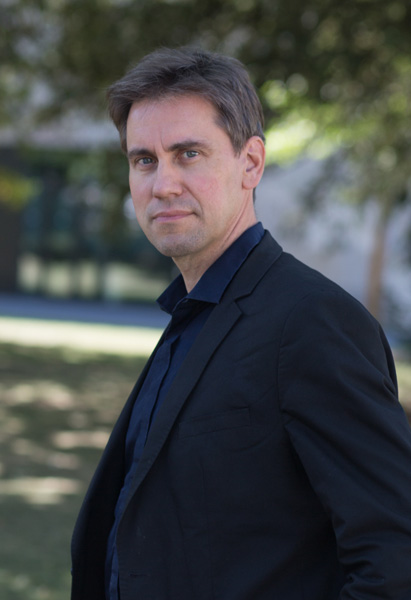
Florian Huber is a Research Associate at Paracelsus Medical University's Institute of Pharmacology and Toxicology, investigating molecular mechanisms of genetic hearing disorders. His work focuses on ubiquitin-proteasome regulation of pendrin (SLC26A4) variants associated with Pendred syndrome. Recent studies demonstrate how proteasome inhibitors rescue function of pathogenic pendrin mutants, offering therapeutic pathways for hearing restoration. Huber develops experimental and computational approaches to map degradation pathways of membrane transport proteins. He supervises medical doctoral candidates and teaches pharmacology in graduate programs.
Vinzenz Hediger is a Full Professor of Film Studies at Goethe University Frankfurt, Germany. He has held previous positions as Full Professor of Film Studies and History/Theory of Documentary Forms at Ruhr-University Bochum (2004–2011) and as a substitute Full Professor at the same institution (2002/3). Hediger has served as Senior Fellow at IKKM, Bauhaus Universität Weimar (2016), and as Speaker/Director for research programs including the DFG-funded Graduate College GRK 2279 Configurations of Film (2017–2021) and the Hans Böckler Foundation's The Productivity of Culture (2009–2014). Current Role: Full Professor, Film Studies, Goethe University Frankfurt Previous Roles: Professorships in Film Studies, Guest Professorships in Belgium, France, Italy, Czech Republic Leadership: Co-founder of NECS (2006–2011), President of German Association for Media Studies (2007–2011) Research Interests span Film Studies, Film Philosophy, Media Culture, Post-cinema, and Digital Media Culture. His work explores the philosophical foundations of film, industrial cinema, and the digital transformation of media practices. Hediger's recent publications focus on the ecology of post-cinematic media, the productivity of industrial films, and the historiography of film studies. Scientific Awards & Roles include membership in the Mainzer Akademie der Wissenschaften und der Literatur (2017), Senior Fellowship at IKKM (2016), and Franqui Chair at the University of Antwerp (2014). He has directed large-scale research programs and contributed to international academic networks like NECS.
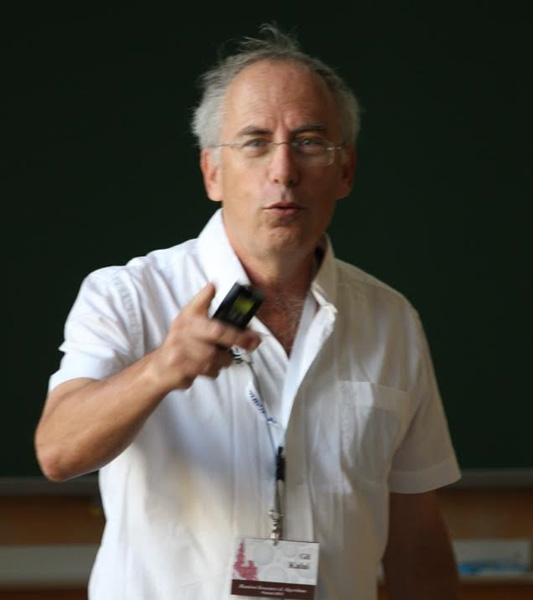
Gil Kalai is a Professor of Mathematics at the Hebrew University of Jerusalem since 1992, where he holds the Henry and Manya Noskwith Chair. He also serves as an Adjunct Professor of Mathematics and Computer Science at Yale University since 2004 in a long-term part-time visiting position. His academic career includes visiting positions at prestigious institutions including MIT, Cornell, IAS Princeton, Berkeley, Bell-labs, IBM, and Microsoft. Professor Kalai's research spans multiple areas within mathematics and theoretical computer science. His work in combinatorics encompasses geometric, probabilistic, and topological approaches. He has made significant contributions to the study of convex sets and polytopes, linear programming, and theoretical computer science. His influential 1988 paper with Kahn and Linial on Boolean functions pioneered applications of Fourier analysis in theoretical computer science. Kalai's research has evolved to include the application of Fourier analysis to thresholds, influences, symmetries, noise, percolation, and social choice. He has developed theories in algebraic shifting and studied face-numbers and other combinatorial invariants of polytopes. His work on the diameter of polytopes and randomized simplex algorithms has been influential in optimization theory. In 1993, his collaboration with Kahn produced a groundbreaking counterexample to Borsuk's Conjecture in 1325 dimensions. Professor Kalai's publications reveal a consistent focus on the intersection of combinatorics, geometry, and theoretical computer science. His work shows a progression from foundational combinatorial geometry to increasingly sophisticated applications of harmonic analysis in discrete mathematics. The recurring themes across his 30+ year career include Boolean functions, polytope theory, and probabilistic methods in combinatorics, demonstrating remarkable coherence in his research trajectory. 2016 European congress of Mathematics, plenary speaker 2013 ERC advanced grant 2012 Rothschild Prize 1994 International Congress of Mathematicians invited section talk, Zurich 1994 Fulkerson Prize 1993 Erdos Prize 1992 Polya Prize Though specific details of his advising are not provided in the source material, Kalai has written over 70 scientific papers and maintains an active research blog entitled "Combinatorics and More." His 2013 ERC advanced grant indicates significant research funding for his work. His extensive collaborations with researchers across multiple institutions suggest a robust research program with numerous PhD students and postdoctoral researchers, though specific names are not mentioned in the provided texts. Professor Kalai maintains active research connections across multiple institutions including Hebrew University, Yale, and various research centers worldwide. His work bridges pure mathematics and theoretical computer science, creating a unique interdisciplinary research environment that influences both fields.
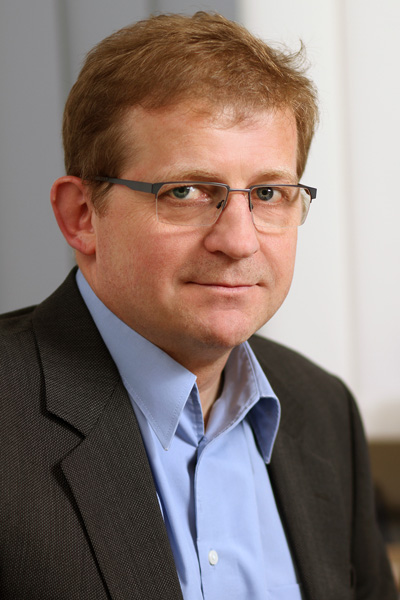
Wolfgang Kunz is a Full Professor (C4, W3) and Chair of Electronic Design Automation at the Technische Universität Kaiserslautern since 2001. His academic career spans multiple prestigious institutions, including Goethe-University Frankfurt/Main and the University of Massachusetts, Amherst. He has held leadership roles such as Dean (2005-2007) and Vice-Dean (2007-2009) at TU Kaiserslautern. Habilitation (Dr. rer. nat. habil.), Computer Science, University of Potsdam (1996) Doctoral degree (Dr.-Ing.), Electrical Engineering, University of Hannover (1992) Dipl.-Ing. degree, Karlsruhe Institute of Technology (1989) His research focuses on hardware verification, security, and optimization, particularly in embedded systems and processors. His work on formal verification methods has been commercialized by companies like Synopsys, Mentor Graphics, and Siemens EDA. His 2016-2021 publications address critical security issues such as Spectre/Meltdown and introduce innovative verification frameworks adopted by industry leaders like Infineon and OneSpin Solutions. Scientific awards include the IEEE Fellow (2006), German IT Society Award (2005), and TU Kaiserslautern Distinguished Teaching Award (2016). He has served on editorial boards of major journals and coordinated the Erasmus Mundus European Master Program in Embedded Computing Systems since 2010. Key students: Jörg Bormann, Raik Brinkmann, Tobias Ludwig Collaborations: Siemens EDA, Infineon, AbsInt, Intel SCAP Spin-offs: LUBIS EDA, OneSpin Solutions
Christian Friedrich Wilhelm Becker is a full Professor at the University of Vienna, holding a position within the Faculty of Chemistry and the Department of Biological Chemistry. His research profile shows extensive activity in protein chemistry and biochemistry, with particular focus on post-translational modifications and their implications in disease mechanisms. His work bridges chemical biology, biochemistry, and biomedical applications, contributing significantly to the academic and research landscape at one of Europe's oldest and most prestigious universities. Faculty of Chemistry, University of Vienna Department of Biological Chemistry Active research leader with numerous ongoing projects Significant publication record spanning multiple disciplines Professor Becker's research primarily focuses on protein chemistry, particularly post-translational modifications and their role in protein function and dysfunction. His work spans multiple interconnected areas including ubiquitination, protein aggregation, prion protein behavior, and biomimetic approaches to protein analysis. His research has significant implications for understanding neurodegenerative diseases and developing novel therapeutic approaches. The fingerprint analysis of his work shows strong connections to biochemistry, molecular biology, and chemistry, with particular emphasis on cysteine chemistry, glycosylation, and amino acid modifications. Analysis of Professor Becker's recent publications (2021-2025) reveals a consistent research trajectory focused on protein modification techniques and their biological implications. His work shows increasing sophistication in chemical biology approaches to study protein function, with particular emphasis on ubiquitination pathways and protein aggregation mechanisms. The integration of chemical synthesis methods with biological analysis represents a hallmark of his research approach. His publications span high-impact journals in biochemistry, chemical biology, and peptide science, demonstrating the interdisciplinary nature of his contributions. Professor Becker has received notable recognition for his research contributions, most prominently the Cathay Award in 2020. This award acknowledges his significant contributions to the field of protein chemistry and chemical biology. His work appears to have practical applications in therapeutic development, particularly in the areas of targeted protein degradation and immunotherapy, which likely contributed to this recognition. Cathay Award (2020) Professor Becker leads multiple significant research projects, including 'Targeted protein degradation - from small molecules to complex organelles' (2020-2024), 'Taktira: Development of an improved, low-side-effect and sustainable immunotherapy' (2019-2023), and 'Structure Zoom: Zooming in on protein functional sites with atomic resolution' (2018-2021). These projects demonstrate substantial grant funding and collaborative research efforts across multiple institutions. His active participation in 290 recorded activities through 2025 indicates a highly engaged research program with numerous collaborators and trainees. Targeted protein degradation project (2020-2024) Taktira immunotherapy project (2019-2023) Structure Zoom project (2018-2021) Professor Becker's research environment includes a robust team of collaborators and junior researchers, as evidenced by the numerous co-authored publications and activities. His work intersects with multiple research groups studying protein function, modification, and therapeutic applications. The international collaboration network shown in his profile indicates significant engagement with researchers across multiple countries, creating a dynamic research ecosystem focused on advancing protein science and its biomedical applications.
Matteo Maffei is a Full Professor at TU Wien, leading the Security and Privacy group. He joined in 2017 after 11 years at Saarland University's CISPA. He holds a Ph.D. in Computer Science from Ca’ Foscari University of Venice (2006). He coordinates the TU Wien Cybersecurity Center, the SecInt Doctoral School, and the FWF Special Research Program SPyCoDe. His research focuses on formal methods for security and privacy, blockchain technologies, and web security. Roles: Full Professor, Coordinator of TU Wien Cybersecurity Center, Module Head of Christian Doppler Lab for Blockchain Technologies (CDL-BOT), Board Member of Vienna Cybersecurity and Privacy Research Cluster (ViSP). His work emphasizes formal verification of cryptographic protocols, smart contracts, and decentralized systems. Key achievements include ERC Advanced (2024) and Consolidator (2018) Grants, and leadership roles in conferences like IEEE Computer Security Foundations Symposium (CSF). Research Interests: Formal methods, smart contracts, blockchain scalability, web security, privacy-preserving protocols, and decentralized systems. His recent projects include optimizing Lightning Network channels, secure multi-hop payments, and AI-driven robustness verification. Publications: Over 200 publications in top venues like CCS, IEEE S&P, and CRYPTO. Recent work includes advancements in blockchain interoperability (e.g., Alba bridges), light client protocols (Blink), and neural network verification techniques. Grants & Awards: ERC Advanced Grant (2024), ERC Consolidator Grant (2018), DFG Emmy Noether Fellowship (2009). Led projects funded by EU Horizon, FWF, and industry partners like ABC Research GmbH. Advising & Labs: Supervised over 20 PhD/Master theses. Active in the Christian Doppler Lab for Blockchain Technologies and the SPyCoDe SFB. Collaborates with institutions like SBA Research and Stanford University.
Staffan Kjelleberg is a Distinguished University Professor at Nanyang Technological University (NTU), Singapore, and Director of the Singapore National Biofilm Consortium (SNBC) and Singapore Centre for Environmental Life Sciences Engineering (SCELSE). He holds previous positions as Scientia Professor at the University of New South Wales (UNSW), Australia, and has led major research initiatives globally. His academic career spans over four decades, with roles including Head of School at UNSW and Professorships at the University of Gothenburg, Sweden. Education: BSc (Chemistry and Biology, 1975), PhD (Microbiology, 1981), and Docent (Microbiology, 1983) from the University of Gothenburg. He has authored over 384 journal papers with significant citations, reflecting his leadership in microbial biofilm research. Research focuses on microbial biofilms and microbiomes, addressing environmental sustainability, public health, and industrial applications. He employs an interdisciplinary approach to study biofilm community dynamics, matrix properties, and translational technologies for biofilm control. Key contributions include discoveries on quorum sensing inhibitors, biofilm dispersal mechanisms, and eDNA roles in biofilm structure. Honours include Fellowships from the Australian and American Academies of Microbiology, Web of Science Highly Cited Researcher status, and Editor roles for 15 international journals. He leads major programs like the Marine Climate Change Science initiative and has co-directed global research centers such as the Centre for Marine Bio-Innovation. Advising and grants: While specific student names are not listed, his extensive leadership in research programs indicates mentorship of numerous scholars. His work bridges fundamental and applied microbiology, impacting environmental and biomedical fields. Labs/Teams: Directs SCELSE and SNBC, co-founded the Centre for Marine Bio-Innovation, and collaborates internationally on biofilm and microbiome research.
Philip Poole is a Professor of Plant Microbiology at the University of Oxford's Department of Plant Sciences and Senior Research Fellow at Somerville College. His research focuses on plant-microbe interactions, nitrogen fixation, and rhizosphere microbiology. He has led major international projects including the BBSRC-NSF Synthetic Symbioses program (2014-2019) and the India-UK Nitrogen Fixation Consortium (2016-2019). With 26 grants as PI from the UK's BBSRC, he has secured over £10.5 million in funding. His work includes pioneering bacterial Lux biosensors for metabolite analysis, transcriptomics under sterile conditions, and metatranscriptomics in soil to study microbiome-plant interactions. Current projects model nitrogen fixation biochemistry in legume nodules and investigate rhizobia lifecycle transitions from rhizosphere colonization to symbiotic bacteroid differentiation. He co-directs the Oxford Centre for Plants for the 21st Century and serves on editorial/advisory boards for Microbiology UK, The Journal of Bacteriology, and Pivot Bio. His contributions include elucidating the ammonia-alanine pathway for nitrogen secretion and demonstrating symbiotic auxotrophy dependencies in bacteroids. Key achievements include developing global mutagenesis strategies (INSeq) and advancing understanding of microbial community structures in the rhizosphere. His research integrates molecular, genetic, and systems biology approaches to address global challenges in sustainable agriculture.
Olaf Steinbach is a University Professor (Univ.-Prof.) at the Institute of Applied Mathematics at Graz University of Technology. His academic career spans over three decades with continuous research activity from 1992 to the present, including publications scheduled for 2026. He serves as a project manager for several research initiatives including the Special Research Area (SFB) F90 Computational Electric Machine Laboratory, which runs from 2022 to 2026. Professor Steinbach's research interests primarily focus on Numerical Analysis and Computational Mathematics . His work centers around developing and analyzing advanced numerical methods, particularly Finite Element Methods (FEM) and Boundary Element Methods (BEM), for solving partial differential equations (PDEs) and optimal control problems. His research spans both theoretical aspects (such as error analysis, stability, and convergence) and practical applications (including electric machines, electromagnetics, and biomechanics). He has made significant contributions to space-time finite element methods, which treat time as an additional dimension in the discretization process, leading to more robust and efficient solvers for time-dependent problems. Analysis of his recent publications (2021-2026) reveals a strong focus on optimal control problems governed by partial differential equations, with particular emphasis on elliptic, parabolic, and hyperbolic PDEs. His work demonstrates a consistent pattern of developing robust numerical methods with rigorous error analysis, often incorporating regularization techniques to handle challenging constraints. The applications span computational electromagnetics (particularly electric machines), fluid dynamics, and wave propagation problems. His research increasingly incorporates advanced computational techniques including parallel computing and isogeometric analysis. Professor Steinbach has supervised numerous doctoral students and has been actively involved in organizing academic events, including summer schools on Boundary Element Methods. His collaborative network extends across multiple disciplines and institutions, reflecting the interdisciplinary nature of his work in computational mathematics. His research has been supported through multiple significant projects including DK-W1244 Doctoral Program on Partial Differential Equations, the EU CASOPT project on optimization of industrial devices, and the ongoing Special Research Area on Computational Electric Machine Laboratory. These projects demonstrate his leadership in establishing research frameworks that bridge theoretical mathematics with practical engineering applications. Professor Steinbach maintains an active research group within the Institute of Applied Mathematics, collaborating closely with researchers in computational engineering, electrical engineering, and biomechanics. His work on the Computational Electric Machine Laboratory represents a particularly strong interdisciplinary effort combining mathematical theory with electrical engineering applications.
Emmanuel Kowalski is a Professor of Mathematics at ETH Zurich , where he has been since 2008. Previously, he held professorships at Université Bordeaux I (2000–2007) and was a Veblen Research Instructor at Princeton University and the Institute for Advanced Study (1998–2000). His research focuses on analytic number theory, automorphic forms, and algebraic geometry. Education: École Normale Supérieure de Lyon (1989–1992); PhD in Mathematics from Rutgers University (1998). Research Interests include automorphic forms, L-functions, sieve methods, exponential sums, and probabilistic number theory. His work often bridges number theory with algebraic geometry and harmonic analysis. He has authored over 70 research papers and 6 books, including the influential Analytic Number Theory (2004) with Henryk Iwaniec. Scientific Awards and Invitations include the von Neumann Visiting Fellowship at IAS Princeton (2009), membership in the Board of the Institut des Hautes Études Scientifiques (2016–present), and four invitations to lecture at the prestigious Bourbaki Seminar. He has also delivered key lectures at the Riemann International School of Mathematics and conferences honoring major mathematicians. Grants and Leadership He has organized numerous conferences and research programs, including the 2019 Arithmetic, geometry and modular forms conference at FIM and the 2022 goMath program on Women in Mathematics. He co-leads projects funded by the Swiss National Science Foundation (SNF), such as Trace functions and arithmetic Fourier transforms .
Cesare Franchini is a full Professor at the University of Vienna's Faculty of Physics, leading the Computational Materials Physics research group. His work focuses on theoretical understanding and computational modeling of quantum materials using first principles methods, particularly VASP. He maintains an active research program with numerous postdocs, PhD students, and collaborations across multiple institutions including the University of Bologna. Professor Franchini's research centers on quantum materials with many interacting degrees of freedom (lattice, spin, and electron orbital) that enable novel electronic and magnetic phases. His specific interests include metal-insulator transitions, polaron physics (electron-phonon interactions), non-collinear spin orderings, topological Dirac/Weyl phases, multiferroism, and superconductivity. He has increasingly incorporated machine learning data-driven tools and diagrammatic Monte Carlo techniques into his computational approaches. Analysis of his recent publications (2024-2025) reveals a strong focus on polaron physics across multiple material systems, with significant work on hematite, titanium dioxide, and quantum paraelectrics like KTaO3. His research increasingly integrates machine learning with traditional first-principles methods, particularly for studying hydrogen diffusion, surface science phenomena, and electronic structure calculations. There's also substantial work on single-atom catalysis and the application of advanced computational techniques to understand fundamental charge transport mechanisms in energy materials. Professor Franchini actively supervises numerous PhD students and postdocs, including Andrea Angeletti, Viktor Birschitzky, Lorenzo Celiberti, and several others working on diverse aspects of computational materials physics. He leads or participates in major research projects including TACO (Taming Complexity in Materials Modeling), DCAFM (Doctoral College Advanced Functional Materials), and the recently launched Spin-orbit entangled anharmonic polarons project. His group maintains strong collaborations with experimentalists at Charles University, Technical University of Vienna, and other international institutions.
Pierre Colmez is a French mathematician affiliated with the École Polytechnique (1993-2010) and the National Center for Scientific Research (CNRS) at the Institut de Mathématiques de Jussieu since 2010. His academic journey includes postdoctoral positions at the Institut Joseph Fourier (Grenoble) and the Max Planck Institute for Mathematics (Bonn). Ph.D. in 1988 (Grenoble) under Jean-Marc Fontaine and John Coates École Polytechnique: Professor (2006-2010), Teaching Professor (1993-2005) Colmez’s research lies at the intersection of arithmetic geometry , Galois representations , p-adic Hodge theory , and the Langlands program . His work explores connections between automorphic forms, p-adic analysis, and cohomological structures in number theory. His most recent publications focus on p-adic cohomology, Drinfeld towers, and syntomic complexes, reflecting his expertise in advanced topics of nonarchimedean geometry and Galois cohomology . Collaborations with Gabriel Dospinescu and Wiesława Nizioł highlight his contributions to modern arithmetic geometry. Prix Léonid Frank (2016) Aisenstadt Chair (2015) Prix Fermat (2005) Prix Gabrielle Sand et Guido Triossi (1999) Colmez has held editorial roles at Astérisque (1999-2004), directed the SMF Mathematical Documents collection (2001-2016), and served on editorial boards for Annales de l'ENS and Publications de l'IHES . His academic network includes collaborations with Laurent Berger, Christophe Breuil, and Jean-Pierre Serre.
Shaul Pollak is an Assistant Professor at the Division of Microbial Ecology within the Centre for Microbiology and Environmental Systems Science at the University of Vienna. His research focuses on bacterial interactions in ecosystems, particularly their roles in plant pathogen protection and carbon cycling across soil and marine environments. He leads a research group investigating how microbial processes scale from genetic mechanisms to planetary biogeochemical cycles. His primary research interests include microbial community assembly, bacterial metabolism of complex biopolymers, and evolutionary genomics of marine cyanobacteria. Current projects leverage genomic dark matter to predict soil carbon fluxes, examine plant-bacteria interactions under environmental change, and explore the diversity of Prochlorococcus marinus. His interdisciplinary approach integrates genomics, high-throughput experiments, and machine learning to bridge ecological and evolutionary theory. Analysis of his 2022-2025 publications reveals consistent themes in microbial community dynamics, with emphasis on polysaccharide degradation mechanisms, phage-bacteria interactions, and genomic predictors of bacterial metabolic functions. His work demonstrates how bacterial trade-offs and cross-feeding structures shape ecosystem processes from ocean biogeochemistry to human gut microbiome organization. Dr. Pollak actively recruits PhD students and postdoctoral researchers through university stipend programs, with current group members including Thomas Gaehtgens, Gerhard Gruber, Jyothsna Pujar, Qi Qi, Lior Shachar, Marco Sing, and Joana Valèrio. His laboratory maintains active collaborations across soil and marine microbial ecology projects, with research infrastructure supported by University of Vienna resources and external funding.
Emanuel Sallinger is a Full Professor at TU Wien's Databases and Artificial Intelligence Group and Vice Dean of Academic Affairs for Business Informatics and Data Science. He leads the Knowledge Graph Lab, focusing on scalable knowledge-based systems, reasoning in knowledge graphs, and AI integration. His research spans computational logic, database theory, and blockchain applications. Education: PhD in Computer Science (awarded 'sub auspiciis praesidentis rei publicae'), Master's degrees in Computational Intelligence and Informatics Management, and a Bachelor's in Software and Information Engineering. Research Interests: Knowledge graphs (construction, reasoning, scalability), logic-based systems, AI/ML integration with databases, enterprise architecture modeling, and financial knowledge systems. His work emphasizes practical applications like enterprise modeling, sustainable waste management, and regulatory compliance. Grants & Projects: Lead Vienna Science and Technology Fund (WWTF)-funded Knowledge Graph Lab. Involved in projects like 'Knowledge Graph-driven Tour Management' (sustainability), 'SustainGraph' (waste processing), and 'Enterprise Architecture Knowledge Graphs'. Teaching: Offers courses on Knowledge Graphs, Generative AI, Database Systems, and research methodology. Supervises doctoral and master's students in AI, databases, and knowledge representation. Labs/Teams: Knowledge Graph Lab at TU Wien, collaborating with industry on blockchain-based systems, financial AI, and enterprise architecture frameworks.