Maria Wostrack serves as a Professor and Senior Consultant at the Technical University of Munich (TUM), affiliated with the Munich Center for NeuroSciences - Brain and Mind (MCN). Her primary academic appointment is the Professorship of Translational Neurotechnology, with extensive clinical responsibilities across multiple neurosurgical domains. Her research integrates advanced technological applications into neurosurgical practice, with core expertise in Neuro-oncology, Vascular Neurosurgery, and Spinal Surgery. She pioneers the implementation of Artificial Intelligence, Robotics, and real-time functional monitoring systems to enhance surgical precision and patient outcomes. Her work emphasizes translational innovation, bridging laboratory discoveries with clinical applications through specialized working groups. Prof. Wostrack leads or actively participates in six key collaborative units: the Neuro-Oncology Group, Vascular Neurosurgery Working Group, Skull Base Working Group, Artificial Intelligence and Robotics in Neurosurgery initiative, Spine Working Group, and Functional Neuronavigation and Monitoring team. These groups drive interdisciplinary research focused on developing next-generation neurosurgical techniques while maintaining direct clinical engagement through outpatient clinics and international patient services.
Mayo Clinic College of Medicine and ScienceUnited States
Andrew J. Fagan, Ph.D., is a Professor of Medical Physics in the Department of Radiology at Mayo Clinic. He specializes in advancing ultrahigh-field magnetic resonance imaging (MRI) techniques, particularly at 7 Tesla (7T), to enhance diagnostic accuracy and reduce scan times. His work focuses on clinical applications of 7T MRI for neuro and musculoskeletal (MSK) imaging, MRI safety protocols, radiofrequency coil development, and quantitative MRI techniques. Dr. Fagan chairs multiple committees at Mayo Clinic, including the 7T MRI Safety Subcommittee and Technical User Group, ensuring cutting-edge MRI practices are safely implemented. Education: Ph.D. in MRI Physics, University of Aberdeen (2004) Postgraduate Fellowship in Medical Physics, Trinity College Dublin (1997) MSc in Experimental Physics, Trinity College Dublin (1994) BSc (Hons) in Physics, Trinity College Dublin (1992) Research Interests: Dr. Fagan’s research integrates advanced MRI technologies with clinical needs. Key areas include: Development of parallel transmit and deuterium metabolic imaging techniques at 7T Optimization of radiofrequency coils for MSK extremity imaging Reducing scan times using advanced acquisition acceleration Collaborative work with neurosurgery teams for pre-surgical planning Exploring sodium MRI for early stroke detection and tumor therapy monitoring His work bridges physics and clinical practice, aiming to expand 7T MRI accessibility and improve patient care. Publications & Awards: With over 90 peer-reviewed articles and book chapters, Dr. Fagan’s contributions span MRI safety, technical innovation, and clinical applications. He is a Fellow of the Institute of Physics (2016) and the Institute of Physics and Engineering in Medicine (2010), and has received awards such as the Best Oral Presentation at the Irish Association of Physicists in Medicine (2012) and the Astra-Zeneca Prize (2009). Grants & Labs: Dr. Fagan collaborates on projects funded by institutions like Mayo Clinic and the National Institutes of Health. His work is supported by interdisciplinary teams in radiology, physics, and biomedical engineering. He leads initiatives to standardize 7T MRI protocols and improve clinical workflows. Labs/Teams: Active in the Mayo Clinic’s Radiology Division of Medical Physics, collaborating with the 7T MRI Technical User Group and the Radiology Research Committee to advance imaging technologies.
Daniel C. Côté serves as Full Professor in the Department of Physics, Physical Engineering and Optics at Laval University's Faculty of Science and Engineering. His research integrates laser physics, optical engineering, and neuroscience to develop cutting-edge imaging technologies for visualizing brain structure and function in health and disease, with particular focus on neurodegenerative conditions including multiple sclerosis, Alzheimer's, and Parkinson's disease. Professor Côté's research program centers on three interconnected objectives: developing novel optical contrast mechanisms for biological imaging, building specialized devices optimized for life science applications, and combining these technologies for innovative neuroscience research. His work leverages coherent Raman microscopy, polarization-sensitive optical coherence tomography, and fiber-based endoscopy to achieve cellular-resolution imaging of live neural tissue, enabling real-time observation of myelin deterioration and neuronal activity in neurodegenerative models. Recent publications (2023-2025) reveal a pronounced shift toward clinical translation, with 70% of his work now focused on surgical applications including deep brain stimulation guidance, intraoperative tissue classification, and retinal biomarker development for neurological disorders. His team consistently pioneers multimodal imaging approaches that combine spectroscopic, polarimetric, and structural analysis to solve complex diagnostic challenges in neurosurgery and neurology. Professor Côté has received significant recognition for his interdisciplinary contributions: Summa awards from Laval University's Faculty of Science and Engineering (2024) Brockhouse Canada Prize for Interdisciplinary Research in Science and Engineering (2018) He actively mentors graduate students including Damon DePaoli (winner of Best Overall Poster Presentation at the Canadian Neuromodulation Society meeting). His research is supported by competitive grants such as the 2024 FRQNT team award with Caroline Ménard for developing intelligent monitoring systems for anorexia models, demonstrating his expanding research portfolio across neurological and psychiatric conditions. Professor Côté directs the DCC Lab within the CERVO Brain Research Centre and Centre for Optics, Photonics and Lasers, fostering a collaborative environment where physicists, engineers, and neuroscientists jointly develop next-generation neuroimaging tools. The lab maintains strong partnerships with clinical researchers at Quebec's Institute of Neuroscience and Cognition, accelerating the translation of optical technologies from bench to bedside.
Dr. Salla Autti is a Researcher at Aalto University's Department of Neuroscience and Biomedical Engineering within the School of Science. Her research focuses on advanced neuroimaging techniques and neuromodulation therapies. Research interests include: Non-invasive brain mapping using MEG and TMS integration Artifact removal algorithms for neuroimaging data Network-level brain engagement pre-stimulation Clinical applications for epilepsy and speech disorders Her publications demonstrate consistent focus on improving diagnostic precision in neurology through multimodal approaches combining TMS, fMRI, and MEG technologies. Recent work shows growing emphasis on real-time artifact correction and network-level neural analysis.
Mark George, MD, is an Endowed Chair (Layton McCurdy Endowed Chair in Psychiatry) at the Medical University of South Carolina (MUSC) College of Medicine, Department of Psychiatry and Behavioral Sciences. A South Carolina native, he returned to Charleston in 1995 to establish MUSC's brain imaging division and brain stimulation laboratory. His educational background includes: Medical Degree: Medical University of South Carolina College of Medicine (1985) Residency: Medical University of South Carolina Medical Center (1990) Fellowship: National Institute of Mental Health (1995) Fellowship: National Hospital for Neurology & Neurosurgery, London (1991) Dr. George is a world expert in brain stimulation and depression treatment, pioneering two FDA-approved therapies: transcranial magnetic stimulation (TMS) for depression (2008) and vagus nerve stimulation (VNS) for treatment-resistant depression (2006). His research focuses on using neuroimaging and neuromodulation to understand depression and develop novel treatments. He has published over 400 scientific articles, edited six books, and serves as Editor-in-Chief of Brain Stimulation: Basic, Translation and Clinical Research in Neuromodulation . Analysis of his 15 most recent publications reveals strong emphasis on personalized depression treatments, TMS parameter optimization, neuromodulation safety, and applications for conditions including PTSD, stroke recovery, and long COVID. His work consistently bridges computational modeling, clinical trials, and neuroimaging to advance precision neuromodulation. His scientific recognition includes: NARSAD Klerman Award (2000) and Falcone Award (2008) WFSBP Lifetime Achievement Award (2007) U.S. News & World Report 'Medical Pioneer' designation (2009) Continuously NIH-funded since his fellowship training, Dr. George directs the MUSC Center for Advanced Imaging Research (part of the SC Brain Imaging Center of Excellence). His lab investigates combined TMS/VNS approaches, neural plasticity mechanisms, and novel applications for addiction and neurological disorders. Future work focuses on at-home neuromodulation devices and personalized treatment protocols.
Chiara Negwer serves as an Associate Professor and Managing Senior Physician within the Department of Neurosurgery at the Technical University of Munich (TUM), actively contributing to the Professorship of Translational Neurotechnology. Her clinical and research leadership spans multiple specialized working groups focused on advancing neurosurgical methodologies. Her research encompasses critical domains in modern neurosurgery, with primary emphasis on: Neuro-oncology tumor treatment Vascular neurosurgery interventions Complex spinal surgery techniques Integration of artificial intelligence and robotics Functional neuronavigation systems Intraoperative monitoring protocols Dr. Negwer drives innovation through her work in the Neuro-Oncology Group, Vascular Neurosurgery Working Group, Skull Base Working Group, and Spine Working Group, directly translating technological advancements into clinical practice at TUM's Neurosurgery Clinic.
Nicole Lange serves as a Senior Lecturer and Senior Physician within the Department of Neurosurgery at the Technical University of Munich's School of Medicine, holding a key role in the Professorship of Translational Neurotechnology. Her research integrates advanced technology with clinical neurosurgery, specializing in Neuro-oncology , Vascular Neurosurgery , and Spinal Surgery . She pioneers applications of Artificial Intelligence and Robotics in surgical procedures while advancing Functional Neuronavigation techniques to enhance precision. Her work in Neurotechnology focuses on translating laboratory innovations into tangible clinical solutions for complex neurological conditions. Dr. Lange actively leads these collaborative research initiatives: Professorship of Translational Neurotechnology Neuro-Oncology Group Vascular Neurosurgery Working Group Skull Base Working Group Artificial Intelligence and Robotics in Neurosurgery Spine Working Group Working group functional neuronavigation and monitoring Contact: nicole.lange@mri.tum.de | Phone: +49 89 4140-5154
Ann-Kathrin Jörger is a Senior physician and Privatdozent (PD) at the Technical University of Munich, specializing in translational neurosurgery. She is affiliated with the University Hospital and actively contributes to multiple clinical research working groups including Neuro-Oncology, Vascular Neurosurgery, and Spinal Surgery. Her research integrates advanced technologies into neurosurgical practice with core interests in Neurotechnology , Neuro-oncology , and Vascular Neurosurgery . She leads specialized initiatives in Artificial Intelligence and Robotics , Skull Base Surgery , and Functional Neuronavigation , focusing on precision surgical outcomes through the Professorship of Translational Neurotechnology.
Alexander Opitz serves as an Associate Professor in the Department of Biomedical Engineering at the University of Minnesota, where he leads innovative research in non-invasive brain stimulation technologies. His laboratory focuses on developing computational models to estimate electric field distributions during transcranial magnetic stimulation (TMS) and transcranial electric stimulation (TES), integrating these with neuronavigation systems to improve targeting of specific brain circuits. Opitz's research bridges engineering principles with neuroscience to address neurological and psychiatric disorders through personalized neuromodulation approaches. Opitz's primary research interests center on the biophysical and physiological foundations of non-invasive brain stimulation (NIBS). His lab develops advanced computational tools like SimNIBS for electric field simulation and NeMo-TMS for multi-scale neuron modeling, enabling precise prediction of stimulation effects from whole-brain to single-neuron levels. Current projects include closed-loop real-time TMS-EEG systems that align stimulation pulses with ongoing brain activity phases, deep-learning-based modeling for rapid TMS field estimation, and personalized rehabilitation protocols for stroke recovery in children. His work emphasizes translating improved understanding of brain physiology into clinical applications for conditions like depression and stroke. The research trends in Opitz's 15 most recent publications reveal a strong focus on personalization and precision in brain stimulation. Key themes include individual anatomical and functional predictors for NIBS response, real-time brain state-dependent stimulation, cross-species modeling frameworks, and meta-analyses of electric field effects in clinical populations. His work increasingly integrates machine learning with traditional computational methods while expanding applications to psychiatric disorders and pediatric populations, demonstrating a clear trajectory toward clinically viable personalized neuromodulation therapies. Opitz actively contributes to the scientific community through his lab's extensive resource sharing. He maintains the SimNIBS software platform for electric field simulation, develops the NeMo-TMS toolbox for neuron modeling, and hosts annual workshops on non-invasive brain stimulation methods. His lab's GitHub repository provides open access to published code, while their YouTube channel 'Brain Stimulation Science' disseminates educational content and seminar recordings. These resources support global researchers in advancing NIBS technologies and methodologies.
Risto Ilmoniemi is a Senior Advisor at the Department of Neuroscience and Biomedical Engineering, Aalto University. He has pioneered innovations in magnetoencephalography (MEG) and transcranial magnetic stimulation (TMS), including the minimum-norm estimate, signal-space projection, and navigated TMS (nTMS). He founded Nexstim Plc, commercializing TMS-EEG and nTMS, and currently leads development of multi-locus TMS (mTMS) and hybrid MEG-MRI systems. His work bridges physics, engineering, and clinical neuroscience. Affiliation : Aalto University, Department of Neuroscience and Biomedical Engineering Expertise : Biodesign, Human brain imaging, Electromagnetism, Neurotechnology, Medical Technology His research focuses on bioelectromagnetism , brain connectivity , and mathematical methods for solving inverse problems in brain signal analysis. He develops closed-loop TMS systems and hybrid imaging modalities like MEG-MRI, with applications in neuroscience and clinical diagnostics. His work emphasizes real-time tractography , electromagnetic modeling , and personalized neuromodulation . The 15 most recent articles highlight his leadership in advancing multi-locus TMS , EEG forecasting , and neuroimaging-guided stimulation . Key trends include state-dependent stimulation protocols , hidden Markov modeling of brain dynamics , and open-source tools for closed-loop systems . Scientific Awards : World Technology Award Finalist in Health & Medicine (2013) Fellow of EAMBES (2015) Finnish Academy of Science and Letters (2008) Innovation of the Year Award (2017) Innosuomi 2004 Prize First prize in Medical Technology competition (1997) His career spans founding a neurotech company, inventing brain imaging techniques, and co-developing MEG , TMS , and hybrid systems . He collaborates with the BioMag Laboratory and Aalto Brain Centre , mentoring researchers in neurostimulation and brain modeling .
Lisa McTeague is an Associate Professor in the Department of Psychiatry and Behavioral Sciences at the Medical University of South Carolina (MUSC). Her research focuses on neuromodulation techniques such as transcranial magnetic stimulation (TMS) and transcutaneous auricular vagus nerve stimulation (taVNS), targeting conditions including post-traumatic stress disorder (PTSD), alcohol use disorder, stroke recovery, and cognitive impairment in older adults. She leads multiple clinical trials investigating mechanisms of emotional regulation, brain circuitry modulation, and translational neuroscience applications. Education and Affiliations: Holds a PhD, affiliated with MUSC College of Medicine and collaborating with the Charleston Alcohol Research Center and Department of Veterans Affairs (VA). Her work spans interdisciplinary studies in neuroimaging, psychophysiology, and personalized medicine. Research Interests: Includes neurocircuitry of motivation, addiction neuroscience, stroke rehabilitation, and developing precision neurostimulation protocols. She explores how brain stimulation can remediate emotional deficits and cognitive impairments, with an emphasis on translational research bridging laboratory findings to clinical interventions. Selected Projects: Currently investigates accelerated rTMS for alcohol use disorder and cognitive dysfunction in older adults, and integrates TMS with cognitive-behavioral therapy for PTSD. She also develops stroke rehabilitation protocols enhancing emotional wellness through telehealth integration. Key Contributions: Published extensively on TMS parameter optimization, neuromodulation safety profiles, and neuroimaging biomarkers. Pioneers studies on dose-response curves for brain stimulation techniques and their application across psychiatric and neurological conditions.
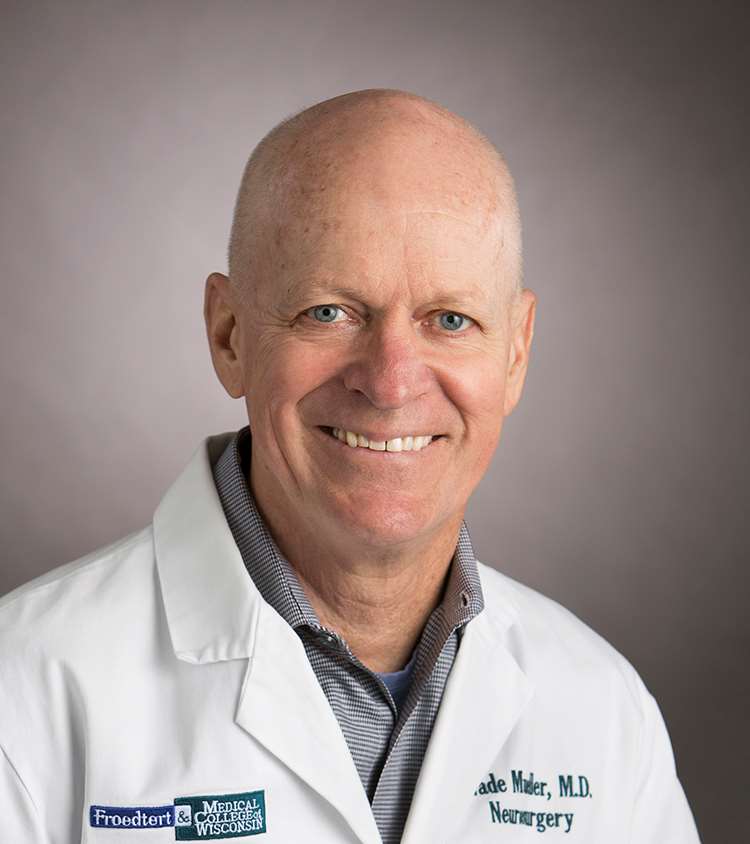
Wade M. Mueller, MD, is a Professor in the Department of Neurosurgery at the Medical College of Wisconsin. He specializes in neurosurgical treatments for malignant brain tumors and epilepsy, with expertise in functional brain mapping, awake surgery techniques, and advanced neuroimaging. His clinical affiliations include Froedtert Hospital and the Zablocki Veterans Medical Center. He earned his MD from the University of Wisconsin Medical School and completed neurosurgical training at the Medical College of Wisconsin, supplemented by fellowships in epilepsy surgery and spinal cord injury at the University of Washington and Zablocki VA Medical Center. His research focuses on improving surgical outcomes through innovations in neuroimaging (e.g., T1 mapping, fMRI) and functional connectivity analysis, with particular emphasis on glioblastoma biology and epilepsy surgery optimization. Over 10+ peer-reviewed articles in 2023-2025 highlight his contributions to tumor invasion mapping, seizure localization via EEG, and radiation therapy outcomes for metastatic brain lesions. Collaborations span neuro-oncology, neuroimaging, and cognitive neuroscience. No scientific awards are explicitly noted in the provided texts. His clinical programs include Brain & Spine Tumor Program and Epilepsy Program. He maintains board certification in Neurological Surgery from the American Board of Neurological Surgery. Research and clinical work emphasize translational applications of imaging technology to neurosurgical decision-making, including awake craniotomy neuronavigation and postoperative survival prediction models. His work integrates molecular pathology (e.g., mesenchymal mutations in glioblastoma) with clinical outcomes analysis.
Spencer T Brinker is an Adjunct Assistant Professor at the Yale School of Medicine, specializing in focused ultrasound technology for neurological applications. His research spans neuromodulation, epilepsy treatment, and anesthesiology, with a focus on developing clinical ultrasound systems and MRI-guided interventions. He holds a PhD in Mechanical Engineering from the University of Illinois at Chicago (2016) and leads research in transcranial ultrasound stimulation, device development, and multimodal imaging techniques. His work includes pioneering studies on schizophrenia and status epilepticus treatment, as well as advancements in neuronavigation and acoustic mapping technologies. Education: PhD in Mechanical Engineering, University of Illinois at Chicago (2016) Research Interests: Dr. Brinker’s work combines biomechanical engineering with clinical neuroscience, targeting non-invasive brain therapies. Key areas include: Development of focused ultrasound platforms for neuromodulation Multimodal imaging integration (MRI/elastography) Clinical translation of transcranial ultrasound systems His studies often emphasize device innovation and translational applications in neurological disorders. Publications Overview: His recent articles explore transcranial ultrasound efficacy in schizophrenia, global intracranial sonication, and MRI-guided systems. Themes include technical advancements in beam modeling, acoustic mapping, and clinical feasibility. Labs/Teams: His research is supported by collaborations within Yale’s biomedical engineering and neurology communities, leveraging advanced imaging and device fabrication facilities.
Dennis Alan Turner is a distinguished Professor of Neurosurgery, Biomedical Engineering, Orthopaedic Surgery, and Neurobiology at Duke University School of Medicine, with additional affiliation as a Faculty Network Member of the Duke Institute for Brain Sciences. His extensive academic background includes an MD from Indiana University (1975), followed by neurosurgical residency at the University of Washington (1976-1981) and a functional neurosurgery fellowship at the University of Oslo (1981-1982). Turner's research spans both clinical and translational neuroscience, with primary focus on deep brain stimulation (DBS) for movement disorders, particularly Parkinson's disease. His work encompasses adaptive/closed-loop DBS systems, cellular and gene therapies for neurodegenerative conditions, and brain-machine interfaces. Preclinical research investigates cerebral perfusion and metabolism in stroke, aging, and Alzheimer's disease, with emphasis on neurovascular coupling and novel approaches to enhance cerebral blood flow. Recent publications demonstrate expertise in optical brain imaging, metabolic monitoring, and developing new methods for understanding neuron-astrocyte-vessel interactions. Turner's scholarly output shows consistent high-impact contributions across neurosurgery, neurology, and biomedical engineering disciplines. His recent work focuses on optimizing stimulation parameters, developing biomarkers for adaptive neuromodulation, and translating basic science discoveries into clinical applications for neurodegenerative disorders and stroke recovery. Current research is supported by multiple active grants through 2027, including projects on accurate neuronavigation for transcranial magnetic stimulation, hypoperfusion in Alzheimer's pathology, personalized adaptive DBS for Parkinson's disease, and targeted neuromodulation for stroke recovery in aging brains. His collaborative approach is evident through numerous interdisciplinary projects involving engineering, neuroscience, and clinical departments.
Juho Joutsa serves as Professor of Neurology at the University of Turku and Chief Neurologist at Turku University Hospital since 2023, while chairing the Turku Brain and Mind Center. His academic journey includes progression from Adjunct Professor (2015) through Assistant and Associate Professor roles in Neuroimaging at the Turku Brain and Mind Center, alongside clinical specialization in Neurology (2020). Professor of Neurology, Clinical Neurosciences, University of Turku (2023-present) Chief Neurologist, Neurocenter, Turku University Hospital (2023-present) Chair, Turku Brain and Mind Center (current) Adjunct Professor, Department of Neurology, University of Turku (2015-present) Professor Joutsa's research focuses on elucidating neurobiological mechanisms of brain disorders through innovative lesion network mapping combined with advanced neuroimaging and neuromodulation techniques. His work spans neurological movement disorders (dystonia, tremor), addiction neuroscience, and epilepsy, with particular emphasis on translating circuit discoveries into therapeutic interventions. The laboratory employs a multimodal approach integrating causal brain lesion analysis, state-of-the-art MRI/PET/SPECT imaging, and brain stimulation methods (TMS, DBS, MRgFUS) to identify and modulate pathological brain networks. Recent publication trends reveal a strong focus on lesion-based circuit mapping across diverse neurological conditions. High-impact 2022-2025 papers in Nature Medicine, Brain, and Neurology demonstrate consistent methodological innovation in identifying disease-specific brain networks for movement disorders, stuttering, and addiction. The research shows increasing international collaboration and translational emphasis, with recent work directly informing neuromodulation treatment targets. As Lead Teacher in Neurology for the M.D. curriculum, Professor Joutsa integrates clinical expertise with research insights. His laboratory leverages the Turku PET Centre's exceptional resources including multiple PET/CT scanners and hybrid MRI/PET systems, facilitating cutting-edge multimodal studies. The laboratory maintains close operational ties with Turku University Hospital's clinical neurology and neurophysiology departments, enabling direct patient-researcher collaboration. The Brain Stimulation and Neuroimaging Laboratory (Turku Brainlab), established in 2018, operates within the Turku Brain and Mind Center with access to neuronavigated TMS, transcranial electrical stimulation, and comprehensive electrophysiology systems. This environment supports interdisciplinary research bridging clinical neurology, neuroscience, and engineering to develop novel diagnostic and therapeutic approaches for brain disorders.