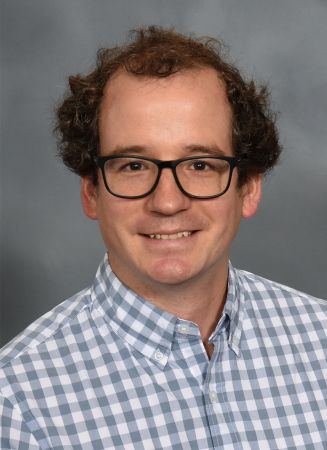
E. Thomas (Tommy) Pashuck is an Assistant Professor in the Department of Bioengineering at Lehigh University , where he joined after postdoctoral training at Rutgers University and Imperial College London . His research focuses on designing enzyme-responsive biomaterials using peptide self-assembly to control hydrogel chemistry and nanoscale organization , aiming to improve regenerative medicine applications. Education: Ph.D. in Materials Science from Northwestern University (2009) Pashuck's work explores biomaterials that direct cell behavior through precise spatial and mechanical cues . Recent publications highlight advancements in high-throughput peptide screening , 4D bioprinting , and protease-activated hydrogels , demonstrating his expertise in dynamic biomaterial design and cell-matrix interactions . His research group investigates cell adhesion optimization via ligand mobility control , enzyme-mimicking nanomaterials , and sequence-controlled polymerization while maintaining clinical translation goals. Publications from 2021-2025 emphasize hydrogel mechanics , biodegradable scaffolds , and supramolecular catalytic systems , spanning biomaterial engineering , peptide nanotechnology , and regenerative medicine .
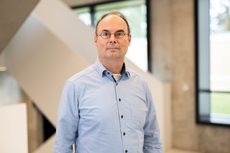
Prof. Dr. Stefan Bräse serves as Full Professor of Organic Chemistry at Karlsruhe Institute of Technology (KIT), holding continuous faculty positions since 2003. He directs both the Department of Organic Chemistry (Institut für Organische Chemie) and the Institute of Biological and Chemical Systems (IBCS-FMS) since 2020, with prior leadership as Dean of the Faculty of Chemistry and Biosciences (2007-2011). Education: Chemistry studies at Georg-August-Universität Göttingen and University College of North Wales (1988-1992) Diplomhauptprüfung at Göttingen (1992) Dissertation (summa cum laude) under Prof. A. de Meijere (1995) Postdoctoral fellow at University of Uppsala (1995-1996) and Scripps Research Institute with Prof. K. C. Nicolaou (1996-1997) Habilitation at RWTH Aachen under Prof. D. Enders (1997-2001) Research Focus: Bräse pioneers asymmetric synthesis methodologies and combinatorial chemistry platforms for biologically active compounds, with landmark work in solid-phase natural product synthesis (THC, Secalonic Acids) and functionalized nano-structures. His interdisciplinary approach bridges organic chemistry with nanotechnology and medicinal applications, emphasizing catalytic innovation and molecular design. Scientific Recognition: Multiple KIT Innovation Prizes (2014, 2016, 2018) ISCB ABAWR for Excellence in Chemical Science (2009) Lilly Lecture Award (2001) and Richard-Zsigmondy Prize (1995) Extensive fellowship support including DFG-Habilitations-Stipendium and Liebig stipend Academic Leadership: Bräse has secured major research funding through DFG programs and industry collaborations, serving as referee for American Chemical Society Petroleum Funds and DFG Fachkollegium 301. His 600+ publications reflect sustained mentorship of graduate researchers despite unlisted student names. He directs the KIT Combinatorial Chemistry Platform and Soft Matter Synthesis Lab while co-leading Helmholtz Program 'Biointerfaces' initiatives. Research Infrastructure: Current leadership includes Directorship of IBCS-FMS and membership in SFB 1176 and 3DMM²O Cluster, driving KIT's strategic focus on bioactive compound discovery and molecular systems engineering.
Dr. Peng Zhang is a Research Fellow at the University of Birmingham's School of Geography, Earth and Environmental Sciences, where he leads research in nanotechnology applications for environmental and agricultural sustainability. He joined as a Marie Curie Fellow in 2018 following a Ph.D. and assistant professorship at the Chinese Academy of Sciences' Institute of High Energy Physics, and a research fellowship at McGill University, Canada. His work focuses on nanomaterial fate analysis using synchrotron techniques, including pioneering isotope labeling for nanomaterial tracking in plants. He also explores nanotechnology in sustainable agriculture, such as nanopesticides and nanofertilizers, with over 80 publications in top journals like Nature Protocols and ACS Nano . Dr. Zhang holds editorial roles in journals like Reviews of Environmental Contamination and Toxicology and co-edited Nano-enabled Agriculture (Elsevier). His research integrates environmental toxicology, nanomaterial safety, and interdisciplinary approaches combining AI with nanotechnology. He has been awarded the 2022 American Chemical Society James J Morgan Early Career Award for his contributions to nanotechnology and sustainability. Key research themes include environmental fate of engineered nanomaterials, biointerface reactions between nanomaterials and organisms, and nanomaterials for pollution remediation. His work bridges fundamental science and practical applications, addressing global challenges in agriculture and environmental health.
Professor Kripa K. Varanasi is a faculty member in the Department of Mechanical Engineering at the Massachusetts Institute of Technology, operating within the School of Engineering. Her interdisciplinary research spans physico-chemical phenomena, thermal-fluids, interfacial science, and electrochemical systems, with applications in energy, water, biomedical technologies, and sustainable manufacturing. Alumnus of Indian Institute of Technology Madras (B.Tech, 1998), MIT (M.S. 2002, Ph.D. 2004) Former GE Global Research lead with multiple technology awards Her research program uniquely bridges fundamental surface science with scalable industrial solutions, evidenced by startup ventures like LiquiGlide, Infinite Cooling, and AgZen. Expertise lies in Nanostructured surfaces , electrochemical fluid control , and bio-inspired material design . The group's visible light-responsive TiO 2 surfaces enable transformative approaches to oil-water separation and microfluidic manipulation. Scientific recognition includes: NSF Career Award DARPA Young Faculty Award ASME Bergles-Rohsenow Heat Transfer Award MIT Graduate Advising Excellence Award Multiple startup competition victories Key publications reveal systematic innovations in optically modulated wetting , dye-sensitized interfacial engineering , and industrial fluid dynamics . The group's startups have won prestigious competitions including the MIT-100K and MassChallenge Diamond Winner distinction.
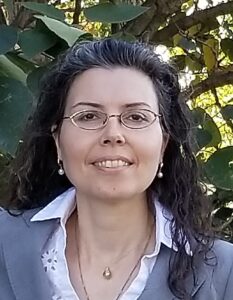
Marie-Christine Daniel serves as an Associate Professor in the Department of Chemistry & Biochemistry at the University of Maryland, Baltimore County (UMBC). Her research laboratory focuses on the preparation of multifunctional colloidal inorganic nanoparticles for medical, materials, and environmental applications. She maintains an active research program with laboratory space in the Meyerhoff Chemistry/Biochemistry Building. Daniel earned her Ph.D. from the University of Bordeaux 1 (France) in 2003, followed by postdoctoral training at Tokyo University (Japan) and Indiana University (IN) in 2004. Her educational background provides a strong foundation in both European and American research traditions. Her primary research interests include the development of nanoparticle-based drug delivery systems for cancer chemotherapy, particularly using dendronized gold nanoparticles capable of carrying payloads of up to 1400 dendrons per nanoparticle. She also investigates plasmon-exciton coupling using gold nanoparticles and quantum dots for quantum computing applications, and develops microfluidic sensors for lead detection in tap water. Her work bridges chemistry, materials science, and biomedical engineering. Analysis of her publication record reveals consistent research output across three main thrusts: 1) Cancer nanomedicine with emphasis on prostate cancer treatment, 2) Quantum phenomena in nanoparticle assemblies, and 3) Environmental sensing applications. Her most recent work (2025) continues to advance quantum dot transfer techniques, while her highly cited 2004 Chemical Reviews article on gold nanoparticles remains influential in the field. Daniel leads multiple funded research projects including NSF-funded work on hyperthermia for enhanced nanoparticle delivery to tumors, development of HIFU (High-intensity focused ultrasound) energized functionalized nanoparticles for tumor ablation, controlled assembly of inorganic nanoparticles for hybrid nanomaterials, and gold nanoparticle-based microfluidic devices for lead sensing in tap water. Her laboratory collaborates extensively with researchers across disciplines including physics, oncology, and engineering. The Daniel Lab maintains active collaborations with the Pelton research group in Physics at UMBC for nanoparticle optical properties research, and works with medical researchers on cancer treatment applications. Current projects include optimizing dendronized gold nanoparticles for prostate cancer treatment, developing gold nanorattles for combination chemotherapy and photothermal therapy, and creating user-friendly lead detection devices for home water testing.
Guizhi Zhu (Julian) is an Associate Professor in the Department of Pharmaceutical Sciences at the University of Michigan — Ann Arbor . He is also a Center Member at the Rogel Cancer Center and Biointerfaces Institute . His research focuses on RNA-based therapeutics and vaccines at the intersection of immunology, nucleic acid engineering, and functional biomaterials. Dr. Zhu earned a B.S. from Nankai University (China), a Ph.D. from the University of Florida (USA), and completed postdoctoral training at the National Institutes of Health . His work has been continuously supported by federal grants from NIH , DoD , and ACS , including a $2.3M NIH/NCI R01 grant (2022-2027) and a DoD Breast Cancer Research Breakthrough Award (2022-2025). Developing circRNA and mRNA vaccines for cancer and infectious diseases Designing nucleic acid immunotherapeutics (circRNA, gene-editing gRNA, siRNA) Engineering cGAS-STING-targeted immunomodulators for cancer and autoimmune diseases Creating biomaterials delivery systems : lipid nanoparticles, polymeric microneedles, hydrogels His 15 most recent publications (2020-2025) demonstrate expertise in circular RNA vaccines , nucleic acid delivery , and combination immunotherapy . His 2022 review in Journal of Controlled Release has been cited 231 times, highlighting his leadership in RNA therapeutics. 2022 : Mary Ann Liebert Young Investigator Award, AAPS Emerging Leader Award 2021 : NIH MIRA R35 grant ($1.9M), METAvivor Early Career Award 2019 : KL2 Scholar (NCATS, NIH) The Zhu Research Group includes 15+ members working on projects like tumor therapeutic mRNA vaccines and RNA editing. They currently accept PhD students, postdocs, and visiting scholars.
Hendrik Jan (Henk) Busscher is a Professor Emeritus in the Department of Biomedical Engineering at the University of Groningen, affiliated with the Faculty of Medical Sciences and the W.J. Kolff Institute. His research focuses on biomaterial-associated infections, microbial adhesion mechanisms, and surface modification strategies to prevent biofilm formation on medical implants. He has held leadership roles, including Head of the Department of Biomedical Engineering and Director-owner of consulting firm SASA BV, and serves as Editor of Colloids and Surfaces B: Biointerfaces . Research interests include physico-chemical interactions of biomaterials with biological components, antibiotic resistance, and nanotechnology applications in infection control. He has supervised over 79 PhD students and authored >636 publications, achieving an H-index of 58. Key contributions span biofilm dynamics, surface characterization techniques, and in vitro/in vivo infection models. His work emphasizes translational research, bridging academic and industrial partnerships in biomaterials innovation. Recent studies explore quantum dot synthesis for biomedical applications, pH-responsive drug delivery systems, and magnetic nanoparticle-based antibacterial strategies. Collaborations include global institutions and companies like Philips and Procter & Gamble. His interdisciplinary approach addresses sustainable healthcare challenges, particularly in preventing infections from medical devices.
Ronald Zirbs is a Research Fellow at the Institute of Colloid and Biointerface Science , University of Natural Resources and Life Sciences, Vienna (BOKU). With a PhD in Polymer Chemistry (Martin-Luther-University Halle/Saale, 2007-2009; TU Wien, 2005-2006), his research focuses on nanoparticle synthesis , surface-active ionic liquids , and thermoresponsive polymer architectures .
William Dichtel is a Professor in the Department of Chemistry at Northwestern University, holding the Robert L. Letsinger Professorship. His research focuses on synthetic and supramolecular chemistry to develop structurally precise organic materials for water purification, energy storage, and biological interactions. B.S., MIT (2000) Ph.D., UC-Berkeley (2005) Postdoctoral studies at UCLA & Caltech (2005-2008) Key research areas include: Water purification materials (especially PFAS removal) Energy storage polymers Self-healing polymer systems 2D covalent organic frameworks (COFs) Nanomaterial-biological interactions Mechanochemical polymer activation The group's publications demonstrate expertise in 2D materials, polymer chemistry, and environmental applications, with recent innovations in solid-state polymerization and low-energy PFAS destruction methods. Scientific recognitions include: MacArthur 'Genius Grant' (2015) Guggenheim Fellowship (2018) Blavatnik Award for Young Scientists (2020) Clarivate Highly Cited Researcher (2024) Kavli Frontiers Fellow (2015) ACS National Fresenius Award (2014) Current advisees include NSF Graduate Research Fellow Laura Reed and Schmidt Science Fellow Ansuree Natraj. The lab maintains collaborations with institutions including Max-Planck Institute for Solid State Research and Lawrence Berkeley National Laboratory.
Prof. Dr. Marialore Sulpizi is a Professor of Theoretical Physics of Electrified Liquid-Solid Interfaces at Ruhr-University Bochum, Germany, and a core member of the RESOLV Cluster of Excellence. Previously, she served as Junior Professor (2010–2017) and Adjunct Professor (2017–2021) at Johannes Gutenberg University Mainz. Her research focuses on molecular-scale understanding of electrified solid-liquid interfaces using ab initio and atomistic simulations, addressing phenomena like charge/mass transport in energy conversion and biomembrane systems. She holds a Laurea (M.Sc.) in Theoretical Physics from Università di Roma La Sapienza (1997) and a PhD in Condensed Matter Theory from SISSA (2001), followed by postdoctoral work at EPFL/ETHZ (Switzerland) and the University of Cambridge (UK). Research interests span interfacial electrochemistry, nanomaterials, and environmental interfaces. She explores how interfacial structure influences reactivity in systems like platinum electrodes, gold nanoparticles, and silicate surfaces. Key contributions include modeling electrolyte double layers, nanoparticle growth mechanisms, and surface acidity effects. Publications (2021–2025) highlight advancements in interfacial dynamics, ionic liquid confinement, and biomolecular solvation. Her work bridges fundamental physics with applied challenges in energy storage and biointerfaces. Collaborations with experimental groups enable validation of simulation predictions. Current projects investigate non-equilibrium interface behavior and solvent roles in chemical reactions.
Torsten John is an Assistant Professor of Physical Chemistry at the School of Science, Constructor University Bremen gGmbH, Germany. His research bridges biophysical chemistry and computational chemistry to engineer biomolecular systems for biomedical applications. PhD in Chemistry (2020) from Leipzig University (summa cum laude) Postdoctoral experience at Max Planck Institute, MIT, and Leibniz Institute of Surface Engineering Research focuses on biomolecular self-assembly and membrane interactions , with implications for antimicrobial strategies , nanomedicine , and neurodegenerative diseases . Articles show interdisciplinary work combining experimental and theoretical approaches . Publications include high-impact journals like Advanced Functional Materials and Nucleic Acids Research . His group develops bionanomaterials using peptide nanofibrils and DNA origami, with applications in viral particle isolation and exciton transport . Collaborations span institutions in Germany, USA, and Australia. Teaching includes Physical Chemistry (CO-440) and Physical Chemistry Lab (CO-446-B) .
Kelly Nash is a Professor in the Department of Physics and Astronomy at the University of Texas at San Antonio (UTSA), within the College of Sciences. She also serves as the Vice Provost for Faculty Success, a leadership role reflecting her commitment to academic excellence and faculty development. Previously, she was Associate Dean for Faculty Success (2019–2023) and Director of the Kleberg Advanced Microscopy Center (2018–2020). Education: Ph.D. in Physics, University of Texas at San Antonio M.S. in Applied Physics, University of Michigan B.S. in Physics, Dillard University Prof. Nash's research lies at the intersection of physics, materials science, and biology. Her work focuses on functional nanomaterials , particularly their synthesis, optical properties, and interactions with biological systems. Key areas include biophotonics , nanoparticle synthesis via laser ablation , photoacoustic sensing , and nanotransducers for biomedical applications . Her lab develops nanoparticles for photodynamic therapy, on-demand drug release, antimicrobial treatments, and environmental sensing. Her recent publications reveal a strong trend in leveraging light-matter interactions for biomedical diagnostics and therapy. She pioneers all-optical photoacoustic techniques that eliminate bulky transducers, enabling high-resolution, high-frequency detection. Her work spans fundamental biophysics to translational applications, with materials including gold, selenium, and dichalcogenide nanoparticles. Scientific Awards and Recognition: Air Force Office of Scientific Research Young Investigator Program Award APS Women Physicist of the Month (July 2016) Dillard University Alumni 40–Under-40 San Antonio Business Journal 40-Under-40 UTSA President’s Distinguished Diversity Award UTSA COS Excellence in Community Service Award Prof. Nash is a dedicated mentor and advocate for diversity in STEM. She has served as UTSA-APS Bridge Program Coordinator and chair of the APS Conferences for Undergraduate Women in Physics National Organizing Committee. Her lab, the Functional Nanomaterials Laboratory , receives funding from AFOSR, NIH, NSF, DOE, and NNSA. She is actively involved in grants focused on biophysics, antimicrobial nanomaterials, and STEM education. She welcomes graduate and undergraduate students interested in nano-bio interfaces and translational research. The lab collaborates extensively with institutions such as the University of Texas Health Science Center, Southwest Research Institute, AFRL, and international partners, forming a robust interdisciplinary research network.
Dr. Mirko Nitschke is a senior researcher at the Leibniz Institute of Polymer Research Dresden (IPF), affiliated with the Max Bergmann Center of Biomaterials Dresden. He has been instrumental in advancing polymer biomaterials science since joining the institute in 1996, focusing on plasma-based surface engineering and biocompatible material development for medical applications. His academic foundation includes: Graduate studies (1992-1996) at Chemnitz University of Technology, where he investigated FTIR Spectroscopic Investigation of Plasma Modified Polymer Surfaces Physics undergraduate degree (1987-1992) from Friedrich-Schiller-University Jena with thesis on Computer Simulation of Ion Trajectories in Solids Nitschke's research centers on plasma surface functionalization and polymer diagnostics to engineer biocompatible materials. His work bridges fundamental surface science with clinical applications, particularly in vascular stents, nerve regeneration, and corneal tissue engineering. Key innovations include thermo-responsive cell carriers and bioactive hydrogel coatings that respond to physiological cues. Analysis of his 15 most recent publications reveals a strong trajectory in advanced biomaterials characterization using ToF-SIMS and plasma techniques. His work increasingly integrates machine learning for spectral analysis while maintaining focus on medical device applications—particularly in cardiovascular and ophthalmic implants where surface-biology interactions dictate clinical success. As a core member of the Polymer Biomaterials Science Division, Nitschke collaborates extensively with clinical partners through the Max Bergmann Center's university-linked infrastructure. His laboratory specializes in plasma modification systems and surface analytics for next-generation biomaterials development.
Terry D. Johnson is Senior Instructional Professor and Program Director for the Master of Engineering at the University of Chicago's Pritzker School of Molecular Engineering. He holds an MS in Chemical Engineering from MIT and is an emeritus Teaching Professor from UC Berkeley, where he co-founded the Masters of Translational Medicine program. Research integrates engineering and biomedicine, with patented innovations in tissue engineering and synthetic biology. Recent work develops sustainable textile dyeing technologies eliminating toxic reductants. Earlier projects include microfluidic hepatocyte cultures and EGF-functionalized biomaterials. Awards: Golden Apple Award for Outstanding Teaching (UC Berkeley 2010) Distinguished Teaching Award (UC Berkeley 2013) Co-authored the popular science book How to Defeat Your Own Clone . Teaches molecular engineering courses and directs master's programs bridging technical innovation and medical translation.
Mary Hannah Wood is an Assistant Professor at the University of Copenhagen's Niels Bohr Institute, specializing in the Theoretical High Energy, Astroparticle and Gravitational Physics department. With a background in physical and surface chemistry, her research focuses on applying advanced techniques like neutron reflectometry to understand complex bioelectronic interfaces and electron transport mechanisms. Her work addresses energy and chemical supply challenges through bioelectronic systems and interfacial analysis . Publications highlight collaborations in electrochemistry , biophysics , and microfluidic engineering , with recent studies in Journal of the American Chemical Society and Langmuir . Mary's research spans photosynthetic membranes , lipid bilayer dynamics , and environmental chemistry . She utilizes neutron reflectometry and atomic force microscopy to explore bioelectronic interfaces and mineral surface interactions.