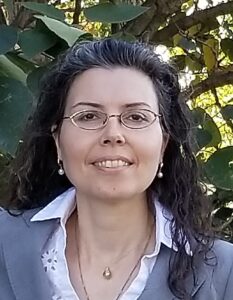
Marie-Christine Daniel
دانشیار · Nanoparticle drug delivery systems
University of Maryland, Baltimore Countyمعرفی
Marie-Christine Daniel serves as an Associate Professor in the Department of Chemistry & Biochemistry at the University of Maryland, Baltimore County (UMBC). Her research laboratory focuses on the preparation of multifunctional colloidal inorganic nanoparticles for medical, materials, and environmental applications. She maintains an active research program with laboratory space in the Meyerhoff Chemistry/Biochemistry Building.
Daniel earned her Ph.D. from the University of Bordeaux 1 (France) in 2003, followed by postdoctoral training at Tokyo University (Japan) and Indiana University (IN) in 2004. Her educational background provides a strong foundation in both European and American research traditions.
Her primary research interests include the development of nanoparticle-based drug delivery systems for cancer chemotherapy, particularly using dendronized gold nanoparticles capable of carrying payloads of up to 1400 dendrons per nanoparticle. She also investigates plasmon-exciton coupling using gold nanoparticles and quantum dots for quantum computing applications, and develops microfluidic sensors for lead detection in tap water. Her work bridges chemistry, materials science, and biomedical engineering.
Analysis of her publication record reveals consistent research output across three main thrusts: 1) Cancer nanomedicine with emphasis on prostate cancer treatment, 2) Quantum phenomena in nanoparticle assemblies, and 3) Environmental sensing applications. Her most recent work (2025) continues to advance quantum dot transfer techniques, while her highly cited 2004 Chemical Reviews article on gold nanoparticles remains influential in the field.
Daniel leads multiple funded research projects including NSF-funded work on hyperthermia for enhanced nanoparticle delivery to tumors, development of HIFU (High-intensity focused ultrasound) energized functionalized nanoparticles for tumor ablation, controlled assembly of inorganic nanoparticles for hybrid nanomaterials, and gold nanoparticle-based microfluidic devices for lead sensing in tap water. Her laboratory collaborates extensively with researchers across disciplines including physics, oncology, and engineering.
The Daniel Lab maintains active collaborations with the Pelton research group in Physics at UMBC for nanoparticle optical properties research, and works with medical researchers on cancer treatment applications. Current projects include optimizing dendronized gold nanoparticles for prostate cancer treatment, developing gold nanorattles for combination chemotherapy and photothermal therapy, and creating user-friendly lead detection devices for home water testing.