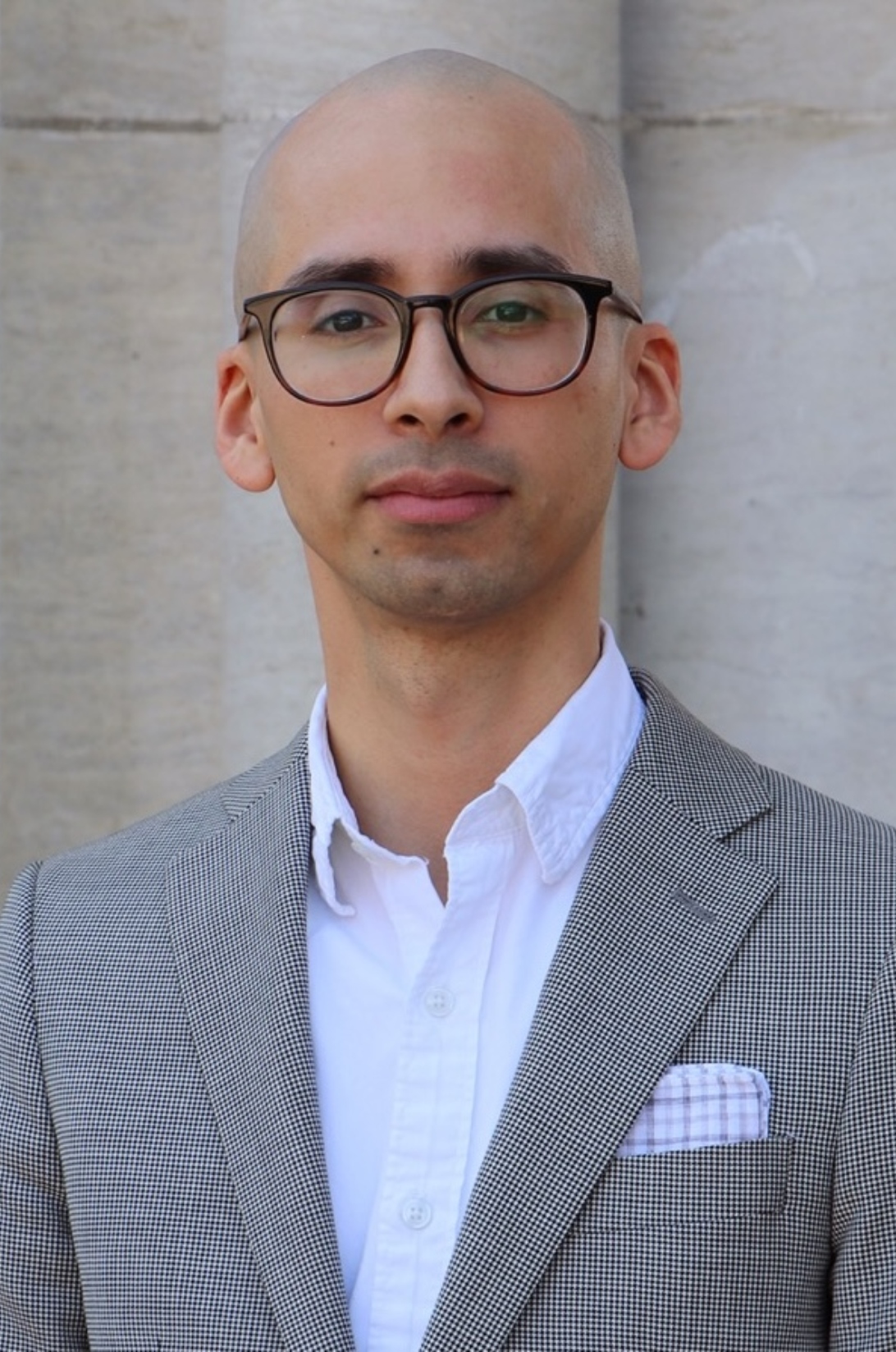
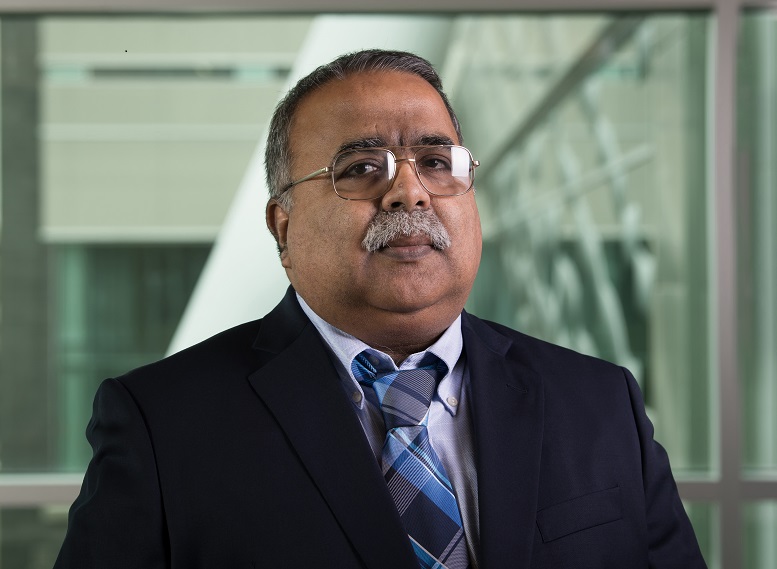
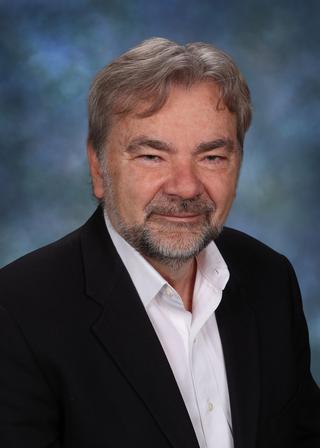
Professor Gerard Gorman is a Professor of Computational Science and Engineering at Imperial College London's Faculty of Engineering. He leads the MSc in Applied Computational Science and Engineering and serves as Associate Director of the Centre for Computational Methods in Science and Engineering. His research focuses on high-performance computing, seismic imaging, and adaptive algorithms. Key affiliations include the Applied Modelling and Computation Group, Grantham Institute, and Quantum Engineering programs. Education includes a PhD (2005), MSc (2000), and BSc (1997) from Imperial College London and National University of Ireland Galway. His work spans domain-specific languages (e.g., Devito), parallel computing optimization, and multiphysics modeling. Notable contributions include the Stride platform for ultrasound tomography and the Devito project for automated stencil code generation. Research interests combine computational methods with geophysical applications, emphasizing scalability and algorithmic innovation. He has led numerous grants and collaborations in HPC and geoscience. Current efforts include advancing seismic inversion techniques and AI integration in computational workflows.
Dr. Mario Bencomo is an Assistant Professor of Mathematics at California State University, Fresno. He holds a Ph.D. and M.A. in Computational and Applied Mathematics from Rice University and a B.S. in Physics and Applied Mathematics from the University of Texas at El Paso. His research focuses on numerical methods for partial differential equations, inverse problems, and scientific computing, with applications in wave propagation, heat conduction, and seismic imaging. He has published in leading computational journals and contributes to open-source scientific software. Dr. Bencomo teaches advanced mathematics courses including Numerical Analysis, Differential Equations, and Linear Algebra. He is recognized for innovative teaching pedagogy integrating technology and programming into math education. His work emphasizes practical applications such as seismic imaging, industrial cooking simulations, and efficient regularization techniques for large-scale problems. He has mentored students in projects involving reduced-order modeling, finite element methods, and spectral approaches to heat equations. His academic background includes postdoctoral research at Rice University and Brown University’s ICERM.
Utpal Dutta is a full Professor in the Civil Engineering department at the University of Alaska Anchorage . He holds a Ph.D. in Applied Geophysics from the Indian School of Mines (1992) and has over 25 years of academic experience, including teaching roles at Guru Nanak Dev University (1992-1998) and research positions at the University of Alaska systems since 1998. His career includes joint appointments between the University of Alaska Anchorage and the Geophysical Institute, UAF. Education: Ph.D. (1992) from Indian School of Mines, M.Sc(Tech) (1988) from same institute, B.Sc(Physics Hons) from Calcutta University (1984) Professional Roles: Member of American Geophysical Union, Seismological Society of America, Earthquake Engineering Research Institute, Society of Exploration Geophysicists, and NEES network Research Interests focus on Earthquake Engineering , Engineering Seismology , and Seismic Microzonation with specific emphasis on permafrost and frozen ground effects on seismic responses. His work addresses urban earthquake hazards , seasonal ground freezing , and climate change impacts on Arctic infrastructure. Key Article Trends show 20 years of publications in earthquake engineering , geophysics , and cold-region engineering , with recent focus on nonlinear site effects (2021), shear wave velocity mapping (2021), and Alaska-specific seismic studies (2020-2014). Earlier works include international collaborations in the Middle East (2015), high-rise building dynamics (2008), and seismic zonation (2000-2004). Grants & Projects (2003-2020): Secured over $400k in funding from U.S. Geological Survey, ConocoPhillips, Alaska Space Grant, and internal university sources for seismic monitoring, permafrost studies, and structural analysis Professional Service (2002-2021): Co-Chair of 2021 IAGA-IASPEI conference, Technical Committee member for multiple earthquake engineering conferences, and served on editorial boards of major journals
Mohamed Aziz Boukraa is a Postdoctoral Research Fellow at the University of Oslo (UiO) within the Department of Informatics. He is affiliated with the Digital Signal Processing and Image Analysis (DSB) research group and participates in the DSTrain programme focused on medical ultrasound elastography. Education: PhD in Applied Mathematics from University of Caen Normandy, France. Research Interests: Specializes in inverse problems and imaging, particularly for non-invasive data completion in structural mechanics, seismic imaging, and medical ultrasound. Develops mathematical models to align simulations with observed data using iterative optimization techniques like full-waveform inversion. Explores hybrid approaches combining physics-based simulations with machine learning to accelerate wavefield propagation computations. Collaborations: Previously worked with INRIA (French National Institute for Research in Digital Science and Technology) and EDF (French energy company) on seismic data processing. Contact: Email: mohambo@ifi.uio.no Room: 4460, Gaustadalléen 23B, UiO
Prof. Heiner Igel is a Professor in the Department of Earth and Environmental Sciences at Ludwig-Maximilians-Universität München. His research focuses on advanced seismic instrumentation, rotational ground motion analysis, planetary geophysics, and nonlinear seismic wave dynamics. He leads multidisciplinary projects such as the NEPOS initiative for planetary exploration and the ROMY ring laser observatory. Key research areas include: Development of 6-component (6C) seismic sensors for structural health monitoring Full-waveform inversion techniques for crustal and mantle imaging Applications of rotational sensing in earthquake engineering and lunar exploration Recent work addresses novel methods for: Nonlinear seismic rupture modeling with discontinuous Galerkin methods Planetary subsurface exploration using autonomous robotic swarms Quantifying seismic anisotropy through multicomponent observations His lab operates cutting-edge facilities including the ROMY ring laser and collaborates globally on projects like the SmartSolo seismic node development for geothermal and environmental research.
Derecke Palmer is an Honorary Senior Lecturer at the University of New South Wales (UNSW), affiliated with the School of Biological, Earth & Environmental Sciences. He is a leading international authority on near-surface seismic refraction methods, notably pioneering the Generalized Reciprocal Method (GRM) and the Refraction Convolution Section (RCS), for which he has received awards from Australian and international geophysics societies. His research focuses on advancing full waveform seismic refraction data processing using tools like Seismic Unix, aiming to generate detailed compressional and shear wave models of near-surface structures. Applications include statics corrections for seismic reflection data, geotechnical analysis, and natural resource management. His work addresses complex environments such as sand dunes and infrastructure-adjacent areas with low signal-to-noise ratios. Palmer’s publications span over three decades, emphasizing methodological advancements in refraction tomography, amplitude analysis, and inversion strategies. His articles highlight challenges like non-uniqueness in inversion, uncertainty quantification, and the integration of multi-fold data. He has contributed to both theoretical frameworks and practical field applications, including case studies like the Mt Bulga Shear Zone and syncline models. Scientific Awards: Awards from Australian Exploration Geophysics Societies International Exploration Geophysics Society Recognition Advising & Grants: While specific student advisees are not listed, his extensive publications indicate collaborative research efforts in geophysical exploration and environmental geoscience. Labs/Teams: His work is closely tied to the development and application of Seismic Unix tools for near-surface analysis.
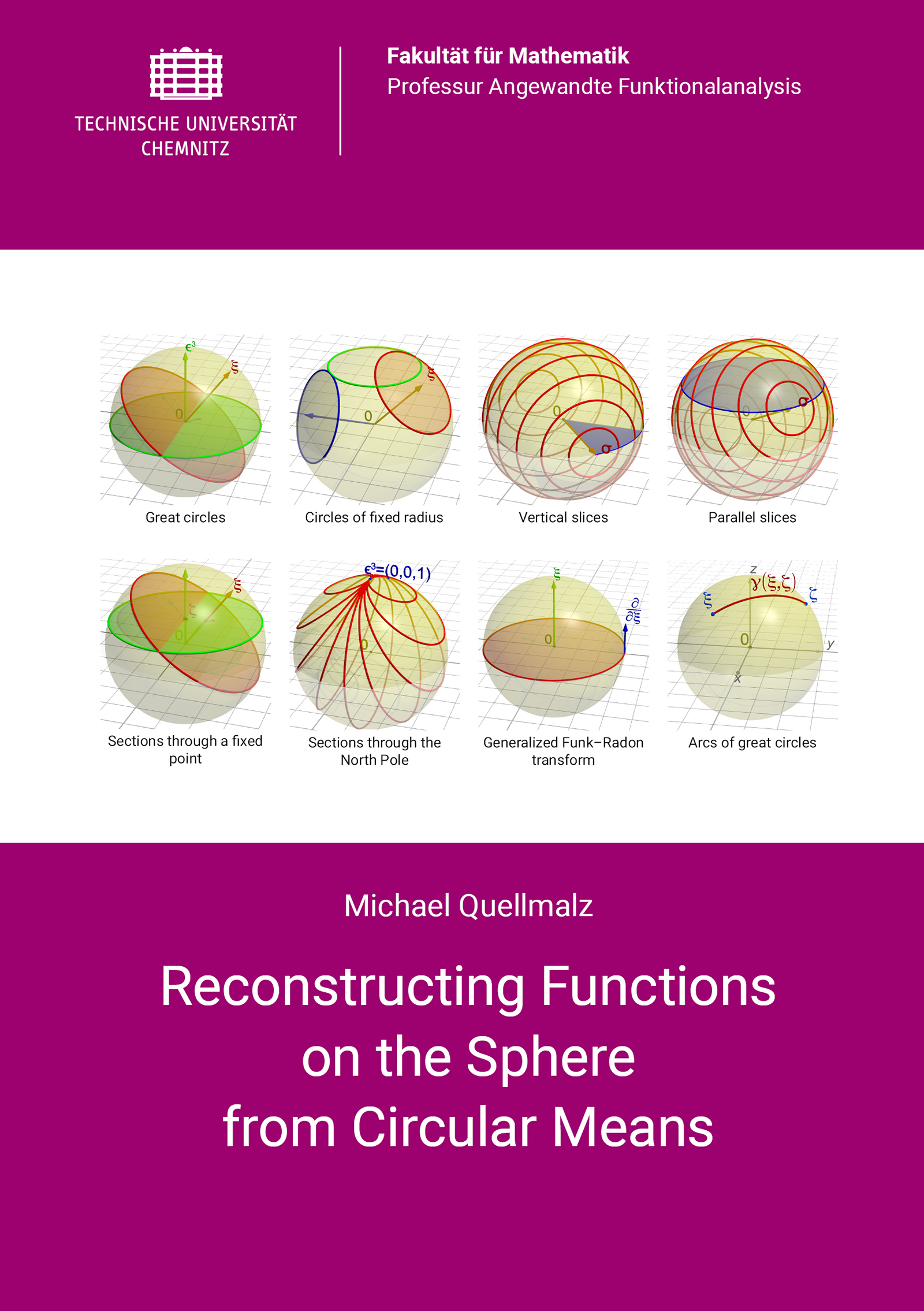
Dr. Michael Quellmalz is a Researcher in Applied Mathematics at the Technical University of Berlin (TU Berlin), affiliated with Faculty II - Mathematics and Natural Sciences and the Institute of Mathematics. His research focuses on inverse problems, tomography, optimal transport, and Fourier analysis with applications in medical imaging and computational geometry. He actively contributes to the SFB Tomography Across the Scales collaborative research center, advancing reconstruction techniques in diffraction tomography and motion detection. He teaches a variety of courses including Analysis II for Engineering, Harmonic Analysis I, and Numerical Mathematics, emphasizing both theoretical foundations and their practical implementations. His work has been recognized through awards such as the Universitätspreise 2020 and a Digital Fellowship for innovative educational contributions in adaptive feedback systems. Key publications include advancements in sliced optimal transport on spheres, motion detection algorithms, and Fourier-based reconstruction methods. Dr. Quellmalz's research group develops MATLAB toolboxes for applications like FourierODT and NFFT-Sinkhorn, reflecting his commitment to bridging mathematical theory with computational tools. His academic journey includes a PhD from TU Chemnitz (2019) and extensive participation in international conferences, workshops, and collaborative projects across Europe.
Nebojsa Duric, Ph.D., is a Professor in the Department of Imaging Sciences and Biomedical Engineering at the University of Rochester. He serves as Vice Chair for Research in Imaging Sciences. His academic journey includes a BSc in Astronomy and Astrophysics, followed by MSc and PhD in Physics from the University of Toronto, and an NSERC Postdoctoral Fellowship at the University of British Columbia. Dr. Duric's research focuses on medical imaging technologies, particularly ultrasound tomography for breast cancer screening and treatment monitoring. He co-developed the SoftVue system, a clinical ultrasound tomography platform. His research interests span ultrasound tomography, breast density quantification, and imaging biomarkers for cancer risk assessment. Key contributions include correlating sound speed measurements with breast density and evaluating tamoxifen therapy efficacy. Dr. Duric has over 130 peer-reviewed articles and holds multiple awards, including the Aunt Minnie Roadie Award (2019) and Distinguished Innovator Award (2011). His work bridges physics and medicine, advancing non-invasive imaging techniques for clinical applications. Dr. Duric collaborates with institutions like Karmanos Cancer Institute and leads projects funded by NIH and industry.
Qi Hu is a Research Fellow in the Department of Energy Science and Engineering at Stanford University, collaborating with Tapan Mukerji on developing innovative workflows for monitoring subsurface CO2 sequestration. His educational background includes: PhD in Geophysics, University of Calgary (2023) Dr. Hu's research focuses on integrating advanced seismic inversion techniques, such as full-waveform inversion, with rock physics and fluid dynamics to understand subsurface structures and behaviors. He explores the application of distributed acoustic sensing and machine learning algorithms to energy transition topics, with core expertise spanning Geophysics, Carbon Sequestration, Seismic Inversion, Rock Physics, Fluid Dynamics, Distributed Acoustic Sensing, and Machine Learning for Energy. Contact: qihu@stanford.edu
Prof. Dr. Christian Wieners is a faculty member at the Institute for Applied and Numerical Mathematics , part of the Faculty of Mathematics at Karlsruhe Institute of Technology (KIT) . He has held leadership roles, including Head of the KIT Department of Mathematics (2012-2015) and Speaker of the GAMM activity group on numerical methods for PDEs (2010-2017). Academic Rank: Professor Research Focus: Scientific Computing, Discontinuous Galerkin Methods, Multigrid Algorithms, and Applications in Solid Mechanics and Cardiac Modeling His research spans Numerical Analysis , Computational Mechanics , and Biomedical Engineering , with a focus on parallel finite element methods for wave equations, phase-field fracture, and multi-physics cardiac simulations. Recent work includes adaptive space-time DG methods, visco-acoustic inversion, and digital twins for heart modeling. He has served as an Associated Editor for SIAM Journal of Scientific Computing (2008-2013) and a Section Editor for Numerical Analysis in ZAMM. His publications highlight collaborations in Parallel Computing , Visco-Elastic Models , and Nonlocal Plasticity . Prof. Wieners teaches courses like Numerische Mathematik and Grundlagen der Kontinuumsmechanik , with a history of lectures on Scientific Computing , Machine Learning in Mathematics , and Multigrid Methods . His work integrates Mathematical Rigor with Engineering Applications .
Kai Wang is a Research Fellow at Nanyang Technological University, affiliated with the MIG research group since October 2021. His primary research focuses on Adjoint-state traveltime tomography, advancing methodologies in seismic data interpretation and subsurface modeling. His academic credentials include: PhD in Geophysics from Macquarie University (2018) Dr. Wang's research spans Seismic Imaging, Full waveform inversion, and Tectonics, with emphasis on computational geophysics. He develops innovative inversion techniques to enhance seismic resolution for tectonic analysis and resource exploration, bridging theoretical geophysics with practical applications in Earth structure imaging. No scientific awards or student advisement roles are documented in the source material. He actively contributes to the MIG research group's mission of pioneering advanced geophysical data processing frameworks and tomographic methodologies.
Bao Xueyang is an Assistant Professor at the Department of Earth and Space Sciences (Faculty of Science) of Southern University of Science and Technology (SUSTech) , where he has worked since January 2019. His academic background includes a Ph.D. in Geology from the University of Missouri-Columbia (2011) , M.S. and B.S. degrees in Geophysics from the University of Science and Technology of China . Ph.D., Geological Sciences, University of Missouri-Columbia (2011) M.S., Earth and Space Sciences, University of Science and Technology of China (2005) B.S., Earth and Space Sciences, University of Science and Technology of China (2001) His research focuses on seismological full-waveform inversion , seismic wave attenuation measurement , and geophysical studies of tectonically active regions such as the Tibetan Plateau and Tethys domain. Methodologically, he develops techniques for: 3D full-waveform inversion Joint seismic-gravity inversion Seismic wave attenuation anisotropy Background noise tomography Wavefield simulation on complex topographies Seismic source parameter inversion Analysis of his recent publications reveals expertise in full-waveform sensitivity kernel development , ocean-bottom seismology , and cratonic lithosphere thermal structure through Rayleigh wave attenuation studies. His work spans both theoretical advancements in inversion algorithms and practical applications in energy resource characterization and tectonic studies. Scientific recognition includes: 2019 Shenzhen Overseas High-Level Talent 2022 Excellence Awards in Reviews of Geophysics and Planetary Physics He leads multiple National Natural Science Foundation projects while co-leading international research initiatives. His teaching portfolio includes undergraduate and graduate courses on geophysical inversion theory, covering both linear and nonlinear inversion methods with machine learning applications.
Christoph Zielhofer is a full Professor of Physical Geography at the Institute of Geography , affiliated with the Faculty of Physics and Earth System Sciences at Leipzig University. As Coordinator of DFG Priority Programme SPP 2361 'On the Way to the Fluvial Anthroposphere' since 2021, he leads interdisciplinary research on human-environment interactions in floodplains. His academic career includes leadership roles as Director of the Institute of Geography (2013–2020) and Study Dean (2019–2021) , with current membership in the Faculty Board since 2010. Zielhofer's research focuses on Holocene environmental dynamics Fluvial geomorphology Soil geography Paleolimnology Climate-anthropogenic tipping points He integrates geophysical field techniques (e.g., Direct Push Sensing, SH waveform inversion) with sediment analysis to reconstruct floodplain evolution, particularly in Central Europe, the Mediterranean, and Africa. His recent publications emphasize Anthroposphere formation in river systems Ceasing Neolithic land use-climate coupling Geoarchaeological methods for mass grave localization Carbon storage in peatlands Saharan dust-climate links Scientific awards include Volksbank Award for interdisciplinary PhD thesis (2002) Scientific Advisory Board Vice-Chair , Leibniz-Institut für Länderkunde (2019) LeipzigLab working group leadership (2023) His research spans from desert margins in NW Arabia to German river catchments, with fieldwork integrating drilling techniques , hydrological modeling , and multidisciplinary collaboration . Grants include DFG coordination funds for SPP 2361 and SMWK-funded historical anthroposphere studies.
Loukas F. Kallivokas is a Professor and holder of the Brunswick-Abernathy Regents Professorship in Soil Dynamics and Geotechnical Engineering at The University of Texas at Austin. He serves as Associate Chair of Civil Engineering and is affiliated with multiple research units including the Oden Institute for Computational Engineering and Sciences, Texas Acoustics, and the Texas Consortium for Computational Seismology (TCCS). His educational background includes a Diploma in Civil Engineering from the National Technical University of Athens, and MS (1990) and PhD (1995) degrees in Civil Engineering/Computational Mechanics from Carnegie Mellon University. Prior to joining UT Austin in 1999 as an assistant professor, he held postdoctoral and visiting positions at Carnegie Mellon University, including an NSF CISE postdoctoral fellowship. Professor Kallivokas's research spans computational mechanics with emphasis on wave mechanics and inverse problems. His work focuses on metamaterials design, subsurface imaging, seismic motion modeling, soil-structure interaction, and non-destructive condition assessment. He has made significant contributions to inverse medium problems, inverse scattering, and inverse source problems for wave-driven applications. His research has practical applications in earthquake engineering, geotechnical site characterization, and enhanced oil recovery through wave-based techniques. His recent publications demonstrate consistent output in top journals, with research trends showing increasing focus on metamaterial design, advanced wave focusing techniques, and sophisticated inverse problem solutions for subsurface characterization. The work often involves collaboration with postdocs and students, particularly Heedong Goh who appears as co-author on many recent papers. Allen Newell Medal (1998) for research excellence in large-scale modeling of seismic motion National Science Foundation CAREER award (2003) for research in subsurface imaging Fellow of the Engineering Mechanics Institute (F. EMI) Professional Engineer (PE) license Professor Kallivokas has advised numerous PhD and MS students who have gone on to successful careers in academia and industry, including positions at Seoul National University, Vanderbilt University, ExxonMobil, and major engineering firms. His research has been supported by significant grants including the NSF CAREER award and other NSF funding. He serves as Associate Editor for ASCE's Journal of Engineering Mechanics and previously chaired the Computational Mechanics Committee of ASCE's Engineering Mechanics Institute (2008-2011). His research group operates within the Mechanics, Uncertainty, and Simulation in Engineering (MUSE) laboratory facilities at UT Austin, specifically in ECJ 4.602. The group focuses on computational modeling of wave phenomena and inverse problems, with current projects spanning metamaterial design, subsurface imaging, and coupled-physics imaging approaches.