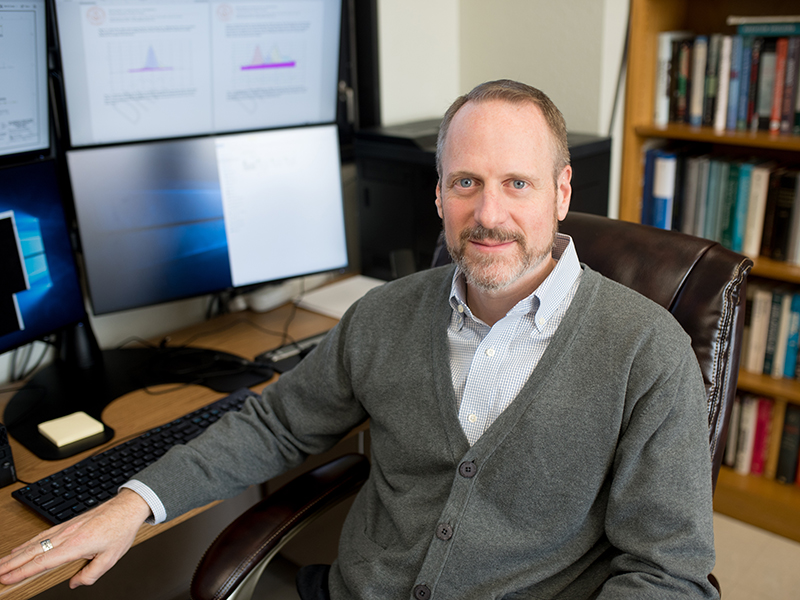
Professor Christopher Howe is a Professor of Plant and Microbial Biochemistry at the Department of Biochemistry, University of Cambridge . He has been a Fellow of the College since 1983 and currently serves as its President . He directs studies in Preclinical Medicine , teaching Biochemistry to first-year medical students. Research Interests : Photosynthesis biochemistry and evolution Biotechnological applications of photosynthetic organisms (e.g., algae for electricity production) Plasmodium's photosynthetic ancestry and remnant chloroplast Evolutionary analysis of non-biological systems like manuscripts Coral bleaching and dinoflagellate-coral symbiosis Article Trends : Focus on cyanobacteria, dinoflagellates, and Plasmodium Biophotovoltaic systems and sustainable energy Phylogenetic methods in biological and cultural evolution Scientific Awards : Fellow of the American Academy of Microbiology (2017) Advising and Collaborations : Supervises graduate students in the Howe Group Collaborates with academic and commercial partners (Anaero Technology, LEITAT, Spireat) Labs & Teams : Leads the Howe Group at the Department of Biochemistry Co-leads the BEST Project for biophotovoltaic systems Works with 3D organotypic cultures and biophotoelectrochemistry
Dr. Michael Smith serves as a Departmental Visitor in the Nuclear Physics & Accelerator Applications department at the Australian National University, where he is affiliated with the Nuclear structure research group. His research spans nuclear structure physics, gamma spectroscopy techniques, and nuclear instrumentation development. His primary research interests focus on nuclear isomers, high-spin states in atomic nuclei, and neutron-rich nuclear systems. Dr. Smith employs advanced spectroscopic techniques to investigate nuclear structure in rare-earth elements and heavy nuclei, with particular expertise in francium, dysprosium, holmium, and erbium isotopes. His methodological approach combines experimental measurements with sophisticated data analysis. Analysis of his 11 publications from 2008-2024 reveals consistent research themes in nuclear structure physics, with recent work emphasizing instrumentation development. His 2024 paper describes a new conversion electron spectrometer, while his 2021 research examined neutron-rich niobium isotopes. The publications demonstrate strong collaboration with the Heavy Ion Accelerator Facility at ANU and international laboratories. Dr. Smith maintains active research collaborations across multiple institutions, particularly with researchers in the Nuclear structure group at ANU. His work bridges fundamental nuclear physics with practical applications in reactor physics and nuclear engineering, as evidenced by publications on reactor fuel testing and radiation shielding.
Dr. Muhammad Shafique is a Lecturer at Brunel University London, affiliated with the Department of Civil and Environmental Engineering within the College of Engineering, Design and Physical Sciences. He joined Brunel in May 2022 after completing his PhD at the City University of Hong Kong and a postdoctoral fellowship there. His research focuses on life cycle assessment, circular economy, and sustainable design for civil and transportation systems. PhD, Architecture and Civil Engineering (2021), City University of Hong Kong M.S., Smart City and Construction Engineering (2018), University of Science and Technology, South Korea Dr. Shafique's work addresses environmental challenges in emerging technologies through proactive modeling. Key areas include: sustainable construction, green buildings, battery recycling for electric vehicles, hydrogen mobility systems, and climate change adaptation. His recent publications emphasize lifecycle emissions of alternative fuels and circular economy applications in infrastructure. He serves as Associate Editor for Frontiers in Energy Research and Frontiers in Sustainability , and holds editorial roles at four other journals. Dr. Shafique actively mentors PhD candidates and organizes international conferences on carbon capture and circular economy topics.
Ahmed Ahmed, an associate professor in the Department of Computer Science at Prairie View A&M University (PVAMU) , shapes tech leaders through innovative teaching and research. His work spans IoT, AI, and ML applications across agriculture, infrastructure monitoring, and healthcare. Key research areas include: IoT and AI for sustainable agricultural practices LoRa-based location tracking in constrained environments Secure blockchain-federated learning systems Geofencing for community safety With over 50 peer-reviewed publications and a $300k NSF grant (2023), Ahmed develops hands-on learning tools like a Special Interest Group for IoT and live programming demonstrations. His global journey—from Cairo University to a PhD at the University of Saskatchewan—fuels his commitment to empowering underrepresented students. Scientific awards include the PVAMU Faculty Service Award . He advises students like Kritika Singh (2022 graduate) and advocates for continuous refinement of teaching as a craft.
Tim Dallas is an Associate Dean of the Graduate School and Professor of Electrical and Computer Engineering at Texas Tech University's Whitacre College of Engineering. His roles include overseeing graduate fellowship programs and developing innovative MEMS-based educational tools. Dr. Dallas is renowned for co-creating the Solar-Powered Digital Classroom-in-a-Box, deployed in off-the-grid African regions using pico projectors. Co-founded Class on a Chip, Inc. (2008) for commercializing micro-experimental devices Established the Technology Start-up Lab (2014) in partnership with business classes Principal Investigator for NSF-REU, CCLI, and S-STEM grants His research spans renewable energy systems, biometric authentication, and interdisciplinary learning. Dr. Dallas has secured funding from Keck and Welch Foundations for MEMS-based education technologies and served as Associate Editor for IEEE Transactions on Education. He is a Senior Member of IEEE and affiliated with ASEE and SPIE.
Associate Professor Paul Jensen from The University of Queensland is a leading academic in the School of Chemical Engineering and Australian Centre for Water and Environmental Biotechnology (ACWEB) . With a PhD in Engineering, he specializes in anaerobic biotechnology, resource recovery, and sustainable waste management. His research focuses on: Biogas production from livestock and agricultural waste Wastewater nutrient recovery for circular economies Bio-plastic and fertilizer synthesis from low-value biomass Microbial inhibition dynamics in anaerobic systems Over the past decade, his 15 most recent publications demonstrate expertise in waste valorization , biofilm reactor design , and anaerobic digestion kinetics , particularly for paunch waste and microalgal biomass. Notable projects include: 2025: Alkaline pretreatment of paunch waste for methane optimization 2024: Engineering process design curricula for chemical engineering students 2023: Hydrothermal treatment economics for sludge-derived fuels 2022: Biocomposite development from paunch fibers His work integrates engineering , biological sciences , and process modeling to deliver real-world solutions for municipal and industrial partners. Current grants include: 2024-2025: Pilot-scale Anaerobic Co-digestion at Central SEQ Municipal STP 2022-2027: ARC Training Centre in Bioplastics and Biocomposites 2021-2025: Sludge-to-resource CRC-P projects Paul supervises PhD candidates in topics such as anaerobic digestion microbiology , biogas process acceleration , and sewage sludge sustainability , collaborating with experts like Professors Damien Batstone and William Clarke.
Alison M. Ferris is an Assistant Professor in the Department of Mechanical and Aerospace Engineering at Princeton University conducting experimental research at the intersection of chemical kinetics, optical diagnostics, and sustainable fuel development using shock wave methodologies. Her educational background includes: Ph.D. in Mechanical Engineering from Stanford University (2021) M.S. in Mechanical Engineering from the University of Wisconsin-Madison (2014) B.S. in Mechanical Engineering from Columbia University (2012) Dr. Ferris's research focuses on high-temperature reaction chemistry for sustainable aviation fuels (SAFs), combining shock tube experiments with laser-based diagnostics to measure key reaction rates and develop predictive models. Current projects investigate the link between aviation particulates and contrail formation, low-carbon fuel kinetics, and data-driven approaches for accelerating SAF development through machine learning and optical sensing techniques. Analysis of her 15 most recent publications (2019-2024) reveals dominant themes in sustainable aviation fuels, ammonia combustion for zero-carbon propulsion, and advanced diagnostic development. Her work consistently employs shock tube platforms for high-temperature flame speed measurements while increasingly integrating machine learning for fuel property prediction, demonstrating evolution from fundamental kinetics toward applied sustainable fuel solutions. Scientific awards: No awards were documented in the provided information. Dr. Ferris leads the Ferris Lab where she advises graduate researchers in combustion science, though specific student names and grant details were not provided in the source material. The Ferris Lab (D324 Engineering Quadrangle) maintains three core research thrusts: Sustainable Fuels development using machine learning, Chemical Kinetics investigations of reaction pathways, and Flame Dynamics studies of alternative fuels at extreme conditions through shock wave methodologies.
Lukas Weimann is a PhD candidate at Utrecht University's Copernicus Institute of Sustainable Development, specializing in the Energy & Resources department. His research focuses on the optimization of multi-energy systems and their synergies with carbon capture technologies to decarbonize industries like cement and steel production. He holds a BSc and MSc in Chemical Engineering from ETH Zurich, with a research stint at MIT under Prof. Klavs F. Jensen, where he developed expertise in mathematical optimization. His skills include Matlab (programming language) Modeling . Lukas supervises Master's thesis projects on topics such as: Development of MILP models for carbon capture units Optimization of multi-energy systems for carbon-neutral fuels Thermochemical storage modeling He teaches courses like Energy Conversion Technologies I and Advanced Energy Analysis, emphasizing heat integration and energy system analysis.
Dr. William Charlton is a Professor at the University of Texas at Austin , holding the John J. McKetta Energy Professorship in the Walker Department of Mechanical Engineering. He serves as the Director of the Nuclear Engineering Teaching Laboratory , which houses the newest nuclear research reactor in the U.S. His career spans leadership roles in academic nuclear security and nonproliferation research, including founding the Nuclear Security Science & Policy Institute at Texas A&M University (2006–2015) and leading research programs at the University of Nebraska’s National Strategic Research Institute (2015–2018). Dr. Charlton’s research focuses on nuclear security , nonproliferation , radiation detection , and nuclear forensics . His work addresses technical solutions for nuclear threats, including reactor design, spent fuel verification, and border monitoring systems. Recent publications highlight advancements in neutron resonance densitometry, gamma-ray background modeling, and proliferation resistance analysis tools. His scientific awards include the Special Service Award from the Institute of Nuclear Materials Management (2010), multiple Faculty Fellowships at Texas A&M, and the NSRI Distinguished Research Award (2017). Dr. Charlton has supervised numerous students, including R. Coogan, D. Sweeney, and B. Goddard, on topics ranging from nuclear detection to safeguards. As Director of the Nuclear Engineering Teaching Laboratory , he oversees cutting-edge research facilities and collaborates with national security agencies. His security clearances (TOP SECRET, SCI) reflect his role in high-impact projects for the U.S. Department of Defense and National Nuclear Security Administration.
Till Requate is Professor for Innovation, Competition and New Institutional Economics at Kiel University's Faculty of Business, Economics, and Social Sciences since 2002, following his professorship in Environmental Economics at Heidelberg University (1996-2002). He served as Associate Dean for Study Programs (2004-2010) and Dean of the Faculty (2016-2020), and currently co-edits the Berkeley Electronic Journal of Economic Analysis and Policy while serving on Germany's Commission of Experts for Research and Innovation since 2020. His academic background includes: Graduation in Mathematics and Philosophy from Bielefeld University (1985) Ph.D. in Economics with thesis on game theory and industrial organization (1989) Habilitation (1994) Requate's research centers on environmental economics, competition policy, and experimental economics, with significant contributions to climate policy design, emissions trading systems, and market mechanisms. His work bridges theoretical modeling and experimental validation, particularly examining institutional frameworks for environmental regulation and innovation. The experimental laboratory at Kiel University supports his empirical investigations into strategic behavior and policy effectiveness. His publication record (2014-2021) reveals strong interdisciplinary trends, connecting environmental economics with public health (pandemic response), energy systems (renewable integration), and behavioral insights (labor market reciprocity). Key thematic clusters include climate policy innovation (Flexcap mechanism, stranded assets), regulatory design (Montero mechanism), and market structure analysis (Cournot competition, emission permit markets), demonstrating consistent application of experimental methods to real-world policy challenges. Major recognitions include: von-Bennigsen-Foerder-Preis (1990) Eric-Kempe Prize from EAERE (2004) German Association of Health Economics Best Paper Award (2012) As former Editor-in-Chief of the Journal of Environmental Economics and Management (2013-2018) and current BEJEAP Co-Editor, Requate shapes scholarly discourse while applying expertise through consultancy for the World Bank, OECD, German Federal Ministry of Research, and Danish Ministry for Agriculture. His leadership extends to directing Kiel's Experimental Laboratory and influencing national climate policy through the EFI Commission. Requate maintains active research collaborations through Kiel University's Experimental Laboratory, focusing on behavioral responses to environmental regulations and market design experiments that inform real-world policy implementation across European and international contexts.
Veli-Pekka Tynkkynen is a Professor in Russian Environmental Studies at the University of Helsinki, where he leads the Research Group on the Russian Environment. He is affiliated with the Faculty of Arts, specifically the Aleksanteri Institute - Finnish Centre for Russian and East European Studies, and the Helsinki Institute of Sustainability Science. His academic career spans over two decades, with expertise in Russian energy policy, environmental studies, and Arctic research. Dr. Tynkkynen holds a Doctor of Philosophy in Planning Geography from the University of Helsinki (2007) and has been recognized with the prestigious Finlandia prize (Tieto-Finlandia) in 2003 and the Ragnar Hult Medal from The Geographical Society of Finland in 2023. His educational background includes extensive fieldwork in Eurasia, including expeditions to the Urals and Siberia. Professor Tynkkynen's research focuses on the intersection of Russian energy policy, environmental studies, and geopolitical dynamics. His work explores how Russia's hydrocarbon culture influences its environmental policies, climate change approaches, and international relations, particularly with Europe. He has pioneered research on energy materialities, examining how physical energy resources shape political and social structures. His recent work critically analyzes European misconceptions about Russia, particularly regarding energy dependencies and security implications. His publication record includes 124 works, with 97 scientific publications and 11 monographs. His most notable book, 'The Energy of Russia: Hydrocarbon Culture and Climate Change' (2019), has been influential in understanding Russia's energy-environment nexus. Recent publications examine how Russia's war on Ukraine has reshaped energy materialities and European security paradigms. His work spans disciplines including political geography, environmental science, and international relations, with particular attention to Arctic studies and sustainability science. Ragnar Hult Medal (2023) - The Geographical Society of Finland Finlandia prize (Tieto-Finlandia) (2003) Professor Tynkkynen has secured over 2.9 million euros in research funding from prestigious sources including the Kone Foundation, Academy of Finland, and Nordic Council of Ministers. He has supervised 4 PhD dissertations, 8 funded PhD students, and 9 Master's theses. His leadership extends to directing major research projects such as 'Sustainable Development, Russia and Finland' and 'FLOWISION: Best from both worlds – enhancing energy transition in Russia and Finland.' He has provided expert testimony to the President of Finland, Prime Minister's Office, and Finnish Parliament on multiple occasions. As leader of the Research Group on the Russian Environment at the Aleksanteri Institute, Tynkkynen fosters interdisciplinary collaboration between environmental scientists, political scientists, and geographers. His team actively participates in international networks including the Arctic Challenge for Sustainability II and the University Alliance Europe. The group's work integrates field research in Russia with policy analysis to develop nuanced understandings of Russia's environmental challenges and opportunities.
Dr. Abe Hendriks is a Junior Assistant Professor in Innovation Studies at Utrecht University's Faculty of Geosciences . His work bridges political science and science & technology studies, focusing on sociotechnical imaginaries , sustainability transitions , and democratic futures . Currently co-editing Introduction to Sustainability Transitions Research (Cambridge University Press, 2025), he leads the Nederland Verbeeld(t) project exploring spatial futuring in the Netherlands. PhD from University of Groningen/Ghent University (circular economy futures) Postdoc at Netherlands Institute for Social Research (SCP) Research Themes: Intersections of political theory and technology philosophy in grand challenge contexts Temporal analysis of future visions (Chronos/Kairos dichotomy) Sociomaterial practices in mobility transitions Creative methods for post-fossil futures through poetry Recent Publications Trends: Six peer-reviewed works (2023-2025) examine circular economy temporality, mobility futures, and collaborative hope-building mechanisms. His scholarship emphasizes qualitative methods and interdisciplinary synthesis across sustainability science, political philosophy, and organizational studies. Contact: a.hendriks@uu.nl
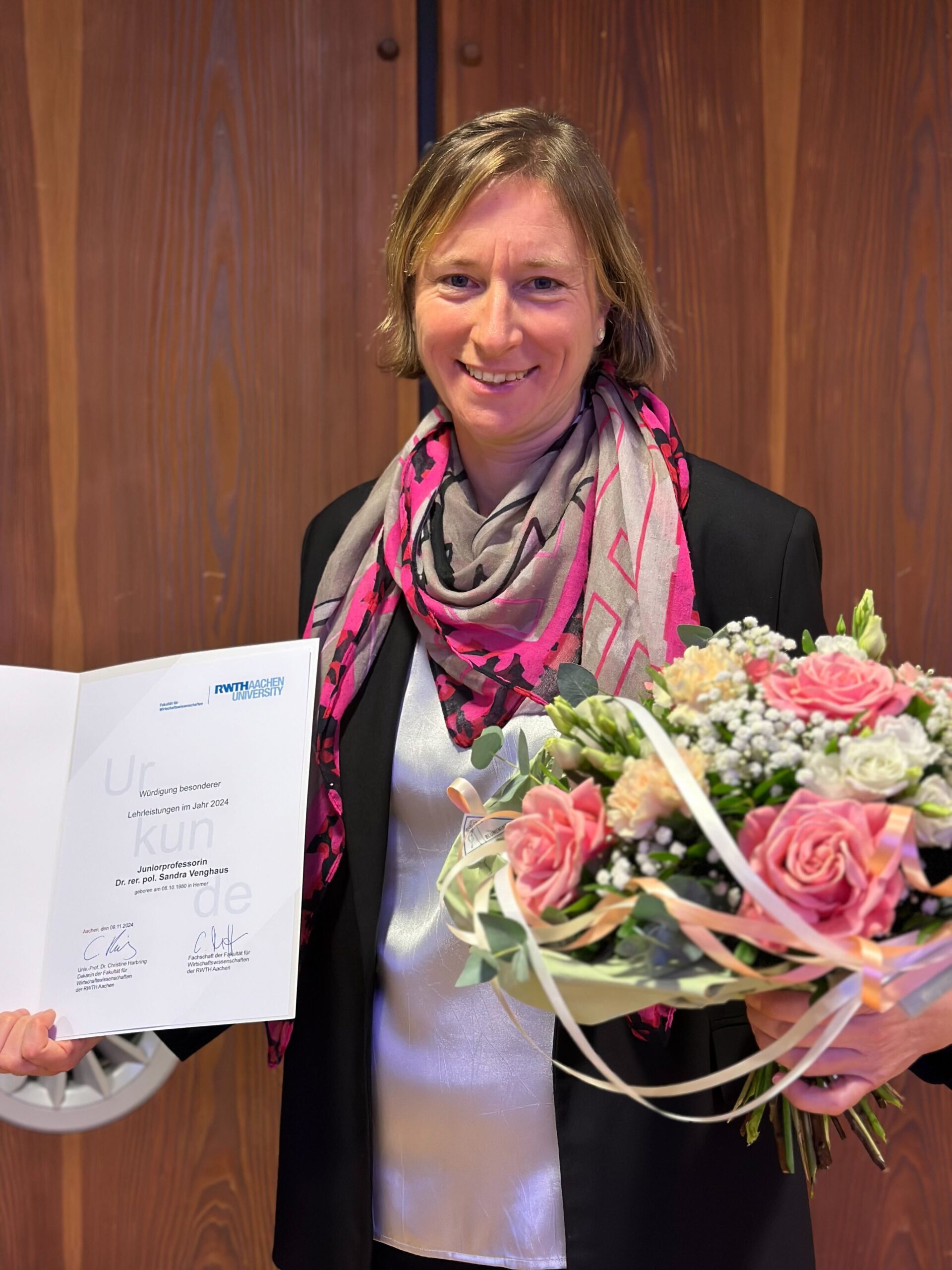
Sandra Venghaus serves as Assistant Professor for Decision Analysis and Socio-Economic Assessment at RWTH Aachen University's Faculty of Business and Economics, leading the dedicated research group in this field. She additionally coordinates the BioSC Competence Platform "Transform2Bio: Integrated Transformation Processes and their Regional Implementations: Structural Change from Fossil Economy to Bioeconomy". Her academic foundation includes: Environmental Science and Public Policy studies at Harvard University (2000-2004) Doctoral degree in Complex System Innovations from Leibniz University Hannover Professor Venghaus's research centers on quantitative modeling of complex socio-ecological systems , specifically analyzing how political decisions impact social, economic, and ecological outcomes. Her work spans critical domains including: Governance of the Sustainability Transformation Innovation in Socio-Ecological Systems Computational Resource Economics Decision Analysis Sustainability Assessment Bioeconomy development Markets, Circular Economy, and Water-Energy-Land Nexus dynamics Recent publications (2023-2024) demonstrate evolving focus on renewable energy market barriers, bioeconomy's climate mitigation potential, and sustainability-digitalization intersections. Her interdisciplinary work integrates energy economics, environmental science, and policy analysis within German and European contexts, emphasizing quantitative assessment frameworks for resource security and transformation pathways. She has received recognition through the Faculty of Business and Economics Teaching Prize. Teaching Prize of the Faculty of Business and Economics Information regarding her advisees and grant funding specifics was not provided in available sources. Professor Venghaus leads the Decision Analysis and Socio-Economic Assessment research group while coordinating the Transform2Bio platform, which drives integrated strategies for transitioning from fossil-based economies to sustainable bioeconomies through regional implementation frameworks.
Anna C. Balazs is the John A. Swanson Chair of Engineering and Distinguished Professor of Chemical Engineering at the University of Pittsburgh Swanson School of Engineering, with an adjunct appointment in the Department of Chemistry. She has held visiting professorships at the Scripps Research Institute, University of Texas at Austin, and Oxford University. Dr. Balazs serves on the Advisory Board of the Materials Council for Materials Sciences and Engineering Division of the Department of Energy, Basic Energy Sciences, and is a member of the Editorial Advisory Boards of Langmuir, Soft Matter, and Polymer Reviews. Education: A.B. in Physics from Bryn Mawr College (1975) Ph.D. in Materials Science from MIT (1981) Postdoctoral research at Brandeis University, MIT, and University of Massachusetts Dr. Balazs specializes in the statistical, mechanical, and computer modeling of complex chemical systems, with particular expertise in polymer blends and the behavior of polymers at surfaces and interfaces. Her research focuses on developing theoretical frameworks for understanding responsive materials, particularly self-oscillating polymer gels, active matter systems, and nanocomposites. She investigates how chemical reactions can drive mechanical motion and pattern formation in soft materials, creating biomimetic systems with lifelike functionality. Her work bridges fundamental theoretical modeling with practical applications in microfluidics, drug delivery, and smart materials design. Analysis of Dr. Balazs' recent publications reveals a strong focus on the integration of chemistry, fluid dynamics, and mechanics to create responsive materials systems. Her research demonstrates how chemical reactions can drive complex mechanical behaviors in polymer gels and microstructures, enabling the spontaneous formation of 3D patterns, self-propulsion, and lifelike functionality. The work spans from fundamental theoretical modeling to practical applications in microfluidics and soft robotics, with a particular emphasis on enzyme-powered systems, chemically responsive materials, and the autonomous assembly of hierarchical structures. Dr. Balazs has made significant contributions to the field through her extensive publication record in top journals including Proceedings of the National Academy of Sciences, Nature Nanotechnology, and Advanced Functional Materials. Her work has been widely cited and has influenced multiple disciplines including materials science, chemical engineering, and soft matter physics. As a leading researcher in computational materials science, Dr. Balazs has mentored numerous students and postdoctoral researchers throughout her career. Her research has been supported by various funding agencies including the National Science Foundation and Department of Energy. She has established herself as a leading authority in the theoretical modeling of complex soft matter systems. Dr. Balazs' research group at the University of Pittsburgh focuses on developing computational models to understand and predict the behavior of responsive materials. Her team employs a range of simulation techniques to study phenomena ranging from molecular-scale interactions to macroscale material behaviors, with particular emphasis on the coupling between chemical reactions and mechanical responses in polymer systems.
Hema Ramsurn, Ph.D. , is an Associate Professor and the A. Paul Buthod Endowed Chair in Chemical Engineering at the University of Tulsa , where she leads the Bioproducts Laboratory . Her research focuses on converting biomass into value-added chemicals and materials through liquefaction, gasification, and carbonization processes, with applications in heavy metal removal , corrosion prevention , and CO2 sequestration . She also explores catalytic methane conversion and anti-oxidative coatings for extreme environments. Education Ph.D., Chemical Engineering, Auburn University (2013) M.S., Environmental Science with Legislation, Brunel University (2002) B.S., Chemical Engineering, University of Mauritius (2000) Research interests span supercritical reactions , carbon composites , and nanoparticle catalysts . Her lab develops graphene , activated carbon , and biochar for environmental and energy applications. Recent work includes ZrB2-SiC anti-oxidative coatings and methane dehydroaromatization studies. Scientific Awards Omega Chi Epsilon, Beta Psi Chapter Chemical Engineering Outstanding Teacher (2023, 2020, 2019) Distinguished Graduate Mentor Award (2023) Kermit Brown Award for Teaching Excellence (2019) Tau Beta Pi Teaching Excellence Award (2019, 2017) AIChE Advisor Honor Roll (2015-2018) Ramsurn's publications highlight trends in catalysis , carbon materials , and supercritical water processes . Her advising philosophy emphasizes hands-on research in bioproducts and nano-engineered materials . No specific grants are mentioned in the provided text.