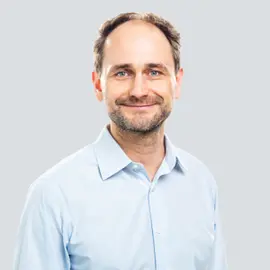
Kristina Mazur, M.Sc., is a Lecturer at the Chair of Aircraft Design, Technical University of Munich (TUM), working under Prof. Dr.-Ing. Mirko Hornung. Her research focuses on integrating sustainability metrics into aircraft design through life cycle assessment and hydrogen propulsion systems. Key Research Areas: Aircraft Design Life Cycle Assessment Hydrogen Powertrain Development Sustainable Aviation Technologies Notable Projects: UNICADO (Unified Conceptual Aircraft Design Framework) Kristina's recent publications emphasize environmental impact assessment methods for future aircraft, comparative analysis of hydrogen and biofuel powertrains, and operational cost modeling. Her work bridges conceptual aircraft design with sustainability considerations, particularly through systems-level life cycle analysis. She collaborates with researchers like Mischa Saleh and Mirko Hornung. The Chair of Aircraft Design is located at Boltzmannstr. 15, Garching b. München, Germany, with her contact information including room 5506.03.632 and phone +49 (89) 289-16346.
Ditte Baun Hermund serves as an Associate Professor at the National Food Institute, Technical University of Denmark (DTU), leading the Research Group for Bioactives – Analysis and Application. Her work directly contributes to UN Sustainable Development Goals through innovative food science research focused on sustainable resource utilization and health. Her research centers on marine bioresources, particularly seaweed-derived bioactives, with expertise spanning antioxidant chemistry, lipid oxidation control, and functional food development. She pioneers extraction techniques for natural antioxidants using supercritical fluids and investigates processing impacts on bioactive stability in products like cocoa, fish oil-enriched mayonnaise, and seaweed-based ingredients. Her fingerprint reveals dominance in antioxidant research (100%), seaweed applications (47%), and oxidative stability (28%), with strong connections to food preservation and sensory science. Recent publications demonstrate a clear trajectory toward sustainable marine resource valorization, with emphasis on transforming seaweed into functional food ingredients while addressing practical challenges like product failures in commercial applications. This work bridges fundamental chemistry with real-world food system innovation. Hermund's scientific recognition includes four major awards reflecting her growing impact: Student travel grant (2014) Young Scientist Award (2015) Direktør, Dr. Techn. A.N. Neergaards og hustrus legat (2017) Otte Mønsted travel grant (2018) As an active supervisor and collaborator, she leads significant research initiatives including the AlgaeVita project on vitamin D3-fortified algae ingredients and SEATAN for seaweed extract development. Her grant portfolio demonstrates strong industry-academic partnerships focused on translating marine bioresources into market-ready solutions for food and cosmetics. Hermund directs the Bioactives Research Group at DTU Food, where her team operates cutting-edge facilities for lipid oxidation analysis, supercritical fluid extraction, and sensory evaluation. Current efforts focus on zero-waste approaches to microalgae biorefining for sustainable aviation fuels and nutraceutical production, positioning her group at the forefront of marine bioeconomy research.
Elia Distaso is an Assistant Professor at the Department of Mechanics, Mathematics & Management, Politecnico di Bari, Italy. His research focuses on fluid dynamics, hydrogen combustion, and computational modeling. University: Politecnico di Bari Department: Mechanics, Mathematics & Management Academic Rank: Assistant Professor Email: elia.distaso@poliba.it His work spans hydrogen engines , CFD simulations , and hydraulic systems , with recent publications addressing auto-ignition mechanisms, cavitation phenomena, and sustainable aviation technologies. He specializes in leveraging numerical methods for combustion and fluid flow analysis. His 15 most recent publications highlight trends in computational fluid dynamics, including boundary condition modeling, pressure-velocity coupling, and OpenFOAM® applications. Key subfields include hydrogen combustion dynamics , lubricant oil reactivity , cryogenic heat exchanger design , and piezohydraulic pump analysis .
Filippo Masseni is a Fixed-term Tenure-Track Assistant Professor at the Department of Mechanical and Aerospace Engineering (DIMEAS) , Politecnico di Torino. His academic and research activities focus on aerospace propulsion systems, particularly hybrid rocket engines and solid propellant development. Scientific disciplinary sector: IIND-01/G - Aerospace Propulsion ERC sector: PE8_1 - Aerospace Engineering Research Interests include combustion instability modeling, coupled propulsion/trajectory optimization, multidisciplinary design optimization, and robust optimization techniques. His work bridges theoretical modeling with practical applications in hybrid rocket engines and advanced propulsion systems. In teaching , he serves as Course Lecturer for Combustion in Aerospace Engines and supervises courses like Aeronautical Propulsion and Aircraft Engines, spanning academic years 2019-2025. Supervised PhD Students : Vincenzo Madonia, Daniele Tozzi, Leonardo Stumpo, Alessandra Zumbo, Lorenzo Folcarelli, Giovanni Polizzi Research group: Aerospace Propulsion (DIMEAS)
Mirko Bothien is a Senior Lecturer and Head of Research/Focus Area Renewable Energy at the Institute of Energy Systems and Fluid Engineering (IEFE) within the Zurich University of Applied Sciences (ZHAW) School of Engineering. He also holds an Associate Professor position at the Department of Energy and Process Engineering at the Norwegian University of Science and Technology (NTNU) in Trondheim. Previously, he was a Rudolf Diesel Industry Fellow at the Institute for Advanced Study at TU München from 2018 to 2022. His work focuses on renewable energy systems with particular emphasis on hydrogen technologies and gas turbine applications. Dr. Bothien earned his Dr.-Ing. in Thermoacoustics and Combustion from the Institute of Fluid Mechanics and Acoustics at TU Berlin (2005-2008) and his Dipl.-Ing. in Turbo-machinery and Jet Propulsion from RWTH Aachen (2001-2005). In 2023, he completed a Certificate of Advanced Studies in Teaching and Learning in Higher Education from PH Zürich, enhancing his pedagogical expertise. Dr. Bothien's research spans thermoacoustics, combustion dynamics, gas turbine technology, hydrogen energy systems, and alternative fuels. He leads numerous projects investigating hydrogen combustion in gas turbines, ammonia-hydrogen co-firing, and advanced combustion systems for carbon-free power generation. His work addresses critical challenges in decarbonizing power systems through innovative combustion technologies that maintain high efficiency while reducing emissions. His research integrates experimental, numerical, and theoretical approaches to understand complex combustion phenomena, particularly focusing on thermoacoustic instabilities in reheat combustors and novel flame stabilization mechanisms. He teaches Thermodynamics, Heat Transfer, and Wind Power and Hydropower courses. Analysis of Dr. Bothien's recent publications reveals a strong focus on hydrogen and ammonia combustion technologies for gas turbines, with particular attention to thermoacoustic stability, flame dynamics, and emissions characteristics. His work demonstrates increasing emphasis on carbon-free energy carriers and their integration into existing power generation infrastructure. The research spans fundamental combustion science to applied engineering solutions, with a clear trajectory toward enabling hydrogen-based power systems. Dr. Bothien actively leads multiple research projects including HyPowerGT (demonstrating hydrogen-powered gas turbines), FLEX4H2 (hydrogen flexibility), AETHER (hydrogen burner development), and ADONIS (ammonia-hydrogen combustion in micro gas turbines). These projects involve collaboration with industry partners and research institutions across Europe, securing significant research funding for advancing renewable energy technologies. As Head of Research at IEFE, Dr. Bothien oversees a research team focused on renewable energy systems, with particular expertise in thermoacoustic analysis, combustion dynamics, and hydrogen technologies. The team operates advanced experimental facilities for combustion research and maintains strong industry partnerships to translate research findings into practical applications for the energy sector.
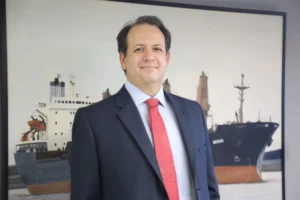
Lagoudis Ioannis is an Associate Professor at the Department of Maritime Studies, University of Piraeus, specializing in maritime management and business administration. His research focuses on Human resource practices in shipping Digitalization challenges Environmental regulation compliance Fuel price risk management Port competitiveness . Recent publications highlight trends in Maritime logistics and digital transformation (2022-2024) Supply chain analysis for shipyards (2016) Carbon emissions in transportation (2015) . His work combines theoretical frameworks with practical case studies.
Prof. Dr. rer. nat. Anna Mechler is a faculty member at RWTH Aachen University , specifically affiliated with the Aachen Process Engineering school under the Teaching and Research Area Electrochemical Reaction Engineering . Her research focuses on electrochemical reaction engineering, particularly in the development of advanced catalysts for energy conversion systems. Research Interests: Oxygen evolution reaction (OER) optimization, electrochemical catalyst synthesis, plasma-assisted electrode fabrication, and sustainable energy technologies like fuel cells and water electrolysis. Publications: Recent work highlights the development of Ni-Co-O anodes, mechanochemical activation of catalysts, and innovative methods for improving electrolyzer efficiency and reproducibility. Labs/Teams: Active in the NGP² group at Aachen Process Engineering, contributing to industrial-scale electrochemical process development.
Dr. Maxim Durach is an Associate Professor in the Department of Biochemistry, Chemistry and Physics at Georgia Southern University's College of Science and Mathematics, where he has been employed since 2011. He maintains affiliate positions with the Center for Advanced Materials Science and the Sustainable Fuels Research Network. His research focuses on theoretical and computational physics for nanotechnology applications, with specialized expertise in photonics, metamaterials, plasmonics, and optoelectronics. Durach's research investigates fundamental phenomena including quartic metamaterials, plasmon drag effects, momentum absorption of light and plasmons, optical forces, photonic integrals, nanorod metasurfaces, optical neutrality (invisibility) in metamaterials, and hyperbolic metasurface cavities. His work contributes to UN Sustainable Development Goals through advancements in materials science and nanotechnology. With an extensive publication record spanning electromagnetism, metamaterials, and nanophotonics, Durach's recent research (2020-2025) demonstrates strong focus on isotropy-broken media, surface electromagnetic phenomena, and advanced optical materials characterization. His theoretical frameworks explore novel beam propagation models, scattering mechanisms, and topological phases in complex media. Durach leads an active research group developing computational approaches for nanophotonics applications. His laboratory investigates plasmonic phenomena through both theoretical modeling and experimental validation, with work supported by consistent research output since 2007. Current projects explore inverse methods in electromagnetism, beam propagation in anisotropic media, and advanced metamaterial designs.
John T. Groves is the Hugh Stott Taylor Chair of Chemistry and Professor of Chemistry at Princeton University, affiliated with the Department of Chemistry. His research bridges organic, inorganic, and biological chemistry, focusing on biomimetic catalysis, membrane-protein interactions, and radical-mediated transformations. He leads the Groves Group in the Frick Laboratory, collaborating with institutions like the Andlinger Center for Energy and Environment. Research interests include designing catalysts for energy and environmental applications, studying host-pathogen iron interactions via siderophores, and developing probes for peroxynitrite in biological systems. His work emphasizes metal-catalyzed processes, with notable contributions to methane oxidation, C-H functionalization, and enzyme-inspired chemistry. Dr. Groves has received over 50 honors, including the National Academy of Sciences membership (2012) and multiple ACS awards (e.g., 2015 Inorganic Chemistry Award). His research has led to innovations in fluorination, catalytic oxidation, and enzyme inhibition strategies. Key achievements include manganese-catalyzed fluorination techniques, iodate/chloride-driven alkane oxidation, and insights into cytochrome P450 mechanisms. His lab also investigates hypothetic applications in drug discovery and sustainable chemistry.
David Chopp is a Professor of Engineering Sciences and Applied Mathematics at Northwestern University's McCormick School of Engineering. His research focuses on numerical methods, scientific computing, and interface motion, with applications in bacterial biofilms, neurophysiology, and materials science. He holds the Charles Deering McCormick Professor of Teaching Excellence award. Chopp earned his Ph.D. in Mathematics from UC Berkeley and a B.S. in Mathematics and Applied Mathematics from the University of Washington. Research interests include level set methods, computational neuroscience, fracture mechanics, and biofilm modeling. Notable contributions span phase field modeling, microbial fuel cell simulations, and adaptive algorithms for neural systems. His work bridges computational tools with real-world applications in engineering and biology. Key Projects: Phase field modeling with large driving forces (2023), biofilm potassium signaling (2021), non-planar crack tracking (2016). Awards: Charles Deering McCormick Professor of Teaching Excellence. Chopp advises students in biofilm dynamics, computational materials, and fracture mechanics. His lab develops algorithms for interface tracking and neural simulations, collaborating on biofilm bioclogging and material failure analysis. Active in teaching and publishing, he authored textbooks on high-performance computing and contributed to over 60 peer-reviewed articles.
Christina Roth is a Professor and Chair of Materials Process Engineering at the University of Bayreuth's Faculty of Engineering. Her research focuses on materials science and electrochemical energy systems, including fuel cells, redox flow batteries, CO₂ electro-reduction, and advanced materials synthesis via templating and electrospinning. She leads projects on operando methods to study catalytic processes and material degradation mechanisms. Her work bridges fundamental electrochemistry with applied energy technologies. Key research areas include developing high-performance electrocatalysts, optimizing electrode structures, and understanding reaction mechanisms under industrial conditions. Recent studies emphasize operando techniques to monitor catalyst behavior during operation, enhancing reliability in high-current-density electrolysis systems. Collaborations span academia and industry, addressing challenges in sustainable energy storage and conversion. Dr. Roth's expertise is reflected in over 150 publications across top journals like Nature Materials , ACS Catalysis , and Journal of the Electrochemical Society . She actively contributes to conferences such as the livMatS Colloquium series and serves on the Scientific Advisory Board. Her lab focuses on innovative materials for next-generation energy systems, emphasizing scalability and environmental impact.
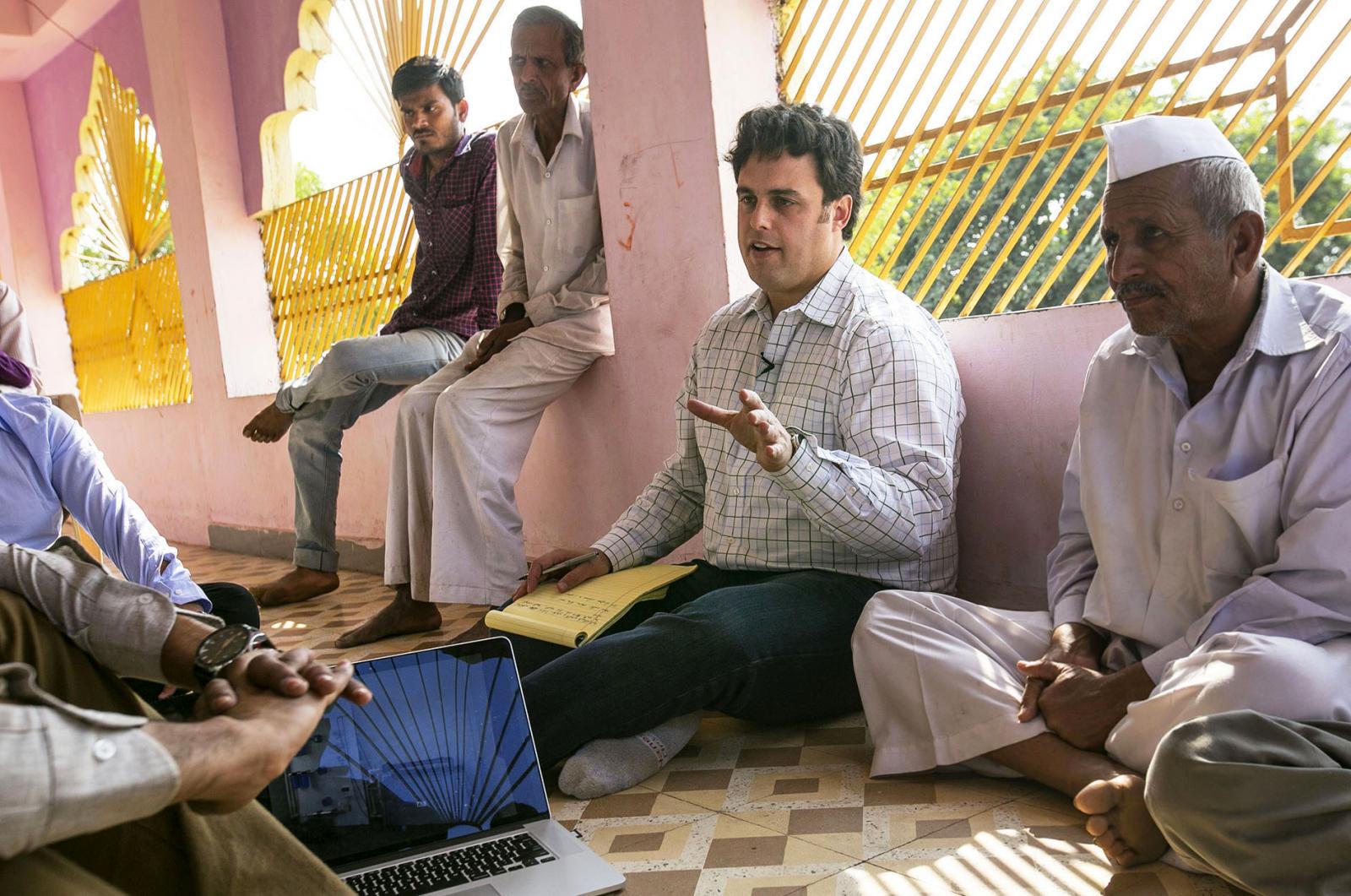
Professor Amos Winter is the Germeshausen Professor in Mechanical Engineering at the Massachusetts Institute of Technology (MIT). He directs the K. Lisa Yang Global Engineering and Research (GEAR) Center, focusing on creating high-performance, low-cost technologies for emerging markets through interdisciplinary engineering science. His work spans water purification, prosthetics, agricultural systems, and transportation solutions. Education: B.S. in Mechanical Engineering from Tufts University (2003), S.M. and Ph.D. from MIT (2005, 2011) Labs: Founder and Director of MIT Mobility Lab (2007-2012), GEAR Center PI Winter’s research combines biologically-inspired design with mechanical and product development, emphasizing constraints-driven innovation. His projects include a solar-powered desalination system for rural India, the Leveraged Freedom Chair for off-road mobility, and smart drip irrigation systems for water-stressed regions. His publications analyze biomechanical interactions, adaptive robotics, and reverse innovation frameworks. Recent projects focus on time-variant desalination systems, low-pressure drip emitters, and energy-efficient agricultural technologies. These align with his expertise in mechanics, fluid dynamics, and cross-cultural technology transfer. Winter has received numerous honors including the 2025 Bose Award for Excellence in Teaching, the 2017 NSF CAREER Award, and the 2015 USAID Desal Prize. He was named to the TR35 list in 2013 and earned multiple design accolades for humanitarian technologies. As a co-founder of Global Research Innovation and Technology (GRIT), Winter bridges academic research with real-world implementation. He teaches Design and Manufacturing (2.007) and Global Engineering (2.76) at MIT, while advising startups and mentoring students through initiatives like the MIT Formula SAE Team.
Carmen Guerra-Garcia is the Charles Stark Draper Associate Professor of Aeronautics and Astronautics at MIT. She leads the Aerospace Plasma Group, focusing on the intersection of aerospace engineering, low-temperature plasma technologies, and gas discharge physics. Massachusetts Institute of Technology (PhD, SM) 2007-2014 Polytechnic University of Madrid (Ingeniero Aeronautico) 2007 Her research spans aircraft safety (lightning interaction, wind turbines, and charge control systems), plasma-assisted combustion , and space propulsion . She combines multi-physics modeling , computation , and experimentation to address challenges in carbon-free energy and aerospace electrification. Key trends in her recent work include plasma-assisted ignition of sustainable fuels , CO2 conversion for Mars ISRU , and dynamic interactions between plasmas and flames . Her articles highlight advancements in nanosecond pulsed discharges , self-pulsating streamers , and lightning risk mitigation . NSF CAREER Award (2024) Junior Bose Award for Excellence in Teaching (2024) Office of Naval Research Young Investigator Award (2021) International Fulbright Science and Technology Award (2009) First National Award in Aeronautical Engineering, Spanish Ministry of Education (2007) Guerra-Garcia’s grants include NSF CAREER funding for plasma-assisted combustion and ONR support for aerospace safety. She advises PhD students and collaborates with the Space Propulsion Lab and APS/AIAA technical committees.
Carol Hunsberger is an Associate Professor in the Department of Geography and Environment at Western University. Her research focuses on political ecology, energy justice, biofuels, pipeline politics, and environmental governance. She examines how energy projects impact livelihoods and ecologies, and how discourses around climate change, economic priorities, and development influence governance and decision-making processes. Her work emphasizes justice and fairness in energy systems, particularly in Canada, though she has prior research experience in Kenya and Puerto Rico. Teaching interests include courses on energy and power dynamics, environmental justice, and climate change. She supervises graduate students in interdisciplinary studies, including topics like urban cycling behavior, Indigenous resistance to pipelines, and corporate social responsibility in Africa’s mining sector. Her research has been published in journals like Energy Research & Social Science, GCB Bioenergy, and The Canadian Geographer. Hunsberger’s recent publications analyze Canadian pipeline reviews, energy transition discourses, and biofuel policies. She critiques regulatory processes and advocates for inclusive decision-making frameworks. Her work bridges academic research with policy implications, addressing global environmental challenges through a justice-oriented lens.
Philippe Gachon is a Professor in the Department of Geography at the University of Quebec at Montreal (UQAM), Director of the ESCER Research Centre, and leader of the Quebec InterSectoral Flooding Network (RIISQ). He specializes in hydro-climatology and climate risk assessment, with extensive experience at Environment Canada and as a Strategic Research Chair holder on Hydrometeorological Risks Related to Climate Change. His research examines climate change impacts on extreme weather events including floods, droughts, and heat waves. Recent work focuses on improving risk identification and adaptation strategies through intersectoral approaches. Key research themes include: Regional climate modeling and validation Hydro-meteorological hazard intensification Systemic risk assessment Community-scale resilience building Climate services development His recent publications demonstrate advanced statistical approaches for modeling non-stationary flood regimes, evaluating wildfire risks under climate change, and quantifying vector-borne disease transmission. Collaborative projects with 16 universities address physical climate risks and socioeconomic vulnerabilities across Quebec.