Jing Wang is a Professor at NYU Grossman School of Medicine, affiliated with both the Department of Anesthesiology, Perioperative Care, and Pain Medicine and the Department of Neuroscience . She specializes in pain medicine, combining clinical practice with research on brain circuits and pain regulation. Dual MD-PhD training (Columbia University, 2004 and 2003 respectively) Leadership roles: Director of Interdisciplinary Pain Program and Vice Chair, Research, in Anesthesiology Her research interests focus on cortical pain mechanisms, computational neuroscience for pain decoding, and brain-machine interfaces. Key areas include: Glutamatergic projections in pain modulation Ketamine studies for postoperative pain Machine learning for neural biomarkers of chronic pain Psychedelics in pain treatment Current clinical trials include: Chronic Pain and Postoperative Cognitive Function in the Elderly EEG Biomarkers for Acute-to-Chronic Pain Transition Predictive Biomarkers in Chronic Pancreatitis Pain Her work bridges molecular neuroscience , clinical applications , and real-time neural engineering for pain management.
Yuan Yang is an Associate Professor at the University of Illinois Urbana-Champaign (UIUC) in the Department of Bioengineering and an adjunct Associate Professor at Northwestern University's Feinberg School of Medicine. He also holds a part-time role as Associate Professor at Carle Foundation Hospital. His research focuses on neural engineering, neurorehabilitation, and biomedical imaging, particularly in stroke recovery and Alzheimer's disease biomarkers. Yang leads the Illinois-Carle Joint Neural Engineering and Rehabilitation Laboratory (JNERL), collaborating on innovative solutions for neurological conditions using advanced imaging and neurotechnology. Education: PhD in Signal and Images from Telecom ParisTech (2013), MS in Biomedical Engineering from Shanghai Jiao Tong University (2010), and BS from Central South University (2008). He has held faculty positions at UIUC, the University of Oklahoma, and Northwestern University since 2017. Research interests include cortical connectivity, non-invasive brain stimulation (e.g., HD-tDCS), functional MRI analysis, and electrophysiological signal processing. His work bridges engineering and clinical applications, addressing motor impairment in stroke and cognitive decline in Alzheimer's. Key contributions include studies on sex differences in brain connectivity and neuroplasticity, as well as developing targeted interventions using EEG and neuroimaging. Yang has received prestigious awards such as the NSF CAREER Award and serves as an IEEE Distinguished Lecturer. Professional service includes roles in grant review for NIH, AHA, and international bodies, along with editorial positions in major journals like Frontiers in Neuroscience and Medical & Biological Engineering & Computing.
Barbara Shinn-Cunningham is the Glen de Vries Dean of the Mellon College of Science at Carnegie Mellon University (CMU) and holds professorships in Psychology, Biomedical Engineering, and Electrical and Computer Engineering. She is also the founding director of CMU's Neuroscience Institute. Her research focuses on auditory neuroscience, particularly auditory attention, binaural hearing, and multisensory integration, with applications to hearing disorders and assistive technologies. Shinn-Cunningham earned her B.S. from Brown University and her M.S. and Ph.D. from MIT in Electrical and Computer Engineering. Education: B.S., Electrical Engineering, Brown University (1986) M.S., Electrical & Computer Engineering, MIT (1988) Ph.D., Electrical & Computer Engineering, MIT (1994) Research Interests: She investigates how the brain processes sound in complex environments, including spatial hearing, auditory attention deficits in aging and clinical populations, and the neural mechanisms underlying cochlear synaptopathy. Her work integrates behavioral studies, neuroimaging (EEG, fMRI), and computational modeling to bridge basic science and translational research. Awards & Recognition: Fellow, Acoustical Society of America (2009) Alfred P. Sloan Research Fellow (2000) National Security Science and Engineering Faculty Fellow (2008) Helmholtz-Rayleigh Interdisciplinary Silver Medal (2019) Advising & Grants: She mentors a diverse team of graduate students and postdocs, focusing on training the next generation of auditory neuroscientists. Her grants include funding from NSF, NIH, and the Department of Defense. She leads the LiMN Lab, which explores neural mechanisms of sensory processing and attention. Labs & Teams: Director of the Lab in Multisensory Neuroscience (LiMN) at CMU, part of the Carnegie Mellon Neuroscience Institute. Collaborates with engineers, clinicians, and marine biologists to advance auditory technology and neuroimaging techniques.
Prof. I. Toni (Ivan) is a Professor of Cognitive Psychology at the Donders Institute for Brain, Cognition and Behaviour, Radboud University Nijmegen. He leads the Intention & Action research group, focusing on the neural mechanisms underlying instrumental and communicative actions. Research Interests: Integration of perceptual, conceptual, and rule-based information into sensorimotor processes Neural substrates of goal-directed movements (object prehension, tool use) Computational models of communicative innovation and shared symbol systems Role of lateral occipito-temporal, inferior parietal, and premotor cortices in action planning Research Grants: 2022-2027: ERC Advanced Grant (€2.5m) for "Human communication as joint epistemic engineering" 2021-2027: NWO-STW Open Competition Grant (€0.75m) on social-emotional regulation 2017-2022: NWO Language in Interaction Consortium Grant (€1.5m) for "Creating a shared cognitive space" 2011-2015: NWO Grant (€500k) on mental simulation 2009-2014: NWO-MAGW VICI Grant (€1.3m) for "Raising glasses and pointing fingers" Editorial Roles: Senior Editor, The Journal of Neuroscience (since 2012)
Justine Cléry, PhD, serves as an Assistant Professor in the Department of Neurology and Neurosurgery at McGill University's Faculty of Medicine and Health Sciences. She leads the Sensory and Social Brain Mechanisms (SSBM) Lab at The Neuro (Montreal Neurological Institute) and contributes to autism research through the Azrieli Centre for Autism Research (ACAR). Her work bridges fundamental neuroscience with clinical applications in neurodevelopmental disorders. Education: Doctorate in Neurosciences, University of Claude Bernard Lyon 1 (2017), supervised by Prof. Suliann Ben Hamed at Institut des Sciences Cognitives Postdoctoral Associate, Robarts Research Institute, University of Western Ontario (2017-2021), with Prof. Stefan Everling Research Interests: Dr. Cléry pioneers fMRI studies in awake non-human primates to decode neural mechanisms of social cognition and sensory processing . Her work examines how the brain represents peripersonal space, processes looming visual stimuli, integrates multisensory cues, and constructs social interaction networks. This research employs marmoset models to investigate fundamental questions with implications for autism spectrum disorder and neurodevelopmental conditions, uniquely combining cognitive neuroscience and advanced neuroimaging . Publication Trends: Her 2015-2021 publications reveal a cohesive trajectory using ultra-high field fMRI to map brain networks in marmosets. Key themes include social interaction observation systems, somatosensory/visual processing hierarchies, and spatial representation mechanisms. This body of work establishes critical methodological frameworks for awake primate neuroimaging while advancing understanding of neural substrates underlying social and sensory functions. Scientific Awards: BrainsCAN Postdoctoral Fellowship Tier II (2017-2021) BrainsCAN Postdoctoral Fellowship Tier I (2021-2022) CIHR Postdoctoral Fellowship (2021-2022) Berthe-Fouassier Foundation Fellowship (2016-2017) Advising and Grants: Dr. Cléry has secured competitive postdoctoral fellowships from BrainsCAN, CIHR, and Berthe-Fouassier Foundation. As SSBM Lab director, she mentors graduate researchers in neuroimaging techniques and primate neuroscience. Her work leverages institutional resources at The Neuro and collaborative frameworks through ACAR, with funding supporting cutting-edge fMRI capabilities for awake animal studies. Labs and Teams: The Sensory and Social Brain Mechanisms (SSBM) Lab develops innovative fMRI paradigms for awake marmosets to investigate social and sensory brain functions. Dr. Cléry actively contributes to the Azrieli Centre for Autism Research (ACAR), participating in interdisciplinary initiatives that connect basic neuroscience with autism spectrum disorder research through The Neuro's open science framework.
Professor Gesa Hartwigsen is a leading cognitive neuroscientist holding dual appointments as Professor for Cognitive and Biological Psychology at Leipzig University and Lise Meitner Research Group Leader at the Max Planck Institute for Human Cognitive and Brain Sciences (MPI CBS). She leads the Research Group Cognition and Plasticity, focusing on neural networks for higher cognitive functions, adaptive plasticity in cognition, and language network reorganization after stroke. Her educational background includes: Studies of Psychology (Dipl.-Psych., 2001-2006) at Kiel University PhD in Neurology (Dr. phil., 2007-2010) at Kiel University Habilitation in Psychology (2018) at University of Potsdam Hartwigsen's research spans cognitive neuroscience with particular emphasis on language processing, neural plasticity, and brain stimulation techniques. Her work investigates how brain networks support semantic cognition, how they adapt following neurological damage, and how they change across the lifespan. She employs advanced methodologies including transcranial magnetic stimulation (TMS), functional MRI, and concurrent TMS-fMRI to establish causal relationships in neural processing. Analysis of her recent publications reveals a strong focus on language networks, executive control mechanisms, and neural plasticity. Her work increasingly integrates advanced computational approaches with neurostimulation to understand semantic processing, speech comprehension in challenging environments, and recovery from language disorders. A significant trend is her development of methodological frameworks for concurrent TMS-fMRI, establishing new standards in the field. Her notable scientific recognition includes: ERC Consolidator Grant (2023-2027) for "The Flexible Brain: (Re-)shaping Adaptation in Semantic Cognition" NVIDIA GPU grant (Titan Xp Donation) Hartwigsen has secured substantial research funding, including multiple DFG projects as Principal Investigator. Her current DFG Research Unit (2023-2026) focuses on "Modulation of brain networks for memory and learning by transcranial electrical stimulation," where she serves as PI. She has successfully led multiple interdisciplinary projects examining language networks, neural plasticity, and brain stimulation effects. At the MPI CBS, she leads the Cognition and Plasticity research group, which investigates how brain networks support cognitive functions and adapt to challenges. Her team employs a multimodal approach combining neurostimulation, neuroimaging, and behavioral methods to understand the causal architecture of cognitive networks, particularly in language processing and semantic cognition.
Vikaas Sohal, MD, PhD is a Professor in the Department of Psychiatry at the University of California, San Francisco (UCSF) School of Medicine and a member of the UCSF Weill Institute for Neurosciences. He directs a neuroscience laboratory investigating the brain circuits underlying fundamental aspects of cognition and emotion, with particular focus on gamma oscillations in normal cognition and schizophrenia, as well as how rhythmic brain activity encodes emotional states. Dr. Sohal is also a board-certified psychiatrist who supervises residents in the Early Psychosis (PATH) clinic. Dr. Sohal earned his A.B. and S.M. in Applied Mathematics from Harvard University in 1997, followed by an M.A.St. in Mathematics from the University of Cambridge in 1998. He completed his M.D./Ph.D. in Neuroscience at Stanford University in 2005, where he also completed his residency in adult psychiatry. During his residency, he conducted postdoctoral research with Dr. Karl Deisseroth, performing some of the first experiments using optogenetics to study information processing in brain circuits. Dr. Sohal's research has focused on neural circuit mechanisms underlying cognitive and emotional processes, with particular emphasis on gamma oscillations, prefrontal-hippocampal interactions, and the role of specific interneuron subtypes in information processing. His laboratory has made significant contributions to understanding how parvalbumin interneurons generate gamma oscillations that organize prefrontal networks to promote behavioral adaptation. His recent work has explored the circuit basis of emotional states, pain-related aversion, and neuropsychiatric disorders. His publication record shows a consistent trajectory of high-impact research, with recent publications spanning topics from psilocybin effects to thalamocortical organoids for neuropsychiatric disorder modeling. His work demonstrates a progression from fundamental circuit mechanisms to translational applications for psychiatric disorders, particularly focusing on schizophrenia and emotional processing abnormalities. Dr. Sohal has secured continuous NIH funding as Principal Investigator since 2009, including multiple R01 grants, an R56, DP2, R00, and K99 awards, demonstrating sustained research productivity and significance. His research program represents a sophisticated integration of molecular, cellular, circuit, and behavioral approaches to understand and potentially treat neuropsychiatric disorders.
Franziska M. Korb is a Researcher at the Institute of General Psychology, Biopsychology and Methods of Psychology at Technische Universität Dresden. She holds a PhD in Psychology from the University of Leipzig (2008) and has conducted extensive postdoctoral research at institutions including Duke University (USA), the Max Planck Institute for Human Cognitive and Brain Sciences (Leipzig), and the University Clinic Cologne. Her research focuses on cognitive control mechanisms, decision-making processes, and the neural underpinnings of self-control and emotional regulation. She has received awards such as the Charlotte Bühler Award for teaching excellence (2014) and grants for pilot studies and travel. Korb is also an ad-hoc reviewer for multiple prestigious journals and research councils. Her academic journey includes a diploma in Psychology from Leipzig (2004) and research internships at UC San Diego and the Max Planck Institute. She explores topics like brain networks (e.g., salience network), decision conflict, and the role of anticipated emotions in self-regulation. Her work combines neuroimaging (fMRI, EEG), transcranial stimulation (TMS/tDCS), and behavioral experiments to study cognitive and affective processes in health and clinical populations (e.g., anorexia nervosa). Research Highlights: Investigates how brain connectivity predicts self-controlled choices. Examines neural mechanisms of honesty and reward circuits in moral decisions. Studies framing effects in food choices and future consequences in health behaviors. Explores cognitive effort tolerance and dark triad personality traits. Awards and Grants: Charlotte Bühler Teaching Award (2014) DAAD Travel Award (2014) DEFD Best Poster Award (2013) Start-up grant for pilot studies (2014) Professional Contributions: Active in open science initiatives, replication studies, and academic ethics education. Collaborates internationally, including with Duke University and the Max Planck Society.
Dr. Regina Lapate serves as an Assistant Professor in the Department of Psychological and Brain Sciences at the University of California, Santa Barbara (UCSB), within the College of Letters & Science. She directs the LEAP Neuro Lab (Lapate Experimental Affective Psychophysiology and Neuroscience Laboratory), where her team investigates neural mechanisms of emotion-cognition interactions using multimodal methodologies including TMS, EEG, fMRI, and psychophysiology. Her educational trajectory includes a PhD from the University of Wisconsin-Madison (2015) under Dr. Richard Davidson, followed by an NIH postdoctoral fellowship at UC Berkeley (2016) with Dr. Mark D'Esposito. She co-edited the 2nd edition of The Nature of Emotion: Fundamental Questions in 2018. Dr. Lapate's research centers on emotional processing, cognitive control, and adaptive emotion regulation, with particular emphasis on temporal memory dynamics and prefrontal cortex function. Her lab employs causal inference approaches to explore how emotional states sculpt sensory processing and behavioral goals, aiming to uncover mechanisms that promote resilience against psychopathology. Recent work demonstrates how emotional context modulates temporal memory and action goal representations, revealing critical prefrontal circuitry involved in emotional adaptation. Her publication trends reveal deep integration of time perception with emotional processing, neurostimulation-based causal testing of prefrontal mechanisms, and translational applications for mood and anxiety disorders. The 2024-2025 publications particularly highlight anorexia nervosa symptomatology, temporal coding in emotion, and open-loop motor circuit dissociations. Scientific recognition includes: Hellman Fellowship (2024) Prestigious NIH grant for prefrontal mechanism research (2023) Regent’s Junior Faculty Award (2023) Dr. Lapate has secured substantial grant funding including an NIH award to elucidate prefrontal mechanisms of emotional processing and regulation. Her LEAP Neuro Lab functions as a collaborative hub where graduate and undergraduate researchers investigate fundamental questions about how emotional experiences dynamically interact with cognitive processes to shape adaptive functioning and psychopathology vulnerability.
Marc H. Schieber, M.D., Ph.D. is a Part-Time Professor in the Department of Neurology at the University of Rochester School of Medicine and Dentistry. He leads the Schieber Lab, which focuses on neural control of hand and finger movements and brain-machine interface technology development. His research has significant implications for restoration and repair of damaged neurological function. Dr. Schieber's educational background includes both an MD and PhD from Washington University School of Medicine (1982), followed by a Neurology residency at Massachusetts General Hospital (1983-1986) and an Internal Medicine internship at Barnes-Jewish Hospital South (1982-1983). His academic journey was supported by prestigious fellowships including the Medical Scientist Training Program Fellowship (1974-1982). His research primarily investigates how the brain controls fine finger movements used in activities like typing, playing musical instruments, or performing delicate surgery. More recent work explores the combination of reaching, grasping, and manipulating. His lab studies how the brain controls complex muscle movements to achieve required actions, with applications to brain-machine interface technology. His publications reveal consistent focus on neural coding, motor cortex function, and the development of neuroprosthetics for restoring lost function. Dr. Schieber's work shows strong trends in understanding neural representations of movement, cortical organization for motor control, and translating these findings to practical brain-computer interfaces. His recent publications (2023-2025) increasingly focus on intracortical microstimulation for injecting information into cortical networks, neural synchrony in sensorimotor systems, and computational approaches to motor control. Javits Investigator Merit Award (2003-2010) Clinical Investigator Development Award (1986-1989) Phi Beta Kappa (1974) A.B. summa cum laude (1974) Medical Scientist Training Program Fellowship (1974-1982) Dr. Schieber has mentored numerous graduate students and postdoctoral fellows who have gone on to successful careers in academia and industry. His lab has received substantial research funding supporting investigations into neural control mechanisms and brain-machine interface development. The Schieber Lab has been an important contributor to understanding distributed motor control in the cortex and translating these findings to potential clinical applications for neurological rehabilitation. His laboratory work has consistently examined the distributed nature of motor control in the cortex, challenging traditional views of somatotopic organization and demonstrating how multiple cortical areas work together to produce coordinated movements. Current research directions include investigating how to effectively inject information into cortical networks using microstimulation and understanding the computational principles underlying motor control.
Håkan Fischer is a Professor of Human Biological Psychology at Stockholm University, where he has served as Head of the Department of Psychobiology and Epidemiology since 2011. He also holds an associate professor position at Karolinska Institutet, is affiliated with the Aging Research Center and Stockholm University Brain Imaging Centre, and is a faculty member at Digital Futures at the Royal Institute of Technology. Since September 2025, he has additionally served as a visiting professor at Linköping University. Fischer has established himself as a leading researcher in emotional and cognitive processing, with particular expertise in socio-emotional aspects across the lifespan. Fischer earned his PhD in psychology from Uppsala University in 1998, followed by postdoctoral research at Harvard Medical School (1999-2001). He then worked at the Aging Research Center at Karolinska Institutet before joining Stockholm University in 2011. His academic journey includes a sabbatical year (2021-2022) at the University of Florida's Department of Psychology. Fischer is actively involved in university governance as a member of the Swedish Research Council's Subject Council for Humanities and Social Sciences (2023-present) and represents Stockholm University in multiple international collaborations. Håkan Fischer's research primarily focuses on investigating intra- and interindividual differences in affective, cognitive, social and perceptual processing, with special emphasis on age-related differences in adults. His laboratory employs advanced neuroimaging techniques including fMRI, PET, and fNIRS to examine brain function, while also utilizing structural imaging methods like T1-weighted imaging, DTI, and perfusion imaging to study brain structure. Fischer advocates for single-subject small-N designs to better understand emotional and cognitive mechanisms. His current research lines include socio-emotional perception and recognition, oxytocin effects on socio-emotional processing across the lifespan, and AI development for interpersonal communication analysis. Analysis of Fischer's recent publications reveals a strong focus on emotion recognition across populations, neurobiological mechanisms of socio-emotional processing, and methodological innovations. His work consistently integrates behavioral testing, neuroimaging, and genetic analysis to provide comprehensive insights. The increasing incorporation of AI approaches demonstrates his adaptation to emerging technological advances in psychological research. Fischer has published 136 peer-reviewed articles with over 12,200 citations and a Google Scholar h-index of 53. Fischer has received consistent funding since 2002 from prestigious sources including the Swedish Research Council, Wallenberg Foundation, STINT, Riksbankens Jubileumsfond, and Konung Gustav V och Drottning Victorias stiftelse. He currently leads nine funded research projects (two as principal investigator totaling 6.9 million SEK, seven as co-applicant totaling 24.8 million SEK) spanning multiple international collaborations in Sweden, Germany, and the USA. As an educator, Fischer leads the basic course in Cognitive Neuroscience and the master's course in Emotion Psychology and Affective Neuroscience. He regularly teaches at both undergraduate and advanced levels, primarily in biological psychology, cognitive neuroscience, and emotion psychology. Fischer currently supervises six doctoral students (one as main supervisor, four as assistant supervisor) and has mentored graduate students since 2002. Håkan Fischer leads a dynamic research laboratory that investigates emotional, social, perceptual, and cognitive processing. The lab examines how intraindividual variations across stimuli and time, as well as interindividual differences in age, gender, genetics, personality, and sleep deprivation affect these processes. His lab maintains active national and international collaborations with researchers at Stockholm University, Uppsala University, Karolinska Institutet, University of Florida, and University of Gothenburg, creating a robust interdisciplinary research environment focused on translating basic neuroscience into practical applications.
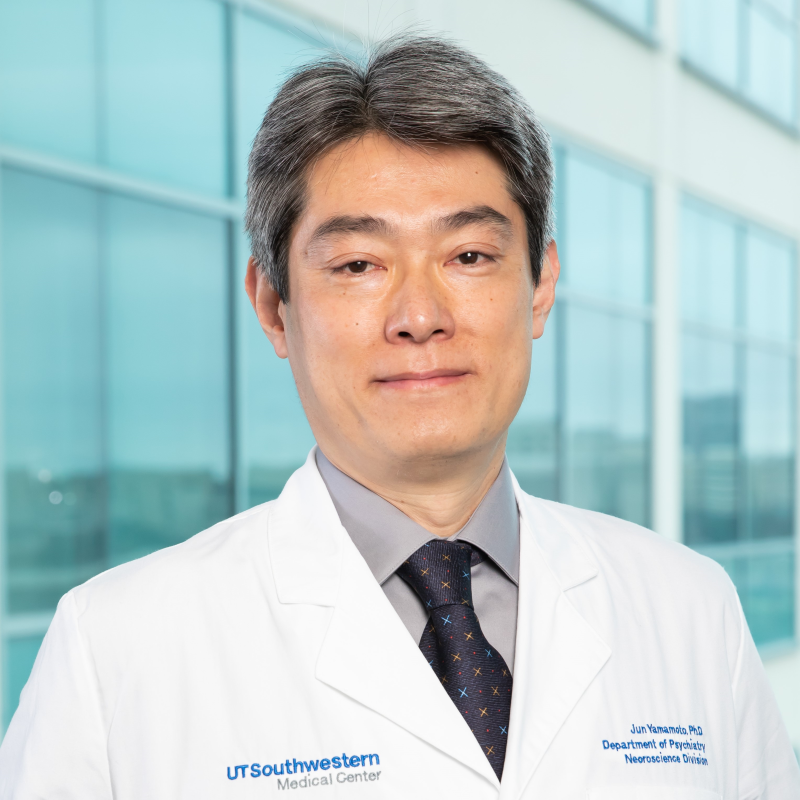
Jun Yamamoto is an Assistant Professor of Psychiatry Neuroscience at UT Southwestern Medical Center. He holds a Ph.D. in computer science from Keio University (Japan), with postdoctoral training at the University of Strasbourg Medical School and MIT's Picower Institute. His research focuses on neural dynamics underlying memory access and retrieval in hippocampal-cortical networks, particularly spatial topology, working memory, and schizophrenia models. He has developed advanced neurotechnologies like motorized microdrives for chronic neural recordings in freely moving animals. Education: Bachelor's, Master's, and Ph.D. in Computer Science, Keio University (Tokyo, Japan) Postdoctoral Fellowships: MIT Picower Institute (with Matt Wilson and Susumu Tonegawa) and University of Strasbourg Medical School Research Interests: Yamamoto's lab investigates hippocampal circuit mechanisms for memory formation, observational fear circuits, and reverse-translational models of psychosis. His work integrates experimental neuroscience, electrophysiology, and engineering to study neural activity in behaving animals. Lab & Collaborations: The Jun Yamamoto Lab at UT Southwestern explores neural network dynamics using cutting-edge techniques like optogenetics, calcium imaging, and computational modeling. They collaborate on projects involving hippocampal-amygdala circuits and schizophrenia pathophysiology.
Sandra Martin is a Postdoctoral Researcher at the Max Planck Institute for Human Cognitive and Brain Sciences in Leipzig, Germany, where she works in the Lise Meitner Research Group Cognition and Plasticity. Her research combines neuroimaging and neuromodulation methods with graph theory, large language models, and behavioral modeling to explore cognitive changes across the adult lifespan, with a particular focus on age-related changes in memory processes and their interaction with executive functions. Education: PhD in Cognitive Neuroscience (2018-2023) from the Max Planck Institute for Human Cognitive and Brain Sciences, Leipzig M.Sc. in European Master of Clinical Linguistics (2014) from University of Potsdam, Germany & University of Groningen, The Netherlands B.A. in Linguistics (2012) from Humboldt University Berlin, Germany Research Interests: Dr. Martin's research focuses on cognitive aging , neurolinguistics , and network neuroscience . She investigates how domain-general networks contribute to language prediction and semantic cognition across the adult lifespan. Her work often employs non-invasive brain stimulation techniques like transcranial magnetic stimulation (TMS) to understand the causal roles of specific brain regions in cognitive processes. She is particularly interested in how executive resources shape language predictability effects and how these relationships change with age. She's a strong advocate for open and reproducible research practices including preregistration and registered reports. Her recent publications reveal a strong trend toward understanding the neural mechanisms of semantic cognition and language processing across the lifespan. She combines multiple methodologies including fMRI, TMS, graph theory, and computational modeling to investigate how brain networks reorganize with age and how this affects cognitive performance. Her work has important implications for understanding cognitive aging and developing interventions for language disorders like aphasia. Scientific Awards: Doctoral fellowship from the German Academic Scholarship Foundation (Studienstiftung des deutschen Volkes) Advising and Grants: Dr. Martin has been involved in several research projects, including a DFG-funded project on 'The role of domain-general networks in natural language predictions' together with Prof. Dr. Gesa Hartwigsen (Leipzig University) and Prof. Dr. Jonas Obleser (University of Lübeck). While there's no explicit mention of students she's formally advising, her role as a postdoc suggests she likely mentors junior researchers. She actively promotes open and reproducible research practices and co-organized a symposium on Good Scientific Practice titled 'Doing Good – Scientific Practice under Review'. Labs and Teams: Dr. Martin is part of the Lise Meitner Research Group Cognition and Plasticity at the Max Planck Institute for Human Cognitive and Brain Sciences. She collaborates with researchers from Leipzig University and University of Lübeck. Her work often involves interdisciplinary teams combining expertise in cognitive neuroscience, linguistics, and clinical neurology, particularly in studying aphasia and language recovery after stroke. Her research group maintains open science practices with code and data available on GitLab and OSF.
Beatrijs Van den Bergh serves as a Visiting Professor at KU Leuven with primary affiliations in the Health Psychology unit and dual membership in the KU Leuven Brain Institute (LBI) and KU Leuven Institute for Child and Youth (LC&Y). Her research program centers on perinatal mental health and developmental pathways from maternal prenatal anxiety to offspring outcomes. Her core research interests include: self- and co-regulation dynamics in dysregulated families; neurodevelopmental impacts of prenatal stress; mindful parenting interventions; epigenetic mechanisms (e.g., NR3C1 methylation); and preventive strategies for infant self-regulation. She employs multimodal methodologies spanning neuroimaging, behavioral observation, and longitudinal cohort analysis. Analysis of her 2023-2025 publications reveals strong thematic continuity in studying maternal-offspring biobehavioral synchrony, with increasing emphasis on intervention frameworks and environmental moderators like green spaces. Her work consistently bridges basic neuroscience with clinical applications in mental healthcare. Dr. Van den Bergh currently co-promotes two major funded projects: Self- and co-regulation dynamics in dysregulated families (2023-2028), employing laboratory-to-home multimodal assessment, and Supporting infant self-regulation development (2023-2027), focused on preventive mental healthcare strategies. She maintains active international collaborations evidenced by presentations at the Marcé Society and WAIMH conferences. As a core member of KU Leuven's Health Psychology research unit, she contributes to interdisciplinary teams within the Brain Institute and Child and Youth Institute, frequently collaborating with neuroscientists, clinicians, and public health researchers on translational studies presented at venues including the European Society for Cognitive and Affective Neuroscience.
Dr. Max Garagnani is a Senior Lecturer in Computer Science at Goldsmiths, University of London, and co-director of the MSc in Computational Cognitive Neuroscience. He holds dual PhDs from the University of Cambridge (Computational Cognitive Neuroscience, 2009) and the University of Durham (Artificial Intelligence, 1999). His primary research focuses on developing biologically realistic neural networks to model cognitive functions like language acquisition, decision-making, and perception-action integration. Garagnani's work emphasizes neurocomputational models constrained by brain anatomy and physiology, particularly exploring how language emerges from neural activity in the cortex. He has collaborated with institutions like the Free University of Berlin’s Brain Language Lab and the MRC Cognition and Brain Sciences Unit. His research combines computational modeling with neuroimaging (MEG/fMRI) and robotics (e.g., iCub). Key achievements include modeling semantic dementia breakdown, explaining visual cortex recruitment in blind individuals, and simulating prediction-error signals in cortical hierarchies. Awards include the EU Marie Curie Fellowship and EPSRC grants. He teaches courses in computational neuroscience and supervises projects in neural network modeling and cognitive systems.