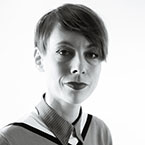
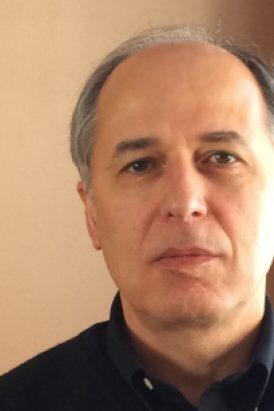
Sira Helena Gratz is an Associate Professor at the Department of Mathematics, Aarhus University. Her research focuses on advanced topics in algebra and category theory, particularly cluster algebras, singularity categories, and tilting theory. She has published extensively in leading journals such as the Journal of the London Mathematical Society and Mathematische Zeitschrift. Her work often involves collaborations with other mathematicians, including G. Stevenson and A. Zvonareva. Her recent publications explore cluster structures for infinite singularities, lattices of t-structures in discrete cluster categories, and homotopy invariants in singularity categories. These works intersect with subfields like representation theory, homological algebra, and noncommutative geometry. Contact: sira@math.au.dk | Phone: +45 87 15 17 98 | Address: Aarhus C, 1530-428
Dr. Ilke Canakci is an Assistant Professor in the Department of Mathematics at Vrije Universiteit Amsterdam. She specializes in cluster algebras, combinatorics, and representation theory. Her research focuses on algebraic structures like perfect matchings, derived categories, and triangulations. She teaches Discrete Mathematics, Group Theory, and Linear Algebra courses. Key collaborators include researchers from institutions worldwide. Her recent work explores cluster categories for infinity-gons and infinite friezes related to annulus triangulations. Awards and grants are not explicitly mentioned, but her extensive publication record reflects active research in algebraic geometry and combinatorial mathematics. Research Interests: Cluster algebras, categorification of geometric structures, combinatorial patterns, representation theory of algebras, and applications of algebraic methods to geometric problems. Current projects involve extending Caldero-Chapoton maps and analyzing frieze patterns in non-traditional geometries.
Klemens Fellner is a Professor of Mathematics/Computational Sciences and Group Leader of the Applied Analysis Group at the Institute of Mathematics and Scientific Computing, University of Graz. His research focuses on the analysis of partial differential equations and mathematical modeling across physics, chemistry, and biology. Research Interests: Prof. Fellner's work spans theoretical analysis of nonlinear PDEs (reaction-diffusion, kinetic, and non-local equations) using entropy/duality methods, with applications to: Biological systems (lipolysis, protein localization, stem-cell division) Physical processes (organic photovoltaics, semiconductor modeling) Collective behavior (swarming micro-organisms, aggregation dynamics) Interdisciplinary Mathematics-Arts collaborations Publication Trends: His recent articles (2018-2021) demonstrate strong focus on: Global existence and regularity for reaction-diffusion systems Convergence to equilibrium via entropy methods Drift-diffusion models in semiconductor physics Mathematical biology applications (prion dynamics, lipolysis) Novel approaches for non-local aggregation and hysteresis phenomena Research Leadership: Currently leads the Applied Analysis Group with members including postdocs and PhD students. Key projects: Doctoral School IGDK (International Graduate School) SFB Lipid Hydrolysis (Special Research Program) Mathematics and Arts collaborations Colibri research platform Supervises PhD candidate Reymart Lagunero studying generalized reaction-diffusion systems.
Prof. Karin Baur is a Professor of Pure Mathematics at Ruhr University Bochum since 2024. Previously, she held professorships at ETH Zurich, the University of Graz, and the University of Leeds. Her research focuses on algebraic and geometric structures, including representation theory, cluster algebras, and combinatorial methods, supported by grants like the SNF Professorship and Royal Society Wolfson Fellowship. She leads the Research Team Baur at RUB, comprising members such as Amandine Favre, Dr. Azzurra Ciliberti, and Dr. Tal Gottesman. Research Interests: Baur's work bridges algebra, geometry, and combinatorics, with emphasis on cluster algebras, algebraic groups, and invariant theory. She explores geometric representation theory, frieze patterns, and applications in topology and geometry. Awards & Grants: Recipient of the SNF Professorship and Royal Society Wolfson Fellowship. Her research has been supported by collaborative projects like the SFB/TRR 191 and the European Women in Mathematics initiatives. Advising & Leadership: Advised numerous postdoctoral researchers (listed under 'students'). Organized major conferences, including the 2025 ARTIG-6 Conference and events on cluster algebras and representation theory. Active in promoting early-career researchers through the Henriette Herz Scouting Programme. Labs & Teams: Leads the Research Team Baur, part of the Floer Center of Geometry. Collaborates with institutions globally on projects like the WINART series and the τ-Research School.
David Pagel is a Professor of Art Theory and History in the Art Department at Claremont Graduate University (CGU), where he teaches courses such as Studio Art, Survey of Contemporary Art, and Written Statement. He holds an MA in Art History from Harvard University and a BA in Modern Thought and Literature from Stanford University. His academic and professional work bridges critical theory, curatorial practice, and artistic engagement. Research Interests: Pagel’s work centers on contemporary art, painting, art criticism, museums, and the role of creativity in intellectual inquiry. He emphasizes emotional resonance, narrative construction, and the aesthetic experience, often exploring how pleasure and empathy function within serious artistic discourse. His research extends into curatorial projects that reframe artistic legacies and highlight underrepresented narratives. His recent publications and exhibition contributions reveal a consistent focus on figurative and abstract painting, portraiture, emotional expression, and the interplay between cultural identity and artistic form. Themes such as empathy, identity, pattern, and materiality recur across his writings, reflecting both personal and broader societal concerns in contemporary visual culture. Professional Recognition: Reviews Editor, Art Issues (1998–2001) Regular contributor to Artforum , Art in America , frieze , and the Los Angeles Times Adjunct Curator, Parrish Art Museum Advising and Professional Engagement: As a professor at CGU, Pagel mentors emerging artists and art historians. He has curated numerous exhibitions, including Unfinished Business , Underground Pop , and Damage Romanticism , and is currently co-organizing Pattern as Platform , a 40-artist exhibition. His editorial and curatorial roles demonstrate sustained leadership in the art world. Labs and Creative Teams: Pagel collaborates with artists, galleries, and institutions such as Deitch Projects, Spelman Evans Downer, and VAST space projects. He works closely with Kirk Pedersen on curatorial initiatives and contributes to exhibition catalogs for galleries including Miles McEnery, L.A. Louver, and Sikkema Jenkins.
Richard Posamentir is a Professor of Classical Archaeology at the University of Tübingen , affiliated with the Institute of Classical Archaeology in the Faculty of Humanities. His research spans Greek funerary art, Ionian pottery, and cultural contacts in ancient peripheral regions, with a focus on Anatolia and the Black Sea. Education: Master's and Doctorate at Ruhr University Bochum (1997, 2000), habilitation at Tübingen (2014). Projects: Led surveys in Cosa (2013-2020), Herakleia am Latmos, and Anazarbos, funded by the Gerda Henkel Foundation , Ministry of Science Baden-Württemberg , and others. Research Trends: Recent publications analyze Roman provincial architecture ( Litterae Aureae ), earthquake impacts on ancient settlements, and Ionian colonization. Articles emphasize archaeometric methods, cultural identity, and acculturation processes in the Eastern Mediterranean and Black Sea region. Collaborations: Worked with institutions like the German Archaeological Institute , State University of Florida, and University of Zürich. Co-edited volumes on topics such as Hellenismus in Cilicia and the 2000th anniversary of Augustus' death.
Prof. Dr. Karin Baur is a Professor in the Algebra department at the Faculty of Mathematics, Ruhr University Bochum. She has held academic positions at several prestigious institutions including University of Leeds (since 2018), University of Graz (since 2011), and ETH Zurich (2007-2011). Her research focuses on algebra, representation theory, cluster algebras, cluster categories, combinatorics, and Lie algebras. Professor Baur's research investigates the geometric and combinatorial structures underlying algebraic systems, with particular emphasis on cluster algebras and their connections to representation theory, geometry, and topology. She develops geometric models for algebraic structures, studies frieze patterns and their generalizations, and explores combinatorial aspects of Lie theory. Her work often bridges abstract algebraic concepts with concrete combinatorial models through the study of triangulations, quiver representations, and Grassmannian geometries, revealing deep connections between different mathematical disciplines. Her recent publications demonstrate continued innovation in cluster theory, geometric representation, and combinatorial algebra, with applications extending to mathematical physics and interdisciplinary projects connecting mathematics with the arts. Professor Baur's research program shows consistent evolution from foundational work on cluster categories to increasingly sophisticated investigations of their geometric and combinatorial manifestations. Royal Society Wolfson Fellowship (2018-2023) Marie Curie Intra-European Fellowship (2011-2013) SNSF Professorship (2007-2011) Professor Baur has secured substantial research funding as Principal Investigator, including the major project 'Combinatorial Representation Theory: Algebra and its interfaces with geometry, topology and combinatorics' (2,554,972£) running from 2022-2027. She actively mentors junior researchers and has supervised numerous PhD students throughout her career. Her research group at Ruhr University Bochum includes Amandine Favre, Dr. Azzurra Ciliberti, and Dr. Tal Gottesman, working on related topics in algebra and combinatorics. Professor Baur is an active organizer of academic events, having coordinated numerous international conferences including the upcoming ARTIG-6 Conference at Ruhr University Bochum in July 2025. She has also been involved in interdisciplinary projects such as 'Listen to Intuition,' a mathematics and arts exhibition project that demonstrates her commitment to public engagement with mathematical concepts.
Susan Goldstine is a Professor of Mathematics at St. Mary’s College of Maryland , where she has been on the faculty since 2004. She is also a Board Member of the Bridges Organization and Associate Editor for the Journal of Mathematics and the Arts . Education: B.A. in Mathematics and French, Amherst College (1993) Ph.D. in Mathematics, Harvard University (1998) Research Interests explore connections between mathematics and handcrafts like knitting, crochet, and beadwork, focusing on abstract algebra, combinatorics, and topology. Her 2014 book Crafting Conundrums (with Ellie Baker) examines bead crochet through mathematical principles. Publications and Talks : Her 2022 article analyzes symmetry types in mosaic knitting, including classifications of attainable frieze and wallpaper groups. Expository talks cover topics like Fortunatus's Purse (topology), Hexaflexagons (geometric puzzles), and Escher’s geometries. External Affiliations: Bridges Organization – Board of Directors Mathematical Association of America Association for Women in Mathematics
Martin Beckmann is an Associate Professor in the Department of Greek & Roman Studies at McMaster University. His primary research focuses on Roman art and archaeology with particular emphasis on numismatics, sculpture, mosaics, and pottery. He has conducted extensive fieldwork at sites such as Nysa on the Meander and Zeugma, contributing to excavations and geophysical surveys across the Mediterranean region. Beckmann has authored acclaimed works on Roman imperial monuments including Trajan’s Column and the Column of Marcus Aurelius, exploring their sculptural programs and historical narratives. His scholarship bridges textual analysis (e.g., Pliny’s letters) with material culture, examining how art and coinage communicated imperial ideology. Teaching: Roman Art, Archaeological Methodology, Latin language courses Recent Projects: Geophysical surveys in Sabina region, analysis of Hadrian’s gold coinage, investigations into Faustina the Younger’s portraiture Beckmann’s interdisciplinary approach integrates numismatic studies with architectural analysis, emphasizing how material remains reflect political messaging and cultural identity in the Roman Empire. His field schools combine hands-on excavation with theoretical training, preparing students for advanced archaeological practice.
Anahita Razmi is a Lecturer in Fine Art at Central Saint Martins, University of the Arts London. Her practice spans installation, moving image, photography, and performance, focusing on transcultural dialogues between East and West, hybrid identities, and cultural representation. Studied at Bauhaus-University Weimar, Pratt Institute, and State Academy of Art and Design Stuttgart Her work interrogates geopolitical contexts, material symbolism, and the politics of cultural appropriation through projects like The Paykan Project and HellterFuckingSkelter . Key themes include migration, inflation, and the recontextualization of historical artifacts. Recent publications include collaborations on art and migration, while her exhibitions—such as Darookhaneh / Apotheke / Pharmacy and Simurgh —explore symbolic polarities and resistance. She has received international fellowships and residencies, including Tarabya Cultural Academy and Goethe Institute support. Scientific Awards & Grants Tarabya Cultural Academy Fellowship (2020/2023) Goethe at LUX Residency (2018) Werkstattpreis, Erich Hauser Foundation (2015) MAK-Schindler Scholarship (2013) Emdash Award, Frieze Foundation (2011) Razmi’s recent articles and publications analyze migratory patterns in art and cultural disconnection, reflecting her broader research into entangled histories and representational frameworks.
Sarah Easom is a Senior Lecturer in Fashion Design at Manchester Metropolitan University, specializing in engineered print techniques and 3D construction methodologies. She holds a BA (First Class Honours) in Fashion Design from MMU and an MA in Fashion Womenswear from the Royal College of Art, where she received scholarships and multiple finalist awards. Academic Affiliation: Manchester Metropolitan University (2012–present) Previous Teaching Roles: London College of Fashion, Central St Martin’s, Victoria & Albert Museum Professional Background: Studio assistant to Zandra Rhodes and Jessica Ogden, freelance collaboration with Julie Verhoeven (2009–2018) Her research focuses on creativity and cultural memory in fashion, combining traditional craft with digital techniques to create garments that communicate historical narratives. Key themes include color theory, pattern cutting innovation, and the interplay between handcrafted and digital processes. Artistic Outputs: 2015: 'The Art of The Joy of Sex' (installation investigating garment-object relationships) 2015: 'Baggism' (optical illusion exploration through print-layering) 2014: '8 Maids-a-Milking' (historical garment reinterpretation) 2014: 'Whiskers Between My Legs' (experimental construction techniques) Scientific Awards: L’Oreal Paris Best Use of Colour Award Fashion Fringe Finalist (2008) Laura Ashley Foundation Joint Winner (2006) Shortlisted for Tod and Duncan Award for Excellence (2007) Sarah's industry expertise spans film, art exhibitions, and commercial design, with technical support for major events at ICA London, Frieze, and Studio Voltaire. She is a Fellow of the Higher Education Authority (FHEA) and actively contributes to fashion media including Vogue, Dazed Digital, and WGSN.
Michelle Naka Pierce serves as Core Professor at Naropa University's Jack Kerouac School of Disembodied Poetics, where she has taught for over 20 years and previously held roles as inaugural dean of the school and director of the Writing Center. Her academic credentials include: BA, University of New Mexico MA, University of New Mexico (with distinction) MFA, Naropa University Pierce's creative scholarship centers on embodied poetics through experimental frameworks exploring memory as it fails, matrilineal bodily narratives, illness, healing, and endurance. Her work interrogates liminal spaces between architecture and the body while engaging somatic rituals and ekphrastic traditions. As a mixed-race artist born in Japan and raised in the United States, she investigates hybrid identity through migratory patterns across languages, seasons, and cultural boundaries. Recent publications like the chapbook MAMA demonstrate her signature approach of stitching personal history with broader cultural narratives through poetic resilience. Her writing consistently bridges intimate matrilineal experiences with universal themes of survival, using language as a living medium for processing trauma and memory loss. Her distinguished recognition includes: Poets Out Loud Editor’s Prize for Continuous Frieze Bordering Red Pierce mentors thesis students across BA and MFA programs through embodied writing practices emphasizing risk-taking and the Japanese concept of Nana Korobi Ya Oki (fall seven times, rise eight). Her pedagogy integrates dance, contemplative rituals, and intention-setting frameworks to cultivate linguistic experimentation. She actively collaborates with cross-disciplinary artists including visual creators like Sue Hammond West and writing collectives for projects such as QUARTER LIGHT and Exposure , forming creative teams that explore ritualistic approaches to seasonal transitions and intercultural dialogue.
Professor Karin Baur is a Professor in the School of Mathematics at the University of Leeds, part of the Faculty of Engineering and Physical Sciences. She specializes in algebra, representation theory, cluster algebras, cluster categories, combinatorics, and Lie algebras. She has held academic positions at ETH Zurich, UCSD, University of Leicester, and University of Graz before joining Leeds in 2018. Her educational background includes: PhD in Mathematics from the University of Basel, Switzerland (2002), supervised by Hanspeter Kraft Post-doctoral positions at ETH Zurich (2002-2003), UCSD (2003-2005), and University of Leicester (2005-2007) Professor Baur's research focuses on Combinatorial Representation Theory, exploring algebra's interfaces with geometry, topology and combinatorics. Her work centers on cluster algebras, frieze patterns, and their connections to representation theory and combinatorial geometry. She has made significant contributions to understanding the geometric structures underlying algebraic concepts, particularly in the areas of Grassmannians, polygon tilings, and mutation theory. Her recent publications demonstrate a strong focus on geometric interpretations of algebraic structures, with particular attention to cluster algebras, frieze patterns, and combinatorial aspects of representation theory. Her work bridges abstract algebra with geometric and combinatorial approaches, revealing deep connections between seemingly disparate mathematical domains. Many of her papers explore the interplay between algebraic structures and geometric configurations, particularly in the context of triangulations, tilings, and polygonal structures. Her notable recognition includes: Royal Society Wolfson Fellowship (2018-2023) Professor Baur currently supervises several postgraduate researchers, including Joel Costa, Bradley Ryan, and Julia Hörmayer. She is actively involved in research projects related to Combinatorial Representation Theory and welcomes enquiries from potential PhD students interested in her areas of expertise. Her work has been supported by prestigious fellowships and has resulted in numerous publications in top mathematical journals. Professor Baur is a member of several professional mathematical societies, including the London Mathematical Society (LMS), Austrian Mathematical Society (OeMG), Swiss Mathematical Society (SMS), and European Women in Mathematics (EWM).
Sergey Fomin is the Richard P. Stanley Distinguished University Professor in the Department of Mathematics at the University of Michigan. His research focuses on combinatorics and its applications in algebra, geometry, and other mathematical domains, with significant contributions to cluster algebras, incidence geometry, and real algebraic curves. He holds a Ph.D. from St. Petersburg State University (1982). His work bridges foundational combinatorial structures with advanced algebraic and geometric theories. Education: Ph.D., St. Petersburg State University (1982) Research Interests: Combinatorics, algebra, geometry, and their interplay. Key areas include cluster algebras, incidence geometry, distance geometry, and real algebraic curves. His recent work emphasizes combinatorial approaches to algebraic structures and geometric problems. Publications Trends: Fomin’s articles span combinatorial algebra, geometric structures, and cluster theory. Recent works explore cyclic quivers, tilings, mutation cycles, and Heronian friezes, reflecting a focus on structural patterns and their applications. Labs/Teams: None explicitly mentioned, though his research often involves collaborations in algebraic combinatorics and geometry.
Prof. Michael Cuntz is a Professor at the Institute of Algebra, Number Theory and Discrete Mathematics at Leibniz University Hannover, affiliated with the Faculty of Mathematics and Physics. He holds roles such as Deputy Chairperson of the Admissions Board for Teacher Training Courses and Faculty Information Officer (FIO). His research focuses on algebraic structures involving reflections, including Weyl groupoids, simplicial arrangements, complex reflection groups, and frieze patterns. He is a member of the Riemann Center for Geometry and Physics. Education: Studied mathematics at the University of Heidelberg (1996–2002) and the University of Paris VII (1999–2000). Professional milestones include his professorship at Leibniz University since 2013. Research projects encompass four key areas: Weyl groupoids/Nichols algebras, simplicial arrangements/Terao's conjecture, complex reflection groups/modular data, and cluster algebras/frieze patterns. His work often integrates computational algebra for conjecture exploration. Publications span over 50 articles, including recent contributions on root systems, singular curves, and frieze patterns. His work bridges algebra, combinatorics, and geometry, with applications in quantum groups and modular tensor categories.