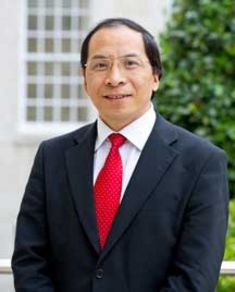
Dr. Jianhu Shen is a Lecturer in the School of Engineering at RMIT University, specializing in civil, materials, and mechanical engineering. His research focuses on structural design under dynamic loads, microstructural material design, auxetic materials, and numerical simulations. He is actively involved in supervising Masters and PhD students in areas like soil-structure interaction, fiber-reinforced composites, and fatigue optimization. Research Interests: Civil Engineering Materials Engineering Manufacturing Engineering Nanotechnology Condensed Matter Physics Auxetic Structures and Materials Recent Work Highlights: His publications span topics like dynamic levelling systems in agriculture, nanoscale friction analysis, and optimization of structures for minimum weight and fatigue resistance. He collaborates on projects involving graphene, carbon nanotubes, and metamaterials, emphasizing practical applications in construction and energy absorption. Labs/Teams: Collaborates on advanced materials and structural design projects within RMIT's School of Engineering.
Mateo Acosta is an Assistant Professor of Geomechanics at Virginia Tech, specializing in earthquake mechanics, crustal deformation, and geomorphic processes. He serves as Center Director of the Center for Geomechanics and Mitigation of Geohazards (GMG) and Associate Director of the Center for Autonomous Systems and Technologies, bridging geoscience with engineering applications. His research integrates field observations, seismological and geodetic measurements, remote sensing, and laboratory experiments to develop kinematic and dynamic models. Key projects include seismicity forecasting in subsurface engineering operations, hydrology-crustal deformation interactions, Martian dune dynamics, Himalayan and Tibetan tectonic studies, and postseismic deformation analysis. Recent publications focus on induced seismicity mitigation, geothermal reservoir optimization, fault hydraulic properties, and earthquake nucleation mechanisms. These works span 2017-2025 with recurring themes in geothermal energy applications, CO2 storage safety, and computational geomechanical modeling. Scientific awards : Resnick Graduate Scholar Acosta contributes to earthquake physics outreach through media appearances, including a PBS Interview on geothermal systems. His work connects geological processes with practical engineering solutions for geohazard mitigation.
Guido Ascari is a Professor of Economics at the University of Pavia and Economic Advisor & Head of Monetary Policy Research at De Nederlandsche Bank (DNB). Previously, he held a professorship at the University of Oxford (2014–2021). His research focuses on monetary economics, DSGE models, fiscal-monetary policy interactions, inflation dynamics, and expectations-driven fluctuations. He has published in top journals like the American Economic Review and Journal of Monetary Economics. Key research interests include the effects of government spending via tax foresight, fiscal policy’s role in Euro-area inflation, and the macroeconomic implications of inflation expectations. Recent work addresses green transition inequality and global supply chain pressures. Recent presentations include keynote roles at the 2024 Joint Workshop in Macroeconomics (Adelaide) and the Australasian Macroeconomic Society (Perth). Upcoming events include a seminar at the University of Ottawa’s Marleau Lecture Series (March 2025) on government spending and fiscal foresight. No explicit scientific awards are listed, but his extensive publication record reflects recognition in the field. He advises doctoral students through his academic role but no specific names are provided. Labs/teams: Affiliated with the University of Pavia’s Department of Economics and BDN’s Monetary Policy Research division. Active in CEPR’s Discussion Paper series and VoxEU columns.
Roles & Affiliations: Wenqing Hu is an Associate Professor of Mathematics at the Department of Mathematics and Statistics, Missouri University of Science and Technology (formerly University of Missouri, Rolla). He holds memberships in professional societies including The Bachelier Finance Society, INFORMS, SIAM, and the Society of Actuaries. Education: Ph.D. in Mathematics, University of Maryland at College Park (2013) B.S. in Mathematics, Peking University (2008) Research Interests: His work spans Probability (stochastic analysis, multiscale problems), Machine Learning (optimization algorithms, neural networks), Operations Research (smart grid systems), Math Biology (Ao's potential function), and Cryptology (zero-knowledge proofs in blockchain). Recent breakthroughs include contributions to zero-knowledge virtual machines and high-dimensional data analysis . Publications Overview: His 15 most recent works (2025-2012) span topics like cryptology (e.g., zkEVM), stochastic differential equations, and reinforcement learning applications in manufacturing. Key themes include stochastic processes, nonlinear optimization, and interdisciplinary applications in energy systems and biology. Awards & Grants: Miner Alumni Teaching Award (2018) Simons Foundation Collaboration Grant (2020-2025) NSF-funded travel support for the 2018 ICM Labs & Collaborations: Active in cross-disciplinary projects such as subspace indexing on Grassmann manifolds and nonlinear optimization in ML .
Dr. Andrey Launov is a Senior Lecturer in Labour Economics and Director of Graduate Studies at the University of Kent. His research employs microeconometric methods to evaluate labor policies and quantify workforce dynamics. Research focuses on unemployment flow analysis, job search monitoring systems, working time flexibility impacts, and informal employment in developing economies. Recent publications examine German unemployment reduction mechanisms and working time account effects on employee turnover. Supervision includes PhD candidates working on labor market informality and policy evaluation. As Director of Graduate Studies, he oversees MSc programs and leads the school's Macroeconomics, Growth and History research center initiatives.
Mikko Hokka is a Professor and Head of the unit in the Department of Materials Science and Environmental Engineering at the Faculty of Engineering and Natural Sciences, Tampere University. His research focuses on experimental characterization of material behavior under dynamic loading conditions, with particular emphasis on high and low temperature testing at high strain rates. He leads the Engineering Materials Science (EMS) group and is an active member of the DYMAT Governing Board since 2016. His research interests include developing experimental methods for studying dynamic phenomena such as strain-induced phase transformations in materials, percussive drilling of rocks and concrete, plastic deformation in high entropy alloys, and the effects of adiabatic heating on plastic deformation using high-speed imaging techniques. Key areas of expertise are mechanical testing, digital image correlation, infrared imaging, and the application of the Split Hopkinson Pressure Bar. His recent work spans dynamic material behavior, including investigations into phase transformations in steels, composite material failure under high strain rates, and geomechanical processes such as rock drilling. Hokka has also contributed to foundational texts like the 2024 anthology Dynamic Behavior of Materials , showcasing his leadership in advancing the field's theoretical and applied aspects. Notable contributions include studies on adiabatic heating effects in metals, piezoelectric excitation of quartz in granitic rocks, and energy quantification in percussive drilling. This interdisciplinary work bridges materials science with geomechanics and engineering, addressing challenges in both industrial and fundamental research contexts.
Shao Jian-Fu is an Exceptional class Professor of Civil Engineering at the University of Lille, France, a position he has held since 2010. He also serves as a Distinguished Professor of Geomechanics at Hohai University, China on a part-time basis. His academic career at the University of Lille has been progressive, having previously held positions as First class Professor (2001-2010), Second class Professor (1994-2001), and Associate Professor (1989-1994) of civil engineering. Professor Shao's educational background includes: 1992: Habilitation to supervise research (HDR) in Civil and Mechanical Engineering, University of Lille, France 1987: PhD in Civil Engineering, University of Lille, France 1984: Master in Solid Mechanics, University of Lille, France 1982: Bachelor in Hydraulic Engineering, China Agricultural University, China Professor Shao's research focuses on the mechanics of geomaterials and structures, with particular expertise in sequestration of CO2, thermo-hydromechanical and chemical coupling processes, and geological disposal of radioactive waste. His work spans multiple scales, from atomistic studies to field applications, and employs both experimental and computational approaches. He has made significant contributions to multi-scale modeling and the development of continuous and discontinuous numerical methods for geomechanical problems. His recent publications demonstrate a strong focus on phase-field modeling of cracking processes, constitutive modeling of heterogeneous and anisotropic materials, and the application of advanced computational techniques to geomechanical problems. His research has important applications in areas such as rainfall-induced landslides, radioactive waste disposal systems, and understanding the mechanical behavior of clayey rocks under various environmental conditions. Professor Shao has received numerous prestigious awards, including: 2023: Senior member of the Institut Universitaire de France (IUF) 2022: Chandrakant S. Desai Medal, IACMAG 2022: Maurice A. Biot Medal, ASCE 2021: Member of the European Academy of Sciences and Arts 2020: Member of the European Academy of Sciences 2019: Prize of Natural Science (2nd rank), Chinese Ministry of Education 2013: Prize of Science and Technology (2nd rank), Jiangsu Province, China 2012: Prize of Science and Technology (1st rank), The Chinese Association of Hydraulic Power 2011: Excellent contributions Award, IACMAG As a principal investigator, Professor Shao has led numerous significant research projects, including EU projects MAGIC and CEBAMA related to radioactive waste disposal, China State Key R&D projects on hydro-landslides, and various ANR and NSFC-funded projects. He has also served as an associate editor for several prestigious journals including the International Journal of Rock Mechanics and Mining Sciences and as a member of editorial boards for journals such as Computers and Geotechnics and International Journal of Plasticity. His extensive service includes reviewing for major funding agencies including the European Research Council, Swiss National Science Foundation, and Czech Science Foundation.
Dr. Xiaosheng Gao is a Professor and Associate Chair for Graduate Programs in the Department of Mechanical Engineering at the University of Akron's College of Engineering and Polymer Science. He joined UA in 2001, with prior roles including Assistant Professor at Northwestern Polytechnical University (China), visiting positions at the Royal Institute of Technology (Sweden) and the National University of Singapore, and a Summer Faculty Fellowship at the Office of Naval Research. His research focuses on mechanics of materials, computational modeling, fracture mechanics, and multi-scale material behavior. Education: Ph.D. (2008, Brown University), M.S. (2005, Brown University), M.S. (1990, Xi'an Jiaotong University), B.S. (1987, Xi'an Jiaotong University). Research interests include constitutive modeling of advanced materials, fatigue and fracture mechanics, micromechanics, and corrosion damage analysis. Recent studies emphasize hydrogen embrittlement, composite material behavior, and environmental effects on material degradation. His work integrates experimental and computational methods, with applications in aerospace, naval, and structural engineering. Key awards include the American Society of Mechanical Engineers Fellowship and the Office of Naval Research Young Investigator Award. His contributions span over 50 peer-reviewed articles, focusing on material failure mechanisms, corrosion, and multi-scale modeling. Courses taught include Dynamics, Finite Element Analysis, and Continuum Mechanics.
Wenwei Zheng is an Associate Professor at Arizona State University (ASU), affiliated with the School of Applied Sciences and Arts within the CISA initiative. He holds a PhD in Chemistry from Rice University (2017), followed by postdoctoral research at the NIH. His research focuses on computational methods to study intrinsically disordered proteins (IDPs) and their roles in membraneless organelles and pathological fibril formation. Key areas include liquid-liquid phase separation and protein interaction networks. Dr. Zheng leads the Zheng Biophysics Lab, leveraging grants from NIH-NIGMS, NSF, and NVIDIA GPU resources. He teaches courses in chemistry and scientific computing at ASU. Research interests emphasize biophysical modeling of IDPs, with recent work exploring salt effects on conformation, phosphorylation impacts on phase separation, and drug discovery targeting disordered regions. Over 50 publications span journals like PNAS , ACS Central Science , and Journal of Physical Chemistry . Collaborations include projects on FUS protein toxicity and estrogen receptor disorder. His lab's 2024 advancements include studies on α-synuclein aggregation and transient protein interactions. Grants include a 5-year NIH R35 MIRA award (2022) and NSF support for biodegradation studies. Notable achievements include Anton2 supercomputing allocations and NVIDIA GPU donations. The lab actively recruits students interested in computational biophysics and protein dynamics.
Clément Mazet-Sonilhac is an Assistant Professor at Bocconi University and an associate researcher at the Collège de France's Economics of Innovation Lab and the Innocenzo Gasparini Institute for Economic Research (IGIER). He previously worked as a Research Economist at Banque de France and visited MIT Sloan under David Thesmar. He earned his PhD from Sciences Po, Paris in 2021 under Thomas Chaney. His research focuses on technological change and financial intermediation, employing applied econometrics, structural modeling, and machine learning. Key areas include innovation, climate change impacts on financial markets, and poverty reduction strategies. His work bridges macroeconomic analysis with microeconomic behavior, addressing topics such as banking dynamics, tax policies, and digital infrastructure effects on outsourcing. Recent articles explore credit market frictions, NGO campaigns against fossil fuels, and the macroeconomic implications of corporate tax cuts. His analyses of broadband expansion and North Sea oil innovation highlight intersections of technology and economic structures. No scientific awards are explicitly mentioned, and he has not listed advisees. His affiliations include Bocconi's IGIER and the Collège de France's interdisciplinary labs.
Prof. Vasileios Angelidakis is a Professor at Friedrich-Alexander-Universität Erlangen-Nürnberg (FAU), specializing in Discrete Element Method (DEM) modeling, granular materials, and particle dynamics. His research focuses on numerical simulations of particulate systems, including particle shape characterization, DEM framework comparisons, and applications in additive manufacturing, railway ballast, and material science. He has collaborated internationally, contributing to open-source DEM software like MercuryDPM and Yade, and has published extensively on topics such as clump dynamics, thermal-particle interactions, and global benchmark studies on granular behavior. He has also worked on seismic engineering, analyzing structural responses to earthquake-induced ground motion. Education: PhD in Engineering (Newcastle University, 2022), MSc in Structural Engineering (National Technical University of Athens, 2016), Diploma in Civil Engineering (National Technical University of Athens, 2014). Research Interests: DEM modeling, particle shape effects, granular flow, computational mechanics, additive manufacturing processes, and seismic structural analysis. Publications highlight his work on open-source frameworks, particle morphology analysis, and validation studies across disciplines. His contributions include algorithms for rotational motion integration and tools like CLUMP and SHAPE for particle representation.
Emily Asenath-Smith is an Adjunct Assistant Professor of Engineering at Dartmouth College's Thayer School of Engineering and a senior research materials engineer at the U.S. Army Engineer Research and Development Center (ERDC) Cold Regions Research and Engineering Laboratory (CRREL) in Hanover, NH. She leads the Ice Adhesion Facility and the Advanced Materials Team, focusing on ice modulation, interfaces, and structural ice applications for military and civilian use. Her research sponsors include the U.S. Army, DARPA, NASA, and ONR. Education AB in Chemistry, Mount Holyoke College (2008) MS in Ceramic Engineering, Alfred University (2010) PhD in Materials Science and Engineering, Cornell University (2015) Research Interests Ice adhesion mechanisms and mitigation Thermal transport in crystalline materials Bioinspired hierarchical materials Strategic manipulation of material properties with solutes Her work bridges fundamental materials science with applied solutions for cold-region challenges, including ice prevention, energy-efficient materials, and high-performance ice structures. Awards & Activities NSF Graduate Research Fellowship (2008–2011) IGERT Traineeship in Advanced Materials (2011–2014) American Chemical Society membership (2008–present) Labs & Projects Her Advanced Materials Team develops novel methods for ice control and material synthesis, supported by patents like the 'Tribometer with real-time observation' (US 11835444) and 'Multi-spectral photocatalytic materials' (US 11298689). Research highlights include advancements in crystallization processes and bio-inspired composite materials.
Dr. Yongxian Tan is a Senior Lecturer in Finance at Curtin University's School of Accounting, Economics and Finance, within the Faculty of Business and Law. His research focuses on stock market anomalies, corporate governance, and the influence of information intermediaries in financial markets. He holds a PhD in Finance from Vanderbilt University and has held prior academic positions at the University of Otago and Shanghai University of Finance and Economics. Dr. Tan’s educational background includes a PhD from Vanderbilt University (USA), with earlier roles at international institutions. His research has been featured in top-tier journals such as the Journal of Financial Economics and Accounting Review. He actively contributes to academic governance, serving as Chair of the School’s Research Working Group (RWG) and member of the Financial Planning Advisory Board. His research explores behavioral finance topics like accruals seasonality, short seller monitoring, and female director dynamics. A notable 2022 study on the cash conversion cycle spread received media attention from Financial Times Alphaville. Dr. Tan has earned the Chartered Financial Analyst (CFA) designation and a Certified Public Accountant (inactive) credential, alongside the 2024 Best Paper Award for financial markets research. Teaching responsibilities include Financial Instruments and Markets, and Issues in Financial Planning Practices. His work bridges academia and practice, with a focus on Asia-Pacific financial dynamics and corporate innovation in emerging markets.
Paolo Castaldo is a Full Professor in the Department of Structural, Building and Geotechnical Engineering (DISEG) at the Polytechnic University of Turin, where he also serves as Deputy Director of the Department and Scientific Director of several national research projects. He is actively involved in teaching at both the undergraduate and PhD levels and is a member of the University Open Access Commission. His research interests include: Earthquake Engineering Structural Safety and Reliability Seismic Isolation using Friction Pendulum Systems (FPS) Reinforced Concrete Structures Bridges and Viaducts Numerical Modelling and Simulation Castaldo's recent publications focus on seismic performance, safety assessment, and reliability of isolated and reinforced concrete structures, often involving nonlinear finite element analysis and probabilistic evaluation. His work frequently addresses practical applications in bridge engineering, structural robustness, and retrofitting of existing infrastructure. Among his scientific contributions are leadership roles in PRIN-funded research projects such as 'Life-long optimized structural assessment and proactive maintenance with pervasive sensing techniques' and 'Data Fusion Based Digital Twins for Structural Safety Assessment'. He also leads commercial and departmental agreements involving structural safety assessments for public infrastructure. He supervises several PhD students, including Gabriele Neri, Guglielmo Amendola, Gaspar Andres Auad Alvarez, and Elena Miceli, guiding research on seismic reliability, impact mitigation in isolated structures, and robustness of concrete frames. His research is applied in real-world contexts, including collaborations with the ReLUIS Interuniversity Consortium and the Department of Civil Protection, as well as with the Archaeological Park of Paestum and Velia for structural assessment of historical sites.
Hai-Sui Yu is Professor and Chair in Geotechnical Engineering at the University of Nottingham, where he also serves as Dean of Engineering and founding Director of the Nottingham Centre for Geomechanics. He leads a major research group in geomechanics and is actively involved in international collaborations and editorial leadership. Education: M.Sc. in Rock Mechanics, Imperial College London, 1987 D.Phil. in Soil Mechanics, University of Oxford, 1990 D.Sc. (higher doctorate), University of Newcastle, NSW, 2000 Professor Yu's research centers on theoretical and computational geomechanics, with particular emphasis on constitutive modeling, in-situ soil testing, and geotechnical challenges in pavements and railways. His work integrates advanced plasticity theory, numerical simulation, and experimental validation to understand the behavior of cohesive-frictional materials under complex loading conditions. He has made significant contributions to shakedown theory, granular micromechanics, and slope stability under pore pressures. The analysis of his recent publications reveals a consistent focus on fundamental mechanics of geomaterials using analytical and numerical methods. Key themes include shakedown behavior under moving loads, micromechanical modeling of granular materials, and stability of slopes under hydraulic conditions—highlighting his expertise in both theoretical and applied geomechanics. Scientific Awards: Chandra Desai Medal (2008) ISSMGE J.K. Mitchell Lecturer (2004) Shamsher Prakash International Research Award (2003) ICE Telford Medal (2000) Australian Geomechanics Society Trollope Medal (1998) Professor Yu has played a significant advisory and leadership role in the geotechnical community. He is the founding Editor-in-Chief of the International Journal of Geomechanics and Geoengineering and serves on the editorial boards of leading journals including Geotechnique and ASCE Journal of Geotechnical and Geoenvironmental Engineering . He has been a member of ISSMGE Technical Committees TC3 and TC16 and served on the National Executive Committee of the British Geotechnical Association (2002–2004). His leadership extends to institutional roles such as Dean of Engineering and founding Director of a major geomechanics research center. He leads the Nottingham Centre for Geomechanics, one of the largest geotechnical research groups in the UK, which conducts interdisciplinary research in soil mechanics, infrastructure resilience, and computational modeling. The group collaborates internationally with institutions across the USA, Canada, Australia, Europe, and Asia.