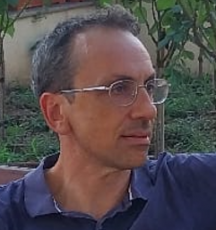
Karim Achab serves as a Part-time Professor in the Department of Linguistics within the Faculty of Arts at the University of Ottawa, holding dual teaching responsibilities in linguistics and French as a Second Language. His research centers on Amazigh studies with deep expertise in Tamazight (Berber, Kabyle, Tuareg) linguistics, spanning syntax, morphology, and lexical semantics. He maintains a strong focus on North African geopolitics alongside broader interests in bilingualism, language contact, heritage languages, dialectal variation, minority languages, and second-language pedagogy. His multilingual capabilities in French, English, Tamazight varieties, Hungarian, and Spanish directly inform his interdisciplinary approach to linguistic diversity. While the source text confirms his active faculty status and research domains, it does not specify details regarding student advising, grant funding, laboratory affiliations, or collaborative research teams. No information about scientific awards or publications was provided in this institutional profile.
Ana Teresa Pérez-Leroux is a Professor of Spanish and Linguistics and Chair of the Department of Spanish and Portuguese at the University of Toronto . She also serves as Director of the Cognitive Science Program. Her research focuses on child language acquisition, bilingualism, and Spanish syntax, with an emphasis on understanding how children learn complex grammatical structures. She holds a PhD in Hispanic Linguistics from the University of Massachusetts Amherst. Key affiliations include the Faculty of Arts and Science , where she has been a professor since 2009, and leadership roles such as Chair of Spanish and Portuguese (2019–present) and Director of Cognitive Science (2014–2019). Earlier roles include Visiting Professorships at the Federal University of Rio de Janeiro and Michigan State University. Research Interests : Her work investigates syntactic and semantic development in monolingual and bilingual children, particularly recursion in noun phrases, clitic usage, and tense/mood systems. Recent projects include SSHRC-funded studies on noun phrase complexity ($158,848, 2014–2018), revealing insights into recursive structures across languages like Japanese, German, French, Spanish, and English. Grants and Collaborations : Co-PI on SSHRC Insight Grant exploring recursive embedding in children. Collaborators include Susana Bejar, Diane Massam, and Yves Roberge. Supervises over 20 graduate students and has published extensively in Bilingualism: Language and Cognition , Linguistics , and Language . Education : PhD in Hispanic Linguistics (1993), MA in Spanish & Linguistics (1992), both from UMass Amherst. BA in Modern Languages (1983) from Universidad Autónoma de Santo Domingo.
Associate Professor Daniel Herscovitch is a renowned pianist and academic at the Sydney Conservatorium of Music, University of Sydney. He holds an Associate Professorship in Piano and has lectured on chamber music and piano pedagogy. His career spans extensive performances across Europe, Asia, and Australia, including collaborations with leading ensembles like the Australia Ensemble and Sydney Spring Festival of New Music. Education: Bachelor of Music (DSCM, Honours) Künstlerische Reifeprüfung (Munich) Meisterklassendiplom (Munich) Research Interests: Specializes in Baroque and Classical performance interpretation, particularly Bach’s Art of Fugue and Beethoven ornamentation. Active in commissioning contemporary works by Australian and international composers. His recordings span 17th to 21st century repertoire, with notable releases on Toccata Classics and ABC Classics. Performance Highlights: Includes tours in the USA, Indonesia, and Europe, with residencies at institutions like the Royal Northern College of Music. Notable performances include Hindemith’s Ludus Tonalis and Bartók’s Two-Piano Concerto. Awards: 2019 Gramophone Editor’s Choice for the Roger Smalley CD. Internationally acclaimed releases include works by Don Banks and Peter Dart. Grants & Collaborations: Supported by DAAD scholarships and has led projects with Musica Viva, the Seymour Group, and Sydney Southeast Asia Centre. His research bridges historical performance practices with contemporary composition. Labs/Teams: Involved in the Sydney Conservatorium’s chamber music programs and pedagogical initiatives. Regularly presents at conferences on topics like Bach interpretation and 20th-century piano techniques.
Ingrid Notarrigo is a researcher at the University of Namur specializing in sign language linguistics. Her work focuses on fluency/disfluency markers in French Belgian Sign Language (LSFB) and comparative studies with Flemish Sign Language (VGT). She contributes to the Lex-LSFB corpus project and co-leads research on bilingual education for deaf communities. Education: Completed a PhD in Languages, Letters and Translation (2017) at the University of Namur, supervised by Prof. Luc Meurant and Dr. Anne-Catherine Simon. Research interests include discourse analysis in sign languages, repetition functions, and sociolinguistic aspects of sign language use. Her work bridges theoretical linguistics with applied projects in deaf education and corpus development. Key contributions include developing disfluency annotation protocols and analyzing repetition patterns across signer proficiency levels. She actively participates in international sign language research networks and collaborates with institutions like the Ecole et Surdité (Namur).
Yvonne McLaren-Hankin is an Associate Professor in Languages & Intercultural Studies at Heriot-Watt University's School of Social Sciences. She holds leadership roles as Academic Dean of Arts, Humanities & Social Sciences, Chair of the University Studies Committee, and Vice-Chair of the University Committee of Quality & Standards. She previously led Postgraduate Programmes and the Department of Languages & Intercultural Studies. Her research focuses on business communication, linguistic features of corporate genres, and intercultural communication. She has published widely on topics like corporate press releases, reputation management, and cross-cultural promotional texts. Her work analyzes texts from industries like banking, pharmaceuticals, and luxury goods. Dr McLaren-Hankin teaches business communication at the Masters level and French-to-English translation at undergraduate level. She supervises dissertations and PhD theses in intercultural and business communication areas. She is a Senior Fellow of the Higher Education Academy and mentors early career academics. Her 15+ publications demonstrate expertise in corporate discourse analysis across sectors. Key themes include hedging in forward-looking statements, crisis communication in finance, and luxury brand communication strategies. She has presented at international conferences and collaborates with institutions like Palgrave Macmillan and the Higher Education Academy.
Professor Ailbhe Ní Chasaide at Trinity College Dublin is a leading figure in phonetics, with expertise in voice quality, speech production, and Irish language prosody. She established Trinity’s Phonetics & Speech Laboratory and leads a multidisciplinary team focused on speech technology and endangered language preservation. Education PhD Experimental Phonetics, University of Wales, Bangor (1985) MA Linguistics, University of Wales, Bangor (1977) Maîtrise ès Lettres French Literature, Université de Bordeaux (1975) BA French/German, University College Galway (1973) Her research explores how voice quality interacts with prosody to convey emotion and linguistic meaning, alongside pioneering work in documenting and preserving the Irish language through speech technology. Key areas include experimental phonetics, speech acoustics, and Irish dialect intonation. Recent publications highlight affective prosody, cross-language voice quality analysis, and Irish language revitalization. These works span acoustic modeling, synthetic speech applications, and the role of prosody in linguistic identity. Scientific Awards Elected member of the ISCA IAC (2021) Elected to Council of the International Phonetic Association (2019) Government of Ireland Senior Research Fellowship (2003) Fellow Trinity College Dublin (1998) Fulbright Senior Research Fellowship (1987) Senior Research Fellowship, Oxford University (1982) Professor Ní Chasaide mentors a team of postdocs, research assistants, and PhD students. She has co-founded Irish postgraduate programs in phonetics and supervised numerous researchers. Her projects, including ABAIR (€3.85m) and FastNet (€1.12m), focus on speech technology and social interaction studies.
Gilles Philippe is a full Professor of French Linguistics in the French Section of the Faculty of Letters at the University of Lausanne. He previously taught at multiple institutions including the Universities of Amiens, Grenoble, Paris III, Harvard, Columbia, and Helsinki. His research focuses on stylistics and pragmatics of literary texts, with an emphasis on 19th and 20th century French prose. Key works include *The Discourse in Itself* (1997), *Subject, verb, complement* (2002), and *French, the last of the languages* (2010). He is a contributor to the prestigious Gallimard's Bibliothèque de la Pléiade series. His academic journey began at the École Normale Supérieure. Research interests further include textual genetics and the evolution of literary styles. Recent scholarship explores narrative techniques, stylistic norms, and comparative linguistic analysis across historical periods. His publications span monographs, edited volumes, and peer-reviewed articles, reflecting a deep engagement with both theoretical linguistics and literary practice. His work frequently bridges historical linguistics and literary criticism, examining how stylistic choices reflect broader cultural shifts. Collaborations with international scholars and editorial contributions highlight his role as a leading figure in French literary studies.
Cyrille GRANGET is a Professor in the Department of Language Sciences at Toulouse Jean Jaurès University (UT2J), where he also serves as Director of the NeuroPsychoLinguistics Laboratory (LNPL, UR4156). He is actively involved in academic governance, holding elected positions in the Departmental Council of Language Sciences, the CLESCO Doctoral School Council, and the Qualified Scientific College (CSQ). He is also the Educational Coordinator for International Relations and outgoing mobility in Language Sciences. His research lies at the intersection of linguistics, cognition, and education, with a strong focus on second and third language acquisition. Key interests include: Linguistic and cognitive representation of events in L2 Inflectional verbal morphology in L2 French Effects of orthography and metrical structure on pronunciation Role of context, prior languages, and literacy in language learning Sociolinguistic variation and critical appropriation of dominant varieties Language acquisition among migrant populations His recent publications reflect a multidisciplinary approach combining psycholinguistic experiments (eye-tracking), computational modeling, and sociolinguistic fieldwork. He frequently collaborates across languages including French, German, Japanese, Spanish, Arabic, and Portuguese, often in educational or migratory contexts. His work is published in journals such as Languages , Education Sciences , and Revue Romane , and presented at major conferences like EuroSLA and CMLF. Scientific contributions and service include: Member of the editorial board of Langage, Interaction, Acquisition (LIA) Member of the office of the Thematic Network Recherche en Acquisition des Langues Secondes (RéAL2) Participant in the Toulouse Political Ecology Workshop (Atecopol) Supervision of multiple research projects and students in linguistics and language education He is deeply committed to inclusive language education, particularly for newly arrived migrant adolescents, and integrates theoretical linguistics with practical pedagogical applications. His leadership in LNPL and involvement in national research networks underscore his significant role in advancing psycholinguistic and sociolinguistic research in France.
Dragana Drobnjak is a Full Professor at the Department of French Language and Literature , Faculty of Philosophy, University of Novi Sad. She has held academic positions since 1996, progressing from assistant to associate professor (2014) and full professor (2019). Education: MA (2000) and PhD (2008) in French Language and Literature from University of Novi Sad. Research Focus: Specializes in Romance studies, semantics/pragmatics, contrastive linguistics, and linguoculturology. Key Courses: Morphosyntax of French, Lexicology, Comparative Phraseology, and Contact Linguistics. Her research explores lexical and phraseological interactions between French, Italian, and Serbian, with emphasis on false friends, metaphorical concepts (money, death, soul), and cultural semantics. She received a Swiss Confederation Scholarship (2005/2006) for research at the University of Lausanne. Scientific Awards: Swiss Confederation Scholarship (2005/2006)
Vanja Manić-Matić is a Senior Lecturer in the Department of Romance Studies at the Faculty of Philosophy, University of Novi Sad (Serbia). With over a decade of academic experience, she specializes in French language education and francophone studies. Education French language and literature (2004) Master's in French linguistics (2009) Doctorate in Francophone studies (2017) Her research focuses on francophone studies, modern French language and linguistics, educational methodology, didactics, and translation studies. She has explored Quebec French, Swiss French, and Belgian French through multiple publications, with particular emphasis on cultural representation in language education. Her recent publications examine linguistic variations in French dialects and their pedagogical applications, highlighting Francophone cultural elements in foreign language teaching. These works span topics including Quebecois stereotypes in authentic materials, Amerindian influences in French vocabulary, and the use of multimedia in language instruction. Scientific Awards Translation scholarship from French Ministry of Culture - National Center for the Book (Paris, France), 2006 She participated in the Serbian Ministry of Education's 'Languages and Culture in Time and Space' (project 178002) and received professional training in France (Paris, Arles, Bordeaux, Montpellier) and international conferences. She has developed courses in French as a foreign language, translation techniques, and modern French methodology.
James William Underhill is a Professor at the University of Rouen Normandy, affiliated with the ERIAC research unit (Ethnolinguistics and Critical Thinking). He holds a position in the UFR Letters and Human Sciences, specializing in ethnolinguistics, translation studies, and cultural concept analysis. His work explores how language shapes worldviews through studies of key terms like truth, love, hate, and war. Underhill has authored influential books such as *Ethnolinguistics and Cultural Concepts* (2012) and *Migrating Meanings* (2019), and contributes to journals like *Problemy Języka i Kultury*. He frequently collaborates internationally, including as a Distinguished Visiting Scholar at the Australian National University (2018) and co-organizing global conferences like *Cultural Linguistics for Today’s Europe* (2016). His research integrates philosophy, poetics, and sociolinguistics, with a focus on translation’s role in cultural mediation. Underhill’s academic leadership includes editorial roles for journals such as *Etnolingwistyka* and membership in international scientific boards. He actively promotes interdisciplinary dialogue through initiatives like the Rouen Ethnolinguistics Project (REP), which hosts conferences on topics like *Translating Hearts & Parts* (2019) and *Homelands & Heartlands* (2018). His teaching includes research seminars on translation theory and linguistic worldview analysis.
Laurence Bachmann is an Associate Professor at the Geneva School of Social Work (HETS-GE), part of the Western Switzerland University of Applied Sciences (HES-SO). She works within the Social Work Department and the Social Research Center (CERES), with additional involvement in the VisionS - HES Health-Social Continuing Education Center. Her academic position focuses on gender studies, social work practices, and personal transformation processes. Professor Bachmann's research interests center on gender and social work, particularly the transformation of gendered dispositions, becoming a feminist, the appropriation of social sciences, and sociology of self-knowledge tools. Her work examines how individuals transform their gendered dispositions through engagement with feminist ideas and social science knowledge. She has conducted significant research on nonviolent communication, debt management in social work, and masculinity studies. Her publication trends reveal a consistent focus on gender transformation processes, social work practices, and personal development techniques. Recent work (2023-2025) increasingly examines embodied leadership, reflective practices in social work management, and the experiences of men transforming their relationship to dominant masculinity. Throughout her career, she has maintained a strong focus on how social science knowledge is appropriated to transform gendered dispositions and practices. Professor Bachmann led a major SNSF-funded research project (2020-2024) titled 'Personal development: a cross-cutting sociological analysis of popular techniques of the self and their scope' with a budget of 406,407 CHF. This project examined nonviolent communication across different contexts including French-speaking Switzerland and California, analyzing how individuals appropriate these techniques and transform their dispositions. The research took an intersectional approach considering gender, class, and other social positions. She has collaborated extensively with colleagues including Anne Perriard, Sophie Rodari, Anne Ronchi, and Francis Loser, often working in interdisciplinary teams that bridge sociology, social work practice, and organizational development. Her research frequently connects theoretical frameworks with practical applications in social work settings.
Oreste Floquet is an Associate Professor in the Department of European, American and Intercultural Studies at Sapienza University of Rome. His academic work focuses on French linguistics with special expertise in African Francophonies, particularly in Niger and West Africa. Professor Floquet's research spans multiple linguistic subfields including sociolinguistics, historical linguistics, phonology, syntax, and language acquisition. His work consistently examines language variation in postcolonial contexts, with particular attention to metalinguistic awareness - how speakers perceive and reflect on their own language use. His publications demonstrate expertise in analyzing French language phenomena across diverse contexts including metropolitan France, West Africa, and Italy. Analysis of Professor Floquet's recent publications reveals a strong emphasis on African Francophonies, with numerous studies examining French language variation in Niger, Ivory Coast, and Benin. His research explores the intersection of linguistic theory and sociolinguistic reality, particularly focusing on phonological phenomena like liaison, syntactic structures including negation and pronominal verbs, and orthographic awareness in multilingual contexts. A recurring theme throughout his work is the relationship between language structure and speaker perception. Professor Floquet teaches French language and linguistics across multiple degree programs at Sapienza University, including courses for Sustainable Tourism Sciences, Modern Philology, History/Anthropology/Religions, Linguistics, Intercultural Mediation, and Fashion Sciences. He works with teaching assistants Marta Tomassetti and Martina Bocci to support students with exam preparation and materials. His office hours are available by appointment in room 336 (third floor, Marco Polo building) or via Zoom.
Arianna Punzi is a Full Professor at the Department of European, American and Intercultural Studies (Sapienza University of Rome), specializing in medieval Romance philology and literature. Focus on Arthurian cycles (Lancelot-Graal, Guiron le Courtois) Expertise in Dante's Inferno and classical myth reception Conducts textual criticism and intercultural narrative analysis Recent publications explore emotional themes in medieval texts, manuscript traditions, and cross-cultural adaptations. She leads research projects on Ernesto Monaci's archive digitization and teaches courses in Modern Philology. Her work engages with the ERC SH5_2/SH5_3 projects, emphasizing textual history and digital humanities approaches.
Dr. Jean-Guy Mboudjeke is an Associate Professor of French Studies at the University of Windsor's Department of Languages, Literatures and Cultures, where he has been teaching since 2006. He is also a distinguished Killam Scholar with expertise in the sociolinguistics of translation. Education: PhD in French Studies (Sociolinguistics of Translation) - Dalhousie University, Halifax, Nova Scotia MA in Education - Cameroon (1996) BA in French and English Studies - Cameroon (1994) Research Focus: Dr. Mboudjeke's scholarly work centers on the intersection of language, culture, and translation. His research encompasses contrastive discourse analysis , examining how different languages structure meaning and how this affects translation practices. He is particularly interested in translation studies , exploring both theoretical frameworks and practical applications. His work on languages in contact investigates the dynamics between French, English, and indigenous languages in multilingual societies like Cameroon and Canada. Additionally, he contributes to language teaching methodologies , particularly in French as a second language contexts. Publication Trends: Dr. Mboudjeke's publications demonstrate a consistent focus on translation challenges in multilingual contexts, particularly between English and French. His work spans literary translation, audiovisual translation (including The Simpsons dubbing), and the sociolinguistic implications of translation choices. Notable themes include ethical considerations in translating heterolingual texts, the pidginization processes in subtitling, and the politics of translation in officially bilingual nations. Scientific Recognition: Killam Scholar - A prestigious recognition of research excellence in Canada Teaching Experience: Before joining University of Windsor in 2006, Dr. Mboudjeke taught at multiple Canadian institutions including University of Regina (2005-2006), Saint Mary's University (2005), and Dalhousie University (2001-2005). His teaching portfolio includes courses in French Language, General Linguistics, Sociolinguistics, Translation Theory and Practice, and Phraseology.