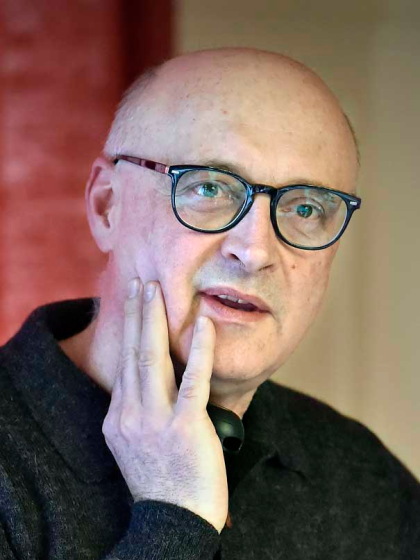
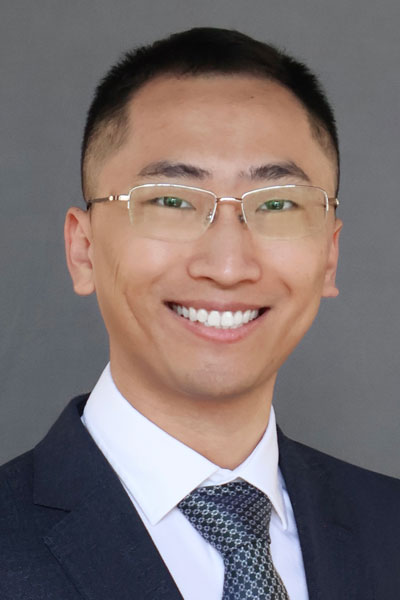
Mario Marinelli is an Associate Professor at the University of Sannio , affiliated with the Department of Transport under the School of Engineering . His research focuses on sustainable mobility, freight transport optimization, hydrogen vehicle applications, and emission reduction strategies. Academic Rank: Associate Professor University: University of Sannio School: School of Engineering Department: Department of Transport Research Interests: Marinelli's work spans transportation systems, with emphasis on low-emission vehicles, fuel cell electric freight transport, and algorithmic approaches to traffic assignment. He has contributed to hydrogen infrastructure modeling, waste management optimization, and demand-responsive urban mobility solutions. His studies frequently involve simulation models and policy impact assessments. Publication Trends: Recent articles address eco-ADAS systems, freight network design, and hydrogen traction. Subfields include emission reduction at signalized intersections, multi-objective transport optimization, and berth allocation using bio-inspired algorithms. Keywords span sustainability, freight logistics, and computational methods.
Li-Lian Gao is an Associate Professor in the Department of Management and Entrepreneurship at the Business School of Hofstra University. He holds a Ph.D. and MBA from Indiana University Bloomington and a B.S. from Shanghai Institute of Mechanical Engineering. His academic career includes prior teaching roles at Indiana University and Shanghai Institute of Mechanical Engineering. B.S., Shanghai Institute of Mechanical Engineering M.B.A., Indiana University Bloomington Ph.D., Indiana University Bloomington Dr. Gao's research centers on operations and supply chain management, with emphasis on distribution systems design , facility location , distributed data networks , multi-echelon inventory systems , and fixed charge network programming . His work applies quantitative and optimization techniques to solve complex logistical and operational problems in both industrial and service sectors. His publications appear in leading journals such as Management Science , Naval Research Logistics , Decision Sciences , and European Journal of Operational Research , reflecting a consistent focus on applied operations research and decision modeling. The articles demonstrate strong methodological rigor and practical relevance in logistics, network design, and inventory optimization. Dr. Gao is a member of several professional organizations including the Decision Sciences Institute , Institute for Operations Research and the Management Sciences (INFORMS) , and the Production and Operations Management Society (POMS) . He has advised various undergraduate courses including Introduction to Operations & Supply Chain Management (MGT 110) , Management Systems (MGT 114) , Business Process Management (MGT 143) , and Business Internship (MGT 174) . While no specific grants or student advisees are mentioned, his research output and professional affiliations indicate active engagement in scholarly activities. There is no mention of lab affiliations or research teams, but his publication record suggests independent and possibly collaborative research in operations management and logistics.
Dr. Jakub Marcinkowski is an academic researcher and lecturer at the Department of Strategic Management and Logistics within Wrocław University of Economics’ Jelenia Góra Branch. His research focuses on logistics optimization, humanitarian supply chains, and strategic management in the digital economy. He holds multiple prestigious awards including the Young Scientists Program laureate distinction and a nomination for the 'Iuvenes Wratislaviae' Award. His work bridges theoretical frameworks with practical applications in disaster response logistics and sustainable e-commerce delivery systems. Education details are not explicitly listed, but his academic contributions span over 20 years with publications addressing humanitarian logistics in disaster-prone regions like ASEAN and Brazil/Poland comparisons. He actively participates in international research networks under grants such as the National Science Centre and Horizon2020 programs. Research interests prominently feature cross-sectoral collaboration in humanitarian networks, digital transformation of logistics, and circular economy principles. His publications analyze stakeholder perspectives in urban last-mile delivery sustainability and demonstrate methodological expertise in comparative studies using tools like Promethee decision-making frameworks. Grants & Projects: Dekaban-Liddle Fellowship (2025-2026), Horizon2020 collaborations Awards: Santander Universidades Scholarship, Young Scientists Program recognition He serves as a reviewer and member of organizations including the Polish Economic Society and Polish Logistics Society. His work often emphasizes resilience in supply chains through staff exchange programs and inter-organizational partnerships.
Dr. Mehrnaz Ghamami is an Associate Professor and Associate Chair for Undergraduate Studies in the Department of Civil and Environmental Engineering at Michigan State University's College of Engineering. Her research focuses on sustainable transportation systems, including transit operations, travel reliability, and electric vehicle policy. She has developed comprehensive models for analyzing electric vehicle adoption policies and has conducted funded research on urban travel reliability using GPS data and bus route efficiency for the Chicago Transit Authority. Education: Ph.D., Civil and Environmental Engineering, Northwestern University (2015) M.S., Civil and Environmental Engineering, Northwestern University (2015) B.S., Civil Engineering, Sharif University of Technology (2008) Her research interests emphasize integrating transportation demand with energy communities, developing activity-based models for EV infrastructure, and leveraging machine learning for winter maintenance operations. Key publications address charging infrastructure deployment, autonomous vehicle impacts, and sustainable urban freight systems. Awards: 2024 and 2023 TRB Recognition for Subcommittee Leadership 2019 Walter & Pauline Adams Academy Fellow 2015 Oakton College Critical Thinking Teaching Certificate Dr. Ghamami has coordinated interdisciplinary research initiatives, including workshops on integrated transport modeling. She advocates for instructional innovation through her teaching roles and has contributed to policy frameworks for sustainable transportation networks.
Nick Szirbik is a Lecturer at the University of Groningen (RUG), Faculty of Science and Engineering, affiliated with the Engineering and Technology Institute Groningen (ENTEG). He holds a PhD in Computer Science from Politehnica University of Timisoara and has extensive postdoctoral and professional experience in agent-based systems and systems engineering. Education: Dipl. Eng. in Computer Science & Engineering (Politehnica Timisoara, 1987) PhD in Computer Science (Politehnica Timisoara, 1997), focusing on neural networks and distributed computing Postdoc at TU Eindhoven (1998-2000) in agent-based systems and enterprise modeling Research Interests: Agent-based serious gaming for infrastructure design Complex systems modeling in energy and logistics Multi-agent systems for supply networks and virtual enterprises Integration of AI techniques with industrial systems Key Projects: EU-funded projects: REWERSE, TraSer, EDGAR/GISEmarket National projects: CASIMIR (Dutch energy research) Development of simulation frameworks for supply chain and energy systems Teaching: Systems Engineering courses for MSc programs Undergraduate courses in Industrial Engineering and Management Past expertise in programming languages and neural networks Labs/Teams: Active contributor to ENTEG's systems engineering research group, focusing on interdisciplinary systems modeling and serious gaming applications.
Hongyu Zheng is an Assistant Professor in the Department of Industrial and Systems Engineering and holds a courtesy appointment in Civil and Environmental Engineering at the University of Tennessee, Knoxville (UTK), within the Tickle College of Engineering. He leads the Electrified, Autonomous, and Shared Transportation (EAST) Lab, focusing on next-generation mobility systems. Ph.D. in Transportation System Analysis and Planning, Northwestern University, 2024 M.S. in Civil and Environmental Engineering, Northwestern University, 2024 M.S. in Transportation Engineering, Zhejiang University, 2019 B.Eng. in Civil Engineering, Zhejiang University, 2016 Dr. Zheng's research lies at the intersection of industrial engineering and mobility, emphasizing data-driven modeling, optimization, and economic analysis. His methodologies include applied economics, game theory, machine learning, bi-level optimization, and network modeling. Key application areas include autonomous transportation, shared mobility systems, transportation electrification, smart logistics, and equity in transit. His work aims to improve the efficiency, sustainability, and fairness of urban transportation networks. The recent publications reflect a strong trend toward integrating economic and behavioral modeling with advanced computational techniques to solve complex mobility challenges. His research spans theoretical modeling (e.g., game-theoretic competition in bikesharing) and real-world applications (e.g., impact of ridesplitting, pandemic effects on taxi markets). There is a clear focus on emerging technologies like autonomous vehicles, modular passenger-freight systems, and AI-based forecasting tools, often validated with real-world datasets from cities like Shenzhen and Hangzhou. Scientific contributions have been recognized through publications in top journals such as Transportation Science , Transportation Research Part A/B/C , and IEEE Transactions on Intelligent Transportation Systems . Notably, he received the Best Paper Award at the 9th International Workshop on Computational Transportation Science (CTS) in 2017. Dr. Zheng is actively involved in mentoring and research funding. He is currently recruiting fully funded Ph.D. students for Fall 2025 or Spring 2026. He also welcomes remote undergraduate and graduate visitors. While specific grants are not listed, his active lab and publication pipeline suggest ongoing research support. He teaches IE 430/530 (Supply Chain Engineering) and IE 691 (Advanced Topics: Game Theory and Its Applications in Mobility Systems). He leads the Electrified, Autonomous, and Shared Transportation (EAST) Lab at UTK, which focuses on innovation in sustainable and intelligent mobility. The lab integrates methodological advances in optimization, machine learning, and economics to design and analyze future transportation systems. Current research directions include modularity in co-modal transport, ethical transit pricing, and competition dynamics in shared mobility markets.
Richard Kotter is an Anglo-German economic and political geographer affiliated with Northumbria University. His research focuses on regional economic development in border regions, ecological modernization, urban futures, disaster-risk reduction through rights-based approaches, and Holocaust/genocide education. He actively contributes to Amnesty International as a national volunteer coordinator and member of their Case Management Group, emphasizing human rights campaigning and impact evaluation. Kotter leads the EVOLVE project (2023-2025), a €79,286 initiative exploring electric vehicle infrastructure optimization. His interdisciplinary work spans sustainable energy systems, smart cities, and mobility equity, with notable outputs in disaster resilience, EV charging innovation, and urban technology dynamics. He holds a Fellowship from the Royal Geographical Society (2003) and has contributed to global sustainability initiatives like the York City of Human Rights project. Professional activities include invited talks on carbon capitalism, mobility-energy-grid integration, and international emergency services collaboration. Kotter’s academic background includes a PGDip in Research Methods (1994), MA/BSc in Geography (1993-1994), and extensive fieldwork in Poland, Germany, and Newcastle. His research bridges academia with grassroots activism, emphasizing marginalized communities’ empowerment through policy and design.
Professor Philip Rogers holds multiple prestigious professorial roles including Honorary Professor at the University of Plymouth (Shipping & Logistics), Professor of Commodity Trade/Shipping Economics at Frederick University (Cyprus), and academic positions at Middlesex Business School, Hamburg School of Transport, Copenhagen Business School, and London Metropolitan University. He has extensive industry experience as Global Head of Research & Analysis at Galbraiths Shipbrokers, Head of Consultancy at ICAP London, and Head of Research at Simpson, Spence & Young Shipbrokers. His research focuses on maritime economics, bulk commodity trade dynamics, and freight market forecasting. Specializations include dry bulk freight analysis, coal/oil/grain transport economics, and strategic maritime logistics. He teaches maritime strategy and supply-demand modeling at undergraduate and postgraduate levels globally. Professor Rogers has supervised PhD/MSc/MBA/BSc research degrees across multiple institutions. His 40+ year career bridges academia and industry through roles at major shipping firms and commodity brokers. No specific scientific awards are listed, but his industry leadership positions reflect professional recognition.
Dongjun Li is an Assistant Professor at Northumbria University, specializing in the Marketing Operations and Systems Department. Her research bridges theoretical and applied domains within operations management, with a focus on pricing and revenue management, game theory, and business analytics. Prior to her academic career, she spent 16 years in railway project management. PhD in Operations Management, Newcastle University (2019) Funded by EPSRC and Network Rail Her work applies advanced mathematical and computational methods, including stochastic programming and artificial bee colony algorithms, to address complex challenges in transportation systems, smart grids, and environmental monitoring. She has developed innovative tools for the UK railway infrastructure manager and published 5 peer-reviewed articles. Current research explores: Railway network revenue management Smart grid energy load analysis UAV-based maritime pollution monitoring GNSS data optimization
Ersin Korkmaz is an Associate Professor in the Department of Civil Engineering at Kırıkkale University , specializing in Transportation Engineering . His academic journey includes dual bachelor's degrees from Erciyes University (Electrical and Civil Engineering, 2011-2012), a master's degree in 2016, and a doctorate in 2019. Expertise in optimization algorithms (flower pollination, differential evolution, YOLO-based models) Research focuses on transportation energy demand, smart traffic systems, and UAV-based intersection analysis Developed hybrid AI control systems for signalized intersections Contributor to bibliometric studies in banking and accounting sectors His work bridges civil engineering and computational methods, with recent publications analyzing traffic safety, energy forecasting, and infrastructure optimization. Notable trends include integration of metaheuristic algorithms for transportation modeling and applications of drone imaging in urban mobility.
Nevin Mutlu is an Assistant Professor in the Operations Planning, Accounting & Control (OPAC) Group within the School of Industrial Engineering at Eindhoven University of Technology (TU/e). She is affiliated with multiple research centers including the Data Science Center Eindhoven (DSC/e), Efficient Consumer Response (ECR) Community, Retail Operations Lab, and Freight Transport & Logistics Research Group. Her industry partnerships include Nike and the ECR Community, demonstrating strong connections between her academic research and practical retail applications. Dr. Mutlu received her PhD and MSc degrees in Industrial and Systems Engineering from Virginia Tech, USA in 2016 and 2013, respectively. She also holds a BSc degree in Industrial Engineering and a BA degree in Economics from University at Buffalo, State University of New York, USA. Prior to joining TU/e in 2016, she served as a graduate teaching assistant and instructor at Virginia Tech, teaching courses in operations research and working with the Office of Emergency Management on real-world applications. Her research bridges optimization, economics, and marketing to address industry-relevant problems in retail operations and logistics. She specializes in modeling how operational decisions impact consumer behavior, with particular focus on retail pricing, experiential retail, e-commerce adoption, and transportation systems. Her interdisciplinary approach combines theoretical optimization techniques with practical business considerations, resulting in impactful research that addresses current challenges in retail and supply chain management. Analysis of her publications reveals a strong trajectory in operations research with increasing focus on consumer behavior dynamics. Her work spans theoretical optimization methods (resource allocation, production-routing problems) and applied retail contexts (experiential retail, dual-channel strategies). Recent publications show growing interest in sustainability aspects of retail operations and transportation, reflecting contemporary industry challenges. Her research consistently addresses the complex interplay between operational decisions and consumer responses, providing valuable insights for both academia and industry. EU Horizon 2020 Marie Curie Individual Fellowship (2018-2020) Dr. Mutlu actively contributes to research funding through projects like SYNERCIZE: SYnchromodal Transport NEtworks for a Construction Industry towards Zero Emissions (2025-2027), where she serves as a project member. Her teaching portfolio includes Supply Chain Management, Revenue Management and Pricing Analytics, and Project and Process Management courses. She has also served on committees such as the AI Planner of the Future program, demonstrating engagement with emerging technologies in her field. Her research is supported by multiple affiliations including the Data Science Center Eindhoven, ECR Community, and Retail Operations Lab, providing collaborative environments for interdisciplinary work. Her industry partnerships, particularly with Nike, facilitate the translation of academic research into practical retail solutions. The SYNERCIZE project demonstrates her expanding research scope into sustainable transportation networks for construction industries.
Karel van Donselaar is an Assistant Professor at Eindhoven University of Technology's Industrial Engineering and Innovation Sciences department. His research focuses on Retail Operations and Supply Chain Management , with particular emphasis on automated replenishment systems, perishable product logistics, and operational efficiency improvements. Primary Research Areas: Inventory policy optimization, freight accessibility analysis, food waste reduction Key Methodologies: Gravity modeling, stochastic operations management, empirical data analysis His publications demonstrate significant contributions to retail efficiency, including 8% cost reduction potential through DC unpacking and 43.1% waste reduction via shelf life extension. He has received international recognition through a Fulbright Grant. Scientific Awards Fulbright Grant (1998) Van Donselaar collaborates extensively with Dutch retailers and has developed innovative approaches to planogram optimization and logistics employment analysis. His work bridges theoretical modeling with real-world implementation across multiple sectors including pharmaceuticals and automotive supply chains.
Sinem Tokcaer is an Assistant Professor in the Logistics Management Department at Izmir University of Economics . She holds a PhD in Business Administration from the same institution and completed postdoctoral research at the University of Illinois Urbana-Champaign. With six years of professional experience in logistics companies, she specializes in mathematical modeling and data analytics for logistics systems design and analysis. Education PhD in Business Administration (2018), Izmir University of Economics M.A. in Maritime Transportation and Logistics (2010), Dokuz Eylül University B.A. in European Union Relations (2005), Bahçeşehir University Her research focuses on multimodal transportation optimization, contract design in biofuel enterprises, and dynamic capabilities in logistics operations. She co-founded a startup providing decision support systems for long-haul logistics providers. Recent publications address bi-objective transportation planning, cellulosic biofuel contract mechanisms, energy security frameworks for Turkey, and timely delivery optimization in logistics networks. These works span operations research, supply chain analytics, and sustainability-focused logistics.
Prof. Dr. Michael Schüller is a Professor of Management and Supply Chain Management at the Faculty of Management, Culture and Technology (Campus Lingen) of Osnabrück University of Applied Sciences. He completed his doctorate at the University of Bremen (1999-2002) and was appointed Honorary Professor at Hefei University in 2011. His work bridges academic research, industry collaboration, and international policy analysis. Education: Diplom in Wirtschaftsinformatik (University of Bamberg, 1987-1992), Dr. rer. pol. (University of Bremen, 1999-2002) Research Focus: Prof. Schüller specializes in Supply Chain Management , China Logistics , and Process Management . His work addresses the intersections of Industry 4.0 , Global Trade , and Intercultural Collaboration , particularly in Germany-China contexts. He has led initiatives like the Logistik 4.0-Labor in Hefei and co-developed the LOGinCHINA program. Recent Publications (2024-2015) analyze trends in Transportation Infrastructure , Blockchain Adoption , and the Belt and Road Initiative . Key themes include Digital Transformation in logistics, Strategic Development of freight networks, and Cross-Border Collaboration . Scientific Awards: Huangshan-Freundschaftspreis (2017), Ehrenprofessor Hefei University (2011) Labs & Projects: He co-founded the Logistik 4.0-Labor in Hefei and leads research on China-Europe Logistics . His work engages with the Asian German Knowledge Network and EXCHAiNGE initiatives.
Dr. Panagiotis Repoussis serves as Associate Professor of Operations Research and Supply Chain Management at the Department of Marketing and Communication within the School of Business at Athens University of Economics and Business (AUEB). Previously, he held positions as Assistant Professor at Stevens Institute of Technology and visiting Lecturer at the University of Piraeus and Bayes School of Business at City University of London. His academic foundation includes a Diploma in Chemical Engineering from the National Technical University of Athens (2002), followed by graduate studies at Imperial College London and AUEB where he completed his doctoral dissertation in November 2008. His educational trajectory reflects a strategic shift from chemical engineering to operations research specialization. Dr. Repoussis specializes in Operations Research with concentrated expertise in Supply Chain Management , Vehicle Routing and Scheduling , and Production Systems Optimization . His research integrates mathematical modeling with computational intelligence to solve complex combinatorial optimization problems across logistics networks, manufacturing operations, and transportation systems. Key methodological contributions include advanced algorithms for dynamic scheduling under uncertainty and real-time decision support frameworks. Analysis of his 15 most recent publications (2019-2025) reveals a strong research trajectory toward Industry 4.0 applications, with increasing focus on IoT/AGV integration in manufacturing, disruption-resilient logistics, and robust optimization under stochastic conditions. Vehicle routing problems remain his dominant research theme, now extended to cross-docking operations, profit-oriented routing, and humanitarian logistics contexts. As principal investigator, Dr. Repoussis has secured research funding from NSF, EU programs, non-profit organizations, and private sector partners across Europe and North America. His academic service includes editorial board membership for Transportation Research Part E and Advances in Operations Research, leadership roles in the Hellenic Operational Research Society and Production and Operations Management Society, and organization of major conferences including Odysseus and MathSports. His professional activities demonstrate deep engagement with both theoretical advancements and practical implementations, particularly through development of decision support systems for waste management, healthcare logistics, and energy-aware production scheduling. Current initiatives emphasize the convergence of prescriptive analytics with emerging digital technologies in operational planning contexts.