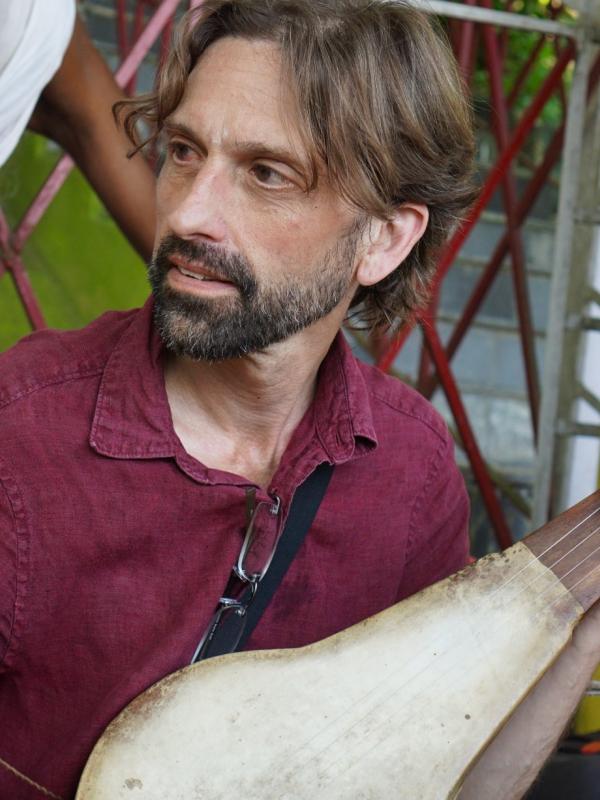
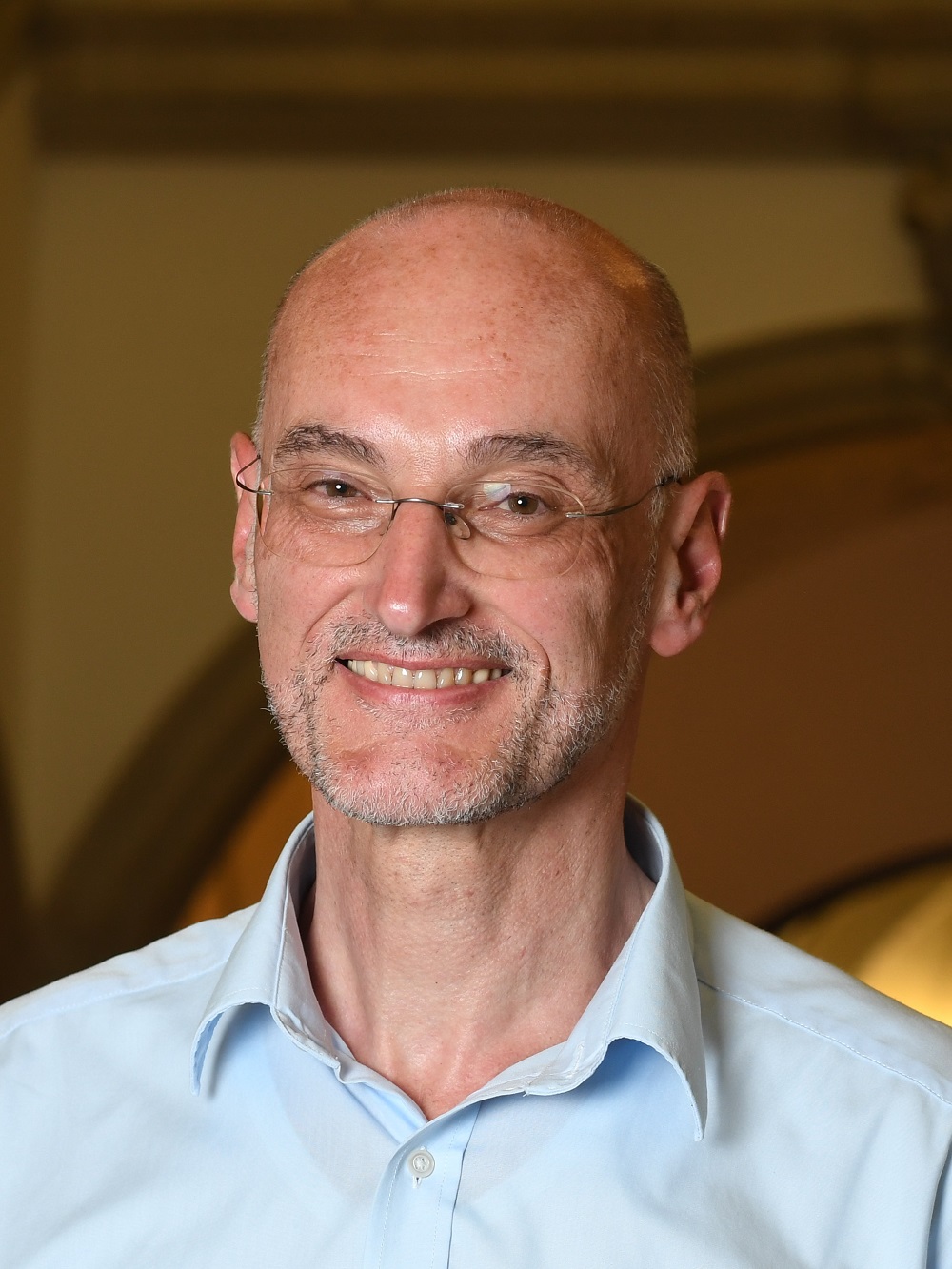
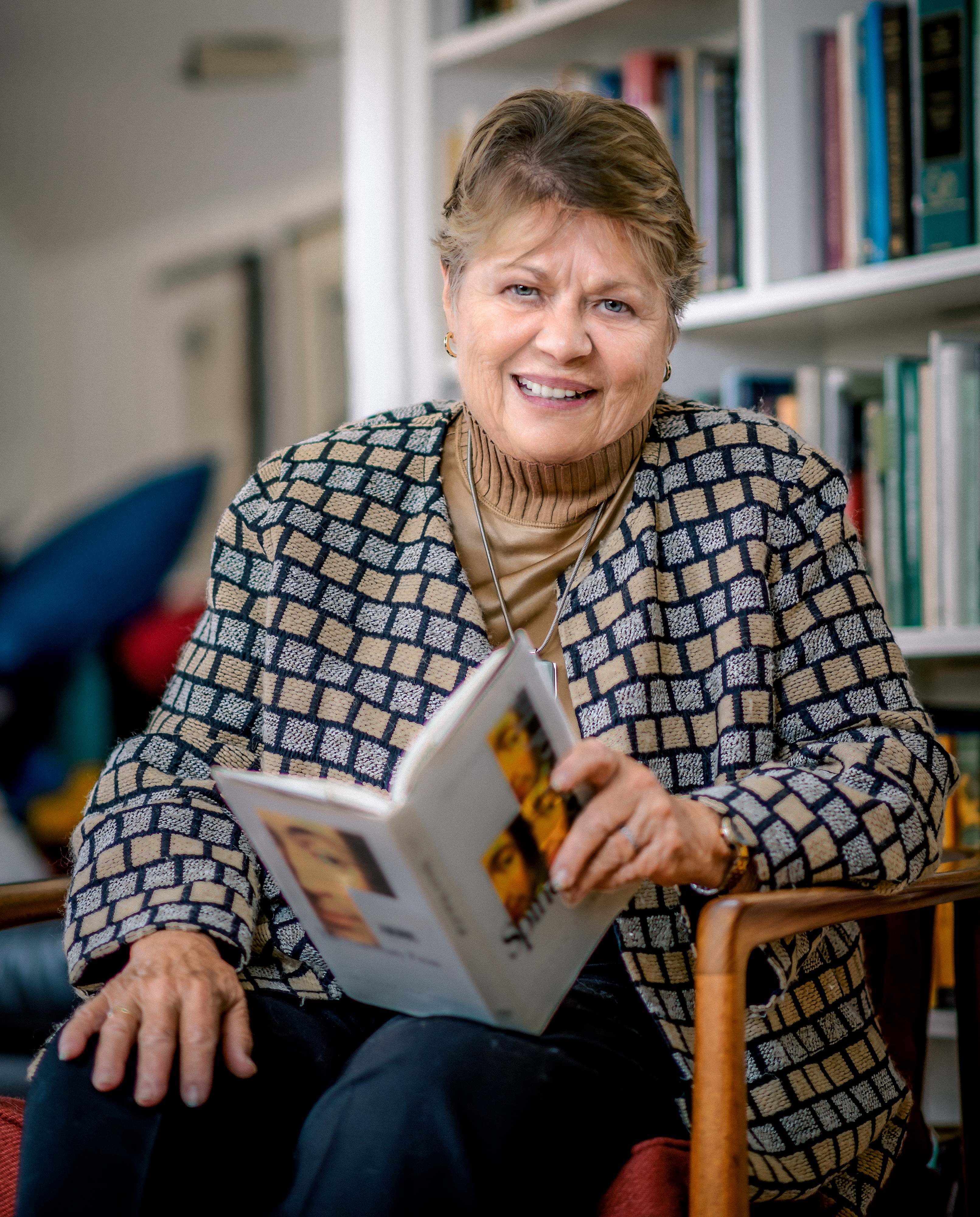
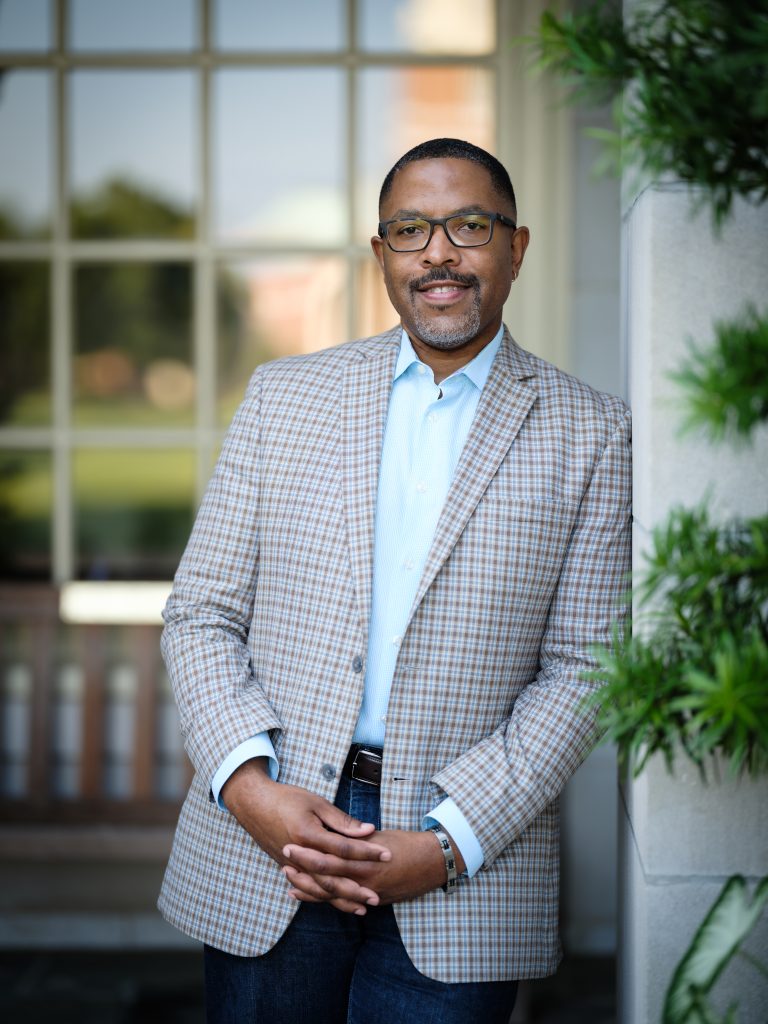
M. Şükrü Hanioğlu is a Professor of Near Eastern Studies at Princeton University and Chair of the Near Eastern Studies Department. He holds a Ph.D. in Political Science from Istanbul University and has taught courses on late Ottoman political and diplomatic history at institutions including Istanbul University, Bosphorus University, the Turkish Naval Academy, Columbia University, and Princeton. Focuses on Ottoman intellectual history, nationalist movements, and diplomatic history Supervised multiple Ph.D. dissertations at Istanbul University and Princeton on topics related to Ottoman-Turkish history Publishes extensively on the Committee of Union and Progress and late Ottoman political life Selected Publications: His works include A Brief History of the Late Ottoman Empire (2008) and Young Turks in Opposition (1995), with archival research spanning Turkish, German, Austrian, French, Swiss, Italian, Greek, and British collections.
Prof. Katharina Thoma is a renowned opera director currently serving as Head of the Opera School at the University of Music Würzburg . She also holds the positions of Deputy Chair of the Music Academy and Dean of Studies . With a career spanning major European opera houses including the Royal Opera House Covent Garden and Glyndebourne Festival, she specializes in blending historical accuracy with modern theatrical innovation. Studied piano at Lübeck University of Music Resident director at Dortmund Opera (2011-2014) Visiting professor at Graz University of Music (2018) Freelance director since 2008 Katharina Thoma's research and practice focus on opera stage direction , scenic training for singers , and historical opera interpretation . Her work spans from Baroque masterpieces to contemporary political operas, emphasizing: Contextual authenticity in period-specific productions Modern reinterpretation of classical works Interdisciplinary approaches to staging Integration of visual and musical elements Training of next-generation opera performers Exploration of war-related themes in opera Notable productions include: 2024: Johann Strauss' The Bat (University of Music Würzburg) 2023: De Falla's El retablo de Maese Pedro 2022: Britten's The Rape of Lucretia 2019: Schönberg's Pierrot lunaire 2007: European Opera Directing Competition Finalist Her artistic contributions have been recognized with: Second Prize at the European Opera Directing Competition 'Camerata Nuova' (2007) Katharina Thoma actively mentors young singers and develops innovative opera productions at the University of Music Würzburg's Opera School. Her recent work includes: Wagner operas debut (2019/20 season) Collaboration with composers like Richard Jones and Christof Loy Participation in renowned festivals (Munich Biennale, Glyndebourne) The Opera School under her leadership focuses on comprehensive training combining: Historical performance practices Contemporary staging techniques Technical vocal training Interdisciplinary collaboration
Prof. Danny Kaplan is an Associate Professor in the Department of Sociology and Anthropology at Bar-Ilan University, Israel, and co-directs the Bar-Ilan Center for Cultural Sociology. His research bridges political sociology , gender studies , and digital culture , focusing on how friendship and public intimacy inform national solidarity . A leading scholar in masculinity ideologies and cultural models of fathering , he has held visiting positions at Columbia University and Yale University’s Center for Cultural Sociology. His research on social club sociability (e.g., Freemasonry, military rituals, reality TV) reveals how institutions transform strangers into symbolic friends, fostering collective loyalty. Recent work explores digital media (e.g., Facebook, Twitter) as platforms for mediated relationships and mass solidarity . Kaplan’s empirical studies in consumer masculinity and male body ideologies have been supported by an ISF grant , yielding tools like the Consumer Masculinity Inventory (CMI) and New Masculinity Inventory (NMI). Scientific awards include: ISF grant for research on involved fatherhood His articles span topics from nationalism as homosocial bonding to digital intimacy , with methodological emphasis on ethnography , media analysis , and quantitative models . As director of the Men’s Studies track in Bar-Ilan’s Gender Studies program, he mentors future scholars in gender dynamics and social movements .
Hugh Urban is a Professor of Comparative Studies at The Ohio State University, serving as Department Chair and a Distinguished Scholar in Religious Studies and South Asian Studies. He holds a Ph.D. in the History of Religions from the University of Chicago, with additional degrees from George Washington University and the Antioch University Buddhist Studies Program. His research focuses on secrecy in religion, South Asian traditions, new religious movements, and the intersection of religion with politics and modernity. Urban's expertise spans Tantra studies, contemporary religious movements (e.g., Scientology, Heaven's Gate), and the cultural politics of secrecy. He has authored over 20 books and numerous articles, including seminal works like The Church of Scientology: A History of a New Religion (2011) and Secrecy: Silence, Power, and Religion (2021). His work bridges academic rigor with accessible scholarship, examining topics like digital religion, tantric symbolism, and the global impact of new religious movements. Urban's contributions to the field include groundbreaking analyses of religious secrecy in both historical and contemporary contexts, from colonial Bengal to modern cyber spaces. He has held grants and fellowships supporting his research, and his teaching emphasizes critical engagement with religious diversity and esoteric traditions. Active in academic discourse, he frequently contributes to interdisciplinary dialogues on religion, politics, and globalization.
Dr David Johnson is an Associate Professor of Entrepreneurship at Durham University Business School, where he serves as Associate Chair for the £9 million Smart & Scale initiative supporting SME innovation in North-East England. He is also a Fellow of the Wolfson Research Institute for Health and Wellbeing and maintains active Visiting Fellow positions at international institutions. Johnson's educational background includes: PhD in Management (Entrepreneurship), University of Edinburgh Business School MSc by Research (Entrepreneurship), University of Edinburgh Business School MBA, Adam Smith Business School, University of Glasgow Master's degree in Science, University of Edinburgh Bachelor's degree in Science, University of Leeds PG Cert in Learning, Teaching, and Assessment Practice His research centers on academic entrepreneurship , life science commercialisation , and university-industry engagement , with particular focus on linguistic approaches and machine learning applications. Johnson examines how institutional practices shape entrepreneurial activities across contexts ranging from regenerative medicine to Freemasonry, emphasizing the built environment's role in ecosystem development. Johnson's publication trajectory reveals evolving methodological sophistication, shifting from early studies on regenerative medicine venturing (2014-2017) toward computational linguistics and machine learning applications (2024-2025). His work consistently bridges theoretical frameworks with practical innovation challenges, spanning entrepreneurial ecosystems, technology transfer, and narrative analysis in resource mobilization. His scientific recognition includes: NASA Innovation and Technology Transfer: Space2Pitch Final Visiting Research Fellow at Interface, Edinburgh Fellow of Wolfson Research Institute for Health and Wellbeing Visiting Research Fellow at Skolkovo Institute Visiting Research Scholar at Wisconsin School of Business Fellow of Higher Education Academy Johnson supervises postgraduate students including Clare Talbot-Jones and Olivia King, supported by over £500,000 in research funding: Science commercialisation activities at university-industry boundary (£390,824) Cardiology-focused point-of-care device development (£38,934) Primary Research Support Fund for Zambian field research (2025) Global Engagement Grant for Dartmouth College knowledge exchange (2024) He actively leads research infrastructure as Co-Director of Durham Enterprise Centre and through his Smart & Scale initiative role, while contributing to interdisciplinary health research via the Wolfson Institute fellowship.
Wolfgang Schmale is a Full Professor of Modern and Contemporary History at the University of Vienna, Austria. He has held academic leadership roles such as Vice-Dean for Education (2012–2016) and Director of Study Programs in History (2010–2012) within the Faculty for Historical and Cultural Studies. His career includes professorships at Ludwig-Maximilians-University Munich, University of Graz, and Technical University Braunschweig. He has been honored with a doctor honoris causa from Sofia University (2021), the Insignia of Honour Blue Ribbon (2018), and membership in the European Academy of Sciences and Arts (2016). Schmale has also served as Secretary-General of the International Society for Eighteenth-Century Studies (ISECS) since 2015. His research focuses on digital humanities, eighteenth-century studies, European integration history, gender history, and human rights. His scholarly contributions include seminal works such as Geschichte Europas (2000), Gender and Eurocentrism (2016), and For a Democratic 'United States of Europe' (2019). These publications analyze transnational networks, historical memory, and the evolution of European identity. Schmale’s work bridges academic rigor with public engagement through travel narratives and digital humanities projects like 'pastperfect.at.' He has held visiting professorships at institutions including the Hebrew University of Jerusalem (2006–2016) and the Université Paris I Panthéon-Sorbonne (2007). His awards reflect both academic excellence and contributions to European scholarly networks. Schmale’s interdisciplinary approach integrates gender studies, cultural history, and digital methodologies to reframe European historical narratives.
University of California, Los AngelesUnited States
Margaret Jacob is Distinguished Research Professor of History at UCLA, specializing in European intellectual history with focus on the Enlightenment period. Her influential scholarship examines connections between scientific development, cultural transformation, and social organizations like Freemasonry. Research highlights include: Transmission of scientific knowledge during industrialization Development of secular thought and cosmopolitan identities Role of fraternal organizations in civil society formation Cross-cultural exchanges in early modern Europe Professor Jacob has directed numerous doctoral dissertations and currently supervises graduate research on European and Dutch historical topics. Her extensive honors include membership in the American Academy of Arts and Sciences and American Philosophical Society, plus honorary doctorate from Utrecht University.
Jose Ignacio Cruz Orozco is a faculty member at the Universitat de València, affiliated with the Faculty of Philosophy and Educational Sciences, where he serves as Titular de Universidad (Associate Professor) in the Department of Comparative Education. His academic focus lies in the Theory and History of Education, and he is an active member of the POLISOC research group, which studies educational policies, interculturality, and society. His research interests center on the historical development of education in 20th-century Spain, particularly during the Francoist period and the Spanish Republican exile. Key themes in his work include educational policies, school absenteeism, the expansion of secondary education, Freemasonry’s role in education, and the cultural and pedagogical contributions of exiled educators. He has extensively analyzed state educational grants, rural schooling models, youth organizations like the Frente de Juventudes, and the institutionalization of secondary education. The trends in his recent publications (2021–2025) reflect a sustained engagement with historical educational policy, with a strong emphasis on equity, access, and political ideology in education. His work bridges historical analysis with sociological and policy-oriented perspectives, often focusing on marginalized or understudied educational phenomena such as school absenteeism in the Valencian Community or the integration of adopted private schools in rural areas. He has contributed to academic discourse through numerous publications and book chapters, though no formal scientific awards are mentioned in the provided text. While there is no explicit list of advisees, he completed his own doctorate at the Universitat de València with a thesis on Freemasonry and education during the Second Spanish Republic, supervised by Dr. María del Carmen Labrador Herráiz. His research is supported by institutional affiliations and active participation in educational history scholarship. Dr. Cruz Orozco is associated with the Department of the Republican Exile at the Valencian Library, contributing to the recovery of educational heritage from exiled teachers and professors. His work exemplifies a commitment to preserving and analyzing the sociocultural dimensions of educational history, particularly in contexts of political upheaval and exile.
Christoph De Spiegeleer serves as an unpaid guest professor at the Vrije Universiteit Brussel (Free University of Brussels), affiliated with the History, Archaeology, Arts, Philosophy and Ethics faculty. His academic work centers on the Secular Studies Association Brussels, where he has been active from 2011 to 2024. His research interests primarily focus on secularization processes, particularly examining the historical development of secular thought and practices in Belgium. His work spans several interconnected fields including funeral practices, 19th century Belgian history, freethinkers movements, and the evolution of atheism in European contexts. A significant portion of his research analyzes how secular alternatives to religious funeral practices developed in 19th century Belgium, exploring the cultural, political and social dimensions of this transformation. De Spiegeleer's publications reveal a strong emphasis on the intersection of religion, death culture, and political identity in Belgian history. His recent work has examined topics such as the moral dimensions of disbelief among Brussels freethinkers (1854-1870), secular burial practices, and the historical context of the Peasants' War. His research often employs transnational perspectives, as seen in his work on Charles Potvin and the Risorgimento. Among his notable recognitions are the De Bock-Doehard Prize for best historical dissertation at the Vrije Universiteit Brussel (2009-2010) and the Emile Zola dissertation award (third place, 2012). De Spiegeleer has been actively involved in academic collaborations, including the Workshop on Secularism and Biography (March 2024) and the conference 'THE NON-RELIGIOUS AND THE STATE' (October 2022), where he served as an organizer. His ORCID profile (0000-0002-4927-8607) documents his extensive scholarly output across multiple formats including journal articles, book chapters, books, and conference papers.
Corey D. B. Walker is the Dean of Wake Forest University School of Divinity, Wake Forest Professor of the Humanities, and Inaugural Director of the Program in African American Studies. His career includes leadership roles at Virginia Union University, Winston-Salem State University, Brown University, and the University of Virginia. A theologian and scholar, his work interrogates the moral foundations of American democracy through interdisciplinary lenses. He holds degrees from Norfolk State University (BS), Virginia Union University (MDiv), Harvard University (MTS), The College of William and Mary (PhD), and Brown University (MA ad eundem). Education: BS in Finance (Norfolk State University), MDiv (Virginia Union University), MTS (Harvard University), PhD in American Studies (William and Mary), MA ad eundem (Brown University). Research interests include religious freedom, Black intellectual traditions, democracy’s ethical frameworks, and critical pedagogy. His scholarship bridges religion, race, and politics. He has authored multiple books and over 70 articles, emphasizing transformative thought and social justice. Notable works include A Noble Fight: African American Freemasonry and the Struggle for Democracy in America and forthcoming Disciple of Nonviolence: Wyatt Tee Walker and the Struggle for the Soul of Democracy . Awards include the 2023-2024 Phi Beta Kappa Frank M. Updike Memorial Scholar distinction. He has served as Book Review Editor and Associate Editor of The Journal of the American Academy of Religion . Current roles include board memberships at Lincoln University, Habitat for Humanity, and the Middle Passage Ceremonies and Port Markers Project. Advising/grants: While no formal advisees are listed, his leadership roles involve mentorship across institutions. Grants include Ford Foundation support for the Center for the Study of Local Knowledge. Labs/teams: Directed the Ford Foundation-supported Center for the Study of Local Knowledge (UVA) and led interdisciplinary initiatives at multiple universities. His work centers collaborative research on race, democracy, and religion.
Ashley Beck serves as Senior Lecturer in Pastoral Ministry at St Mary's University, Twickenham within the School of Education, where he has taught theology since 2008 and joined CERRL (Centre for Education Research, Religion and Lifelong Learning) in 2022. His role encompasses teaching Old Testament, New Testament, Ecclesiology and Moral Theology in the Catholic Certificate in Religious Studies programme, alongside serving as chaplain of St Mary's Catholic Primary School in Beckenham and maintaining diocesan connections through past representation on the Bromley Education Committee. Dr. Beck's academic credentials include a PhD from the University of Surrey (2013), MA in Theology with first-class honors from Oxford University (1984), BA in Literae Humaniores from Oxford University (1981), and Certificate in Theology from Oriel College and St Stephen's House, Oxford (1985). His research spans critical intersections of theology and contemporary issues, with primary focus on healthcare resource allocation through Catholic social doctrine, Catholic social teaching's relationship with Europe, 20th century church history, ecclesiology, liberation theologies, permanent diaconate theology, Catholic war/peace ethics, liturgical studies, and Catholic-Freemasonry relations. This work consistently bridges historical analysis with current ethical dilemmas in bioethics, social justice, and ecclesial structures. Analysis of his 2014-2015 publications reveals dominant themes in war/peace ethics, Catholic social teaching applications, and biblical interpretation. His prolific output across journals like The Pilgrim, The Tablet, and New Blackfriars demonstrates dual commitment to academic rigor and pastoral relevance, particularly regarding papal encyclicals, deacon roles, and scriptural perspectives on conflict. As Programme Director for the Foundation Degree in Pastoral Ministry (since 2012) and Moderator for the MA in Catholic School Leadership (since 2012), Dr. Beck provides academic guidance though specific student details aren't documented. His external examining roles at York St John University and Maynooth further demonstrate academic leadership. Dr. Beck actively contributes to research communities through CERRL at St Mary's University and the International Diaconate Study Centre North European Network, where he has participated since 2007 in advancing permanent diaconate scholarship.
Dr. Felipe Corte Real De Camargo serves as a Lecturer at Cardiff University and concurrently works as a Student Success Adviser within the Arts, Law and Social Sciences department at the University of Bristol. His academic profile centers on historical research with emphasis on European fraternal societies and material culture studies. His research investigates the role of friendly and fraternal societies in eighteenth and nineteenth century Europe, specializing in English Freemasonry's material culture, symbolism, and imagery. Current work examines early modern Emblem Books' influence on Masonic moral teachings, intersecting with Western Esotericism, Allegories, and Early Modern History. This scholarship bridges historical analysis with cultural studies through interdisciplinary methodologies. Publication trends reveal consistent focus on Freemasonry's transnational manifestations, with particular attention to material artifacts like aprons as historical evidence. His work demonstrates methodological rigor in connecting symbolic systems to social practices across Europe and Latin America. Key recognitions include: Beca Roberto Carri scholarship (2009) Bristol Plus Award (2018) CAPES PhD Programme funding (2015) While his Cardiff role involves graduate teaching responsibilities, his Bristol position focuses on student academic support services. Research collaborations span transnational networks in Historical Studies, evidenced by co-authored case studies on Latin American Freemasonry.
Luis Ignacio Gordillo Pérez is a Full Professor of Constitutional Law at the University of Deusto, Spain, and holds the Jean Monnet Chair in Economic Constitutionalism and European Integration. He teaches in undergraduate (Law, Law & Business Administration) and postgraduate programs (Official Master in Maritime-Port Business Management, European Doctoral Program in Economic and Business Law). Research Interests: His work focuses on constitutional theory, transnational legal fragmentation, European Union law, fundamental rights, public services regulation, and pedagogical innovation in legal education. Since 2012, he has led the research group 'Economic Constitution and Social Justice' (IT1768-22, Basque Government) and the Jean Monnet Chair project (2019-2024, European Commission). Recent Publications address parliamentary erosion, transnational legal dynamics, and economic constitutionalism. He has authored or co-authored over 100 publications, including books like Una teoría del Estado constitucional europeo (2020) and Constitución económica y gobernanza económica de la UE (2019). Scientific Awards Premio Nicolás Pérez Serrano (2009-2010) Premio UD-Santander de Investigación (2015) Positive CNEAI evaluations for three research periods (2004-2009, 2010-2015, 2016-2021) Honoris Causa by Universidad de Xalapa and Colegio de Veracruz (Mexico) Advising includes supervising PhD theses on topics like smart city mobility, EU constitutionalization, and tax guarantees. He has participated in 25+ research projects (11 as Principal Investigator) with regional, national, and EU funding.
Lisa Hellman is a researcher at Swedish Collegium for Advanced Study (SCAS), affiliated with Uppsala University, specializing in global and maritime history with a focus on gender dynamics and intercultural relations during the early modern period. Her work spans Asia, particularly China, Japan, and Central Asia, examining historical networks through a gendered lens. Global history frameworks Maritime networks and seafaring cultures Intercultural gender analysis Colonial trade systems Port city social structures Historical knowledge production Her publications highlight interdisciplinary approaches, combining maritime studies, gender theory, and global history. Hellman collaborates on oceanic connectivity and has contributed to understanding daily life in colonial contexts.
Peter Lanchidi is an Assistant Professor at the Department of Modern and Contemporary Art, Institute for Art History, Eötvös Loránd University. His research bridges art history with the study of western esotericism and Jewish mysticism, focusing on 19th-century visual culture, particularly Kabbalistic-Masonic lithographs. Academic Affiliation: Eötvös Loránd University (Institute for Art History) Rank: Assistant Professor Key Research Areas: Kabbalistic Art, Freemasonry Iconography, Religious Reform Movements His work examines how Jewish artists and Freemasons utilized Kabbalistic symbolism in lithography to negotiate religious identity and universality across diverse contexts like Paris, New York, and Australia. Publications analyze figures such as Rabbi David Rosenberg and Jacob Norton, exploring cross-denominational uses of esoteric art. Recent articles trace the global dissemination of Rosenberg's 1841 lithograph Aperçu de l'origine du culte hébraïque , highlighting its dual interpretations in Jewish and Masonic circles. His research also covers Julius Bien's American adaptation of the lithograph and its role in antebellum religious debates.