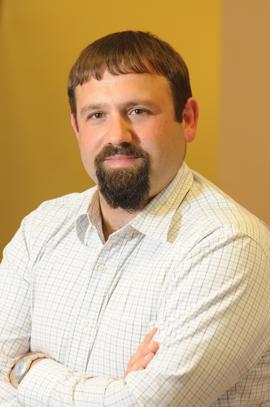
Professor Tibor Besedes of the School of Economics at Georgia Institute of Technology specializes in international trade, behavioral economics, and decision-making processes. His work bridges empirical trade analysis with experimental studies on consumer and firm behavior. Education: PhD and MA in Economics, Rutgers University Education: BSc in Economics, Texas Christian University His research explores trade duration dynamics, financial sanctions' collateral effects, and behavioral responses to large choice sets. He is a leading expert on trade cost elasticity and policy impacts on global markets. Recent publications focus on transportation costs in gravity models, post-sanction market adjustments, and regulatory effects on EU beer exports. His experimental work examines age-related heuristics and optimal choice architectures. As director of the Forum for Research in Empirical International Trade , he oversees collaborative studies on trade friction reduction. He also serves as co-editor of The Journal of International Trade and Economic Development and associate editor for Southern Economic Journal . Active grants from the National Institutes of Health and National Science Foundation support his behavioral economics research. His media contributions address contemporary issues like supply chain disruptions, inflation, and trade wars.
Prof. Gabriella Cagliesi is a Professor of Economics and Associate Dean (Education and Students) at the University of Sussex Business School. She holds a PhD in Economics from the University of Pennsylvania and previously served as Principal Lecturer at the University of Greenwich and Adjunct Professor at Rutgers University. Her academic leadership includes roles as Teaching and Learning Lead, Course Director for undergraduate economics programs, and Research Officer at the University of Cambridge. Education: PhD in Economics (University of Pennsylvania, 1993), MSc Economics (University of Pennsylvania, 1991), BSc Economics (Guido Carli Free International University for Social Studies, Rome, 1984). Research Interests: Macroeconomics, behavioral economics, labor economics, and education policy, with a focus on BAME attainment gaps and inclusive pedagogy. She has led projects funded by HEFCE and the Royal Economics Society, analyzing postgraduate education barriers and Widening Participation initiatives. Teaching & Awards: Awarded “Outstanding Teacher of the Year 2015” and recognized for innovative teaching methodologies like Team-Based Learning (TBL) and feedback loops. Her work on reducing attainment gaps has been showcased at national conferences (e.g., BERA, Royal Economic Society). Grants: Recipient of Royal Economics Society grants for outreach programs targeting underrepresented communities. Led a HEFCE-funded study on postgraduate education access barriers. Labs/Teams: Active in interdisciplinary collaborations, including the UK Behavioural Team of the Cabinet Office and the Greenwich Council. Member of professional bodies like AdvanceHE, British Academy of Management, and the Economics Network.
Jörgen Blomvall is an Associate Professor at Linköping University's Department of Management and Engineering (IEI). His research focuses on optimal financial decision-making, accurate financial measurement, and stochastic optimization models applied to financial markets. He develops methods to enhance measurement accuracy for quantities like forward rates, default intensities, and local volatilities, which are critical for equity, interest, credit, and derivative markets. Blomvall's work integrates stochastic programming and dynamic programming to address portfolio optimization, risk management, and transaction cost reduction. He is affiliated with the Operations Management and Finance research group, exploring resource optimization in manufacturing and service industries. His key research areas include financial engineering, stochastic programming, and quantitative risk management. Recent work emphasizes improving dividend estimation from intraday quotes, reducing transaction costs in hedging strategies, and analyzing stage complexity in stochastic programming for portfolio choice. Blomvall's methodologies have advanced the modeling of systematic risks and optimal investment decisions under real-world market constraints. Blomvall has contributed extensively to the development of optimization-based frameworks for performance attribution and yield curve estimation. His articles frequently address practical applications of stochastic models in financial markets, balancing theoretical rigor with computational feasibility. Despite his prolific output, no specific academic awards or student advisees are documented in the provided texts. He is active in the Production Economics (PEK) research group at Linköping University.
Argyrios Deligkas serves as a Senior Lecturer in the Department of Computer Science at Royal Holloway, University of London, where he is affiliated with both the Centre for Intelligent Systems and the Centre for Reliable Machine Learning. His research profile highlights extensive contributions to theoretical computer science with practical economic applications, maintaining active collaboration networks across international institutions. His core research focuses on Algorithmic Game Theory and Mechanism Design , particularly examining computational aspects of equilibrium concepts, fair division protocols, and complexity barriers in multi-agent systems. Recent work investigates the PPA complexity class's limitations, envy-free allocation criteria (EF1/EFX), and strategic behavior in facility location games, demonstrating how theoretical computer science frameworks can resolve economic modeling challenges. Analysis of his 2024-2025 publications reveals a concentrated effort on computational hardness in fair division (e.g., pizza-sharing problems) and equilibrium approximation, with methodologies spanning combinatorial optimization, randomized algorithms, and complexity theory. These works consistently bridge theoretical guarantees with real-world applicability in resource allocation systems. As Principal Investigator for the EPSRC-funded NAfANE project (2024-2026), he leads research into novel approximation techniques for Nash equilibria. While specific advisees aren't listed in the source material, his senior lecturer role implies active supervision of postgraduate researchers within Royal Holloway's computer science ecosystem. His institutional affiliations with the Centre for Intelligent Systems and Centre for Reliable Machine Learning position him at the forefront of trustworthy AI development, where theoretical foundations directly inform robust machine learning system design.
Tilottama Ghosh Chowdhury serves as Professor of Marketing at Quinnipiac University, teaching MBA 688 Graduate Internship I (Summer 1 2025) and MK 320 Marketing Research (Fall 2025) from her office in The Dome 207 with mail drop SB-DNF. Her academic credentials include: BS from University of Calcutta MS from Bond University PhD from University of Connecticut Professor Chowdhury's research investigates consumer responses to brand transgressions, social media influencer impacts, and AI applications in marketing. She examines psychological mechanisms like self-efficacy in consumer decision-making across contexts including health marketing, emotional support animals, and luxury branding. Her work frequently employs cross-cultural methodologies and analyzes demographic variables such as age and gender in advertising reception. Analysis of her 2021-2025 publications reveals three dominant trends: increasing focus on digital consumer behavior (particularly social media and AI interactions), growing attention to health-related marketing contexts, and consistent examination of psychological antecedents to consumer responses. Her research increasingly incorporates political orientation and cross-cultural comparisons while maintaining strong methodological rigor through experimental designs. Scientific awards: No awards were documented in the source material. Regarding academic mentorship and funding: The provided text contains no references to doctoral students supervised, grant awards received, or research team leadership roles. Her teaching portfolio indicates active engagement in graduate and undergraduate marketing education through structured coursework. Laboratory and team affiliations: No dedicated research laboratories, centers, or collaborative teams are mentioned in the available documentation.
M.J. Alhabeeb is a Professor of Resource Economics at the University of Massachusetts Amherst , with a focus on Managerial Economics , Finance , and Applied Microeconomics . His research spans capital budgeting , consumer trust , and retail spatial models , emphasizing the application of economic theory to real-world financial and marketing challenges. His publications reveal a consistent focus on risk analysis , human capital , and decision-making under uncertainty . 2004 : Outstanding Teaching Award 2000 : Dual Outstanding Research Awards 1999 : Distinguished Paper Award Alhabeeb has secured teaching grants and advised SIFE (Students in Free Enterprise) teams, integrating professional development and leadership training into his pedagogy. His teaching philosophy prioritizes active learning and higher-order thinking over passive information transfer.
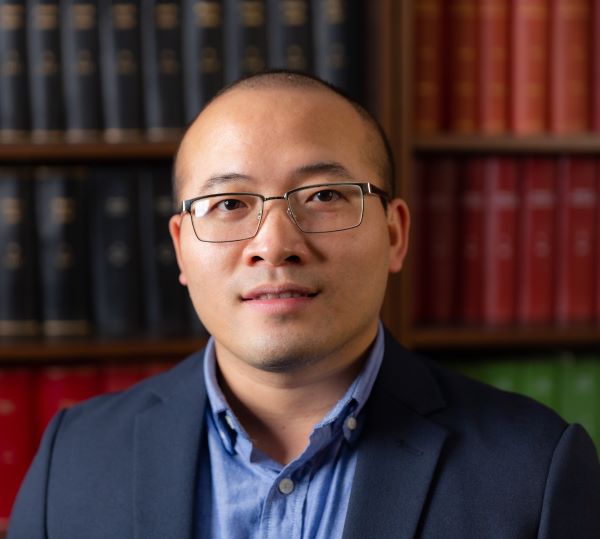
Guoming Li is an Assistant Professor in the Department of Poultry Science at the University of Georgia's College of Agricultural & Environmental Sciences . His research integrates digital technologies, data analytics, and automation to advance poultry production systems. Education: Ph.D., Mississippi State University M.S. & B.S., China Agricultural University Postdoctoral Training, Iowa State University Dr. Li's work focuses on precision livestock farming , computer vision , and applied artificial intelligence for automated behavior monitoring, environmental control, and welfare assessment. His recent studies explore robotics, digital phenotyping, and 3D reconstruction. Scientific Awards : 2022 Editor’s Choice Article (MDPI Sensors) 2022 ASABE Outstanding Reviewer Award 2021 ASABE Boyd-Scott First-Place Award 2020 AOC Graduate Scholarly Achievement Award 2019 International Symposium on Animal Environment and Welfare Best Paper/Presentation He contributes to open-source tools like AnimalAccML for behavior analytics and has developed robotic systems for poultry management. His projects emphasize cross-disciplinary collaboration with institutions across the U.S. and China.
Dr. Rebecca Taylor is an Associate Professor in the Education Policy, Organization and Leadership Department at the University of Illinois at Urbana-Champaign's College of Education. She serves as Editor of Educational Theory and directs the Philosophy of Education program at Illinois, demonstrating significant leadership in her field. Her work bridges philosophical inquiry with practical educational concerns, focusing on ethics, justice, and epistemic issues in educational policy and practice. Dr. Taylor earned her Ph.D. in Education from Stanford University, an M.A. in Peace, Conflict, and Development Studies from Universitat Jaume I, and a B.A. with honors in Mathematics and Philosophy from Washington University St. Louis. This interdisciplinary background informs her unique approach to educational research. Dr. Taylor employs philosophy and philosophically-grounded mixed methods to investigate questions of ethics and justice in educational policy and practice. Her research centers on epistemic injustice, intellectual virtues, and ethical issues in higher education. She has made significant contributions to understanding how closed-mindedness threatens knowledge and understanding in educational contexts, and how educational environments can foster intellectual autonomy and fairness. Her work often examines the intersection of race, power, and knowledge production in historically and predominantly white institutions, addressing critical issues of equity and inclusion. Analysis of Dr. Taylor's recent publications reveals a strong trajectory from foundational work on intellectual virtues toward increasingly sophisticated examinations of epistemic injustice in higher education. Her 2023-2025 publications show growing attention to AI's role in education, campus controversies around free speech, and student activism. The interdisciplinary nature of her research bridges philosophy, educational policy, and social justice frameworks, with consistent publication in top-tier journals including Educational Theory, AERA Open, and Teachers College Record. Campus Distinguished Promotion Award (2025) National Academy of Education/Spencer Research Development Award (2020) Choice Outstanding Academic Title (2022) Dr. Taylor's research has been funded by prestigious organizations including the Spencer Foundation and the Center for Ethics and Education at University of Wisconsin. She previously served as Chair of the Philosophical Studies in Education SIG for the American Educational Research Association and currently serves as Editor of Educational Theory . Her mentorship extends through her editorial role, leadership of the Philosophy of Education program, and teaching of graduate seminars that shape emerging scholars in the field. While specific lab information isn't explicitly mentioned, Dr. Taylor maintains extensive collaborative networks as evidenced by her numerous co-authored publications with colleagues across institutions. Her editorial leadership of Educational Theory positions her at the center of scholarly discourse in philosophy of education, influencing research directions and methodological approaches in the field.
Dr. Olga Kellert serves as a Lecturer in the Department of Romance Philology within the Faculty of Humanities at the University of Göttingen, where she conducts interdisciplinary research at the intersection of sociolinguistics, computational linguistics, and historical Romance linguistics. Her work bridges traditional linguistic analysis with cutting-edge digital methodologies, particularly focusing on language variation in social media contexts and diachronic syntactic change. Her research encompasses three primary domains: (1) Sociolinguistic analysis of code-switching and language variation using geolocated social media data, particularly examining Spanish-French interactions in Quebec and Spanish-Italian dynamics in South America; (2) Computational approaches to sentiment analysis and linguistic modeling, with emphasis on syntax-aware NLP systems; (3) Historical evolution of quantificational structures in Romance languages, especially indefinites and free choice items across Old and Modern Italian, Spanish, and Catalan. Current projects include the sociocomputational assessment of belief states among vulnerable indigenous groups in Latin American crises (funded through international collaboration with Mexico, Ecuador, Peru, and Austria) and geospatial analysis of urban linguistic variation using Twitter data. Her publication trajectory reveals a strategic evolution from foundational work in Romance syntax and prosody toward increasingly computational methodologies, with recent publications heavily featuring NLP applications, geotagged linguistic analysis, and interdisciplinary crisis communication research. This shift reflects broader trends in digital humanities while maintaining deep roots in Romance linguistic theory. Habilitation Completion Grant from the Faculty of Humanities, University of Göttingen Dr. Kellert actively supervises student project work on language mixing in social media contexts and collaborates extensively through the University of Göttingen's CRC 'Textstrukturen' research center. Her grant portfolio demonstrates significant international collaboration, particularly with Latin American institutions on crisis communication projects and European partners on historical linguistics initiatives. Current funding includes DFG support for 'Quantification in Old Italian' and international partnerships for sociolinguistic crisis response research. Her research operates within the Collaborative Research Center 'Textstrukturen' at the University of Göttingen, where she contributes to interdisciplinary teams combining linguistic theory, computational methods, and sociocultural analysis. Recent projects involve cross-institutional teams spanning Mexico, Ecuador, Peru, Austria, France, and Italy, with particular emphasis on community-engaged research with indigenous populations in Latin America.
Cécile Desoutter is an Associate Professor of French Language at the University of Bergamo's Department of Foreign Languages, Literatures and Cultures, where she conducts research at the intersection of specialized languages, written communication, and multilingual contexts. Her work examines linguistic practices in legal, institutional, and business settings through cross-linguistic (French-Italian) and pedagogical lenses. Her primary research interests include: Specialized languages in legal, administrative, and business discourse Written communication in digital contexts (ICT, linguistic landscapes) Relationships to foreign language writing in professional and educational settings French language use in multilingual environments (language choice, code-switching, linguistic rights) Analysis of her 15 most recent publications (2016-2020) reveals consistent focus on discourse analysis across legal, environmental, and social domains, with growing emphasis on digital communication trends, emotional expression in judicial contexts, and multilingual signage in urban spaces. Her work bridges theoretical linguistics with practical applications in language education and cross-cultural communication. Professor Desoutter actively participates in international academic collaboration, evidenced by co-edited volumes and multi-country comparative studies examining poverty discourse across France, Ireland, and Italy, as well as linguistic landscapes in European Chinatowns. Her research demonstrates strong interdisciplinary connections between sociolinguistics, legal studies, and environmental communication.
Nathaniel Daw holds the Huo Professorship in Computational and Theoretical Neuroscience at the Princeton Neuroscience Institute , Princeton University. His research integrates computational, neural, and behavioral approaches to study decision-making through trial-and-error learning and reward/punishment processing. Research Interests: Computational Neuroscience Decision-Making Under Uncertainty Model-Based and Model-Free Learning Neural Mechanisms of Self-Control Publications (2025-2019) explore intersections of machine learning and neuroscience, focusing on reward-guided behavior, memory systems, and psychiatric implications like anorexia nervosa and obsessive-compulsive disorder. Key themes include neural replay, cognitive effort allocation, and predictive modeling of human and animal learning. Scientific Awards: Princeton-Rutgers $16M Research Grant for mental illness studies Grants and Collaborations: Highlighted by a major interdisciplinary grant with Rutgers University to advance understanding of mental illness through computational frameworks. Labs and Teams: Leads the Daw Lab at Princeton Neuroscience Institute, focusing on neurocomputational models of decision-making and self-control.
Julie Deeke is a Teaching Professor in the Department of Statistics at the University of Illinois, Urbana-Champaign. She specializes in statistics and data science education, focusing on pedagogy for large courses and graduate teaching assistant (TA) development. Her work emphasizes authentic data analysis experiences and the integration of instructional technology. Ph.D., Statistics, University of Michigan Ann Arbor, 2019 M.A., Statistics, University of Michigan Ann Arbor, 2016 B.S. & B.A., Statistics and Anthropology, Indiana University Bloomington, 2013 Research interests include data science education frameworks, student choice in learning materials, and fostering professional growth in teaching assistants. Deeke co-developed a free online course resource for STAT 207 and uses interactive materials in STAT 420. She collaborates on initiatives like TA training programs and leadership awards for graduate students. Deeke’s teaching focuses on large enrollment courses such as Data Science Exploration (STAT 207) and Methods of Applied Statistics (STAT 420/ASRM 450), emphasizing practical skills and real-world data applications.
Dr. Dimitri Volchenkov is a Professor in the Department of Mathematics and Statistics at Texas Tech University, specializing in nonlinear dynamics, complex systems, and stochastic processes. His research integrates mathematical physics, statistical mechanics, and network theory to study phenomena ranging from social dynamics to urban mobility. His core research areas include developing mathematical frameworks for complex networks, analyzing predictability in non-ergodic systems, and applying statistical mechanics to biological and social systems. Recent work focuses on information propagation in social networks, detection of disinformation campaigns, and modeling human navigation patterns in urban environments. Volchenkov has published extensively on network-based analysis of social phenomena, including studies on troll networks, social conformity, and opinion dynamics. His applied research includes pedestrian movement modeling on university campuses, tornado severity prediction, and polymer physics. He received the International George M. Zaslavsky Award in 2020 and maintains active research projects funded by organizations including the Department of Defense. Volchenkov teaches courses in linear algebra, mathematical statistics, and specialized topics in complex systems.
Dr. Taiwo Frances Gbadegesin is a Lecturer in Initial Teacher Education at Queen Margaret University (QMU), affiliated with the Psychology, Sociology and Education Division. She is also an Associate Member of the Centre for Applied Social Sciences. Her academic background includes a bachelor's degree in Economic Education from Obafemi Awolowo University (Nigeria), a master's degree from Obafemi Awolowo University, and a PhD from the University of Leeds (UK). She held a postdoctoral fellowship at the University of the Free State in South Africa and previously served as academic staff at Ekiti State University, Nigeria before joining QMU in 2022. Education: Bachelor's in Economic Education (Obafemi Awolowo University) Master's degree (Obafemi Awolowo University) PhD in Education (University of Leeds) Research Interests: Quality education in early childhood Children’s rights and wellbeing Refugee/migrant children’s integration Comparative and international education Gender and inclusive education practices Dr. Gbadegesin employs interdisciplinary and cross-national approaches, with a focus on qualitative and mixed-method research. Her work often addresses systemic challenges in education and housing policy, particularly in developing nations. She teaches modules on early childhood education, global health, and comparative education, serving as a module coordinator for topics such as Early Childhood Development and Learning in Context and Global Health and International Education . Her research highlights the intersection of socio-cultural factors and policy interventions, with notable contributions to understanding child welfare in post-pandemic contexts, urban housing impacts on child health, and educational equity in Nigeria and South Africa.
Bert Gordijn is Professor and Director of the Institute of Ethics at Dublin City University's School of Theology, Philosophy, and Music. His research spans bioethics, technology ethics, and global ethical frameworks. Education: Doctorate in Philosophy from Albert-Ludwigs-Universität Freiburg (1995) Doctorate in Bioethics from Radboud University Nijmegen (2003) Gordijn's scholarship examines ethical issues in emerging technologies, research integrity, and healthcare ethics. He has held visiting professorships at Georgetown University, National University of Singapore, and Lancaster University. His current work addresses AI ethics, climate policy ethics, and integrity in scholarly publishing. Recent publications focus on ethical dimensions of technological innovations, including generative AI in academia, carbon pricing mechanisms, and contributor attribution systems. His research demonstrates consistent attention to bridging theoretical ethics with practical applications in science and technology. Editorial Leadership: Editor-in-Chief of Medicine, Health Care and Philosophy Editor of International Library of Ethics, Law and Technology Editor of Advances in Global Bioethics