Aviad Rubinstein is an Assistant Professor of Computer Science at Stanford University, specializing in theoretical computer science with a focus on algorithms, complexity, and game theory. He has taught courses such as Design and Analysis of Algorithms (CS161), Incentives in Computer Science (CS269i), and Topics in Intractability (CS354). His research interests include approximation algorithms, computational complexity, and fair division, with notable work on envy-free cake-cutting and prophet inequalities. He advises several PhD students including Joshua Brakensiek and Ruiquan Gao, and mentors postdocs like Soheil Behnezhad. His undergraduate mentoring includes students from Tsinghua and Berkeley. Rubinstein has received the Kalai Prize from the Game Theory Society and a FOCS Best Paper Award for his work on inapproximability of Nash equilibria. Rubinstein co-authored Algorithms for Toddlers with Mary Wootters, a book simplifying computational concepts for younger audiences. He also organizes workshops on topics like fine-grained complexity and early career mentoring in computer science. Beyond academia, he consults part-time for the blockchain startup Lava. His research frequently bridges theoretical foundations with practical implications, such as developing algorithms with real-world applications in auctions, mechanism design, and optimization under constraints.
Duygu Uygun Tunc is a Collegiate Assistant Professor in the Department of Philosophy at the University of Chicago, where she has been teaching since September 2023. She is also affiliated with the Society of Fellows and holds the position of Harper-Schmidt Fellow. Her academic journey includes a dual PhD from Heidelberg University in Germany and the University of Helsinki in Finland, which she completed in October 2020 with her dissertation titled 'Communication and the Origins of Personhood'. Her research spans multiple dimensions of epistemic value in scientific research, investigating what makes individuals good researchers, groups good scientific collectives, epistemic systems good scientific communities, and research procedures good empirical studies. She works extensively on intellectual virtues in science, scientific communities, experimental methodology (including testability, theory choice, and underdetermination), and applied philosophy of science (addressing the replicability crisis, science policy, and scientific norms). A central question guiding her work is how the social nature of scientific inquiry can best be utilized to advance scientific knowledge. Her publications from 2019-2024 demonstrate a consistent focus on the intersections of philosophy of science, epistemology, and values in science. Her work often examines distributed cognition in scientific communities, the nature of scientific expertise in contemporary research environments, and the relationship between scientific methodology and social values. A notable trend across her publications is the exploration of how scientific knowledge production has become increasingly social and collaborative, requiring new conceptual frameworks to understand epistemic responsibility in team science. Marie Curie Actions Fellowship for 'Extended Scientific Virtue' project Dr. Uygun Tunc currently teaches 'Science and Values' (PHIL 23404/33404) at the University of Chicago, examining debates about the value-free ideal of science and the relationship between scientific objectivity and social values. She is actively working on a series of articles on values in science and her first book manuscript on scientific expertise, which develops a novel conception addressing distributed epistemic labor and technological extension of epistemic processes while maintaining notions of epistemic responsibility. She maintains a blog on the epistemology of science where she explores topics like trust and criticism in scientific communities.
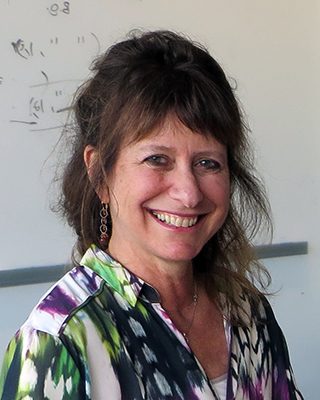
Anna R. Karlin is a Professor and the Bill & Melinda Gates Chair in Computer Science & Engineering at the University of Washington's Paul G. Allen School of Computer Science & Engineering. She serves as Associate Director of Graduate Studies and leads research in theoretical computer science within the Theory & Models of Computation focus area. Ph.D. from Stanford University (1987) Former researcher at Digital Equipment Corporation's Systems Research Center (5 years) Professor Karlin's research centers on theoretical computer science, with specific expertise in algorithm design and analysis, particularly probabilistic and online algorithms. Her work spans multiple interdisciplinary domains including algorithmic game theory, economics and computation, data mining, operating systems, networks, and distributed systems. Her research has evolved from foundational algorithmic work to impactful applications in market design, auction theory, and pricing mechanisms. Karlin's publication record demonstrates a consistent trajectory from classical theoretical computer science toward algorithmic game theory and mechanism design. Her recent work focuses on approximation algorithms for NP-hard problems, auction design, revenue maximization, and stable matching problems, with applications in online advertising, network economics, and resource allocation. She has developed influential algorithms for the Traveling Salesman Problem and made significant contributions to understanding interdependent valuations in combinatorial auctions. Bill & Melinda Gates Chair in Computer Science & Engineering Professor Karlin has advised numerous doctoral students throughout her career, with former students including prominent researchers like Jason Hartline, Frank McSherry, and Kira Goldner. Her collaborative research has been supported by various grants, including NSF funding (CCF-1813135 mentioned in her publications). She co-authored the influential textbook Game Theory, Alive with Yuval Peres, which serves as a rigorous introduction to game theory with applications across multiple disciplines. As a leader in theoretical computer science, Professor Karlin maintains active involvement in the Theory of Computation research group at the Allen School, fostering collaboration between theoretical foundations and practical applications in computer science.
John O'Doherty is the Fletcher Jones Professor of Decision Neuroscience at the California Institute of Technology (Caltech). He holds a B.A. from Trinity College Dublin (1996) and a D.Phil. from the University of Oxford (2000). His academic trajectory includes roles as Assistant Professor (2004–2007), Associate Professor (2007–2009), and Professor (2009–present), culminating in his current endowed chair since 2021. From 2013–2017, he served as Director of the Caltech Brain Imaging Center. Research Focus: O'Doherty’s work investigates how the brain processes decisions under uncertainty, encodes reward values, and learns from experience. His group studies neural systems involved in decision-making, including arbitration between model-based and model-free learning strategies, the role of prefrontal and striatal circuits in value representation, and social learning mechanisms. They utilize computational modeling combined with neuroimaging (fMRI) and electrophysiological techniques. Key Contributions: His research bridges cognitive neuroscience and psychiatry, addressing topics like gambling disorder, autism spectrum traits, anorexia nervosa, and obsessive-compulsive behaviors. He has pioneered studies on the neural substrates of reward prediction errors, hierarchical decision-making, and the interplay between habitual and goal-directed actions. Affiliations: Caltech Brain Imaging Center (Former Director) Leading international collaborations in neuroeconomics and computational psychiatry Grants & Funding: Extensive support from NIH, NSF, and private foundations for projects on decision neuroscience and translational mental health research.
David Frazier is a Professor in the Department of Econometrics & Business Statistics at Monash University, specializing in simulation-based inference, financial econometrics, and nonparametric/semiparametric modeling. He teaches ETC 1010: Data Modeling and Computing. His research focuses on robust statistical methods, Bayesian computation, and model misspecification. Key projects include 'Consequences of Model Misspecification in Approximate Bayesian Computation' (2020-2025) and 'Loss-based Bayesian Prediction' (2020-2025). Recent work addresses forecasting in misspecified models, weak identification in econometric frameworks, and robust variational Bayes techniques. His contributions align with UN Sustainable Development Goals related to economic and environmental sustainability. Projects: 4 active/funded projects with ARC, Brown University, and international collaborators. Publications: Over 37 peer-reviewed articles in journals like the Journal of the American Statistical Association and Journal of Econometrics. Research interests include advancing Bayesian methodologies for complex models, with applications in asset pricing and economic forecasting. His work emphasizes reliability in statistical inference under model uncertainty and computational efficiency.
Peter Breunig is a Professor at the University of Applied Sciences Weihenstephan-Triesdorf (HSWT), working within the Department of Agriculture, Food, and Nutrition. His academic focus centers on agricultural marketing, market theory, and sustainable food systems. As Coordinator specializing in "Marketing and Management in Agribusiness" and Public Relations lead for the Agriculture department, he plays a significant role in shaping the institution's engagement with industry and the public. His educational expertise is reflected in his comprehensive teaching portfolio covering: Agricultural markets Fundamentals of Agricultural Marketing Marketing and Management of Regional Value Chains (Master) Market theory and market policy Regional marketing Strategies of International Agricultural Marketing (Master) Processes and economics of crop/animal production Professor Breunig's research bridges theoretical market concepts with practical applications in agriculture, with particular emphasis on sustainability transitions. His work demonstrates strong interdisciplinary collaboration across agricultural economics, food science, environmental studies, and technology fields. Recent publications reveal a clear trend toward addressing sustainability challenges in food systems, particularly regarding consumer acceptance of alternative proteins, climate impacts of agricultural practices, and digital transformation in agriculture. Among his notable scientific contributions are studies on: Media portrayal of new genetic technologies in agriculture Consumer acceptance of animal-free dairy products Climate change mitigation potentials in agricultural systems Digital transformation frameworks for agricultural ecosystems Professor Breunig has supervised numerous master's theses across diverse topics in agricultural marketing and management, and currently mentors doctoral candidates including Tanja Strobel-Unbehaun and Hanno Koßmann. His research projects include "Mastering opportunities yourself - scouting, career guidance and key qualifications in Agriculture" where he serves as project lead, demonstrating his commitment to developing future agricultural professionals.
Ralph Hertwig is the Director of the Research Department of Adaptive Rationality and Deputy Managing Director of the Max Planck Institute for Human Development in Berlin. He holds honorary professorships at both the Free University of Berlin (since 2016) and Humboldt University of Berlin (since 2013). His research focuses on models of limited and ecological rationality, experience-based decisions, psychology of risk, development of decision-making processes across the lifespan, and evidence-based interventions to increase decision-making and self-control skills (boosting). Hertwig's work bridges cognitive science, psychology, and practical applications for improving decision-making in complex environments. Hertwig's recent publications reveal a strong focus on behavioral interventions against misinformation, risk perception across the lifespan, cross-species comparisons of decision-making, and the development of boosting techniques as alternatives to traditional nudging approaches. His work increasingly addresses digital challenges, misinformation, and democratic discourse in the attention economy. Selected honors: Gottfried Wilhelm Leibniz Prize (2017) Charlotte and Karl Bühler Prize (2006) Fellow, Association for Psychological Science (2011) Member, German National Academy of Sciences Leopoldina Hertwig actively contributes to multiple academic initiatives including the International Max Planck Research School on the Life Course (LIFE), the Max Planck School of Cognition, and the International Max Planck Research School for Computational Methods in Psychiatry and Aging Research (COMP2PSYCH). His keynote speeches worldwide demonstrate the broad impact of his research on decision-making science.
Nicholas Sinclair-House is an Assistant Professor in Criminology within the School of Law, Politics and Sociology at the University of Sussex. His interdisciplinary research bridges psychology, law, and neuroscience, focusing on criminal responsibility, addiction, and neuroethics. He is Co-Director of the Sussex Crime Research Centre (CRC) and affiliated with the Sussex Addiction Research and Intervention Centre (SARIC), the Ministry of Justice Expert Academic Network, the British Psychological Society (BPS), and the International Neuroethics Society (INS). Assistant Professor in Criminology (Sociology and Criminology) School of Law, Politics and Sociology, University of Sussex Co-Director, Sussex Crime Research Centre (CRC) Member, Sussex Addiction Research and Intervention Centre (SARIC) Member, Ministry of Justice Expert Academic Network Member, British Psychological Society (BPS) Member, International Neuroethics Society (INS) His research explores how addiction, intoxication, and mental disorders influence perceptions of blame and mitigation in criminal justice. Key interests include drug policy reform, the philosophy of justice, and the ethical implications of neuroscience in law. His work critically examines whether framing addiction as a brain disease leads to more lenient sentencing, concluding that perceived prior choice remains a dominant factor in judicial reasoning. The recent publications reflect a strong engagement with neuroethics and criminology, particularly in how cognitive biases, environmental factors, and neurological conditions affect legal responsibility. Themes include the impact of the pandemic on addiction, AI in education, and psychedelic therapy in fictional AI. His work combines empirical psychology with legal theory, often using experimental methods to study magistrates’ and public perceptions. While no formal scientific awards are listed, his active participation in high-profile academic networks and conferences underscores his recognition in the field. Nicholas Sinclair-House supervises students in criminology and psychology, particularly in neurocriminology and cognitive aspects of criminal behaviour. Though specific advisees are not named, his research collaborations—especially with Child, Crombag, and Osborn—suggest active mentorship and grant-funded projects. His teaching portfolio includes courses such as Thinking Like a Criminologist , Understanding the Criminal Justice System , and various psychology modules, indicating a strong commitment to interdisciplinary education. He is a core member of the Sussex Crime Research Centre (CRC) and the Sussex Addiction Research and Intervention Centre (SARIC), where he contributes to collaborative research on addiction, criminal responsibility, and policy reform. These teams engage in interdisciplinary projects combining neuroscience, psychology, and legal scholarship to inform justice policy and practice.
Sean Hanna is a Professor of Design Computing at The Bartlett School of Architecture , University College London , and a member of the UCL Space Syntax Laboratory . His interdisciplinary work bridges architecture, computational modeling, and machine learning.
Ramavarapu S Sreenivas is a Professor in the Industrial and Enterprise Systems Engineering department at the University of Illinois at Urbana-Champaign , with research appointments at the Coordinated Science Laboratory (CSL) and the Information Trust Institute (ITI ). He holds a joint affiliation with the Electrical and Computer Engineering department and serves as the Arthur Davis Faculty Scholar since 2016. Ph.D. , Electrical and Computer Engineering, Carnegie Mellon University (1990) M.S.E.E. , Carnegie Mellon University (1987) B.Tech , Electrical Engineering, Indian Institute of Technology Madras (1985) His research focuses on Discrete-Event/Discrete-State (DEDS) systems , applying Coding Theory, Machine Learning, and Information Theory to develop near-optimal supervisory policies for applications in wireless networks, automated manufacturing, and healthcare systems . He leads the Center for Autonomous Construction and Manufacturing at Scale (CACMS) , established in 2023. Recent publications highlight advancements in liveness enforcement in Petri nets , fault-tolerant control , and IoT-based load scheduling . His work bridges theoretical rigor with practical implementations in Distributed Control, Network Coding , and Reinforcement Learning . UIUC Campus Award for Excellence in Graduate and Professional Teaching (2023) Arthur Davis Faculty Scholar (2016) Senior Member, IEEE (2002) James Franklin Sharp Outstanding Teaching Award in Industrial Engineering (2017, 2012) Sreenivas has taught graduate and undergraduate courses in Control Systems, Integer Programming, and Financial Computing since 1992. He co-instructed courses in Health Technology and contributed to the Master of Science in Financial Engineering (MSFE) program, which ranks 4th nationally.
Prof. Dr. Wanja Wellbrock is a Professor at Heilbronn University's Faculty of Economics, focusing on Supply Chain Management, Sustainability, and Circular Economy. She leads the cooperative doctoral program with Tallinn University of Technology, focusing on 'Innovative Supply Chain Management in the Context of Industry 4.0 and Sustainable Management.' Her research spans funded projects like the 'Emission-free campus transport' (€200,000) and collaborations with organizations such as Hendricks, Rost & CIE and Lumics GmbH. Her academic roles include membership in the Senate Committee for Research, Transfer and Innovation, the Ethics Committee, and the Contact Point against Racism. She supervises doctoral students at the Schwäbisch Hall campus and actively contributes to international conferences and journals, including the 'Supply Management' symposium and 'GSI Journals Serie C.' Key research themes include sustainable procurement, risk management in supply chains, and digital technologies in logistics. Recent work explores circular economy innovations, cross-cultural communication, and the environmental impact of consumer choices. Research Collaborations: Philips University of Marburg (Innovative Supply Chain Management) Lumics GmbH (Process Orientation and Disruption Management) Grants: €200,000 from the Baden-Württemberg Ministry for 'Emission-free Campus Transport.' Her publications address sustainability in various sectors, including automotive, construction, and retail, with a focus on practical case studies and policy implications.
Pengcheng An is an Assistant Professor at the School of Innovation and Creative Design at Southern University of Science and Technology (SUSTech) in Shenzhen, China. His research sits at the intersection of Design and Human-Computer Interaction (HCI), focusing on the design and implications of intelligent interactive systems in everyday contexts such as smart classrooms, offices, and other learning environments. Education: Ph.D. in Industrial Design, Eindhoven University of Technology, Netherlands Postdoctoral Research, Eindhoven University of Technology Postdoctoral Research Fellow and Sessional Lecturer, School of Computer Science, University of Waterloo, Canada An's research interests center on creating interactive systems that enhance learning, education, and support for children, families, and underprivileged groups. His work explores how emerging technologies like IoT, intelligent systems, and multimodal interfaces can be seamlessly integrated into real-world settings to improve user experiences without disrupting natural workflows. He particularly focuses on peripheral and unobtrusive interaction techniques that support busy practitioners like teachers and healthcare workers. His publication record demonstrates consistent contributions to top-tier HCI venues, with a focus on educational technology applications, assistive systems, and novel interaction techniques. The research trajectory shows increasing sophistication in understanding real-world deployment challenges and developing solutions that respect existing workflows while providing meaningful augmentation. Scientific Awards: Best Paper Honorable Mention Award (ACM CHI) Reviewers' Choice Award (INTERACT) Red Dot Design Award: Best of the Best (twice) iF Design Talent Award An serves as an active member of the HCI community, having been Associate Chair for the "Learning, Education, and Family" track at ACM CHI since 2021. He has secured research funding including a National Social Science Fund Youth Project exploring AI technology in art therapy for special children. His service extends to reviewing for major conferences (CHI, DIS, TEI, IDC) and journals (Behavior & Information Technology, Experimental Results). His laboratory work focuses on real-world deployments of interactive systems, particularly in educational settings, where he collaborates with teachers and students to develop and evaluate technologies that support learning without disrupting classroom dynamics.
Prof. Dr. Peter Kerkhof is a Full Professor of Social Media at Vrije Universiteit Amsterdam's Department of Communication Science and serves as Vice Dean of Education at the Faculty of Social Sciences. He holds a PhD (1997) in Social Psychology from VU Amsterdam. His research focuses on social media's impact on organizational and individual interactions, emphasizing how online environments shape perceptions of brands, policies, and health behaviors. He has held key administrative roles, including Chair of Communication Science (2010–2018) and membership in the Kansspelauthoriteit advisory board. Education: PhD in Social Psychology (VU Amsterdam, 1997) Administrative Roles: Vice Dean of Education, Chair of Communication Science, Faculty Board Member His research spans social media's role in health communication (e.g., blood donation campaigns), psychological effects of FOMO, and corporate reputation management. He has published in journals like Journal of Computer-Mediated Communication and Human Communication Research . Awards include the Best Faculty Paper in Public Relations (2016) and the Bob Heath Award (2015). Recent articles explore topics like blood donation engagement via Facebook, longitudinal studies on FOMO and well-being, and patient support groups on social media. His work bridges communication science with practical applications in health, marketing, and digital ethics. Scientific Awards: Best Faculty Paper in Public Relations (2016), Bob Heath Award (2015) Grants/Activities: Supervised 11 PhD theses, engaged in media outreach (e.g., commentary on social media trends) He is affiliated with the Network Institute and the Communication Choices, Content and Consequences (CCCC) research group, contributing to interdisciplinary projects on digital communication and societal resilience.
James V. Shuls is an Associate Professor and Department Chair of Educator Preparation and Leadership at the University of Missouri-St. Louis, College of Education. He also serves as the graduate program director of educational leadership and policy studies. Dr. Shuls earned his Ph.D. in education policy from the University of Arkansas and holds master's and bachelor's degrees in elementary education from Missouri State University and Missouri Southern State University, respectively. Dr. Shuls' research focuses primarily on teacher labor markets, school finance, and school choice. His expertise has led him to serve as an expert witness in the school finance case, Martinez/Yazzie v. New Mexico. His methodological approaches include longitudinal data analysis, ethnography, and various evaluation methods including randomized control studies and quasi-experimental design. His scholarly work appears in journals such as Social Science Quarterly, The Rural Educator, Educational Policy, Journal of Education Finance, and Journal of School Choice, where he serves on the editorial board. Recent publications address the four-day school week in Missouri, teacher pension systems, school finance equity, and the conservative appeal of private schools. His research often bridges academic rigor with practical policy implications. Before joining UMSL, Dr. Shuls served as director of education policy for the Show-Me Institute, where he remains a distinguished fellow. His practical classroom experience teaching first and fifth grade in Republic, MO provides valuable context for his research and policy analysis. Dr. Shuls actively engages with broader audiences through popular media, talk radio, and television appearances on education policy matters.
Jeff Brazell is a Lecturer in the Department of Marketing at the David Eccles School of Business, University of Utah. He also serves as Director of the Center for Strategic Analytics, leveraging his expertise in marketing research and predictive analytics to bridge academic theory with industry practice. Doctorate: PhD in Marketing Science, University of Sydney (2000) Teaching Experience: University of Utah (1993-1994, 2019–present), University of Sydney (1994–1999) His research focuses on decision-based analytics for marketing challenges, including conjoint analysis, choice modeling, and economic valuation of product features. He has co-authored a textbook and published extensively in top journals like the Journal of Marketing Research and the Journal of Law and Economics. The 15 most recent publications highlight his work in choice modeling, Bayesian statistics, market share analysis, and predictive analytics. These articles span applications in consumer behavior, economic feature valuation, and hierarchical effects in advertising, reflecting his interdisciplinary approach to solving complex market problems. CEO of the Year, Utah (2016) Best Paper, AMA Advanced Research Techniques Forum (2009) Teaching Recognition Award, University of Sydney (1996) Outstanding Marketing Scholar, University of Utah (1993) Multiple Teaching Excellence Awards (1994) Honor Society Memberships: Phi Kappa Phi, Beta Gamma Sigma, Phi Beta Kappa As founder of The Modellers, sold to Omnicom (2010), he has translated academic research into commercial success for Fortune 500 clients. His ongoing work emphasizes improving executive decision-making through data-driven insights and advanced market intelligence tools.