- Ecopoetics
- Environmental Justice
- Translingualism
- +۹ مورد دیگر
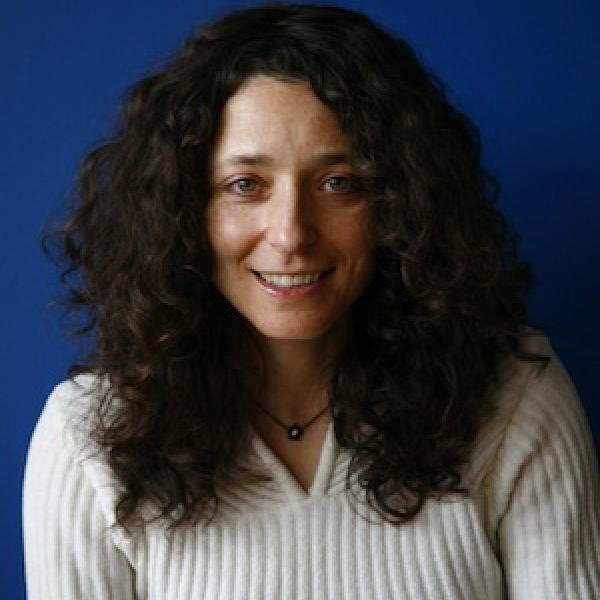
Jennifer Scappettone is Associate Professor in the Department of English at the University of Chicago, where she has taught since 2006. She holds a Ph.D. from the University of California at Berkeley (2005) and is a faculty affiliate of the Committee on Environment, Geography, and Urbanization and the Center for Study of Gender and Sexuality. She founded and advises the Environmental Humanities + Arts Lab (The City and its Others). Her research spans ecopoetics, environmental justice, translingualism, and avant-garde studies across 19th-21st centuries. She investigates vulnerable landscapes, poetic resistance to fascism, and urban geographies through radical documentary methods. Her work bridges poetry, scholarship, translation, and performance with collaborators including Deep Time Chicago, Judd Morrissey, and choreographers. Analysis of her publications reveals sustained exploration of anthropogenic landscapes , linguistic metamorphosis , and spatial justice . Key trends include: geopoetic interventions in urban watersheds, xenoglossic resistance to ethnonationalism, and sensory documentation of toxic sites. Her work consistently connects environmental harm with colonial and fascist violence through experimental forms. Raiziss/De Palchi Book Prize (2012) Italian Ministry Translation Prize (2012) Modernist Studies Association Book Competition Finalist (2014) Creative Capital Award Finalist (2023) She advises the Environmental Humanities Lab and received a 2015-16 Mellon Fellowship for "The Data That We Breathe" project. Current grant-supported initiatives include the 2024-25 "Geopoetics of Urban Rivers" symposia between Chicago and Paris. Her research has been funded by Harvard's Villa I Tatti, Stanford Humanities Center, Getty Research Institute, and American Academy in Rome. Her Environmental Humanities + Arts Lab (The City and its Others) catalyzes interdisciplinary projects on urban ecologies. Recent initiatives include "Sensing the Anthropocene" co-taught with Visual Arts, deploying non-visual senses to document Chicago's anthropogenic landscapes through drawing, scoring, and experimental book-making.