Dr. Michael Wood is an Associate Professor of Physics at the University of St. Thomas, specializing in laboratory astrophysics research that bridges astronomy and atomic physics. His work investigates the cosmic origins of elements through spectroscopic analysis of atomic transitions, with applications in understanding nucleosynthesis and exoplanet composition. Wood's research involves measuring atomic transition probabilities using advanced spectroscopic techniques to improve astronomical data. His NIH-funded work has produced critical atomic data for thousands of transitions published in journals like Journal of Physics and Astrophysical Journal . Recent publications focus on transition probabilities for iron-group elements and their implications for stellar evolution models. He teaches undergraduate and graduate courses including Classical Physics II and Astrophysics, integrating laboratory experiences into upper-level coursework. His pedagogical work includes developing the "Integrated Laboratory in an Upper-Level Astrophysics Course" (2021).
Satoshi Takahama is an Adjunct Professor at the Laboratory for Environmental Spectrochemistry (LESC) within the School of Architecture, Civil and Environmental Engineering (ENAC) at École Polytechnique Fédérale de Lausanne (EPFL). He also contributes to teaching through the SSIE - Teaching unit at EPFL and serves on the PhD program committee for Civil and Environmental Engineering. His research is centered on the measurement, analysis, and modeling of atmospheric aerosols and their impacts on air quality and climate. Research Interests: Measurement and modeling of atmospheric aerosols Application of Fourier-transform infrared (FTIR) spectroscopy for aerosol characterization Functional group analysis of organic particulate matter Development of computational and chemometric tools for environmental data analysis Climate and air quality impacts of biomass burning and urban emissions His recent publications reflect a strong focus on the chemical evolution of aerosols, instrumental development (e.g., electrostatic collectors), and data-driven approaches to emission inventories and monitoring. These works span atmospheric chemistry, environmental engineering, and analytical method development. Scientific Awards: No awards listed in the provided text. Advising and Grants: Supervised multiple PhD students including Virginia Tadei, Gözde Bitlislioglu, Eirini Boleti, Nikunj Dudani, Giulia Ruggeri, and Amir Yazdani. Involved in large-scale monitoring network studies (e.g., IMPROVE, SEARCH) and international field campaigns (e.g., Cal-Mex, SOAS). Contributed to the development of open platforms such as AIRSpec for infrared spectroscopy analysis. Labs and Teams: Laboratory for Environmental Spectrochemistry (LESC), EPFL Collaborations with research groups in the U.S. and Europe on aerosol characterization and modeling Active participant in international conferences and research networks in aerosol science.
Jürgen Hauer is a Professor at the Technische Universität München (TUM) within the TUM School of Natural Sciences . He leads the Professorship for Dynamic Spectroscopy , focusing on ultrafast chemical processes using femtosecond laser spectroscopy. His work spans energy transfer pathways, photocatalytic reactions, and molecular dynamics across ten timescale orders. Research Interests Ultrafast energy transfer in photosynthetic systems Femtosecond spectroscopy for reaction bottlenecks Development of advanced time-resolved methods Photochemical kinetic resolution of enantiomers Application to sustainable chemistry and catalysis Recent Publications (2025) highlight innovations in transient absorption anisotropy, Stokes shift dynamics, and FT-IR bacterial analysis. His scientific awards include the FWF's START Prize and Lise Meitner Fellowship. Teaching activities at TUM include courses in Biophysical Chemistry and Experimental Physical Chemistry.
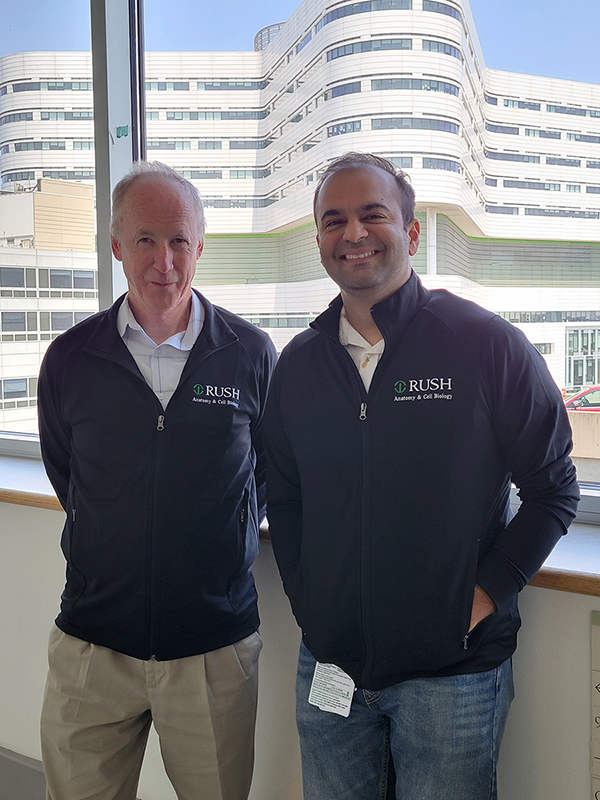
D. Rick Sumner, PhD, serves as Professor and Chair of the Department of Anatomy & Cell Biology at Rush Medical College, Rush University, and directs the Rush MicroCT and Histology Core. With over 30 years of continuous research funding from major institutions including NIH, DoD, NASA, and industry partners, his work has established him as a leading researcher in bone biology and orthopedic biomechanics. His laboratory maintains active collaborations with research groups both within Rush and internationally. Dr. Sumner's research focuses on fundamental aspects of bone biology with direct clinical applications. His primary areas of investigation include bone regeneration mechanisms, orthopedic implant fixation, and the role of bone in osteoarthritis pathogenesis. Specific projects examine the genetics of bone regeneration, effects of premature birth on postnatal bone development, early detection of particle-induced peri-implant osteolysis, and cartilage-bone interactions in osteoarthritis. His lab employs advanced imaging techniques including micro-computed tomography, backscatter scanning electron microscopy, and Fourier transform infrared spectroscopy, complemented by histology, mechanical testing, and biomarker analysis. Analysis of Dr. Sumner's recent publications reveals a strong interdisciplinary approach spanning bone biology, immunology, microbiome research, and circadian rhythms. His work demonstrates how bone health intersects with systemic conditions including inflammatory bowel disease, circadian disruption, and premature birth. The research consistently applies sophisticated imaging and analytical techniques to understand bone-implant interfaces and develop improved diagnostic and therapeutic approaches for orthopedic conditions. Dr. Sumner serves as Principal Investigator or Multiple Principal Investigator on multiple NIH grants including R01AR080118 (bisphosphonates and bone matrix), R01AR079179 (systems genetics of bone regeneration), R21HD102026 (bone health in formerly premature individuals), and P30AR079206 (Chicago Center on Musculoskeletal Pain). He has mentored numerous postdoctoral fellows including Frank Ko, PhD, and Brittany M. Wilson, PhD, who continue research in bone regeneration and implant osteolysis. Dr. Sumner's laboratory operates as the Laboratory of D. Rick Sumner within the Department of Anatomy & Cell Biology at Rush University Medical Center. The lab maintains the Rush MicroCT and Histology Core, providing advanced imaging capabilities for bone and implant research. His team includes bioinformaticians, postdoctoral researchers, and technical staff working collaboratively on multiple projects related to bone regeneration, implant fixation, and osteoarthritis mechanisms.
Kyle Crabtree is an Associate Professor in the Department of Chemistry at the University of California, Davis, focusing on molecular spectroscopy and quantum chemical calculations for astrochemical applications. He joined the UC Davis faculty in 2014 after postdoctoral work at the Harvard-Smithsonian Center for Astrophysics. Ph.D., University of Illinois (2012) B.S., Ball State University (2006) Research Interests The Crabtree Lab investigates: Photodissociation dynamics of diatomic molecules Fourier transform microwave spectroscopy of astrochemical radicals Mid-infrared spectroscopy technique development Chemical models for interstellar molecule formation Quantum chemical calculations for astrophysical identification Low-temperature nuclear spin chemistry Scientific Awards UC Davis Hellman Fellow (2016) NASA Earth and Space Science Fellowship (2011-2012) Astrochemical Impact His research bridges laboratory experiments and theoretical models to identify space molecules and explain their formation/destruction pathways. Recent work focuses on nitrogen-containing radicals, carbon chains, and advanced spectroscopic tools.
Julia Dusk Kennefick serves as Associate Professor and Department Chair in the Physics Department at the University of Arkansas' College of Arts and Sciences. A native Arkansan and University of Arkansas alumnus, she returned to her alma mater in 2003 after completing her Ph.D. at Caltech and postdoctoral work at Ohio State University and Oxford University. Education: B.S. in Physics (1989), University of Arkansas Ph.D. in Physics (1995), California Institute of Technology Research Focus: Dr. Kennefick's work centers on observational astronomy with emphasis on active galactic nuclei (AGN) and quasars . She investigates AGN-host galaxy relationships, conducts deep-space surveys for high-redshift quasars, and develops methods to measure supermassive black hole masses through spiral arm pitch angles. Her recent expansion into studying galaxy outskirts for dwarf galaxies and gamma ray bursts demonstrates her evolving research trajectory across extragalactic phenomena. Publication Trends: Analysis of her 15 most recent publications reveals a dominant focus on the black hole-galaxy connection , particularly how spiral structure metrics correlate with central black hole masses. Her methodological innovations in pitch angle measurement using Fourier decomposition have become influential, while her dual-AGN identification work addresses critical questions about galaxy mergers. The consistent use of multi-wavelength data (optical, infrared, UV) from global observatories underscores her observational approach. Scientific Recognition: Fulbright College Master Advisor Award (2023) Robert C. and Sandra Connor Endowed Faculty Fellowship (2007) National Science Foundation ADVANCE Fellowship (2004-2007) National Physical Science Consortium Graduate Fellowship (1989-1995) Kingsley Foundation Graduate Fellowship, Caltech (1992) Mentorship & Resources: As Master Advisor Award recipient, Dr. Kennefick actively guides student research including gamma ray burst studies. Her observational program leverages major facilities like Hubble Space Telescope, Palomar Observatory, and international telescopes across Chile, Hawaii, and Australia. Fellowship support from NSF and Caltech provided critical early-career resources for her survey work. Collaborative Framework: Leading the Arkansas Center for Space and Planetary Sciences, she coordinates observational campaigns involving international teams. Her research group frequently collaborates with her husband (also Physics Professor at UARK) and institutions including Ohio State and Oxford, while utilizing data from space telescopes like Spitzer and GALEX for multi-spectral analysis.
Luis Carlos Colocho Hurtarte is a Researcher and Ph.D. candidate at the Department of Soil Science, Technische Universität München (TUM-Germany). As a member of the LINXS community, he contributes to the Advanced Imaging and Data Analysis theme through interdisciplinary research bridging soil science and neutron/X-ray imaging technologies. Key Research Focus: Fate and interrelations of carbon with nutrients/contaminants in tropical and temperate soils Methodologies: Scanning Transmission X-ray Microscopy (STXM), Micro-Fourier Transform Infrared Spectroscopy (µ-FTIR), X-ray Absorption Near Edge Structure (XANES), X-ray Diffraction (XRD) Scientific Affiliation: LINXS Fellow
Dr. Ruth Ellerbrock is a Researcher in the Agricultural Biogeochemistry working group at ZALF's Research Area 1: 'Landscape Functioning'. Her expertise focuses on soil chemistry, particularly carbon dynamics and organic matter analysis. She employs advanced techniques like Fourier Transform Infrared Spectroscopy (FTIR) and DRIFT Mapping, alongside ecotoxicology and contact angle measurements. She is affiliated with the Leibniz Centre for Agricultural Landscape Research (ZALF) in Müncheberg, Germany. Though no formal education details are provided, her research aligns with ZALF's mandate to study agricultural landscapes through interdisciplinary approaches. Her work contributes to understanding soil health, environmental sustainability, and biogeochemical processes in agroecosystems. No scientific awards or specific grants are listed in the provided text. She collaborates within the Agricultural Biogeochemistry group, part of ZALF's broader structural framework addressing landscape functioning and agricultural systems.
Dr. Giovanni Ciotti is an academic affiliated with the University of Bologna and the Cluster of Excellence 'Understanding Written Artefacts' (UWA) at the University of Hamburg. He serves as Project Lead for the initiative 'Towards a Comprehensive Approach to the Study of South Indian Palm-Leaf Manuscripts' (2020–2025). His research focuses on material analysis of manuscripts, digital palaeography, and the intersection of technology with traditional textual studies. He has contributed to projects such as the Palm Leaf Manuscript Profiling Initiative (PLMPI) and the NETamil network exploring Tamil intellectual exchange networks. His work integrates scientific methods like FTIR spectroscopy and chemometrics with humanities research, addressing questions of provenance, conservation, and textual transmission. He has collaborated on initiatives like the High Performance Lab and Data Linking Lab, applying advanced technologies to cultural heritage preservation. Dr. Ciotti has published extensively on topics including manuscript materiality, digital encoding strategies for Indic texts, and interdisciplinary approaches to South Asian literary traditions. His research also engages with the technical aspects of manuscript production, such as binding techniques and paratextual analysis.
Professor Emel Önder Karaoğlu serves in the Department of Textile Engineering at Istanbul Technical University's Faculty of Textile Technologies and Design. With an h-index of 18 and 2127 citations, her research focuses on advanced textile applications for thermal energy storage and functional materials. Her primary research interests form a distinctive fingerprint in materials science, including Phase Change Material integration for heat storage Electrospinning techniques for nanofiber production Organoclay-modified polyurethane nanocomposites Thermal energy storage textiles Polyethylene glycol applications in smart fabrics Her work bridges fundamental material science with practical textile applications, particularly in sustainable energy storage solutions. Analysis of her recent publications (2018-2025) reveals strong thematic consistency in thermal management materials, with increasing focus on renewable energy storage applications and biomedical implementations like magnetic hyperthermia. Her research output demonstrates methodological expertise in electrospinning and nanocomposite characterization. Professor Karaoğlu has supervised 16 graduate students as indicated by institutional records, though specific names aren't publicly listed. Her laboratory work centers on nanofiber production and thermal property characterization, utilizing equipment for electrospinning, scanning electron microscopy, and thermal analysis.
Oscar Leandro Ramos is a researcher at the Centre for Biotechnology and Fine Chemistry (CBQF) of the Portuguese Catholic University (UCP) since 2018. He transitioned to a Senior Researcher role at Biorbis in Nov 2023, leading projects in food innovation, sustainability, and advanced materials. His career spans academia, entrepreneurship (co-founder of Blendera Food Solutions), and industry collaboration with Amyris Inc. and Biorbis. Education: PhD in Microbiology (2007-2012) from ITQB/Nova University of Lisbon, with research at CBQF/UCP. Ramos focuses on sustainable formulation technologies, including edible coatings, nanoscale delivery systems, and bio-based hydrogels. His work bridges food science, biotechnology, and materials engineering, addressing applications in food preservation, cosmetics, and biomedical sectors. His recent publications highlight advancements in biopolymer design, liposomal delivery systems for skincare, and superabsorbent hydrogels for agriculture. These contributions align with UN Sustainable Development Goals, particularly in sustainability and innovation. Scientific Awards: Annual incentives by CBQF (2020-2022) Honorable distinction by COTEC Portugal (2012) Honorable distinction by Food Hydrocolloids (2016) Ramos has co-supervised 1 postdoctoral, 5 PhD (2 as sole supervisor), 11 MSc, and 15 undergraduate students. He has led R&D collaborations between academia and industry, translating research into market-ready products and securing competitive funding for projects like Alchemy and Fermentation Solutions.
Dr. Jonathan Elsey is a Visiting Research Fellow in the Department of Meteorology at the University of Reading, where he serves as Postdoctoral Research Assistant on the EU-funded MAPP (Metrology for Aerosol oPtical Properties) project. His work focuses on quantifying aerosol optical properties using the UK Met Office SOCRATES radiative transfer code within a Monte Carlo framework to reduce uncertainties in radiative forcing calculations. Previously, he held a Postdoctoral Research Assistant role on the ASPIC project analyzing laboratory data at the Rutherford Appleton Laboratory. His educational background includes a PhD funded by the NERC SCENARIO Doctoral Training Partnership with CASE sponsorship from the National Physical Laboratory, centered on deriving water vapour continuum absorption between 1-5 microns using atmospheric spectroscopic measurements. Dr. Elsey's research spans critical atmospheric radiation processes, with emphasis on water vapour continuum absorption in atmospheric windows, aerosol direct radiative effects, and solar spectral irradiance discrepancies. His work integrates Fourier Transform spectroscopy with radiation model development to address Earth's energy budget uncertainties and climate change impacts. Key methodological approaches include laboratory data analysis, Monte Carlo frameworks, and high-resolution radiative transfer code development (e.g., RFM-DISORT). His recent publications (2017-2022) demonstrate consistent focus on spectroscopic validation of water vapour continuum models and reconciliation of solar irradiance measurements, contributing to improved climate modeling accuracy. These works bridge laboratory experiments, atmospheric observations, and radiative transfer theory across near-infrared and visible spectral regions. Best Oral Presentation, 15th AMS Conference on Atmospheric Radiation (2018) University of Reading Department of Meteorology PhD Poster Presentation Prize (2016) As Principal Investigator on EU MAPP and ASPIC projects, Dr. Elsey manages significant research funding from the European Union and UK's Natural Environment Research Council. His collaborations include the UK Met Office, National Physical Laboratory, and international institutions like the University of Oklahoma. Though no formal students are listed, he actively mentors through seminar leadership as former Lunchtime Seminar chair. He operates within the Department of Meteorology's Radiation Group, utilizing specialized facilities including the Dr Carbon Atmospheric Observatory and Rutherford Appleton Laboratory instrumentation for spectroscopic measurements. Current work involves Monte Carlo uncertainty quantification for aerosol radiative effects, with future directions targeting improved continuum models for next-generation climate simulations.
Charles A. DiMarzio is an Associate Professor in the Department of Electrical and Computer Engineering at Northeastern University , with affiliations in Mechanical and Industrial Engineering and Bioengineering. His research spans advanced optical imaging techniques for biomedical applications. Education: PhD in Electrical and Computer Engineering, Northeastern University (1996) MS in Physics, WPI BS in Engineering Physics, University of Maine Research interests focus on optics , microscopy , coherent detection , hyperspectral imaging , and collagen studies . His group develops hardware and computational methods for multi-modal biomedical imaging , including the Keck 3-D Fusion Microscope . Recent publications highlight innovations in: Collagen monomer orientation measurement Super-resolution structured illumination Ultrasound-modulated light imaging Coded-illumination Fourier ptychography Awards include: SPIE Fellow (2022) SPIE Senior Member (2021) Optica Senior Member (2021) He supervises capstone design projects and teaches graduate courses in Optics for Engineers and undergraduate classes in Circuits and Signals , Electronics , and Subsurface Sensing . Collaborations include the Gordon Center for Subsurface Sensing , ALERT , and institutions like Memorial Sloan Kettering Cancer Center.
Dr. Jonathan M. Larson is an Assistant Professor at Baylor University in the Department of Chemistry and Biochemistry, with Affiliate Faculty status at the Energy Storage and Distributed Resources Division of Lawrence Berkeley National Laboratory. His interdisciplinary research bridges physics, chemistry, and materials science. Ph.D. in Physics from the University of Maryland (2018) M.S. in Physics from Auburn University (2011) B.S. in Physics and Mathematics from Longwood University (2007) Larson's work focuses on nondestructive characterization of electrochemical interfaces using advanced techniques like infrared nanospectroscopy and scanning probe microscopy , targeting applications in Li-ion batteries , quantum materials , and biochemical systems . Key areas include solid electrolyte interphase (SEI) dynamics, 2D material catalysis, and nanoscale surface engineering. Recent publications highlight trends in operando infrared analysis of battery interfaces and light-driven C–H activation via transition metal dichalcogenides. Collaborations span Lawrence Berkeley National Laboratory, UC Publication Management System, and multidisciplinary energy storage initiatives. Scientific contributions include: Developing synchrotron-based infrared nanoimaging methods Elucidating SEI layer mechanics and cross-talk in Si/C composites Pioneering nanoscale FTIR signal processing algorithms
Simon Ussher is an Associate Professor of Marine and Analytical Chemistry at the University of Plymouth, affiliated with the School of Geography, Earth and Environmental Sciences within the Faculty of Science and Engineering. He is also the Associate Head of School for Research and a PhD supervisor. His work focuses on marine biogeochemistry, trace metal cycling, and atmospheric deposition impacts on ocean systems. Research interests include iron and carbon dynamics in marine environments, hydrothermal influences, and methodological advancements in chemical analysis. He contributes to global sustainability goals through studies on oceanic iron limitation, anthropogenic impacts on marine ecosystems, and the development of novel analytical techniques for environmental monitoring. His interdisciplinary approach bridges analytical chemistry with ecological and climatological outcomes. Recent research highlights include investigations into mesopelagic iron-carbon co-limitation, Southern Ocean hydrothermal iron transport, and the effects of shipping regulations on atmospheric sulfur deposition. Publications span over two decades, emphasizing both field-based and experimental studies in marine and atmospheric chemistry.