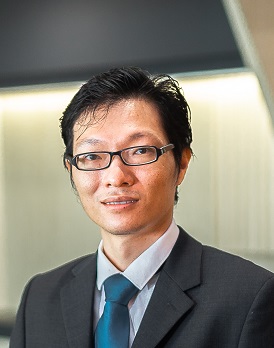
Dr. He Wang is an Associate Professor in the Department of Physics at the University of Miami's College of Arts and Sciences. His research focuses on nanotechnology, optoelectronics, and renewable energy materials. Contact: hxw373@miami.edu . Research Interests : Development of scalable perovskite solar cells with improved efficiency and photostability Investigation of atomically precise gold nanoclusters for photothermal and plasmonic applications Exploration of coherent vibrational dynamics in metallic and molecular-state nanomaterials Ultrafast electron dynamics and single-atom effects in bimetallic nanoclusters Recent Publications Trends : Advancements in blade-coating and vacuum quenching techniques for solar cells Discovery of longitudinal excitons in sub-2 nm gold nanorods Clarification of metallic-to-molecular transition thresholds in gold nanoparticles Engineering bulk heterojunctions for balanced charge transport in photovoltaics Applications : Solar energy conversion, biomedical imaging, photocatalysis, and semiconductor design.
Prannoy Suraneni serves as an Associate Professor in the Department of Civil, Architectural and Environmental Engineering at the University of Miami's College of Engineering. His academic position places him at the forefront of concrete technology research with a strong emphasis on sustainable construction materials and innovative engineering solutions. Dr. Suraneni's research spans multiple critical areas in concrete science, with particular expertise in supplementary cementitious materials, sustainable alternatives for traditional concrete components, and advanced concrete processing techniques. His work addresses pressing industry challenges including carbon reduction in concrete production, durability enhancement under extreme conditions, and the development of novel construction methods like 3D concrete printing for specialized applications such as marine infrastructure. Analysis of his recent publications reveals a strong focus on sustainable concrete technologies, with particular emphasis on waste material utilization (eggshells, basaltic fines), advanced characterization of cementitious systems, and performance optimization for challenging environments. His research demonstrates consistent innovation in both fundamental material science and practical engineering applications, with significant contributions to understanding structure-property relationships in complex cementitious systems. Dr. Suraneni maintains active collaborations across multiple institutions as evidenced by his co-authorship on numerous publications. His research program addresses critical industry needs including carbon footprint reduction in concrete production, enhanced durability mechanisms, and innovative material processing techniques that push the boundaries of conventional concrete technology.
Pedro Nuno de Sousa Sampaio is a Researcher affiliated with the Faculty of Engineering and associated with research groups including COPELABS - Cognitive and People-centric Computing and BioRG - Bioengineering & Sustainability Research Group . His work spans biotechnology, sustainability, and spectroscopy applications.
Cozar Bogdan Ionuț is a Senior Researcher at the National Research and Development Institute for Isotopic and Molecular Technologies (INCDTIM), with a focus on molecular and biomedical physics. He has over 9 years of experience in research and is affiliated with the Department of Isotopic and Molecular Technologies, where he leads and participates in advanced scientific projects. MSc in Biophysics and Medical Physics (2009), Babeş-Bolyai University, Romania PhD in Physics (2011), Babeş-Bolyai University, Romania His research interests span molecular and biomolecular physics, theoretical physics, and nanotechnology, with a particular emphasis on self-assembled molecular structures, AFM investigations, Raman spectroscopy, and molecular recognition. He specializes in advanced spectroscopic techniques like SERS (Surface-Enhanced Raman Scattering), AFM (Atomic Force Microscopy), and FTIR (Fourier Transform Infrared Spectroscopy), applying these to biomedical and molecular detection challenges. Cozar's projects include the development of SERS-PCA biosensors for pathogenic microorganism detection, rational design of antimicrobial peptides, and structural dynamics of DNA molecules. His work also explores ion sensing through modified cyclic peptides and biosensor fabrication using ink-printing nanotechnologies. He is recognized in the academic community with a Web of Science ResearcherID (C-7049-2012) and holds the status of a Recognised Researcher (R2).
Christoph Krafft serves as Group Leader ( Arbeitsgruppenleiter ) at the Leibniz Institute of Photonic Technology (Leibniz-IPHT) in Jena, Germany, where he leads the Raman and IR Spectroscopic Analytics research group within the Spectroscopy/Imaging Research Department. His research program bridges physics, chemistry, and biomedical applications through advanced optical technologies. Dr. Krafft's expertise centers on vibrational spectroscopy techniques, particularly Raman and infrared methods. His research spans biomedical diagnostics (cancer detection, cellular analysis, infection mechanisms) and environmental applications (microplastic detection). He has developed innovative instrumentation including specialized Raman imaging systems, 1064 nm fiber probe spectrometers, and high-throughput screening platforms that address fluorescence interference challenges in biological samples. Analysis of his publication record reveals a strategic focus on clinical translation of spectroscopic technologies. His recent work demonstrates progression from fundamental methodology development toward practical diagnostic applications, particularly in intraoperative settings. The consistent collaboration with Jürgen Popp and international research teams across multiple disciplines highlights his position within a robust scientific network focused on advancing optical technologies for real-world challenges. Dr. Krafft actively participates in large-scale collaborative efforts, including international interlaboratory comparisons for microplastic detection standardization. His laboratory at Leibniz-IPHT maintains a dual focus on pushing technical boundaries in spectroscopic instrumentation while ensuring practical applicability in medical and environmental contexts.
Sunita Gautam Adhikari serves as a Casual Academic in the College of Science and Engineering at Flinders University while concurrently pursuing her PhD at the Flinders Institute for Nanoscale Science and Technology. Her dual role positions her at the intersection of teaching and cutting-edge materials research focused on renewable energy solutions. Her research expertise centers on advanced nanomaterials for solar energy conversion and storage systems. Key investigations include dye-sensitized solar cells (DSSCs), perovskite photovoltaics, titanium dioxide interfaces, and photocatalytic processes. She employs surface science techniques like X-ray photoelectron spectroscopy to analyze molecular anchoring mechanisms and interface degradation phenomena, with particular focus on N719 dye behavior on titania substrates and aging effects in solar cell architectures. Recent publications (2024-2025) reveal a strategic research trajectory toward sustainable energy materials, spanning from fundamental interface engineering in perovskite solar cells to innovative waste-derived electrode materials for supercapacitors. Her work demonstrates strong interdisciplinary collaboration across Australian and international institutions, with publications appearing in high-impact journals like Journal of Materials Chemistry A and Advanced Materials Interfaces . Adhikari's research directly contributes to UN Sustainable Development Goals 7 (Affordable and Clean Energy) and 12 (Responsible Consumption and Production) through her focus on green synthesis methods, waste valorization, and sustainable energy technologies. She operates within the collaborative ecosystem of the Flinders Institute for Nanoscale Science and Technology, leveraging advanced characterization facilities for nanomaterial development.
Prof. Dr. Bernd Klein is a Professor at the University of Applied Sciences Bonn-Rhein-Sieg (H-BRS) and Head of the Department of Digital Signal Processing and Submillimeter Technology at the Max Planck Institute for Radio Astronomy (MPIfR) . He serves as Project Manager for the APEX Telescope in Chile and Co-PI for the GREAT Receiver on NASA/ESA's SOFIA Observatory. 1989–1993: Diplom (FH) in Electrical Engineering, FH Gießen-Friedberg 1993–1996: Supplemental Studies in General Electrical Engineering, University of Siegen 1999–2004: Doctoral Researcher, MPIfR 2005: PhD in Astronomy, University of Bonn His research focuses on digital signal processing , THz/spectrometer development , and radio astronomical instrumentation . He pioneered high-resolution Fast Fourier Transform Spectrometers (FFTS) for telescopes like Effelsberg, APEX, SOFIA, and MeerKAT, with applications in submillimeter astronomy and space debris analysis . Key trends in his 15 most recent publications span terahertz heterodyne systems , quantum cascade laser phase-locking , stellar feedback mechanisms , and atomic oxygen detection in planetary atmospheres. His work bridges instrumentation development and observational astrophysics . 2018 : THz Science and Technology Best Paper Award, IEEE Microwave Theory and Techniques Society He leads instrumentation projects for radio telescopes and contributes to large-scale collaborations like the SFB 1601 (2023–present) on digital signal processing. His technical expertise includes field-programmable gate arrays (FPGAs) , heterogeneous computing architectures , and machine learning for astronomical data .
Professor Dorina Timofte is a distinguished academic and researcher serving as Professor in Veterinary Clinical Microbiology at the University of Liverpool School of Veterinary Science. She leads the Veterinary Microbiology Diagnostic Laboratory (VMDL), which provides essential diagnostic services for referral hospitals (Equine, Small animals and Farm animals) at Leahurst & Liverpool, as well as for external veterinary practices. Her leadership extends to multiple prestigious roles including Vice President of the European College of Veterinary Microbiology (2024-2027), Chair of the Education Committee of the European College of Veterinary Microbiology Executive Committee, and Director of the ECVM Training Centre at the University of Liverpool. Professor Timofte's research focuses on the surveillance and molecular epidemiology of multidrug-resistant bacteria, particularly healthcare-associated infections in human and veterinary hospitals. She has pioneered work in characterizing antimicrobial resistance mechanisms in companion and farm animals, with a particular emphasis on Enterobacteriaceae. Her research bridges veterinary and human health through a One Health approach, examining the genomic epidemiology of interspecies transmission of multidrug-resistant bacteria. She has led significant efforts to standardize laboratory procedures across veterinary microbiology laboratories in Europe through her leadership in ENOVAT (European Network for Optimization of Veterinary Antimicrobial Treatment). Professor Timofte's recent publication record demonstrates consistent high-impact contributions to the field, with numerous articles in leading journals covering topics from antimicrobial stewardship to rapid diagnostic technologies. Her work on ESKAPE pathogens in veterinary hospitals, molecular characterization of resistance mechanisms, and application of FT-IR spectroscopy for pathogen identification represents the cutting edge of veterinary clinical microbiology. Fellowship of the Royal College of Pathologists (FRCPath) by Published Works (2023) Fellow of the Royal College of Veterinary Surgeons (FRCVS) for Meritorious Contributions to the Profession (2023) PRECISI2016 from the Romanian Ministry of Education and Scientific Research (2016) Visiting Professor at Faculty of Veterinary Science Iasi (2011) Best Young Researcher award from the Romanian Ministry of Education and Scientific Research (2002) As an educator, Professor Timofte provides substantial teaching for veterinary students through clinical rotations in diagnostic pathology and bacteriology, with 288 hours of small group teaching annually. She integrates the diagnostic laboratory experience directly into student learning, providing practical aspects of clinical microbiology as required by the Royal College of Veterinary Surgeons. Her teaching receives consistently positive feedback from students. She also supervises honors projects and has guided research on topics including neonatal infectious arthritis in lambs and antimicrobial resistance in horses. Professor Timofte leads the Veterinary Microbiology Diagnostic Laboratory, which utilizes modern technologies such as proteomics and genomics for rapid identification of infectious agents and antimicrobial resistance genes. She chairs the Biosecurity and Infection Control Committee in the School of Veterinary Science and coordinates the Environmental Surveillance Programme, which is critical for detecting nosocomial pathogens in the hospital setting. Her leadership has been instrumental in establishing the first European College of Veterinary Microbiology residency standard training programme at Liverpool.
Dr. Soon Kok Heng serves as Head of Department of Mechanical Engineering and Senior Lecturer at Swinburne University of Technology Sarawak within the Faculty of Engineering, Computing and Science. He joined Swinburne in 2011 as a Lecturer and was promoted to Senior Lecturer in 2014, maintaining continuous academic service. His educational foundation includes: Advanced Diploma in Mechanical and Manufacturing Engineering (2005) MSc in Manufacturing Systems Engineering (Queen's University Belfast, 2006) PhD in Mechanical Engineering (Queen's University Belfast, 2010) Dr. Soon's research integrates computational mechanics with sustainable materials development, focusing on Finite Element Method applications for semiconductor reliability and polymer nanocomposites. His work examines processing-structure-property relationships in green chemistry and biodegradable composites, while innovating engineering education through technology-enhanced pedagogy. Recent publications demonstrate strong industry alignment in microelectronics packaging and agricultural waste valorization. His publication trends (2019-2021) reveal dual expertise in computational semiconductor reliability and sustainable biocomposites, with methodologies spanning FTIR/thermal analysis, finite element modeling, and natural fiber characterization. Key themes include agricultural waste upcycling, thermal stress reduction in microelectronics, and renewable resource utilization. Major recognitions include: Three 2019 Swinburne Research Awards (SoR Success, HDR Supervision, Publication) IMAPS 2017 Best of Session Award for thermal stress research Dual 2017 Innovation Expo Gold Medals for natural fiber composites and biotechnology integration Dr. Soon actively supervises research students and secures competitive funding, currently leading projects on nanocrystalline cellulose extraction and flipped laboratory pedagogy. His grant portfolio includes Ministry of Education Malaysia FRGS awards (2013, 2019) and multiple Swinburne Research Grants addressing sustainable materials and educational innovation.
Professor Domenico Majolino is a Full Professor at the Department of Mathematical and Computer Sciences, Physical Sciences and Earth Sciences at the University of Messina. He currently serves as Director of the Department (academic periods 2021/22-2023/24 and 2024/25-2026/27) and has held numerous leadership roles including Rector's Delegate for Teaching and e-Learning Evaluation. His research spans multiple disciplines with a focus on physics applied to cultural heritage, environmental science, and biophysics. Professor Majolino graduated in Physics from the University of Messina on May 3, 1984 with full marks and academic honors. He obtained his PhD in Physics on October 1, 1992, discussing the thesis "Study of relaxation processes in structured fluid systems". His academic career progressed from Researcher (1992-2001), to Associate Professor (2001-2004), to Full Professor (2004-present), with his disciplinary sector evolving to focus increasingly on physics for life sciences, the environment and cultural heritage. Majolino's research focuses on seven main areas: 1) Physical methodologies for archaeometry and cultural heritage diagnostics; 2) Environmental and food matrices analysis for radiological risk assessment; 3) Development of techniques for environmental physics, particularly microplastics characterization; 4) Biomedical applications; 5) Cooperative phenomena in hydrogen-bonded systems confined in porous matrices; 6) Hydration processes in aqueous polymer solutions; and 7) Vibrational dynamics of self-assembled drug-carrier systems. His work combines multiple experimental techniques including light scattering, infrared absorption, ultrasonic techniques, neutron diffraction and scattering, and X-ray absorption. His extensive publication record (over 280 publications with an H-index of 36 and more than 5,000 citations as of May 2025) demonstrates consistent contributions across physics, environmental science, cultural heritage preservation, and biomedical applications. Recent publications show a strong emphasis on radiological risk assessment in cultural heritage materials, advanced spectroscopic techniques for material characterization, and environmental pollution studies, particularly regarding microplastics and heavy metals. Professor Majolino has been actively involved in numerous research projects and grants, including scientific directorship of multiple University Research Programs (PRA) and coordination of significant initiatives like the TEC4ART project (Advanced technologies for cultural tourism in Sicily). He has served as scientific manager for PRIN research programs and as reviewer for international research evaluation bodies. His laboratory work involves state-of-the-art facilities at the University of Messina and collaborations with major European research centers including the Laboratoire Leon Brillouin (Saclay, France), the Institut Laue Langevin (Grenoble, France), and the European Synchrotron Radiation Facility. He has organized numerous specialized sessions at international conferences focused on cultural heritage preservation and metrology.
Dr. Jhy-Charm Soo serves as Assistant Professor in the Department of Biostatistics, Epidemiology & Environmental Health Sciences at Georgia Southern University since 2022. His expertise bridges occupational health science and environmental exposure assessment with significant contributions to industrial hygiene practices and personal protective equipment evaluation. Dr. Soo's academic credentials include: Ph.D. in Industrial Hygiene, National Cheng Kung University (2005-2011) B.S. in Occupational Safety and Health, Chang Jung Christian University (2000-2003) His research program focuses on critical occupational health challenges including aerosol and gas sampling methodologies, exposure assessment techniques, and personal protective technology development. Current projects address respirable crystalline silica exposures in stone fabrication industries, medical glove performance against hazardous substances like fentanyl, and microplastic contamination in urban environments. This work directly supports UN Sustainable Development Goal 3 (Good Health and Well-being) through evidence-based workplace safety interventions. Analysis of Dr. Soo's recent publications reveals strong methodological rigor across diverse applications: from spatial epidemiology of COVID-19 transmission to advanced materials testing for PPE. His work demonstrates consistent focus on practical exposure assessment solutions while adapting to emerging hazards like microplastics and illicit drug handling. Dr. Soo's scholarly impact is evidenced by 65 research outputs, an h-index of 13, and 475 Scopus citations. His research has been recognized through significant CDC/NIOSH funding and real-world applications in occupational safety standards. Key research funding includes: Nitrous Oxide Exposure: From Improved Sampling Method to Exposure Assessment (PI, CDC/NIOSH NORA, 2017-2020) Evaluation of portable direct reading instrument for VOCs in air (PI, CDC/NIOSH, 2015-2017) Treated rock dust: silica content and toxicity (Co-I, CDC/NIOSH OMSHR, 2015-2016) Dr. Soo maintains active research operations with experimental capabilities for exposure assessment and PPE evaluation, providing students with hands-on experience in field sampling, laboratory analysis, and instrument development for occupational health applications.
Bram Lap is an external researcher (part-time) at the University of Groningen's Faculty of Science and Engineering, Department of Astronomy. His work centers on developing advanced terahertz instrumentation for astronomical applications, with expertise in Fourier transform spectrometers, superconducting detectors, and optical modeling of far-infrared systems. Research Focus: Lap specializes in: Terahertz and far-infrared detector technology Few-mode Fourier transform spectrometers Kinetic Inductance Detectors (KIDs) for space polarimeters Optical coherence modeling Superconducting film characterization (e.g., NbTiN) His recent publications (2022-2025) demonstrate consistent themes in terahertz detection innovation, including ultra-sensitive space-borne polarimeters, energy absorption interferometry, and dispersive spectrometry techniques for material analysis. No scientific awards or student mentorship roles are documented. Lap collaborates extensively with institutions like SRON Netherlands Institute for Space Research, as evidenced by co-authored publications on THz instrumentation.
Lina Maria Velez Acosta is a Research Professor and Internal Researcher at the Agroindustrial Research Group (GRAIN) of Universidad Pontificia Bolivariana in Colombia. With a Master in Development, she leads and participates in multiple research initiatives focused on sustainable material development, particularly nanocellulose applications derived from Colombian agricultural resources like fique. Her work significantly contributes to the United Nations Sustainable Development Goals, especially those related to sustainable cities, responsible consumption, and industry innovation. Research Focus: Development and characterization of nanocellulose from agricultural residues for food, pharmaceutical, and cosmetic applications Key Areas: Turmeric and starch research, food emulsion technology, chemical characterization of agricultural materials Technical Expertise: X-ray diffraction, FTIR spectroscopy, morphological analysis, chemical characterization techniques Dr. Velez Acosta's research demonstrates a strong commitment to transforming agricultural waste into valuable products through nanotechnology. Her work spans multiple disciplines, bridging material science with food technology to create sustainable solutions that address real-world challenges in Colombia's agricultural sector. She has developed expertise in analyzing the structural and functional properties of biomaterials for industrial applications. Her publication record shows consistent output with 72 scientific productions, including journal articles, book chapters, and research reports. Recent work focuses on valorizing coffee grounds, turmeric rhizomes, and fique byproducts, demonstrating her dedication to circular economy principles. She has co-authored publications in reputable journals like Molecules and Foods, reflecting the quality and impact of her research. Current Projects: CHAKRA (Living Laboratory of Urban Agriculture), Nanofiquecel (nanocellulose applications), Tostado de panes Supervisión BT (industrial bread production), POTENCIAL DE LA CELULOSA DEL BAGAZO DE FIQUE Leadership Roles: Technical Leader for industrial bread production project, key researcher in multiple nanocellulose development initiatives As a research supervisor, Dr. Velez Acosta mentors students working on agri-food systems and nanocellulose applications, guiding master's level research on topics like the Antioquia agri-food supply system. Her collaborative approach is evident in her extensive network of research partnerships with Colombian institutions and industry partners, facilitating the translation of research findings into practical applications that benefit both the agricultural sector and consumers.