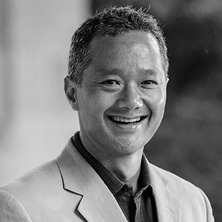
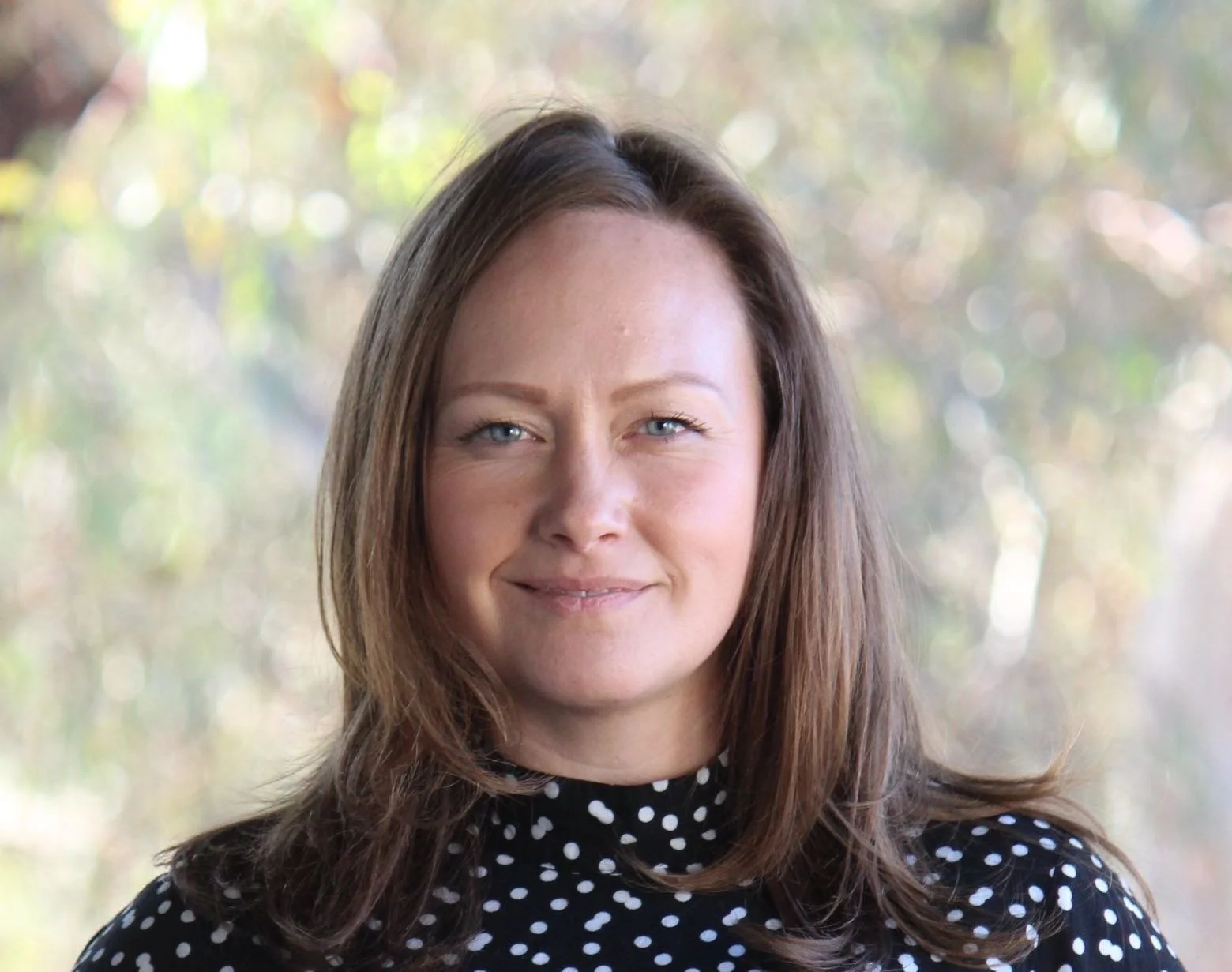
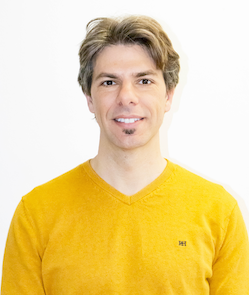
Dr. Andre A. Pekerti is an Associate Professor in International Management at The University of Queensland Business School (UQBS), specializing in multiculturalism, cultural intelligence (CQ), and servant leadership. A naturalised New Zealander and Australian of Indonesian-Chinese heritage, his research bridges personal multicultural identity with organizational effectiveness. He teaches in MBA programs and consults for institutions like BiasSync, focusing on unconscious bias solutions. Education: Bachelor of Science, University of Canterbury Masters (Research), University of Canterbury Doctor of Philosophy, The University of Auckland His research explores n-Culturals —individuals synthesizing multiple cultural identities—and their impact on trustworthiness, acculturation, and cognitive complexity. He develops multi-method CQ assessment tools and investigates servant leadership’s role in ethical workplace dynamics. Andre’s recent publications analyze gender disparities in global business, emotional memory effects in mergers, and sociocultural adaptation mechanisms. His work has informed training programs for organizations like the Royal Canadian Mounted Police (RCMP) and Human Factors AS Norway. Grants and Supervision: He has secured funding for projects on servant leadership (2012-2016), cultural intelligence (2004-2005), and Indonesian SME digital transformation (2020-2021). Currently supervising four PhD students on topics like post-merger cognition and digital change. Initiatives: Founder of UQBS’s Rapid Acculturation Mateship Program (RAMP), now expanded into Global Mates and BEL Buddies, which supports international student adjustment through peer mentoring.
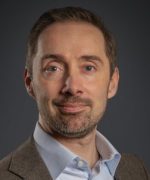
Jeroen Derwall is an Associate Professor of Finance at Utrecht University School of Economics and holds a part-time position at Maastricht University. He is co-founder of the European Center for Sustainable Finance (ECCE) and has held previous faculty positions at Open University of The Netherlands, Tilburg University, and RSM Erasmus University. His academic journey includes a PhD in Financial Management from RSM Erasmus University. Derwall's research expertise spans sustainable finance and investments, with particular focus on how sustainability (ESG) issues affect financial markets, investment portfolio management, active ownership, corporate behavior, and firm valuation. His work demonstrates significant evolution from early studies on eco-efficiency to contemporary research on biodiversity risk, climate change impacts, and regulatory effects of sustainable finance disclosure. He has established himself as a leading scholar in the field through consistent publication in top-tier journals including Management Science, Journal of Banking and Finance, and Financial Analysts Journal. His recent publications reveal a strong trend toward examining the materiality of ESG factors, with increasing sophistication in measuring environmental risks and their financial implications. The research shows progression from broad ESG analysis to more granular examinations of specific environmental risks like biodiversity and climate change impacts on firm performance. Moskowitz Prize from the Center of Responsible Business at UC Berkeley (2005) Finance & Sustainability Research Award of the French Social Investment Forum (2005, 2007) PRI/Sustainalytics Best Paper Award (2012) Excellent Graduate Educator at Maastricht and Tilburg Universities (2015) Winner of the 2024 GRASFI Conference Best Paper award Derwall actively supervises PhD candidates in sustainable finance and has co-developed Master's programs in Sustainable Finance at both Maastricht University (2014) and Utrecht University (2022). His research agenda has received external funding from MISTRA (2006-2011) and various institutional investors. He serves on the Academic Review Board of PGGM Systematic Equity Strategies (2022-2025) and the Netspar Program Research Council (2024-present), while also co-organizing major conferences including the inaugural Global Research Alliance for Sustainable Finance & Investments (GRASFI).
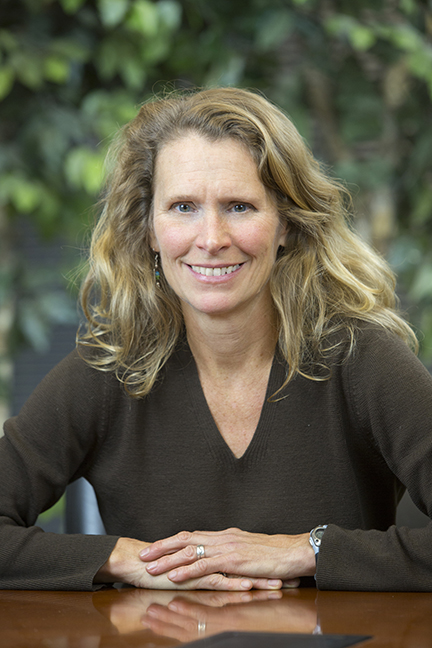
Susan K. Cohen serves as Associate Professor of Organizations and Entrepreneurship at the University of Pittsburgh's Katz Graduate School of Business, where her research investigates how firms achieve innovation success through organizational capabilities, social networks, alliance structures, and ecosystem strategies. Her work integrates resource-based theory, social network analysis, and complex contagion frameworks to advance knowledge in innovation commercialization. Her academic credentials include a PhD in Strategic Management from the University of Minnesota (1998) and a BS in Management Information Systems from Clarkson University (1986). Professor Cohen's research spans innovation dynamics, entrepreneurial ecosystems, knowledge management, and strategic alliance formation. She examines firm-specific language in life science business model transformation and analyzes how regional entrepreneurial ecosystems influence new venture resource acquisition strategies. Her current work emphasizes practical applications for improving innovation outcomes in complex technological environments. Analysis of her recent publications reveals consistent focus on innovation barriers and enablers across industries including biotechnology, machine tools, and wireless communications. Her work demonstrates evolving emphasis on ecosystem-level factors and cross-sector collaboration, with increasing attention to assistive technology translation and regional economic development. Scientific recognition includes: Distinguished Reviewer Award, Academy of Management Discoveries (2018) She has secured over $4.5 million in research funding through grants from NSF, NIDILRR, PPG Foundation, and University of Pittsburgh initiatives. Key projects include IMPACT Grant on community development ($4.5M), Pitt Seed Grants for entrepreneurial ecosystem diversity ($48,972), pharmaceutical R&D productivity studies ($7,000), and global innovation conferences sponsored by Bayer/Alcoa/PPG. Her editorial leadership includes Associate Editorship at Academy of Management Discoveries and TIM Division Program Chair-Elect role at the Academy of Management. Professor Cohen directs experiential learning initiatives including Commercializing New Technologies and Leading Organizations to Innovate courses, while co-organizing industry-academic partnerships like the Global Collaboration for Technological Innovation conference series.
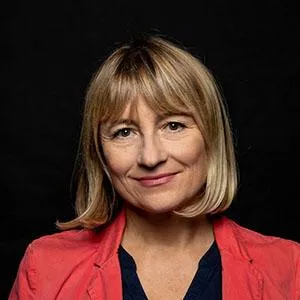
Professor Agnieszka Popiel is a psychiatrist, psychotherapist, and psychotherapy supervisor at SWPS University's Institute of Psychology in Warsaw. She serves as the Scientific Director of the Cognitive-Behavioral Therapy Clinic and heads the Center for Clinical Research and Psychotherapy Improvement. With over 25 years of experience, she has significantly contributed to developing psychotherapy as a scientifically grounded treatment method in Poland. Scientific Director of Cognitive-Behavioral Therapy Clinic Head of Center for Clinical Research and Psychotherapy Improvement Co-founder of School of Cognitive-Behavioral Psychotherapy Representative to European Association for Behavioral and Cognitive Therapies Professor Popiel's research primarily focuses on psychotherapy effectiveness based on evidence-based practice, psychopathology of mental disorders, and emotional problems associated with personality disorders. Her clinical work emphasizes cognitive-behavioral approaches, particularly in treating trauma and PTSD. She has developed specialized protocols including a cognitive therapy protocol for PTSD that forms the basis of the 'Effective Action Under Stress' prevention program published in 2019. Analysis of Professor Popiel's recent publications reveals a strong focus on PTSD research, particularly examining treatment effectiveness across different modalities. Her work spans trauma from motor vehicle accidents to war-related trauma and pandemic stress. A distinctive thread throughout her research is the investigation of how temperament and personality factors influence treatment outcomes. She has conducted pioneering cross-cultural validation studies of PTSD assessment tools and has extensively documented the comparative effectiveness of psychotherapy versus pharmacotherapy for PTSD. MedWoman 2023 Award for lifetime achievement Global CBT Ambassador program selection Publication award from Polish Academy of Sciences Professor Popiel, together with Dr. Ewa Pragłowska, directs postgraduate programs in Cognitive-Behavioral Psychotherapy and Supervision at SWPS University. They have trained approximately 1,000 psychotherapists working with adults, children, and adolescents, with another 1,000 specialists currently undergoing training. Through the TRAKT, TRAKT II, and TRAKT III programs, she conducted Poland's first clinical trials comparing psychotherapy and pharmacotherapy for PTSD. Her work has established evidence-based standards for psychotherapy practice in Poland. Professor Popiel directs the Center for Clinical Research and Psychotherapy Improvement and co-founded the School of Cognitive-Behavioral Psychotherapy at SWPS University. She initiated the Polish Association for Cognitive and Behavioral Therapy in 1998 and serves as its representative to the European Association for Behavioral and Cognitive Therapies. She is an active member of the EABCT Working Group on Training Standards, contributing to international psychotherapy education guidelines.
Lisbeth Louderback is an Associate Professor of Anthropology at the University of Utah and serves as the Curator of Archaeology at the Natural History Museum of Utah (NHMU) , where she also directs the Archaeobotany Lab . Since 2022, she has held the rank of Associate Professor, and from 2014 to 2022, she was an Assistant Professor. She is also a Senator at the University of Utah as of August 2024. She earned a BA in Psychology and Biology from Mills College (1999) , followed by two MA degrees in Anthropology from the University of Nevada, Reno (2007) and the University of Washington (2009) , and a PhD in Anthropology from the University of Washington (2014) . Her research focuses on the ecology of human-plant relationships , using archaeobotanical and paleoecological methods to understand dietary shifts over time. Key themes include: Starch granule analysis of ancient plant use Domestication and transport of Solanum jamesii (Four Corners potato) Climate-driven dietary change in the Great Basin and Colorado Plateau Gendered foraging strategies and subsistence patterns Lithic investment and mobility modeling She has led or co-led over 20 major research grants , including NSF-funded projects on potato domestication , Great Basin geophyte use , and Paleoindian plant use . Her work has been recognized with awards such as the Presidential Award from the Great Basin Anthropological Association (2023) and the Yeager Award for Scholarly Excellence in Archaeology . She teaches courses including Paleoethnobotany , Archaeology and Paleoecology of the Arid West , and Thesis Research-PhD , and mentors graduate students in museum collections and field-based research. She is actively involved in community outreach , including collaborations with the Bureau of Land Management, Red Butte Garden, and Native American tribal communities.
Kedrick James is a Teaching Professor in the Department of Language and Literacy Education at the Faculty of Education, University of British Columbia Okanagan . As of July 2, 2024, he serves as the Interim Director of the Okanagan School of Education, a role reflecting his leadership and advisory contributions to academic excellence and mentorship. Research Focus: Intersections of language, ecology, and technology; decolonizing education; digital arts-based methods; automation of literacy; socio-cultural impacts of digital media. Projects: Founder of PhoneMe (place-based poetry app) and Singling (text sonification software for accessibility). Leads the Digital Literacy Centre and The Patch (digital arts-based research). Research Trends: His recent publications emphasize digital literacies , transmediation , and collaborative methodologies in education. Works like Text Sonification and PhoneMe Poetry highlight innovative approaches to accessibility and community engagement. Awards: Murray Elliott Service Award for Outstanding Contributions to Teacher Education (2018) Advisory Roles: Active in curriculum development, teacher education, and advancing social justice and ecological preservation in Boundary Country. Grants include unspecified funding for projects like PhoneMe and Singling.
Mario Jolicoeur is a Full Professor in the Department of Chemical Engineering at Polytechnique Montréal. His research focuses on metabolic engineering, biomedical applications, and bioreactor design. He is affiliated with Spheroid AI Inc. (Co-founder, Scientific Director), Viridios (Collaborating Researcher), and the Institute of Biomedical Engineering (Member). Education: B.Sc.A., M.Sc.A., Ph.D. (Polytechnique Montréal and Paul-Sabatier University, Toulouse), Visiting Engineer (MIT) Jolicoeur develops metabolic engineering tools for cancer therapies and therapeutic agent production, designs mathematical models for cellular metabolism regulation, and creates aseptic culture equipment for diverse cells. His work spans CHO cells , microalgae , and tissue engineering . Recent publications highlight metabolic therapies for ovarian cancer, dynamic modeling of CHO cultures, and lipid production in Chlorella. Trends include cancer metabolism, mitochondrial dynamics, and bioreactor optimization. Supervision: He has mentored 43 graduate students since 1990, including those working on metabolic models, bioreactors, and biotherapies. Notable projects involve methylene blue in cancer treatment, ABE fermentation, and chondrocyte culture systems. Labs & Teams: Collaborates with interdisciplinary groups in biomedical engineering and chemical engineering, utilizing advanced bioreactor platforms and computational models.
Michelle Caswell is an Assistant Professor of Archival Studies at the University of California, Los Angeles (UCLA), affiliated with the Graduate School of Education and Information Studies. Her work focuses on the intersections of archival studies with social justice, human rights, and pluralism, particularly examining memory construction related to the Khmer Rouge in Cambodia and the role of community archives in empowering marginalized groups. Her research explores archival theory and practice, information ethics, the politics of accountability and access, and the collective memory of violence. She is deeply engaged in digital history, visual culture, and feminist archival praxis, often analyzing how records serve as agents in community memory work. Caswell's recent publications highlight trends in community archives, survivor-centered approaches to human rights documentation, and the application of radical empathy and feminist ethics in archival practices. Her work frequently addresses the challenges of representing marginalized communities and the ethical implications of archive creation and digitization. She is a co-founder and board member of the South Asian American Digital Archive (SAADA), contributing to the preservation of South Asian diaspora histories and advocating for inclusive digital cultural heritage strategies.
Kian Goh is an Associate Professor of Urban Planning at UCLA's Luskin School of Public Affairs, where she investigates the spatial politics of urban climate change responses across North America, Southeast Asia, and Europe. A licensed architect and co-founder of SUPER-INTERESTING! design practice, she bridges academic research with professional practice in urban ecological design and social mobilization. Her educational background includes: Ph.D. in Urban and Environmental Planning from MIT Master of Architecture from Yale University Prior academic appointments span Northeastern University, University of Pennsylvania, The New School, and Washington University in St. Louis. Dr. Goh's research centers on climate justice, urban resilience, and the intersection of design with social movements. Her work critically examines how climate adaptation plans reinforce or challenge spatial inequalities, with particular focus on queer space and smart city sociopolitics. Her forthcoming MIT Press book Form and Flow: The Spatial Politics of Urban Resilience and Climate Justice analyzes global power dynamics in urban climate responses through case studies in New York, Jakarta, and Rotterdam. Analysis of her recent publications reveals dominant themes in climate justice praxis, with strong emphasis on racial capitalism, fiscal equity, and grassroots mobilization. Her scholarship consistently connects urban theory to on-the-ground climate activism, highlighting how marginalized communities shape resilient futures through spatial resistance and alternative governance models. Dr. Goh has not been mentioned to have received specific scientific awards in the provided materials. As an educator and practitioner, she mentors students in urban planning while leading SUPER-INTERESTING!—a Brooklyn-based firm engaged in multidisciplinary architecture and strategic consulting. Her professional work with Weiss/Manfredi and MVRDV informs her academic research on just urban design and climate adaptation. Through SUPER-INTERESTING!, Dr. Goh collaborates with community organizations on climate resilience projects, particularly focusing on queer spatial practices and equitable smart city development. Her current fieldwork in Jakarta examines urban waterscapes and hydro-politics in sinking cities, while ongoing projects analyze fiscal mechanisms for climate justice in North American municipalities.
Terry Blum is the Tedd Munchak Chair and ADVANCE Professor at Georgia Institute of Technology, serving as Chair and Coordinator for Organizational Behavior and Faculty Director of the Institute for Leadership and Social Impact (ILSI). At ILSI, she develops interdisciplinary leadership programs including the Impact Speaker Series, Ideas to Serve (I2S), Global Social Ventures Competition, and Georgia Tech’s Excel Program for students with Intellectual Disabilities. She also co-developed entrepreneurship curricula for biomedical technology graduate students, expanded across engineering and science disciplines. Served as Dean of Georgia Tech’s College of Business (1999-2007) Co-founder of Georgia Tech’s Excel Program Collaborates on NIH training grants for Biomedical Engineering doctoral students Blum’s research spans organizational behavior, workplace health, and social entrepreneurship. She examines: Leadership dynamics and gender roles Substance abuse treatment organization management Technology transfer in healthcare Employee assistance programs and workplace health Disability inclusion in remote work Creative work environments Her publications focus on: Organizational behavior and human resource management Workplace substance abuse prevention Shared and servant leadership models Gender dynamics in management Sociological approaches to employee health Scientific awards include: Best Dissertation-based Paper Award (Organizational Behavior division, 2016) Top 10% Best Paper designation (Organizational Behavior division, 2016) Best Paper in Health Care Division (Academy of Management, 2011) Blum advises entrepreneurial initiatives like: Stanford’s Roundtable on Engineering Entrepreneurship Education Project Tsunami’s Global Brain Trust (Kauffman Foundation) Georgia Tech Technology Ventures (GATV) Georgia Tech’s Economic Development Institute She serves on: Academy of Management Journal editorial board Camp Twin Lakes executive committee Georgia Tech Faculty Senate Scheller College Honors Committee
Edward L. Gibson is a Professor and Kenneth Burgess Professor of Political Science at Northwestern University's Weinberg College of Arts and Sciences. He served as Department Chair (2013-2015) and currently holds the position of Associate Dean for Faculty Affairs at Weinberg College. His academic journey includes a B.A. from Clark University (1977) and a Ph.D. from Columbia University (1992). Co-founder of Northwestern's Comparative Historical Social Science Program Joint appointment in Latin American and Caribbean Studies Research Interests His work focuses on democratization, authoritarianism, federalism, and party politics in Latin America and the United States. Key themes include subnational democratic dynamics, comparative historical analysis, and institutional development. Publication Trends His publications span comparative studies of federalism, party systems, and democratization processes in Argentina, Brazil, Mexico, and the American South. Articles emphasize institutional persistence, electoral coalitions, and territorial politics. Scientific Awards V.O. Key Award (2014) for best book on U.S. Southern Politics Donna Lee Van Cott Award (2013) for Latin American Political Institutions National Science Foundation CAREER Award (1998) McCormick Professorship of Teaching Excellence (2003-2006) Advising & Grants Mentored 15 Ph.D. students with placements at institutions like University of Maryland, Rice University, and University of Pennsylvania. Secured grants from Howard Foundation, Searle Kinship Foundation, and NSF.
Kathryn (Kate) Henne serves as Professor and Director of RegNet (the ANU School of Regulation and Global Governance) at the Australian National University, where she leads the Justice and Technoscience Lab (JusTech). She concurrently holds an Adjunct Professor position at Arizona State University and serves as Associate Editor of Critical AI. Her research critically examines how technoscientific advancements reshape governance frameworks, with emphasis on developing equitable regulatory policies. Core interests span Regulation , Global Governance , and Technoscience , specifically addressing Algorithmic Ethics , Human-AI Interaction , Automating Governance , and Personalisation systems. Her interdisciplinary approach integrates Criminology and Science and Technology Studies to analyze power dynamics in emerging regulatory landscapes. Professor Henne has received significant recognition including the ANU Futures Award, alongside research funding from major international bodies. Her work demonstrates sustained impact across policy and academic domains. ANU Futures Award She has secured competitive grants from the Australian Research Council, National Science Foundation, American Society of Criminology, Canada Research Chairs Program, Social Sciences and Humanities Research Council, Canada Foundation for Innovation, and Ontario Research Fund. Her supervision and teaching excellence have also been formally recognized. As founder of the Justice and Technoscience Lab (JusTech), she directs collaborative research on technology's sociopolitical dimensions in regulatory contexts, fostering interdisciplinary partnerships across governance and technical domains.
François Gauthier is a Full Professor in the Department of Social Sciences at the Faculty of Arts and Humanities, University of Fribourg. Originally from Quebec, he earned his PhD in Religious Sciences from UQAM and previously taught at the Department of Religious Sciences at UQAM from 2009-2012 before joining the University of Fribourg in 2013. He is also the co-founder and co-editor of MAUSS International, an interdisciplinary English-language journal, and serves on the editorial board of the Revue du MAUSS semestrielle. His research spans a wide range of topics including: Sociology and anthropology of modern and contemporary religion in a global perspective Gift theory and its applications Religion and politics Religious festivals (particularly Burning Man and Rainbow Gatherings) Ritual studies (including death rituals) Neo-shamanism and alternative spiritualities Globalization and religion Gauthier's work focuses on developing analytical frameworks for understanding modern and contemporary religious transformations within a global context, particularly examining the relationship between religion and the rise of neoliberalism and consumerism. His approach draws heavily on Marcel Mauss's gift theory and connects with broader social scientific theories. His recent publications reveal a strong focus on the marketization of religion, with particular attention to Global Islam, religious transformations in Orthodox Eastern Europe, and Chinese religious developments. He has conducted significant research on transformational festivals like Burning Man and Rainbow Gatherings, exploring their ritual creativity and religious dimensions. His work also examines wellbeing-oriented spiritualities, religious change in risk societies, and the halal market phenomenon. Gauthier has received research funding from the Swiss National Science Foundation (FNS) for multiple projects including: "Spirits and Gods" (2025-2027) "Religion in the Market Era: The Rise of Market Islam, the Revenge of Confucius, and Other Stories from a Global Age" (2024) "European Network on Death Rituals - Annual Workshop" (2019-2020) "Burning Man and Transformational Event Cultures" (2018) "Ritual Creativity in the Swiss and European Rainbow Gatherings" (2017-2022) "Burning Progeny: The European Efflorescence of Burning Man" (2016-2019) He is particularly known for his work on the European adaptation of Burning Man and its ethos, having organized symposia and conducted ethnographic research on European transformational festival cultures. His research on death rituals in Europe has contributed to understanding contemporary transformations in funerary practices across linguistic regions of Switzerland.
Dr. Juli Feigon is a Distinguished Professor in the Department of Chemistry and Biochemistry at UCLA's College of Letters and Science, where she has been a faculty member since 1985. Her research focuses on the structure and function of nucleic acids using multidimensional NMR spectroscopy, X-ray crystallography, and cryo-EM to study telomerase, riboswitches, and RNA-protein complexes. As a member of the National Academy of Sciences and recipient of numerous prestigious awards, she has established herself as a leader in structural biology of nucleic acids. Dr. Feigon received her B.A. from Occidental College and her M.S. and Ph.D. from the University of California, San Diego where she studied with Dr. David Kearns. Her postdoctoral work was completed at the Massachusetts Institute of Technology as a Damon Runyon-Walter Winchell Cancer Fund Postdoctoral Fellow with Dr. Alex Rich. Dr. Feigon's laboratory studies nucleic acid structure and function with emphasis on telomerase structure and mechanism, H/ACA RNPs biogenesis, and riboswitch dynamics. Her group uses NMR spectroscopy as a primary tool, complemented by X-ray crystallography, cryo-EM, and biochemical methods to understand how RNA and RNA-protein complexes function in the cell and how mutations can lead to disease. Current research focuses on structure, function, dynamics, assembly, and folding of human telomerase, Tetrahymena telomerase, riboswitches, H/ACA RNPs, and other noncoding RNAs. Analysis of Dr. Feigon's recent publications reveals a progression from fundamental RNA structure studies to increasingly complex biological systems. Her work has evolved from isolated RNA domains to full complexes and holoenzymes, with growing integration of multiple structural biology techniques. While maintaining her core focus on telomerase structure, her research has expanded to include connections to human diseases like cancer and neurodegenerative conditions, demonstrating the broad applicability of her structural insights. Member, National Academy of Sciences (2009) Glenn T. Seaborg Medal (2024) Herbert Newby McCoy Award (2022) Dorothy Crowfoot Hodgkin Award from Protein Society (2017) Founders Award from the Biophysical Society (2019) Presidential Young Investigator, National Science Foundation (1989-1994) Camille and Henry Dreyfus Teacher/Scholar Award (1990) Dr. Feigon has mentored numerous postdoctoral fellows and graduate students who have gone on to independent positions at institutions worldwide. Her laboratory has been exceptionally successful in securing postdoctoral fellowships for its members, including American Heart Association, NIH Ruth L. Kirschstein, and Life Sciences Research Foundation awards. She established the 'Juli Feigon Helping Hands Award' to support postdoctoral fellows, research staff, and graduate students who are primary caregivers for dependent children or other family members, with matching funds from the Department of Chemistry and Biochemistry. The Feigon Laboratory maintains state-of-the-art NMR facilities including an 800MHz Bruker Avance with TCI cryoprobe, 600MHz with TXI cryoprobe, and two 500MHz spectrometers. The lab collaborates extensively with UCLA's DOE shared facilities for crystallization, protein expression, and X-ray/EM structure determination, as well as the EICN EM facility featuring Titan Krios and other advanced electron microscopy equipment. Her research group continues to investigate the structure, function, dynamics, assembly, and folding of telomerase and other non-coding RNA complexes.
Rafael Sebastian is a Full Professor at Universitat de Valencia and General Director for Science and Research of the Generalitat Valenciana. He leads the Computational Multiscale Simulation Lab (CoMMLab) and collaborates with institutions like Oxford University and Yale University. Department of Computer Science, Universitat de Valencia CoMMLab Founder Spanish Network of Excellence in Cardiac Modeling His research focuses on multi-scale computational models and artificial intelligence for patient-specific cardiac simulations , aiming to improve arrhythmia risk stratification and therapy planning . Key topics include cardiac conduction system modeling , scar-related ventricular tachycardia , and machine learning pipelines for clinical applications. Recent publications emphasize automata-based simulations for atrial arrhythmias, machine learning in arrhythmia localization, and 3D geometric characterization of aortic diseases. Trends show integration of computational modeling with clinical data and medical imaging . Scientific Awards: Best Poster Award, Functional Imaging and Modeling of the Heart (2021) Cum Laude Award, SPIE Medical Imaging (2009) Student Presentation Award (2011) He has supervised 7 PhD/Master students and led grants exceeding €1 million, including projects like iSARC-GENETICS and iCardioTwins , focusing on digital twin technology and cardiac disease stratification .