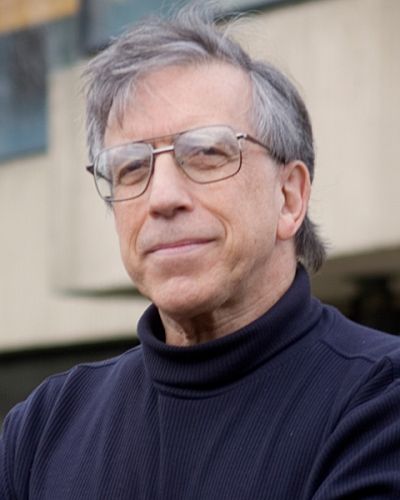
Mohammadreza Jalali serves as Professor and Chair of Engineering Geology and Hydrogeology at RWTH Aachen University's Faculty of Civil Engineering. His academic journey spans multiple prestigious institutions including ETH Zurich and the University of Waterloo, with extensive industry experience at Schlumberger and GEOMEC Engineering. His current research focuses on the intersection of geomechanics and hydrogeology with practical applications in energy and waste management systems. Dr. Jalali earned his Ph.D. in Earth & Environmental Sciences from the University of Waterloo (2013), following an M.Sc. in Petroleum Engineering (2007) and B.Sc. in Mining Engineering (2004), both from the University of Tehran. His educational background combines engineering fundamentals with earth sciences expertise, providing a strong foundation for his interdisciplinary research approach. His research interests center on Rock and Geomechanics, Applied Hydrogeology, and their applications to critical infrastructure challenges. Specializing in Thermo-hydro-mechanical coupled problems in rocks, he investigates Hydro-mechanical characterization of rocks, Hydraulic stimulation techniques, and Discrete fracture network modeling. His work has significant implications for Nuclear Waste Repositories and Deep Geothermal Energy systems, addressing some of the most pressing energy and environmental challenges of our time. Analysis of his recent publications reveals a strong focus on the mechanical behavior of clay-rich formations, particularly Opalinus Clay which is crucial for nuclear waste disposal. His work combines advanced experimental techniques with sophisticated numerical modeling to understand rock behavior under complex thermo-hydro-mechanical conditions. The research shows increasing emphasis on energy storage applications, particularly hydrogen storage in salt caverns, reflecting emerging energy transition needs. Dr. Jalali maintains active collaborations with major underground research laboratories including the Grimsel Test Site in Switzerland and the Bedretto Underground Laboratory. His work integrates field-scale experiments with laboratory investigations and numerical modeling, creating a comprehensive research framework that bridges theoretical understanding with practical engineering applications.