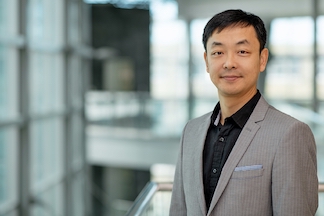
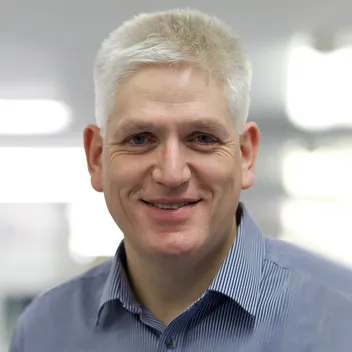
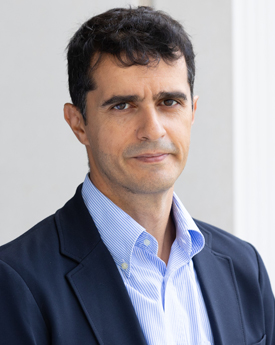
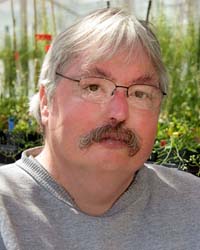
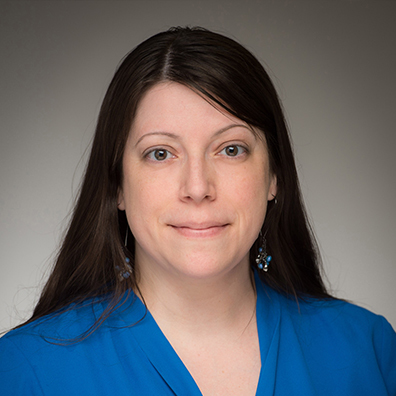
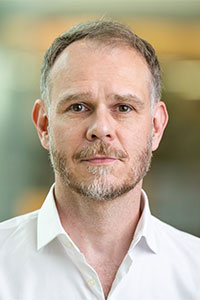
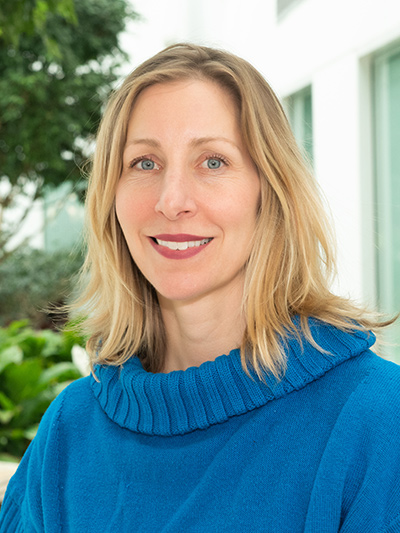
Yuanzhu Chen is a Professor in the School of Computing at Queen’s University, affiliated with the Faculty of Arts and Science. He previously served as Professor and Department Head at Memorial University of Newfoundland (2005–2021). His research focuses on computer networking, mobile computing, complex networks, and applied machine learning, emphasizing wireless innovation beyond traditional wired systems. He holds a PhD from Simon Fraser University (2004) and a B.Sc. from Peking University (1999). Education: PhD in Computing Science (Simon Fraser University, 2004); B.Sc. in Computer Science (Peking University, 1999). Earlier roles include Post-doctoral Researcher at Simon Fraser University (2004–2005) and leadership positions at Memorial University, including Department Head (2019–2021). Research Interests: Network Coding and Opportunistic Routing Mobile and Wireless Network Protocols Complex Network Analysis Machine Learning Applications Indoor Positioning Systems Social Network Dynamics Selected Awards: Recipient of Queen’s University President's Award for Distinguished Teaching. Lab Affiliation: Director of the Wireless Networking and Mobile Computing Lab (WineMocol). Active in collaborative projects involving smartphone sensors, community-based environmental monitoring, and stock market prediction using web data.
Professor Dario Alessi is a leading academic at the University of Dundee's School of Life Sciences, serving as the Director of the MRC Protein Phosphorylation Unit (MRC PPU) and Professor of Signal Transduction. He earned his BSc (1988) and PhD (1991) from the University of Birmingham. His research focuses on protein phosphorylation and ubiquitylation pathways, particularly the LRRK2 kinase pathway linked to Parkinson's disease. He has made groundbreaking contributions to understanding LRRK2's role in neurodegeneration, including its interaction with Rab proteins and scaffolding molecules like RILPL1. School of Life Sciences, University of Dundee MRC PPU Director since 2012 Signal Transduction Therapy Unit Director His work combines molecular biology, biochemistry, and collaborative industry partnerships to advance therapeutic strategies for Parkinson's disease. Key research areas include LRRK2 activation mechanisms, Rab protein phosphorylation, and lysosomal dysfunction. Alessi has trained over 30 graduate students and 40 postdocs, many now in academic and industry leadership roles. Notable awards include the EMBO Gold Medal (2005), the Robert A. Pritzker Prize for Leadership in Parkinson’s Research (2023), and an OBE (2023) for contributions to medical science. His lab promotes open science, sharing reagents and protocols globally through platforms like MRC Pure Agents and LRRK2.bio. Current projects include investigating novel mitochondrial and organelle biology in Parkinson’s, developing biomarkers, and advancing LRRK2 inhibitors through clinical trials. Collaborations span the Michael J. Fox Foundation, Aligning Science Across Parkinson’s, and the UK Dementia Research Initiative.
Professor David E. Gloriam is a leading expert in G protein-coupled receptors (GPCRs) at the University of Copenhagen , Department of Drug Design and Pharmacology. Recognized as a top 1% Clarivate Highly Cited Researcher, he leads GPCRdb, a major database with >50,000 annual users, and develops computational tools like GPCRgraphs for drug discovery. His innovation roles include Senior Scientific Expert at Kvantify A/S and applications in pharmaceutical industry tools with patent citations. Education: Ph.D. in Medicine (Uppsala University, 2006), M.Sc. in Pharmaceutical Sciences (Uppsala University, 2003) Leadership: Head of GPCRdb (2014–), EU COST Actions member (2014–17), and institutional leadership roles in Pharmaceutical Data Science unit and Research Leadership Forum Research Interests: His work spans computational modeling of GPCR dynamics, virtual screening methods for inaccessible receptors, pharmacogenomics (PGxDB platform), and biased signaling for safer drugs. He integrates structural biology, data science, and bioinformatics to advance pharmaceutical discovery. Awards: Clarivate Highly Cited Researcher (2022) IUPHAR Analytical Pharmacology Award (2023) Lars Arge Prize for Big Data (2021) UCPH Forward Talent Program (2019) ERC Starting Grant (2014) Teaching & Supervision: Teaches Molecular Pharmacology and AI in Drug Discovery , and supervises 3 current PhD students. He has mentored 13 PhDs and 14 Postdocs, with former members attaining tenured academic or industry roles.
Professor Efthymios Pavlidis is a faculty member in the Department of Economics at Lancaster University Management School (LUMS). He holds the rank of Professor and specializes in macroeconomics, international finance, and time series econometrics. His research focuses on housing market dynamics through collaborations like the International Housing Observatory (with the Federal Reserve Bank of Dallas) and the UK Housing Observatory. He is a Fellow of the Higher Education Academy, reflecting his commitment to academic excellence in teaching and research. His research interests include speculative bubble detection, real estate price forecasting, and testing parity conditions in financial markets. Pavlidis actively supervises PhD students in applied time series econometrics, emphasizing practical applications in financial markets and housing economics. He is involved in numerous academic activities, including organizing conferences and workshops such as the Dynare Conference and the Lancaster Economics Seminar. Key contributions include developing econometric methods for detecting market exuberance and analyzing real exchange rates. His work bridges theoretical econometrics with practical policy implications, particularly in housing and energy markets. Pavlidis collaborates internationally, evidenced by his participation in global academic networks and institutions like the European Economic Association and the Royal Economic Society. His teaching includes the course ECON222 Intermediate Macroeconomics I, and he maintains an office in the Management School (B015), with weekly office hours on Tuesdays. A comprehensive overview of his research and projects is available at his personal webpage: https://sites.google.com/view/etpavlidis/ .
Jeff Dangl is the John N. Couch Professor and an HHMI Investigator at the University of North Carolina at Chapel Hill, where he leads research in the Department of Biology. He has been studying plant-microbe interactions since 1989, focusing on two main areas: the plant immune system and the root microbiome. His laboratory is located in the Genome Sciences Building on UNC's historic campus, which is part of the Research Triangle Park area, a leading hub for biotechnology research. Dr. Dangl's research interests span several interconnected areas of plant-microbe interactions. His work examines how plants recognize pathogens through their two-tiered immune system consisting of extracellular pattern recognition receptors and intracellular NLR receptors. He also investigates how the plant immune system shapes the composition and function of the root microbiome. His lab uses Arabidopsis thaliana as a model system to study these interactions at multiple biological scales, from molecular and structural levels to small mesocosms. The research trends in Dr. Dangl's recent publications indicate a strong focus on understanding the molecular mechanisms of plant immune receptors, particularly NLR proteins and their activation pathways. His work increasingly integrates microbiome research with plant immunology, exploring how commensal microbes interact with and potentially modulate the plant immune system. There's also significant emphasis on the structural and functional aspects of immune receptor complexes, as well as the evolutionary dynamics of plant-pathogen interactions. HHMI Investigator John N. Couch Professor Dr. Dangl leads a diverse research group with members from several countries, emphasizing small team approaches to tackle complex problems in plant-microbe interactions. His students and postdocs benefit from access to multiple inputs about their work through this collaborative environment. His laboratory has developed expertise in genomics, ecological modeling, metabolic modeling, and both forward and reverse genetics to address questions about microbiome assembly and function. The Dangl lab maintains strong connections with the broader scientific community through collaborations and participation in major research initiatives. They work within the rich research environment of the Research Triangle Park, which includes UNC, Duke University, North Carolina State University, the North Carolina Biotechnology Center, and numerous life-science companies.
Zhipeng Lu is currently an Associate Professor of Pharmacology and Pharmaceutical Sciences at the University of Southern California (USC) School of Pharmacy. His research focuses on understanding RNA molecules and their structural complexity as a second layer of genetic instructions beyond protein encoding. He directs the Lu Lab at USC, which develops and applies novel technologies to investigate RNA structures, interactions, chemical modifications, and functions in cellular processes and animal development. Dr. Lu's research interests center on "RNA machines" in living cells, with particular emphasis on how RNA molecules fold into structures and form intermolecular interactions to execute genetic instructions. His work spans multiple dimensions of RNA biology, including RNA structure-function relationships, RNA-protein interactions, RNA modifications, and the role of RNA in human diseases such as genetic disorders and viral infections. The lab combines computational, chemical, and biological approaches to elucidate fundamental mechanisms of RNA machines, with the ultimate goal of developing new understanding and therapies targeting human diseases. Analysis of Dr. Lu's publication history reveals a strong trajectory in RNA structure and interaction mapping technologies. His work has evolved from foundational studies on RNA processing and modification to developing innovative high-throughput methods like PARIS and RISE for analyzing RNA interactomes. Recent publications focus on specific RNA systems like XIST and snoRNAs, demonstrating how his lab has moved from method development to applying these tools to solve longstanding biological questions in epigenetics and RNA therapeutics. Dr. Lu has received numerous prestigious awards recognizing his contributions to RNA research: NHGRI K99/R00 NIH Pathway to Independence Award (2017-2022) RNA Society Scaringe Award (2017) Stanford University Jump Start Award for Excellence in Research (2016-2017) Damon Runyon-Sohn Fellowship (2015-2017) His research is supported by multiple funding sources from organizations including the National Institutes of Health and other foundations. The Lu Lab is actively recruiting PhD students and postdoctoral researchers to work on several cutting-edge directions including RNA structures, interaction networks, RNA modification mechanisms, and their roles in development and disease. The lab integrates biological, chemical, and computational approaches to advance RNA biology and push forward RNA medicine. The Lu Lab at USC is a dynamic research environment focused on "RNA machines" with recent highlights including solving aspects of the orphan snoRNA problem and discovering snoRNAs that control eMet tRNA activity. The lab's vision emphasizes creative exploration of RNA biology, with researchers encouraged to pursue innovative ideas much like "wild animals running in the African savannah." Current research directions include analysis of RNA structures, interaction networks, RNA modification mechanisms, and their roles in development and disease, with applications to genetic disorders, cancers, and viral infections.
Rebecca A. Wingert is the Elizabeth and Michael Gallagher Associate Professor in the Department of Biological Sciences at the University of Notre Dame, where she also serves as Director of Graduate Studies and Chair of the Institutional Animal Care and Use Committee. Her research focuses on the genetic and molecular mechanisms of renal stem cells in kidney development, regeneration, and disease. Research Interests: The Wingert Lab investigates how renal stem cells contribute to nephron formation, homeostasis, and regeneration after injury. Her work addresses fundamental questions in developmental biology, stem cell biology, and organogenesis, with implications for understanding birth defects and chronic kidney diseases. Using zebrafish models, her lab explores conserved genetic pathways in vertebrate kidney development. Developmental Biology Stem Cell and Regenerative Biology Genetics & Genomics Molecular Biology Nephrology and Kidney Disease Rare and Neglected Diseases (e.g., Non-Ketotic Hyperglycinemia) Recent Research Trends: Analysis of her recent publications reveals a strong focus on transcriptional regulation (e.g., Tfap2a, Irx2a, Emx1), prostaglandin signaling, ciliogenesis, and nephron segmentation. Her lab uses zebrafish to model human renal diseases and uncover conserved mechanisms of nephrogenesis and repair. There is a recurring emphasis on metabolic regulation (e.g., PGC-1α) and injury response pathways. Scientific Awards and Recognition: Gallagher Family Professorship in Stem Cell Biology Advising and Grants: As Director of Graduate Studies, Dr. Wingert plays a central role in mentoring graduate students in the Department of Biological Sciences. While specific grant funding is not listed, her sustained productivity and leadership roles suggest active external support for her research program. She advises graduate students and postdoctoral researchers in her lab, fostering training in developmental genetics and renal biology. Labs and Research Teams: The Wingert Lab at the University of Notre Dame utilizes zebrafish as a model system to study kidney development and regeneration. The lab integrates forward and reverse genetics, chemical screening, and molecular imaging to dissect nephrogenesis and disease mechanisms. Her team collaborates across disciplines to model rare diseases and explore regenerative pathways.
Betül Boz is an Assistant Professor at the Department of Computer Hardware, Faculty of Engineering, Marmara University. She holds a B.Sc. and M.Sc. in Computer Engineering from Marmara University, and a Ph.D. in Computer Engineering from Boğaziçi University. Her research focuses on computer architecture, optimization, and evolutionary computing. B.Sc., M.Sc., and Ph.D. in Computer Engineering Her research interests include computer architecture, parallel algorithms, optimization techniques, and evolutionary algorithms applied to graph coloring and scheduling. Recent work explores cloud computing scheduling, register allocation, and bioinformatics applications like circRNA-disease prediction. She has published extensively in these areas, utilizing evolutionary computing and machine learning. Key trends in her publications include evolutionary algorithms for graph coloring (2015–2025), register allocation (2004–2024), and cloud computing optimization (2023). She also investigates biomedical applications such as circRNA-disease association prediction. She has advised one thesis, managed one project, and her work aligns with UN Sustainable Development Goals. Her research outputs include 14 WoS-indexed publications, 11 WoS citations, and an h-index of 25 on WoS.
Dietram Scheufele is the John E. Ross Professor in Science Communication at the University of Wisconsin–Madison and co-director of the Science Communication Incubator Lab (SCI Lab) at the Morgridge Institute for Research. He holds the Taylor-Bascom Chair and directs Academic Programs for the Department of Life Sciences Communication within the College of Agricultural and Life Sciences. Scheufele is internationally recognized as a leading scholar examining public opinion dynamics surrounding controversial science, with expertise in the interplay among media, policy actors, and lay audiences. His educational background includes a PhD in Mass Communications (major) with a minor in Political Science, and an MA in Journalism and Mass Communication, both from the University of Wisconsin–Madison. Scheufele has established himself as a prominent voice in science communication theory and practice, bridging academic research with real-world applications through collaborations with organizations like the World Health Organization, the World Bank, and Porter Novelli. Scheufele's research focuses on understanding how public opinion forms around emerging scientific issues, particularly examining the role of media, values, and misinformation in shaping attitudes toward controversial science and technology. His work spans multiple domains including AI, genetic engineering, climate change, and vaccine communication, with particular attention to how digital platforms transform science communication dynamics and public understanding. He has pioneered research on the psychological mechanisms underlying science attitudes and the effectiveness of different communication strategies in polarized environments. His recent publications reveal a strong focus on contemporary challenges in science communication, including AI perceptions, vaccine misinformation, science credibility across demographic groups, and innovative communication formats like science comics. The work demonstrates increasing attention to intersectional issues of race, gender, and political ideology in science communication, as well as methodological innovations in measuring science literacy in digital environments. Member, German National Academy of Science and Engineering Fellow, American Association for the Advancement of Science Fellow, International Communication Association Fellow, Wisconsin Academy of Sciences, Arts & Letters 2024 American Academy of Political and Social Science Fellowship (Harold Lasswell Fellow) University of Wisconsin–Madison Hilldale Award Scheufele has mentored numerous PhD students who have gone on to academic positions, including Becca Beets at the University of Maryland and Shiyu Yang at the University of Tennessee. His SCI Lab serves as a unique test bed for science communication practitioners and researchers to collaborate, experiment with new ideas in public science engagement, and assess impact through rigorous social scientific approaches. The lab leverages Wisconsin's position as a political 'purple' state to develop scalable models for communicating science that incorporate diverse viewpoints. Scheufele emphasizes the importance of 'paying it forward' in academic mentorship and fostering the next generation of science communication leaders.
Dr. Wei-Chin Ho is an Assistant Professor specializing in microbial genetics and evolutionary biology. His research integrates experimental, computational, and theoretical approaches to study how microorganisms adapt to environmental changes. Key focuses include mutation dynamics, phenotypic plasticity, genetic drift vs. selection, and the molecular mechanisms underlying traits like antibiotic resistance and biofilm formation. His research investigates topics such as mutation rate variation, metabolic adaptation, and evolutionary trade-offs in response to fluctuating resources. Recent work explores microbial survival strategies in feast-famine cycles and the reversibility of phenotypic changes during environmental adaptation. Dr. Ho’s studies emphasize understanding the interplay between genetic and environmental factors in shaping microbial evolution. His publications reflect a focus on experimental evolution, mutation analysis, and the genetic basis of microbial adaptation. Notable themes include hypermutator evolution, ecotype dynamics, and the limits of population genetic parameter estimation using temporal data. No scientific awards or grants are explicitly mentioned in the text. Advising and student mentorship details are not provided. Dr. Ho’s work is centered in microbial systems biology, with implications for understanding antibiotic resistance and environmental microbial responses.
Scott A. Jackson is the Georgia Research Alliance Eminent Scholar in Synthetic Biology at the University of Georgia's College of Agricultural and Environmental Sciences (CAES), Department of Crop & Soil Sciences. He holds adjunct professor roles in the Institute of Plant Breeding, Genetics and Genomics. His research focuses on genomic tools for crop improvement, particularly in legumes like peanut and soybean, with emphasis on genome structure-function relationships and synthetic biology applications. Education and career highlights include his tenure as GRA Eminent Scholar in Plant Functional Genomics (2011–2019) and leadership roles in the Plant Center and Center for Applied Genetic Technologies. After industry experience with Bayer Crop Science, he returned to UGA to establish genomic-driven crop improvement programs. He is an Associate Editor of The Plant Journal and Molecular Plant . Research interests span genome evolution, crop domestication, and translating genomic insights into agricultural practices. His work bridges academia and industry, emphasizing sustainable crop productivity and global food security. Awards include the NSF Young Investigator Award (2002) and AAAS Fellowship. Key initiatives include developing genomic resources for legumes, leveraging synthetic biology for crop innovation, and fostering interdisciplinary collaboration. His lab focuses on disease resistance, genomic assembly, and applying advanced modeling to agricultural systems. Awards: NSF Young Investigator Award, AAAS Fellow Labs/Teams: Center for Applied Genetic Technologies (CAGT), Institute of Plant Breeding, Genetics and Genomics (IPBGG) Grants/Funding: GRA Eminent Scholar Program, industry partnerships
Sri Niwas Singh serves as Chair Professor in the Department of Electrical Engineering at the Indian Institute of Technology, Kanpur, where he has established himself as a leading expert in power systems engineering with significant research contributions spanning multiple critical areas. His educational qualifications include: PhD in Electrical Engineering from IIT Kanpur (1995) M.Tech in Electrical Engineering from IIT Kanpur (1989) B.Tech in Electrical Engineering from KNIT Sultanpur (1987) Professor Singh's research program focuses on Power System Restructuring, FACTS Technology, Optimal Power Dispatch and Security Analysis, Power System Dynamics, Operation and Control, Distribution System Planning and Demand Side Management, and Application of Genetic Algorithms and Artificial Neural Networks in Power Systems. His work bridges theoretical concepts with practical applications, particularly in smart grid technologies and renewable energy integration. His publication record reveals a consistent research trajectory addressing evolving power system challenges, with increasing emphasis on renewable energy integration and computational intelligence techniques. The progression from traditional power system analysis toward smart grid technologies and AI applications demonstrates his ability to adapt research focus to emerging industry needs. His significant professional recognitions include: 2013 IEEE Educational Activities Board Meritorious Achievement Award in Continuing Education Three PhD theses supervised by him receiving the POSOCO Power System Award (2012) Humboldt Research Fellowship (awarded 2005 and 2007) INAE Young Engineer Award (2000) C.B.I.P. Young Engineer Award (1996) Professor Singh has mentored numerous graduate students, with three of his PhD students receiving the prestigious POSOCO Power System Award in 2012. His research has attracted substantial funding and collaboration opportunities, supporting advanced work in power systems analysis and control. His laboratory focuses on power system simulation, renewable energy integration studies, and smart grid technology development, with a research team comprising PhD scholars and industry collaborators working on cutting-edge power engineering problems.
Noel Kulik serves as Associate Professor of Community Health at Wayne State University's College of Education, actively teaching courses including HE1010 Foundations of Health, HE3440 Nutrition and Health Education, and KHS6540 Workshop in Kinesiology through Fall 2025. Holding a Ph.D. in Public Health from UNC Chapel Hill's Gillings School, Dr. Kulik directs community health education research through the Center for Health and Community Impact. Ph.D. in Public Health, Gillings School of Global Public Health, University of North Carolina at Chapel Hill Dr. Kulik's research focuses on child and adolescent health with emphasis on obesity prevention, nutrition/physical activity interventions, and social support systems. Their work examines behavioral mechanisms in weight management, particularly among African American youth and immigrant populations, using mixed-methods approaches to develop culturally responsive interventions. Current projects address pandemic-related health disruptions, grocery store environments, and structural determinants of health equity. Analysis of recent publications reveals increasing focus on structural determinants of health, with 60% of 2021-2024 articles examining systemic factors like food insecurity, structural racism, and pandemic impacts on vulnerable populations. Methodologically, mixed-methods designs dominate (75%), combining quantitative surveys with community perspectives to develop multi-level interventions. Recipient of $2.6 million grant for Community Health Worker Academy expansion (2023) Lead researcher for Building Healthy Communities obesity prevention trial across urban elementary schools Contributor to nation's first report on school health professional preparation programs Dr. Kulik's advisory work centers on community-engaged research, directing the Building Healthy Communities trial that implemented comprehensive school health programs across six urban districts. Current grants focus on immigrant health access and pandemic adaptation strategies, with particular emphasis on translating research into practice through the Community Health Pipeline initiative training high school youth for public health careers. Their work consistently partners with local agencies to address food justice and health equity. As Research Faculty for the Center for Health and Community Impact, Dr. Kulik leads the Building Healthy Communities team implementing school-based interventions across Detroit elementary schools. Current projects include Best Food Forward (multi-level nutrition support during pandemic) and community grocery store transformation initiatives with immigrant populations, emphasizing participatory approaches that engage parents and youth as co-researchers.
Jonathan Eggenschwiler is an Associate Professor in the Department of Genetics at the University of Georgia (UGA), affiliated with the UGA Developmental Biology Alliance. His research focuses on molecular mechanisms governing tissue patterning during mammalian embryonic development, particularly through Hedgehog and Nodal signaling pathways. B.A., Biology, University of California, Santa Cruz (1988) Ph.D., Genetics and Development, Columbia University (1998) Postdoctoral Research, Sloan-Kettering Institute (2003) Using mouse models, his lab investigates how Hedgehog signaling controls cell fate specification in the central nervous system and explores Nodal signaling in left-right axis patterning. Current NIH/NICHD grants support studies on Hedgehog transcriptional responses linked to the cell cycle and TGF-beta regulation by Rab23 and Megf8. He also co-leads an NSF-funded project to develop genome-editing tools in Anolis lizards. His scientific contributions are highlighted by awards such as the March of Dimes Basil O’Connor Starter Scholar Award and his role on editorial advisory boards for journals like Cilia and Development. He teaches courses including GENE4310 (Genetic Approaches to Developmental Neuroscience) and mentors graduate students.
Maria Chahrour is a tenured Associate Professor at the University of Texas Southwestern Medical Center, affiliated with the Eugene McDermott Center for Human Growth and Development, the Departments of Neuroscience and Psychiatry, the Center for the Genetics of Host Defense, and the Peter O’Donnell Jr. Brain Institute. She leads the Chahrour Lab, which focuses on the genetics of autism spectrum disorder (ASD) and other neurodevelopmental disorders. Bachelor of Science in Biology, American University of Beirut M.S. in Forensic Genetics, University of North Texas Ph.D. in Molecular and Human Genetics, Baylor College of Medicine Postdoctoral Fellow and Instructor, Harvard Medical School and Boston Children's Hospital Dr. Chahrour's research centers on identifying genetic causes of ASD through whole-exome and genome sequencing, forward genetics, and animal models. Her work explores transcriptional regulation, chromatin remodeling, and the ubiquitin-proteasome pathway in neurodevelopment. She aims to map disrupted molecular pathways to inform diagnostic biomarkers and targeted therapies. Her recent publications (2022–2023) highlight a strong focus on global genetic diversity in ASD, community engagement in genomics, and the use of advanced sequencing to identify both coding and noncoding variants. Earlier works (2016–2020) emphasize gene discovery (e.g., KDM5A, UBE3B), animal modeling, and the role of epigenetic and ubiquitin-related mechanisms in neurodevelopmental conditions. Dr. Chahrour has not been mentioned as receiving specific scientific awards in the provided text, but her extensive publication record in top-tier journals reflects significant scholarly impact. She actively mentors graduate students and researchers, including Lauretta El-Hayek, Shayal Vashisth, and others. Her lab has secured research funding to support studies in ASD genetics, though specific grants are not listed. The Chahrour Lab is involved in international research collaborations and enrolls participants globally for genetic studies of ASD. The lab leverages cutting-edge genomic technologies and maintains a collaborative environment with members specializing in wet-lab biology, computational analysis, and neurogenetics. It is part of UTSW’s broader neuroscience and genetics research ecosystem, including the Peter O’Donnell Jr. Brain Institute.