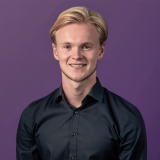
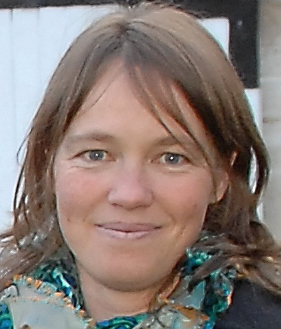
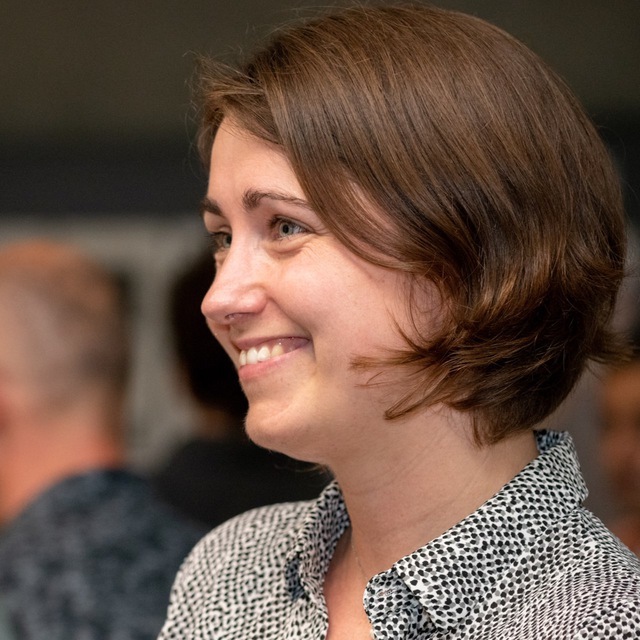
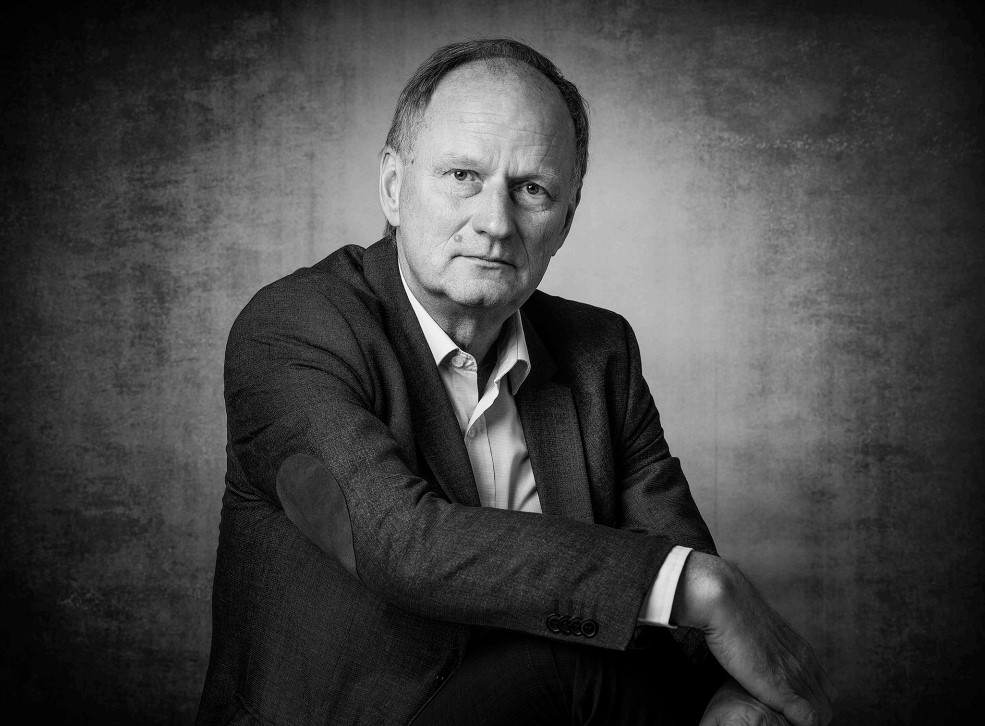
Juan Dodyk serves as Assistant Professor in Political Science and Environmental Studies at Washington University in St. Louis, holding a PhD in Government from Harvard University (2025) and a Bachelor's in Mathematics from Universidad de Buenos Aires (2017). His academic credentials include: PhD in Government, Harvard University, 2025 Bachelor's degree in Mathematics, Universidad de Buenos Aires, 2017 A political economist specializing in Climate Policy , Business Lobbying , and Formal Theory , Dodyk investigates strategic climate policy design against industry opposition, interest group coalition tactics, and family firm political influence in developing nations using formal models and causal inference. His work bridges political science, environmental policy, and corporate strategy with methodological rigor. His publications in the Journal of Politics and World Development reveal consistent focus on business-politics intersections, particularly corporate power structures in climate transitions and developing economies, with emerging emphasis on green industrial policies following recent legislation like the Inflation Reduction Act.
Yanja Dajsuren is an Assistant Professor and Program Director of the PDEng Software Technology program at Eindhoven University of Technology's Department of Mathematics and Computer Science. Her work bridges academic research and industry applications in software engineering and mobility systems. Education: PhD in Computer Science (2015), TU/e PDEng in Software Technology (2005), TU/e MBA (2002), Maastricht School of Management Research Focus: Yanja specializes in software architecture for autonomous and cooperative driving systems, with a focus on model-driven development, functional safety, and system modularity. Her work contributes to Cooperative Intelligent Transport Systems (C-ITS) and aligns with UN Sustainable Development Goals related to smart cities and innovation. Projects: Current projects include i-CAVE (Project #6) and Horizon 2020 C-MobILE, addressing challenges in automotive software integration and cooperative driving systems. Past projects at Philips Research, NXP Semiconductors, and CWI demonstrate her long-term expertise in industrial software development. Academic Contributions: She co-founded the International Workshop on Automotive Software Architectures (WASA) and launched the Journal of Automotive Software Engineering (JASE). Her collaborations span academia and industry, including partnerships with ASML, Philips Hue, and international research teams.
Dr. Tijn Fleuren is a researcher and teacher at the Department of Econometrics and Operations Research within the Tilburg School of Economics and Management (TiSEM) at Tilburg University. His work focuses on optimizing production-inventory systems under uncertainty, with applications in high-tech, low-volume manufacturing supply chains. Institution: Tilburg University School: Tilburg School of Economics and Management Department: Department of Econometrics and Operations Research Email: T.W.A.Fleuren@tilburguniversity.edu ORCID: https://orcid.org/0000-0002-0925-6892 Office: Koopmans Building, Room K 423, Warandelaan 2, 5037 AB Tilburg, Netherlands His research lies at the intersection of operations research and supply chain management, with a strong emphasis on stochastic modeling, risk-aware decision-making, and integrated planning under uncertainty. Key themes include production-inventory optimization, customer portfolio selection, procurement planning, and dynamic supply chain configurations. His work often addresses real-world challenges in collaboration with industry leaders like ASML. The recent publications demonstrate a consistent focus on advanced optimization techniques applied to complex supply chain environments. These include multi-stage stochastic programming, conic quadratic programming heuristics, sampling-based methods, and deep reinforcement learning. The research spans both theoretical contributions—such as optimality conditions and bounds—and practical applicability, particularly in high-tech sectors with long lead times and customization requirements. Dr. Fleuren completed his doctoral studies at Tilburg University in January 2025, contributing significantly to the field through his dissertation on stochastic approaches in production-inventory planning. While no formal scientific awards are listed, his research outputs have been published in top-tier journals such as International Journal of Production Economics and Omega–International Journal of Management Science . He is actively involved in teaching courses such as Supply Chain Analytics and Introduction to Data Analysis. As a recent PhD graduate, he may be mentoring students informally, though no formal advisees are listed. His research has been supported through collaboration with industrial partners and academic grants, likely via CentER and the Operations Research Center at Tilburg University. Dr. Fleuren is affiliated with the Operations Research Center at TiSEM, where he contributes to a vibrant research environment focused on quantitative methods in economics and management. His ongoing work continues to advance methodologies for decision-making under uncertainty in complex, real-world supply chains.
Emmanuel Haucourt is a Professor of Computer Science at École Polytechnique, conducting research at the Computer Science Laboratory (LIX) within the Cosynus team. His work focuses on applying directed algebraic topology to analyze concurrent programs. Research Interests: Directed Algebraic Topology, Concurrency Theory, Geometric Models in Computer Science, Static Analysis of Concurrent Programs, Software Verification, and Theoretical Computer Science. Publications Trends: His publications emphasize the use of higher-dimensional geometric structures (e.g., d-spaces, cubical areas, non-Hausdorff manifolds) to model concurrency, enabling deadlock detection and state-space reduction through theoretical advances in category theory and topology. Laboratory: Affiliated with the Computer Science Laboratory (LIX) at École Polytechnique and the Cosynus team.
Sylvie Putot is a Professor of Computer Science at École Polytechnique, where she focuses on formal verification of numerical programs and cyber-physical systems. She leads the Cosynus team at LIX laboratory and organizes the LIX Seminar series. Current affiliation: École Polytechnique (Computer Science Department) Prior affiliation: CEA LIST (developer of FLUCTUAT static analyzer) Her research spans formal methods for cyber-physical systems , emphasizing reachability analysis , invariant synthesis , and probabilistic verification . She combines abstract interpretation with zonotopic domains and constraint programming to address numerical stability and safety in AI-driven control systems. Recent publications highlight work on Safe AI through Formal methods (SAIF project) , including probabilistic guarantees for neural networks and applications in mobile robotics. Her team’s best paper award at EMSOFT 2015 recognized scalable quadratic invariant computation for embedded systems. Scientific awards: Best paper award, ACM SIGBED International Conference on Embedded Software (EMSOFT 2015) She has supervised numerous PhD students in topics like mobile robotics , neural network verification , and numerical error analysis . Active in ANR projects (COVERIF, MALTHY, DEFIS) and currently leads the PEPR IA initiative on AI validation.
Ashwinkumar Venkatanaga Machanavajjhala is an Adjunct Associate Professor of Computer Science at Duke University's Trinity College of Arts & Sciences since 2024, with prior roles as Associate Professor (2018-2024) and Assistant Professor (2012-2018). His research focuses on differential privacy, secure multi-party computation, and privacy-preserving data analysis frameworks. Education: Ph.D. from Cornell University (2008) His work spans privacy-preserving algorithm design, synthetic data generation, and privacy-utility trade-offs. Recent research themes include differential privacy for aggregate queries, foreign key constraints in database systems, and policy-aware privacy frameworks . Grant projects like RAISE: C-Accel Pilot and RAPID: Poirot highlight his leadership in privacy and data security initiatives. Scientific contributions include groundbreaking work on ϵktelo for differentially private algorithms, DP-Sync for update pattern privacy, and Blowfish Privacy for customizable privacy definitions. Awards include the NSF CAREER Award (2013) for early-career impact. In outreach, he led the Bass Connections Faculty Team (2018-2019) addressing vaccine misinformation in Durham. Teaching includes COMPSCI 891: Special Readings in Computer Science (Summer 2022).
Noortje Venhuizen is an Assistant Professor in the Department of Cognitive Science and Artificial Intelligence at the Tilburg School of Humanities and Digital Sciences, Tilburg University. She serves as Academic Director for the BSc Cognitive Science and Artificial Intelligence program since 2024, and has held academic positions at Saarland University (2015-2022) including roles as Scientific Staff member and Principal Investigator in SFB 1102 projects. PhD in Computational Semantics (University of Groningen, 2015) MSc in Logic (ILLC, University of Amsterdam, 2011) BSc in Artificial Intelligence (Utrecht University, 2009) Her research focuses on expectation-based language comprehension, neurocomputational modeling of semantic processing, distributional formal semantics, and pragmatic reasoning in discourse. Key contributions include PDRT-SANDBOX (Haskell NLP library) and DFS Tools (Prolog implementation of distributional formal semantics). Recent publications (2023-2025) explore multimodal word meaning, informativity in reference production, and neurocognitive models of surprisal processing. Her work combines formal semantics with cognitive neuroscience and computational modeling. LOT Grotevragenprijs essay contest - Second Prize She has presented research at major conferences including CogSci, AMLaP, and Sinn und Bedeutung. Current teaching includes courses on artificial intelligence, statistics, and semantic theory.
Damian Niwinski is a Professor in the Institute of Informatics at the Faculty of Mathematics, Informatics and Mechanics, University of Warsaw, Poland. He is a member of the Automata Theory Group and actively contributes to research and academic life at the university. His research interests include logic, automata theory, fixed point calculi, information theory, complexity, and games . These areas represent core topics in theoretical computer science, with applications in formal verification, programming languages, and computational logic. He has supervised several PhD students, including Filip Murlak, Eryk Kopczyński, Michal Strojnowski, Szczepan Hummel, and Marcin Przybyłko, indicating a strong commitment to academic mentorship and the development of future researchers in his field. Prof. Niwinski is involved in editorial work as a member of the editorial board of Fundamenta Informaticae and organizes the Automata Theory Seminar , further demonstrating his leadership and engagement in the academic community. He maintains a public academic presence through his Google Scholar profile and personal website, where he shares his papers and talks.
Rebecca Files is an Associate Professor in the Department of Management at the Naveen Jindal School of Management, University of Texas at Dallas. She specializes in financial accounting and strategic disclosure, with a strong research focus on accounting restatements, SEC enforcement, and corporate transparency. Education: Ph.D. in Accounting, Texas A&M University, 2009 M.S. in Finance, Texas A&M University, 2004 B.B.A. in Accounting, Texas A&M University, 2004 Her research examines how firms disclose financial information, particularly in the context of regulatory scrutiny and litigation risk. She investigates strategic behaviors such as stealth disclosures during restatements and the impact of cooperation with the SEC on enforcement outcomes. Her work contributes to understanding transparency, accountability, and investor protection in financial markets. Her recent publications, including a forthcoming article in the Journal of Accounting and Economics and prior work in The Accounting Review , reflect a consistent trajectory in high-impact research on financial reporting integrity. These studies span topics like pro forma earnings, class action lawsuits, and regulatory databases, indicating a deep engagement with empirical accounting and policy implications. Scientific Awards and Honors: UT System Regents’ Outstanding Teaching Award (2014) President’s Outstanding Teaching Award, UT Dallas (2013) Ernst and Young Doctoral Fellowship (2004–2008) Mays Business School Regent's Fellowship (2004–2008) Laurels Scholarship - Educational Foundation for Women in Accounting (2007) Big XII Conference Postgraduate Scholarship (2004) CoSIDA Academic All-American, volleyball (3rd team, 2003–2004) Bill Erwin Female Scholar-Athlete of the Year, Texas A&M (2003–2004) Academic All-American District VI, volleyball (1st team, 2003) Most Inspirational Player, Women's Volleyball, Texas A&M (2003) Volleyball Academic All-Big XII Team (2002–2003) Fellowship of Christian Athletes (FCA) Student-Athlete of the Year (2001–2002) Most Improved Player, Women's Volleyball, Texas A&M (2001) Big XII Conference Commissioner's Honor Roll (1999–2003) Dr. Files is a dedicated educator and mentor, recognized for her excellence in teaching. Students have consistently praised her ability to dispel myths about accounting being dull or purely mathematical. She emphasizes relationship-building and real-world relevance in her pedagogy. She has held her faculty position at UT Dallas since 2009, progressing from Assistant to Associate Professor, indicating strong performance in research, teaching, and service. There is no indication of part-time status, retirement, or emeritus designation. She is actively engaged in academic discourse, having presented at major conferences such as the American Accounting Association Annual Meetings and the Lone Star Conference. Her work has been featured in media outlets like The Wall Street Journal , highlighting its real-world impact. While no formal lab or research team is mentioned, her collaborative publications suggest active research partnerships.
Ian Zemke is an Assistant Professor in the Department of Mathematics at the University of Oregon's College of Arts and Sciences. His research focuses on low-dimensional topology and symplectic geometry, with a particular emphasis on Heegaard Floer homology and knot theory. Education: PhD in Mathematics from University of California, Los Angeles (2017) - Advisor: Ciprian Manolescu Research Interests: Zemke's work bridges symplectic geometry and low-dimensional topology, using Heegaard Floer homology as a primary tool. His research explores fundamental questions in knot theory, 3- and 4-dimensional manifold theory, and the interplay between different Floer-theoretic invariants. Key areas include: Development of surgery formulas in Heegaard Floer homology Study of concordance and cobordism invariants for knots and links Investigation of involutive Floer homologies and their applications Analysis of exotic smooth structures on 4-manifolds Recent Research Trends: Zemke's recent publications demonstrate a concentrated focus on advancing the theoretical foundations of Heegaard Floer homology, particularly through the development of new surgery formulas and the study of involutive invariants. His work consistently addresses fundamental questions about knot concordance and the structure of 3- and 4-manifolds, with significant contributions to understanding the relationship between different Floer-theoretic invariants. Scientific Awards: Sloan Research Fellowship Funding and Support: Zemke's research is partially supported by: National Science Foundation grants DMS-1703685 and DMS-2204375 Sloan Research Fellowship Teaching and Service: Currently teaching Math 690: Morse Theory in Autumn 2025 at the University of Oregon. He maintains an active website with research materials, including Python and Sage code for computational topology, lecture notes, and slides from various conferences and summer schools.
Poul Henrik Damgaard is a Professor of Theoretical Physics at the Niels Bohr International Academy (NBIA), affiliated with the Niels Bohr Institute (NBI) at the University of Copenhagen . He has served as NBIA Director since its founding in 2007. Research Interests: Modern amplitude computation techniques Non-perturbative studies of supersymmetric theories on spacetime lattices Classical two-body dynamics in general relativity Analytical predictions for gravitational wave emission Scientific Awards: Marie Skłodowska-Curie Grant (SAGEX project, 2020-2024) Publications (2021-2024): His work focuses on merging quantum field theory with classical gravity, particularly through post-Minkowskian expansions and amplitude methods for gravitational wave predictions. Collaborations include researchers from CERN, UCPH, and international institutions.
Nikolas Olson Aksamit is an Associate Professor in the Department of Mathematics and Statistics at UiT The Arctic University of Norway, where he conducts interdisciplinary research at the intersection of applied mathematics and environmental science. His work focuses on understanding coherent structures in fluid flows relevant to the coupling between the cryosphere, atmosphere, and hydrosphere. His research interests include applied mathematics, nonlinear dynamical systems, fluid dynamics, Lagrangian coherent structures, snow science, and climate dynamics. He develops mathematical tools to analyze complex environmental systems, particularly in polar and alpine regions, with applications to sea ice, blowing snow, and ocean turbulence. His work bridges theoretical modeling with field observations and data analysis. The recent articles reflect a strong trend in using Lagrangian methods and nonlinear dynamics to study geophysical flows. Key themes include the detection of coherent structures in turbulent flows, sea ice dynamics, climate modeling, and the application of machine learning to oceanographic data. His publications span high-impact journals in fluid mechanics, geophysics, and environmental science, often in collaboration with leading experts in dynamical systems and climate science. He is a member of the research group Changing Arctic and contributes to the project Development of nonlinear dynamics-based techniques for sea ice diagnosis . While no formal students or awards are listed, his active publication record indicates a vibrant research program. His work has implications for climate prediction, polar monitoring, and environmental engineering.
Riccardo Augello is a Research Fellow in the Department of Mechanical and Aerospace Engineering at Politecnico di Torino, Italy. He is actively involved in both research and teaching, serving as a course collaborator in aerospace engineering programs focusing on structural mechanics and spacecraft design. His academic work is centered on advanced computational modeling of complex structures using the Carrera Unified Formulation (CUF). His research interests include computational structural mechanics, finite element analysis, composite materials, aerospace structures, multilayered systems, and nonlinear structural behavior. He specializes in high-fidelity modeling of deployable space structures, sandwich panels, and reinforced concrete systems, with a strong emphasis on accuracy and computational efficiency. His recent publications (2023–2025) reveal a consistent focus on applying CUF to diverse structural problems, including damage analysis in concrete, folding of tape springs, global/local modeling of composites, and dynamic behavior of metamaterials. The work demonstrates a strong trend toward high-order, refined modeling techniques for both terrestrial and space applications, often validated against experiments. Scientific Responsible, NOVITAS project (2023–2026), EU-funded MSCA grant on nonlinear analysis of deployable composite booms. He is a core member of the MUL2 (Multilayered structures and Multifield analyses) research group, collaborating closely with Prof. Erasmo Carrera and other researchers. His teaching contributions include modules in Spacecraft Structures, Aeronautical Structures, and Additive Manufacturing for Aerospace Applications. No formal advisees or scientific awards are mentioned in the available texts.
Peter Demerjian is a Professor and Director of the School of Accountancy at Georgia State University’s J. Mack Robinson College of Business. He holds a Ph.D. in Accounting from the University of Michigan, an MBA from the College of William & Mary, and a B.A. in Mathematics from Brandeis University. Ph.D., Accounting – University of Michigan MBA – College of William & Mary B.A., Mathematics – Brandeis University His research focuses on financial accounting, particularly the role of accounting in debt contracting and the use of accounting information to assess managerial ability. He is recognized as a leading expert on how accounting standards affect debt covenants and the design of loan agreements. His work bridges accounting and finance, with implications for corporate governance, risk management, and financial reporting standards. Demerjian’s publications span top journals including Management Science , The Accounting Review , and Journal of Accounting and Economics . His recent work explores income smoothing, forecast accuracy in private lending, and the impact of fair value accounting on debt contracts. The research consistently examines how accounting information is used in real-world contracting environments, especially under uncertainty. He serves on the editorial boards of The Accounting Review and Journal of Accounting, Auditing, and Finance , reflecting his standing in the academic community. While no formal list of advisees is provided, his senior role and research productivity suggest active mentorship of doctoral students. He has not disclosed specific grants, but his publication record in premier journals indicates sustained research support. No formal lab or research team is mentioned, but his collaborations with scholars like Baruch Lev imply active research networks.
Dr. Wei Ke is an Adjunct Associate Professor in the Marketing Department at the Leonard N. Stern School of Business, New York University, joining in 2024. He holds a Ph.D. in Decision, Risk & Operations from Columbia Business School and a B.Sc. in Electrical Engineering and Applied Mathematics (summa cum laude) from Columbia University. His professional career is centered at Oliver Wyman, where he serves as a Partner in the pricing, sales, marketing, retail, and business banking practices. Ph.D., Decision, Risk & Operations, Columbia Business School (2009) MPhil, Decision, Risk & Operations, Columbia Business School (2006) B.Sc. (Summa Cum Laude), Electrical Engineering and Applied Mathematics, Columbia University (2003) Wei Ke's research focuses on pricing algorithms and behavioral pricing , exploring how psychological and computational models influence pricing decisions in digital, retail, and financial contexts. His work bridges data science with consumer behavior, emphasizing real-world applications in customer value management and digital sales effectiveness. His recent publications reveal a strong trend in algorithmic and behavioral approaches to pricing across industries such as SaaS, ride-hailing, financial services, and e-commerce. The articles span disciplines including marketing, behavioral economics, data science, and operations research, with recurring subfields like dynamic pricing, consumer segmentation, discount framing, and machine learning for elasticity modeling. His work often combines empirical analysis with strategic implications for firms. Wei has authored over 50 publications in academic and industry journals, contributing significantly to pricing thought leadership. Though no formal awards are listed, his prolific output and consulting leadership underscore his influence in the field. Advises global financial institutions, retailers, and tech firms on pricing and marketing strategy Teaches Pricing Strategies (MKTG-GB.2353.30) at NYU Stern Previously taught at Columbia Business School and Queen’s University Smith School of Business Extensive experience in grant-like consulting engagements with Fortune 500 clients While not affiliated with a formal lab, Wei collaborates closely with industry teams at Oliver Wyman and Simon-Kucher & Partners, contributing to real-world pricing innovation and strategy development in retail, banking, and technology sectors.