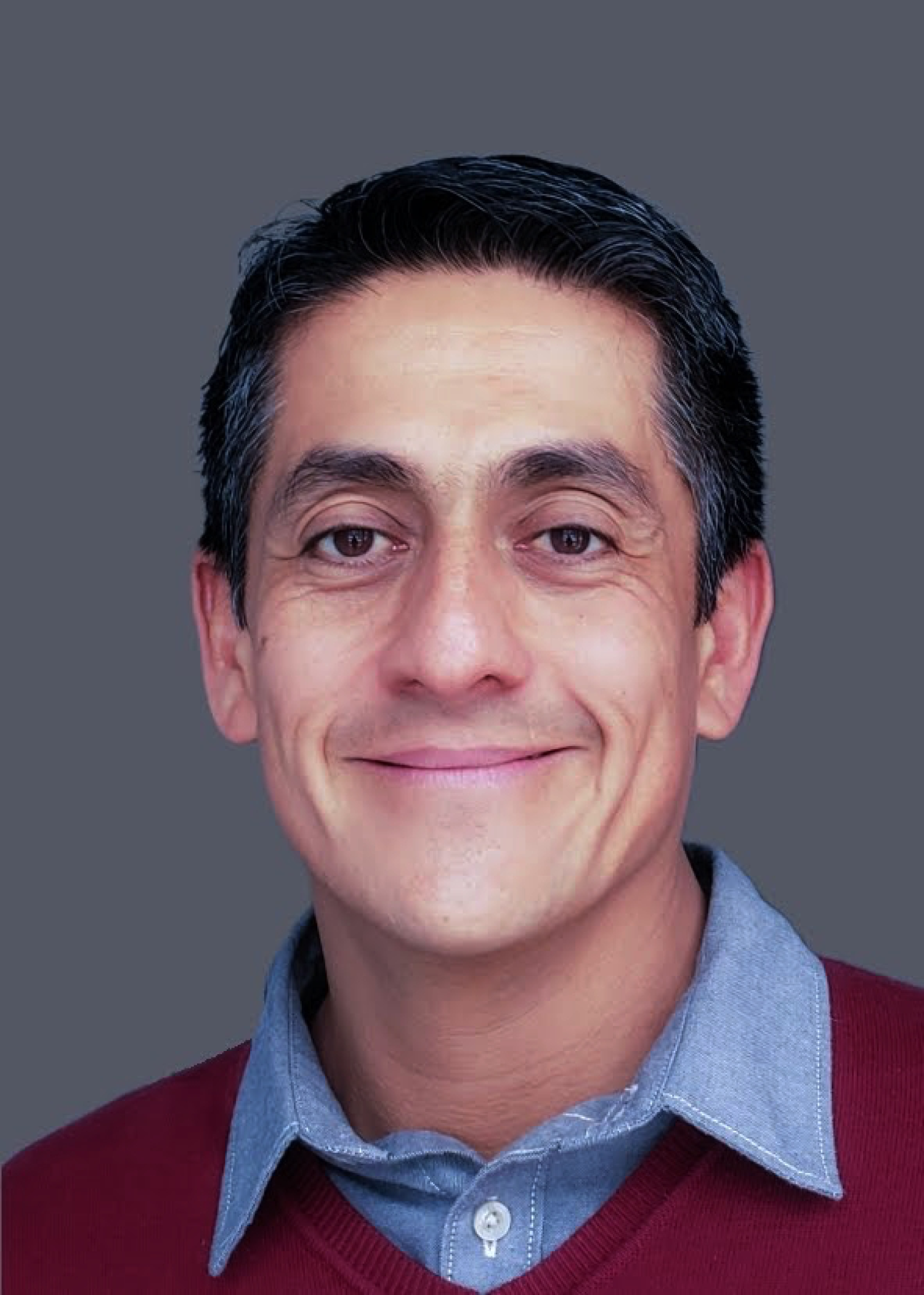
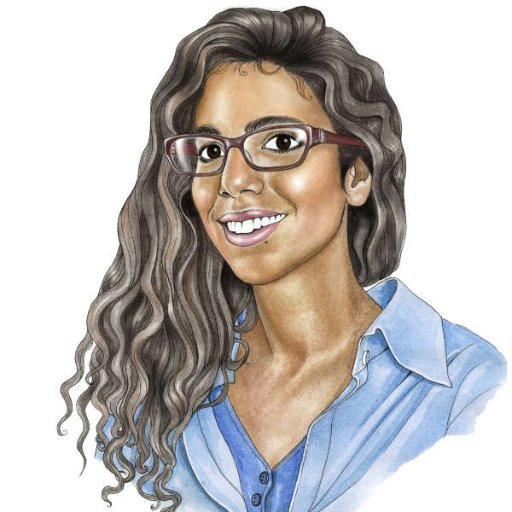
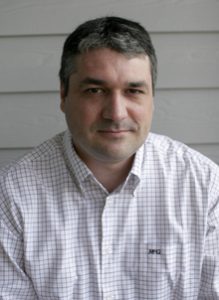
Baudouin Le Charlier is a researcher with a focus on computational logic, programming languages, and system security. He has led multiple research projects, including sequential analysis under Unix, automated IT resource monitoring, and abstract interpretation for declarative languages. His work spans 1992–2008, with a strong emphasis on logic programming and formal semantics. Key Research Areas: Logic Programming, Abstract Interpretation, Data Stream Processing, Unix Systems, and Programming Language Interoperability. Notable Projects: Asax (Sequential Analysis), Survauto (IT Monitoring), COMPULOG-Net (Computational Logic Network), ABILE (Abstract Interpretation Tools). His 15 most recent publications (1995–2008) highlight trends in declarative semantics, interoperability mechanisms, and distributed audit analysis. These works often intersect with constraints, tools, and formal modeling.
Fernando Briones serves as a Research Associate at the Laboratory for Energy and Environmental Policy Innovation (LEEP) within the University of Colorado Boulder. A Mexico-born social anthropologist, he specializes in the social dimensions of environmental change with emphasis on marginalized communities across the Global South and United States. His institutional affiliation positions him at the intersection of academic research and policy implementation in environmental governance. Education: Ph.D. in Social Sciences, École des Hautes Etudes en Sciences Sociales, Paris, France (2008) Briones' research interrogates the nexus of social vulnerability, disaster risk reduction, and climate change adaptation through critical examination of indigenous knowledge systems and policy applicability. His work consistently centers on power dynamics in risk construction, emphasizing how marginalized groups experience and navigate environmental hazards. Fieldwork across Mexico, Brazil, Argentina, Peru, Central America, and Caribbean Islands reveals recurring themes of epistemic injustice in climate policy and the resilience of traditional knowledge systems. His anthropological approach challenges top-down adaptation frameworks by documenting community-led responses to hydrological disasters and climate variability. Analysis of his 15 most recent publications demonstrates sustained focus on knowledge systems in disaster contexts, with increasing attention to policy integration challenges since 2015. Geographically, his work concentrates on Mesoamerican and Caribbean regions, particularly examining indigenous communities' climate adaptation strategies. Methodologically, he bridges qualitative social science with disaster studies, producing critical insights about the social construction of risk in urban and rural settings affected by El Niño events, hurricanes, and droughts. Briones actively contributes to the Laboratory for Energy and Environmental Policy Innovation's mission through field research and policy analysis. His scholarly output directly informs disaster risk governance frameworks, though specific grant details remain unpublicized in available materials. The absence of formal student advisement listings suggests his primary role centers on independent research rather than academic mentorship within the university structure.
Thomas Bechinger serves as Professor of Glass Design and Painting in the Art Department at the State Academy of Fine Arts Stuttgart since 2010. He is an elected member of the Bavarian Academy of Fine Arts (2020) and maintains an active studio practice with international exhibitions. His research focuses on the intersection of traditional painting techniques with experimental glass design, emphasizing material processes and temporal dimensions in art creation. Key interests include stratigraphic layering in Strata , chromatic evolution in Watching Paint Dry , and hybrid approaches to medium boundaries. Exhibition trends reveal consistent exploration of spatial relationships and collaborative dialogues, particularly evident in works like blind date (with Nathan Coley) and For 4 Walls/4 Walls (with Jerry Zeniuk), demonstrating his commitment to interdisciplinary engagement. Member of the Bavarian Academy of Fine Arts (2020) Bechinger's teaching philosophy centers on peer-based knowledge exchange ('talk to each other, learn from each other') within the academy's Senate. His studio practice directly informs pedagogical approaches to material experimentation and conceptual development. His creative output spans large-scale installations like Schattenspiele (2018–2020) at Munich-Moosach's Schulcampus Emmy-Noether-Straße, blending public art with educational environments through collaborative team structures.
Nada Amin is an Assistant Professor of Computer Science at the Harvard John A. Paulson School of Engineering and Applied Sciences (SEAS). She holds a PhD from École Polytechnique Fédérale de Lausanne (EPFL) and degrees from MIT. Her research spans programming language theory, metaprogramming, semantics, and functional programming. Her educational background includes a Doctoral Program in Computer, Communication and Information Sciences from EPFL (2011–2016) and a Master of Engineering and Bachelor of Science from MIT. She has held research positions at TU Darmstadt, University of Cambridge, EPFL, Microsoft Research, and MIT CSAIL. Nada Amin's research focuses on foundational and practical aspects of programming languages. She investigates type systems, staged computation, generative programming, program synthesis, and the semantics of programming languages. Her work often bridges theory and implementation, with applications in verification, compiler construction, and language design. She is particularly known for her contributions to the DOT calculus, collapsing towers of interpreters, and relational programming with miniKanren. Her recent publications reveal a strong trend in advancing programming language foundations, especially in type systems and semantics (e.g., Persimmon, Dolorem, Extensible Metatheory). She integrates functional and logic programming paradigms, explores staged and generative techniques for efficiency and abstraction, and applies these to domains like probabilistic programming and biomedical reasoning. Recipient of the first Michigan Cambridge Research Initiative Grant (with Baris Kasikci, May 2018) 6.170 Letter of Commendation from Prof. Michael Ernst (2005) Peer Bonus at Google for enabling Gmail's CSS compiler for Android Peer Bonus at Google for benefiting numerous projects including Google Apps Nada Amin actively mentors students and collaborates widely in the programming languages community. She has served on numerous program committees (POPL, PLDI, ICFP, OOPSLA, etc.) and organized workshops. Her work is supported by academic and industrial collaborations, and she has contributed to open-source projects. She leads research involving interpreters, compilers, and program transformation systems, often developing tools and frameworks like LMS and Pink.
Hossein Hojjat is an Assistant Professor in the Department of Computer Science at the Rochester Institute of Technology (RIT), within the Golisano College of Computing and Information Sciences. He received his PhD in computer science from EPFL, Switzerland in 2013 and was a postdoctoral researcher at Cornell University before joining RIT. He is currently on leave from his academic position since 2019. Research Interests: His research focuses on formal methods for the analysis and verification of software and hardware systems. He works extensively on program verification, network verification (especially in software-defined networking), automated program repair, Horn clauses, interpolation techniques, and model checking. His work bridges theoretical foundations with practical tools and applications. Publication Trends: His recent publications (2012–2017) show a strong trend in applying formal methods to networked and distributed systems, particularly using NetKAT and Horn clause solvers. He has made significant contributions to ensuring consistency in network updates, synthesizing repairs, and analyzing timed and concurrent systems. His work integrates logic, programming languages, and systems. Scientific Service: Program Committee: FSEN 2015, FSEN 2017, TTCS 2017, VSTTE 2017, SEFM 2017, SBMF 2018, FSEN 2019 (co-chair), PLDI 2019 (AEC) Editorial Board: Information Processing Letters Advising and Grants: He has advised PhD student Ali Shokri and has received research funding through the SaTC: CORE: Small grant on federated network security. His academic advising and grant activities reflect his leadership in advancing formal techniques for secure and reliable systems. Labs and Teams: While no specific lab is mentioned, his collaborations with researchers at EPFL, Cornell, and in tool development (e.g., FLATA, ELDARICA) indicate active participation in formal methods research teams focused on verification toolkits and network programming.
Nina Aregger is a Doctoral Assistant at the Laboratory of Catalysis and Organic Synthesis (LCSO) within the Institute of Chemical Sciences and Engineering at EPFL's School of Basic Sciences. She is concurrently a PhD student in the Doctoral Program in Chemistry and Chemical Engineering (EDCH). Her research focuses on organic synthesis and catalysis, with an emphasis on developing efficient and sustainable synthetic methodologies. This work is situated at the intersection of synthetic organic chemistry and process development. The research conducted by Nina Aregger falls broadly within the domain of organic chemistry and catalysis, as reflected in her affiliation with the Laboratory of Catalysis and Organic Synthesis. While no specific publications are listed, her work likely contributes to advancements in synthetic methods and reaction design. Nina Aregger has not been listed as having received any scientific awards. Nina Aregger serves as a Doctoral Assistant, indicating an active research and possibly teaching or mentoring role within her laboratory. There is no information available about external grants or formal advising of students. She is a member of the Laboratory of Catalysis and Organic Synthesis (LCSO) at EPFL, a research group dedicated to advancing the field of catalytic organic transformations.
Dr. Drielli Peyerl serves as a Researcher at the Van 't Hoff Institute for Molecular Sciences (HIMS), an esteemed research institute within the Faculty of Science at the University of Amsterdam. Her professional address is Science Park 904, Amsterdam, the Netherlands, with postal correspondence directed to Postbus 94157, 1090 GD Amsterdam. Her research spans critical domains of molecular science, structured as follows: Molecular Sciences Chemistry Physical Chemistry Molecular Physics Materials Science Nanotechnology These interconnected fields drive HIMS' mission to pioneer molecular-level innovations through interdisciplinary collaboration across chemistry, physics, and materials engineering. Scientific recognition includes: No formal awards documented in current profile Professional activities encompass research mentorship and grant-funded projects within HIMS' collaborative framework, though specific details remain unpublished in available materials. The institute maintains cutting-edge laboratories focused on molecular synthesis, characterization, and theoretical modeling to advance fundamental and applied science.
Aaron Leconte is a Professor of Chemistry at the Keck Science Department of Claremont Colleges, serving Claremont McKenna, Pitzer, and Scripps Colleges. He was promoted to full Professor in June 2025 after serving as Associate Professor (2018-2025) and Assistant Professor (2012-2018). His research group focuses on protein engineering to create useful tools for medicine and biotechnology, with particular expertise in luciferase and DNA polymerase engineering. Dr. Leconte's research interests center on biochemical analysis and engineering of proteins, particularly in developing novel enzyme activities through directed evolution and high-throughput biochemical approaches. His work spans protein engineering, synthetic biology, and molecular evolution, with applications in biotechnology and medical diagnostics. The Leconte Group employs a combination of bioinformatics, biochemical analysis, and directed evolution to create improved bioluminescent tools and polymerases capable of handling modified nucleotides. His recent publications demonstrate a strong focus on firefly luciferase engineering and DNA polymerase development, with multiple high-impact papers in Biochemistry and other journals. The group's work on red-shifting mutations in luciferase and developing polymerases for XNA synthesis represents significant contributions to the field. 2024 Cottrell SEED Award 2023 Cottrell Postbaccalaureate Fellowship 2019 R15 Award (NIH) 2018 CAREER Award (NSF) 2016 Cottrell Scholar Award 2014 Cottrell College Science Award Dr. Leconte has mentored numerous undergraduate researchers, many of whom have gone on to prestigious graduate programs and research positions. His lab has received substantial funding from NIH, NSF, and the Research Corporation, supporting both research and educational initiatives. The Leconte Group is known for its inclusive hiring practices and commitment to undergraduate research training, with a structured approach to onboarding new students through open houses and formal application processes. The lab maintains strong collaborations with other research groups, particularly the Prescher Group at UC-Irvine, and has produced numerous publications with undergraduate co-authors. Current projects include characterizing and engineering firefly luciferase and developing fusion domains to improve XNA polymerases.
Jeffrey Elbert is an Assistant Professor in the Department of Chemistry at Dakota State University, within the College of Arts & Sciences. He holds a Ph.D. in Chemistry from Northwestern University (1990), an M.S. in Chemistry from the same institution, a B.S. in Chemistry from Iowa State University, and an MBA from Capella University. His academic career combines deep expertise in photochemistry and organic synthesis with applications in bioimaging and molecular probes. Ph.D., Chemistry, Northwestern University, 1990 MBA, Capella University, 2003 M.S., Chemistry, Northwestern University, 1986 B.S., Chemistry, Iowa State University, 1985 His research interests span photochemistry, photophysics, synthesis of photoactive compounds, bolaform vesicles, and the interaction of such compounds with biological systems . He has made significant contributions to the understanding of cinnamamide photoisomerization, triplet energy transfer, and the development of metalloorganic DNA labels and MRI contrast agents. His work bridges theoretical organic chemistry with practical applications in biotechnology and environmental monitoring. The 15 most recent publications reflect a consistent focus on photoactive organic molecules , particularly cinnamamides, quinolones, and naphthalimides. These works explore their spectroscopic properties, photochemical behavior, and potential applications as sensors or biomarkers. Broad disciplines include organic chemistry, photochemistry, physical chemistry, and bioorganic chemistry , with subfields such as photoisomerization, excited state dynamics, synthetic methodology, and molecular probe design. Award: Dean’s Award for Teaching in Departmental Programs - University of Northern Iowa Jeffrey Elbert has advised multiple research projects as evidenced by co-authored publications, though specific student names are not listed. His work has been supported by research in academic laboratories, particularly during his time at Northwestern and later institutions. While no specific grants are mentioned, his publication record in high-impact journals suggests sustained research activity and funding support. He has contributed significantly to the development of photoresponsive materials and analytical tools for biological and environmental applications. Though no formal lab or team structure is described in the text, his collaborative publications indicate engagement with research groups in organic synthesis, photochemistry, and bioinorganic chemistry. His interdisciplinary approach connects traditional synthetic chemistry with modern applications in imaging and molecular biology.
Bengt Jonsson is a researcher at Uppsala University , Sweden, with a focus on formal verification, concurrency, and automata learning. His work addresses challenges in software testing, protocol verification, and concurrent systems analysis, often collaborating with institutions like KTH Royal Institute of Technology and academic peers such as Parosh Aziz Abdulla and Konstantinos Sagonas. Research Fields: Formal Verification, Concurrency, Automata Theory, Software Testing, Distributed Systems, Protocol Verification Recent publications highlight advancements in stateless model checking, dynamic partial order reduction, and automated detection of state machine bugs in protocol implementations. His 2023 CONCUR Test-Of-Time Award underscores his contributions to theoretical computer science. Collaborative efforts span network protocol analysis, cache performance modeling, and register automata learning, with practical applications in IoT security and multicore parallelization. Scientific Awards: CONCUR Test-Of-Time Award (2023)
Alastair Donaldson is a Professor and Director of Research in the Department of Computing at Imperial College London, where he has been a faculty member since 2011. He leads the FastPL research group (formerly Multicore Programming Group), focusing on formal analysis, software testing, and programming languages techniques for improving software reliability, with special emphasis on high-performance systems. Donaldson earned his BSc (First Class Honors) in Computing Science and Mathematics from the University of Glasgow in 2003, followed by a PhD in Computing Science from the same institution in 2007 under Alice Miller. His academic journey includes positions as an EPSRC Postdoctoral Research Fellow at Oxford, Visiting Researcher at Microsoft Research Redmond, and Research Engineer at Codeplay Software Ltd. His research spans automated reasoning, compiler verification, and GPU programming with significant contributions to software reliability. He pioneered metamorphic testing for graphics drivers through GraphicsFuzz (acquired by Google in 2018) and developed innovative compiler fuzzing techniques. His work addresses critical challenges in memory models, concurrency, and verification of complex systems. Recent publications show increasing focus on applying these techniques to modern challenges including AI-generated code and verification-aware programming languages like Dafny. Donaldson's scientific contributions have been recognized with the 2017 BCS Roger Needham Award, an EPSRC Early Career Fellowship, and multiple best paper awards including EuroSys 2024 (Best Paper), ICST 2024 (Best Industry Paper), and ISSTA 2023 (Distinguished Paper). His 2012 GPUVerify paper received the ACM SIGPLAN Most Influential OOPSLA Paper Award in 2022. As an advisor, Donaldson has mentored numerous PhD students and postdocs, many now in prominent academic and industry positions. His research is supported by Amazon Research Awards (2022-2023) for Dafny ecosystem testing and compiler validation. He previously served as Senior Software Engineer and Visiting Researcher at Google following the GraphicsFuzz acquisition. The FastPL group maintains strong industry connections with Google, Microsoft, and Amazon, ensuring practical relevance of their theoretical work. Donaldson currently serves as Editor-in-Chief of ACM TOPLAS (2025-present) and on program committees for major conferences including PLDI, ICSE, and ASPLOS.
Azadeh Farzan is a Professor and Vice Chair in the Department of Computer Science at the University of Toronto, specializing in automated reasoning and software verification. She leads research in concurrency, program synthesis, and probabilistic systems with significant contributions to formal methods. Her research interests focus on automated verification of concurrent programs , where she develops novel techniques for detecting data races, proving termination, and synthesizing correct-by-construction code. Key areas include commutativity-based reasoning, hypersafety properties, and probabilistic program analysis, addressing challenges in scalability and modularity for real-world systems. Farzan has received the 2023 Amazon Research Award for her work on data race detection predictability. She serves on prestigious conference committees including CAV (2025 Area Chair) and POPL (2025 Program Committee), having previously chaired CAV 2016 and POPL 2021. She advises doctoral students such as Victor Nicolet and Emanuele D’Osualdo, with research funded through collaborations like the Amazon Scholars program. Her work bridges theoretical foundations and practical tools for software reliability, impacting both academia and industry.
Sebastián Uchitel is a Full Professor at the Department of Computing, Facultad de Ciencias Exactas y Naturales, Universidad de Buenos Aires, where he serves as head of LaFHIS (Laboratory on Fundamentals and Tools for Software Engineering). He is also a Principal Researcher for CONICET (National Scientific and Technical Research Council of Argentina), a professor at the Department of Computing, Imperial College London, UK, and a visiting professor at the Japanese National Institute of Informatics. Professor Uchitel's research focuses on Automated Software Engineering with emphasis on foundational aspects that can be exploited in tools for supporting automated reasoning. His current research threads include discrete event controller synthesis and AI planning applied to robotics, adaptive systems, requirements engineering, and business process management. Much of his work is implemented through the MTSA tool, which supports partial behavior model specification, analysis, and controller synthesis techniques. His notable scientific awards include: Member of the National Academy of Exact, Physics and Natural Sciences (2020) Bernardo Houssay Prize from the Ministry of Science, Argentina (2015) Konex Foundation Awards (2013) StG Award from the European Research Council (2009) Philip Leverhulme Prize from Leverhulme Trust (2005) Newly Appointed Lecturers Award from Nuffield Foundation (2004) 2023 Amazon Research Award for Abstractions for Validating Distributed Protocol Reference Implementations Professor Uchitel actively supervises PhD students, with four current students at institutions including Universidad de Buenos Aires and Instituto Balseiro. He has previously supervised 13 PhD students to completion. His professional activities include serving as Senior Member of the Institution of Electrical and Electronic Engineers, Distinguished Scientist of the Association for Computing Machinery, and Member of the IFIP Working Group 2.9 on Software Requirements Engineering. He has held significant editorial roles including Board Member of Communications of the ACM (2018-2020) and Associate Editor in Chief of IEEE Transactions on Software Engineering (2006-2010). He leads LaFHIS laboratory, which focuses on developing fundamental techniques and tools for software engineering, with particular emphasis on formal methods, model-based techniques, and automated reasoning approaches applicable to various software engineering tasks.
Nicolas Markey is a CNRS researcher in computer science, affiliated with the French National Centre for Scientific Research. His work centers on formal methods, particularly in the verification and synthesis of reactive and real-time systems. He has been actively contributing to the field since 2004 and has supervised numerous PhD and postdoctoral researchers. PhD in Computer Science (specific institution and year not provided in text) Active research career since 2004 at CNRS His research interests lie at the intersection of logic, automata theory, and system verification. He focuses on model checking, temporal logics (especially timed and quantitative extensions), games for synthesis, and robustness in timed systems. His work enables rigorous analysis of systems where timing is critical, such as embedded or safety-critical software. He has made significant contributions to the theory and application of timed automata and strategy logic. The recent publications highlight a sustained focus on formal verification of timed and reactive systems. Themes include temporal logic extensions (e.g., discounted LTL), analysis via tree automata, and game-theoretic approaches. The works span foundational theory to algorithmic solutions, appearing in top venues like CONCUR, ICALP, and TACAS, indicating a strong, ongoing research trajectory in theoretical computer science and formal methods. Nicolas Markey has not been mentioned to have received specific scientific awards in the provided text. He has advised 13 PhD students and mentored multiple postdoctoral researchers, including Aline Goeminne, Vincent Jugé, and Mickaël Randour. His academic leadership is evident through his supervision and collaborative research. While no specific grants are listed, his long-standing CNRS position suggests consistent research funding. His current status as on leave from CNRS (since September 2024) to serve as a secondary-school teacher reflects a temporary shift in professional focus, but not a departure from his academic identity. There is no mention of specific labs or research teams in the text, though his affiliation with CNRS implies integration within larger research units such as LSV (Laboratory for Specification and Verification) or similar institutions in France.
Jean-François Raskin is a Full Professor in the Computer Science Department at the Université Libre de Bruxelles (ULB) , where he has held tenure since 2002. His research focuses on formal verification , game theory , and quantitative analysis of reactive systems, with funding from the Fondation ULB and international projects like ERC, FP7, and FNRS. He received prestigious awards including an ERC Consolidator Grant (2011), IBM Faculty Award (2014), and ACM-SigSoft Most Influential Paper Award (2020). His research explores multi-player games with ω-regular objectives, Markov decision processes , and reactive synthesis under rationality constraints. Key contributions include algorithms for subgame perfect equilibria , regret minimization , and tools like SynthLearn for guided synthesis. He has served as PC co-Chair for major conferences (FORMATS, TACAS, CONCUR) and authored over 250 publications. Scientific Awards : ERC Starting Grant (2011) IBM Faculty Award (2014) Professeur Francqui de Recherche (2015-2018) ACM-SigSoft Most Influential Paper Award (2020) CONCUR'21 Best Paper Award Advising & Collaborations : Supervised 23 PhD students and mentored 15 postdocs, including Emmanuel Filiot and Mickaël Randour. Collaborated with institutions like IST Austria , MIT , and INRIA on formal methods and AI integration.