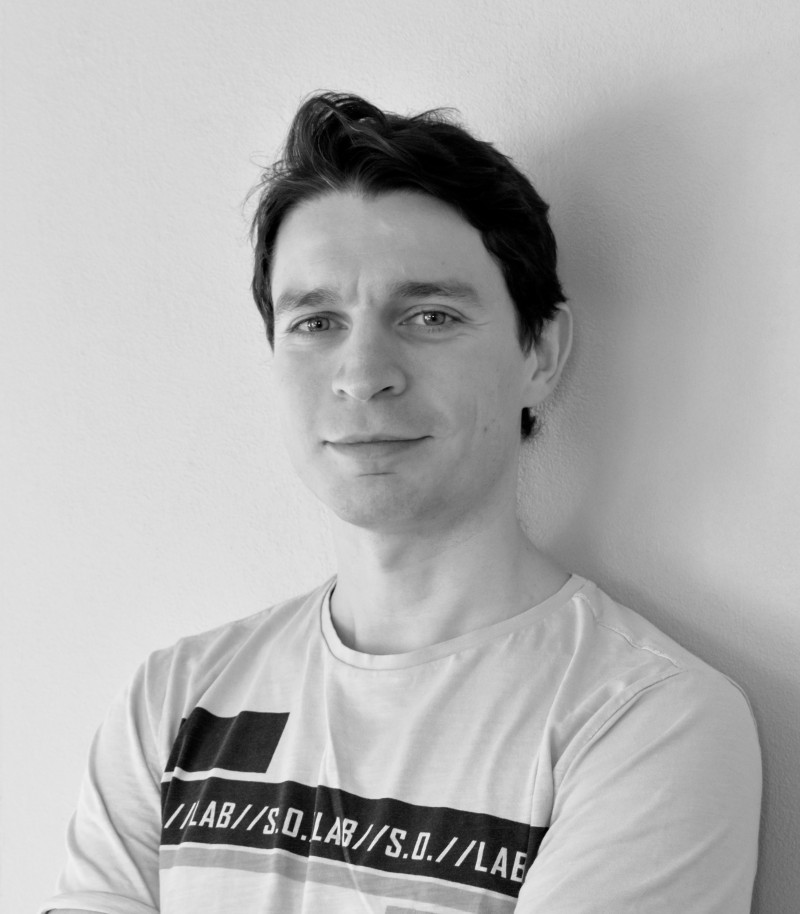
Lennard Reese is a Postdoc and Instructor in the Department of Computer Science (DIKU) at the University of Copenhagen, affiliated with the Software, Data, People & Society (SDPS) section. His current role involves both research and teaching responsibilities. Research Interests: His work centres on developing efficient monitoring techniques for software systems, with a particular emphasis on runtime verification and parallel processing. His research contributes to the broader goals of the SDPS section, which focuses on creating software systems that serve both developers and end-users while delivering societal value. Publications: Reese's most recent contribution is the 2025 article "TimelyMon: A Streaming Parallel First-Order Monitor," which introduces scalable methods for runtime monitoring in distributed environments. Contact: He can be reached at lere@di.ku.dk .
Pernille Rattleff is an Educational Developer at the Center for Teaching and Learning in Engineering Education at the Technical University of Denmark (DTU). She focuses on advancing pedagogical practices in STEM education, particularly in engineering and law disciplines. Her work emphasizes teacher training, curriculum design, and active learning strategies to enhance student engagement and conceptual understanding. Research interests include educational reform in university contexts, qualitative studies on student learning processes, and the integration of technology in teaching. She has contributed to institutional projects such as redesigning legal education curricula and developing video-based learning resources. Recent publications highlight her work on STEM educator training, first-year student experiences, and the role of teaching portfolios in faculty evaluations. She supervises PhD students in projects exploring conceptual understanding in physics and generative AI applications in engineering education. Her contributions extend to designing active learning environments, peer learning strategies, and evaluating the impact of computational tools in mathematics instruction. She is affiliated with DTU's Learning Lab and collaborates on initiatives to strengthen university pedagogy and educational innovation.
Ekkart Kindler is an Associate Professor in the Department of Applied Mathematics and Computer Science at DTU Compute, Technical University of Denmark. His research focuses on model-based software engineering, process mining, and road condition assessment using vehicle sensor data. He leads the Competence Centre for Model-Based Software Engineering, supporting industry adoption of advanced software development methodologies. Education: M.Sc. (1990), Ph.D. (1995) from Technische Universität München; Habilitation in Computer Science (2001) from Humboldt-Universität zu Berlin. He held visiting professorships at German universities (2000–2007) and has extensive experience in formal methods, business process modeling, and Petri nets. Research interests include declarative process modeling, complexity metrics for cognitive load assessment, and the integration of formal methods into industrial software development. His work contributes to UN Sustainable Development Goals related to sustainable infrastructure (SDG 9) and innovation (SDG 9). Notable collaborations include road condition assessment projects using vehicle sensor data (LiRA-CD dataset) and contributions to Petri net standards (PNML). He has supervised PhD students such as K. I. Simonsen (protocol software) and A. Skar (road assessment). Grants and projects: Live Road Assessment with Vehicle Sensors (2019–2022), Model Transformation Tools (2013–2016), and waste management modeling (2012–2016). Active in open-source datasets and tool development for indoor climate control (climify.org).
Martin Kristjansen is a Researcher in the Department of Computer Science at Aalborg University's Technical Faculty of IT and Design. He is part of the Distributed, Embedded and Intelligent Systems research group, focusing on real-time systems, model checking, and distributed computing. His research interests span multiple areas of computer science with a focus on: Real-Time Systems and Schedulability Analysis Model Checking and Formal Verification using UPPAAL Distributed Systems and Multi-core Architectures Reinforcement Learning applications in battery management Fleet management in noisy environments Automata theory and symbolic model learning Dr. Kristjansen's publication record shows a consistent research trajectory from avionics systems in 2019 to more recent work on stochastic digraph real-time task models in 2024. His work demonstrates a strong focus on applying formal methods to practical engineering problems, particularly in safety-critical systems, with research areas spanning automaton theory (100%), mobile robotics (85%), multicore systems (85%), and performance analysis (85%). He has been actively involved in significant research projects including: STORM_SAFE: Software reliability for critical infrastructures (2024-2027) as a Project Participant Digital technologies for Industry 4.0 (2019-2021) as a Project Participant Dr. Kristjansen collaborates extensively with Professor Kim G. Larsen and other researchers at Aalborg University, contributing to the institution's strong reputation in formal methods and real-time systems research. His work includes two significant datasets related to symbolic timed models and distributed fleet management, demonstrating commitment to research reproducibility.
Fabrizio Montesi is Professor of Computer Science at the University of Southern Denmark, Department of Mathematics and Computer Science. He leads the Section of Artificial Intelligence, Cybersecurity, and Programming Languages and holds leadership roles in the Microservices Community, SDU Digital Democracy Centre, and SDU eScience Center. His work focuses on programming languages and systems, cloud/edge computing, microservices, choreographic programming, and cybersecurity.
Birgit Debrabant is an Associate Professor at the Department of Mathematics and Computer Science, University of Southern Denmark, with additional roles in Data Science and the STEM Center for Educational Research – FNUG. Her interdisciplinary work bridges statistical methodology with applications in neuroscience, clinical medicine, and public health. Department: Department of Mathematics and Computer Science Research Centers: STEM Center for Educational Research – FNUG Professional Affiliation: Active in Danish Society for Theoretical Statistics Her research focuses on biostatistics in clinical contexts, particularly neurosurgical outcomes, chronic subdural hematoma, intraventricular hemorrhage, and public health interventions. She employs advanced statistical methods including randomized trials, observational studies, meta-analyses, and genetic association studies. Her work often involves large-scale registry data and methodological innovation in handling complex health data. The 15 most recent publications reveal a strong trend in medical statistics, especially in neurosurgery and public health. Topics include optimal drainage times, antithrombotic therapy, BMI policy impacts, and statistical methods for DNA methylation and hidden population estimation. These reflect a cohesive research program applying rigorous statistical science to pressing clinical and public health questions. She has no listed scientific awards in the provided text. Birgit Debrabant actively contributes to teaching and curriculum development, particularly in biostatistics and applied statistics for health sciences. She has led or co-taught courses such as 'Advanced Biostatistical Methods in Health Sciences' and 'Theory of Science and Statistics'. While no formal student advising or grant information is mentioned, her involvement in multi-center trials and educational initiatives suggests collaborative leadership. She participates in national and international conferences, including DAGStat and the International Workshop on Applied Probability. She is involved in collaborative research networks, particularly in theoretical statistics and health data science, and contributes to professional events as both organizer and presenter.
Amin Timany serves as an Associate Professor in the Department of Computer Science at Aarhus University, Denmark. His research focuses on foundational aspects of programming languages and formal verification systems, with particular expertise in logical frameworks for program correctness. His primary research interests span: Programming Languages Theory Formal Methods and Verification Type Systems and Type Soundness Separation Logic for Concurrency Logical Relations and Denotational Semantics Mechanized Proof Systems Analysis of Timany's recent publications (2022-2025) reveals a strong emphasis on separation logic extensions for distributed systems, guarded recursion techniques, and type soundness proofs. His work frequently bridges theoretical foundations with practical verification challenges, particularly in capability-based security and CRDT verification. The publications demonstrate consistent contributions to top venues including POPL, PLDI, and CPP. Timany actively participates in academic service, having served as conference chair for CPP 2025. His research involves significant collaboration with international teams, particularly with researchers at Aarhus University and other European institutions. The publication record shows steady output with 40+ research items, including 2 PhD supervisions noted in his profile.
Morten Haahr Kristensen is a Research Fellow at the Department of Electrical and Computer Engineering at Aarhus University, Denmark. His work focuses on software engineering and computing systems, particularly in the domains of robotics, autonomous systems, and digital twins. Primary Affiliation: Department of Electrical and Computer Engineering, Aarhus University Other Affiliation: Software Engineering & Computing Systems group Research Interests: Morten investigates formal architectural patterns for adaptive robotic software and runtime verification of autonomous systems. His projects include safety analysis of self-adaptive robot behavior using digital twin technology. He contributes to trustworthy software systems through tutorial lectures and collaborative research. Selected projects: Determining the Limits of Self-Adaptive Behaviour of Robots from a Safety Perspective (2024-2027) Publications: Recent works include contributions to conferences like FASE 2025 and IEEE ACSOS-C 2024, focusing on digital twin implementations and formal verification in robotic systems.
Peter Gjøl Jensen is an Associate Professor in the Department of Computer Science at Aalborg University's Technical Faculty of IT and Design. His research spans formal methods, artificial intelligence, and practical applications in energy systems. He is affiliated with multiple research groups including Distributed, Embedded and Intelligent Systems, AI for the People, and Artificial Intelligence and Machine Learning. His research interests focus on Model Checking , Formal Verification , Reinforcement Learning , and applications to Cyber-physical Systems . He has developed expertise in applying theoretical computer science to solve real-world problems, particularly in energy optimization and heat pump control systems. His work bridges the gap between formal methods and practical engineering applications. His recent publications show a clear trend toward applying AI and formal verification techniques to energy systems and cyber-physical applications. The research spans theoretical foundations of model checking and reaches into practical implementations for heat pump control, autonomous systems, and environmental management. His work often involves the UPPAAL and Stratego frameworks for verification and synthesis. Dr. Jensen actively supervises PhD students, including Andreas Holck Hoeg-Petersen on the "Explainable and Causally Enforced Reinforcement Learning" project. His research has attracted media attention, particularly for intelligent heat pump control systems that provide significant energy savings. He is involved in multiple research projects including "Explainable and Causally Enforced Reinforcement Learning" (ongoing) and "BEO-COVID: Decision Support for Evaluation and Optimization in UPPAAL" (completed in 2020).
Theis Kehlet Nielsen serves as an Assistant lecturer within the Department of Computer Science at the University of Copenhagen, contributing to the institution's academic mission through teaching and research activities in computing disciplines. His research profile centers on core Computer Science domains with particular emphasis: Theoretical Computer Science : Investigating computational complexity, formal methods, and discrete mathematics foundations Software Engineering : Exploring development methodologies, system architecture, and reliability engineering Algorithms : Designing and analyzing computational procedures for optimization problems Contact for academic inquiries may be directed to tkni@di.ku.dk , with additional departmental resources available through the official DIKU website.
Daniel Gratzer is an Assistant Professor at the Department of Computer Science, Aarhus University. His research focuses on theoretical computer science, particularly in type theory, modal logic, and programming language semantics. He has contributed to foundational work in multimodal type theory, cubical type systems, and separation logic frameworks like Iris. His work often bridges categorical logic, homotopy type theory, and formal verification techniques. Gratzer's research interests include: Dependent and modal type theories Formal verification of concurrent systems Semantics of programming languages Proof assistants and logical frameworks His recent publications explore topics such as idempotent resources in separation logic, univalent reference types, and proof systems for multimodal logics. Gratzer collaborates on projects like the mitten proof assistant and has developed syntactic/semantic frameworks for categorical type theories. His work emphasizes foundational formalizations, with contributions to both theoretical results (e.g., normalization proofs, categorical semantics) and practical tools (e.g., Iris implementations).
Magnus Madsen is an Associate Professor at the Department of Computer Science, Aarhus University. He specializes in programming language design, compilers, and type and effect systems, and is the lead developer of the Flix programming language. His research focuses on advancing static analysis techniques and declarative language constructs for effectful and data-driven programming. Research Interests : - Programming language design - Type systems and effect systems - Static program analysis - Datalog and declarative programming - Compiler optimization and implementation Awards & Grants : - 2023: Sapere Aude Grant (Independent Research Fund Denmark) - 2022: Dahl-Nygaard (Junior) Prize (ECOOP) - 2022: STEM Grant (Stibo Foundation) - 2021: Amazon Research Award (collaboration with Jaco van de Pol) - 2020: DFF Project One (Independent Research Fund Denmark) Advising & Collaboration : - Supervises four current PhD students (listed above). - Active in academic service: PC member for ECOOP, OOPSLA, PLDI, and other conferences. - Collaborates with industry (e.g., Google, Systematic) and academia on tool development and language research. Labs & Projects : - Core contributor to the Flix programming language and the CASA (Center for Advanced Software Analysis) initiative. - Involved in interdisciplinary projects combining declarative programming with domain-specific applications.
Radu Grosu is a full professor and head of the Institute of Computer Engineering at the Faculty of Informatics, Vienna University of Technology (TU Wien). He also serves as a research professor in the Department of Computer Science at the State University of New York at Stony Brook (USA). His leadership extends to directing the Cyber-Physical Systems research group at TU Wien and previously co-directing the Concurrent-Systems Laboratory and co-founding the Systems-Biology Laboratory at SUNY Stony Brook. His research focuses on the modeling, analysis, and control of cyber-physical and biological systems. Key application domains include distributed automotive and avionic systems, Internet of Things (IoT), autonomous mobility, green operating systems, mobile ad-hoc networks, and biological networks such as cardiac, neural, and genetic regulatory systems. His methodological expertise lies in formal methods, hybrid systems, and compositional design. The recent trend in his publications emphasizes formal frameworks for cyber-physical system design, verification of AI-based controllers, green computing, and modeling of biological systems using hybrid and stochastic models. His work bridges theoretical rigor with practical applications in safety-critical domains. Scientific Awards: National Science Foundation Career Award State University of New York Research Foundation Promising Inventor Award Association for Computing Machinery Service Award Advising and Grants: Radu Grosu has co-directed research laboratories and mentored students in concurrent and systems biology research. He has secured competitive funding, evidenced by the NSF CAREER Award and other institutional recognitions. His leadership in founding and directing labs indicates strong grant acquisition and team mentorship capabilities. Labs and Research Groups: He leads the Cyber-Physical Systems group at TU Wien and previously co-directed the Concurrent-Systems Laboratory and co-founded the Systems-Biology Laboratory at SUNY Stony Brook, fostering interdisciplinary research in formal methods and biological computing.
Hugo Daniel Macedo serves as an Associate Professor in the Department of Electrical and Computer Engineering at Aarhus University, where he leads research at the intersection of formal methods and cyber-physical systems. His primary institutional affiliations include the INTO-CPS initiative and the HUBCAP project, focusing on integrated toolchains for collaborative engineering design. His research spans critical domains in modern engineering: Digital Twins : Visualization frameworks, security architectures, and applications in autonomous systems (e.g., F1TENTH race cars) and sustainable infrastructure (floodwater management for Power-to-X) Formal Methods : Advancement of the Vienna Development Method (VDM), including tool integration with UML and Visual Studio Code Cyber-Physical Systems : Model-based design, co-simulation techniques, and lifecycle management for circular economy applications Analysis of his 2022-2024 publications reveals a strategic focus on operationalizing digital twins through formal verification, with significant contributions to floodwater resource systems and secure autonomous vehicle frameworks. His work consistently bridges theoretical formal methods with industrial applications, particularly in sustainable engineering contexts. Dr. Macedo actively supervises graduate students in digital twin implementation and formal verification methodologies, though specific advisee names are not publicly documented. His project leadership includes the EU-funded Digital Innovation HUBs initiative (2020-2022), which developed collaborative platforms for cyber-physical system design, securing substantial research grants for toolchain integration and security validation. He maintains active roles in the International Overture Workshop series as both contributor and proceedings editor, driving community standards for formal methods tooling. Current laboratory work centers on the INTO-CPS Application environment, where his team develops co-simulation frameworks for real-time digital twin deployment across automotive and environmental engineering domains.
Bent Thomsen is a Professor in the Department of Computer Science at Aalborg University's Technical Faculty of IT and Design. He directs the Integrated Composites Laboratory (ICL) and serves as editor-in-chief of Advanced Composites and Hybrid Materials. His research focuses on sustainable software development challenges, energy-efficient computing systems, and programming language design. Key interests include green computing paradigms, formal methods for software verification, and optimizing energy consumption in distributed systems. Recent publications demonstrate a strong focus on environmental sustainability in computing, particularly developing methodologies for measuring and reducing energy footprints of IT systems. This aligns with his leadership in the 'Teaching AI green coding' project funded by The Villum Foundation. Professor Thomsen leads multiple research groups including the Center for Embedded Software Systems (CISS) and Center for Data-intensive Systems (Daisy), fostering collaborations across distributed systems and intelligent embedded technologies.