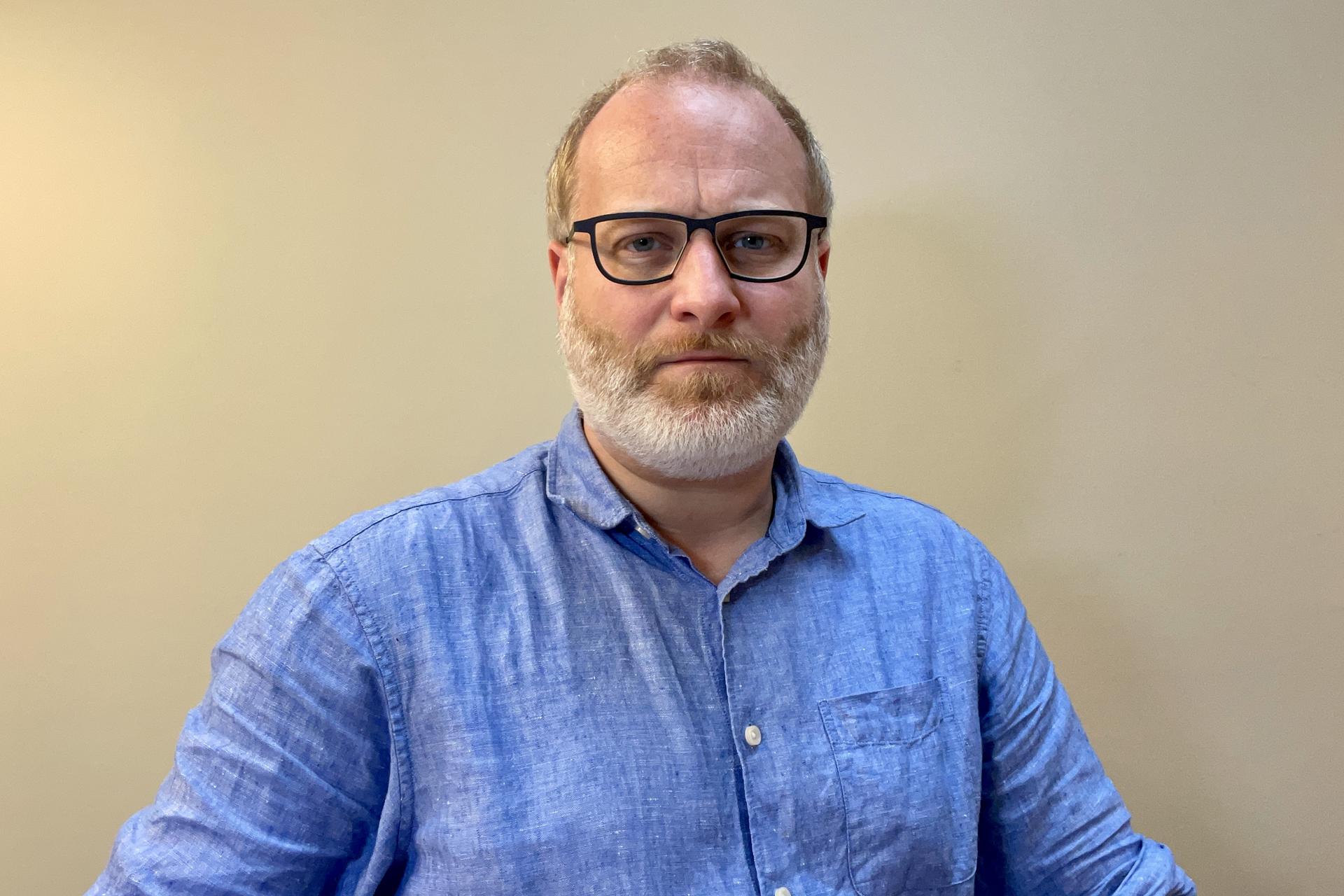
Roziana Ramli is an academic affiliated with Northumbria University, holding a PhD in Computer Science. Her research focuses on medical imaging techniques, cybersecurity in healthcare systems, and bio-inspired optimization algorithms. She has contributed to advancements in retinal fundus image registration and IoT security protocols. Her work integrates computer vision with biomedical applications, addressing challenges in healthcare monitoring and assistive technologies. Key research areas include federated learning in healthcare networks, prosodic feature analysis for language recognition, and secure communication for drone networks. Her systematic literature reviews and algorithmic innovations highlight her interdisciplinary approach to solving technical and clinical problems. Though no formal awards are listed, her active publication record from 1999 to 2024 demonstrates sustained academic engagement.
PD Dr. Tobias Delfs is a Visiting Professor at the Chair for Cultures and Societies of South Asia at Humboldt University during the 2024/25 winter semester . Previously, he was a Research Associate (2018-2024) in the DFG-funded Modern India in German Archives (MIDA) project and a Researcher (2015-2018) in the DFG project on Nathaniel Wallich's botanical network . He holds a habilitation (2023/24) on German botanists' role in 19th-century South Asian imperialism . Education: Studied Medieval/Modern History, Political Science, and Sociology at Kiel University; PhD (2017) on Deviance in the Halle Mission at the University of Zurich Research Stays: Serampore College (India), Archive of the Francke Foundations (Halle), and funded by Fritz Thyssen Fellowship Fields of Interest include imperial/global history , modern South Asian history , history of knowledge , environmental history , and colonial natural science . His 2022-2024 publications focus on German botanical imperialism , missionary knowledge transfer , and colonial alcohol debates . Scientific Awards: Fritz Thyssen Fellowship Collaborative Projects include co-editing Benjamin Schultze's Dialogue Book on Madras and South Asia Chronicle 12 . He contributes to postcolonial historiography , missionary deviance studies , and imperial scientific networks .
Dr. Wolfgang Fischer-Bossert is a leading numismatic researcher affiliated with the Numismatics Department at an unspecified institution. His work focuses on ancient coinage, particularly in the Mediterranean region, with a specialization in electrum production, Sicilian coinage, and die-sharing practices in Greek mints. Primary fields: Ancient History, Numismatics, Classical Archaeology Key subfields: Electrum Coinage, Coin Iconography, Die Analysis, Trade Networks, Political Economy, Metallurgical Techniques His research spans from early electrum coinage (7th century BC) to Hellenistic monetary systems, with notable publications on Syracusan tetradrachms, Athenian decadrachms, and the economic implications of coin hoards and die-sharing. While no explicit awards are listed, his editorial contributions (e.g., Cista Mystica ) highlight his academic leadership. He has collaborated on projects analyzing Sicilian coins and Ptolemaic gold coinage, with a focus on cultural exchange and technological evolution.
Marina Unger is a scientific collaborator at the Photographic Collection of the Bibliotheca Hertziana – Max Planck Institute for Art History since February 2025. She studied Classical Archaeology and Art History at Philipps University of Marburg, University of Naples ‘L'Orientale’, and Humboldt University of Berlin, earning a Magister Artium in 2010. In 2020–2021, she completed a Master’s degree in Literary Translation for Italian at Ludwig Maximilian University in Munich. Her current doctoral thesis focuses on Greek vase drawings within the archaeological apparatus of the Instituto di Corrispondenza Archeologica in Rome. Education: Magister Artium (Humboldt University, 2010), Master’s in Literary Translation (LMU Munich, 2021) Her research bridges archaeology , media history , and archival studies , emphasizing nineteenth-century documentation practices like vase drawings and early photography. She contributes to provenance research and digital humanities projects. Recent work includes the DFG-funded Gelehrte, Ausgräber und Kunsthändler project, analyzing the networks of the German Archaeological Institute through correspondence and linked data infrastructure. Collaborations span institutions like the German Archaeological Institute (DAI) and Scuola Normale Superiore in Pisa, with publications on Etruscan tomb paintings, Greek vases, and antiquities trade dynamics. Prior roles include: student assistant at Bildarchiv Foto Marburg, IT department member at Kunsthistorisches Institut in Florence, and research assistant at DAI Archives in Berlin. She has also worked as a freelance translator/editor and project manager.
Gert Partoens is a full professor at the Faculty of Arts, KU Leuven, where he serves as head of the Institute for Classical Studies. He is a member of the Latin Literature Research Group and LECTIO – KU Leuven Institute for the Study of the Transmission of Texts, Ideas and Images in Antiquity, the Middle Ages and the Renaissance. Additionally, he participates in university governance as a member (ZAP) of both the Faculty Council of Arts and the Artesraad. Professor Partoens' research focuses on Latin literature, particularly patristic and medieval texts with a specialization in Augustine studies, textual transmission, and manuscript analysis. His expertise spans: Early Christian theology and literature Manuscript studies and textual criticism Reception history of classical and patristic authors Medieval exegesis, particularly of Pauline epistles Canon formation in late antiquity His recent scholarly output demonstrates consistent engagement with Augustine's reception, particularly examining how medieval scholars interpreted and transmitted his works. Partoens has produced numerous critical editions, including volumes in the prestigious Corpus Christianorum series, and has increasingly focused on sermon corpora and homiliary collections. His methodological approach combines textual criticism with reception history to trace how classical and patristic texts were understood across different historical periods. Professor Partoens is actively involved in multiple research projects extending through 2027, including studies on canon formation mechanisms, early witnesses to semi-Pelagianism, and the transmission of Pomerius' De vita contemplativa. His work often involves international collaboration, particularly with institutions like SISMEL in Bologna, and contributes significantly to our understanding of how texts traveled and were transformed throughout the medieval period. As an educator, Partoens teaches courses on early Christian and medieval Latin language and literature, classical Latin, textual criticism, and edition techniques, training the next generation of scholars in philological methods and classical reception studies.
Frederic Clark serves as Associate Professor of Classics and English at the University of Southern California's Dornsife College of Letters, Arts and Sciences, specializing in the cultural transmission of classical antiquity through medieval and early modern Europe. His research interrogates how ancient texts shaped humanistic scholarship, evidenced by his monograph The First Pagan Historian (Oxford, 2020) and forthcoming work on historical periodization. Clark's academic foundation includes: Ph.D. in History, Princeton University (2014) M.Phil. in Medieval History, University of Cambridge (2009) B.A. in History and Literature, Harvard University (2008) He completed postdoctoral training as Andrew W. Mellon Fellow at Rice University (2017-2018), Visiting Assistant Professor at NYU's Institute for the Study of the Ancient World (2015-2017), and Mellon Fellow at Stanford University (2014-2015). His intellectual inquiry spans classical reception, Latin literature's afterlife, late antiquity, and Renaissance humanism, with particular focus on textual authenticity, historical periodization, and the construction of scholarly canons. Clark examines how forgeries like Dares Phrygius' Trojan War narrative catalyzed debates about history versus fiction across a millennium of scholarship. Analysis of Clark's publications (2010-2022) reveals consistent investigation into the mechanics of historical consciousness: how early modern scholars demarcated antiquity from the Middle Ages, reconstructed lost classical works, and navigated tensions between philological rigor and imaginative reconstruction. His work demonstrates how medieval genealogies and Renaissance antiquarianism actively shaped modern historical methodologies. Clark's scholarly recognition includes: Faculty Fellow, USC-Huntington Early Modern Studies Institute (Spring 2023) External Faculty Fellow, Stanford Humanities Center (2020-2021) While his current advising activities remain unspecified, Clark's collaborative research—exemplified by the multi-author study of Winthrop family reading practices—highlights his engagement with collective scholarly enterprises. His office (PED 132B) and email (fredernc@usc.edu) facilitate ongoing contributions to classical and historical discourse.
Aleksandar R. Popović is a Full Professor at the University of Belgrade's Faculty of Chemistry, Department of Applied Chemistry. He holds a PhD from the same institution and has held academic positions since 1997, progressing from Teaching Assistant to Full Professor by 2013. His research focuses on environmental pollutants, waste material reuse, and atmospheric deposition, leveraging biomonitoring techniques. He has led or participated in multiple national and international research projects, including studies on soil contamination, airborne pollutants, and environmental risk assessment. Beyond academia, he served as Serbia's Minister of Science and Environmental Protection (2004–2007) and Minister of Mining and Energy (2007–2008). Education: Bachelor's in Chemistry, Faculty of Chemistry, University of Belgrade (1988–1993) Master's in Chemistry, Florida State University (1994–1996) PhD in Chemistry, Faculty of Chemistry, University of Belgrade (1996–2002) Research Projects: Active: International Cooperation - COST Actions project (2022–2026) Completed: National Fundamental Research Projects on pollutant dynamics and soil contamination Committee Roles: Chairman of the Committee for Recognition of Foreign Higher Education Documents (2021–2024) Member of the Committee for Education Strategy His research interests emphasize chemical transformations of pollutants, waste material repurposing, and environmental chemistry. Notable work includes studies on PAHs in food products, trace metal speciation in sediments, and bioindicator applications using moss. His recent publications (2021–2025) address environmental pollution impacts on ecosystems, human health risks, and innovative remediation techniques. Grants and collaborations include funding from the European Commission and Serbian and Slovak governmental bodies. His interdisciplinary approach bridges analytical chemistry, environmental science, and policy, reflecting his dual academic and governmental experience.
Zachary Turpin is an Associate Professor in the English Department at the University of Idaho, affiliated with the College of Letters, Arts and Social Sciences. His research focuses on 19th-century periodical culture, digital humanities, textual recovery, and the history of epistemology and sciences. He is renowned for rediscovering lost works by Walt Whitman and other American authors, including Whitman’s novella *Life and Adventures of Jack Engle* (1852) and wellness manifesto *Manly Health and Training* (1858). Turpin’s work often involves collaborative archival research to uncover unaccounted-for writings by figures like Rebecca Harding Davis, Emma Lazarus, and Paul Laurence Dunbar. Education: Ph.D., English Language and Literature, University of Houston (2017) M.A., English Literature, College of Charleston and The Citadel (2007) B.A., English Literature, New York University (2004) Research Interests: Turpin’s work bridges traditional literary scholarship and digital methods. He explores how periodicals shaped 19th-century literary culture, emphasizing textual recovery and the intersection of science and literature. His projects include editing Whitman’s journalism and compiling *Radicals: Audacious Writings by American Women, 1830–1930*, which recovers feminist voices. Publications Trends: His articles and books focus on recovering lost texts, analyzing authorial networks, and contextualizing works within broader historical frameworks. Recent projects highlight Whitman’s New Orleans period and interdisciplinary approaches to Melville’s philosophical influences. Awards: He has received prestigious fellowships such as the Kluge Fellowship (Library of Congress, 2017–18) and Peterson Fellowship (American Antiquarian Society, 2020–21), alongside teaching awards and grants supporting digital scholarship. Teaching & Advising: Turpin teaches courses on American literature, archival methods, and Whitman/Melville studies. His advising emphasizes hands-on archival research, reflected in student projects and collaborative publications. Labs/Teams: While no formal lab is mentioned, his work involves collaborations with institutions like the Library of Congress and digital humanities initiatives at the University of Idaho.
Katrina B. Olds is a Professor and Chair of the History Department at the University of San Francisco. She specializes in early modern European and Latin American history, with a focus on Counter-Reformation Catholicism, religious belief, and the intersection of humor, sexuality, and sacred practices. Her research explores topics such as historical forgeries, relics, and the cultural politics of memory. Olds holds a PhD and MA in History from Princeton University and a Master of Theological Studies from Harvard Divinity School. She has held significant administrative roles, including Chair of the History Department (2023–2025), Director of the Saint Ignatius Institute (2019–2022), and Academic Advisor for USF Study Abroad programs in Oxford. She has also served on tenure and promotion committees and the Deans Medal Selection Committee. Her notable works include Forging the Past: Invented Histories in Counter-Reformation Spain (Yale, 2015), which won the John Gilmary Shea Prize. She is co-editing the forthcoming Cambridge Companion to Counter-Reformation Saints and Sainthood . Her current research projects investigate blasphemy in the Spanish Enlightenment and the role of laughter in early modern sacred contexts. Awarded the USF Distinguished Research Award (2017) and multiple fellowships, Olds is actively engaged in interdisciplinary teaching through the Saint Ignatius Institute and Honors College, emphasizing the humanities' relevance to contemporary issues.
Thomas James Dandelet is a Professor in the Department of History at the University of California, Berkeley, where he has held positions since 2001 (Associate Professor) and 2015 (Professor). His academic career includes assistant professorships at Princeton University (1997-2000) and Bard College (1995-97). Education: BA in History from St. John's University, Minnesota (1982) MDiv in Church History from Princeton Theological Seminary (1988) PhD in History from the University of California, Berkeley (1995) Research Focus: Specializing in Early Modern Europe, Dandelet examines the Spanish Empire's influence on Mediterranean history, particularly in Italy. His work bridges political, cultural, and social history, analyzing imperial ideologies, transnational networks, and the intersection of religion and statecraft through case studies like Spanish Rome, the Colonna family, and Renaissance architectural projects. Scientific Contributions: Authored The Renaissance of Empire in Early Modern Europe (Cambridge University Press, 2014) Co-edited Spain in Italy, 1500-1700 (Brill, 2006) Translation of Spanish Rome into Spanish ( La Roma Española, 1500-1700 , 2002) Major Awards: Guggenheim Fellowship (2007-2008) Roland Bainton Prize (2002) American Academy in Rome Rome Prize (1999-2000) National Endowment for the Humanities Fellowship (1998) Spanish Ministry of Culture Fellowship (1997) Mellon Fellowship (1994-95) Fulbright Fellowship (1992-93) Advising & Grants: While specific students aren't listed, his academic leadership is evident through editorial roles and research grants from institutions like the National Endowment for the Humanities and the Spanish Ministry of Culture. His work frequently explores the economic foundations of Spanish imperial projects and their cultural manifestations.
Dr. Daniel J. Carr is a Senior Lecturer in Private Law at the Edinburgh Centre for Private Law within the School of Law at the University of Edinburgh. He joined the School of Law in August 2011 after completing his doctoral studies at the University of Cambridge. His academic career includes previous positions as a lecturer at the University of Dundee (2009-2011) and research assistant for Neil Walker's report on final appellate jurisdiction in Scotland. Dr. Carr's educational background includes an LLB (Hons) and MSc by research from the University of Edinburgh, followed by a PhD from the University of Cambridge with his dissertation titled "Equity in Scots Law." He has also conducted research at the Max Planck Institute for International and Comparative Private Law as part of an exchange with the University of Cambridge. Dr. Carr's research focuses on Equity Law, Private Law, Scots Law, Trust Law, Property Law, Succession Law, Fiduciary Duties, and Civil Law. His scholarly work examines the historical development and contemporary application of equity principles within the Scottish legal system, comparative analysis of property and succession laws across jurisdictions, and emerging legal issues related to digital assets. He has made significant contributions to understanding the relationship between law and equity in Scotland, the evolution of fiduciary duties, and the application of equitable remedies in modern contexts. His extensive publication record demonstrates a consistent scholarly output across multiple legal domains, with particular emphasis on the intersection of historical legal principles and contemporary legal challenges. Dr. Carr's work often bridges theoretical legal concepts with practical applications in Scottish courts and comparative legal systems, showing particular expertise in property law, succession law, and the application of equitable principles to modern legal problems. Over 40 research outputs spanning 2007-2025 Multiple book publications including "Ideas of Equity" (2017) and "Property" (3rd edition, 2018) Regular contributor to the Edinburgh Law Review Dr. Carr has contributed significantly to legal education through his textbook "Property" (now in its 3rd edition) and has engaged with the legal community through reviews of major legal texts and participation in scholarly discussions on evolving legal frameworks. As a dedicated educator, Dr. Carr maintains regular office hours on Tuesdays from 16:00-17:00 and is actively involved in the academic life of the University of Edinburgh's Law School. His research continues to shape understanding of private law principles in Scotland and their relationship to broader common law traditions.
Assoc Prof Henry Nguyen is an Associate Professor at Griffith University's School of Information and Communication Technology, with expertise in data integration, data quality, recommender systems, and big data visualization. He directs the Responsible Big Data Lab and has secured over $3.5M in funding since 2015 from ARC, DFAT, and industry partners. PhD & Master's from EPFL, Switzerland ARC DECRA Award (2020) His research focuses on privacy-preserving AI for social data , IoT , and satellite analytics , with over 200 publications in top venues like SIGMOD, KDD, and IEEE TKDE. Recent work spans federated learning , graph neural networks , and secure AI systems . Article trends highlight 2024-2025 publications on: Federated recommendation security On-device AI optimization Privacy-preserving explainable AI Graph condensation techniques LLM-powered risk analysis Cloud-edge collaboration Scientific contributions include ARC DECRA Award 2020 Multiple senior PC roles in A* conferences Citations in International AI Safety Report 2025 Henry Nguyen supervises 12 active PhD/MSc students and has directed 8 completed doctoral theses . His funded projects include collaborations with Ubitech , KARI , and CSIRO , focusing on Australia-Korea partnerships and responsible AI development.
Helen Hughes is a Senior Lecturer in the Department of Fine Art within Monash University's Faculty of Art, Design and Architecture, where she teaches contemporary art theory and research methods at honours and postgraduate levels. She serves as a vital academic figure specializing in Australian art history and criticism while actively mentoring PhD students. Her research spans Australian convict art of the late eighteenth and early nineteenth centuries, postmodern and contemporary Australian art, and the intersection of environmental humanities with art history. Hughes has established herself as a leading scholar through extensive publications and significant research projects including Art and Convict Transportation from Britain and Ireland to Australia, 1787-1868 (2024–present) and Forger-Convict-Artist: The Criminalisation of Forgery and Colonial Australian Art, 1788-1868 (2019–2020). Hughes' scholarly contributions have earned her prestigious recognition including the Getty/ACLS Postdoctoral Fellowship (2019/20) and Paul Mellon Centre Mid-career Fellowship (2023/24). Her edited publications include Tom Nicholson: Lines towards Another (2019), Kiffy Rubbo: Curating the 1970s (2016), Double Displacement: Rex Butler on Queensland Art (2018), and Impresario: Paul Taylor (2014). As a practitioner, Hughes co-founded the contemporary art journal Discipline in 2011 and serves on the editorial boards of Index Journal , Findings Journal , and Memo Review . She contributes regularly to major publications including Artforum (as Melbourne critic), Art & Australia , Artlink , and frieze . Her curatorial practice includes exhibitions at Monash University Museum of Art, Gertrude Contemporary, TarraWarra Museum of Art, and NAP Contemporary. Hughes co-founded the Climate Aware Creative Practice national network with Terri Bird, Tara McDowell, and Lauren Burrow, demonstrating her commitment to addressing the climate crisis through art education. Her recent collaborative projects like Relational Ecologies and Weather Front exemplify this interdisciplinary approach connecting art practice with environmental humanities.
Matthew Sommer is the Bowman Family Professor of History and holds a courtesy appointment in East Asian Languages and Cultures at Stanford University. He specializes in Chinese legal and gender history, with a focus on the Qing Dynasty. His research explores topics such as law, sexuality, and social norms in imperial China. Education: Ph.D., University of California, Los Angeles (History, 1994) M.A., University of Washington (International Studies: China, 1987) B.A., Swarthmore College (Political Science, 1983) Research Interests: Chinese Legal History, Gender Studies, Qing Dynasty, Sexuality in Imperial China, and East Asian Studies. Recent Articles: His work includes studies on transgender histories in late imperial China, legal understandings of violence, and the role of print media in disseminating legal knowledge. Recent publications span 2024 to 1996, with a focus on gender, law, and social dynamics. Honors & Awards: Recipient of the Yalom and Litt Awards (2006), Ellen Andrews Wright Faculty Fellow (2006-2007), and multiple fellowships including the National Resource Fellowship (Chinese, 1990-1991). Advising & Grants: Advises doctoral students in gender and legal history. Served on numerous academic committees at Stanford, including the History Department’s honors program and library initiatives. Labs/Teams: Collaborates with interdisciplinary teams on projects related to East Asian history and gender studies.
Cristina Scherrer-Schaub is an Honorary Professor at the University of Lausanne (UNIL), holding the Chair of Tibetan and Buddhist Studies (part-time). She concurrently served as a Full Professor (Director of Studies) at the École Pratique des Hautes Études in Paris from 1999. Her primary affiliations include the Department of Slavic and South Asian Languages and Civilizations at UNIL and international projects in Tibetology. Education: She earned a degree in Philosophy and Mathematics from the University of Fribourg (1972), followed by a doctorate in Buddhist philology under Prof. Jacques May at UNIL. She mastered multiple languages including Tibetan, Sanskrit, and Pali. Research focuses on ancient Tibetan manuscripts, transmission of Indian Buddhist texts to Central Asia and Tibet, and methodological tools for dating manuscripts. Her fieldwork spans Uzbekistan, Pakistan, China, and Indonesia since 1992. She has edited journals like the Journal Asiatique and held leadership roles, including Secretary General of the International Association of Tibetan Studies (2003–2010) and current President of the International Association of Buddhist Studies. Her articles analyze textual diffusion, scribal practices, and Buddhist art’s role in cultural transmission. She has been pivotal in global Buddhist studies and continues to contribute through collaborative research initiatives.