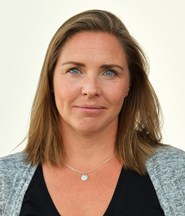
Maria Johansson is an Associate Professor at the Department of Education, Umeå University. Her work focuses on gender studies, education policy, sustainability, and sociology, with a particular emphasis on labor dynamics in forestry and gender inclusion in sports. She leads the research project 'Towards a gender equal and sustainable wildlife management' (2022–2024), funded by Umeå University. Her research explores themes such as gendered labor divisions in Swedish forestry, cultural practices in martial arts clubs, and policy interventions for sustainability and equality. She is affiliated with Umeå University's Mediagränd 14 campus and can be contacted at maria.johansson01@umu.se.
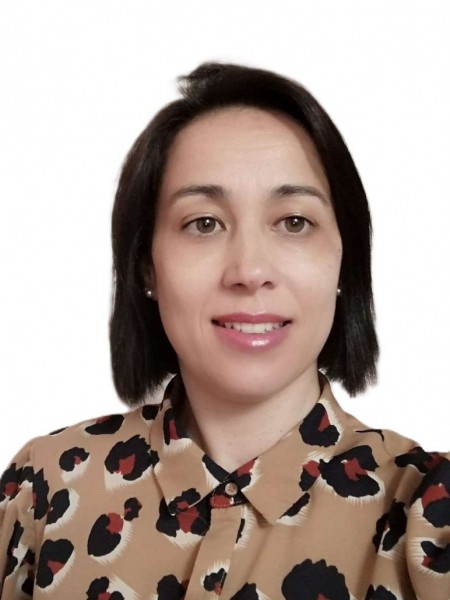
Dr. Carla Vilela is an Assistant Professor in the Department of Chemistry at the University of Aveiro and Principal Researcher at CICECO. She coordinates the Sustainable Materials research line and leads projects on cellulose-based materials and circular economy. Her research focuses on sustainable materials from cellulose and renewable resources for applications in water remediation, food packaging, and textiles. Education includes a PhD in Chemistry from the University of Aveiro and postdoctoral work at CICECO and ISIS Neutron and Muon Source (UK). Research interests include: Development of cellulose-based functional materials Nanocomposites for biomedical applications Sustainable packaging solutions Biopolymer modification and characterization Publications demonstrate strong focus on cellulose nanocomposites, bioprinting bioinks, and active packaging. Recent articles frequently involve nanocellulose modifications, drug delivery systems, and sustainable material design. Awards include being named among World's Top 2% Scientists annually since 2020. Funding includes national projects (Cell4Janus) and EU collaborations (PRIMA Im-Pack). Leads the BioPol4Fun research group and supervises 6 PhD students. Current projects explore cellulose-based microrobots, resin valorization, and marine biopolymers.
Dr. Cathy Oke OAM is an Associate Professor and Melbourne Enterprise Principal Fellow in Informed Cities at the Melbourne School of Design, University of Melbourne. She serves as Director of the Melbourne Centre for Cities and holds roles as a Senior Advisor to the Global Covenant of Mayors for Climate and Energy. Her work bridges research, policy, and practice to advance nature and climate action in urban environments. Previously, she served as a Councillor for the City of Melbourne (2008–2020) and contributed to the Clean Air and Urban Landscapes Hub (CAUL) as a Knowledge Broker. Cathy holds a PhD in Genetics and over 20 years of experience in environmental communications and project management. Her research focuses on urban sustainability, climate resilience, and nature-based solutions. Key initiatives include Innovate4Cities, which drives city-led climate innovation, and projects on urban biodiversity restoration. Cathy’s work emphasizes interdisciplinary collaboration and the integration of scientific evidence into actionable policies. Educations: PhD in Genetics RMIT University affiliation as a former research fellow Awards: 2023 Order of Australia Medal for service to Local Government and the Environment Her articles highlight themes such as urban climate governance, nature-based solutions, and global city networks. She collaborates with international bodies to enhance city diplomacy and accelerate climate action. Cathy leads the Melbourne Centre for Cities, a hub for urban research and policy engagement.
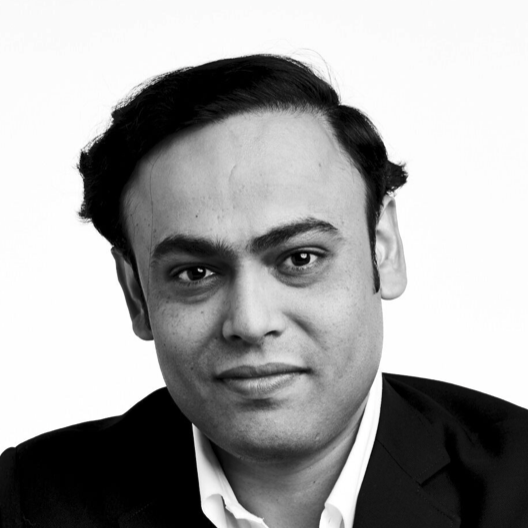
Saurabh Amin is a Professor in the Department of Civil and Environmental Engineering at the Massachusetts Institute of Technology (MIT), where he also serves as the Edmund K. Turner Professor and Undergraduate Officer. He is a Principal Investigator at the Laboratory of Information and Decision Systems and holds affiliations with the Operations Research Center and the Center for Computational Science and Engineering. His educational background includes: B.Tech. 2002, Indian Institute of Technology (IIT) Roorkee M.S. 2004, University of Texas (UT) Austin Ph.D. 2011, University of California (UC) Berkeley Saurabh Amin's research focuses on the design and control of infrastructure systems using game theory and optimization in networks. His work spans three main areas: resilient network control, information systems and incentive design, and optimal resource allocation in large-scale infrastructure systems. By concentrating on critical infrastructure domains including highway transportation, electric power distribution, and urban water networks, his research develops innovative theory and tools to enhance system performance against both stochastic and adversarial disruptions. His approach involves modeling cyber-physical interactions in infrastructures to assess vulnerabilities, developing detection and response tools for failures at various scales, and designing economic incentive schemes that improve aggregate public good while accounting for dependencies and private information among strategic entities. Amin's work bridges mathematical systems theory with practical civil engineering applications, creating a rigorous theoretical foundation for infrastructure resilience that addresses diverse failure mechanisms from natural disasters to deliberate malicious actions. His recent publications demonstrate a strong focus on decarbonization of energy systems, resilient infrastructure planning under climate uncertainty, optimization methods for complex networked systems, and game-theoretic approaches to sustainable infrastructure management. His work increasingly integrates artificial intelligence and machine learning techniques with traditional control theory to address contemporary challenges in infrastructure resilience and sustainability. The research shows a clear trajectory toward addressing climate change impacts on infrastructure systems while maintaining economic efficiency and operational reliability. Professor Amin has received numerous prestigious awards and honors: Common Ground Excellence in Teaching Award, 2025 HSCC Test-of-Time Award, 2024 MIT CEE, Distinguished Service and Leadership Award, 2023 Samuel M. Seegal Prize (SoE) – inspiring students in pursuing and achieving excellence, 2022 Earll M. Murman for Excellence in Undergraduate Advising, 2022 C3.ai Digital Transformation Institute Research Award, 2020 MIT, Ole Madsen Mentoring Award, 2020 MIT, Energy Initiative Research Award, 2020 National Academy of Engineering, China-America Frontiers of Engineering Symposium speaker, 2019 MIT, Robert N. Noyce Career Development Professor, 2015-2018 Google Faculty Research Award, 2015 National Science Foundation CAREER Award, 2015 Siebel Energy Institute Research Award, 2015 MIT, Solomon Buchsbaum AT&T Research Fund Award, 2012 Professor Amin has been actively involved in significant research projects including the C3.ai DTI project on Causal Reasoning for Real-Time Attack Identification in Cyber-Physical Systems and another on Learning in Routing Games for Sustainable Electromobility. He serves as the chief scientist on multi-institutional NSF grants, including the $9 million Foundations of Resilient Cyber-Physical Systems (CPS) project. His teaching portfolio includes courses such as 1.008 Engineering for a Sustainable World, 1.104 Sensing and Intelligent Systems, 1.020 Engineering Sustainability: Analysis and Design, and 1.208 Resilient Networks. As Undergraduate Officer, he plays a key role in shaping the educational experience for civil and environmental engineering students at MIT. Professor Amin leads the Resilient Infrastructure Networks Lab at MIT, where his team develops theoretical foundations and practical tools for infrastructure resilience. The lab focuses on the intersection of control theory, game theory, and optimization applied to cyber-physical infrastructure systems. Current research directions include pandemic-resilient urban mobility and hurricane-resilient smart grid operations, reflecting the lab's commitment to addressing pressing societal challenges through rigorous systems engineering approaches.
Alexandra Paige Fischer is an Associate Professor at the University of Michigan School for Environment and Sustainability (SEAS) . Her research focuses on the human dimensions of environmental change , with emphasis on climate change adaptation , wildfire risk governance , and collective action in forested ecosystems . She collaborates with interdisciplinary teams and serves as a contributing author to the IPCC Sixth Assessment Report . PhD, Oregon State University (Forest Resources Social Science) MS, Oregon State University (Forest Resources Social Science) BA, Hampshire College (Cultural Anthropology) Her research integrates theories from natural resource sociology and human-environment geography , employing qualitative interviews , quantitative surveys , and social network analysis . She leads the Western Forest and Fire Initiative and investigates socio-ecological systems in fire-prone regions and coastal communities. Her work spans the U.S. West and Chile , where she explores global wildfire challenges and flammable plantation impacts. Recent publications highlight her contributions to climate adaptation frameworks , collective risk mitigation , and socio-ecological network analysis . She has received recognition as a Fulbright Scholar and leading fire science researcher . Fulbright Scholar, Facultad de Ciencias Forestales y Recursos Naturales, Universidad Austral de Chile 50 Female Leading Scholars in Fire Science Grants include USDA Forest Service projects on climate change impacts on family forestlands and forestry responses to climate change . She actively contributes to Nature Sustainability , Global Environmental Change , and serves as Associate Editor for Ecology and Society and Frontiers in Climate .
Malgorzata Blicharska is a Senior Lecturer in Sustainable Development at Uppsala University, affiliated with the Department of Geosciences and the Institute for Research on Conflicts of Interest in Sustainable Social Transformation. Her work spans multiple research domains focused on sustainable natural resource management and policy implementation. Dr. Blicharska's research focuses on sustainable development with expertise in ecosystem services, biodiversity conservation, climate change governance, and the Water-Energy-Food-Ecosystem (WEFE) nexus. She integrates social science perspectives with environmental management, examining policy implementation and stakeholder engagement in conservation initiatives. Her work includes extensive research on urban ponds, recreational fisheries, and nature-based solutions, particularly focusing on ponds and wetlands as key components of sustainable landscape management. Her recent publications reveal a strong emphasis on transdisciplinary approaches to environmental challenges, with growing focus on nature-based solutions, drought vulnerability in forested regions, and governance aspects of implementing the WEFE nexus concept. Her work increasingly addresses justice dimensions in environmental management and stakeholder engagement in policy implementation. LANDPATHS: Swedish Environmental Protection Agency-funded program on multifunctional landscapes (coordinator) PONDERFUL: Horizon 2020 project on pond biodiversity and ecosystem services (WP lead) NEXOGENESIS: Horizon 2020 project on WEFE nexus policy integration (WP lead) Wet-Kit: Swedish Environmental Protection Agency project on wetland optimization PUDDLE-JUMP: Formas-funded project on small artificial waterbodies
Peter H. Verburg is a Full Professor of Environmental Spatial Analysis at the Institute for Environmental Studies (IVM) , Vrije Universiteit Amsterdam, leading the Environmental Geography group. He has held this position since 2010 and previously served as an Assistant Professor at Wageningen University (2003–2010) and Senior Researcher at Alterra (2009–2010). His research focuses on land use analysis, spatial modeling, and interdisciplinary environmental studies. Education: PhD in Land Use Modelling, Wageningen University (2000) MSc in Physical Geography, Wageningen University (1996) Key Research Interests: Dr. Verburg is renowned for developing the globally used CLUE land-use modeling framework. His work integrates methods from social sciences, econometrics, and earth sciences to analyze land-use patterns and policies. He actively contributes to EU projects on sustainable urban planning, climate adaptation, and ecosystem services. Current roles include co-Editor-in-Chief of Landscape and Urban Planning , member of the Earth Commission, and Science-Policy Interface member of UNCCD. Professional Activities: Former Chair of Global Land Programme (Future Earth) Lead researcher in multiple EU initiatives (e.g., BrightspotsCSA, TURAS) Organized workshops on land-use modeling and ecosystem services Awards: Highly Cited Researcher (2018, Web of Science top 1%) Research and Collaboration: He has published over 415 peer-reviewed articles and supervised 38 PhD theses. His projects span land-use modeling in China, Central Asia, and the Mekong region. Collaborations include UN agencies, European research networks, and global sustainability initiatives.
Brian Leung is an Associate Professor at McGill University, jointly affiliated with the Department of Biology and the Bieler School of the Environment . He holds the prestigious UNESCO Chair for Dialogues on Sustainability and serves as Director of the McGill Neotropical Environment Option (NEO) , a collaborative program with the Smithsonian Tropical Research Institute. His work bridges ecological theory, computational modeling, and environmental policy. Dr. Leung earned his PhD in Biology from Carleton University and completed postdoctoral research at the University of Cambridge and the University of Notre Dame. His academic journey at McGill began in 2004 as an Assistant Professor, advancing to Associate Professor in 2010. His research centers on predictive ecology , particularly modeling biological invasions and sustainability challenges . He develops and applies mathematical, statistical, and computational models to understand invasion dynamics across terrestrial, aquatic, and marine systems. His recent work includes the Panama Research and Integrated Sustainability Model (PRISM) , a spatially explicit framework for sustainability science in the Global South. His research spans scales from local to global and integrates ecological, economic, and social factors. His recent publications show a strong focus on invasion risk assessment , species distribution modeling , economic costs of invasions , and ecological forecasting . He frequently publishes in top journals such as Nature , Ecology Letters , and Global Ecology and Biogeography , emphasizing data-driven decision-making and policy relevance. Dr. Leung has received significant recognition through invitations to contribute to major reports and has co-edited influential works on invasive species economics. While specific named awards are not listed, his leadership roles and publication record reflect high scientific esteem. He actively mentors a dynamic research group, supervising multiple Ph.D. and M.Sc. students on projects related to invasion modeling, mangrove conservation, forest pest dynamics, and urban ecology. His lab emphasizes quantitative skills and interdisciplinary collaboration. He has secured research funding to support these projects, though specific grants are not detailed in the text. He leads the Leung Lab , which focuses on predictive modeling in ecology and sustainability. The lab collaborates with institutions such as the Smithsonian Tropical Research Institute and environmental firms like Habitat. Current projects include multi-species connectivity modeling, mangrove ecosystem services, and forecasting forest pest outbreaks.
Hisham Zerriffi is an Associate Professor at the University of British Columbia (UBC) in the Department of Forest Resources Management, Faculty of Forestry. He also serves as Associate Dean for Equity, Diversity, and Inclusion. His research intersects technology, energy, and the environment, focusing on rural areas in the Global South. Affiliation: BioProducts Institute Affiliation: Clean Energy Research Centre Affiliation: Institute for Resources, Environment and Sustainability His research examines institutional factors in technology diffusion, household energy choices, and welfare impacts of energy use. Current projects include analyzing forest density's ecological impact, clean cooking transitions in India, and decentralized energy systems. Recent publications address just transitions, biomass energy economics, and policy misalignments in Indigenous communities. He has authored works on climate change mitigation via forest carbon credits and rural electrification strategies. Scientific Award: Ivan Head South/North Research Chair As a PhD supervisor, he has guided Natalie Payer on urban energy poverty in the U.S. He collaborates on interdisciplinary grants and leads the Energy Resources, Development and Environment Lab (ERDELab).
Hossein Nami is an Associate Professor at the Department of Green Technology (IGT) and SDU Life Cycle Engineering at the University of Southern Denmark . His research focuses on Power-to-X , Hydrogen production , E-fuel , and system modeling for sustainable energy solutions. PhD, University of Tabriz (2018) Postdoc, Technical University of Denmark (2020-2022) Assistant Professor, University of Southern Denmark (2022-2025) Nami's research output includes 15 articles (2024-2026) on topics like ammonia-fueled fuel cells , geothermal cycles , chemical looping combustion , and electrolysis optimization . His work emphasizes techno-economic analysis, exergy efficiency, and multi-objective optimization for low-carbon energy systems. He leads the FLEX-ENVIRONMENT project (2024-2027) on electrolyzer integration and contributes to CARMA-Green Fuels (2023-2026) and GRACE (2025) for carbon management and grid-aware investment. His teaching includes supervision of MSc theses on renewable hydrocarbons and power-to-X technologies at SDU.
Jeff Sayer is a Professor in the Department of Forest and Conservation Sciences at the University of British Columbia (UBC) Faculty of Forestry . His research focuses on applied conservation science and the human dimensions of environmental change , with fieldwork spanning Indonesia, West and Central Africa, and Southeast Asia. Current projects include sustainable landscapes in Indonesia (since 2010), forest transitions in Ghana and the Congo Basin (since 2000), and new approaches to conservation science (since 2000). Research emphasizes integrated natural resource management, landscape-scale decision-making, and reconciling agriculture with biodiversity conservation. Key research themes: Integrated landscape approaches for multifunctional landscapes Forest governance and tenure conflicts Policy coherence for Sustainable Development Goals Human-environment interactions in tropical regions Recent publication trends show interdisciplinary focus on deforestation-free trade policies, agroforestry systems, forest governance challenges, and transdisciplinary science applications across tropical Asia, Africa, and Canada.
Dr. Alessio Russo is a Senior Lecturer in Landscape Architecture at the School of Architecture and Built Environment, Queensland University of Technology (QUT). As a recognized expert in urban ecosystem services and green infrastructure, his research bridges environmental design with human health and climate change mitigation. His research emphasizes enhancing urban human health and wellbeing through biodiverse green spaces, participatory design, and nature-based solutions that address thermal comfort, pollution removal, food production, and water runoff. Key projects include 2023-2024: Urban rewilding aesthetics & people's needs in blue/green infrastructure (UKRI RECLAIM Network Plus) 2023: Climate-resilient public spaces (RPA Small Grants, UoG) 2021-2022: Shared vision for urban greening (UCL & Net Zero Innovation Programme) His scholarly output spans 2014-2025, focusing on nature-based urban regeneration aligned with SDG 11. He serves as Associate Editor for Urban Agriculture and Regional Food Systems and sits on editorial boards of Urban Planning, Discovering Cities, and Urban Resilience and Sustainability. Professional memberships include IFLA, ICOMOS-IFLA, and IUCN CEM.
Luca Sebastiani is a Full Professor in Horticultural Sciences (AGR/03) at Scuola Superiore Sant'Anna in Pisa, Italy, since 2014. He currently coordinates the PhD Course in AgroBioSciences and has previously served as Director of the Institute of Life Sciences (2016-2021). His academic career includes roles as Associate Professor (2002-2014) and Assistant Professor (1998-2002) at the same institution. PhD in Plant Biology from Scuola Superiore Sant'Anna (1996) MSc in Agricultural Sciences from University of Pisa (cum laude, 1991) Postdoctoral research in agricultural biotechnology (1996-1998) Research Interests: Focus on plant-environment interactions, particularly abiotic and biotic stress responses in crops. Key areas include: Physiological and molecular responses to climate change stressors Nutraceutical enhancement of food crops Plant germplasm conservation using molecular markers Agriculture 4.0 integrating AI, IoT, and robotics Phytoremediation using poplar and Brassica species Scientific Contributions: His work bridges molecular mechanisms (aquaporin function, heavy metal transport) with ecosystem-level applications (precision irrigation, contaminant phytoremediation). Recent publications emphasize genome sequencing, stress tolerance modeling, and nutraceutical food development. ISHS Medal for SapFlow Workshop organization (2011) Giovanni Spitali Foundation Award for PhD dissertation (1998) Collaborations: Extensive international collaborations with institutions like Beijing Forestry University, Comenius University, and Purdue University. Currently supervises projects in plant phenotyping, omics technologies, and sustainable crop management.
Pavel Tkach is a Researcher at the Arctic Centre , University of Lapland. His research focuses on Arctic governance, subnational decision-making, and policy analysis, with a particular emphasis on environmental policy, migration studies, and indigenous rights. Tkach has been actively involved in EU-funded projects such as Arctic PASSION (observing systems for societal needs), SIRIUS 3.0 (migrant education data mapping), and Co-CREATE (responsible solar radiation modification research). He holds a Law background and has contributed to interdisciplinary research on topics like Nordic forest policy, green transition in the Arctic, and indigenous data sovereignty. Tkach has organized major events such as the Arctic Circle Assembly 2024 and Rovaniemi Arctic Spirit 2023 , showcasing his role in fostering international collaboration. His research outputs include commissioned reports on data-driven governance frameworks and peer-reviewed articles on climate policy, cultural security, and Arctic socio-legal dynamics. Tkach collaborates with institutions across Europe and is a key contributor to pan-Arctic observational systems and sustainable tourism initiatives.
Prof. Dr.-Ing. Werner Lang serves as Vice President for Sustainable Transformation and holds the Chair of Energy Efficient and Sustainable Design and Building (ENPB) at the Technical University of Munich (TUM), within the TUM School of Engineering and Design. Previously, he was Professor of Sustainable Building and Director of the Center for Sustainable Development at the University of Texas School of Architecture in Austin (2008-2010). Lang also directs the Oskar von Miller Forum and is a partner at Lang Hugger Rampp GmbH Architekten in Munich. Lang's research focuses on developing strategies for buildings with positive environmental footprints through regenerative energy systems, renewable materials, and closed material cycles. His work emphasizes comprehensive life cycle analysis considering ecological, economic, and social aspects. Current research areas include climate-resilient urban neighborhoods, circular economy in construction, and sustainable building materials. The ENPB institute conducts numerous research projects such as Building Climate-Municipal, CircularFTmehrRAUM, and Urban Green Infrastructure. Lang's publications reveal a strong trend toward life cycle assessment, multi-criteria decision-making, and computational approaches for sustainable building design. His recent work integrates machine learning with building performance analysis and focuses on practical implementation of circular economy principles in urban contexts, with increasing emphasis on quantifying environmental benefits of urban green infrastructure. TUM Sustainability Award 2022 Doce et Delecta (Second Prize for Best Teaching), 2019 Bayerischer Energiepreis 2014 International Building Skin Tech Award (2008) Promotionspreis der TUM (2000) Lang leads the Institute of Energy-Efficient and Sustainable Design and Building with numerous research grants including projects like Building.Lab+, NAWAREUM, and ECO+. His team includes researchers working on topics ranging from urban mining to life cycle assessment tools. The institute maintains several products and startups including MoMeBo, Bilanzlabor, and EnergyML that translate research into practical applications for the building industry.