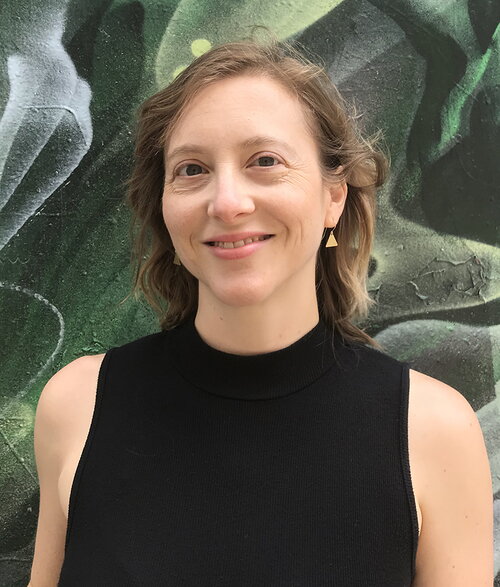
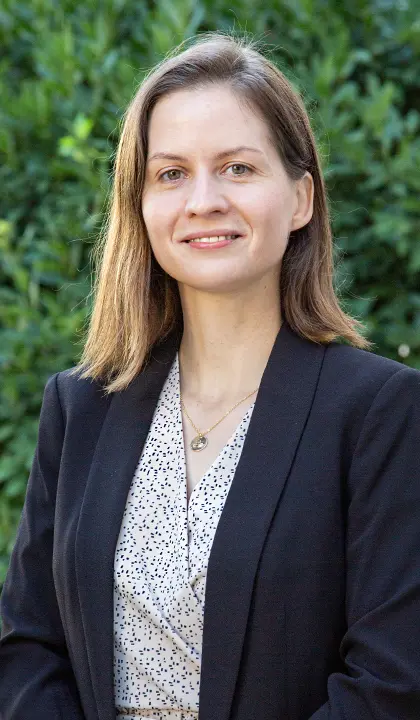
Katy D. Heath is a Professor of Plant Biology and Affiliate Professor in Microbiology at the University of Illinois Urbana-Champaign (UIUC). She leads the Plant Biology department and is affiliated with the Carl R. Woese Institute for Genomic Biology. Her research focuses on the evolution of mutualisms, particularly plant-microbe interactions such as legume-rhizobium symbiosis, emphasizing genetic and ecological factors influencing symbiotic stability and adaptation. She investigates how environmental pressures (e.g., global change) shape mutualistic relationships and microbial community dynamics. Education: B.S. (2000) and Ph.D. (2007) from the University of Illinois and University of Minnesota, respectively, followed by postdoctoral work at the University of Toronto (2007–2009). Research Interests: Symbiosis evolution, microbial genetics, plasmid transmission dynamics, and the impacts of agricultural practices on rhizobia populations. She studies diverse systems, including Medicago-Sinorhizobium, soybean-Bradyrhizobium, and invasive legume-rhizobium interactions. Recent publications (2020–2025) highlight studies on endophyte impacts on soybean yield, rhizobia diversity under conventional farming, and genomic analyses of symbiotic coevolution. Her work integrates molecular biology, quantitative genetics, and ecology. Grants & Collaborations: Lead PI on a $12.5M NSF Biology Integration Institute (Genomics and Eco-evolution of Multi-scale Symbiosis). Her team includes collaborations with institutions like Indiana University and the University of Chicago. Labs & Teams: Heath Lab focuses on symbiosis research, with active projects on microbiome dynamics, plasmid-host coevolution, and community outreach (e.g., Boys and Girls Club collaborations). Recent lab highlights include student graduations (e.g., Ivan Sosa Marquez, Chase) and awards like the John R. Laughnan Award in Plant Biology.
Dr. Kevin Kochersberger is an Associate Professor in the Department of Mechanical Engineering at Virginia Tech , with a career spanning academic research, technical innovation, and educational leadership. His work focuses on autonomous aerial systems , robotic control , and applied aerodynamics , particularly through the Uncrewed Systems Laboratory . Kochersberger's research has pioneered UAV-based radiation detection , 3D terrain mapping , and low-resource drone applications , including establishing the African Drone and Data Academy in Malawi . Education: Ph.D., Mechanical Engineering, Virginia Tech (1994) M.S., Mechanical Engineering, Virginia Tech (1984) B.S., Mechanical Engineering, Virginia Tech (1983) A.S., Engineering Science, Jamestown Community College (1981) Kochersberger's publications demonstrate expertise in UAV path planning , smart material actuation , and radiation source localization , with over $9M in research funding. His scientific awards include AIAA Associate Fellow (2009) and Aviation Week Aerospace Laureate (2003). Notable projects involve helicopter-deployable robotic systems and urban canyon navigation without GPS. Recent articles highlight BVLOS drone simulators , 2.5D terrain mapping , and autonomous negative obstacle traversal , reflecting his focus on real-time adaptive control and heterogeneous robotic systems . He teaches Drone Technology and Flight Operations and Advanced Design Projects , emphasizing student-driven innovation and industry collaboration .
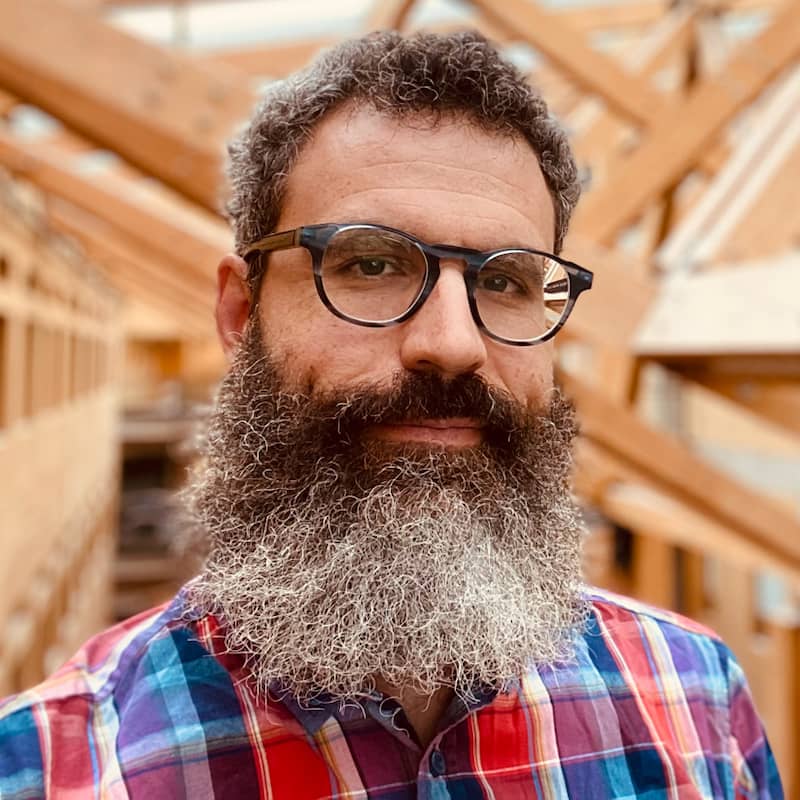
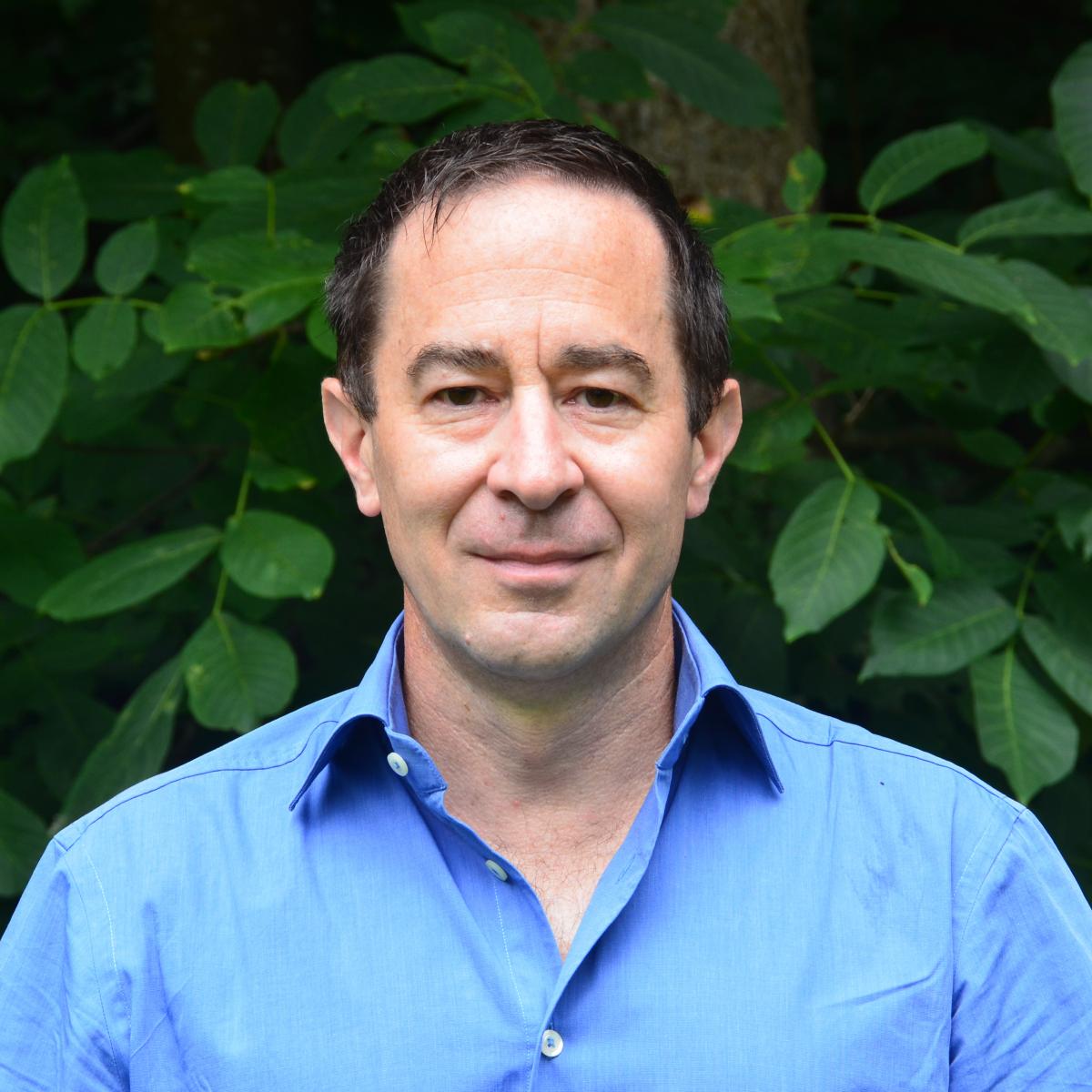
Gregory Paradis is an Assistant Professor in the Department of Forest Resources Management at the University of British Columbia (UBC) Faculty of Forestry. His research focuses on sustainable forest management, integrating operations research, mathematical optimization, and systems modeling to address complex interactions between ecosystems, industries, and society. He works with the FRESH Lab and collaborates with the Integrated Remote Sensing Studio, emphasizing ecological and economic integration in forest planning. Sustainable Forest Management Operations Research Forest Economics Data Science Risk Assessment GIS-based Methods His research spans forest inventory optimization, climate change adaptation strategies, wildfire risk modeling, and decision support systems for invasive species. He develops computational frameworks to enhance wood supply planning, carbon management, and ecological resilience. Recent work includes machine learning applications for fire safety in timber structures and automated road planning tools for wildlife conservation. Paradis’s publications highlight trends in applying optimization methods to sustainable forestry, with a focus on biodiversity, climate adaptation, and value chain innovation. He advocates for interdisciplinary approaches that bridge silviculture, industrial engineering, and data science to tackle emerging challenges in forest ecosystems. As an educator, he seeks motivated students with quantitative and creative problem-solving skills. His lab collaborates on remote sensing integration, risk assessment models, and policy-relevant forest management strategies, ensuring plans account for uncertainties like insect infestations or windthrow events.
Emmanuel K. Akyeampong is the Ellen Gurney Professor of History and Professor of African and African American Studies at Harvard University, with affiliations to the Weatherhead Center for International Affairs and the Hutchins Center. He earned his Ph.D. in African History from the University of Virginia (1993), MA in English Labor History from Wake Forest University (1989), and BA in History and Religions from the University of Ghana at Legon (1984). Education Ph.D., African History, University of Virginia (1993) M.A., English Labor History, Wake Forest University (1989) B.A., History and Religions, University of Ghana at Legon (1984) His research spans African history, eco-social dynamics, cultural change, and post-colonial nation-building. He has edited major works including Themes in West Africa's History and co-edited the Dictionary of African Biography , focusing on Ghanaian societal structures and transnational African narratives. Recent projects like Independent Africa analyze leadership and governance in the post-independence era. Scientific Awards and Recognitions : Zora Neale Hurston Fellow (Northwestern University, 1993-1994) Corresponding Fellow, Royal Historical Society (UK, 2002) Fellow, Ghana Academy of Arts and Sciences (FGA) Honorary Doctor of Laws (University of Ghana, 2018) Loeb Harvard College Professor (2005) As Oppenheimer Faculty Director of Harvard's Center for African Studies and former chair of the Committee on African Studies, he co-founded the International Institute for Advanced Study of Cultures, Institutions and Economic Enterprise (IIAS) in Accra. He also leads the African Public Broadcasting Foundation, promoting development-oriented media.
Bruño Fraga is an Assistant Professor in the Department of Civil Engineering at the University of Birmingham, part of the School of Engineering. He specializes in Computational Fluid Dynamics (CFD) with a focus on turbulent and multiphase flows, particularly in applications like indoor air quality, water treatment, and airborne pathogen transport. His research group develops models such as Multiflow3D, addressing challenges in multiphase flow dynamics and environmental engineering. Education: MEng in Environmental Engineering (University of Santiago de Compostela, 1st class honors), MSc in Applied Math and Numerical Simulation (University of A Coruña), PhD in Civil Engineering (Universities of A Coruña and Chalmers). Research Interests: CFD modeling, bubble-induced turbulence, indoor air quality, water treatment technologies, and multiphase flow dynamics. Dr. Fraga leads major projects such as Fusion Forest (£1m, UKRI) and the IAQ-EMS initiative (£1m, Met Office), focusing on indoor air quality and pathogen transmission modeling. His work includes collaborations with organizations like Deltares Institute and Severn Trent, addressing wastewater treatment and environmental challenges. He is co-leader of the Fluids Research Group and the Water Technology stream at the University of Birmingham’s Water Centre. Scientific Awards: National Outstanding Graduate Prize (2011). Advising & Grants: Supervises graduate students in CFD and multiphase flow research. Oversees grants totaling over £2.1M, including fusion forest and buildair projects. Focuses on translating CFD expertise into real-world solutions for public health and environmental sustainability. Labs & Teams: Leads the Multiflow3D development team and collaborates with the Fluids Research Group and Water Technology stream.
Olivia Badoi is a faculty member in the Department of English at Saint Louis University-Madrid. She holds a Ph.D. in English from Fordham University and contributes to the academic mission through teaching and research in modernist studies, graphic narratives, and ecocriticism. Education: Ph.D. in English, Fordham University M.A. in English, Wroclaw University B.A. in American Studies, University of Bucharest Dr. Badoi's research lies at the intersection of modernist literature, visual culture, and environmental thought. Her work explores how wordless narratives, particularly woodcut novels, engage with ecological themes and nonhuman agency. She introduces the concept of arboreal modernism to describe how trees and forests serve as structural and symbolic models in modernist art. Her scholarship spans ecocriticism, feminist modernism, adaptation studies, and the representation of animals and nature in media. She is currently completing her first book, Arboreal Modernism and the Woodcut Book , under contract. Her recent publications and conference presentations reveal a strong interdisciplinary trajectory, combining literary analysis with visual culture, environmental philosophy, and translation studies. Themes such as deep time, materiality, liminality, and nonverbal communication recur across her work, reflecting a sustained engagement with the boundaries between human and nonhuman, word and image, nature and culture. Scientific Awards: No scientific awards listed in the provided text. Dr. Badoi actively contributes to academic discourse through peer-reviewed publications and international conference presentations. While specific grant funding is not mentioned, her book contract and scholarly output indicate a robust research profile. She mentors students through her academic role, though no named advisees are listed. Her work is supported by her affiliation with Saint Louis University-Madrid, where she participates in scholarly events such as the Landscape, Narrative, and Deep Time conference. She is associated with academic teams and initiatives focused on modernism, adaptation, and environmental humanities, as evidenced by her conference organization and participation.
Dr. Zara Ersozlu is a Senior Lecturer in Mathematics Education within the School of Education at the University of Newcastle, Australia. With a distinguished international career spanning multiple continents, she has held academic positions at prestigious institutions including North Carolina State University (USA), Gazi and Gaziosmanpasa Universities (Turkey), National Taiwan Normal University (Taiwan), The University of Western Australia, Murdoch University, and Deakin University. Her academic journey includes tenured positions as an Associate Professor and leadership roles as Department Head and Chair in teacher education disciplines. Currently, she teaches undergraduate and postgraduate courses in mathematics education, including Effective Pedagogies in Primary Mathematics, K-6 Mathematics, K-6 Numeracy, and Digitally Supported Learning. Dr. Ersozlu earned her Doctor of Philosophy from Firat University in Turkey and her Master of Art from Sakarya University. Her extensive academic preparation is complemented by five years of practical teaching experience in public schools prior to entering academia. This blend of theoretical knowledge and practical classroom experience informs her approach to teacher education and educational research. At the broadest level, Dr. Ersozlu's research investigates solutions to real-life problems impacting people's well-being, success, and capacity to achieve. Her scholarly work spans primary and secondary mathematics education, the psychology of mathematics (including metacognition, self-regulation, and anxiety), cross-cultural educational studies, teacher education, virtual simulated learning environments, and educational assessment. She has increasingly focused on the transformative potential of AI and machine learning in education, exploring how these technologies alter teaching, learning, and research processes. Her methodological expertise encompasses both quantitative and qualitative approaches, allowing her to effectively analyze both small and large educational datasets. Analysis of Dr. Ersozlu's recent publications reveals a strong emphasis on mathematics anxiety, teacher education, and the integration of technology in learning environments. Her work demonstrates a consistent focus on practical applications of educational research to address real-world challenges in mathematics education. The interdisciplinary nature of her research connects educational psychology, technology integration, and cross-cultural perspectives, with particular attention to how these elements intersect in teacher preparation and student learning outcomes. 2023 ATEA Research Recognition Award from the Australian Teacher Education Association 2021 Fellow of the Higher Education Academy (Advance HE, UK) 2010 Fellowship Program for Postdoctoral Researchers from the Council of Higher Education of Turkey Dr. Ersozlu is deeply committed to mentoring the next generation of scholars, currently supervising four PhD students and having successfully guided ten students to completion. Her grant portfolio includes significant funding for projects such as Best Practice Guidelines for RPL in Initial Teacher Education Programs ($60,000), Exploring the Reciprocal Relationship Between Mathematics Anxiety and Mathematical Resilience ($2,599), and multiple conference travel awards. She serves as an Associate Editor for several prominent journals including the International Electronic Journal of Mathematics Education and as Editor for Interdisciplinary STEM Education. Her editorial work reflects her standing as a respected voice in mathematics education research. Dr. Ersozlu's academic leadership extends to her role in developing innovative teaching approaches that integrate virtual simulation technology and learning analytics. Her work with TeachLivE™, a mixed-reality classroom simulation platform, demonstrates her commitment to creating authentic learning experiences for teacher education students. Through these initiatives, she bridges the gap between educational theory and classroom practice, preparing future educators to effectively implement evidence-based teaching strategies in diverse learning environments.
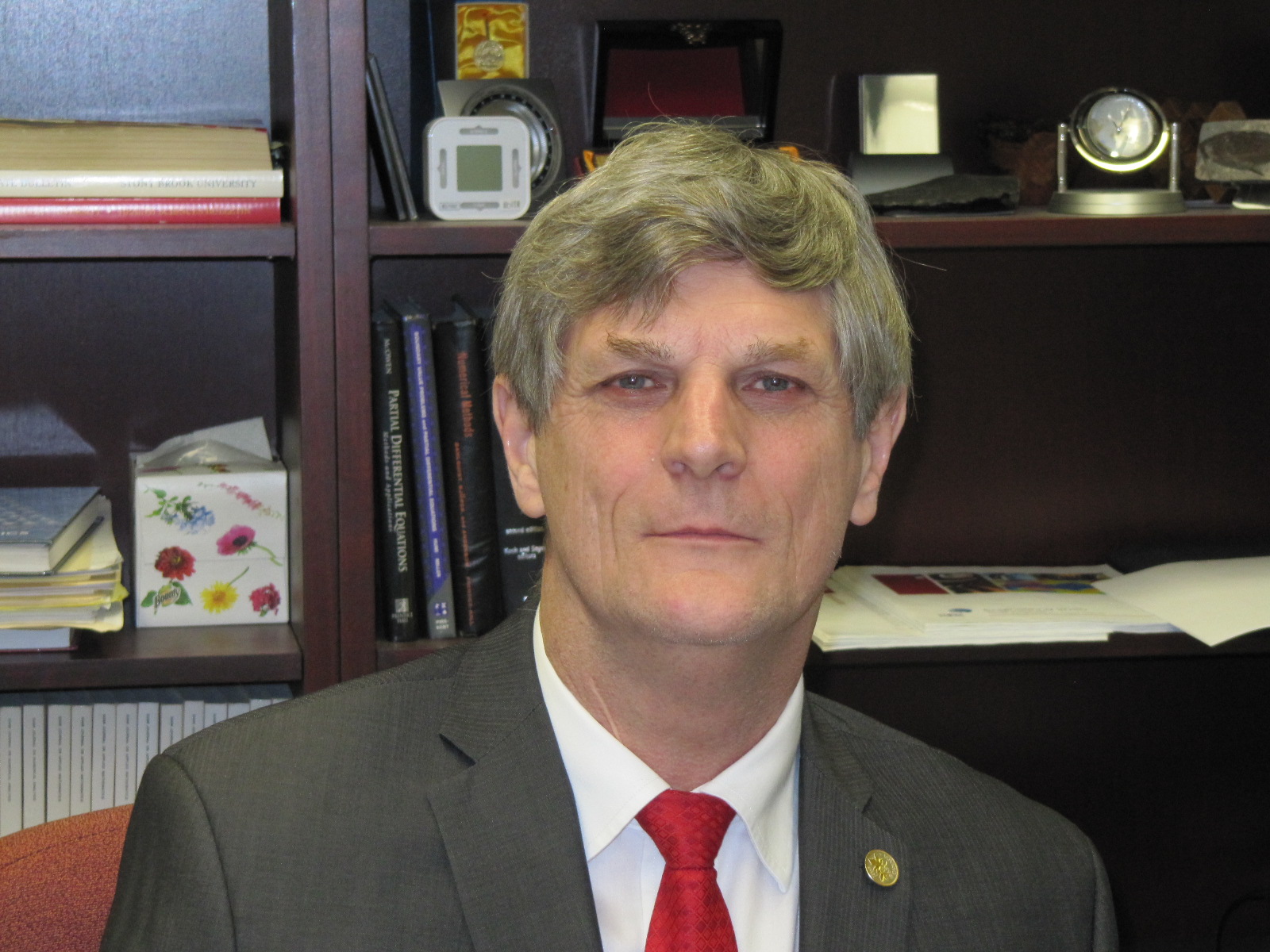
W. Brent Lindquist is a Professor in the Department of Mathematics and Statistics at Texas Tech University, affiliated with the TTU Mathematical Finance Program. His contact details include office location in the Mathematics & Statistics building (Room 104), phone (+1 806 834 2348), and email brent.lindquist@ttu.edu. His research spans computational financial mathematics, porous media flow, neuroscience applications, and quantum electrodynamics. Key contributions include dynamic asset pricing with market microstructure integration, pore-scale flow modeling using 3D micro-tomography, automated neuron morphology identification, and QED computations for electron magnetic moments. Recent work emphasizes ESG factor incorporation into financial models. Analysis of 2023–2025 publications reveals a dominant focus on sustainable finance, particularly ESG-integrated option pricing and portfolio optimization. Methodologies include random forests for market microstructure analysis, skew random walks for volatility modeling, and Lévy processes for Bitcoin dynamics. Cross-cutting themes involve hedonic real estate models with ESG factors and unified asset pricing frameworks bridging classical finance theories.
Christof Bigler is an Adjunct Professor at ETH Zurich's Department of Environmental Systems Science, where he also serves as Deputy Group Head of the Professorship of Forest Ecology and Senior Scientist. He leads the ETH Tree-Ring Laboratory and teaches courses in dendroecology, applied statistics, and forest ecology. His research focuses on tree mortality, climate impacts on forests, disturbance ecology, and phenology, with a strong emphasis on quantitative methods and long-term data analysis. Bigler holds a PhD in Forest Ecology from ETH Zurich (2003), awarded the ETH Medal for his thesis on tree mortality modeling. He has conducted postdoctoral research in Switzerland and the University of Colorado Boulder, exploring disturbance interactions and dendroecology. He has supervised numerous PhD and master's students, contributing to over 150 publications in top journals like Nature Climate Change and Ecology . His work integrates dendrochronological techniques with statistical modeling to understand forest responses to climate change, including drought effects, tree competition, and mortality patterns. He serves on editorial boards for journals like Agricultural and Forest Meteorology and reviews proposals for national and international science foundations. His research also includes managing forest reserves and studying natural forest dynamics in the Alps and beyond. Education: PhD in Forest Ecology, ETH Zurich (2003) Postdoctoral Research: University of Colorado Boulder (2004–2005) Diploma in Biology, ETH Zurich (1998) Key Awards: ETH Medal for PhD thesis (2003) Professional Roles: Member of the Tree-Ring Society, Editor for Frontiers in Forests , and Commission for Phenology and Seasonality (KPS). Bigler's lab and fieldwork emphasize long-term datasets, including analyses of tree-ring records from Swiss National Park and other reserves. His research highlights the critical role of historical climate data in predicting future forest resilience and adaptation strategies.
Kyle C. Hale is an Associate Professor at Oregon State University's School of Electrical Engineering and Computer Science (College of Engineering). He holds a Ph.D. and M.S. from Northwestern University (2016, 2013) and a B.S. in Computer Science from UT Austin (2010). Prior to joining Oregon State in 2024, he served as an Associate Professor at Illinois Tech in Chicago. His research spans operating systems, high-performance computing (HPC), virtualization, computer architecture, and system security. Current work focuses on specialized system software stacks for emerging computing paradigms like memory disaggregation and parallelism optimization. He leads the HExSA Lab and collaborates with the HiPCastor group. Scientific Awards: NSF CAREER Award (2023-2028) Illinois Tech College of Computing Excellence in Research (2023) Illinois Tech College of Computing Excellence in Teaching (2021) Illinois Tech Department of Computer Science Teacher of the Year (2020) EuroSys '22 Best Artifact Award Recent Research Trends: His publications emphasize compiler techniques for memory-disaggregated systems, optimizing parallel runtimes through hardware-software integration, virtualization at fine granularities, and accelerating machine learning workloads via system-level innovations. Keywords include HPC, virtualization, parallelism, and secure execution contexts. Teaching: Courses taught include Computer Architecture (CS/ECE 472), System Security (CSP 544), Operating Systems (CS 450), and advanced topics in serverless/edge computing. He actively recruits PhD students to the HExSA Lab.
Simo Hostikka is a Professor in the Department of Civil Engineering at Aalto University's School of Engineering. His research focuses on fire safety engineering , utilizing numerical fire simulations to address critical challenges in building and infrastructure safety. Key Expertise: Fire Dynamics Simulator (FDS) development, thermal radiation heat transfer, pyrolysis modeling, fire toxicity calculations, and probabilistic risk analysis. Leadership: Supervises advanced fire safety research and contributes to international fire safety standards. Research Trends: Recent publications emphasize fire toxicity modeling , hydrogen fire safety , radiation heat transfer , and fire retardancy of polymeric materials . His work bridges computational methods with real-world fire safety applications. Scientific Awards: Philip Thomas Medal of Excellence (2008, 2005) Sjölin Award (2012) Interflam Trophy (2007) Harmathy Award (2020, 2019) Dean’s Award for Best MSc Thesis (2020) Best Paper in Rakenteiden Mekaniikka (2009) Advising: Supervised Topi Sikanen, who received the Young Talent Award from the International Water Mist Association.
Harold D. Chiang is an Assistant Professor in the Department of Economics at the University of Wisconsin-Madison. His research focuses on econometric theory and methods, particularly robust inference techniques for clustered and network data, machine learning applications, and causal inference frameworks like regression discontinuity/kink designs. He employs computational statistics and asymptotic theory to address methodological challenges in high-dimensional and complex datasets.
Dr. Matthew Brookhouse is a Senior Lecturer at the Fenner School of Environment & Society, part of the Australian National University's Institute for Climate, Energy & Disaster Solutions. With a PhD in Dendroclimatology from ANU, he specializes in using forest structural complexity and tree-ring analysis to understand climate interactions and ecological responses in Australian subalpine environments. Research Focus: Sub-alpine ecology, Dendrochronology, CO2 responsiveness in eucalypt species Teaching: First-year research methods with emphasis on statistical application, advanced modeling and field botany Projects: Leading collaborative snow-gum dieback research and dendrochronological monitoring initiatives His publications span 2006-2025 with recent emphasis on machine learning applications for forest monitoring, tropical tree-ring chronologies for climate change, and climate sensitivity in Australian alpine ecosystems. Key collaborations include institutions like Australian Nuclear Science and Technology Organisation and University of Canberra researchers. Current projects focus on snow-gum woodland dieback mechanisms, high-resolution dendrometric monitoring, and integrating dendrochronology with environmental policy frameworks. He maintains active supervision of research students and contributes to both undergraduate and postgraduate curriculum development.
Dr. Jonathan Lenoir is a CNRS Researcher at the Ecology and Dynamics of Anthropized Systems (EDYSAN) laboratory, University of Picardie Jules Verne , France. His work bridges Ecology and Biostatistics , focusing on ecological dynamics under spatial and temporal global changes, particularly biotic responses to climate change. His research spans broad-scale biodiversity patterns, species distribution modeling, and microclimate ecology, with special attention to forest systems. Dr. Lenoir leads and contributes to multiple research projects including MaCCMic (Impact of forest Management and Climate Change on understory Microclimate) and IMPRINT (Impacts of Microclimatic Processes on forest Biodiversity redistribution under macroclimaTe warming). These projects utilize advanced technologies like LiDAR and microclimate sensors to model understory temperature dynamics and predict biodiversity responses to climate change. His recent publications analyze microclimate buffering in forests ( 2024 ), species thermophilization ( 2024 ), and the application of deep learning to habitat identification ( 2024 ). His work also explores interdisciplinary connections like eco-oncology , comparing invasion dynamics in ecology and medicine. Dr. Lenoir actively mentors researchers and supervises fieldwork campaigns, emphasizing rigorous data collection ( 180 monitoring plots across French forests ) and advanced statistical analyses in R . He collaborates with European institutions and participates in large-scale initiatives like ReSurveyEurope , a database of resurveyed vegetation plots.
Joseph Bailey is a Professor in the Department of Ecology & Evolutionary Biology at the University of Tennessee, Knoxville. His research focuses on evolutionary ecology, particularly how species interactions link genes to ecosystems, natural selection in community contexts, and scaling genetic processes across geographic and molecular resolutions. He holds a Ph.D. from Northern Arizona University (2003). Education: 2003 – Ph.D., Northern Arizona University Research interests include plant-animal interactions, evolutionary ecology, and the genetic underpinnings of community dynamics. His work integrates molecular, ecological, and evolutionary approaches across diverse systems, including native and invasive species interactions. He has published extensively on topics such as genetic structure of foundation species, plant-microbe interactions, and herbivore-induced ecosystem changes. Lab and Affiliations: His research group operates out of the Joseph Bailey Lab ( http://joebaileylab.com/ ). Publications reflect a focus on community genetics, indirect ecological interactions, and the genetic basis of species interactions.