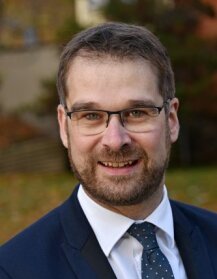
Saurabh Bagchi is a Professor at Purdue University, West Lafayette, USA. He holds a PhD in Computer Science from the University of Illinois Urbana-Champaign (2001). His research focuses on distributed systems security, networking, and embedded systems. Key areas include IoT security, cyber-physical systems resilience, and machine learning applications in edge computing. Bagchi's work spans theoretical and applied domains, addressing challenges in distributed algorithms, fault tolerance, and secure communication protocols. His contributions to firmware analysis, serverless computing optimization, and anomaly detection in industrial IoT systems have been widely recognized. He has published over 300 papers in top-tier conferences and journals such as IEEE Transactions on Dependable and Secure Computing, ACM Transactions on Sensor Networks, and CVPR. He collaborates with researchers in academia and industry to advance resilient networked systems, including projects funded by NSF and industrial partnerships. His lab explores cutting-edge topics like federated learning security, edge computing architectures, and game-theoretic approaches to cyber defense.
Thomas Gunther is a Professor of Managerial Accounting and Control at the Department of Economics, Technical University of Dresden. His research focuses on business accounting, controlling of non-profit organisations, value-based management, and the evaluation of intangible resources. University: Technical University of Dresden Department: Department of Economics Academic Rank: Professor Gunther's work explores performance measurement systems, brand valuation, and time-oriented cost accounting, with empirical studies across German companies and the public education sector. He has led research groups on value-oriented leadership in SMEs and intangible assets in accounting. As a consultant, he works with medium-sized businesses and public institutions on implementing controlling systems, including AOK Saxony, Dresden Transport Company, and the Saxon State Ministry of Education. He serves as Managing Editor for the Journal of Management Control (JoMaC) and is a founding member of PRISMA (Centre for Sustainability Assessment and Policy) at TU Dresden.
Prof. Dr.-Ing. Christoph Stiller is a full professor at the Karlsruher Institut für Technologie (KIT) and serves as the director of the Institute of Measurement and Control Technology (Institut für Mess- und Regelungstechnik, MRT). His work focuses on autonomous driving, sensor fusion, probabilistic estimation, HD mapping, motion planning, and intelligent transportation systems. Education: Details on his academic degrees are not provided in the text, but he holds the title of Dr.-Ing. indicating a doctoral degree in engineering. Research Interests: Prof. Stiller's research spans a wide array of topics critical to the development of autonomous vehicles. His work includes: Sensor Fusion: Integrating data from LiDAR, cameras, and radar to create robust perception systems. HD Mapping & Localization: Developing high-definition maps and precise localization techniques for urban and highway environments. Motion Planning & Decision Making: Creating algorithms for safe and efficient trajectory planning under uncertainty. Machine Learning & AI: Applying deep learning and reinforcement learning to perception, prediction, and control tasks. Publication Trends: His recent publications (2023–2025) emphasize robust traffic light detection, image stitching for panoramic views, motion prediction using redundancy reduction, and safety-enhanced model predictive control. The work increasingly integrates learning-based methods with classical control and estimation theory. Scientific Awards: No specific awards are listed in the provided text. Teaching & Supervision: Prof. Stiller teaches foundational and advanced courses in measurement and control systems, probabilistic estimation, and autonomous driving. He holds regular office hours during both summer and winter semesters and is actively involved in advising students and researchers. Labs & Teams: He leads the Institute of Measurement and Control Technology (MRT) at KIT, which is engaged in cutting-edge research in autonomous systems. The institute collaborates with industry and academia on large-scale projects such as UNICARagil and various European initiatives.
Benjamin Born is a Full Professor of Macroeconomics at Ludwig-Maximilians-Universität München and Research Director at the ifo Center for Macroeconomics and Surveys since 2020 and 2018 respectively. He has held previous academic positions as Associate Professor of Economics at Frankfurt School of Finance & Management (2015-2018) and University of Bonn (2012-2015), and Assistant Professor at University of Mannheim (2011-2012). His educational background includes a PhD in Economics from the University of Bonn (2007-2011), M.Sc. in Econometrics and Economics from the University of York (2006-2007), and B.A./M.A. in Economics from the University of Siegen (2002-2006). Professor Born's research focuses on Fiscal and Monetary Policy, Business Cycles, and Empirical Macroeconomics. His work often combines theoretical modeling with empirical analysis to investigate how economic policies affect business cycles and how uncertainty influences economic decision-making. He frequently employs advanced econometric techniques and structural models to analyze macroeconomic phenomena, with particular attention to the transmission mechanisms of fiscal and monetary policy. His recent publications demonstrate a consistent focus on business cycle analysis, fiscal policy effects, uncertainty dynamics, and the impact of economic shocks. A notable pattern is his extensive collaboration with leading economists such as Christian Bayer, Gernot Müller, and Johannes Pfeifer across multiple research projects spanning different aspects of macroeconomics. Alejandro Justiniano-Best Paper Award (2019) Best Paper Award at Fiscal Policy Seminar (2018) DFG-funded Graduiertenkolleg 'Macroeconomics of Inequality' (1.5 million Euro, 2018-2022) Multiple Fontana Foundation Publication Awards (2012-2014) Research Grant for 'Austerity and Growth: Concepts for Europe' (2014) As Research Director of the ifo Center for Macroeconomics and Surveys, Professor Born leads a significant research team focused on macroeconomic analysis and forecasting. His editorial roles include Associate Editor for Macroeconomic Dynamics (since 2016) and former Panel Member for Economic Policy (2017-2019). He also maintains active research affiliations with the Centre for Economic Policy Research (CEPR) in London and the CESifo Research Network in Munich.
Prof. Dr. Frank T. Piller is a University Professor and Co-Leader of the Institute for Technology and Innovation Management (TIM) at RWTH Aachen University, where he also serves as Academic Director of the Executive MBA program at RWTH Business School. He leads a research team of approximately 30 doctoral students, 5 postdocs, and over 20 student researchers within the TIME Research Area of the School of Business and Economics. His educational background includes a doctoral degree in Operations Management from the University of Würzburg (1999) and a Habilitation degree from TUM Business School (2004) on "Innovation and Value Co-Creation." Prior to joining RWTH Aachen in 2007, he was a Research Fellow at MIT Sloan School of Management and faculty at TUM Business School. Prof. Piller is recognized as one of the world's leading experts in customer-centered value creation, specializing in mass customization, personalization, and customer co-creation. His current research focuses on how established companies can transform in response to disruptive business model innovations, with particular emphasis on digital transformation (Industry 4.0), AI-augmented innovation, and sustainable business models. He is particularly known for his work on innovation ecosystems, platform-based business models, and stakeholder-oriented technology development. His recent publications demonstrate a clear trajectory toward integrating artificial intelligence with traditional innovation management frameworks, exploring how AI transforms manufacturing systems, innovation processes, and business models. His work increasingly addresses the challenges of digital transformation in established industries while maintaining focus on customer co-creation and mass customization principles. His scientific achievements have been recognized with numerous awards: Co-Creation Award of the PDMA Nomination for "Innovating Innovation" Prize by Harvard Business Review and McKinsey "Lecturer of the Year" by Executive MBA students at TU Munich RWTH Aachen Rector's Prize for Excellent Teaching (since 2010) Grant for innovative "Flipping the Classroom" teaching concept ERC Synergy Grant for SAFER Grid project (2025-2031) Prof. Piller maintains an extensive research network spanning academia and industry. He collaborates with numerous corporations including 3M, Adidas, BASF, EON, J&J, P&G, Siemens, and Vodafone, as well as many technology startups across Europe and North America. As a co-founder, supervisory board member, and investor in innovative startups, he actively transfers research into practice. His research has received significant funding, most notably the prestigious ERC Synergy Grant for the SAFER Grid project. He leads the Technology and Innovation Management Group (TIM) within the TIME Research Area at RWTH Aachen, which comprises over 100 senior and junior researchers working at the intersection of innovation, technology management, marketing, and entrepreneurship. The institute is a leading European research institution for strategic, behavioral, and computer-supported technology and innovation management.
Prof. Dr. Holger Kantz serves as Head of the research unit "Nonlinear Dynamics and Time Series analysis" at the Max Planck Institute for the Physics of Complex Systems in Dresden, Germany. He also holds an Adjunct Professorship (Honorprofessor) in Statistical Physics at the Institute of Theoretical Physics within the Department of Physics at the Technical University Dresden. Dr. Kantz's research spans multiple disciplines within nonlinear dynamics and statistical physics. His work focuses on time series analysis, nonlinear dynamics, stochastic processes, and complex systems. He has made significant contributions to understanding anomalous diffusion, extreme events prediction, and the statistical properties of chaotic systems. His research has applications in atmospheric science, climate modeling, power grid dynamics, and biological systems. Analysis of Dr. Kantz's recent publications reveals a strong interdisciplinary approach connecting statistical physics with climate science, energy systems, and scientometrics. His work demonstrates sophisticated applications of stochastic modeling to real-world complex systems, with particular attention to anomalous diffusion processes, extreme events, and predictability limits in chaotic systems. The publications show increasing methodological sophistication in handling nonstationary time series and developing predictive models for rare events. Dr. Kantz leads a research group focused on nonlinear dynamics and time series analysis at the Max Planck Institute. His work has significant implications for understanding and predicting complex phenomena across multiple scientific domains, from climate dynamics to power grid stability, with practical applications in risk assessment and system reliability.
Thomas Berger is a Professor at the University of Hohenheim , affiliated with the Faculty of Agricultural Sciences and leading the Department of Economics of Land Use . He also contributes to the Computational Science Hub and Hohenheim Tropics initiatives. Focus Areas: Climate change adaptation, land-use modeling, biodiversity-productivity trade-offs, agent-based simulation, and machine learning in agricultural systems. Key Projects: Simulation frameworks for smallholder resilience in Ethiopia, bioeconomic modeling in the Amazon, and hybrid intelligence applications in European agricultural policy. Recent Publications: 2025 study on climate change effects on insecticide reduction in Germany, 2024 work on reconciling biodiversity with productivity via hybrid models, and 2023 methodological contributions to surrogate modeling and seasonal forecast integration. Research Trends: Interdisciplinary integration of climate science, agricultural economics, and computational modeling, with increasing emphasis on AI-assisted decision support systems and sustainability policy validation. Teaching & Outreach: Offers Agricultural Economics seminars and Hohenheim Tropics discussions, requiring advance email registration for office hours.
Gregory D. Erhardt is an Associate Professor of Civil Engineering at the University of Kentucky and serves as Associate Director of the T-SCORE Center, a multi-university consortium advancing public transit strategies. He holds a PhD from University College London’s Centre for Advanced Spatial Analysis, with prior experience in transportation planning across public and private sectors. His research focuses on transportation forecasting, big data applications, and evidence-based policy decisions, particularly addressing the impacts of emerging mobility technologies like ride-hailing on urban systems. Erhardt’s work emphasizes improving forecast accuracy and advocating for gender equity in engineering. He has been recognized with awards such as the Transportation Research Board’s Certificate of Appreciation and the Chan Wui & Yunyin Rising Star Fellowship. Education: PhD (University College London), M.S. (Northwestern University), B.S. (Cornell University). His research integrates activity-based travel models with big data to evaluate infrastructure investments and mobility trends. Key projects include analyzing public transit ridership decline, ride-hailing effects on congestion, and TNC impacts on urban transportation systems. Current initiatives include developing multi-agent simulation frameworks for on-demand transit systems. As a Hans Fischer Senior Fellow at the TUM Institute for Advanced Study, he collaborates on travel behavior modeling. His advocacy for diversity includes leading 'Advocates and Allies' training to promote gender equity in engineering. Erhardt’s publications span journals like Transportation Research Part A and Science Advances , with a focus on policy-relevant transportation analytics.
Jun.-Prof. Dr. Annette Rudolph is an Assistant Professor leading the AI and (Climate-Induced) Land Use Change research group at TU Berlin's Institute of Landscape Architecture and Environmental Planning. She holds a Diplom in Mathematics (TU Berlin, 2011) and a PhD in Meteorology (FU Berlin, 2018), with a habilitation thesis on geophysical fluid dynamics and data-driven methods (2023). Her research integrates AI, climate science, and geophysical fluid dynamics. Academic Roles: Head of FG KI und Landnutzungswandel (since 2023), Postdoc in SFB 1114 (2014–2022) Research interests focus on AI applications in environmental sciences, clouds-climate interactions, and fluid dynamics. Her work bridges theoretical meteorology with data science, including machine learning for precipitation modeling and climate analysis. Publications emphasize AI-driven climate modeling, geostatistical methods, and atmospheric dynamics. Notable contributions include a 2024 paper on deep learning for precipitation nowcasting and a 2023 study on CAPE-precipitation relationships using machine learning. She developed e-learning resources on geodata analysis using Python and R, and led DAAD-funded research in Oslo (2022). Current projects involve AI-driven land-use change analysis and climate impact modeling.
Sebastian Henn is a Professor of Economic Geography at the Institute of Geography, Friedrich Schiller University Jena, where he has held the Chair since 2014. He serves as Dean of Studies for the Faculty of Chemistry and Geosciences (since 2020) and Deputy Director of the Leibniz ScienceCampus "Eastern Europe - Global Area". His research spans transnational entrepreneurship, knowledge-based regional development, cluster dynamics, polarization/peripheralization, and migration studies . Education: Dipl.-Geogr. (University of Mannheim, 2001); Dr. rer. nat. (University of Halle, 2006); Habilitation (University of Halle, 2014) Key research areas include spatial perception, mobilities, health geography, and global-local interactions in sectors like pharmaceuticals, medical technology, and the diamond industry. Publications (2013-2024) focus on global production patterns, cluster evolution, regional embitterment, and the role of transnational entrepreneurs in industries from Gujarat to Antwerp. His 2023 work explores populist resentments in rural regions and health infrastructure disparities in Thuringia. Awards include the 2017 Journal of Economic Geography Best Referee Award. He co-edits the Springer series "Perspectives in Human Geography" and holds leadership roles in academic societies like the Schumpeter Centre for Social and Economic Change. Editorial and Review Activities : Active on boards of the Journal of Economic Geography and ZFW journal. Regular reviewer for 20+ journals and funding bodies including DFG and DAAD. Leads research on BRIC investments, Southern multinationals, and spatialization processes under globalization .
Julian Berger is a postdoctoral researcher at the Max Planck Institute for Human Development in the Center for Adaptive Rationality , where he explores how to enhance decision-making through hybrid human-AI systems. He is also a fellow of the Joachim Herz Foundation and has received funding from the Foundation of German Business and the Danish Data Science Academy. Education: M.A. Psychology in Business and Economics, Universidade Catolica Portuguesa (2021) B.A. Politics, Administration and International Relations, Zeppelin Universität (2018) His research spans human-AI collaboration , collective intelligence , and interpretable machine learning . A recurring theme in his work is developing methods to combine human expertise with AI capabilities for accuracy in domains like medical diagnostics , credit scoring , and football analytics . He has authored publications in high-impact venues such as PNAS , Nature Human Behavior , and Science and Medicine in Football . Scientific awards and funding include: Fellowship for interdisciplinary economics, Joachim Herz Foundation (2024) PhD funding from the Foundation of German Business (Stiftung der deutschen Wirtschaft) Research grant from the Danish Data Science Academy His recent article trends emphasize ensembling techniques that leverage complementary human and AI errors, algorithmic fairness, and practical heuristics like Hybrid Confirmation Trees. These works demonstrate significant improvements in diagnostic accuracy and decision cost-efficiency. Beyond academia, Berger works as a consultant and ML engineer with Simply Rational , focusing on interpretable models for financial and sports analytics. His work bridges theoretical research with real-world applications, prioritizing fairness, transparency, and human accountability in AI systems.
Professor Christian Deutscher is a prominent sports economist at Bielefeld University's Faculty of Psychology and Sport Science, specializing in the Department of Sport Science within Division V - Sport and Business. As both Research Officer and Internationalization Officer, he leads significant work in sports economics, particularly focusing on betting markets, match-fixing detection, and sports integrity. His research has attracted funding from major institutions including the German Research Foundation. Deutscher's research interests span sports economics, betting market efficiency, match-fixing detection, sports management, and the business aspects of professional sports. His work combines advanced statistical modeling with practical applications in sports integrity monitoring. He has extensively analyzed live betting markets, Bundesliga economics, and the impact of technological innovations like VAR in football. His research often examines the intersection of sports performance, economic incentives, and market behavior. Analysis of his recent publications reveals a strong focus on empirical studies of sports betting markets, particularly live and in-play betting dynamics. His work demonstrates sophisticated use of state-space models and other advanced statistical techniques to detect market inefficiencies and potential integrity issues. Deutscher frequently collaborates with statisticians and economists to develop warning systems for match-fixing, with particular attention to German football leagues. His research bridges theoretical economics with practical applications in sports governance. Professor Deutscher actively contributes to the European Sport Economics Association (ESEA), having edited special issues of conference proceedings and serving in editorial capacities. His work has been published in leading journals including Journal of Sports Economics, Economic Inquiry, and Applied Stochastic Models in Business and Industry. As Research Officer for the Faculty of Psychology and Sport Science, Deutscher oversees research initiatives and international collaborations. His current projects include data-based fraud detection in live betting markets, funded by the German Research Foundation across multiple phases. He also serves on various university committees including the Quality Improvement Commission and Examination Board for the Department of Sport Science. Deutscher maintains strong connections with sports organizations and betting industry stakeholders, ensuring his research has practical relevance for sports integrity monitoring. His work on betting market inefficiencies has direct applications for regulatory bodies seeking to protect the integrity of sporting competitions.
Niels Agatz is a Full Professor of Last-mile Supply Chain Analytics at the Rotterdam School of Management (RSM), Erasmus University, and Scientific Director of TKI Dinalog, a national research funding institute. His work bridges academia and industry, focusing on sustainable urban logistics, shared mobility, and online retailing analytics. He holds a PhD in Logistics from RSM and an MSc in Industrial Engineering from Eindhoven University of Technology. Research interests include optimizing last-mile supply chains through technology-driven solutions, with emphasis on sustainability and operational efficiency. Notable contributions include frameworks for demand management and transportation-enabled services. His work aligns with UN Sustainable Development Goals related to responsible consumption and climate action. Editorial roles include Area Editor for Transportation Science . Awards include the INFORMS TSL Stella Dafermos Achievement Award (2022) and NWO Rubicon Grant. Collaborations span institutions like Georgia Tech and the Pontifical Catholic University of Chile. Recent publications address home delivery systems, sustainable supply chains, and pickup/delivery optimization. Labs/Teams: Directs TKI Dinalog, collaborates with industry partners to translate research into practical logistics solutions.
Dr. Jing Wang is a Professor in the Department of Bioinformatics at Southern Medical University's School of Medicine, with extensive research at the intersection of artificial intelligence and biomedical applications. Her work demonstrates strong cross-disciplinary collaboration across medical institutions, engineering departments, and computer science research groups. Her primary research interests include Artificial Intelligence in Healthcare , Biomedical Engineering , and Traditional Chinese Medicine Informatics , with recent publications showing particular expertise in medical imaging analysis, diagnostic assistance systems, and clinical decision support. Her work spans both theoretical algorithm development and practical clinical implementations. Analysis of her 15 most recent publications (2025-2026) reveals a strong trend toward clinically applicable AI systems, with approximately 60% of publications focused on medical diagnostics and treatment support systems. The remaining publications demonstrate expertise in industrial applications of computer vision and fundamental AI research. Her work shows consistent collaboration with both domestic Chinese institutions and international research groups. Notable scientific contributions include: Development of 'Tianyi', a traditional Chinese medicine language model for clinical practice Innovations in bionic soft robotics for rehabilitation assistance Novel approaches to medical image analysis for cancer diagnostics Her research program appears well-funded with consistent publication output across high-impact journals in biomedical engineering, AI, and medical informatics. Current work suggests strong emphasis on translating AI research into clinical practice, particularly in diagnostic support systems and rehabilitation technology.
Meeyoung Cha is a Professor at KAIST and Scientific Director of the Max Planck Institute for Security and Privacy (MPI-SP) in Bochum, Germany. Her research focuses on Data Science for Humanity, encompassing computational social science, misinformation dynamics, and human-machine interaction. She holds a PhD in Computer Science from KAIST (2008) and previously served as Chief Investigator at the Institute for Basic Science and Visiting Professor at Facebook. Her work addresses societal challenges such as poverty mapping, fraud detection, and AI ethics. Key achievements include best paper awards and recognition like the Hong Jin-Ki Creator Award (2024) and Test-of-Time Awards (ACM IMC 2022, AAAI ICWSM 2020). Research interests span AI ethics, social media analysis, and interdisciplinary applications of machine learning. Notable projects include modeling climate risks via satellite imagery and analyzing chatbot interactions' societal impacts. She leads the MPI-SP's Data Science for Humanity Group, mentoring over 20 students across PhD and postdoc programs. Education: PhD in Computer Science (KAIST, 2008) Affiliations: MPI-SP (Germany), KAIST Key Awards: Hong Jin-Ki Creator Award, Korean Young Information Scientist Award, Test-of-Time Awards Her publications bridge computational methods with societal issues, including climate modeling, protein engineering, and algorithmic fairness. Current projects explore geospatial AI for economic development and ethical AI design frameworks.