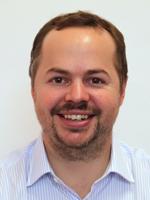
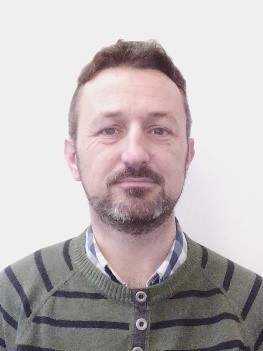
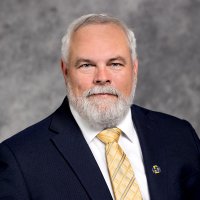
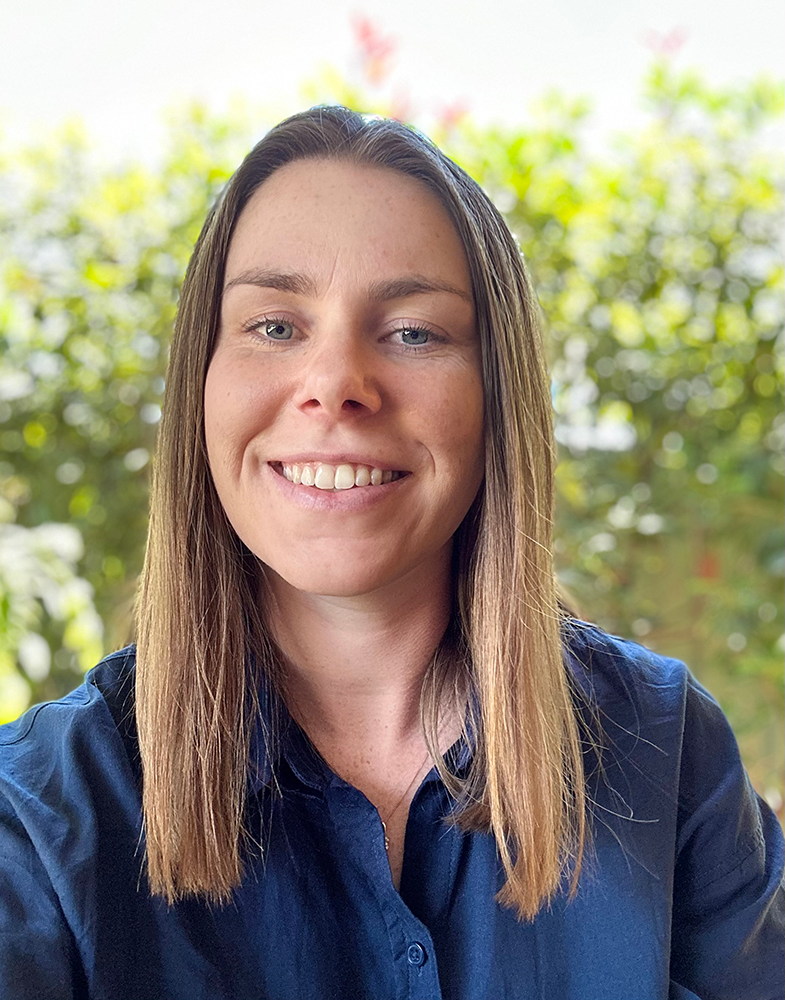
Jan Dijkstra is an Associate Professor at Wageningen University specializing in Animal Nutrition . His research focuses on dairy cattle nutrition, methane emissions, and nutrient efficiency. Academic Rank: Associate Professor Department: Animal Nutrition His work emphasizes: Mathematical modelling of methane production Phosphorus and nitrogen balance optimization Feed supplementation strategies for reduced emissions Genotype-environment interactions in dairy systems Recent publications highlight advancements in methane mitigation , nutrient cycling , and rumen microbiome dynamics . He serves as a promotor for multiple PhD projects and contributes to datasets on equine microbiomes and rumen metabolites. Scientific Awards American Feed Industry Association Award (2015) Publicatieprijs ASG (2013) Supervision PhD candidates: Kozorezov, Henry, Koning, Vivares Martinez EngD candidate: Holshof
Dr James Herbert-Read is an Associate Professor and Whitten Lecturer in Marine Biology at the Department of Zoology, University of Cambridge. He serves as Deputy Head of Department (Postgraduate Education) and leads the Marine Behavioural Ecology Group. His research focuses on understanding how animals, particularly marine organisms, collect and process information from their environments to make behavioral decisions, with emphasis on social interactions, adaptation mechanisms, and ecological constraints. His group employs theoretical frameworks, controlled experiments, and quantitative field studies to investigate behavioral diversity in marine species. Key themes include collective behavior, predator-prey dynamics, camouflage strategies, and the impacts of environmental stressors on animal decision-making. Recent publications highlight work on lionfish vocalization mechanisms, cuttlefish camouflage, citizen science applications in marine research, and behavioral responses to visual and acoustic noise. Scientific awards and affiliations include: Whitten Lecturer in Marine Biology Associate Professor, University of Cambridge He has supervised research projects on topics such as: Social attraction in invasive fish species Evolution of coordinated movement Neurophysiological basis for leadership in shoals Maternal effects on offspring exploration
Prof. Dr. habil. Katrin Giller leads the Department of Molecular Nutrition Science (140a) at the University of Hohenheim, Garbenstraße 30, Bio Building I, Room 151, Stuttgart. Her research focuses on livestock nutrition, with specific interests in methane mitigation, antioxidant mechanisms, and metabolic syndrome in agricultural animals. Department: Molecular Nutrition Science (140a) Contact: katrin.giller@uni-hohenheim.de Office Hours: By appointment Her work spans nutritional biochemistry , ruminal fermentation , and sustainable livestock systems , often examining interactions between dietary compounds (e.g., spirulina, polyphenols, n-3 fatty acids) and animal physiology. Recent studies investigate antioxidant gene expression , transgenerational metabolic impacts , and feed efficiency . Current advisees include B.Sc. Viola Gauly, Fernando Giugno, Jana Kornherr, Mira Kühn, Daniel Obermüller, and Helen Pötzsch. The department's website details research projects, teaching events, and publications.
Professor Eric Morgan at Queen's University Belfast leads parasitology research in the School of Biological Sciences , focusing on climate-driven epidemiology of parasitic infections in animals. His work integrates predictive modeling, parasite transmission dynamics at the wild-domestic interface, and sustainable livestock health solutions. Veterinary parasitology and climate change impact Anthelmintic resistance mitigation strategies AI-enhanced diagnostic systems for animal health Current research students include Anthony George, who investigates Combining alternative approaches for helminth control in grazing livestock . Public engagement initiatives like the BUG Consortium and Poo Patrol translate findings into practical parasite management. His recent publications in 2025 address topics like flood reactors, zoonotic toxocariasis, and precision agriculture tools for parasite risk assessment.
Dr. Serena Ding is a Max Planck Research Group Leader at the Max Planck Institute of Animal Behavior, where she heads the Genes and Behavior department. She leads an interdisciplinary team studying the mechanisms and evolution of collective behaviors in nematodes through genetic, neuronal, and behavioral approaches. Education: PhD in C. elegans Developmental Cell Biology, University of Oxford (2011-2016) Postdoc in C. elegans Quantitative Behavior, Imperial College London (2016-2021) B.Sc. in Biology, University of Richmond (2007-2011) Research Focus: Dr. Ding investigates fascinating collective phenomena in nematodes including towering (collective dispersal), wurmuration (density-dependent swarming), and strain-specific aggregation behaviors. Her lab combines molecular biology, neuroscience, evolutionary biology, and complex systems modeling to understand both proximate mechanisms and ultimate evolutionary drivers of these behaviors across wild nematode strains. Publication Trends: Her research emphasizes quantitative behavioral analysis and innovative imaging methodologies, as exemplified by her 2020 work developing bioluminescence-based tracking of C. elegans foraging patterns. This aligns with her group's focus on high-throughput phenotyping of natural genetic variations in behavior. Team Leadership: Dr. Ding mentors a diverse research team including: 2 postdoctoral researchers (Daniela Perez, Assaf Pertzelan) 3 doctoral students (Narcís Font Massot, Youn Jae Kang, Gopika Ranjith) 1 master's student (Iris Bernstein) 1 technical assistant (Ryan Greenway)
Dr. Joseph Cassady serves as the South Dakota Corn Endowed Dean of the College of Agriculture, Food and Environmental Sciences at South Dakota State University (SDSU). Previously, he held the rank of Professor and Head of the Department of Animal Science at SDSU (2013–2022) and North Carolina State University (2001–2013). His research focuses on food animal genetics and genomics, particularly improving production efficiency in swine and beef cattle. Education: B.S. in Animal Science (Iowa State University, 1993), M.S. and Ph.D. in Animal Science (University of Nebraska-Lincoln, 1995 and 1999). Professional roles include past-president of the National Swine Improvement Federation and executive director of the Beef Improvement Federation (2009–2015). Research emphasizes genetic and genomic advancements to enhance livestock productivity, with notable work on heat stress mitigation, swine behavior, and genomic selection in cattle. Awards include the 2019 Harold and Barbara Bailey Award for Academic Leadership and recognition for service to the Beef Improvement Federation. Administrative responsibilities include leading the College of Agriculture, Food and Environmental Sciences, overseeing accreditation processes, and participating in industry boards such as the South Dakota Poultry Industries Association and American Angus Foundation. Key research themes span animal genomics, livestock environmental adaptation, and precision agriculture. Over 150 peer-reviewed publications address topics like swine feeding behavior, cattle genetics, and genomic tools for improving meat quality and production efficiency.
Dr. Emma Lynch is a Lecturer in Ruminant Production at the School of Environmental and Rural Science , University of New England. Her research focuses on evaluating novel feedstuffs and their impacts on ruminant production, meat quality, and sensory attributes. Education PhD in Ruminant Nutrition, Charles Sturt University Bachelor of Animal Science (Hons), Charles Sturt University Research Interests encompass meat science , ruminant nutrition , protein supplementation , and alternative feed sources . Her work investigates how feed composition affects animal performance, nutrient digestibility, and meat quality, with a notable emphasis on canola meal and hemp biomass in ruminant diets. Recent publications highlight trends in feedstuff evaluation , rumen physiology , and meat quality assessment . She employs comparative methodologies (in vivo, in sacco, in vitro) to study digestibility and uses sensory panels to evaluate consumer preferences. Scientific Memberships NSW Branch Secretary, Australian Association of Animal Sciences (AAAS) Australian Intercollegiate Meat Judging Association Contact : elynch20@une.edu.au
Jose Marin Jarrin is an Associate Professor in the Department of Fisheries Biology at Cal Poly Humboldt's College of Natural Resources. Originally from Ecuador, he holds a B.Sc. in Biology from the University of Guayaquil (2002), an M.Sc. in Marine Biology from the Oregon Institute of Marine Biology (2007), and a Ph.D. in Fisheries Science from Oregon State University (2012). Before joining Cal Poly Humboldt, he served as a Senior Fisheries Ecologist at the Charles Darwin Foundation (2016-2018), a Prometeo Research Fellow at Escuela Superior Politecnica del Litoral in Ecuador (2015-2016), and completed postdoctoral research at Central Michigan University (2013-2015). Dr. Marin Jarrin's research focuses on high-use and data-limited fisheries species, with particular emphasis on providing vital early and adult life history data for fishes and crustaceans. His work examines impacts from local fishery pressures and climate change, primarily through the lens of tropical Eastern Pacific ecosystems, especially the Galapagos Islands, and temperate systems along the California coast. He leads the Marine Fisheries Ecology Lab and has developed innovative approaches to studying sandy beach surf zones as critical habitats for juvenile fish species. His research spans multiple methodologies including otolith analysis, population dynamics, trophic ecology, and collaborative fisheries management approaches. Analysis of Dr. Marin Jarrin's recent publications reveals a strong focus on Galapagos Island fisheries, with significant attention to species life history parameters, impacts of climate variability, and marine protected area effectiveness. His work bridges temperate and tropical systems, connecting research in Northern California with Ecuadorian and Galapagos waters. A notable trend is the increasing emphasis on community-based and collaborative research approaches, particularly with tribal communities along the North Coast of California and artisanal fishers in Ecuador. His publications demonstrate expertise in both field ecology and advanced analytical techniques for fisheries assessment. Dr. Marin Jarrin actively mentors graduate students, with several recent theses focusing on surf zone ecology, fisheries management, and species life history. His teaching portfolio includes courses in Ichthyology, Fisheries Science Communication, US and World Fisheries, Advanced Ichthyology (with specialization in Sharks and Rays), Marine Fish Ecology, and Techniques in Fisheries Biology. His research program has secured funding for projects including the Sandy Beach Surf Zone MPA project and the Northern California Tribal Fisheries Collaborative, demonstrating his commitment to applied fisheries science that directly informs management decisions.
Dr. Flavia van Cleef is an Assistant Professor at the University of Saskatchewan's College of Agriculture and Bioresources, affiliated with the Plant Sciences and Animal and Poultry Science departments. Her research integrates forage management, ruminant nutrition, and sustainable strategies to optimize livestock production while reducing environmental impacts. Ph.D., University of Florida, Marianna, FL, USA M.Sc., São Paulo State University, Jaboticabal, SP, Brazil B.Sc., São Paulo State University, Jaboticabal, SP, Brazil Her work emphasizes the use of alternative feed resources, pasture-based systems, and mitigation approaches to reduce greenhouse gas emissions from livestock. She focuses on enhancing forage utilization efficiency, soil health, and nutrient cycling in tropical grasslands and silvopastoral systems. Recent publications highlight her contributions to methane emissions reduction through tannin-rich legumes, nitrous oxide dynamics in integrated farming systems, and water footprint optimization in nitrogen-fertilized pastures. Her methodologies include in vitro assays, stable isotope analysis, and field studies on dung beetle ecology. Flavia is currently recruiting motivated MSc students. Contact her at flavia.vancleef@usask.ca for collaboration opportunities in forage quality, soil health, and sustainable livestock systems.
Andrea Santangeli serves as a Supervisor in the Doctoral Programme in Wildlife Biology and holds a Docentship in the Organismal and Evolutionary Biology Research Program at the University of Helsinki's Faculty of Biological and Environmental Sciences. He maintains an additional affiliation as an Honorary Fellow at the University of Cape Town's FitzPatrick Institute of African Ornithology under the National Research Foundation Centre of Excellence since August 2019. His research spans international collaborations across multiple continents, with particular focus on African and European conservation challenges. Dr. Santangeli completed his doctoral thesis titled 'Assessing the effectiveness of different approaches to species conservation' at the University of Helsinki in 2013. His educational background established the foundation for his current research program focused on evidence-based conservation strategies and effectiveness assessment. His research interests center on wildlife conservation biology, particularly avian ecology and species protection. Santangeli's work examines human-wildlife interactions, conservation prioritization, and the effectiveness of different conservation approaches. He investigates how climate change affects species distributions and community composition, with special attention to vulture conservation, bird-feeding practices, and the impacts of agricultural systems on biodiversity. His approach integrates ecological, social, and policy dimensions to develop comprehensive conservation solutions. Species conservation effectiveness Human-wildlife interactions Climate change impacts on biodiversity Vulture conservation Bird community dynamics Ecosystem services assessment Analysis of Santangeli's recent publications (2023-2025) reveals a strong focus on interdisciplinary conservation science addressing urgent global challenges. His work increasingly integrates One Health approaches, examining connections between wildlife health, ecosystem functioning, and human activities. Key themes include climate change adaptation strategies, human dimensions of conservation, and technological innovations for monitoring and protection. His research shows growing emphasis on policy-relevant science that directly informs conservation decision-making at multiple scales. His scientific recognition includes an Honorary Fellowship at the University of Cape Town's prestigious FitzPatrick Institute of African Ornithology, part of the DST NRF Centre of Excellence. This position acknowledges his significant contributions to African ornithology and conservation science, particularly his work on vulture conservation across the continent. As a doctoral supervisor, Santangeli guides the next generation of conservation scientists through the Wildlife Biology doctoral program. His research is supported by multiple projects, including the ongoing 'Understanding the drivers and species ecological traits underpinning the global trade in wild birds' (2019-2024), which examines wildlife trade dynamics and conservation implications. His work demonstrates strong international collaboration networks across Europe, Africa, and beyond. Santangeli's research activities involve extensive fieldwork, data analysis, and policy engagement. He participates in academic visits to institutions like the Center d'Études Biologiques de Chizé in France and contributes to scientific conferences and peer review for leading conservation journals. His work often involves citizen science approaches, as evidenced by the 'iratebirds' project on aesthetic attraction to birds.
Maurizio Ramanzin is a Full Professor at the University of Padova , affiliated with the School of Animal Science and Department of Agronomy, Animals, Food and Natural Resources (DAFNAE) . His research focuses on Agricultural Sustainability , Environmental Impact Assessment , and Precision Livestock Farming . Academic Field : AGR/19 Email : maurizio.ramanzin@unipd.it Address : Agripolis - Viale dell'università, 16 - Legnaro (Padova) – ITALY His work explores the interactions between livestock systems and ecosystem services in mountainous regions, with emphasis on: Grazing Management and biodiversity conservation Life Cycle Assessment (LCA) of dairy and beef systems Climate Change Adaptation in Alpine ungulates Animal Welfare in small-scale farms Technological Tools (GPS, NIRS) for monitoring grazing behavior Key trends in his recent publications include: Quantifying environmental drivers of wolf predation on livestock Developing low-cost biologging systems for dairy cows Analyzing social-ecological trade-offs in mountain agriculture Assessing microbial dynamics in alpine soils
Colden V. Baxter is a Professor of Biological Sciences at Idaho State University, where he leads the ISU Stream Ecology Center and the Center for Ecological Research and Education (CERE). He directs ISU's graduate biology programs and previously served as president of the Society for Freshwater Science. His work bridges fundamental stream ecology with social dimensions of river management, focusing on ecological linkages between water and land. His educational background includes a Ph.D. in Fisheries Science from Oregon State University (2002), an M.S. in Organismal Biology and Ecology from the University of Montana (1997), and a B.A. in Biology and Geology from the University of Oregon (1993), followed by postdoctoral training at Colorado State University and Hokkaido University, Japan. Dr. Baxter's research centers on freshwater ecosystem dynamics, particularly stream-riparian interactions, nutrient cycling (especially nitrogen fixation/denitrification), and rivers as social-ecological systems. He investigates how human activities disrupt ecological linkages and examines bidirectional influences between human behaviors and river ecosystems, with strong emphasis on climate change impacts and conservation applications. Analysis of his recent publications reveals consistent focus on spatial heterogeneity in stream processes, food web dynamics in river-floodplain mosaics, and integration of social science into freshwater research. His work spans nutrient cycling, salmonid conservation, floodplain restoration, and extreme event impacts, demonstrating interdisciplinary approaches to river management challenges. His leadership roles, including presidency of the Society for Freshwater Science, reflect professional recognition. Current research is supported by grants like the NSF RAPID project on climate change-induced flooding, addressing urgent conservation questions through collaborative science. Through the ISU Stream Ecology Center, Dr. Baxter mentors graduate students and fosters interdisciplinary collaborations, advancing river science while training the next generation of freshwater ecologists. His lab serves as a hub for integrating field studies with social-ecological modeling to address complex watershed challenges.
Mywish Maredia is a fixed-term Professor of Development Economics at Michigan State University's Department of Agricultural, Food, and Resource Economics. She serves as Interim Co-Director of the Food Security Group and leads the Feed the Future Innovation Lab for Food Security Policy. Her research focuses on agricultural R&D impacts, technology adoption, seed systems, and nutrition policies in Africa, Asia, and Latin America. She holds a Ph.D. from Michigan State University and has over 20 years of experience with international organizations like USAID, CGIAR, and the World Bank. Education: Ph.D. (1993) and M.A./B.A. (1984-1986) in Economics from University of Bombay and Michigan State University Research Interests: Impact evaluation methodologies, agrifood system transformations, and policies promoting nutrition and poverty reduction. She has pioneered innovative approaches like DNA fingerprinting for crop variety tracking and ICT-based agro-advisory systems. Key Achievements: Over $94 million in grants secured, 40+ peer-reviewed publications, and recognition through awards like the Outstanding Dissertation Award (1994). Her work bridges academic rigor with practical policy advice, influencing agricultural strategies in over 30 countries. Scientific Awards: J-PAL Invited Researcher (2023), Ralph H. Smuckler Award (2021), Meritorious Achievement Award (2017) Mentoring: Currently advises 9 Ph.D. students and collaborates with researchers globally. Leads initiatives like the Myanmar Agriculture Policy Support Activity and Thailand Regional Agriculture Innovation Network. Labs/Teams: Director of the Food Security Policy Innovation Lab, co-leader of CGIAR's Policy Research Cluster, and affiliate of the MSU Center for Global Change and Earth Observations.
Dr. Jared G. Carlberg is a Professor in the Department of Agribusiness and Agricultural Economics at the University of Manitoba , with an adjunct appointment in the Department of Economics. He focuses on applied agricultural economics research and teaching in food systems analysis. PhD in Agricultural Economics, Oklahoma State University MSc in Agricultural Economics, University of Saskatchewan BA (Honors) in Economics, University of Saskatchewan B Commerce in Finance, University of Saskatchewan His research spans agricultural marketing (cattle/beef sectors, grain/pulses/oilseeds), nutrition economics (healthcare costs of food-related chronic diseases), and sustainable agrifood systems (conservation easements, pea coproducts, durum wheat supply response). Key projects examine beef quality grade pricing, grain supply dynamics, and health-economic policy linkages. Dr. Carlberg’s 15 most recent publications demonstrate interdisciplinary expertise bridging agricultural markets, food policy, and health economics. Recurring themes include value chain optimization, sustainable practices, policy frameworks, and quantitative analysis of food-health linkages. Professor of the Year Award, Faculty of Agricultural and Food Sciences Student Organization Outstanding Teacher in Agricultural and Food Sciences (twice awarded) He has advised 13 graduate students since 2001, covering topics from flax/corn/oat supply responses to growth-enhancing technologies in cattle feeding. His teaching portfolio includes econometrics (ABIZ 3080) and agricultural marketing research (ABIZ 7240).
Dillon Feuz serves as Professor and Ag Economics Specialist in Utah State University's Department of Applied Economics, concurrently coordinating livestock farm operations. His dual academic-extension role bridges theoretical research with practical ranch management guidance across Western U.S. agricultural communities. Education: PhD in Agricultural Economics, Colorado State University (1990) MS in Agricultural Economics, University of Wyoming (1986) BS in Ag Business, University of Wyoming (1984) Feuz's research examines economic decision-making in beef production systems through consumer preference analysis, risk management modeling, and market structure evaluation. His work integrates experimental economics with real-world ranch data to quantify impacts of pricing mechanisms, trade policies, and production innovations on producer profitability. Recent studies explore sustainable feedlot alternatives, cattle size optimization under grazing regulations, and dairy margin protection forecasting. His 48+ journal articles reveal consistent focus on livestock economics with evolving methodological sophistication—from early spatial price analysis to contemporary consumer experimental auctions and bio-economic modeling. Key thematic threads include value-based marketing efficacy, futures hedging strategies for cattle feeders, and economic sustainability metrics for alternative production systems. Award Highlights: USU Extension Specialists Association Specialist of the Year (2010) Western Ag Economics Association Outstanding Extension Program (2000) American Ag Economics Association Distinguished Extension Program (1997) Feuz mentors graduate students in agricultural economics research while directing extension programming that reaches ranchers through workshops, publications, and direct consultation. His Beehive Master Beef Manager Program demonstrates applied risk management education impacting producer decision-making. As Livestock Farm Coordinator, he oversees university facilities supporting hands-on research in beef production systems and sustainable ranching practices.