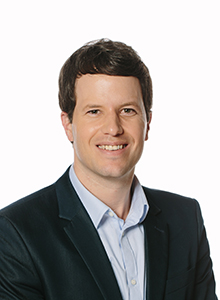
Dr Mark J. Hill is a Lecturer in Cultural Computation at King's College London's Department of Digital Humanities within the Faculty of Arts & Humanities. He holds a DPhil from the University of Oxford, an M.Sc. in Political Theory from the London School of Economics, and a B.A. in Political Science from Concordia University. His interdisciplinary work bridges digital humanities, computational social science, and intellectual history. Research Focus: Social network analysis, public discourse analysis via large datasets, quantitative text analysis, and critical evaluation of digital methods. Current Projects: Investigating discourse patterns across historical and contemporary contexts, including Early Modern Nonconformist networks and digital discourse around football fandom. He collaborates with institutions like the University of Helsinki and engages with public sectors on digital research projects. Teaching includes digital research methods and critical thinking in the digital age. His affiliations include the Computational Humanities Research Group and the Centre for Digital Culture at King's College London.
Dr. David Bell is an Associate Professor in the Departments of Kinesiology and Orthopedics and Rehabilitation at the University of Wisconsin – Madison. He serves as Director of the Wisconsin Injury in Sport Laboratory. His research focuses on musculoskeletal injury risk factors, particularly sport specialization’s impact on youth athletes. He holds a PhD from UNC Chapel Hill and a master’s from the University of Virginia. His work has been funded by the National Athletic Trainers’ Association, American Medical Society for Sports Medicine, and American College of Sports Medicine. Key awards include the 2017 New Investigator of the Year and 2017 STOP Sports Injuries Award for best youth injury prevention paper. He authored the NATA’s 2019 official statement on sport specialization and edited a 2019 Journal of Athletic Training special issue on the topic. He currently holds a 2030 Impact Fellowship (2020–2025) from the UW-Madison School of Education. His research spans injury epidemiology, sport participation trends, and clinical practice improvements. Recent studies address opioid use after surgery, psychosocial impacts of sport specialization, and socioeconomic factors in youth sports access. He collaborates with athletic trainers nationwide to improve injury prevention strategies and healthcare equity in sports.
Professor Simone Fullagar is a sociologist specializing in gender equity in sport, mental health, and social well-being. She serves as Chair of the Sport and Gender Equity research hub at Griffith University and holds affiliations with the Griffith Centre for Social and Cultural Research and the Centre for Mental Health. Her academic career includes roles at the University of Bath, UK, and leadership in organizations like parkrun's global research board. Fullagar earned her PhD from the University of New South Wales and a Bachelor of Arts with Honours from the University of Technology Sydney. Her research explores intersections of gender, health, and sport, with recent projects funded by the Australian Research Council and international bodies. Key interests include violence prevention in sport, disability inclusion, and feminist new materialist methodologies. Fullagar has supervised numerous doctoral students, focusing on topics like sport development systems and gender equity in parasport organizations. Notable awards include the Shaw-Mannell International Leisure Research Award (2015) and Fellowship with the UK Academy of Social Sciences (2019). She contributes to policy through roles such as Chair of Griffith's Inclusive Futures research beacon and member of the Gold Coast Sport and Physical Activity Strategy Steering Committee. Her work emphasizes transformative approaches to social inequities through interdisciplinary collaboration.
Connie M. Koski is an Assistant Professor in the Department of Criminal Justice at North Dakota State University. She earned her PhD from the University of Nebraska Omaha in 2013, an MS from Wayne State University, and a BS from Ferris State University. A retired police officer from Michigan, Koski brings practical experience to her academic work. Her research examines police-citizen perceptions, crime geography, formal/informal social control mechanisms, and officer wellness. Koski's interdisciplinary research spans police-community relations, historical marketplaces, disability access in archaeology, and gender barriers in leadership. Recent publications analyze millennial retention in hospitality sectors, heritage accessibility, and qualitative research challenges in developing nations. She has developed inclusive pedagogical tools like Inclusivity Knowledge Cards and led student consultancy projects with organizations including Lincoln City Football Club. At NDSU, she teaches Introduction to Policing (CJ 210) and Criminal Law and Procedure (CJ 330). Her professional background includes prior teaching positions at Longwood University and Oglala Lakota College.
Thorsten Busch is a Senior Lecturer at the ZHAW School of Management and Law, affiliated with the Zurich Center for Sustainability Leadership. His academic career includes roles as Visiting Assistant Professor at the University of Konstanz (DE), Postdoctoral Fellow at Concordia University (CA), and Senior Research Fellow at the University of St. Gallen (CH). He holds an M.A. in political science, economics, and management from the University of Oldenburg (DE), and a Ph.D. in organizational studies and cultural theory from the University of St. Gallen (CH). His research focuses on digital business ethics, AI ethics, and sustainability in digital industries. Notable projects include leading the ethical business model development for the Play Science citizen science platform. His work has been published in outlets like Journal of Business Ethics and presented at MIT, Oxford, and McGill University. Education: M.A.: University of Oldenburg (Political Science, Economics, Management) Ph.D.: University of St. Gallen (Organizational Studies & Cultural Theory) Advanced training: Oxford Internet Institute, Harvard Berkman Klein Center Research interests bridge digital ethics and sustainability, addressing topics like algorithmic HR challenges, CSR in sports organizations, and environmental impacts of the games industry. He actively engages in global academic discussions through conferences like EGOS and ACM Ethical Games. Current projects emphasize actionable solutions for ethical business models in digital sectors.
James Hardy is a Professor in Sport & Exercise Science at Bangor University's School of Psychology and Sport Science , with a career spanning elite sports psychology research and teaching. He holds a BSc (First Class) from the University of Birmingham, and MA/PhD from the University of Western Ontario under Prof. Craig Hall. Key roles: Senior Lecturer, Deputy Head of School, Associate Editor for Journal of Applied Sport Psychology , and editorial board member for multiple journals. Research focuses on self-talk/imagery and group dynamics (team cohesion, leadership), funded by ECB, UK Sport, and Manchester City FC. Recent publications highlight his interdisciplinary approach, examining leadership effects, pressure training protocols, narcissism in teams, and injury risk factors via pattern recognition. Notable work includes Psychosocial Characteristics of Elite Rugby Players and Individualized Talent Development in beach sprint rowing. Scientific contributions include a Bangor University Teaching Fellowship and 30+ peer-reviewed articles . Grants like £80k from ECB and £56k from City Football Services underscore his applied impact.
Ramón Spaaij is a Professor in the College of Sport, Health and Engineering at Victoria University and holds a Professorial Chair in Sociology of Sport at the University of Amsterdam. He leads the Sport in Society Research Program at IHES and was previously a Senior Research Fellow at La Trobe University, where he served as Deputy Director of the La Trobe Refugee Research Centre. His educational background includes an MA from Leiden University and a PhD from the University of Amsterdam. Spaaij’s research centers on social cohesion, conflict, and social change through two primary lenses: the sociology of sport and the sociology of terrorism. He investigates how sport influences diversity, inclusion, and community belonging, particularly through initiatives like sport for development and youth engagement. Simultaneously, he conducts internationally recognized research on violent extremism, with a focus on lone wolf terrorism, radicalization pathways, and counterterrorism strategies. His recent publications reveal a strong interdisciplinary focus, bridging sociology, criminology, and sport studies. The articles demonstrate recurring themes in both sport-related social dynamics and terrorism studies, with consistent attention to identity, exclusion, and structural violence. He frequently collaborates with scholars across disciplines and countries, contributing to handbooks, journals, and policy-oriented research. Victorian Department of Health and Human Services (2015): Sport integrity analysis DST Group – VU Industry Postdoctoral Research Fellowship (2015–2018): Online/offline radicalization Australian Research Council Linkage Project (2014–2017): Managing diversity in junior sport Youth & Identity Grant, Utrecht University (2013–2015): Youth violence in football National Institute of Justice, USA (2012–2015): Lone wolf terrorism prevention He has completed supervision of 5 Honours, 11 Masters, and 1 PhD student, and currently mentors 5 PhD, 4 Master’s, 1 Honours student, and 2 postdoctoral fellows. He is affiliated with several professional associations including the International Sociological Association and the Australian Sociological Association. Spaaij is also a frequent contributor to international media on topics related to sport and extremism.
Professor Murray Phillips is a Senior Lecturer at the School of Human Movement and Nutrition Sciences , University of Queensland , specializing in the historical and contemporary dimensions of sport . He has held academic roles at the Universities of Canberra, South Australia, and Queensland, joining UQ in 2000. His research spans sport history , Indigenous sport , digital history , and socio-cultural analyses of sport . Education: PhD in Sport History (University of Queensland, 1992) Key Research Areas: Sport and war, gender in sport, rugby league history, sport coaching, Indigenous public history, and sport-related brain trauma. His recent work focuses on brain trauma in sport , including editing the 2025 book Head in the Game , and analyzing Indigenous sport history in Cherbourg and Torres Strait. He has secured funding from the Australian Research Council, Australian Sports Commission, and other institutions. Professor Phillips is also a prominent editor and reviewer for journals like Sporting Traditions and Journal of Football Studies .
Alison Frank Johnson is a Professor of History and Germanic Languages and Literatures at Harvard University, serving as Department Chair. She is affiliated with the Barker Center and the Center for European Studies. She holds a B.A. in German and Russian from Williams College, and an A.M. and Ph.D. in History from Harvard. Additional studies include the Karl Franzens Universität Graz and Jagiellonian University in Kraków. Her research focuses on the Habsburg Empire, German-speaking Europe, and topics like the death penalty, commodity history, and maritime power. Major works include Oil Empire: Visions of Prosperity in Austrian Galicia (2005), awarded multiple prizes. Current projects explore capital punishment in the Habsburg Monarchy and Austria-Hungary’s global commerce strategies. Her articles span dueling, Mediterranean slave trade, Alpine spa towns, and Austria-Hungary’s maritime role. Awards include teaching accolades (Everett Mendelsohn Excellence in Mentoring, Phi Beta Kappa Teaching Prize) and book prizes. She has held fellowships from ACLS, Fulbright, and Vienna’s Institut für die Wissenschaften vom Menschen. Her advisory roles include the Scientific Advisory Board of the Austrian Academy of Sciences. Courses taught include histories of German-speaking Europe, turn-of-the-century Vienna, and commodities in international contexts.
Tianyu Guan is an Assistant Professor in the Department of Mathematics and Statistics at York University, Faculty of Science. He previously served as an Assistant Professor at Brock University and joined York University in 2024. He holds a PhD in Statistics from Simon Fraser University (2020), an MSc in Actuarial Science from the same institution (2014), and a BSc in Statistics from Jilin University (2011). PhD in Statistics, Simon Fraser University, 2020 MSc in Actuarial Science, Simon Fraser University, 2014 BSc in Statistics, Jilin University, 2011 His research centers on sports analytics, functional data analysis, and nonparametric statistics, with strong applications in machine learning and data science. He applies statistical methodologies to understand sports performance, player behavior, and game dynamics. His work also extends to theoretical developments in sparse modeling and functional regression. The recent publications highlight a clear trend toward integrating advanced statistical techniques with real-world sports and entertainment data. His work combines functional data analysis, machine learning, and probabilistic modeling to extract insights from complex longitudinal and high-dimensional datasets. Topics span soccer, rugby, football, and movie reviews, demonstrating interdisciplinary reach. While no formal scientific awards are listed in the provided text, his publications in high-impact journals such as Annals of Applied Statistics and Statistics and Computing reflect strong academic recognition. Tianyu Guan actively advises multiple graduate students at both MSc and PhD levels, primarily at Brock and Simon Fraser Universities. His teaching portfolio includes advanced courses in nonparametric statistics, sampling theory, and experimental design at the undergraduate and graduate levels. He has not received external grant information in the provided text, but his research output suggests active engagement in funded or independent research projects. He leads methodological and applied research in sports analytics, often co-supervising students with colleagues across institutions. His lab or research group appears focused on developing and applying statistical tools for performance analysis and decision-making in sports, supported by computational implementations such as the R package ngr .
Grethe Myklebust is a Professor at the Department of Sports Medicine, Norwegian School of Sport Sciences, where she serves as Program Coordinator for the Master in Sports Physiotherapy and teaches courses including Injury Prevention and Clinical Sports Physiotherapy. She holds a PhD (2003) focused on ACL injury prevention in handball and has 20+ years of experience as a physiotherapist for national teams in handball, football, and beach volleyball, including Olympic health teams in Seoul and Sydney. Her research centers on sports injury mechanisms, risk factors, and prevention strategies—particularly for shoulder, knee, and ankle injuries in handball and football. She investigates how to disseminate prevention knowledge to athletes, coaches, and parents, with projects like Prep to be PRO and Safeplay targeting youth athlete development. Her work emphasizes neuromuscular training, injury epidemiology, and implementation science in sports contexts. Analysis of her 15 most recent publications (2021–2025) reveals dominant themes: ACL injury rehabilitation/return-to-sport decisions (6 studies), youth athlete injury prevention (5 studies), sport-specific biomechanical risks (3 studies), and translational research frameworks (1 study). Her cohort studies and RCTs consistently address gender differences, training load effects, and barriers to implementing prevention programs. She leads multiple projects including Injury Prevention in Youth Sports and collaborates with the Oslo Sports Trauma Research Centre (OSTRC), focusing on practical interventions for athlete resilience. As a board member of the Sports Physiotherapy group (FIA) and former IHF Medical Commission member, she bridges clinical practice with academic research.
Eduardo Saez De Villarreal Sáez is a Professor in the Department of Sports and Information Technology at Universidad Pablo de Olavide, where he is affiliated with the Center for Research in Physical and Sports Performance (CIRFD) and the AFSD Physical Activity, Health and Sport research group. His academic work spans both theoretical and applied aspects of sports science, with a particular focus on physical performance metrics and training methodologies. His research interests center on athletic performance optimization, with specific expertise in strength training methodologies, sprint mechanics, and resistance training adaptations. Dr. Saez De Villarreal's work frequently examines velocity-based training, blood flow restriction techniques, and the biomechanical aspects of athletic movement. His research bridges laboratory findings with practical applications for athletes across multiple sports disciplines including football (soccer), water polo, cycling, and even unique applications to professional bullfighting performance. Analysis of his recent publications (2024-2026) reveals a strong focus on velocity-based resistance training, with particular attention to velocity loss thresholds and their impact on strength development. His work demonstrates increasing sophistication in training methodology research, with systematic reviews and meta-analyses becoming more prominent alongside experimental studies. The research spans multiple sports contexts while maintaining a strong physiological and biomechanical foundation. Dr. Saez De Villarreal supervises doctoral students in the Physical Activity, Sports and Health Sciences program and collaborates with researchers internationally. His work shows consistent output with publications extending into 2026, indicating ongoing active research. His laboratory work appears to focus on practical applications of sports science research across various athletic populations, from youth athletes to professionals.
Kristina Gavin Bigsby is an Associate Professor of Instruction in Business Analytics at the Tippie College of Business, University of Iowa. She serves as Director of Undergraduate Studies for the Business Analytics program, focusing on curriculum development and student engagement. Her academic background includes a PhD in Informatics, a Master's in Library and Information Science, and dual Bachelor's degrees in English and Music from the University of Iowa. Education: PhD in Informatics MA in Library and Information Science BA in English BM in Music Bigsby specializes in business analytics with emphasis on social media analysis, sports recruitment modeling, and decision support systems. Her research combines data mining techniques with behavioral insights to predict school choice patterns and athletic recruitment dynamics. Recent research trends focus on: Predictive analytics in college sports recruitment Social media sentiment analysis for athlete decision-making Data-driven ranking systems for collegiate wrestling Twitter data applications in recruitment integrity Scientific recognition includes: 2024 Part-time MSBA Instructor of the Year 2023 Faculty/Staff Making Positive Difference recognition 2022 Collegiate Teaching Award 2021 Undergraduate Faculty of the Year Contact: kristina-gavin@uiowa.edu
Brian Stemper is a Professor in the Joint Department of Biomedical Engineering at Marquette University and Medical College of Wisconsin, and Professor in the MCW Department of Neurosurgery. He serves as Director of the Neuroscience and Biomechanics Research Laboratories at the Zablocki VA Medical Center in Milwaukee, where his research bridges engineering principles with clinical applications in trauma biomechanics. Dr. Stemper holds a PhD in Biomedical Engineering from Marquette University (2004) and a BS from Milwaukee School of Engineering (1998). His career progression includes positions as Assistant Professor (2004-2008), Associate Professor (2008-2017), and Professor (2019-present) across both institutions, with tenure awarded in 2023. His research focuses on biomechanics of traumatic brain injury, spine injury mechanisms, and automotive safety. Stemper's work examines how mechanical forces translate to biological damage in neural and spinal tissues, with particular interest in repetitive head impacts in sports, military aviation injuries, and automotive collision biomechanics. His laboratory develops experimental models to characterize injury thresholds and mechanisms. Analysis of his 15 most recent publications reveals consistent focus on spinal biomechanics (60%), traumatic brain injury (30%), and military/aerospace applications (10%). His work increasingly integrates computational modeling with experimental validation, particularly in personalized injury prediction and the effects of repetitive impacts. 2004 Best Paper by a Young Researcher, International Research Council on the Biomechanics of Impact 2006-2008 Listed in Who's Who in Science and Engineering 2007-2010 Listed in Who's Who in America 2008 Listed in Who's Who in the World 2009 Best Student Paper, Rocky Mountain Bioengineering Symposium 2010 NASS Best Poster Presentation, North American Spine Society Dr. Stemper has secured significant grant funding from NIH, Department of Veterans Affairs, Department of Defense, and Air Force Research Laboratory. His current research examines head impact exposure in athletes, neck and back pain in high-performance aircrew, and factors influencing addiction outcomes following brain injury. He has mentored numerous graduate students and serves on the Institutional Animal Care and Use Committee at the Zablocki VA Medical Center.
Martin Carlsson-Wall is a Full Professor at Stockholm School of Economics (SSE) in the Department of Accounting within the House of Governance and Public Policy. He serves as Center Director for both the Center for Municipality Governance and the Center for Security and Resilience. In 2024, he was named "The Linder Chair in Sports and Business," the first Chair at SSE on Sports and Business topics. Since 2017, he has been Program Director for the MSc in Accounting, Valuation and Financial Management, and in 2015, he founded the Center for Sports and Business, which now includes 40 faculty members and has strategic partnerships with major Swedish sports organizations across football, hockey, golf, and skiing. Martin Carlsson-Wall's research focuses on accounting in sports organizations and accounting in inter-organisational relationships across both private and public sectors. His work extensively examines management control systems , particularly in contexts of innovation , growth companies , and risk management . His research often takes a qualitative approach, investigating how accounting practices function in extreme situations (such as the Swedish migrant crisis), high-intensity organizations (like football clubs), and during organizational change processes. Analysis of Professor Carlsson-Wall's recent publications reveals a strong thematic focus on the intersection of accounting practices with sports management and public sector administration. His work demonstrates how management control systems adapt to different organizational contexts, from football clubs to technology firms and public administration during crises. A recurring theme is how accounting practices mediate tensions between different stakeholder interests and how they evolve in response to organizational challenges. His research methodology typically employs in-depth case studies that examine accounting as a social practice rather than merely a technical function. Professor Carlsson-Wall has received significant recognition through his appointment as "The Linder Chair in Sports and Business" in 2024, establishing the first dedicated research position at SSE focusing on the business aspects of sports. As an educator, Professor Carlsson-Wall serves as Program Director for the MSc in Accounting, Valuation and Financial Management and teaches several key courses including BE901 Hybrid Organizations: Value Creation and Strategy at the bachelor's level, and course 3313 Investments and Value Creation in Global Sports (which he directs) and course 3302 Management Control at the master's level. He also supervises master's theses in Accounting and Financial Management. In Executive Education, he teaches on management control, costing, performance management, transfer pricing, investment management, and financial analysis through both open programs and customized corporate offerings. Professor Carlsson-Wall founded and directs the Center for Sports and Business, which has grown to include 40 faculty members and established partnerships with major Swedish sports organizations. He also leads the Center for Municipality Governance and the Center for Security and Resilience, demonstrating his commitment to applying accounting and management control research to practical governance challenges in both public and private sectors.