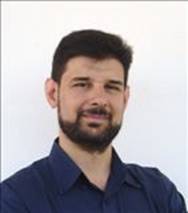
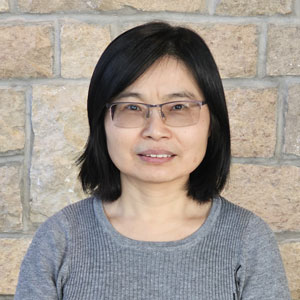
Saji George is an Associate Professor at McGill University's Macdonald Campus, affiliated with the Department of Food Science and Agricultural Chemistry. Their research focuses on sustainable nanotechnology applications for food and agricultural systems, emphasizing safety and environmental responsibility. Research Areas: Sustainable crop/livestock systems, safe food supply, human nutrition, bioaerosols, and antibacterial nanotechnology. Awards: Canada Research Chair (Tier 2) in Sustainable Nanotechnology for Food and Agriculture. Contact: Email saji.george@mcgill.ca or call 514-398-7920.
Alejandro Cifuentes serves as a Full Research Professor at the Spanish National Research Council (CSIC) in Madrid, where he leads the Laboratory of Foodomics and directs the Metabolomics Platform under the International Excellence Campus CSIC + University Autonoma of Madrid. His prior roles include Founding Director of the Institute of Food Science Research and Deputy Director of the Institute. His research centers on foodomics and metabolomics, with emphasis on advanced extraction technologies for bioactive compounds from diverse sources including plants, dairy, and microalgae. Key interests encompass sustainable processing methods, neuroprotective agents, antioxidant properties, and the valorization of agricultural by-products for health applications. Analysis of his recent publications reveals a dominant focus on green extraction techniques—particularly supercritical CO₂ and pressurized systems—combined with mass spectrometry for bioactive compound analysis. His work bridges food science, analytical chemistry, and biotechnology to address challenges in food safety, nutrition, and sustainable resource utilization. Dr. Cifuentes directs the Laboratory of Foodomics and Metabolomics Platform, leading interdisciplinary teams in projects spanning microalgal protein characterization, dairy microbiota studies, and neuroprotective compound transport mechanisms, with strong industry and academic collaborations across Europe.
Professor Benu Adhikari is a faculty member in the School of Science at RMIT University, Australia. He holds honorary positions including Visiting Professor at Jiangnan University (China), Adjunct Professor at Soochow University (China), and Adjunct Distinguished Professor at the China Academy of Agricultural Sciences (Beijing). His research focuses on food engineering, emulsions, encapsulation technologies, biodegradable packaging, and food drying processes. Key projects include developing plant-based dairy alternatives, biodegradable films from agricultural waste, and texture-modified foods for the elderly. He supervises numerous research projects on topics like 3D-printed food from mushroom waste, sodium reduction in food systems, and encapsulation of bioactive compounds. His work integrates advanced materials science, sustainable processing, and food innovation. Professor Adhikari is an editorial board member of Sustainable Food Technology and Drying Technology . Research interests span food engineering fundamentals (rheology, thermal processing), emulsion stability mechanisms, micro/nano encapsulation of heat-sensitive ingredients, and biodegradable packaging development. His lab explores novel applications of plant and algal proteins, lignin-based materials, and AI-driven food supply chains. Over 400+ research outputs highlight contributions to food science, materials engineering, and sustainable technologies. Collaborations with industry and global institutions drive applied research in food safety, nutrition, and circular economy practices. Recent innovations include hemp protein-curcumin conjugates, AI-optimized fresh food logistics systems, and 3D-printed texture-modified foods for dysphagia management. His work addresses global challenges in food security, sustainability, and aging population nutrition through interdisciplinary approaches.
Xiaonan Lu is a Professor at McGill University's Faculty of Agricultural and Environmental Sciences, holding the Department of Food Science and Agricultural Chemistry. They serve as a Canada Research Chair (Tier 1) in Food Safety, Ian & Jayne Munro Chair in Food Safety, and William Dawson Scholar. Their research spans multiple critical areas within food safety and analytical food science. Dr. Lu's research focuses on developing innovative detection technologies for food safety applications. Their work integrates food microbiology, analytical chemistry, and engineering to address challenges in pathogen detection, food authentication, and contaminant analysis. Key research areas include food safety engineering, food synthetic biology, cellular agriculture, and the development of smart materials for food applications. They employ advanced techniques such as Raman spectroscopy, CRISPR-based detection systems, microfluidics, and machine learning to create rapid, sensitive detection methods. Analysis of Dr. Lu's recent publications reveals a strong emphasis on practical food safety solutions with immediate industry applications. Their work spans multiple food safety challenges including pathogen detection (particularly Campylobacter), mycotoxin analysis, food authentication, and novel antimicrobial approaches. The research demonstrates a clear progression toward more sensitive, rapid, and field-deployable detection technologies, with increasing integration of machine learning and advanced materials science. Scientific awards: Canada Research Chair (Tier 1) in Food Safety William Dawson Scholar Ian & Jayne Munro Chair in Food Safety Dr. Lu leads a research group focused on food safety engineering and detection technologies. Their work has significant implications for food industry practices, regulatory frameworks, and consumer protection. Current research directions include the development of next-generation antimicrobial resistance surveillance systems, smart traceability solutions, and advanced detection platforms for foodborne hazards. Their laboratory utilizes cutting-edge instrumentation for molecular analysis, microfluidics development, and food microbiology studies.
Dr. Salwa Karboune is a Professor at McGill University, where she serves as Dean of the Faculty of Agricultural and Environmental Sciences and Associate Vice-Principal at the Macdonald Campus. She is also the Scientific Director of the Consortium for Research, Innovation and Transformation of Agrifood. Based at the Macdonald Campus in Montreal, she maintains research offices in the Raymond Building and Food Science facilities in the Macdonald-Stewart Building. Her research focuses on innovative green bioprocesses for developing novel food ingredients and nutraceuticals, with particular emphasis on carbohydrate-active enzymes for synthesizing tailored prebiotic oligosaccharides and functional polysaccharides. She investigates enzymatic cross-linking of proteins with polysaccharides and develops enzyme technology solutions for converting biomass into valuable bioactive products. Her work bridges fundamental enzyme science with practical food applications, addressing challenges in food security and sustainability. Analysis of her publication record reveals consistent research themes centered around enzyme technology (particularly levansucrases), prebiotic synthesis, functional food development, and valorization of agricultural by-products. Her recent work shows increased focus on nanoencapsulation techniques, lactic acid bacteria applications for food preservation, and investigation of plant-based protein peptides with health-promoting properties. The interdisciplinary nature of her research integrates food science, biochemistry, microbiology, and nanotechnology to address contemporary food system challenges. Dr. Karboune's leadership extends beyond her research laboratory, as evidenced by her dual administrative roles overseeing academic programs and research initiatives at McGill's Macdonald Campus. Her position as Scientific Director of the Consortium for Research, Innovation and Transformation of Agrifood demonstrates her commitment to translating scientific discoveries into practical food system innovations. While specific details about her laboratory infrastructure aren't provided in the source material, her extensive publication record suggests a well-equipped research facility supporting multiple graduate students and collaborators working on enzyme technology and food bioprocessing projects.
Bekzod Khakimov is an Associate Professor in the Department of Food Science at the University of Copenhagen, specializing in Food Analytics and Biotechnology. He has held this position since 2017, following his postdoctoral work (2013-2017) and PhD fellowship (2010-2013) at the same institution. His research group focuses on advanced analytical techniques for food quality assessment and nutritional value determination. His educational background includes: PhD in Plant Metabolomics, Department of Food Science, University of Copenhagen (2013) MSc in Chemical Research, Queen Mary, University of London, UK (2009) BSc in Chemistry, Faculty of Chemistry, National University of Uzbekistan (2006) Dr. Khakimov's research centers on food molecular composition (foodomics) and its health impacts through untargeted molecular screening of bio-fluids (metabolomics). His team works on optimizing standard operating procedures, developing efficient algorithms for processing raw instrumental data, and extracting information from complex omics data using multivariate data analysis (chemometrics). His analytical expertise spans high resolution liquid state NMR spectroscopy, GC-Tof-MS and LC-QTof-MS techniques, with applications ranging from plant foods to dairy products and human health studies. His publication record demonstrates consistent advancement in foodomics methodology and applications, with recent work focusing on metabolomics approaches to understand food quality, nutritional value, and health impacts across diverse food matrices including grapes, potatoes, dairy products, and botanical resources. His research increasingly incorporates advanced statistical modeling and deep learning approaches to overcome analytical challenges like the 'cage of covariance' in metabolomics data. His notable scientific achievements include: Nils Foss Talent Prize (2016) - International Award for ground-breaking science in advanced technologies for improved food quality and safety Best Young Investigator Award in Plant Metabolomics (2015) - 10th International Conference of the Metabolomics Society Dr. Khakimov currently serves as main supervisor for three postdocs, one PhD student, and two MSc students. He has successfully secured multiple competitive research grants as PI or Co-PI from sources including the Independent Research Fund Denmark, UCPH Funding, Danish Dairy Research Foundation, and the European Union. His laboratory maintains state-of-the-art analytical capabilities with responsibility for multiple GC-MS systems, LC-QTof-MS, and co-responsibility for NMR spectrometers. His research infrastructure includes four high-throughput GC-MS systems (Agilent GC-singleQ-MS, LECO Pegasus HT GC-TOF-MS and Bruker EVOQ QQQ systems), one LC-QTof-MS (Bruker Impact II), one LC-UV/Vis-FC system (Thermo Ultimate 3000), and co-responsibility for three NMR spectrometers (600, 500, and 400 MHz) from Bruker.
National and Kapodistrian University of AthensGreece
Associate Professor Maria Halabalaki is affiliated with the Department of Pharmacognosy and Natural Product Chemistry at the National and Kapodistrian University of Athens. Her academic career includes a PhD in Pharmacy (2005) and extensive training in natural products analysis. She teaches undergraduate and graduate courses in Pharmacognosy, Spectroscopy, and Laboratory Practices. Her research focuses on natural product isolation, metabolomics, and analytical methodologies. Key areas include chromatographic techniques (HPLC, LC-MS), NMR-based structural elucidation, and bioactivity evaluation of plant extracts. Her work explores applications in drug discovery, food quality control, and metabolic profiling. Dr. Halabalaki has received prestigious awards including the Egon Stahl Silver Medal (2015) and the 'Irakleitos' Fellowship (2000-2004). Her lab develops innovative platforms for dereplication and metabolomic analysis, contributing to understanding gut microbiota interactions and phytochemical bioavailability. Her research spans diverse matrices—from cannabis and olive-derived compounds to Mediterranean flora—targeting anti-inflammatory, cardioprotective, and anti-leishmanial agents. Current projects include nanoliposomal drug delivery systems and cosmeceutical applications of natural polymers.
Caterina Durante is an Associate Professor in the Department of Chemical and Geological Sciences at the University of Modena and Reggio Emilia. She specializes in Analytical Chemistry (Chimica analitica) and teaches instrumental analytical chemistry courses for both undergraduate Chemistry programs and Master's Degree Courses in Chemical Sciences. Her research interests span multiple areas of analytical chemistry with a strong focus on method development and optimization. She has made significant contributions to food analysis and authentication, particularly for traditional Italian products like Aceto Balsamico Tradizionale di Modena and Parmigiano Reggiano cheese. Her work integrates advanced analytical techniques including chromatography, mass spectrometry, and various spectroscopic methods with sophisticated chemometric approaches for data analysis. Her recent publications (2023-2025) demonstrate a clear research trajectory focused on developing robust analytical methods for complex matrices, with applications in food traceability, environmental analysis, and pharmaceutical quality control. The publications reveal a strong emphasis on chemometrics, particularly multivariate data analysis techniques like PCA, PLS, and PARAFAC, which she applies to interpret complex analytical data from various spectroscopic and chromatographic techniques. She actively collaborates with researchers across multiple institutions, evidenced by her numerous co-authored publications spanning food science, environmental chemistry, pharmaceutical analysis, and green chemistry applications. Her work often addresses practical analytical challenges in industrial and food production settings, with several studies focusing on real-time process monitoring and quality assessment.
Prof. Dr. Michael Rychlik serves as a Professor at the Technical University of Munich (TUM) , leading the Chair of Analytical Food Chemistry within the TUM School of Life Sciences . He holds additional affiliations as an Honorary Professor at the University of Queensland (Australia) and has served as a Visiting Professor at institutions including the National University of Singapore and the University of Hong Kong. Education Highlights: Graduated in Food Chemistry from University of Kaiserslautern (1988) Second State Examination (1989) at Chemical Testing Office Speyer Doctorate (1996) at TUM on toasted bread odorants Habilitation (2003) at TUM on stable isotope dilution assays Prof. Rychlik specializes in developing advanced analytical methods for food safety, focusing on physiologically active compounds like mycotoxins , vitamins , and flavonoids . His work examines bioavailability, toxicity, and metabolic profiling through human, animal, and plant studies. Publications highlight innovations in mass spectrometry applications, masked mycotoxin definitions, and fortified food analysis frameworks. Scientific Contributions: 2007: Kurt Täufel Prize for Food Chemists 1997: Wiss. Förderpreis der Deutschen Großbäckereien Involved in EU projects like METROFOOD and FOODSAFETY4EU Pioneer in stable isotope dilution assays for food contaminants Active in international collaborations across Asia and Australia His leadership roles include directing the Research Department of Nutrition and Food Sciences at Weihenstephan Science Center and chairing the BfR Commission for Contaminants in the Food Chain.
Dr. Gerardo Alvarez Rivera is a researcher at the University of Santiago de Compostela's Faculty of Chemistry, Department of Analytical Chemistry, Nutrition and Bromatology. As a Ramón y Cajal Researcher and member of the LIDSA Laboratory for Research and Development of Analytical Solutions, he specializes in analytical chemistry and foodomics approaches to extract and characterize bioactive compounds from agri-food by-products. PhD (2015) in Analytical Chemistry from University of Santiago de Compostela Focus on sustainable extraction technologies for cosmetic/personal care products safety Expert in foodomics, metabolomics, and neuroprotective compound analysis Works extensively with pressurized liquid extraction and green solvents His recent research explores avocado residues, microalgae, and olive by-products for bioactive compounds, with emphasis on neuroprotective and antioxidant properties. He has developed advanced methodologies using mass spectrometry and chromatography for food safety and composition analysis, particularly in wine proteins and edible insect characterization. While no specific awards are documented in the provided materials, his extensive publication record (over 30 articles since 2019) demonstrates significant contributions to sustainable extraction technologies and food waste valorization. His work bridges analytical chemistry with practical applications in food science and nutraceutical development.
National and Kapodistrian University of AthensGreece
Magiatis Prokopios is an Associate Professor in the Department of Pharmacognosy and Natural Products Chemistry at the Faculty of Pharmacy, National and Kapodistrian University of Athens. His academic journey includes a B.Sc. (1994), M.Sc. (1997), and Ph.D. (2000) in Pharmacy from the University of Athens, followed by postdoctoral research at the Institut Curie in Paris. He has held faculty positions since 2002, advancing from Lecturer to Associate Professor in 2006. His research focuses on natural products chemistry, particularly bioactive compounds from olive oil, marine organisms, and medicinal plants. Key areas include analytical methods for phenolic quantification, drug design using natural product scaffolds, and archaeological pharmacology. He has pioneered studies on oleocanthal and oleacein, identifying their roles in cardiovascular and neurodegenerative disease prevention. Magiatis has secured major grants, including EU-funded projects (FP7, LIFE), and holds patents for pharmaceutical compositions derived from olive compounds. He has published over 90 peer-reviewed articles, with impactful work in Journal of Agricultural and Food Chemistry , Phytochemistry , and Archives of Biochemistry and Biophysics . Awards include the Egon-Stahl Silver Medal (2009) and the ARISTOLEO Innovation Award (2016). He teaches pharmacognosy, spectroscopy, and natural product synthesis, and leads research teams at the University of Athens and international collaborations with institutions like UC Davis and NIH. His lab focuses on olive oil phenolic extraction, marine natural products, and Malassezia metabolomics, bridging basic science with clinical and industrial applications.
Prof. Philippe Schmitt-Kopplin serves as Director of the Research Unit Analytical Biogeochemistry at Helmholtz Munich and Head of the Comprehensive Foodomics Platform at the Technical University of Munich. He concurrently holds appointments as Honorary Professor at Amity University (India), Faculty Member at Punjab University, and Adjunct Professor at the University of Maryland, demonstrating extensive international academic leadership in metabolomics and analytical chemistry. His educational background includes an engineering diploma (1987) and MSc (1990) from the Institut National Polytechnique de Lorraine (France), followed by dual PhDs in ecological chemistry (Technical University of Munich, 1995; INPL, 1996). Professional milestones span from the US Environmental Protection Agency (1995) to GSF Institute of Ecological Chemistry (2001), culminating in his current directorship since 2011. Schmitt-Kopplin pioneers high-resolution chemical cartography of biofluids and complex organic systems, integrating ultrahigh-resolution mass spectrometry, NMR spectroscopy, and bioinformatics to decode microbiome-metabolome interactions. His research bridges nutritional science, disease mechanisms, and extraterrestrial chemistry, with recent work analyzing asteroid Bennu samples for prebiotic compounds. Methodological innovations focus on single-cell phenotyping and deep metabotyping for precision health applications. His 2023-2025 publications reveal a distinctive interdisciplinary trajectory spanning microbiome-aging dynamics, asteroid organic matter, cardiorenal metabolite toxicity, glycation chemistry, and environmental immunoprotection—unified by advanced analytical frameworks for biomarker discovery across terrestrial and space contexts. Key honors include: Les Ambassadeur de CNRS Chimie (2025) Power List 100 of The Analytical Scientist (2021) Spiers Award Nomination, Royal Society of Chemistry (2018) Gay Lussac Price Nomination (2015) As Science Advisory Board member for NASA/JAXA sample-return missions, DFG miTarget consortium, and French metabolomics initiatives, he directs strategic research investments while leading Helmholtz Munich's analytical biogeochemistry unit and TUM's Foodomics Platform. Current projects emphasize clinical translation of metabolomic discoveries and space-exploration analytical protocols. His laboratories develop extreme-resolution MRMS technologies for molecular phenotyping, with active collaborations spanning ZIEL Institute for Food & Health, Max Planck Institute for Extraterrestrial Physics, and Institut Pasteur—focusing on microbiome-driven health interventions and prebiotic chemistry in solar system evolution.
Klavs Martin Sørensen is an Associate Professor at the Department of Food Science, Faculty of Science, University of Copenhagen. His research focuses on applying advanced chemical sensors combined with Process Analytical Technology (PAT) and Deep Learning/AI to optimize food manufacturing processes, ensuring high food quality and safety while minimizing environmental footprint. His educational background includes: Ph.D. in Food Technology, University of Copenhagen (2015) Participant in the DNATF-funded Pasteur-program (project manager education), Harvard University (2012) Engineering Technician, Electronics, Frederiksberg Tekniske Skole, Denmark (1998) With over 20 years of industry experience in developing measurement equipment for the food industry prior to obtaining his PhD, Professor Sørensen brings a unique practical perspective to his academic work. His research centers on vibrational spectroscopy, chemometrics, gas chromatography & mass spectrometry, and sustainable food production technologies. He has developed expertise in applying spectral sensors in online scenarios for process optimization, with special focus on Quality by Design and Process Analytical Technology frameworks. His recent publications demonstrate a strong focus on applying spectroscopic techniques and data analysis methods to food quality assessment across various food matrices including meat, cheese, wine, and protein side streams. His work bridges the gap between theoretical chemometrics and practical industrial food manufacturing applications. His notable awards include: Niels Foss Talent Prize (2019) Course of the year award by Department of Food Science for Rapid Food Analysis Method (2019) Nomination as Faculty teacher of the year by B.Sc. students (2020) Professor Sørensen has led multiple significant research projects including Better utilization of protein side streams (2016-2028), QC-CREW (2018-2020), and SayCheese (2018-2021). He has served as a censor for the BSc/MSc course Quantitative Food Spectroscopy since 2009 and was responsible for the course Rapid Food Quality Analysis Methods starting in 2017. He was a key organizer for the 2017 International Conference On Near-Infrared Spectroscopy (ICNIRS 2017). His technical expertise spans vibrational spectroscopy apparatus design, chemometric tools (PCA, PLS, PLSDA), GC/MS techniques, ultrasonic measurement and imaging, and artificial intelligence modeling for time series data. He also possesses extensive software development skills with over 20 years' experience in C++, C, Python, MATLAB, and various database systems, which he applies to real-time on-line data processing systems for food manufacturing.
Dr. Haixia Zhang is an Assistant Professor in the Department of Food and Bioproduct Sciences at the University of Saskatchewan. Her research focuses on foodomics, employing advanced analytical techniques like UHPLC-MS and GC-MS to study food nutrients and their changes during processing. Her work aims to enhance human health through nutrient-balanced foods and improve sustainability by utilizing food industry byproducts. Dr. Zhang holds a PhD in Analytical Chemistry from Western University, Canada, and has completed postdoctoral training in Biochemistry (Vanderbilt University) and Biology (Western University). Her educational background also includes a BSc in Chemistry from Liaocheng University, China, and an MSc in Analytical Chemistry from the University of Science and Technology of China. Her research interests span food chemistry, plant biochemistry, and sustainable food systems. Key projects involve analyzing bioactive compounds in legumes (e.g., faba beans, lentils), optimizing nutrient quantification methods, and investigating stress responses in crops. Methodological innovations include developing FAIMS-MS and SRM-MS approaches for precise compound detection. Dr. Zhang’s recent publications (2020–2025) highlight advancements in B-vitamin analysis, heat stress effects on crops, and lipidomic studies of seed oils. While no scientific awards are explicitly mentioned, her extensive publication record reflects impactful contributions to food science and analytical chemistry. She teaches undergraduate and graduate courses in laboratory techniques for food and bioproduct sciences, emphasizing hands-on training in modern analytical instrumentation.
University of Illinois Urbana-ChampaignUnited States
Maria Regina Cattai de Godoy is an Associate Professor in the Department of Animal Sciences at the University of Illinois, with additional appointments in Nutritional Sciences and as an Affiliate at the Carl R. Woese Institute for Genomic Biology. A native of Brazil, she has established herself as a leading researcher in companion animal nutrition with a focus on improving pet health through innovative nutritional approaches. Dr. Godoy's research program focuses on three main areas: ingredient evaluation and foodomics, pet food technology, and therapeutic nutrition. Her laboratory employs analytical methods, in vitro assays, and alternative animal models to characterize nutritional value and safety of ingredients used in human foods and animal feeds. She integrates 'omics' technologies including metabolomics, microbiomics, and nutrigenomics to understand the interface between nutrition and health, with the goal of developing nutritional strategies to improve pet quality of life and manage chronic diseases. Her recent publications demonstrate strong activity in canine and feline nutrition research, particularly examining novel ingredients, processing effects, and hydrolyzed proteins. Dr. Godoy has secured grant support from federal agencies, commodity associations, and private sector partners, reflecting the applied significance of her work to the pet food industry. As an educator, Dr. Godoy has consistently been recognized on the University of Illinois 'Incomplete List of Teachers Ranked as Excellent by their Students' and has developed and taught undergraduate and graduate courses in animal sciences. Her research has resulted in over 30 peer-reviewed publications, and her expertise has been sought for numerous invited presentations at national and international conferences across the U.S., Europe, and South America.