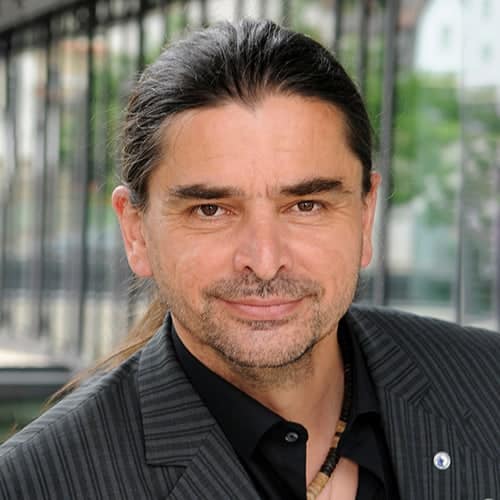
Krist V. Gernaey is Professor in Industrial Fermentation Technology at the Technical University of Denmark's Department of Chemical and Biochemical Engineering. His research develops computational tools for bioprocess optimization across pharmaceutical, food, and chemical sectors. Research specializes in mechanistic modeling of fermentation processes, process analytical technology (PAT) implementation, and continuous production system design. Current investigations focus on uncertainty analysis methods, data-driven modeling, and novel bioreactor characterization from micro to production scale. Publications demonstrate applications in vaccine manufacturing, wastewater treatment, chromatography simulation, and sustainable chemical engineering. Recent work advances regulatory frameworks for in silico bioprocess models and AI integration in engineering education. Research collaborations span academic institutions and industry partners across Europe. Professional activities include conference organization and editorial responsibilities for chemical engineering journals.
Jeppe Revall Frisvad is an Associate Professor in the Department of Applied Mathematics and Computer Science at the Technical University of Denmark (DTU), within the Visual Computing group. His work bridges computer graphics, material science, and applied optics, focusing on realistic rendering and material appearance modeling. Ph.D. in Computer Graphics, DTU Informatics (2008) M.Sc. in Engineering (Applied Mathematics), DTU (2004) Education in University Teaching, LearningLab DTU (2008–2009) His research centers on computing material appearance from physical and chemical properties, developing faster and more accurate physically based rendering methods. Key areas include light scattering, bidirectional reflectance distribution functions (BRDF), anisotropy, and translucency modeling. Applications span computer games, movies, digital prototyping, architectural visualization, and training simulators. His recent publications (2024–2025) reflect a strong trend in digitizing material appearance, especially for 3D printing and food science, using spectrophotometry and optical validation. The work combines computer graphics with interdisciplinary applications in food structure and biological imaging, emphasizing measurement, modeling, and simulation. Scientific Awards: Research travel prize from AEG Elektronfonden (2006) IGDA scholarship for GDCE 2005 DTU Ph.D. scholarship (2004) He actively supervises Ph.D. students and leads multiple research projects, including those on organ-on-chip imaging, cheese quality analysis, and optical modeling of teeth. He collaborates across disciplines and institutions, with external research stays at UC San Diego and the University of Otago. He is involved in projects integrating AI with 3D imaging and material digitization. Jeppe is a key member of the Visual Computing research environment at DTU, contributing to both fundamental rendering algorithms and practical applications in industry and science.
Michael Jørgen Hansen serves as a Senior Researcher in Environmental Engineering at Aarhus University's Department of Biological and Chemical Engineering. His research focuses on agricultural emissions reduction, particularly methane and odor control from pig production systems. His work bridges environmental science, agricultural engineering, and climate policy development. Research interests span Greenhouse Gas Emissions from livestock operations, Waste Management technologies, Odor Control systems using mass spectrometry and olfactometry, and Methane Reduction strategies through dietary interventions and housing innovations. His fingerprint analysis reveals strong specialization in pig production systems (100%), methane emissions (60%), and emissions measurement techniques (42%). Hansen leads multiple active research projects including STOREMIS (Greenhouse gas emissions from slurry storage), PIGMET (methane prediction modeling), and a 2024-2025 project on odor regulation in pig barns. His research outputs include 114 publications with significant activity in 2022-2025, featuring prominent work on fiber-type impacts on methane production and robotic slurry management systems. As primary investigator for the 2024 odor regulation project and co-investigator on multiple international collaborations, Hansen actively contributes to Danish climate technology policy through DCA - National Center for Food and Agriculture. His media presence includes coverage in Danish agricultural press regarding CO2 tax avoidance technologies and pig odor measurement systems.
Sophia Natasha Wilson is a Research Fellow in the Department of Computer Science (DIKU) at the University of Copenhagen, specializing in machine learning applications across interdisciplinary domains. She is affiliated with the SCIENCE AI Centre and holds a cross-departmental position at the Niels Bohr Institute . Her research bridges theoretical machine learning with practical implementations in healthcare, quantum computing, and environmental sustainability. University of Copenhagen Department of Computer Science (DIKU) Niels Bohr Institute SCIENCE AI Centre Her research focuses include: Quantum-enhanced machine learning algorithms Explainable AI for healthcare applications Environmental sustainability in computing Emotion-aware language models Quantum computing hardware optimization Public health risk modeling Her recent publications demonstrate cross-disciplinary work in quantum machine learning (hybrid optical processors, qubit stabilization), health informatics (hypothyroidism analysis, nursing values evaluation), and ethical AI (sustainable AI, fairness in recommender systems). Technical work also appears in non-Euclidean generative models and real-time adaptive systems . Current projects include quantum dot array simulation (QDarts platform) and federated learning for personalized medicine . She contributes to the TreeSense center for remote sensing of global tree resources and works on climate-aware AI frameworks.
Kristian Koefoed Brandt serves as Associate Professor in the Department of Plant and Environmental Sciences at the University of Copenhagen's Faculty of Science, specializing in Microbial Ecology and Biotechnology. His research focuses on environmental microbiology, antibiotic resistance dynamics, and contaminant fate in agricultural systems. His primary research interests span Soil Microbiology, Antibiotic Resistance, Environmental Contaminants, and Wastewater Treatment, with significant contributions to understanding microbial processes in organic agriculture and wastewater systems. Key themes include bioremediation strategies, pesticide risk assessment, and the One Health implications of emerging contaminants. Analysis of his recent publications reveals a strong emphasis on antimicrobial resistance surveillance across environmental interfaces, particularly in wastewater-river systems and agricultural settings. His work integrates molecular techniques with large-scale environmental monitoring, often through European collaborative projects examining climate gradients and farming practices. 295 citations for 'Emerging contaminants: A One Health perspective' (2024) Featured in 13 news outlets and referenced in Wikipedia High-impact research on wastewater-based disease surveillance Extensive collaboration across European research networks Professor Brandt actively contributes to environmental risk assessment frameworks, particularly regarding recycled nutrients in organic agriculture. His research group employs advanced molecular markers and isotope techniques to study microbial interactions, with significant implications for sustainable agricultural practices and public health monitoring systems.
Freja Stær Hincheli serves as a Lecturer at the Department of Computer Science , University of Copenhagen. Her work intersects multiple domains within machine learning, with a particular emphasis on quantum-inspired algorithms, medical imaging, and sustainable AI development. Keywords : Machine Learning, Quantum Computing, Medical Imaging, Natural Language Processing, Computational Biology Key Collaborations : SCIENCE AI Centre Her research spans quantum-enhanced neural networks, explainable AI for medical diagnostics, and energy-aware model design. Recent publications highlight applications in cross-cultural recipe adaptation, emotion-aware dialogue systems, and climate-conscious AI strategies. The Machine Learning Section at DIKU focuses on theoretical foundations and applications including medical image analysis , biological data modeling , and quantum computing , aligning with her contributions.
Birgitte Zeuner is an Associate Professor at the Department of Biotechnology and Biomedicine , Technical University of Denmark, specializing in Protein Chemistry and Enzyme Technology . Her research focuses on Enzymatic Synthesis Technology with particular emphasis on carbohydrate-active enzymes. Active supervisor in Engineering alkenal reductase reversibility (2025-2028) Main supervisor in Regioselectivity in enzymatic carbohydrate synthesis (2024-2027) Supervisor in Enzymatic xyloglucan modification (2018-2022) Recent 54 publications highlight her work on glycosylation, human milk oligosaccharides, and transglycosylation. She has received significant attention in Mendeley readership and peer review platforms. Current projects explore: Enzyme engineering for biomass upgrading Sustainable biocatalytic processes using ionic liquids Gut microbiome interactions with plant-derived carbohydrates Her research aligns with UN Sustainable Development Goals for biocatalytic applications in health and sustainability.
Gerald Steiner is a full professor of organizational communication and innovation, dean of the Faculty of Business and Globalization, and chair of the Department for Knowledge and Communication Management at Danube University Krems in Austria. He is also a member of the Associate Faculty at the Complexity Science Hub Vienna since 2018, reflecting his deep engagement with systems and complexity science. His academic journey includes a PhD in management studies and social sciences from the University of Graz and a BSc in mechanical engineering, with training at UC Berkeley, UCLA, and the University of Oklahoma. His education includes: PhD in Management Studies and Social Sciences (Organizational and Innovation Management), University of Graz Bachelor of Science in Mechanical Engineering, Austria Training at UC Berkeley, UCLA, and University of Oklahoma at Norman Gerald Steiner's research is rooted in systemic and sustainability management, guided by a complexity science framework. His work explores sustainability-oriented innovation systems, knowledge integration, transdisciplinarity, and stakeholder collaboration. He investigates competences for solving complex problems and sustainable entrepreneurship, with recent focus on sustainable resource management, particularly the phosphorus supply chain and phosphate rock mining. His research emphasizes collaborative, science-practice co-creation and digital transformation in innovation systems. The recent publications reflect a strong interdisciplinary trend, bridging sustainability science, public health, mineral economics, and digital entrepreneurship. Articles frequently address systemic challenges during crises (e.g., COVID-19), transdisciplinary modeling, and resource security. Keywords span environmental science, behavioral science, policy, and systems thinking, indicating a holistic, integrative research approach. Scientific awards are not explicitly listed in the provided text. Gerald Steiner actively mentors students and early-career researchers, as evidenced by co-authorships with individuals such as L. Satalkina, L. Zenk, and J. Weitzer. He co-directs the PhD program in migration studies, indicating leadership in graduate education. While specific grants are not mentioned, his involvement in transdisciplinary labs and high-impact publications suggests successful funding acquisition. His work often involves international collaboration, especially with institutions in the D-A-CH region and the United States. He has co-founded four transdisciplinary labs at Danube University Krems: the Transdisciplinarity Laboratory Sustainable Digital Environments, the Transdisciplinary Laboratory for Sustainable Mineral Resources, GovLab Austria, and the Biodiversity Hub. These labs serve as platforms for integrating science, policy, and practice in sustainability transitions.
Ditte Baun Hermund serves as an Associate Professor at the National Food Institute, Technical University of Denmark (DTU), leading the Research Group for Bioactives – Analysis and Application. Her work directly contributes to UN Sustainable Development Goals through innovative food science research focused on sustainable resource utilization and health. Her research centers on marine bioresources, particularly seaweed-derived bioactives, with expertise spanning antioxidant chemistry, lipid oxidation control, and functional food development. She pioneers extraction techniques for natural antioxidants using supercritical fluids and investigates processing impacts on bioactive stability in products like cocoa, fish oil-enriched mayonnaise, and seaweed-based ingredients. Her fingerprint reveals dominance in antioxidant research (100%), seaweed applications (47%), and oxidative stability (28%), with strong connections to food preservation and sensory science. Recent publications demonstrate a clear trajectory toward sustainable marine resource valorization, with emphasis on transforming seaweed into functional food ingredients while addressing practical challenges like product failures in commercial applications. This work bridges fundamental chemistry with real-world food system innovation. Hermund's scientific recognition includes four major awards reflecting her growing impact: Student travel grant (2014) Young Scientist Award (2015) Direktør, Dr. Techn. A.N. Neergaards og hustrus legat (2017) Otte Mønsted travel grant (2018) As an active supervisor and collaborator, she leads significant research initiatives including the AlgaeVita project on vitamin D3-fortified algae ingredients and SEATAN for seaweed extract development. Her grant portfolio demonstrates strong industry-academic partnerships focused on translating marine bioresources into market-ready solutions for food and cosmetics. Hermund directs the Bioactives Research Group at DTU Food, where her team operates cutting-edge facilities for lipid oxidation analysis, supercritical fluid extraction, and sensory evaluation. Current efforts focus on zero-waste approaches to microalgae biorefining for sustainable aviation fuels and nutraceutical production, positioning her group at the forefront of marine bioeconomy research.
Horst-Gunter Rubahn serves as Head of Department and Professor at the Mads Clausen Institute (MCI) within the University of Southern Denmark, and also leads the SDU Climate Cluster. With an extensive publication record of 480 publications, his academic career demonstrates significant leadership and research impact in materials science and nanotechnology. Dr. Rubahn's research focuses on construction of organic nanostructures , with particular expertise in nanofibers, organic solar cells, nanostructures, surface plasmonics, and thin films. His work spans multiple disciplines including materials science, environmental monitoring, energy storage, and sensor technology. The fingerprint analysis of his research shows strong connections across 12 similar research profiles with significant contributions to nanofiber materials science (100%), organic solar cells (60%), nanostructure materials (48%), and surface plasmonics (48%). His recent publications demonstrate trends toward practical applications of nanotechnology in environmental monitoring (nanoplastic detection), energy storage (eutectic salt hydrate composites), and food safety (electronic nose technology for poultry freshness). These works show increasing interdisciplinary collaboration across materials science, environmental science, and engineering disciplines. Villum Grant - Villum Experiment (2022) for research on perovskite solar cells and metal oxide interfaces Dr. Rubahn has supervised PhD students (2 listed in records) and leads multiple significant research projects totaling six active and completed initiatives. His current projects include NANOCHEM (Ultrahigh resolution chemical characterisation, 2022-2028), Motorvej For Materialeviden (2024-2027), and Perovskite solar cell stabilization research (2023-2025). His work has attracted substantial funding from both public and private sources, with research grants spanning energy storage, environmental monitoring, and advanced materials development. He leads research teams working on nanoscale materials characterization, with particular focus on the Mads Clausen Institute's facilities. His research groups collaborate extensively across international boundaries, with visible network connections across multiple countries as shown in his collaboration map. The teams focus on developing advanced materials for energy applications, environmental monitoring solutions, and novel sensing technologies with practical industrial applications.
Ingemar Johansson Cox serves as a Professor within the Machine Learning section at the Department of Computer Science, University of Copenhagen. His research bridges theoretical machine learning foundations with practical applications across medical data analysis, information retrieval, remote sensing, and sustainability initiatives. His research portfolio emphasizes machine learning applications in high-impact domains, particularly medical data analysis (e.g., early detection of gynecological malignancy using online search activity) and sustainability (e.g., reducing AI's carbon footprint). The Machine Learning section actively contributes to the university's SCIENCE AI Centre, focusing on both algorithmic innovation and real-world problem-solving in biological modeling and environmental monitoring. Recent publication trends reveal expanding work in quantum computing applications for biomolecular modeling, sustainable AI frameworks, and cross-cultural NLP systems. His 2024-2025 output demonstrates strong interdisciplinary collaboration, especially in medical informatics and climate-related AI research. Professor Cox operates within the Department of Computer Science's robust research ecosystem, which includes dedicated compute clusters and specialized initiatives like TreeSense for global tree resource monitoring through remote sensing and deep learning. The department's infrastructure supports large-scale machine learning projects requiring significant computational resources.
Zheng Guo is a Professor in the Department of Biological and Chemical Engineering at Aarhus University, specializing in interdisciplinary research at the interface of biocatalysis, materials chemistry, and sustainable chemical engineering. His work focuses on advancing enzymatic processes for environmental remediation, lipid engineering, and functional material design. Key research areas include biocatalytic degradation of pollutants (e.g., PFAS, synthetic dyes), development of enzyme-based optoelectronic devices, and innovative lipid synthesis strategies. He leads several high-impact projects such as the ACTPAC initiative for plastic waste valorization and the HyProfuel program for sustainable aviation fuel research. Collaborations span academic and industrial partners to address challenges in circular economy and green chemistry. Current Projects : Assessing lipid nutritional value in cultivated meat (LipCellMeat, 2025-2026) C1-to-Cn biopathway development for autotrophic yeast (2023-2027) Hydroprocessing sustainable aviation fuels (HyProfuel, 2022-2026) Publications highlight breakthroughs in enzymatic catalysis, nanomaterial synthesis, and bio-inspired optoelectronics. His team’s work frequently appears in top-tier journals like Advanced Science , ACS Synthetic Biology , and Journal of Agricultural and Food Chemistry . Guo actively mentors graduate researchers and has pioneered methodologies for industrial biotechnology applications, with a strong emphasis on translating fundamental discoveries into scalable industrial solutions.
Mikkel Hansen is an active Postdoc researcher at the National Food Institute (DTU Food), Technical University of Denmark, specializing in microbial biotechnology and biorefining for sustainable food systems. His work directly supports UN Sustainable Development Goals related to food security and responsible consumption, with a focus on converting green biomasses into viable protein sources for human nutrition. Education PhD in Food Science and Technology, Technical University of Denmark, 2023 (Thesis: Green Biomasses as a Source of Protein for Human Consumption) Research Interests Hansen’s expertise centers on plant protein extraction from legumes and grasses, particularly alfalfa ( Medicago sativa ). He pioneers biorefining techniques to recover protein concentrates while eliminating off-flavors (e.g., 'taste of hay') through methods like supercritical CO 2 treatment. His work extends to mycelium-based meat alternatives using Pleurotus ostreatus cultivated on pre-fermented byproducts, integrating food engineering, microbial biotechnology, and nutritional science for scalable sustainable food solutions. Publication Trends His 2022-2024 publications reveal a cohesive focus on alfalfa and grass protein valorization. Key themes include scaling screw-press protein recovery, using agricultural residues (sugar beet pulp) for fermentation media, and eliminating off-flavors in concentrates. The work bridges food engineering (pressing, CO 2 treatment), microbial biotechnology (pre-fermentation, mycelium growth), and sustainable food systems , with applications in meat alternatives and nutritional quality improvement. Advising and Grants Hansen has no formal advisees. He was a PhD student in two funded projects: the DTU PhD project "Green biomasses as a source of protein for human consumption" (2019-2023) supervised by Peter R. Jensen and Tim J. Hobley, and the "InnoGrass" project (2019-2021) led by Jensen. These projects addressed sustainable protein extraction from green biomasses, with outputs including his thesis and peer-reviewed articles. Laboratory Affiliation He operates within DTU Food’s Research Group for Microbial Biotechnology and Biorefining, leveraging expertise in pressing, fermentation, and biorefining to optimize protein recovery from agricultural residues while improving digestibility and sensory properties for food applications.
Jonas Vinther is a Research Fellow at the Department of Computer Science , University of Copenhagen, specializing in Machine Learning and its intersections with quantum computing, medical data analysis, and sustainability. He is also an external PhD student in the Quantum Information Science & Technology program at the Niels Bohr Institute. Email: jonas.vinther@nbi.ku.dk , jonas.vinther@di.ku.dk Location: Universitetsparken 1, 2100 København Ø His research spans quantum machine learning , AI ethics , medical imaging , and environmentally sustainable AI , with recent publications on topics ranging from quantum neural networks to fairness in recommender systems . He contributes to the SCIENCE AI Centre and collaborates on initiatives like TreeSense for global tree resource monitoring.
Rodrigo Salvador is an Assistant Professor at the Technical University of Denmark, specializing in the Department of Engineering Technology and Didactics Production, Transportation and Planning. His work bridges circular economy principles with bioeconomy systems, focusing on sustainable resource transformation and industrial ecology. Current Role: Assistant Professor, Technical University of Denmark Research Focus: Circular Bioeconomy, Life Cycle Assessment, Renewable Energy His research explores innovative business models for circular bioeconomy implementation, waste valorization strategies, and sustainable energy systems. Recent publications highlight methodologies like the B2Circle framework and open innovation approaches for biomass upcycling. Key trends in his 15 most recent articles include: Integration of circular economy with bioresource management Multi-criteria decision-making for sustainable technologies Regional strategies for waste-to-energy systems Corporate circularity maturity models Awards: Researcher of the Year (2023) for scientific impact He serves as editor for journals like Sustainable Production and Consumption and Circular Economy and Sustainability , and coordinates the Power Bio project (2023–2026) focused on circular bioeconomy systems.