University of California, Los AngelesUnited States
Yunxiang Yan is a Professor in the Department of Anthropology at the University of California, Los Angeles (UCLA). His work focuses on China and Cultural Anthropology , with specific expertise in Economic Anthropology , Family and Kinship , and Individualization . Education: Ph.D. in Social Anthropology from Harvard University (1993). Yan’s research explores the intersection of social change , moral theory , and family dynamics in modern China. His ethnographic studies in rural villages provide foundational insights into exchange theory and cultural globalization . Recent publications analyze food safety , medical ethics , and moral crises in China, reflecting his interdisciplinary approach combining anthropology, sociology, and philosophy. Articles span themes like intergenerational intimacy , political oppression , and networked social structures . Scientific Awards: Guggenheim Fellowship Levenson Prize-winning Research Yan’s work bridges local Chinese studies with global anthropological discourse. He has held positions at the Chinese University of Hong Kong, Johns Hopkins University, and UCLA since 1996. His career reflects a commitment to documenting the lives of ordinary people, rooted in his early experiences as an expelled villager during Maoist China. Contact: yan@anthro.ucla.edu
Sigrid Schmalzer is a Professor of History at the University of Massachusetts Amherst, specializing in the history of science and modern China. She holds a Ph.D. in History and Science Studies from the University of California, San Diego (2004). Her research bridges the social, cultural, and political dimensions of science in China, with a focus on the intersections of agriculture, activism, and revolutionary movements. Schmalzer is the author of *Red Revolution, Green Revolution: Scientific Farming in Socialist China* (2016), winner of the Joseph Levenson Book Prize, and *The People's Peking Man: Popular Science and Human Identity in Twentieth-Century China* (2008), recipient of the Allan Sharlin Award. Her current projects include a book on agricultural heritage in the People’s Republic of China and leadership roles in organizations like the Critical China Scholars and Science for the People. She co-edits the *Activist Studies of Science and Technology* series for UMass Press, emphasizing socially engaged scholarship. Schmalzer also serves as Co-President of the MSP faculty union at UMass Amherst. Research interests span the history of science activism, transnational movements, and the legacy of Maoist science. Notable awards include the Freeman Book Award (2018) for her children’s book *Moth and Wasp, Soil and Ocean*, which integrates science education with historical narratives. Her work often critiques capitalist and authoritarian structures while advocating for science as a tool for justice and sustainability. Recent publications explore themes like agroecology, science policy, and the global dimensions of China’s scientific history. She teaches courses on modern China, science in society, and radical science movements, blending interdisciplinary approaches to engage students in critical analysis of historical and contemporary issues.
Ben Nobbs-Thiessen is an Assistant Professor of History and Chair of Mennonite Studies at the University of Winnipeg. He holds a PhD from Emory University (2016), with prior roles as a research associate at Arizona State University (2016–18) and a teaching fellow at Washington State University (2018–2020). His research focuses on Mennonite migrations across the Americas, environmental change, and indigenous-settler relations. He teaches courses on Latin American Mennonites and Mennonite Studies II. His research combines archival work, field studies, and oral histories from Bolivia, Paraguay, Mexico, Canada, and the U.S. His 2020 book Landscape of Migration examines Bolivia’s lowland colonization and its intersection with Mennonite and indigenous communities. Current projects include a century-long study of Mexico-Canada Mennonite migrations linked to water scarcity and neoliberal reforms. His publications span journals like Journal of Latin American Studies and Agricultural History , addressing topics like frontier development, foodways, and border conflicts. His transnational approach bridges environmental, migration, and colonial histories. He contributes to interdisciplinary initiatives such as the Newberry Consortium in American Indian Studies and the Centre for Rupert's Land Studies.
Kevin Manaugh is an Associate Professor at McGill University, specializing in Urban Planning with a focus on sustainable transportation and spatial justice. His research examines how decision-making processes in urban development balance environmental, economic, and social equity goals, particularly through transport systems. He holds a PhD in Urban Planning from McGill University (2013). His key research interests include integrating social equity into land use policies, analyzing accessibility impacts on socioeconomically diverse populations, and studying behavior change related to sustainable transportation. Current projects explore equitable transit accessibility, responses to local mobility policies, and health/well-being effects of sustainable transport choices. Manaugh has published extensively on transportation equity, urban form analysis, and GIS applications. His work bridges theoretical frameworks with practical policy implementation, emphasizing participatory approaches to urban planning. Notable contributions include studies on pandemic street reallocation equity and cycling infrastructure prioritization strategies. His research has been supported by interdisciplinary collaborations and applied to Canadian urban contexts. Despite prolific output, Manaugh maintains an active engagement with public discourse on urban mobility challenges and equitable urban futures.
Aya Aboelenien is an Associate Professor in the Department of Marketing at HEC Montréal, a leading business school in Montréal, Canada. Her research focuses on morality and ethics in consumption, consumer culture theory, qualitative methods, aesthetics, and social media. She holds a Ph.D. (Marketing) from Concordia University, an M.B.A. and BBA from the American University in Cairo. Research Interests Aya’s work examines ethical consumption trends, influencer dynamics, and marketplace morality. She explores how brands navigate ethical dilemmas and how social media influencers shape consumer behavior. Her recent studies include analyses of cancel culture’s impact on brands, the ethical dimensions of influencer marketing, and meat consumption’s cultural symbolism. Recent Contributions Her 2024 papers in Journal of Brand Management and Journal of Business Research address brand response strategies to changing market logics and the formation of marketplace moral sentiments. Earlier work in Journal of Marketing Management (2023) and Consumption Markets & Culture (2022) further highlight her focus on ethical influencers and contested consumption practices. Awards & Supervision She received the Best Competitive Paper Award at the 2025 Consumer Culture Theory Conference. Since 2021, she has supervised five MSc projects on topics like green marketing, influencer strategies, and brand repositioning. She teaches courses in consultancy-based marketing research and strategic marketing. Affiliations Aya is affiliated with HEC Montréal’s marketing department and collaborates with global scholars on projects involving consumer ethics and digital marketing innovations.
Pol Antràs serves as the Robert G. Ory Professor of Economics at Harvard University, where he has been a faculty member since 2003. He holds significant research affiliations as a Research Associate at the National Bureau of Economic Research (NBER), where he directed the International Trade and Organization Working Group, and as a Research Affiliate at the Centre for Economic Policy Research (CEPR). He also contributes to the Barcelona School of Economics as a member of its Scientific Council. His academic foundation includes a BA and MSc in Economics from Universitat Pompeu Fabra in Barcelona and a PhD in Economics from MIT (2003). Antràs specializes in international economics and applied theory, with recent research focusing on global value chains, the interplay between globalization and interest rates, market power in global markets, and international relations. His work examines how firms organize cross-border production, the implications for trade policy, and the structural transformations in international trade following events like pandemics. He bridges rigorous theoretical modeling with empirical analysis to address contemporary economic challenges. His publication record reveals a sustained focus on the evolution of global trade architecture, particularly the rise of production networks and their vulnerability to disruptions. Recent work explores unconventional intersections such as monetary policy's impact on trade flows and the political economy of ideology-driven foreign influence. His major scientific distinctions include: Alfred P. Sloan Research Fellowship (2007) Fundación Banco Herrero Prize (2009) Fellow of the Econometric Society (2015) Member of the American Academy of Arts and Sciences (2024) As Editor of the Quarterly Journal of Economics (2015-2020) and contributor to multiple editorial boards, Antràs shapes scholarly discourse in economics. His research is institutionally supported through NBER and CEPR affiliations, though specific grant details aren't publicly itemized. He maintains an active role in mentoring graduate students at Harvard. He drives collaborative research through leadership in the NBER's International Trade and Organization Working Group and CEPR's research networks, fostering international scholarly exchange on trade and globalization.
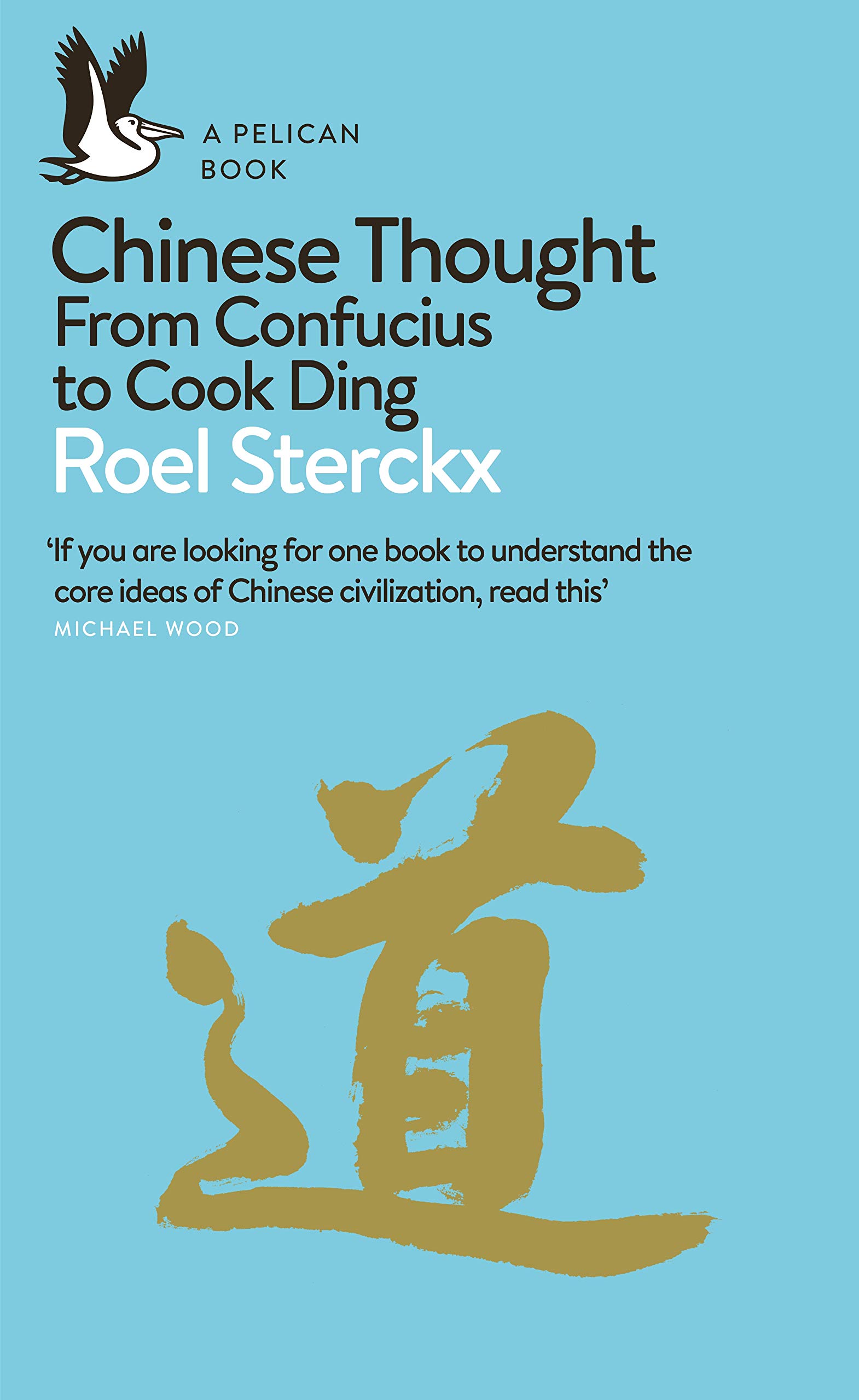
Professor Roel Sterckx is the Joseph Needham Professor of Chinese History, Science, and Civilization at the University of Cambridge, affiliated with Clare College. He specializes in pre-imperial and early imperial Chinese thought, classical Chinese language, and natural history. His research bridges anthropology and the history of science, focusing on topics like ritual, economic thought, and animal studies. He has authored influential books including Food, Sacrifice, and Sagehood in Early China and Animals through Chinese History . Sterckx is a Fellow of the British Academy (since 2013) and holds leadership roles at the Needham Research Institute. He supervises PhD students on subjects ranging from Warring States rhetoric to Han Dynasty apocrypha. Education: BA/PGCE in Sinology and History, Katholieke Universiteit Leuven Masters in Classical Chinese and Philosophy, National Taiwan University PhD in Chinese History, University of Cambridge Research Interests: Early Chinese cultural ecology, ritual economy, and the interplay of moral and material values. His work analyzes texts like the Rites of Zhou , Mozi , and Huainanzi , emphasizing agricultural thought and animal symbolism. Awards: British Academy Fellowship (2013) Grants and Labs: Directs the Cambridge-based Needham Research Institute, focusing on East Asian science and technology history. Current projects include studies on Han perceptions of southern regions and the economics of ritual in early China.
Matteo Bonotti is an Associate Professor of Politics & International Relations at Monash University, previously teaching at Cardiff University, Queen’s University Belfast, and the University of Edinburgh. His research focuses on democratic theory, political liberalism, linguistic justice, free speech, civility, and food justice, addressing ethical pluralism and cultural diversity in modern societies. He has published in journals like the American Political Science Review and authored/co-authored books including Partisanship and Political Liberalism in Diverse Societies (Oxford UP, 2017) and Healthy Eating Policy and Political Philosophy: A Public Reason Approach (Oxford UP, 2022). Bonotti leads projects on disinformation in Southeast Asia, linguistic justice among Italian-Australians, and civic education. His work contributes to UN Sustainable Development Goals related to justice, peace, and sustainable consumption. Education: Previous academic roles at Cardiff, Queen’s Belfast, and Edinburgh universities. Research Themes: Ethical pluralism, democratic legitimacy, public reason, and policy narratives. Recent Projects: ASEAN Disinformation Index, Language & Political Participation in Australia, and Civic Virtue in Polarized Societies. His articles explore topics like civility in environmental politics, far-right network dynamics, and gastrospaces as ethical spaces. Collaborations span international scholars across political theory, sociology, and philosophy. Bonotti actively engages with public discourse through media commentaries on civility, pandemic narratives, and free speech debates.
Loli Kim is a Lecturer on Modern Korea at the Faculty of Asian and Middle Eastern Studies, University of Oxford, with a Leverhulme Postdoctoral Research Fellowship (2022–2025). She specializes in cross-cultural multimodal analysis of Asian communication systems, particularly Korean cinema, folklore, and representation in media. Education: DPhil in Asian and Middle Eastern Studies (2019–2022), University of Oxford Research Focus: Multimodal discourse analysis, foodscaping theory, haenyeo women’s communication Editorial Roles: Assistant Editor of European Journal of Korean Studies; General Editor of 'Foodscaping Asia' series Her work develops the Segmented Film Discourse Representation Structures (SFDRS) methodology for analyzing Korean films' narrative conventions, including violence in revenge cinema and socio-pragmatic dimensions of fashion. She collaborates globally as a visiting lecturer and conference organizer. Kimi’s recent publications examine multimodal translation gaps, cultural representation in children’s literature, and the sociocultural implications of foodscaping. She has delivered keynote talks at institutions including Edinburgh University and SOAS, and co-organizes the Translating Squid Game talks series.
Morris P. Fiorina is the Wendt Family Professor of Political Science at Stanford University and a Senior Fellow at the Hoover Institution. He joined Stanford in 1998 after teaching at Caltech and Harvard. His academic credentials include a B.A. from Allegheny College (1968) and a Ph.D. from the University of Rochester (1972), both in Political Science. Fiorina's research focuses on American politics, emphasizing representation, public opinion, elections, and partisan dynamics. His influential works include Retrospective Voting in American National Elections , Culture War? The Myth of a Polarized America , and Unstable Majorities . He has authored or edited thirteen books and numerous articles, challenging conventional views on polarization, electoral behavior, and political institutions. He has held editorial roles across a dozen political science journals and chaired the American National Election Studies Board (1986–1990). A distinguished scholar, he is an elected member of the American Academy of Arts and Sciences, the American Academy of Political and Social Sciences, and the National Academy of Sciences. He received Career Achievement Awards from the American Political Science Association's sections on Elections, Public Opinion, and Voting Behavior, as well as Political Organizations and Parties. Key Contributions: Pioneered studies on retrospective voting, party sorting, and the 'myth of polarization.' Public Engagement: Analyzes contemporary issues like divided government, electoral reform, and the role of third parties. Fiorina’s work bridges academia and public discourse, addressing critical challenges in American democracy. His current research continues to explore polarization, representation, and governance in the modern political landscape.
Mauro Barelli is Professor of International Law at The City Law School, City, University of London. He holds a PhD from Cardiff University and an LLM from the University of Bristol, and has been a faculty member at City since 2009, progressing from Lecturer to Professor in 2024. He teaches Advanced Issues of International Law, International Human Rights Law, and a course on Minority and Indigenous Peoples' Rights. He has held visiting positions at the University of Cambridge (Lauterpacht Centre), Nanjing University, the University of Iceland, and the University of Trento. His research focuses on: Rights of ethno-cultural and indigenous peoples Law on the use of force Chinese perspectives on international law Soft law and normative development Minority rights and litigation His publications include four books and numerous articles in leading journals such as Journal of Conflict and Security Law , Human Rights Quarterly , and Asian Journal of International Law . His recent work analyzes China’s engagement with international law, the UK’s relationship with the ICJ, and the synchronization of biodiversity protection with indigenous rights. Key scientific recognitions include: Higher Education Academy Fellow (since 2012) He is an experienced PhD supervisor, having chaired and served on numerous doctoral committees, including as PhD Programme Director. His advisee Engin Firat is currently a research student at City. He has also served in administrative roles such as Assistant Dean (Research). His expertise has been sought by national governments, parliaments, and international NGOs. He is an active participant in international academic events, particularly through the European China Law Studies Association.
Marian Chertow is the Manufacturer’s Association Professor of Industrial Ecology at Yale University and Director of the Center for Industrial Ecology at the Yale School of the Environment. She holds an appointment at the Yale School of Management (SOM) and previously taught at the National University of Singapore (NUS) for 20 years, contributing to the development of their Master’s of Environmental Management program. Her research focuses on industrial ecology, circular economy, and industrial symbiosis—the study of material, energy, and byproduct exchanges among businesses. She pioneered frameworks for understanding industrial ecosystems and their resilience, emphasizing collaboration among firms for environmental and economic benefits. Her work spans global case studies, including China, India, and Singapore, and explores urban metabolism, resource reuse, and policy innovation. Chertow has received prestigious awards, including recognition from the U.S. EPA, the CT Women’s Hall of Fame, and the International Society for Industrial Ecology (ISIE). She advises organizations like Trane Technologies and chairs initiatives like the Industrial Symbiosis Research Symposium. Beyond academia, she founded a theater company staging Greek tragedies and teaches a course linking environmental themes to theater. Her research integrates complex adaptive systems theory, social network analysis, and policy design to address sustainability challenges in emerging economies. Current projects include analyzing waste management in China and urban resource flows in Singapore. Chertow’s interdisciplinary approach bridges environmental science, economics, and management to advance sustainable industrial practices globally.
Zaklina Spalevic is a distinguished Professor at Singidunum University, specializing in the intersection of law, technology, and business. With a strong academic background in criminal law and extensive research in cyber law, artificial intelligence applications in legal systems, and tourism law, she has established herself as a leading scholar in digital legal frameworks. Her work spans multiple disciplines, connecting traditional legal principles with emerging technological challenges. Dr. Spalevic earned her doctoral degree in Criminal Law from the University of the Academy of Economics in Novi Sad (2008-2012), following basic studies in General Law at the University of Pristina (1996-2001). Her educational foundation in Science and Mathematics from First Pristina High School (1992-1996) provided the analytical basis for her interdisciplinary approach to legal scholarship. Her research interests focus on the evolving landscape of cyber law, particularly the legal implications of artificial intelligence in judicial systems, electronic governance, and tourism industry regulation. Dr. Spalevic has pioneered work on digital evidence processing, algorithmic justice, and the integration of green law principles into sustainable business practices. Her publications reveal a consistent pattern of addressing emerging legal challenges in the digital age, with increasing emphasis on AI applications across various legal domains. Analysis of her recent publications shows a clear trend toward interdisciplinary research that bridges law, technology, and business. Her work increasingly focuses on practical applications of legal frameworks for emerging technologies, particularly in tourism, agriculture, and judicial systems. The integration of technical solutions with legal regulation represents a distinctive feature of her scholarly contributions. Dr. Spalevic has authored numerous publications including three books: 'Fundamentals of Law with Special Reference to Business and Tourism Law' (2021, 2024 editions) and 'Legal Aspects of Cyberspace' (2018). Her extensive publication record includes over 100 journal articles and conference papers spanning cyber security, electronic governance, intellectual property in digital environments, and legal frameworks for emerging technologies. She actively contributes to academic discourse through conference presentations and collaborative research projects, particularly focusing on the legal implications of artificial intelligence across various sectors. Her work demonstrates a commitment to developing practical legal frameworks that address real-world technological challenges while maintaining foundational legal principles.
Michael R. Dove is the Margaret K. Musser Professor of Social Ecology and Professor of Anthropology at Yale University, where he also serves as Curator of Anthropology at the Peabody Museum and Co-Coordinator of the Combined YSE/Anthropology Doctoral Program. With over forty years of research experience, his work focuses on environmental anthropology, particularly the environmental relations of local communities in South and Southeast Asia. Dove earned his B.A. from Northwestern University and his M.A. and Ph.D. from Stanford University. His academic journey has spanned decades of field research in Asia, including more than a dozen years conducting long-term studies on human ecology in Borneo and Java, developing government research capacity in Indonesia, and advising the Pakistan Forest Service on social forestry policies. Professor Dove's research interests encompass the anthropology of climate change, cultural and political aspects of natural hazards and disasters, indigenous environmental knowledge and practice, environmental institutions and movements, history of environment-related sciences, and multispecies ethnography. His work often examines how local environmental systems interact with national and global markets, politics, and ideologies, with a focus on problematizing orthodox approaches to conservation and development. He has made significant contributions to understanding human-environment relations through both theoretical frameworks and practical applications. Dove's recent scholarly output demonstrates a progression toward more integrated approaches to environmental challenges, blending historical perspectives with contemporary issues. His publications increasingly focus on the intersections of climate change, social justice, and indigenous knowledge systems, while maintaining his longstanding interest in Southeast Asian environmental relations. The work shows a growing emphasis on post-humanist approaches and multispecies ethnography, reflecting broader trends in environmental anthropology while maintaining his distinctive focus on political ecology and institutional analysis. As an educator, Professor Dove has supervised numerous doctoral and master's students, many of whom have gone on to win research awards and secure prestigious positions. He organizes separate research labs for doctoral students from Yale School of the Environment and other departments, as well as for joint YSE/Anthropology doctoral students. His advisees typically conduct international research and have excellent records of obtaining research support both within and beyond Yale. The Dove Lab at Yale School of the Environment serves as a hub for environmental anthropology research, focusing on topics including natural resource management, property rights, power struggles, household energy transitions, and human-wildlife interactions. The lab fosters a collaborative environment with 30-50 students working on related issues each year, characterized by supportive peer dynamics rather than competition. It also contributes to policy and social change through its research and the work of its alumni.
London School of Economics and Political Science (LSE)United Kingdom
Dr Rachel O’Neill is an Assistant Professor in the Department of Media and Communications at the London School of Economics and Political Science (LSE). Her research focuses on gender and sexuality, media and cultural studies, and qualitative methods. She holds a PhD in Gender and Cultural Studies from King’s College London and previously served as a Research Fellow in Sociology at the University of Warwick. Academic Role: Assistant Professor, LSE Department of Media and Communications Research Expertise: Gender studies, media ethnography, feminist theory, wellness industry critique, and financial feminism Her work examines intersections of gender, capitalism, and cultural practices. Key publications include Seduction: Men, Masculinity and Mediated Intimacy (2018) and articles on wellness influencers, financial feminism, and masculinity studies. Her research often critiques patriarchal structures and neoliberal logics in contemporary society.